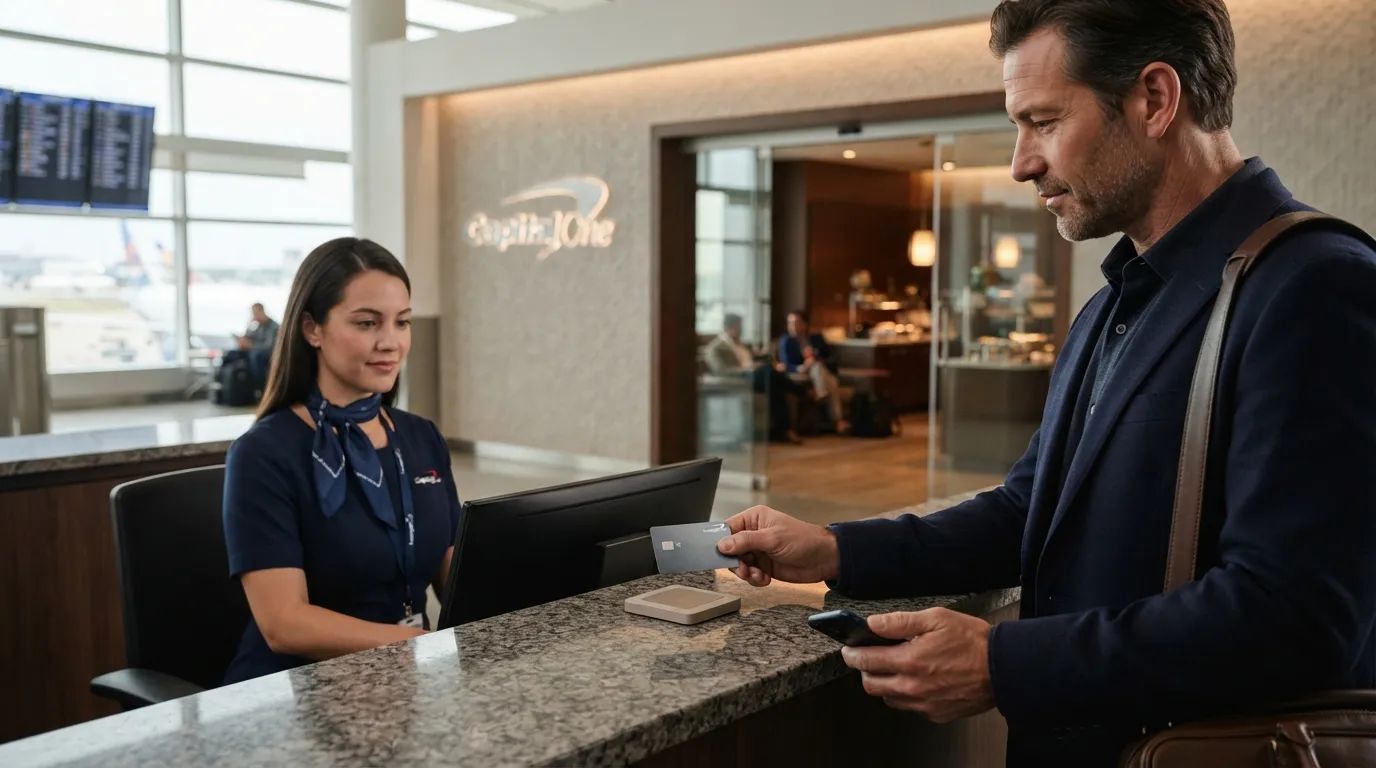
Picture the lounge desk: one traveler flashes a card and walks straight in, the next is asked to pay for a friend, and a third is turned away, all in the same minute and all for the same buffet. The same front desk really can do all three, depending on the ticket, the clock, and the company.
The current policies explain every one of those outcomes. Some hinge on a timer, some on a child’s age, several changed only in 2025 and 2026, and the rule that rewrites almost everything is waiting at #1.
#13 – The Three-Hour Clock Isn’t the Same for Everyone
The famous three-hour rule is really a default, and it bends depending on who you are and why you’re there.
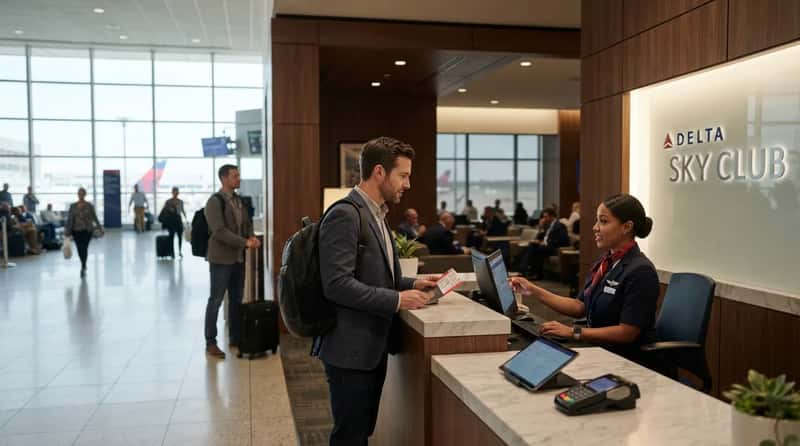
Many airport lounges let travelers enter up to three hours before their scheduled departure, and Delta Sky Clubs use that same three-hour window for departing customers. Show up earlier than that and you’re generally left waiting in the terminal with everyone else.
Connecting passengers get different treatment. Delta lets connecting customers use Clubs in the connecting airport at any time before departure, while Amex said that from July 8, cardmembers and eligible guests on a layover can enter a Centurion Lounge only up to five hours before their departing flight.
Until July 2026, connecting Centurion visitors faced no time limit at all. Departing passengers were already capped at three hours, and arriving passengers generally can’t use the lounge just because they landed unless they have a connecting flight.
That’s how two people on the same concourse can get opposite answers at the same desk. The one on a layover walks in, and the one who just landed and wants a quiet chair does not.
The clock is only the first filter, and #12 is where lounge staff get surprisingly subjective.
#12 – The Dress Code Nobody Posts
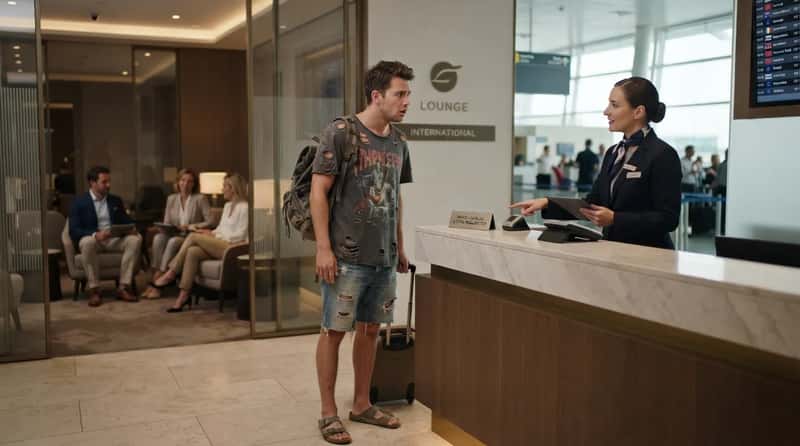
Nobody hands you a dress code at the door, yet some lounges quietly enforce one, and the real rulebook is often the judgment of the person at the desk.
Club lounges call their dress code relaxed, but bare feet and offensive clothing are not permitted. That’s the floor, not the ceiling.
Enforcement tends to rise with the lounge’s prestige. One US-focused guide says dress codes are most likely enforced in flagship lounges at international terminals, and that higher-end lounges may deny entry for certain clothing and behavior.
Another guide describes the usual standard as smart-casual. It also warns that you could be asked to leave if you don’t act civilized.
Plenty of frequent flyers grumble that the rules feel inconsistent, and they have a point. Enforcement depends on the lounge and the airport, not on one universal standard, so an outfit that passes in one lounge may earn a second look in another.
Clothing is a minor gatekeeper next to #11, where the airline you fly may not matter at all.
#11 – Shared-Use Lounges Don’t Care Who You Fly
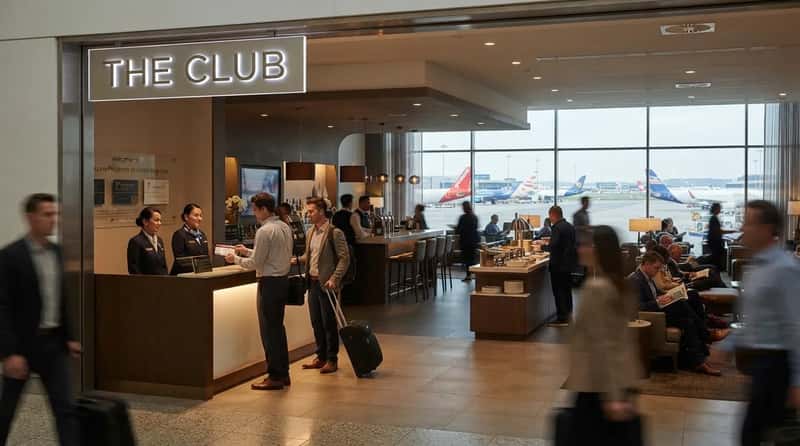
Some lounges ignore your airline and your cabin completely, which makes them the odd ones out in this whole game.
The Club and Club Aspire are shared-use lounges, so guests can enter through programs like Priority Pass and LoungeKey, or by buying a Club pass, regardless of airline or ticket class. Where you sit on the plane simply isn’t part of the question.
There’s a catch for loyal flyers: airline-operated lounge memberships are not accepted. A membership that opens every door at your home hub can be worthless at a shared-use lounge.
That’s a quiet advantage for anyone holding a Priority Pass or LoungeKey membership. Those credentials work at the shared-use door, while an airline’s own members are just another stranger there.
Arrival rules differ too: these lounges are open to checked-in departing passengers, and to arriving passengers only where permitted. Arrivals are not permitted at The Club CHS.
Getting in also depends on when you decide to buy, and #10 has a deadline most travelers miss.
#10 – The Six-Hour Booking Cutoff
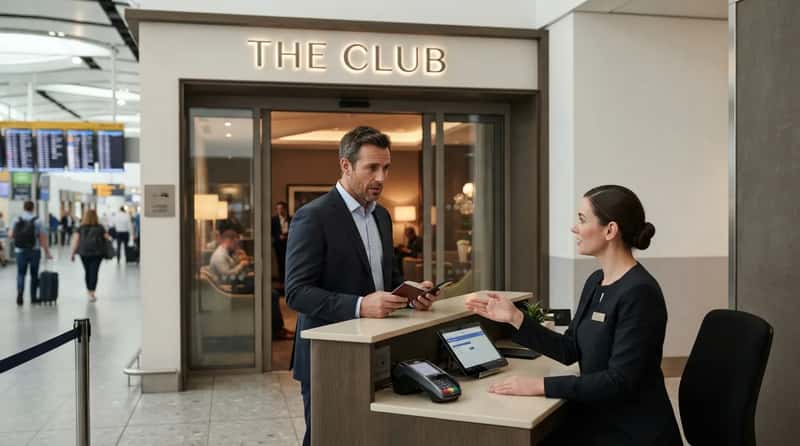
Some lounges sell certainty, but only to people who plan early enough, and the deadline is easy to miss.
The Club lets travelers reserve a pass far ahead, up to a year in advance. The booking must be made at least six hours before your scheduled departure.
Miss that window and the rules change: within six hours of departure, you can still buy a Club Pass at the lounge, subject to availability. The same traveler gets guaranteed entry or a gamble, depending on when they decided to pay.
Plaza Premium Lounges, Aspire Lounges and The Club all offer booking on their websites. Booking in advance generally costs $30 to $60 per person, varying by location.
The benefit is guaranteed entry, which can be crucial during busy periods. Some travelers argue that paying to reserve a chair is absurd, but it’s the only way to remove the availability risk.
Fast Facts
- Book a Club pass up to a year ahead.
- The cutoff is at least six hours before departure.
- Advance booking generally runs $30 to $60 per person.
- Inside six hours, you can still try the lounge desk, subject to availability.
If you’re traveling with children, #9 is where the rules stop making sense.
#9 – Kids Count Differently Everywhere
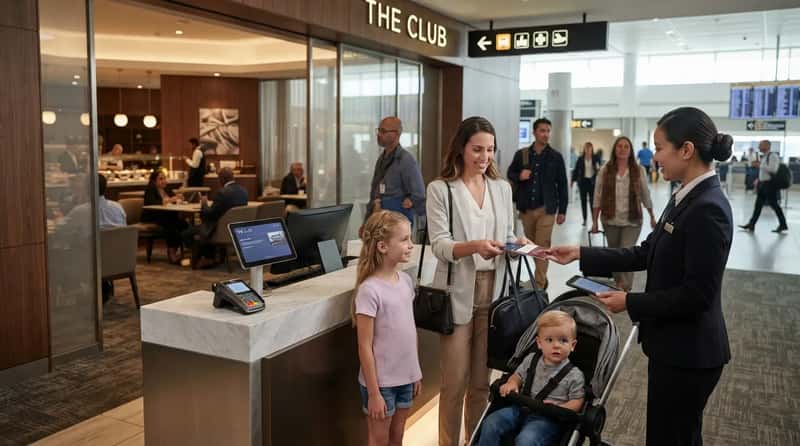
Whether your child is a free rider, a full-price guest, or a surprise on the bill depends entirely on the lounge.
Priority Pass says many lounges let you bring children at the same rate as an adult, while others let children under a certain age in for free. TPG says the magic age is typically either 2 or 12.
Capital One prices kids in tiers: its Lounges and Landings charge $45 per adult and $25 per child aged 2 to 17, and children under 2 are free. Children under 18 must be accompanied by an adult cardholder.
Delta has its own version. Anyone under 18 using a Single Visit Pass needs a supervising adult who is also a Club member, though children under 2 may accompany someone entering with a Single Visit Pass.
At the VIP Lounge in Punta Cana, children under 12 are free. Those young kids don’t count toward your guest allotment.
Kids are only half the guest story, and #8 shows how one membership can produce very different bills.
#8 – One Priority Pass, Wildly Different Guest Bills

Two members can walk into the same lounge and pay different amounts for a friend.
If you bought Priority Pass directly, guest passes for most lounges cost about $35 per guest, per visit, as of July 2026. Direct memberships generally don’t include free guests.
Card-issued memberships are a different story, because if your membership comes through a bank, the guest fee can vary. As of February 1, 2026, Capital One Venture X cardholders no longer get complimentary guest access to Priority Pass lounges.
The Ritz-Carlton Credit Card ended its unlimited Priority Pass guest access on January 15, 2026. Yet Venture X Business cardholders can still bring two complimentary guests to Priority Pass lounges.
That means the business version of a card can now beat the personal version on guests. AwardWallet sums it up: the days of generous, unlimited guest privileges are quickly disappearing.
Quick Compare
- Direct Priority Pass: about $35 per guest, per visit.
- Venture X (personal): no complimentary Priority Pass guests since February 1, 2026.
- Venture X Business: two complimentary guests still allowed.
- Ritz-Carlton card: unlimited guest access ended January 15, 2026.
One lounge brand charges more than double that $35, and #7 has the number.
#7 – The Guest Who Costs $0, $27, $75, or $100
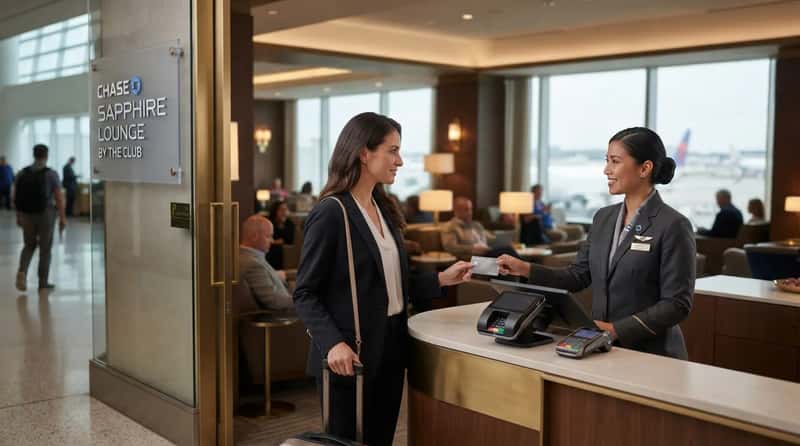
Some lounges inside the Priority Pass network set their own rules anyway.
Chase Sapphire Lounges in the Priority Pass network charge a flat $75 per guest. That’s a reduction from the typical $100 entrance fee for non-members.
Chase’s own cardholders get a better deal. NerdWallet says Chase Sapphire Reserve cardmembers can get up to two free guest passes per visit, with additional guests costing $27 each.
One lounge, four possible prices for the same person: $0, $27, $75, or $100. The only variable is who invites them and which credential that host presents.
Think of the network as one big building with many landlords. The lounge, the card issuer and the network can each write a different guest rule, which is why the fee depends on the credential your host uses at the door.
Paying more still doesn’t promise a seat, and #6 explains why even paid entry can be refused.
#6 – Paid Entry Still Can’t Guarantee a Seat
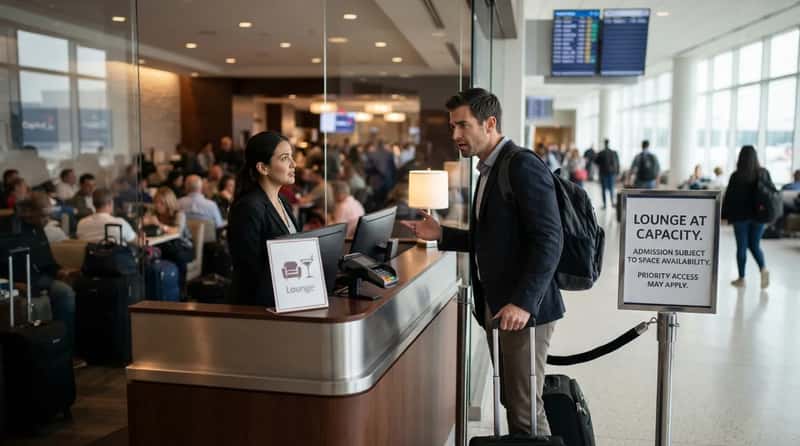
Holding the right card doesn’t mean the door opens.
Capital One says access at all locations is subject to capacity and offered on a space-available basis only. It adds that Venture X cardholders have no guaranteed entry or priority at peak times.
Delta says the same thing in its own terms: Club access is subject to space availability. United Club one-time passes are often not available when lounges are busy.
Paying customers aren’t always first in line, either, and one travel guide warns that others may bump you from the list if a first-class passenger needs your space.
Delta also reserves the right to limit access for non-revenue flyers. In other words, a pass is a request to get in, not a reservation for a chair.
That brings us to the July 2026 change that hit travelers who thought their guest list was safe, which is #5.
#5 – Your Guest Must Now Fly With You

Since July 8, 2026, a friend on a different flight no longer counts as your Centurion Lounge guest.
Card Member guests must be traveling on the same flight as the primary Card Member to enter a Centurion Lounge. The policy applies across the U.S. and in London, Tokyo Haneda and Hong Kong.
Upgraded Points also lists Sydney and Melbourne among the affected locations. The policy does not apply to those with the Amex Centurion Card.
The old system had a loophole, since it was previously fine to guest someone on a different flight. One Mile at a Time noted that this meant guesting someone into a lounge without you sticking around.
MileLion reports that Singapore-issued Platinum Charge cards are also subject to the new restrictions from July 8, 2026. Those cardmembers can guest only one person traveling on the same flight.
Some airlines will still sell you a way in, and #4 shows where the catch hides.
#4 – The One-Time Pass With Fine Print
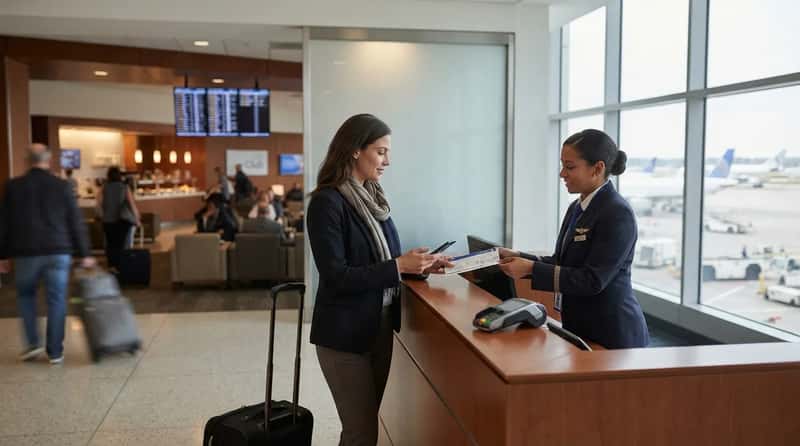
Some lounges will sell entry to almost anyone, but only on strict conditions.
United Club offers one-time passes to travelers with a same-day United departure from that airport. They cost $59 per person at more than 45 locations, according to Daily Passport.
Delta’s version is tied to your ticket: a Single Visit Pass must be used with same-day ticketed travel on Delta or its partner airlines. Customers on Delta Main Basic fares cannot use a Single Visit Pass for entry.
The pass is also locked to a place. It’s valid only at the Delta Sky Club location where it was purchased, and it doesn’t grant access to partner lounges.
Alaska does something unusual: Alaska Lounge members can buy a $35 guest pass without traveling with the guest, instead of the $65 day pass. Critics of day passes argue that paying $59 for access that may vanish at busy times is a gamble.
Worth Knowing
- United Club one-time pass: $59 per person, same-day United departure required.
- Delta Single Visit Pass: same-day Delta or partner ticket, and not valid on Main Basic.
- Delta passes work only at the Sky Club where you bought them.
- Alaska Lounge members can buy a $35 guest pass, versus the $65 day pass.
Family members can cost extra even after you’re in, and #3 shows how authorized users get caught.
#3 – Authorized Users Pay to Play

Being added to a card no longer means you’re added to the lounge list.
Venture X authorized users no longer receive complimentary lounge access. They previously could get free Capital One Lounge, Landing and Priority Pass access.
The replacement has a price, and outlets describe it differently. TPG says primary cardholders pay $125 per account to unlock access for up to four authorized users, while AwardWallet calls it an additional $125 authorized-user annual fee.
Primary cardholders are now the only patrons getting in free. Venture X Business cardholders can add up to four authorized users with lounge access for $125 each.
Anyone who assumed an add-on card still carried lounge perks may only find out at the desk. The loss lands at the door, not in a headline.
The strictest limit of all isn’t about people, it’s about counting your visits, and #2 shows how fast they run out.
#2 – The Visit Counter Ticking Behind the Desk
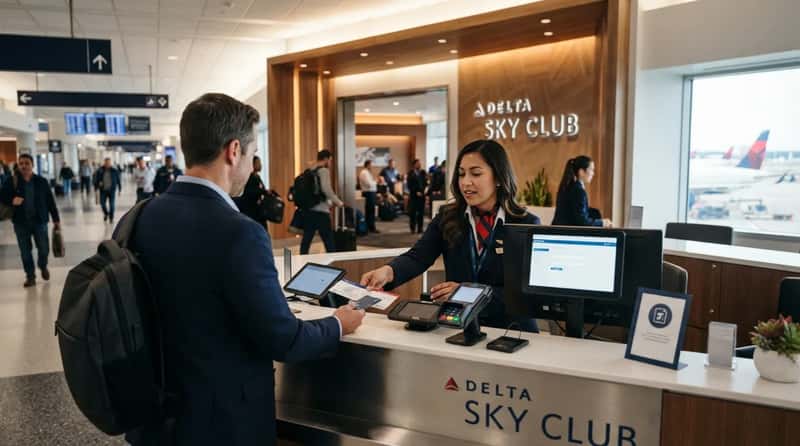
At Delta Sky Club, your card buys a limited number of entries, not an open door.
Since February 1, 2025, Delta has capped annual Sky Club visits made with a credit card. The Amex Platinum gets 10 visits and the Delta SkyMiles Reserve card gets 15.
You also need the right trip: a same-day Delta or Delta Connection boarding pass and an eligible access method. Priority Pass does not provide Delta Sky Club access.
Guests cost extra and don’t replace your own visit. Delta Reserve cardholders can invite two guests by paying $50 per guest per visit, and your own Sky Club visit consumes one visit from your allowance.
Think of it as a punch card you can’t see. Every entry, even one for a quick coffee, punches a hole.
One number scrambles all these rules at once, and #1 shows exactly what it is.
#1 – The $75,000 Switch That Rewrites the Rules

The strongest rule in the lounge world isn’t posted on any wall: it’s how much you spend.
To unlock complimentary guest access at Centurion Lounges, Platinum and Business Platinum members must spend $75,000 in eligible purchases within a calendar year. Eligible purchases by additional card members on the account count toward the requirement.
Delta uses the same line: spend $75,000 on your Amex Platinum in 2025 and you unlock unlimited Sky Club visits through January 31, 2027. Amex says its guest access lasts through the following calendar year and until January 31 after that.
Capital One follows the pattern, since spending $75,000 unlocks two guests at Capital One Lounges and one guest at Capital One Landings. Children aged 2 to 17, charged $25 per visit otherwise, are free once the $75,000 unlock is met.
Three major programs now draw the same $75,000 line. Many frequent flyers welcome the crowd control, while others argue that it turns a flat annual fee into a down payment.
That leaves one takeaway about what these 13 rules have in common.
The Rule Behind All 13 Rules
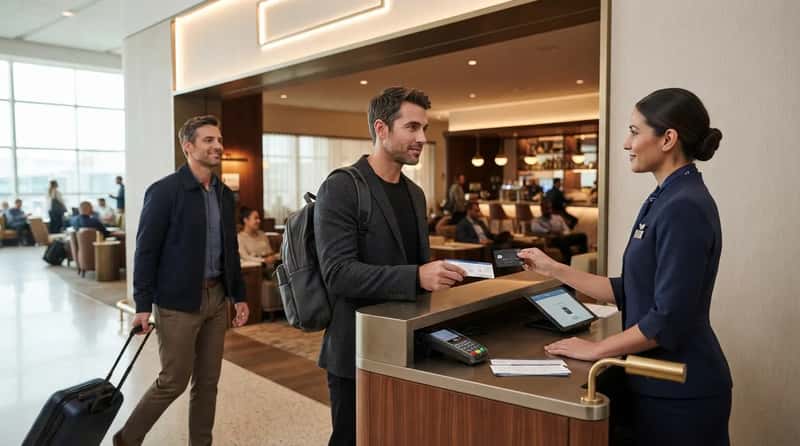
The same lounge can treat two travelers differently based on the clock, the ticket, the card, the child, and the guest list. The biggest 2026 shifts are same-flight guest rules at Centurion Lounges, visit caps at Delta Sky Club, and paid guests and authorized users at Capital One, unless you spend $75,000.
Crowd control sits behind nearly all of it. Card perks and guest policies can change at any time, so confirm current details with your issuer before you travel.
So the next time the door swings open for the person ahead of you and not for you, remember it’s rarely personal. The rulebook attached to each credential got to the desk first.
#14 – The Bonus Tip Nobody Shares

Build a door-proof plan the night before, and choose your credential on purpose. Most people only find out which rule applies to them when the agent says it out loud.
Here is the three-step version:
- Read the lounge’s own page, not just the network directory. Look for hours, guest and child rules, and whether arrivals or connecting passengers are allowed. Screenshot it so you have the policy in hand if the desk says something different.
- Match the credential to the person. If you carry more than one card or membership, pick the one whose guest and child terms fit your group, because the same lounge can price the same guest very differently depending on what the host presents.
- Line up a backup before you leave the gate area. Since every pass is subject to capacity, know the nearest alternative, such as a shared-use lounge you can prebook. If you get turned away, ask the agent politely whether there is a waitlist or a good time to come back.
Five minutes of checking beats an hour of guessing at the desk, and it protects limited visit counts from being wasted on a lounge that won’t take you.