Most pet owners assume flying with their dog or cat is just a matter of buying a ticket and showing up with a carrier. They pay the fee, find their seat, and figure the hard part is over. What they don’t realize is that airlines have quietly built a web of rules around pet travel — capacity limits, temperature blackouts, breed bans, sedation warnings, health certificate windows — that catch thousands of travelers off guard every single year, right at the check-in counter.
And here’s the part nobody warns you about: many of these rules aren’t buried in fine print out of negligence. Some protect your pet. Some protect the airline. And a few exist in a gray zone that only becomes clear when a gate agent shakes their head and says your animal can’t board. What follows is what airlines almost never volunteer — until it’s too late to change your plans.
#13 – There Are Only a Handful of Pet Spots Per Flight, and They Fill Up Fast
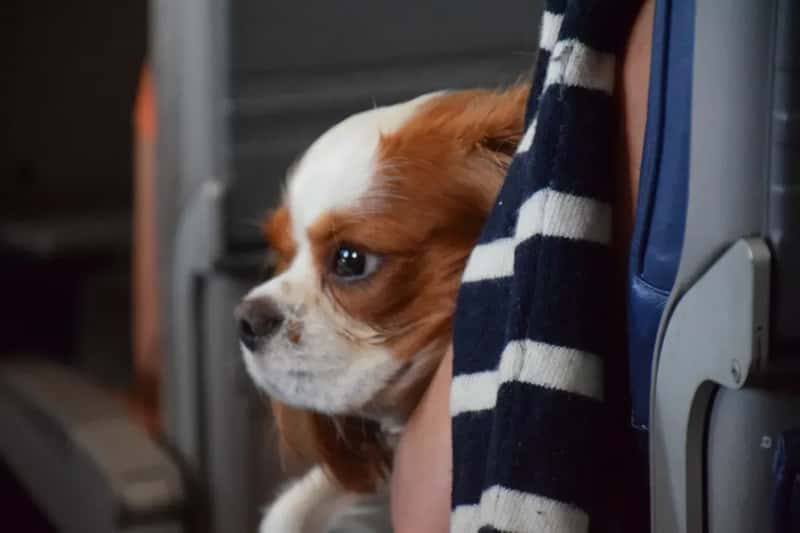
Most people book their ticket first and think about pet logistics later. That’s exactly the wrong order. Airlines cap the number of pets allowed in the cabin per flight — often between four and six depending on the aircraft — to manage air circulation, storage space, and safety protocols. Because these spots fill quickly, especially around holidays and busy travel weekends, pet owners need to reserve their animal’s spot at the same time they book their own seat, not as an afterthought.
The cap isn’t uniform across carriers, either. JetBlue caps in-cabin pets at 6 per flight. Delta and American limit numbers based on aircraft type, usually between 4 and 8, while United restricts some aircraft to just one pet total because of limited under-seat space. Show up without a confirmed pet reservation and there’s a real chance your animal doesn’t board — full stop. But that cap situation is nothing compared to what’s waiting in #12, a rule that quietly blindsides even experienced travelers at the gate.
Fast Facts
- JetBlue allows up to 6 pet carriers per flight in-cabin
- Most carriers require a separate pet reservation — your seat booking doesn’t cover it
- Holiday flights fill pet spots weeks in advance on popular routes
- Some small regional aircraft accept only 1 pet total due to limited under-seat space
- Pet spots are first-come, first-served — no waitlist at most airlines
#12 – Your Pet Carrier Counts as Your Carry-On (On Most Airlines)

Here’s a detail that stings when you find out about it mid-trip. On many airlines, the soft-sided carrier you’re stowing under the seat counts as your carry-on bag — meaning your actual luggage either gets gate-checked or triggers an extra bag fee. On United, the carrier must be no larger than 18″ x 11″ x 11″ and it occupies your carry-on allowance. Several other major U.S. carriers apply the same policy, leaving travelers doing frantic bag math they never anticipated.
#11 – The Pet Fee Hits Every Single Leg of Your Trip
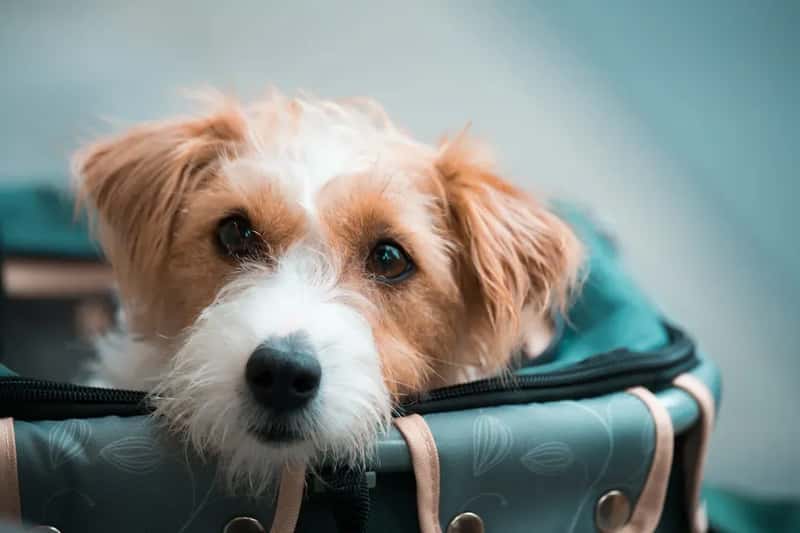
That pet fee sounds manageable until you realize it applies each way — and on some airlines, on each individual segment. Southwest charges around $95 each way per carrier. American Airlines charges $150 each way. Delta charges $175 for domestic flights as of 2026. United charges $125 per segment. JetBlue charges $125 each way. Frontier comes in at around $99 each way. On a round-trip itinerary with one connection each way, you’re potentially looking at four separate charges.
There’s also the question of when you pay: most airlines collect the fee at the airport check-in counter, not during online booking. You can’t quietly pre-pay and forget about it. On a cross-country round trip with a single connection, some pet owners end up paying $400 to $500 in fees alone — on top of their own ticket. Build that into your travel budget before you decide that bringing your pet along is the practical or economical choice. And speaking of things that hit without warning, the temperature rules in #10 are something almost no one knows about until they’re already at the airport.
#10 – Extreme Temperatures Can Ground Your Pet – Even in Summer

Picture this: you’ve booked the flights, reserved your pet’s spot, gotten the vet paperwork, and arrived at the airport on time. Then a gate agent tells you your pet can’t fly because it’s too hot outside. This is a real, enforced policy at multiple major carriers. American Airlines will not transport pets if the current or forecasted temperature exceeds 85 degrees Fahrenheit at any point on the itinerary. Cold weather triggers restrictions too — ground temperatures below 45 degrees Fahrenheit can also result in a no-fly determination for cargo animals, though a written letter from a licensed vet may allow for a cold-weather waiver on some routes.
Some cities are effectively off-limits for cargo pets for months at a stretch. American prohibits cargo pets traveling to, through, or from Phoenix, Tucson, Las Vegas, and Palm Springs between May 1 and September 30 — a full five-month window when flying cargo pets through the Southwest simply isn’t allowed. These restrictions exist because tarmac conditions during loading and unloading can expose crates to dangerous ambient temperatures that climate control can’t fully offset. The lesson: always check the forecast for every city on your itinerary, not just departure and arrival. And what’s in #9 is equally jarring — especially if you assumed a flat-faced dog was just a style of breed.
#9 – Flat-Faced Breeds Face Strict Bans, and the Reason Is Life or Death
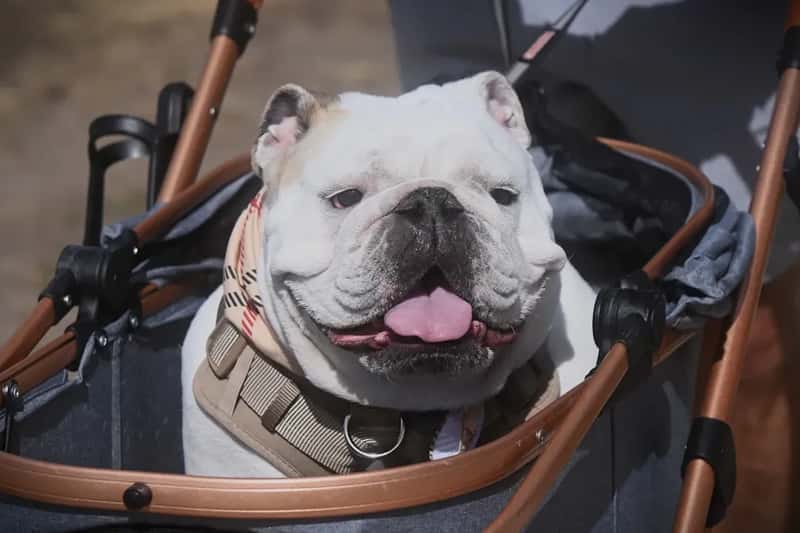
Bulldogs, pugs, French bulldogs, Boston terriers, Persian cats — these are some of the most popular pets in the country, and most major airlines either ban them outright from cargo or impose serious restrictions. The reason isn’t aesthetic. Brachycephalic breeds have anatomically compressed airways that make breathing under normal conditions harder than it is for other animals. At altitude, under travel stress, with slightly reduced oxygen levels, that difficulty can escalate quickly into a genuine respiratory crisis.
The data is stark: according to U.S. Department of Transportation figures, approximately half of documented dog deaths in air transport involve brachycephalic breeds. Of 122 dog deaths associated with airline flights over a five-year study period, 25 were English bulldogs and 11 were pugs — the only two breeds in double digits. If you own one of these breeds, flying cargo isn’t just inconvenient — it may be genuinely dangerous for your pet. Airlines typically list breed restrictions in the fine print, not in the booking confirmation, which is how owners end up discovering the policy at the counter with a carrier in hand. What’s in #8 is another health-related rule that surprises almost everyone — because the instinct behind it feels so reasonable.
At a Glance: Brachycephalic Breeds Most Affected
- English Bulldog, French Bulldog, American Bulldog
- Pug, Boston Terrier, Boxer
- Shih Tzu, Lhasa Apso, Pekingese
- Persian cat, Himalayan cat, Exotic Shorthair
- Most major U.S. carriers ban these breeds from cargo; cabin may still be an option if the pet is small enough
#8 – Sedating Your Pet Before the Flight Can Kill Them

It seems like the obvious solution for an anxious dog or cat: give them a mild sedative before the flight and let them sleep through the whole thing. Virtually every major airline and veterinary organization disagrees with that plan — strongly. The American Veterinary Medical Association warns that sedated pets face a significantly higher risk of respiratory and cardiovascular problems at altitude. At cruising altitude, the mild reduction in oxygen combined with a sedative’s effects on the respiratory system can create a dangerous combination that the animal can’t compensate for. DOT incident data shows oversedation accounts for close to half of all airline travel-related animal deaths.
Tranquilizers affect the respiratory system and impair a pet’s ability to cope with altitude and temperature changes. We strongly advise against their use during air travel.
American Veterinary Medical Association (AVMA)
Instead, experts recommend crate training well in advance of travel — a pet that’s comfortable and calm inside their carrier before the trip will manage the stress of flying far better than one that’s chemically sedated. The crate should feel like a familiar, safe space long before it ever goes through a security checkpoint. Administer a sedative without veterinary guidance specific to air travel, and you’re taking a risk most professionals say simply isn’t worth it. The surprise in #7 is less dangerous but hits a lot of responsible, organized pet owners directly in the wallet.
#7 – Your Health Certificate Has a Brutally Short Expiration Window

Many pet owners schedule their vet visit a week or two before departure, thinking they’re being responsible and organized. Then they discover that the window is even tighter than they assumed. Health certificates for pet air travel are typically valid for only 10 days from the date of issue. That certificate must cover vaccinations, rabies history, microchip information, and any tests or treatments required by the destination. Ten days is an extremely short window — and it becomes nearly impossible to manage if any part of your travel plan shifts.
For most domestic in-cabin flights, airlines don’t require a health certificate, but this changes significantly for cargo travel and dramatically for international routes, where a certificate issued within 10 days of departure is almost always mandatory. Book your vet appointment too early, and the certificate has already expired by flight day. Some states also have their own animal import requirements that can catch out-of-state travelers off guard, separate from anything the airline lists on its website. Check destination-specific regulations — not just your airline’s pet policy page. The rule in #6 is one most pet owners never think to ask about, until a gate agent brings it up after they’ve already settled into what seemed like a great seat.
#6 – You Can’t Sit in a Bulkhead or Exit Row with Your Pet
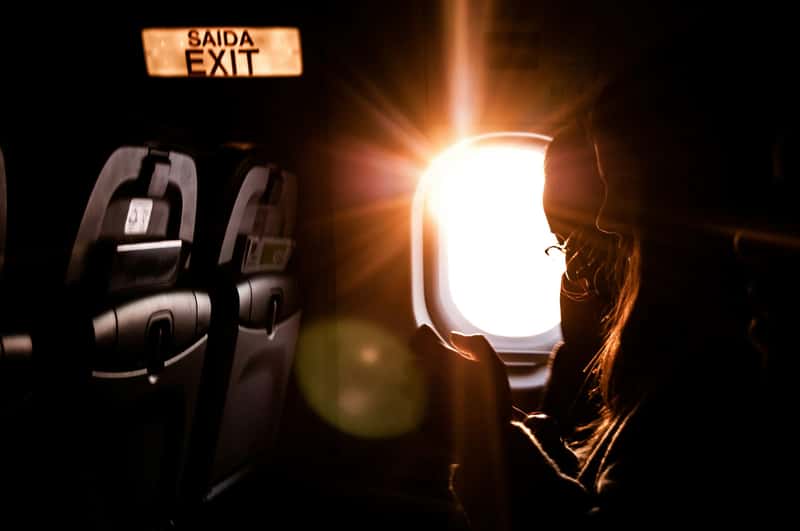
You’ve scored extra legroom, a bulkhead row, a little breathing room on a long flight. If you’re traveling with an in-cabin pet, those seats are off limits. Airlines prohibit pets in bulkhead rows because there’s no seat in front of you — which means nowhere to stow the carrier as regulations require. Emergency exit row restrictions are a separate safety rule. Both policies are firm, and neither is clearly disclosed during the seat selection process at online booking.
What makes this genuinely frustrating is that many passengers choose their seats before the pet reservation is added to the itinerary. You lock in a preferred seat, add the pet later, and the conflict doesn’t surface until a gate agent flags it at check-in. Airlines typically require pet travelers to check in at a staffed ticket counter rather than a self-service kiosk — and arriving at least two hours early is strongly advisable to allow time for paperwork and pet processing. Assuming you can handle everything through an app is a mistake that costs time you don’t have at the gate. What’s in #5 challenges something most people believe firmly — and have believed for years.
Worth Knowing: Airport Day-of Checklist for Pet Travelers
- Check in at the staffed ticket counter — not a kiosk or mobile app
- Arrive at least 2 hours early to allow time for paperwork and pet processing
- At security, remove your pet from the carrier — the empty carrier goes through the X-ray machine
- Most large airports have pet relief areas before and after security
- Staff may ask your pet to stand, turn around, and lie down in their carrier to confirm fit
#5 – The Cargo Hold Is Actually Pressurized and Climate-Controlled
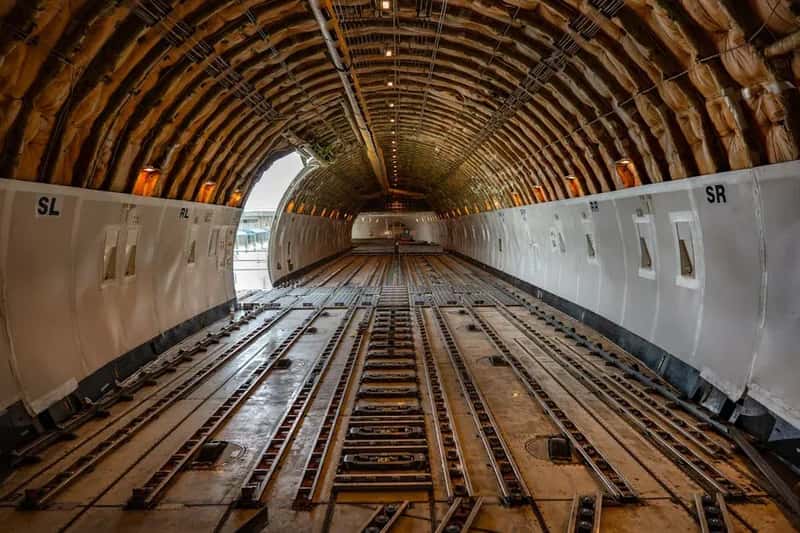
The mental image of a pet in cargo is often grim: dark, cold, chaotic, a dog surrounded by suitcases in some forgotten corner of the plane. The actual conditions are more carefully managed than that. The cargo hold used for live animal transport is fully pressurized and ventilated — held to the same pressure and oxygen standards as the passenger cabin. A continuous supply of fresh, conditioned air flows through the cargo section throughout the flight, regulated by the aircraft’s environmental control system.
Flight crews are informed when pets are on board, and airflow in the cargo area is monitored accordingly. IATA Live Animal Regulations govern crate requirements: pets must be able to stand up, turn around, and lie down comfortably inside their crate — specifications designed to reduce stress and physical discomfort during transport. That said, the real danger in cargo transport isn’t in the air. It’s on the tarmac during loading and unloading, when temperature control is not guaranteed — which is exactly why those seasonal and geographic temperature restrictions exist. Airlines rarely volunteer that distinction. And the cargo-versus-cabin debate gets more complicated in #4, where the option most owners assume is safer may not be what it seems.
#4 – The Cabin Isn’t Automatically Less Stressful Than Cargo for Your Pet
The instinct is universal: keep the pet in the cabin, close by, visible, and presumably less scared. Animal behavior research complicates that assumption. For many pets — especially those that aren’t highly social or accustomed to crowds — the noise level, movement, and proximity of strangers in a cabin environment can be more disorienting than the quieter, darker cargo hold. Being in sight of their owner is reassuring for the owner. It doesn’t necessarily mean less stress for the animal. Those are different things.
For small pets that qualify, cabin travel is a legitimate option with real advantages. But the limitations are significant: the carrier must fit under the seat, many international routes restrict or prohibit cabin pets regardless of size, and per-flight caps mean the option isn’t always available even when you want it. For larger pets and most international relocations, cargo isn’t a compromise — it’s the industry standard, used successfully for decades. What surprises people most isn’t the cargo policy itself; it’s discovering that the cargo option may no longer exist at their airline of choice. That’s exactly what #3 is about.
#3 – Several Major Airlines Have Quietly Dropped Cargo Pet Service Entirely
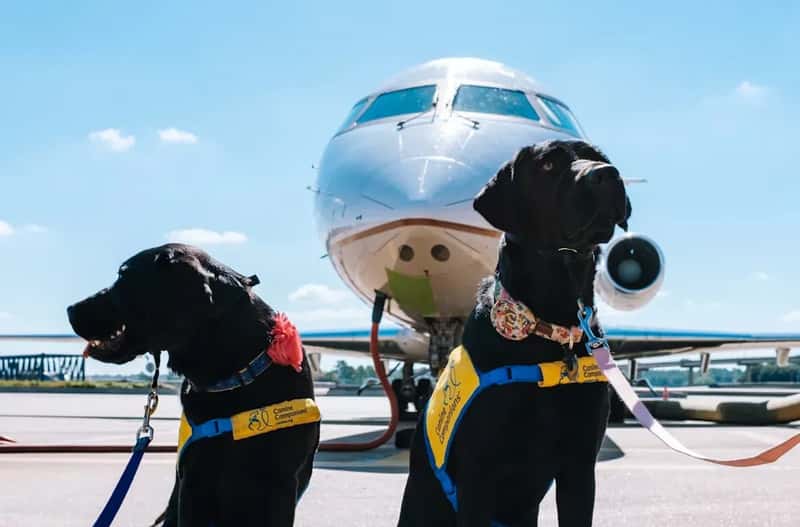
If you have a large dog and you’re counting on flying them as cargo on a major carrier, you may discover that option simply no longer exists. United Airlines has ended its PetSafe cargo program for general public use, with exceptions only for active U.S. military personnel, their spouses, or State Department Foreign Service personnel. Delta implemented a significant embargo on pets through Delta Cargo, with the same narrow military and diplomatic exceptions applying for most civilian travelers with large pets.
That leaves travelers with large animals turning to alternatives they may not have known existed. Semi-private and private carriers like JSX and K9 Jets have stepped into the gap, offering more flexible pet policies, larger size allowances, and a different boarding experience — but with fewer routes and significantly higher ticket prices. If you’ve been counting on a specific airline’s cargo service for an upcoming move with a large dog, verify that the program still exists before you do anything else. The changes happened quietly, and many travelers are still finding out the hard way. What’s in #2 is perhaps the most disheartening item on this list — because it can happen even when you’ve done everything right.
#2 – Your Pet Can Be Turned Away at the Gate, Even with a Confirmed Reservation

You’ve reserved the pet spot. You have the health certificate. You bought an airline-approved carrier and arrived two hours early. The gate agent still has the authority to refuse your pet boarding — and it happens more often than airlines advertise. Airline staff are permitted to make visual assessments of animals in the airport, during boarding, and during cargo loading. A pet that appears visibly distressed, aggressive, unwell, or unable to handle the environment can be denied on the spot, regardless of what your reservation says.
There’s also a dimensional trap that catches people who did their homework on the wrong variable. Carrier size requirements aren’t just based on the airline — they’re based on the specific aircraft operating your route. The under-seat space on a Boeing 737 is not the same as on an Airbus A321. A carrier that fits perfectly on one plane may be too wide or too tall for another. Your carrier might be labeled “airline approved” and still be turned away for the specific aircraft assigned to your flight. Always verify the aircraft type for your specific route — not just the airline’s general size guidelines. And that instability in the rules leads directly to the single most important thing airlines almost never make clear before you book.
#1 – The Rules Change Depending on the Route, the Aircraft, and the Destination – Not Just the Airline

Most travelers pick an airline, read its pet policy once, and assume they know what applies to their trip. The reality is that the rules governing your specific flight depend on a cascade of variables that can completely change the picture. Pet policies vary not just by airline, but by the size and species of the animal, the route, the destination country, and the specific aircraft type assigned to that flight. Fly the same airline on a different route and you may be looking at an entirely different set of requirements.
International flights are where this becomes genuinely complex and where most failed pet itineraries actually fall apart. Many countries require health certificates dated within 10 days of entry, plus import permits, vaccinations specific to that nation’s requirements, and sometimes weeks-long quarantine. Pets are not permitted in the cabin on flights to or from certain destinations — including Hawaii, Australia, and the United Kingdom — regardless of the airline’s general in-cabin policy. Most pet travel disasters don’t happen in the air. They happen in the week before departure, when a traveler discovers a route-specific rule they never saw coming. The only real protection against that is to call your airline directly after booking, confirm the pet reservation, verify the aircraft type for your specific flight, and check your destination’s official animal import requirements — not just the airline’s FAQ page. Every variable matters, and the ones airlines mention least tend to matter most.
Why It Stands Out: The Variables That Actually Control Your Trip
- Aircraft type — under-seat dimensions differ between a 737, A320, and regional jets
- Route — some domestic legs allow cabin pets; international versions of the same airline may not
- Destination country — Hawaii, Australia, and the UK each have strict import quarantine rules
- Connecting cities — temperature rules apply at every stop, not just origin and destination
- Codeshare partners — if a partner airline operates your segment, their rules apply, not your ticketing carrier’s
Flying with a pet is absolutely doable — millions of animals travel safely by air every year. But the gap between what airlines highlight at booking and what they actually enforce at the counter is wide enough to derail a trip entirely. The rules around capacity limits, temperature bans, breed restrictions, sedation warnings, cargo availability, and route-specific policies aren’t secrets exactly. They’re just never volunteered. Now you know where to look before that carrier ever rolls through a security checkpoint.