Long before you say hello, the host has already read you. Not your rig, your gear or your budget, but your tires. Where they stop answers a dozen questions without a word: did you read the reservation, do you respect the neighbors, and do you know what a campsite actually is?
None of this is a personality test, and plenty of tired drivers have an off day. Still, the written rules at national parks and state campgrounds point to the same signals again and again. And the clue at the very top of this list has nothing to do with how big or expensive your rig is.
#13 – Wheels on the Pad, Not on the Grass
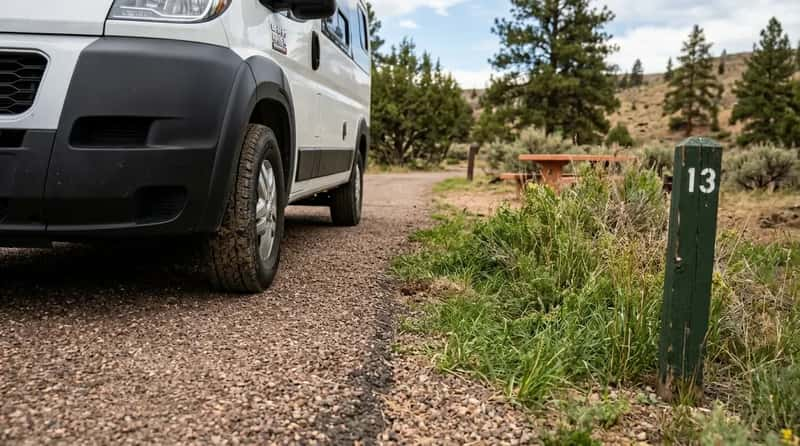
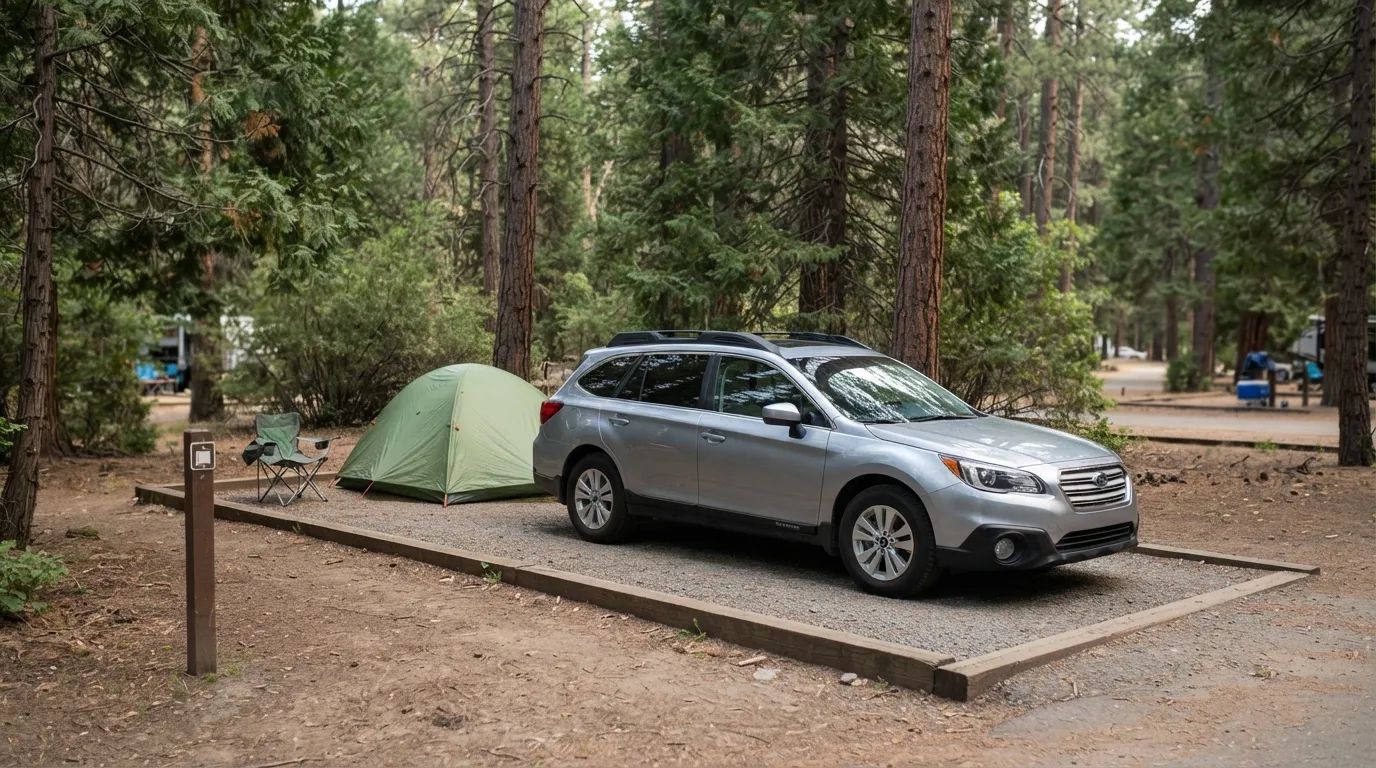
Hosts often glance at your tires before they glance at your face. Rocky Mountain National Park requires each vehicle to sit on the gravel or paved pad, with no resource degradation and no encroachment onto the access road. Capitol Reef adds that parking isn’t permitted on the grass or along the roadway. A driver who stays on the pad has usually read the rules, and a host can tell from fifty feet away.
A driver who rolls onto vegetation may just be exhausted after a long day, but the result is visible anyway. Crushed ground, fresh ruts and a conversation nobody wanted. At Yosemite, breaking campground regulations can lead to a fine and even revocation of your camping permit. One misplaced tire can end up costing more than the site did.
But that’s nothing compared to what a too-long rig tells them in #12…
#12 – The Rig That Was Never Going to Fit
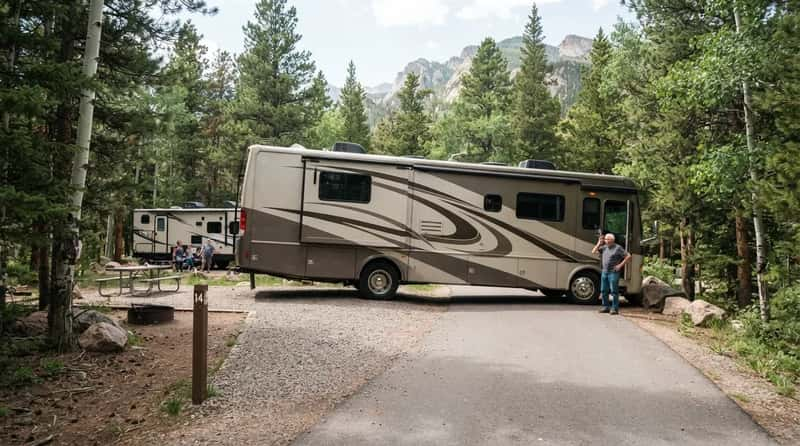
Some arrivals look wrong from the front gate. The rig is simply longer than the site. Rocky Mountain’s limits run from 30 feet at Aspenglen and Timber Creek to 35 at Glacier Basin and 40 at Moraine Park. A host watching a 40-footer approach a 30-foot loop can usually predict the next ten minutes.
The usual reading is that the reservation was made without checking the length. Parking spurs come in different lengths on purpose. Federal guidance says this limits choices for bigger rigs but keeps costs down and reduces ground disturbance. The payoff for everyone watching is a slow loop around the campground, a blocked road and a very awkward reroute.
Wait until you see what happens when the tail end hangs out in #11…
#11 – The Bumper Hanging Into the Road
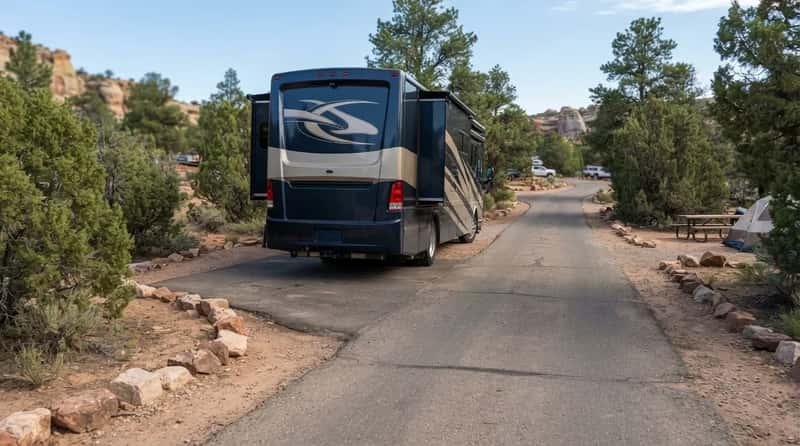
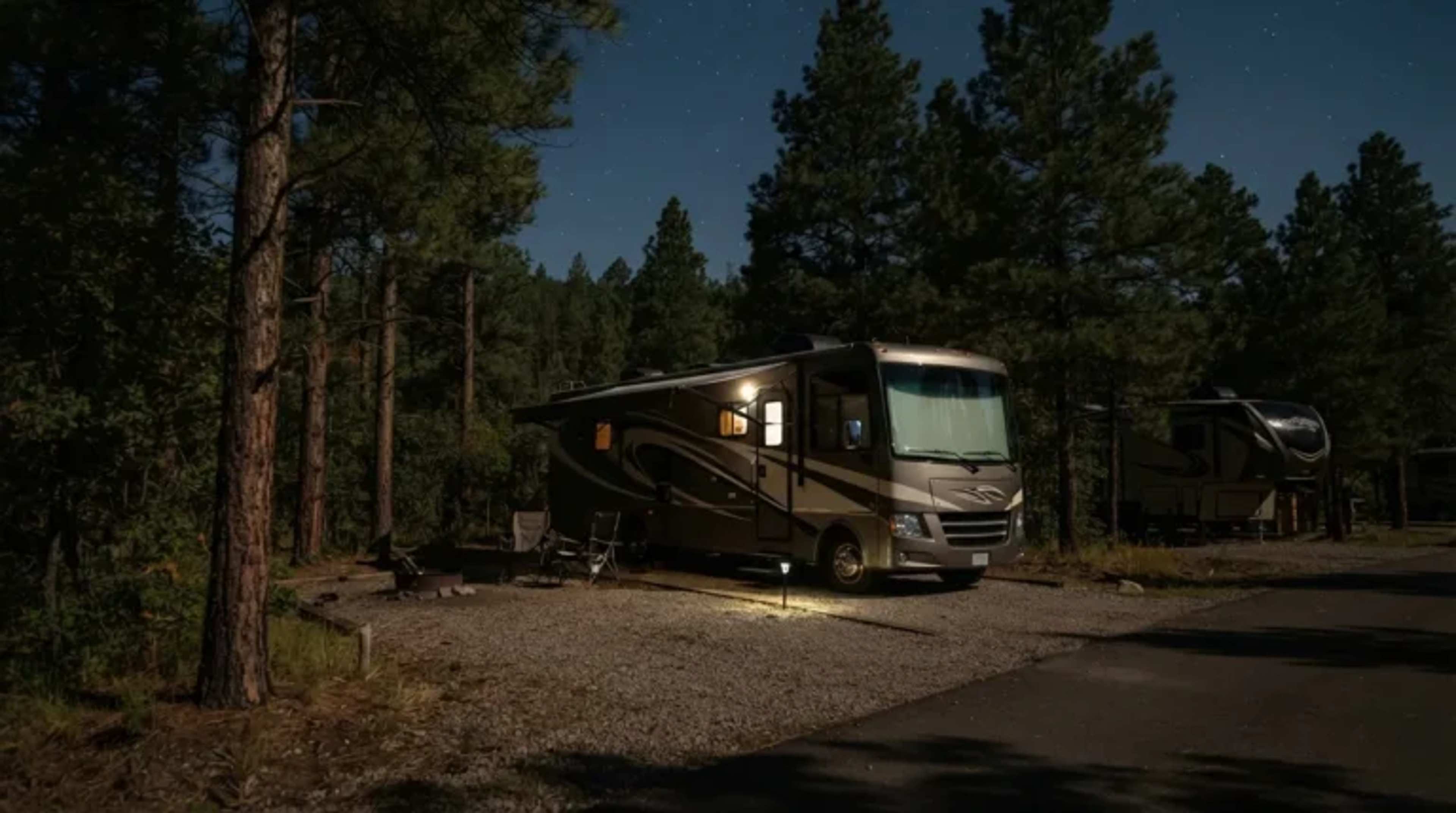
One overhanging bumper can block a whole loop. Capitol Reef limits parking to what fits in the designated space without extending into the roadway. Lake Perris says the same: every vehicle must fit on the pad and not hang into the road. Hosts see the overhang and know a neighbor will be knocking on the office door soon.
The surprise is how much counts toward the boundary. At Pfeiffer Big Sur, vehicles, trailers, awnings, pop-outs and slideouts must all fit inside the parking boundary. That means a rig can look parked correctly and still be out of bounds the moment the slides go out. Hosts tend to read that as a sign nobody checked the site layout.
Quick Compare
- Capitol Reef: Park inside the designated space, with nothing reaching into the roadway.
- Lake Perris: Every vehicle must fit on the pad and not hang into the road.
- Pfeiffer Big Sur: Vehicles, trailers, awnings, pop-outs and slideouts all stay inside the boundary.
And the next one is about arithmetic, not parking…
#10 – The Vehicle Count Nobody Did Before Arriving
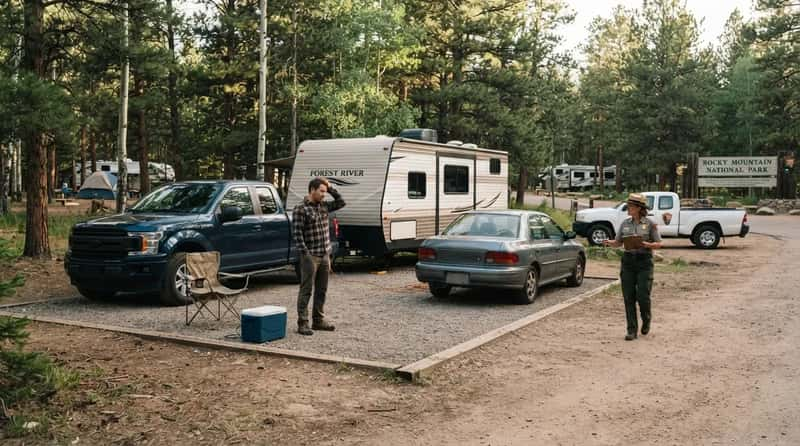
Hosts do math the second you pull in. Rocky Mountain caps parking at two vehicles per site, and a vehicle can be a car, a trailer, an RV or any towed unit. A truck, a camper and a boat can add up to three before you’ve unpacked a single chair.
The rules vary, which is the whole problem. Yosemite doesn’t count trailers against its limit if they fit on the pad. At Lake Perris, a site may hold three vehicles, but a reservation covers only one. A driver who arrives with an extra vehicle and no plan is telling the host they skipped the fine print.
But what happens to the extra car is its own story in #9…
#9 – The Extra Car That Quietly Went to Overflow
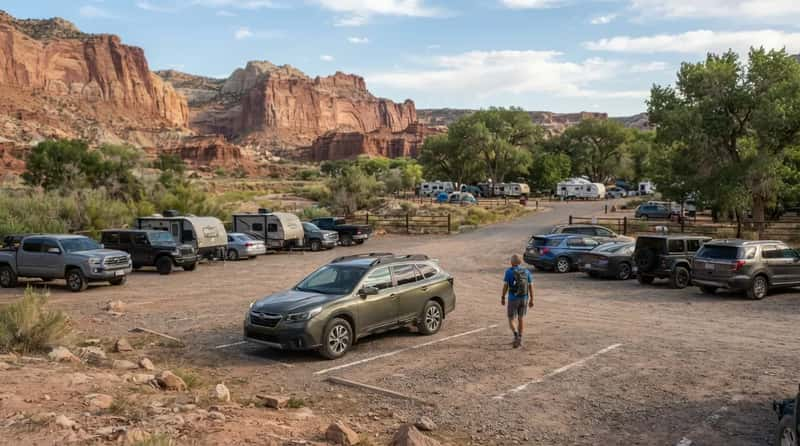
Where the second car goes says a lot. When a site has no room for another vehicle, extras must go to overflow areas. Hosts notice who walks their car over there and who tries to squeeze it in beside the tent.
The better move is to tell somebody. Capitol Reef asks campers to inform the camp hosts when they use overflow, and they may not camp in those vehicles. A driver who stops to say so looks considerate. An unannounced car looks like a free ride. Overflow parking isn’t guaranteed and runs first-come, first-served.
The way you arrive can reveal even more, starting with #8…
#8 – The Crawl Speed That Calms a Whole Loop
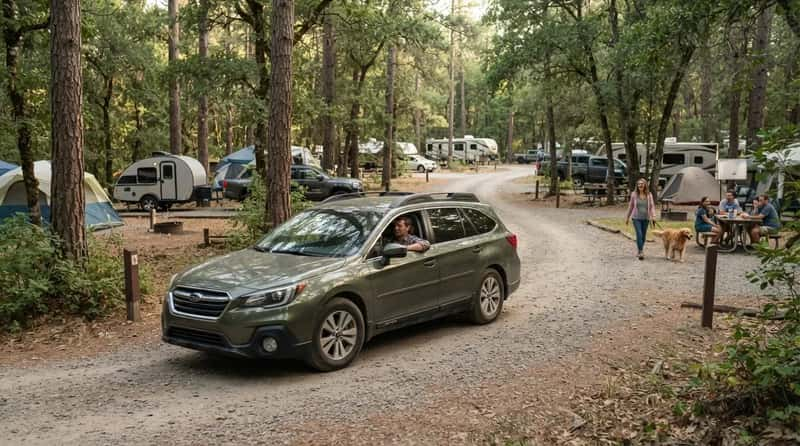
Hosts watch the approach, not just the parking. Campground speed limits are tiny on purpose. Capitol Reef posts 5 mph. Pfeiffer Big Sur sets 10 mph, and the Blue Ridge Parkway’s campgrounds set 15.
That’s walking pace, because the road is full of kids, dogs and people carrying firewood. Someone who arrives hot and kicks up dust is announcing they haven’t clocked who shares the space. The driver who creeps in with the window down is announcing the opposite. Hosts notice the difference, and so do the neighbors.
Then comes the part everyone watches, the backing-in in #7…
#7 – The Backing-In That Draws a Crowd
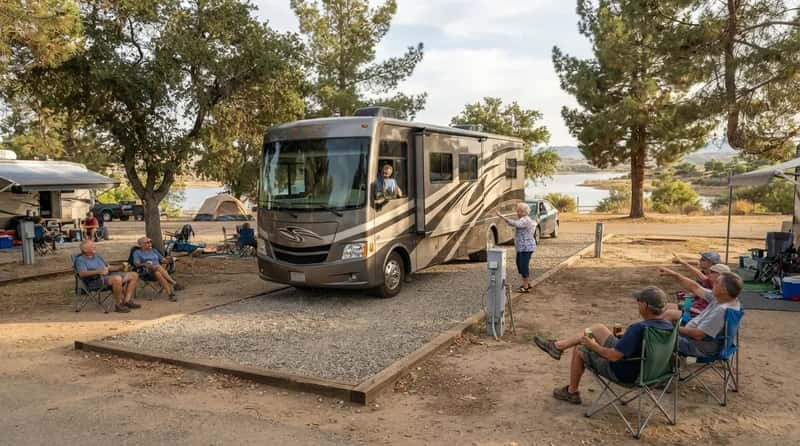
Backing in is the campground’s unofficial talent show. Some sites require it. At Lake Perris, the parking is three side-by-side 31-foot spaces, back-in only. That’s a tight target, and the audience is already settled into lawn chairs.
Hosts look for patience, not perfection. A slow approach, a spotter and a willingness to pull forward and try again signal a driver who knows their rig. Plenty of seasoned campers will argue the opposite, that the confident one-shot backer is mostly showing off. Either way, a stressed, shouting argument at the pad tells the host this was the trip’s first real test.
But the tag in the window tells hosts something even faster in #6…
#6 – The Tag on the Mirror That Saves Everyone a Walk
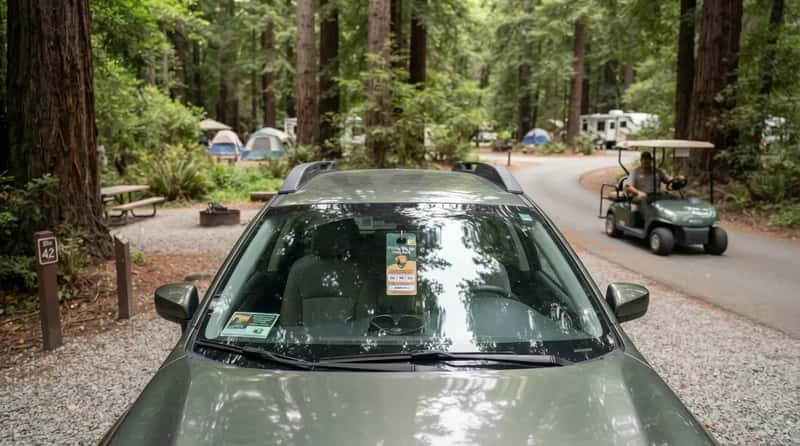
The cleanest arrival often has a small piece of paper in the window. Pfeiffer Big Sur requires every vehicle to be registered and show a valid parking pass. That means a host can check a whole loop from a golf cart in minutes.
Other parks do it differently, but the idea is the same. One Tennessee campground gives each site hang tags for two vehicles, which must be visible at all times. Texas state parks require every vehicle that needs a state license plate to be registered with staff. A visible tag tells the host you checked in properly. A missing one starts a conversation.
At a Glance
- Pfeiffer Big Sur: Every vehicle is registered and shows a valid parking pass.
- Tennessee campground: Two hang tags per site, visible at all times.
- Texas state parks: Any vehicle needing a state plate gets registered with staff.
- The host’s view: A glance at the windshield replaces a walk to every site.
The next clue comes after dark, in #5…
#5 – The After-Dark Arrival and Its Headlight Problem
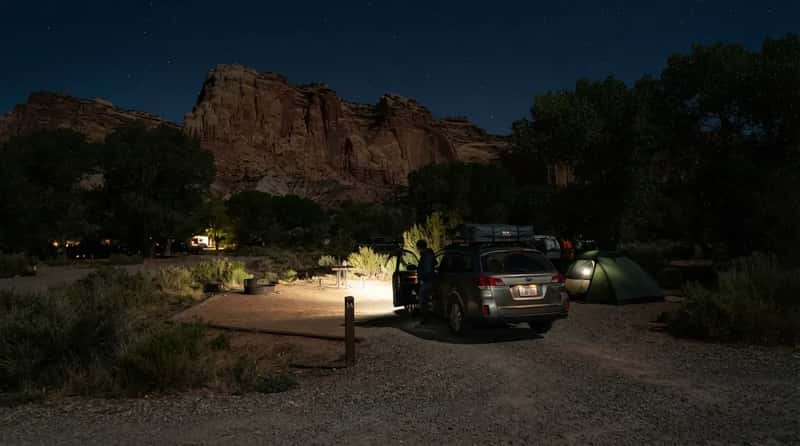
Late arrivals reveal a lot because nobody is watching, except the host. At Capitol Reef, from 10 pm to 6 am on nights the campground is posted full, entry is limited to registered campers and their vehicles. Anyone rolling in late is expected to already have a place.
Hosts also see how you handle the dark: engine idling, headlights sweeping across tents, doors slamming. Pfeiffer’s rule is that noise must not carry beyond your own campsite, whatever the hour. The quiet, dim, quickly parked arrival marks a traveler who has done this before.
But the next one is about an empty site and a car that claims it…
#4 – The Lone Vehicle That Claims a Whole Site
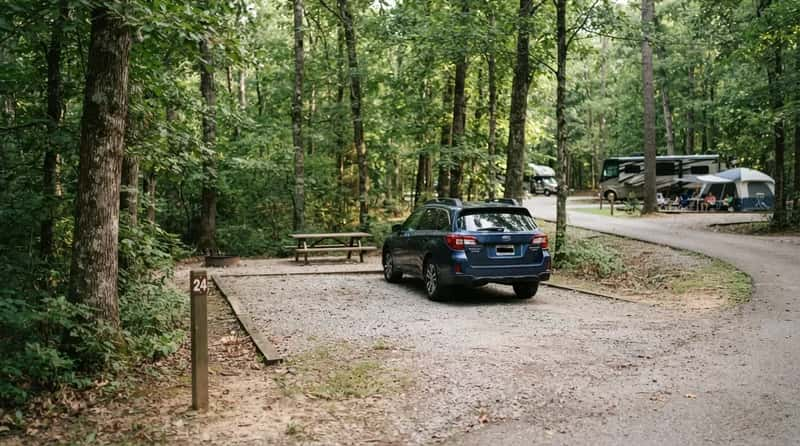
Sometimes the car arrives and nobody follows. A vehicle parked at an empty site is a classic placeholder, and hosts have seen it plenty. At one Tennessee campground, unattended vehicles and equipment can’t be left at a site unless fees are paid, and a rented site must show a camping unit.
The reasoning is plain. A site held for friends who show up at midnight is a site someone else drove past. Some campers shrug this off as harmless, while hosts watch the same loop fill up with arrivals still hunting for a spot. A parked car with no camper reads as a shortcut, whatever the intent.
And then there’s the vehicle with curtains in the windows in #3…
#3 – The Curtained Car in the Wrong Place
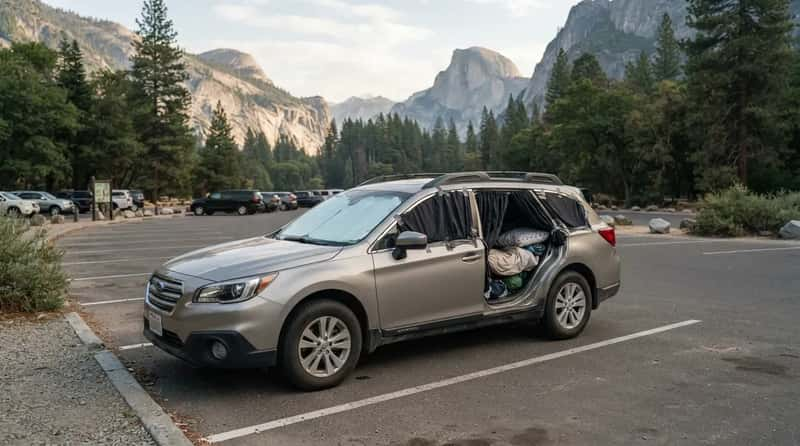
A car with sunshades up and a pillow on the seat tells hosts one thing. Someone is hoping to sleep inside. Yosemite permits sleeping in vehicles only in designated campsites, and nowhere else in the park. That makes a parked sedan in a day-use lot an easy call.
Overflow areas follow the same logic. At Capitol Reef, campers may not camp in or occupy vehicles parked in the overflow lot. Hosts read a curtained overflow car as someone who skipped the reservation. It’s usually a budget issue, not bad intent, but the rules don’t bend for it.
But the biggest tell isn’t about rules at all, and it’s in #2…
#2 – The First-Timer Who Parks Like a First-Timer
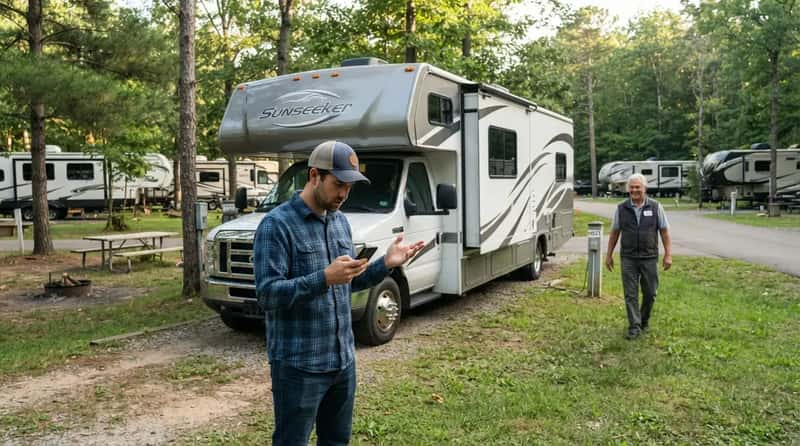
Hosts meet a lot of beginners, and the numbers explain why. Camper households reached 52.2 million in 2025, which is 24.3 percent above the 42.0 million of 2019. Many of the first-timers who arrived between 2020 and 2022 are still camping.
A first-timer’s tells are easy to spot: slow circles, a phone with the confirmation email open, a rig that’s a bit too big. None of it is a character flaw. The beginner who walks up and asks the host for help is often parked and settled long before a veteran who won’t ask. Hosts remember that, usually fondly.
But the number one clue has nothing to do with experience…
#1 – The Quiet Truth: Your Rig’s Price Tag Means Nothing
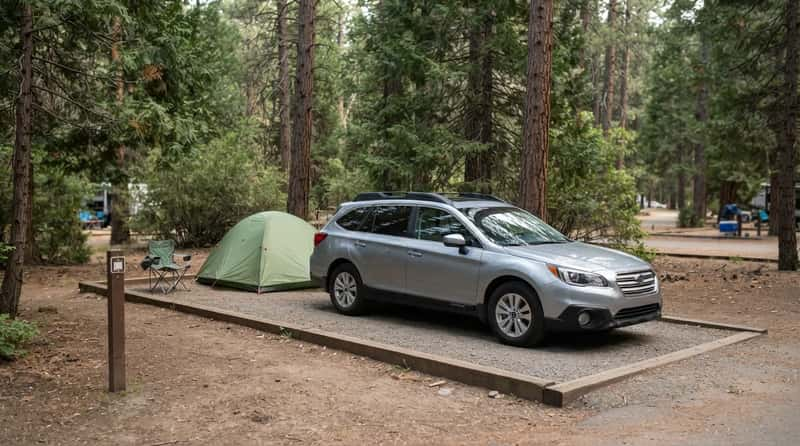
Here’s the part most people get backwards. Hosts aren’t sizing up how much the rig cost. They’re checking how well it fits. A modest hatchback tucked neatly inside the lines tends to impress more than a luxury coach hanging over the road.
Nothing in the rules cited here mentions price. They talk about pads, lengths, tags and boundaries. Yosemite warns campers to check the site details on Recreation.gov, because some sites hold only one vehicle. The parker who did that homework shows it in the first thirty seconds, and that, more than anything, is what hosts read.
Why It Stands Out
- The rules talk about pads, lengths, tags and boundaries, never about what a rig cost.
- Rocky Mountain’s two-vehicle cap applies the same to a pickup or a luxury coach.
- Yosemite’s one-vehicle sites reward the camper who read the listing, not the one with the biggest rig.
- A neat fit is something any driver can control, in any vehicle.
Parking isn’t a verdict on anyone’s character. It’s a quick snapshot of whether you read the site details, respected the pad and thought about the neighbors. Wheels on the pad, a rig that fits, a visible tag and a slow, quiet approach say nearly everything a host needs to know.
The best arrival, by most accounts, is the unremarkable one, where nobody notices you at all. What’s the parking move that told you everything about a neighbor at the campground?