Picture a 1960s family road trip and you probably see a wood-paneled station wagon, a smiling dad and a sunny two-lane road. The real thing was hotter, louder, smokier and far less buckled in. It ran on paper maps, rhyming roadside signs and a back seat with almost no rules, and these 13 details show how different it was.
Some of them are pure fun, the kind of thing you’d happily relive. A few are genuinely hard to believe. And one is so far from the postcard that it changes how you see the whole highway. Keep going, because the strangest details aren’t the ones you’d guess.
#13 – The Rhyming Roadside Signs Kids Read Out Loud
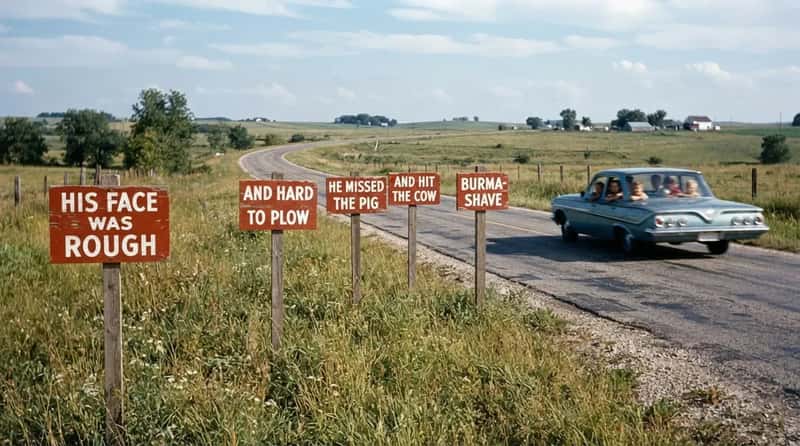
Long before anyone could scroll, the highway had its own entertainment, and it rhymed. From 1925 until 1963, Burma-Shave shaving cream posted small signs in sequence along rural roads, one line of a jingle per board. You only got the punchline at the end, so kids in the back seat read each line aloud as the car rolled past, then waited for the next one.
The ending is a little sad. The signs came down in the early 1960s after the company was sold to Philip Morris, which dropped the roadside campaign. It’s a rare case of advertising that families actually looked forward to. Nostalgic accounts of the era keep coming back to those signs, and almost none of them mention an ad anyone wished they could skip.
But the next item caused more arguments than any rhyme ever did, and it started with a giant piece of paper (#12)…
#12 – The Paper Map Nobody Could Ever Refold
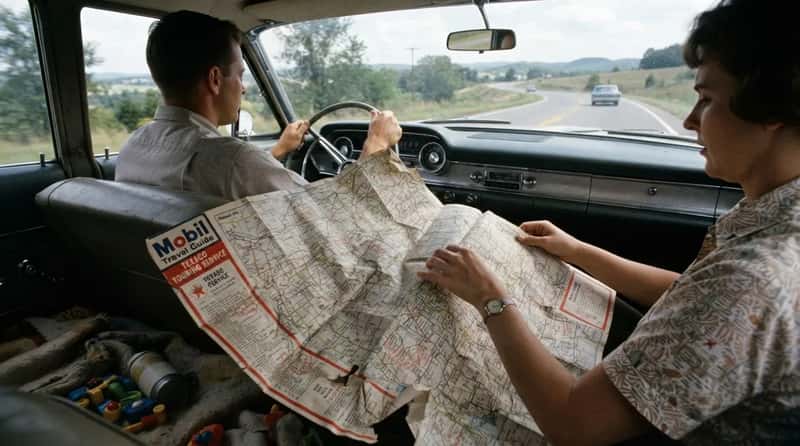
The family navigation system was one parent, one map and a whole lot of tension. Gas stations handed out free road maps, which oil companies printed in bulk to win your business, and auto clubs built custom route booklets for members. Nobody ever managed to refold one along its original creases. By day three, the map on the dashboard looked like a crumpled accordion.
Worth Knowing
- President Eisenhower signed the Federal-Aid Highway Act on June 29, 1956, launching the Interstate system.
- The original plan called for about 41,000 miles of new highway.
- Many pieces were still missing in the 1960s, so route planning meant stitching highways together with local roads.
- Some of the last big gaps, like I-70 through Colorado’s Glenwood Canyon, didn’t open until 1992.
Here’s the twist. The Interstate system was authorized in 1956, but large stretches were still unfinished through the 1960s, so families often drove straight down small-town main streets with stoplights. A “shortcut” could mean a county road and one wrong turn. There was no rerouting voice to blame, so whoever held the map took all the heat.
And if you ran low on fuel mid-detour, the next stop came with a surprise (#11)…
#11 – The Gas Station Attendant Who Did Everything but Drive
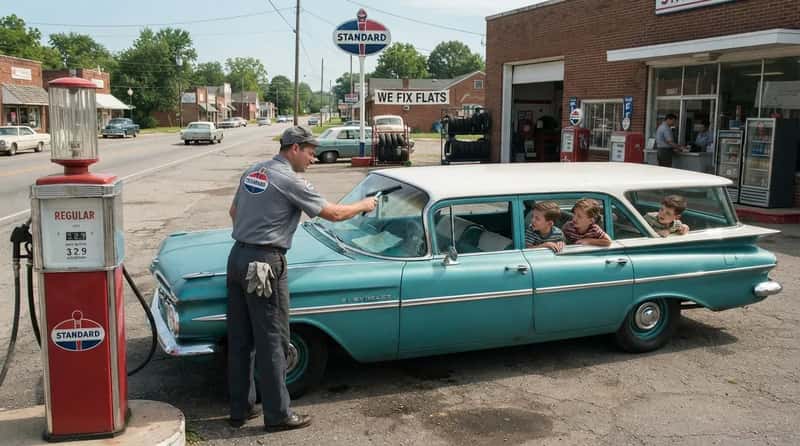
You never touched the pump. A uniformed attendant jogged out, filled the tank, washed the windshield and often checked the oil without being asked. Many stations also offered tire checks as part of the stop. Kids watched through the glass like it was a pit crew at work.
Pay at the window, grab a glass-bottle soda from the cooler, and you were gone. Gas was cheap by today’s standards, and the service was bundled right in. Self-service pumps existed but were rare, and they only spread widely in later decades. The attendant doubled as the local guide, too, since asking him for directions was the standard fix when the map failed.
Of course, once the tank was full, the real fight began over where everyone would sit (#10)…
#10 – The Backward-Facing “Way-Back” Seat That Felt Like a Private Kingdom
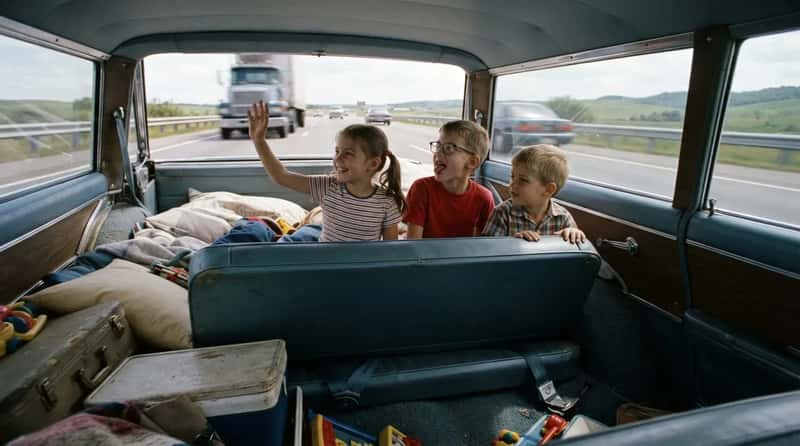
Station wagons had a secret third row, and it faced the wrong way. Kids climbed over the folded seat into a rear-facing perch. From there you waved at truckers, made faces at the car behind and watched the road disappear. It was a hideout on wheels with almost no adult supervision.
The wagon was the family vehicle of the postwar suburbs. Parents packed suitcases around the kids and roped extras onto the roof. The tailgate window sometimes cranked down, which meant the back row had its own weather. Some veterans of those trips insist the way-back was the best seat in America. Anyone who got carsick facing backward will tell you it was the worst.
Staying cool back there took more than a good attitude, as the next one proves (#9)…
#9 – A Tiny Triangle Window Doing the Job of Air Conditioning
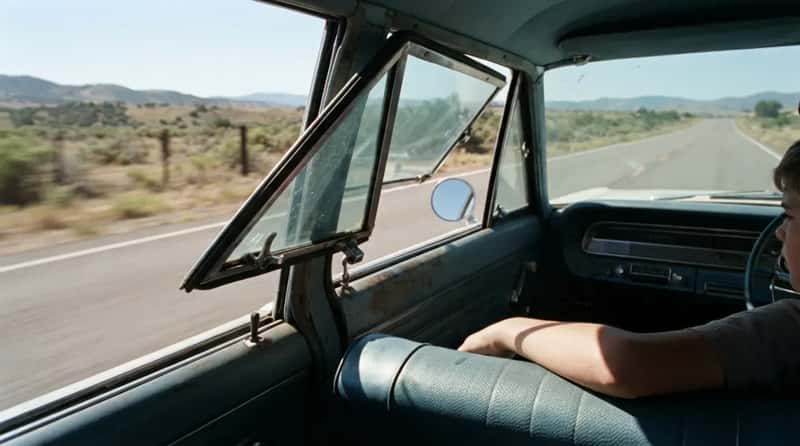
Before dashboards had vents everywhere, the cooling system was a small pivoting window. Front doors had a triangular “wing” pane you could angle open to scoop air inside. The other windows rolled down by hand crank, and a family of five could get stuck arguing over who got one.
Factory air conditioning existed in the 1960s, but it was an expensive option that most families didn’t have. In summer, a car without it could turn into an oven within minutes of sitting in a parking lot. Vinyl seats made it worse. Bare legs on a scorching bench seat are a memory almost nobody forgets.
But the air inside the car had a bigger problem than heat, and it came from the front seat (#8)…
#8 – A Cloud of Cigarette Smoke in a Car With the Windows Barely Cracked
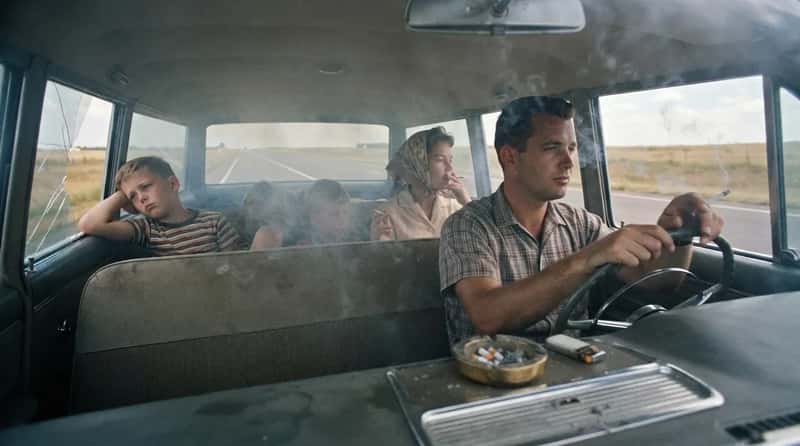
Smoking while driving was ordinary, and so was a back seat full of children. Dashboards came with built-in lighters and ashtrays. Parents lit up at the wheel with the windows open an inch. Kids sat in the haze and mostly just wanted the window seat.
The turning point came early in the decade. The U.S. Surgeon General’s 1964 report on smoking and health concluded that cigarette smoking causes lung cancer in men. Public habits shifted slowly, though, and smoking in cars stayed common for years. Plenty of people who grew up this way say they “turned out fine,” but that only tells the story of the ones who did.
Fast Facts
- The Surgeon General’s landmark report was released on January 11, 1964.
- About 42 percent of U.S. adults smoked in 1965, according to CDC estimates.
- Warning labels on cigarette packs became required in 1966.
- Recent CDC estimates put adult smoking at roughly 11 to 12 percent.
Still, some parts of the trip were genuinely wholesome, starting with the food (#7)…
#7 – The Picnic Cooler and the Roadside Table That Replaced Restaurants
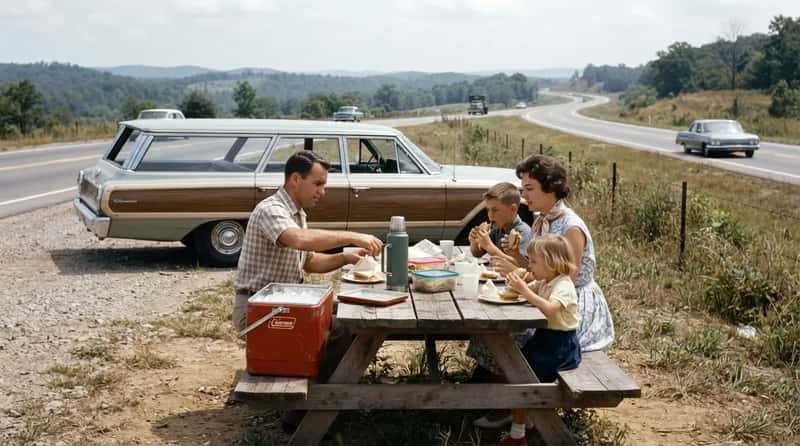
Restaurants were not guaranteed, so families brought lunch with them. Moms packed sandwiches, a cooler of ice and a metal Thermos of something cold. Dads pulled off at a roadside picnic area, and many states had built these simple turnouts with tables just for travelers.
The routine had a practical logic. Fast food had not yet spread to every exit, and a sit-down meal could eat an hour of daylight. A cooler full of melting ice often meant soggy sandwiches by noon. The picnic table was where the whole family finally stopped, stretched and argued about the map one more time.
The best stops, though, were the ones nobody packed for (#6)…
#6 – Billboards Begging You to Visit a Drugstore 300 Miles Away
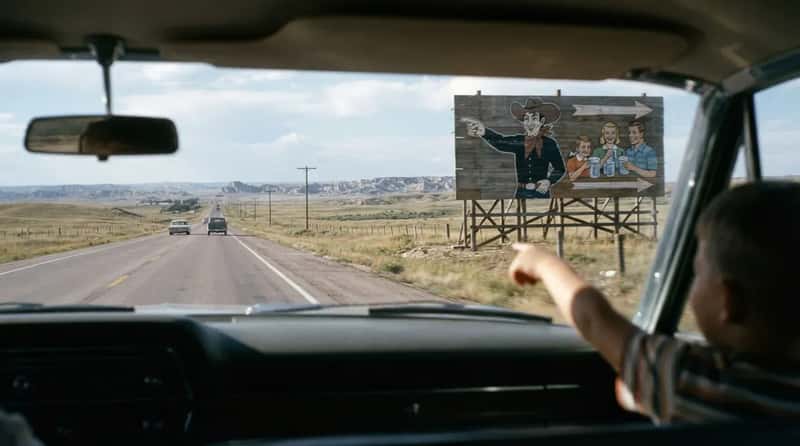
Roadside advertising worked like a slow-burning countdown. In South Dakota, Wall Drug began offering free ice water to thirsty travelers in the 1930s. By the 1960s its signs stretched along highways for hundreds of miles. Kids begged to stop long before anyone could see the building.
Wall Drug was not alone. Pecan shops, reptile farms and giant-statue stops all competed for the family’s attention. Some of these attractions became the whole reason for the trip. Many travelers still call them must-sees, while others see them as souvenir traps. Either way, they filled the back seat with excitement.
The souvenirs weren’t the only thing families took home, because the next item left a paper trail (#5)…
#5 – Rolls of Film Nobody Could Check Until Long After the Trip
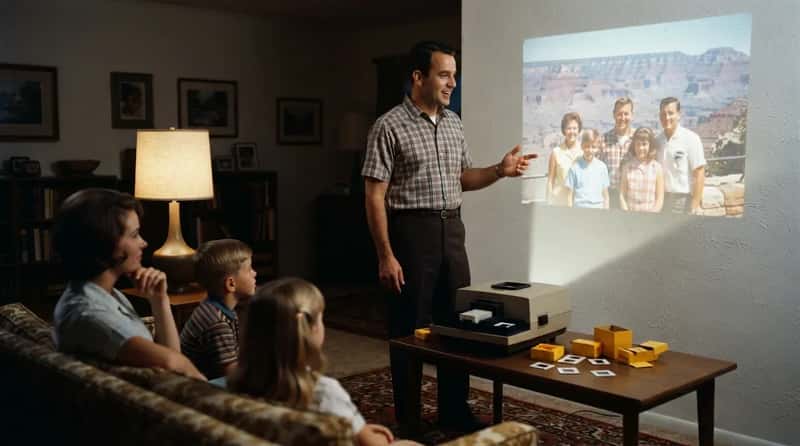
Nobody scrolled through a phone gallery. A family drove home with rolls of film that nobody had seen yet. Kodak’s Instamatic line arrived in 1963 with a drop-in cartridge that made loading simple. Super 8 home-movie film followed in 1965, and parents shot shaky footage of every landmark.
Then came the reveal. You had to wait days, and sometimes weeks, to find out whether anyone’s head had been cut off. The slides were projected on a living room wall, with a dad-narrated commentary that went on far too long. Because each picture was precious, the waiting made the memory feel bigger.
But the photos only showed the sunny part, and the nights were a different story (#4)…
#4 – A Motel Bed Where a Quarter Made the Mattress Shake
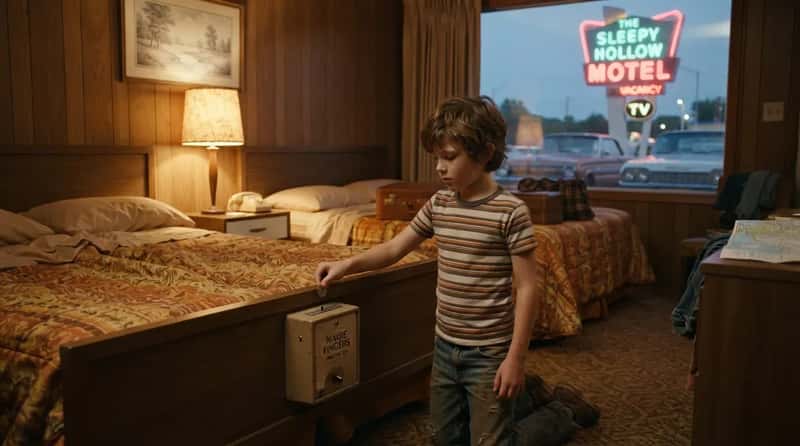
Roadside motels were the real destination for many kids. Neon signs promised a pool, a TV and air conditioning. Families of five squeezed into two beds and fought over the ice machine. A glowing “Vacancy” sign was the best news of the day.
Why It Stands Out
- Big neon signs were the original roadside ads, built to be spotted from a moving car at dusk.
- Chains like Holiday Inn let children stay free, which made a long drive easier on a family budget.
- A pool and an in-room TV were the headline perks, and kids rated motels by them.
- Coin-operated “Magic Fingers” beds, introduced in the late 1950s, turned bedtime into an arcade.
The chain model grew out of a bad trip. Holiday Inn’s founder, Kemmons Wilson, opened the first one in Memphis in 1952 after a frustrating family drive with poor motel options. Some beds even had coin-operated “Magic Fingers” attachments that vibrated the mattress for a quarter. Kids fed them nonstop until parents stepped in, and the cheap thrill often outlasted the sightseeing.
Not every kid had a quiet night, though, and the daytime entertainment was a lot simpler (#3)…
#3 – One Radio Dial That Faded Into Static Every Few Miles
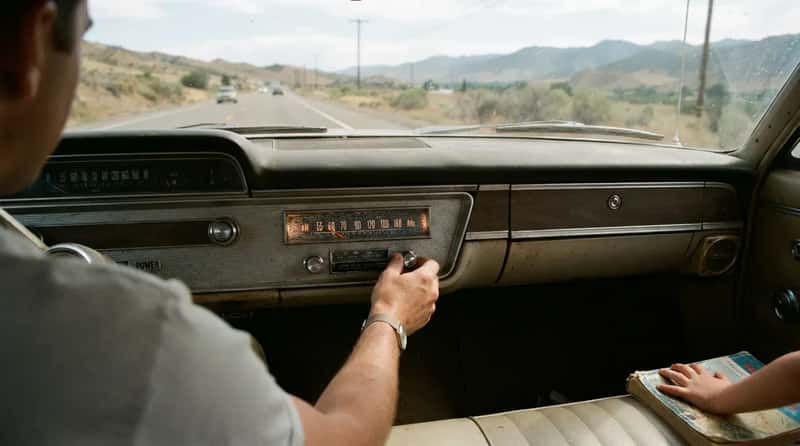
The soundtrack was whatever the radio could pull in. Most dashboards had AM radios, and FM was rare in cars. Stations faded out as you left town, and the dial landed on preachers, farm reports or a faint hit song. Everyone in the car heard the same thing, like it or not.
That meant a shared playlist nobody chose. When a good song finally came through, the whole car went quiet and someone turned it up. When the radio failed, the family sang or played license plate bingo. Those games existed because there was nothing else to do, and today’s quiet back seats, with a headphone in every ear, tell a very different story.
The biggest shock of all is how little protected the people in that car, and it gets worse (#2)…
#2 – Kids Bouncing Around With No Seat Belts at All
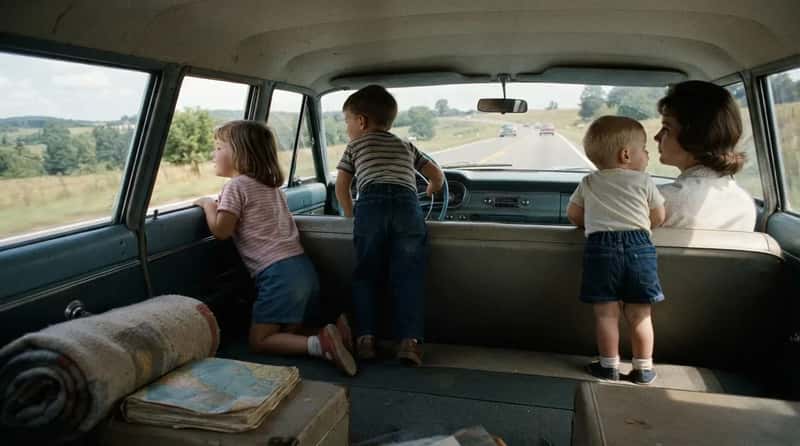
Children roamed free. They stood on the seat, slept on the rear window shelf and rode up front on a parent’s lap. Bench seats often had no restraints in the middle. Hard metal dashboards sat right in front of everyone.
The rules came slowly. Federal standards required seat belts in new cars only beginning with 1968 models. The first federal child-restraint standard came in 1971, and Tennessee passed the first state child-seat law in 1978. Many people who lived through it call it harmless fun, but crash data from the era is the reason those rules exist. It’s a hard truth sitting right beside the nostalgia.
Yet for some families, the biggest danger wasn’t the road itself, and the last item is the one that stays with you (#1)…
#1 – The Guidebook That Told Black Families Where They’d Be Safe
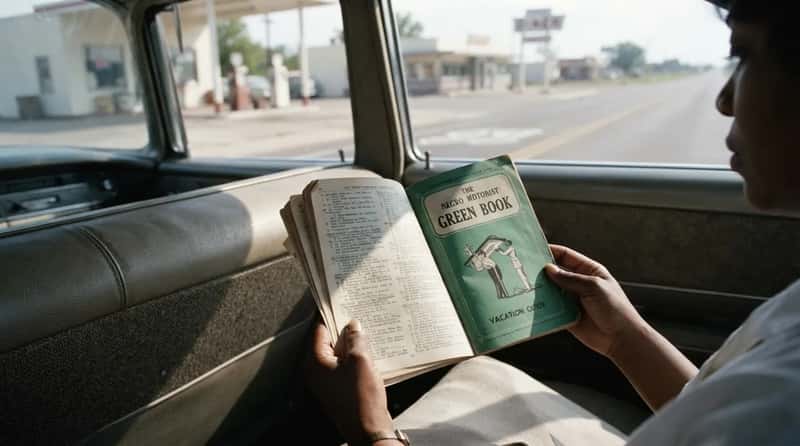
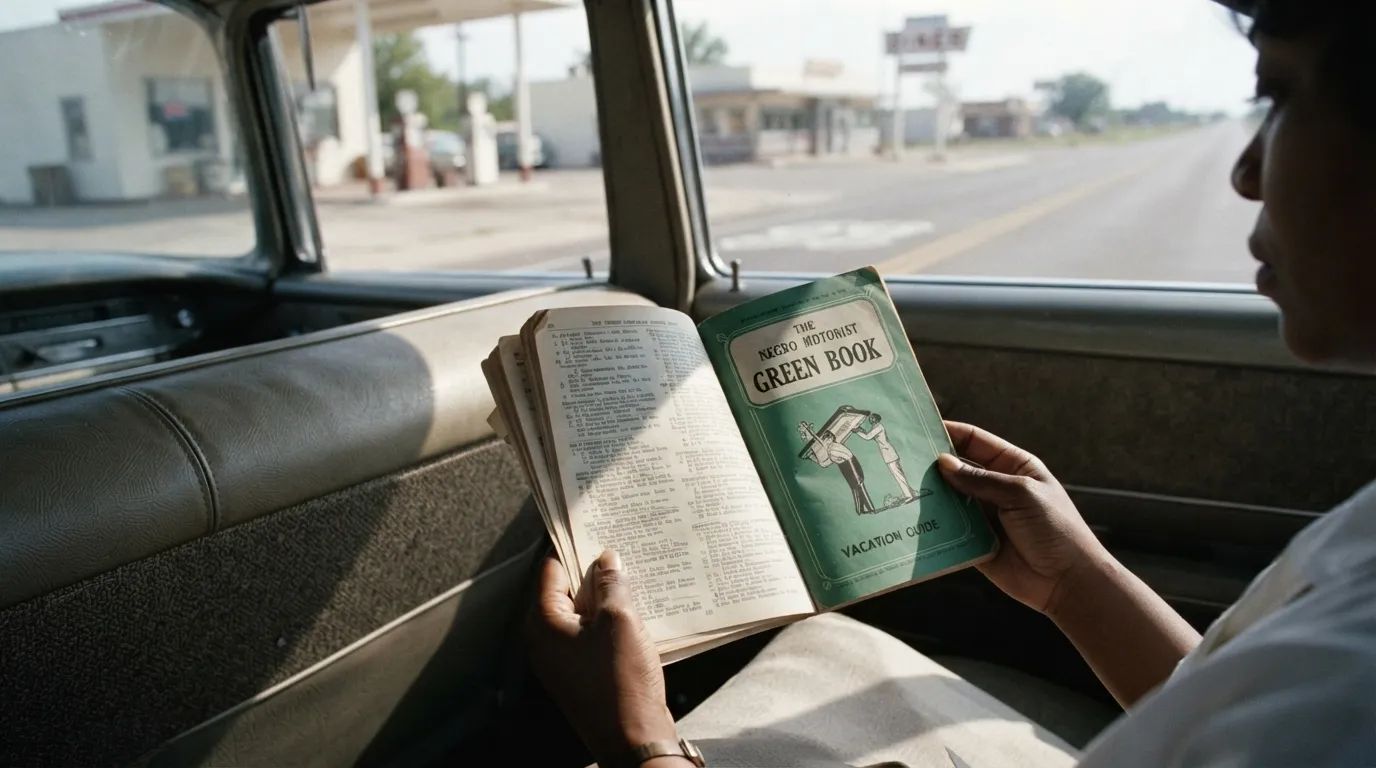
Not every family had the same road trip. For many Black Americans, a drive meant planning every stop in advance. The “Negro Motorist Green Book,” created by Victor Hugo Green, listed hotels, restaurants and service stations that would actually serve them. Without it, a family could be refused a room or a meal in a town they had never seen.
It was a practical survival tool. The guide was published from 1936 until about 1966, covering nearly the whole span of the segregation era on the road. Some families also packed their own food and gas to avoid risky stops. Behind a simple vacation was a level of planning that many other travelers never had to think about, and it shows how the same highway could feel completely different depending on who was driving.
The 1960s road trip was equal parts freedom and risk. Families got rhyming signs, free ice water and a motel pool, but they also got smoke-filled cars, unbuckled kids and, for some, a guidebook just to stay safe.
The most surprising part is how normal all of it felt at the time. The trips we remember fondly were also the ones that eventually changed the rules.