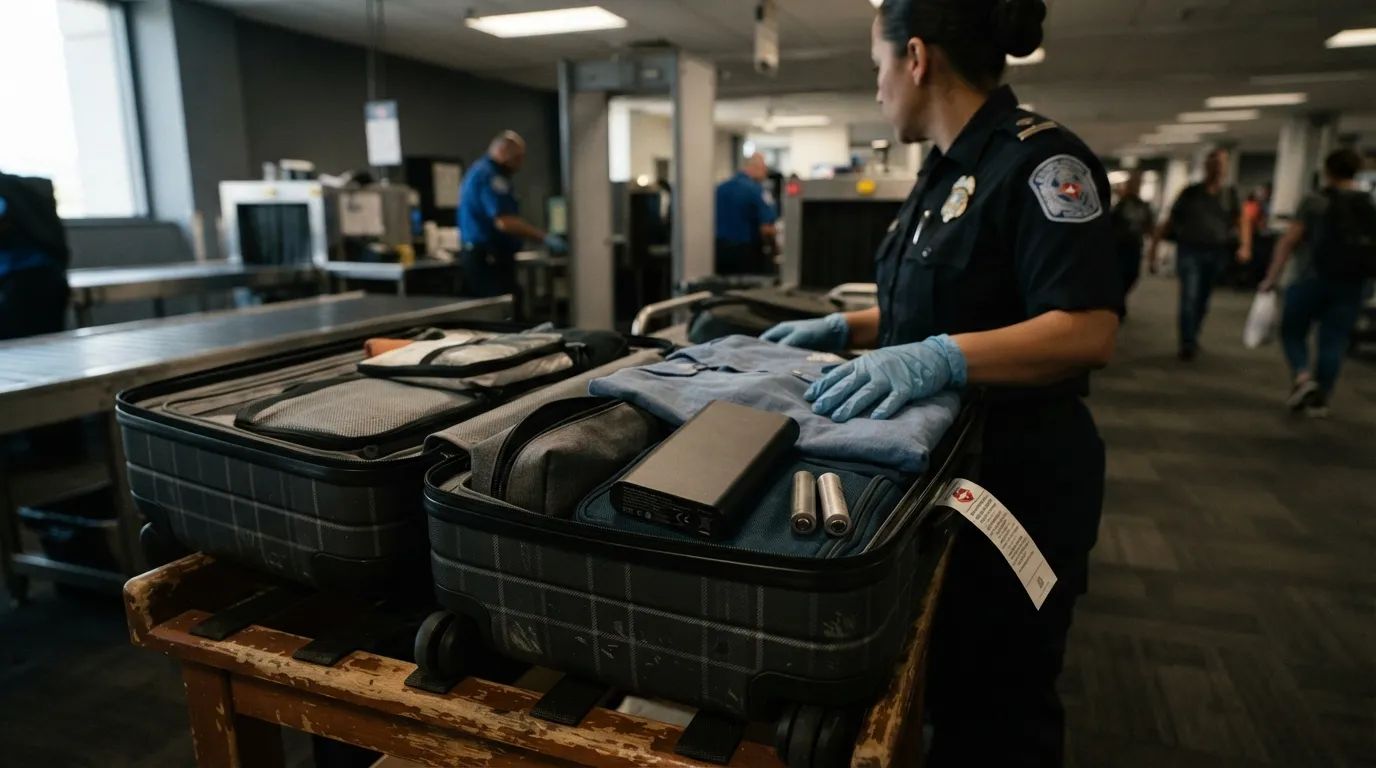
Most people think checked-bag mistakes involve oversized shampoo or a forgotten pocketknife. The ones that really sting happen later, at baggage claim, when the carousel stops and your bag never rolls out. SITA, the aviation tech firm, counted 33.4 million mishandled bags worldwide in 2024. Frequent flyers say the items they miss most are rarely the expensive ones.
Some things on this list are banned from checked bags by federal rules. Others are perfectly legal, and seasoned travelers still keep them within arm’s reach. One item near the end can get your whole bag flagged, and it’s probably sitting in your suitcase right now.
13. Your House and Car Keys: The Smallest Thing That Can Strand You

Nothing in the rules stops you from checking keys. That’s why so many people zip them into a suitcase pocket without a second thought. The trouble starts when the bag doesn’t land with you. SITA’s 2025 report found that delayed bags made up 74% of mishandled baggage.
A delayed bag is still your bag, but it can be in a different city while you stand at your front door at midnight. Picture your house key riding a conveyor belt two airports away. A locksmith call or an unplanned hotel night can follow. That’s why experienced travelers keep keys on their body or in a zipped personal item. But that’s nothing compared to the item at #12, which people usually only forget once.
12. Prescription Glasses: Fragile, Personal, and Hard to Replace Overnight
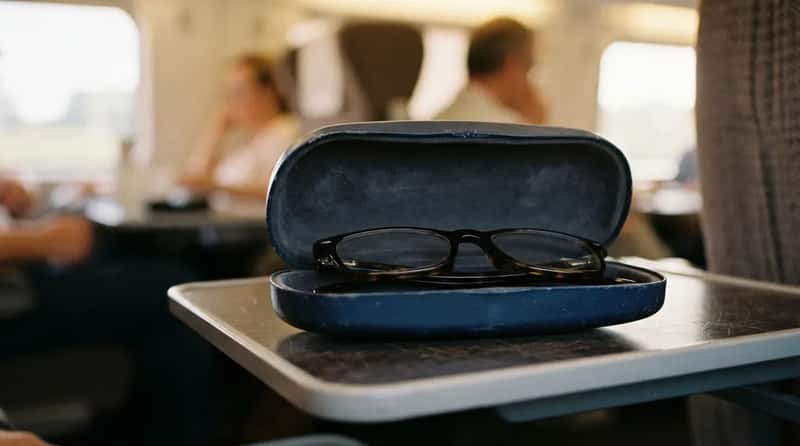
A pair of glasses is a medical device, and a suitcase is a rough place for one. Frames bend, lenses scratch, and hinges snap when a bag gets stacked, dropped, or wedged on a cart. Even if the pair survives, a delayed bag can leave you squinting at road signs in a rental car after dark.
Many frequent travelers wear their main pair and keep a spare in a hard case in the carry-on. Contact lens wearers pack a few extra days of lenses and a small bottle of solution. Nobody wants to hunt for an eye exam in a foreign airport. And the next item is something travelers have watched fail in real time.
Worth Knowing
- A hard case protects a spare pair far better than a loose bag pocket.
- A photo of your prescription on your phone can speed up a replacement order.
- Extra days of contact lenses cost little and save a lot of squinting.
- Wearing your main pair through the airport keeps them off the conveyor entirely.
11. Camera Gear: One Drop Can Quietly Ruin a Lens
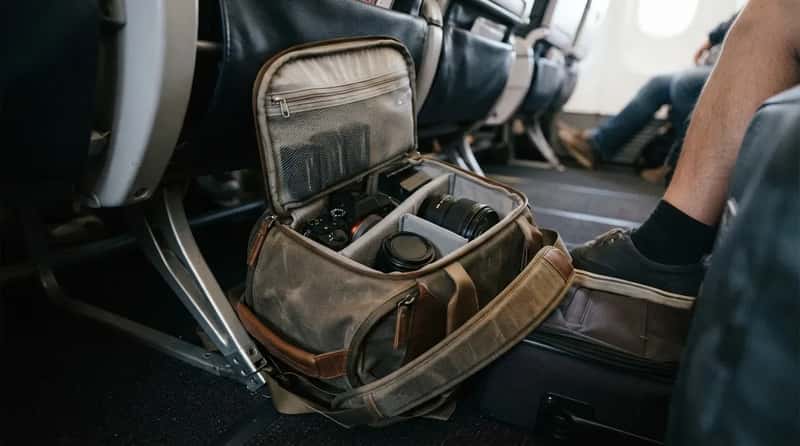
Lenses and camera bodies are built with tiny tolerances, and the damage from a rough ride in a cargo bin often doesn’t show on the outside. The first sign is usually soft, slightly off photos from the trip you saved up for. By then it’s too late to do anything about it.
Photographers who’ve been through it treat the camera bag as their personal item and plan the rest of the packing around it. There’s also a battery rule. The FAA prohibits spare lithium batteries in checked baggage, which includes the spare camera batteries most photographers carry. So part of the kit has to ride in the cabin anyway, and the whole thing might as well stay together. The next item is legal to check, and that’s exactly what makes it tempting.
10. Laptops and Tablets: Legal to Check, Risky in Practice
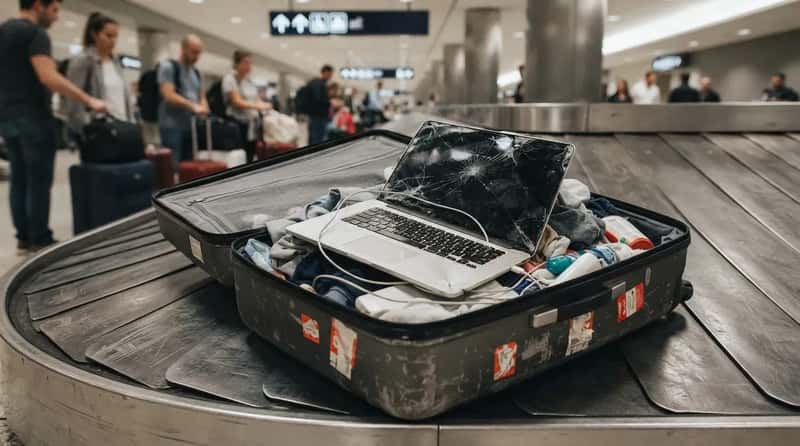
Here’s what surprises people: you’re technically allowed to check a laptop. The FAA says devices with lithium batteries belong in carry-on baggage, and if they’re checked, they must be completely powered off and packed so they can’t be damaged or switched on. That’s a lot of conditions for something that holds your work, photos, and passwords.
Plenty of people shrug and check one anyway. Many seasoned travelers call it the worst gamble in the suitcase. SITA reported that damaged or pilfered bags rose to 18% of mishandled bags in 2024, up from 15% in 2023. A scratched shirt is an annoyance, but a missing laptop can cost you a week. Next up is a category that disappears more quietly than you’d think.
9. Jewelry and Cash: Airlines Don’t Treat Them Like Everything Else

Wedding rings, watches, and an envelope of cash can feel safe tucked into a sock. But airline contracts commonly limit or exclude liability for valuables in checked bags. If something vanishes, the claim form may not cover it. That’s a hard way to learn the fine print.
SITA says lost or stolen bags made up about 8% of mishandled baggage in 2024. That’s a small slice, but a stolen heirloom doesn’t come back with an apology. Some travelers leave the good jewelry at home entirely, and others wear it. Either way, the checked bag is the one place it doesn’t belong. The next item is harder to replace than any ring.
8. The Outfit for the Big Event: Wedding Dresses, Suits, and Uniforms
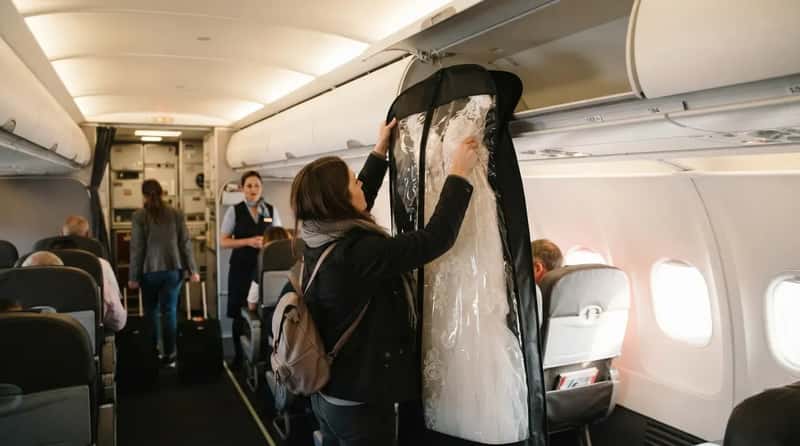
Some bags can be replaced with a shopping trip. A wedding dress or a tailored suit usually can’t. If you’re flying to the event the whole trip is built around, the clothes are the one thing you may not be able to buy in time. A late bag turns an inconvenience into a crisis.
Connections make it worse. SITA found that transfer mishandling was the biggest contributor to mishandled bags in 2024, at 41%. So the more legs your trip has, the more chances your garment bag has to take a detour. That’s why many travelers carry the dress or suit onto the plane and ask the crew about closet space. Next is a rule that can get your whole bag stopped.
7. Vapes and E-Cigarettes: The Banned Item That Looks Harmless
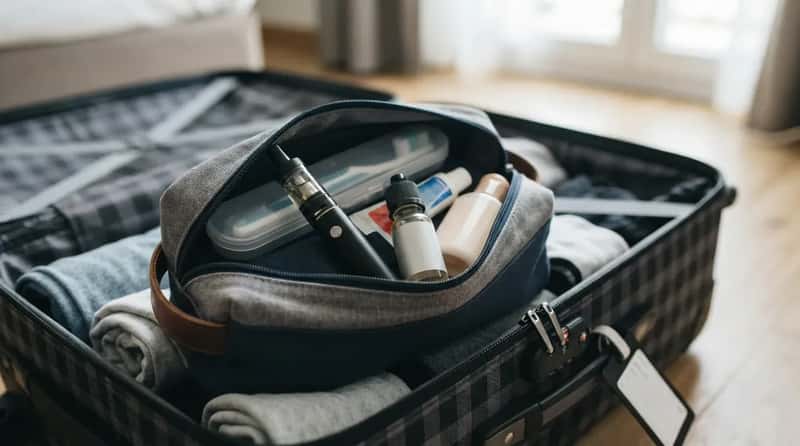
It’s small, it’s quiet, and plenty of people toss one into a toiletry bag. But the rule is clear. The FAA prohibits electronic cigarettes and vaping devices in checked baggage, and they have to ride with you in the cabin.
The reasoning comes down to where a fire would happen. In the cabin, the crew and passengers can respond to smoke or fire from a lithium battery right away. In the cargo hold, nobody is there to notice. Violations can mean a confiscated device or even a steep civil penalty, which is a lot to risk over something pen-sized. The next item shows how the bag itself can break the rule.
Fast Facts
- The FAA bans e-cigarettes and vape devices from checked bags.
- They must travel in your carry-on or on your person.
- Spare lithium batteries for the device follow the same rule.
- The logic is simple: a battery fire in the cabin gets noticed fast, and one in the hold doesn’t.
6. The Smart Suitcase Battery: When the Bag Itself Breaks the Rule
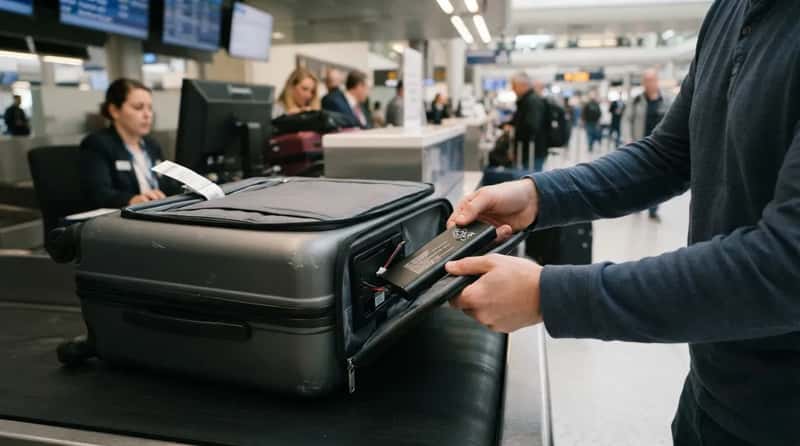
Smart luggage promises a charging port and a tracker, and the irony is that those features can make the bag a problem. Under FAA guidance, a smart bag with a lithium battery that can’t be removed can’t be checked. If the battery comes out, the bag can go in the hold, but the battery rides with you in the cabin.
The catch is that many owners don’t know how their battery works until an agent asks. Standing at a counter fumbling with a zipper is a lousy time to find out. Practice pulling the battery at home, and make sure you can do it in under a minute. That includes the surprise gate-check, when a full flight forces your carry-on into the hold. The next item is one where the real risk is the paper around it.
5. Passport and Travel Documents: The Paper Trail That Can Stall Your Arrival
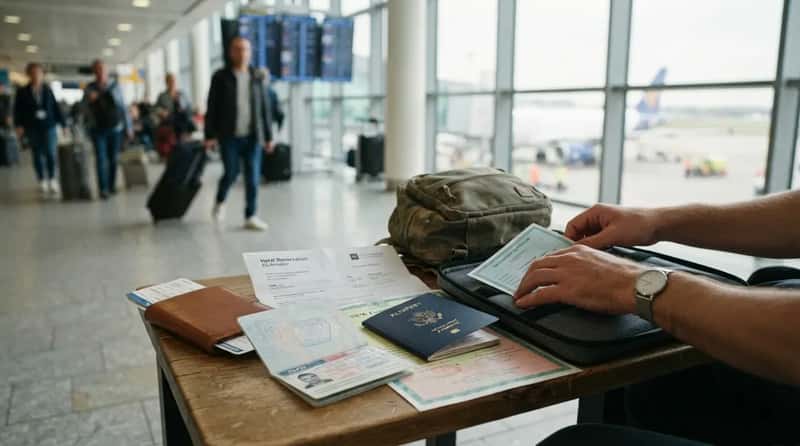
Your passport almost never rides in the hold, because you need it at the counter. The mistake happens with everything around it: visas, hotel confirmations, vaccination records, and children’s birth certificates. Those papers get tucked into a suitcase pocket because they feel boring.
They stay boring until they’re missing. Without them, a border officer or a hotel clerk can turn a smooth arrival into a long, tense conversation. Many seasoned travelers keep one folder in a personal item and photos of every page in cloud storage. A copy won’t replace the original, but it can speed things up when something goes wrong. The next item has a clock attached to it.
4. Prescription Medications: The Delay Nobody Plans For
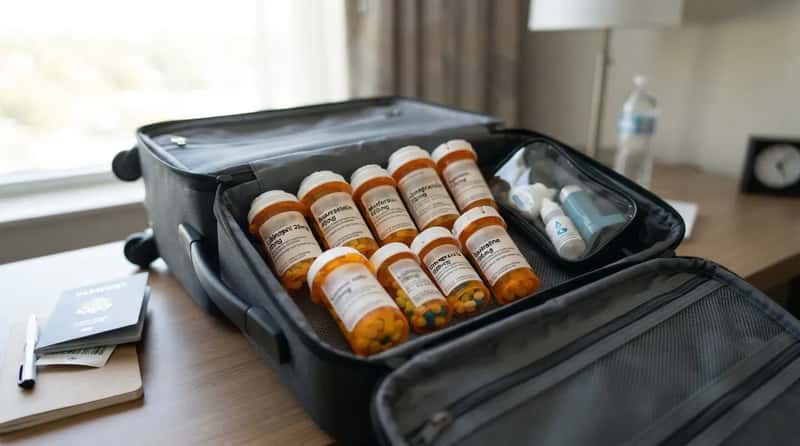
A delayed suitcase is an inconvenience. A delayed suitcase with your daily medication inside is a real problem. You can’t count on an airport pharmacy to fill every prescription, and some medicines are hard to refill when you’re away from home. That’s why doctors and travel authorities consistently say to keep medication with you.
TSA allows medications in carry-on bags, and it also allows medically necessary liquids in reasonable quantities above the usual limit if you tell the officer at the checkpoint. Keep pills in their original labeled containers. Temperature swings on the tarmac and baggage carts are one more reason to keep sensitive medications out of the hold. Now for an item that’s less about safety and more about heartbreak.
Quick Compare
- In your carry-on: Doses stay within reach, in labeled containers, away from tarmac temperature swings.
- In your checked bag: One delay or reroute can leave you without a dose for a day or more.
- Liquid medications: TSA lets medically necessary liquids exceed the usual 3.4-ounce limit, as long as you declare them at the checkpoint.
3. Irreplaceable Keepsakes: Photos, Heirlooms, and the Only Copy of Anything
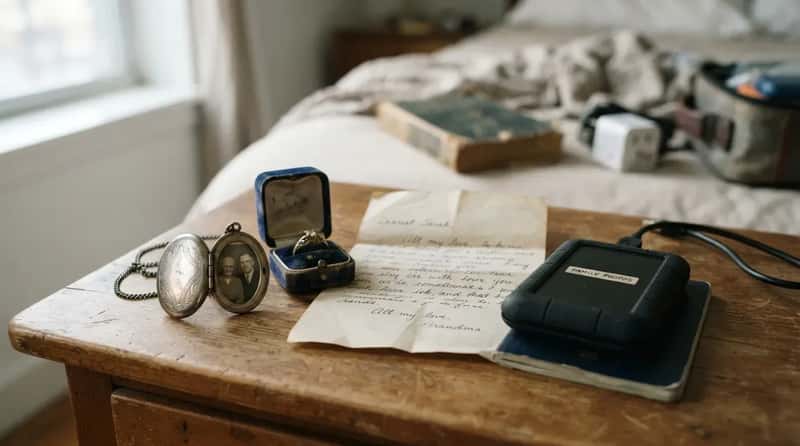
Insurance can replace a lot, but not a grandmother’s ring, a handwritten letter, or a hard drive holding the only copy of your family photos. The odds are in your favor. SITA reported a mishandling rate of 6.3 bags per 1,000 passengers in 2024. But a rare bad outcome is permanent when the item has no replacement.
The question experienced travelers ask is simple: could I buy this again? If the answer is no, it doesn’t go in the hold. Many don’t bring those items at all, and they back up digital files before leaving. The weight of a keepsake isn’t what makes it risky. It’s that no claim form can put a price on it. The next item is the one pros swear by.
2. The 48-Hour Survival Kit: Why Pros Pack Like Their Bag Won’t Show
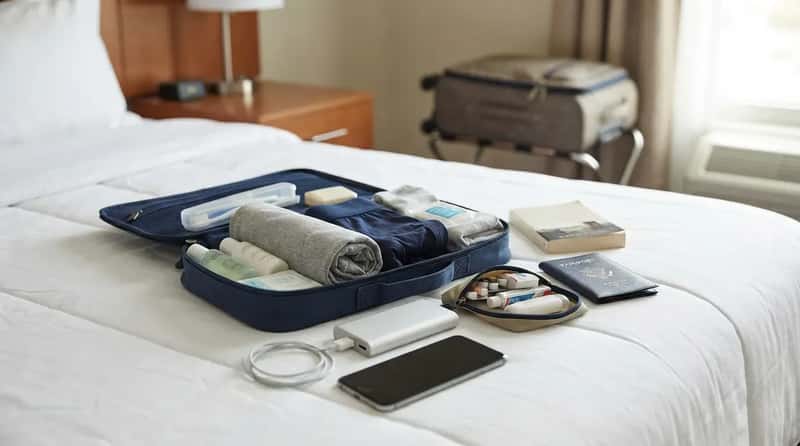
Many travelers pack their carry-on as if the checked bag is guaranteed to arrive. Veterans pack as if it won’t. A change of clothes, basic toiletries, a phone charger, and a few must-haves can carry you through a delay. That small kit is the difference between a mild annoyance and a ruined first day.
The numbers explain the caution. With 33.4 million bags mishandled in 2024, and most of those simply delayed, plenty of travelers spent a day or two waiting for their clothes. Carry-on-only travelers will tell you the problem disappears if you never check a bag. Others say that’s unrealistic for families or long trips. Both sides agree on one thing: a small kit in your personal item beats hoping. The last item is the one that can stop your whole bag.
At a Glance
- One full change of clothes, plus extra underwear and socks
- A phone charger and any power bank, which belong in the cabin anyway
- Toiletries in containers of 3.4 ounces (100 ml) or less
- Medications, glasses, and spare contact lenses
- One folder of key documents and your house key
1. Power Banks and Spare Batteries: The Rule That Can Get Your Bag Pulled
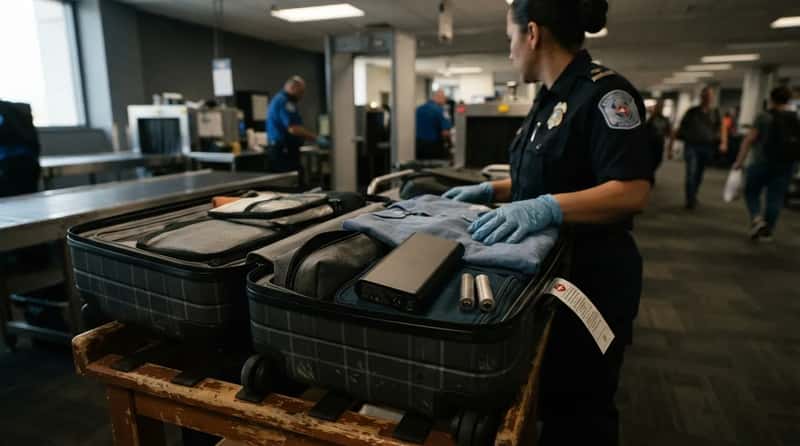
This is the item most people don’t realize they’re breaking a rule with. The FAA prohibits spare lithium batteries and portable rechargers in checked baggage, and they must travel with you in carry-on baggage. That includes the power bank at the bottom of your suitcase that you forgot was there. If a bag with one inside gets flagged, you could be called to deal with it before the plane leaves.
The reason is fire. A shorted lithium cell can heat fast enough to ignite nearby materials, and cargo compartments aren’t built for lithium battery fires. If your carry-on gets gate-checked, take out the power bank and keep it with you in the cabin. Some airlines are also tightening how you can use power banks in flight, so check your carrier’s rules before you go. Don’t let a tiny charger be the reason your bag stops moving.
The Bottom Line: Most of these items aren’t banned. They’re just things you can’t afford to lose, replace, or do without for two days. The bag usually arrives, but the cost of the rare time it doesn’t falls on the things you can’t replace. Pack your hold bag as if you could live without it, and your carry-on as if it’s all you’ll have. What’s the one thing you’ve learned to never check?