Most people book one day at the South Rim expecting a quick look, a few photos and a long drive home. Then the canyon gets a vote. By sunset, a lot of them are quietly checking hotel availability for another night.
The park draws nearly 5 million visitors a year, and plenty of them work out the same lessons in the same order. Some come from rock that was old before dinosaurs existed. Others come from a gate, a bus schedule or a clock that refuses to move. A few of these may change how you spend your one day, and the first one is hiding at the road barrier.
#1 The Free Shuttle Is the Only Way to Reach the Famous Sunset Stretch
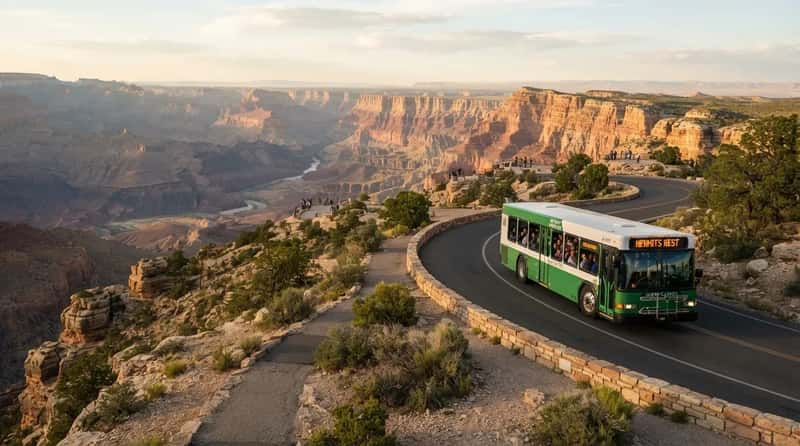
Plenty of first-timers plan to drive to every viewpoint, then find a gate in the way. From March 1 through November 30, Hermit Road is closed to private vehicles, and the free Red Route shuttle is the only motorized way in. That road runs 7 miles and passes 9 overlooks. For most of the year, the South Rim’s most famous sunset stretch is off-limits to your own car.
The shuttle costs nothing extra, since it’s covered by your park entrance fee. The routes connect but don’t overlap, so a transfer or two is part of the day. For fall 2026, the Village (Blue) Route’s first bus runs at 7 am and the last at 9 pm. Most visitors never realize what that gate fee actually buys.
And that’s before you see what one payment covers at the entrance station…
#2 One $35 Payment Quietly Covers a Whole Week
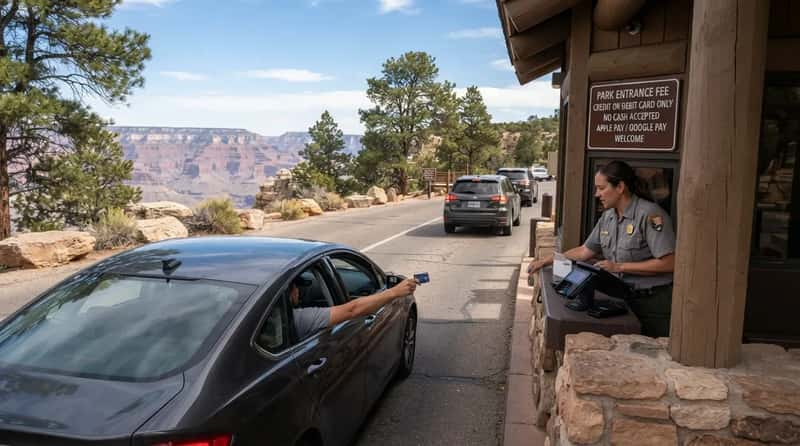
It feels like a one-day ticket, but it isn’t. The fee is $35 per vehicle, $20 per person for pedestrians or cyclists, and $30 per motorcycle. Every pass is good for seven consecutive days and covers both rims. If you only have one day, you’ve technically paid for six you won’t use.
The gate also works differently than many people expect. The park is cashless at its entrance stations, so you pay by card or by phone with Apple Pay or Google Pay. There’s no timed entry, so no reservation is needed. International visitors face a newer rule: as of January 1, 2026, nonresidents 16 and over pay an additional $100 per person or need a Non-Resident Annual Pass.
Once you’re through the gate, the first view comes with a catch, and it’s why some visitors call the park’s most famous overlook overrated…
#3 Mather Point Is the Famous First Stop, and Some Call It a Crowd Trap
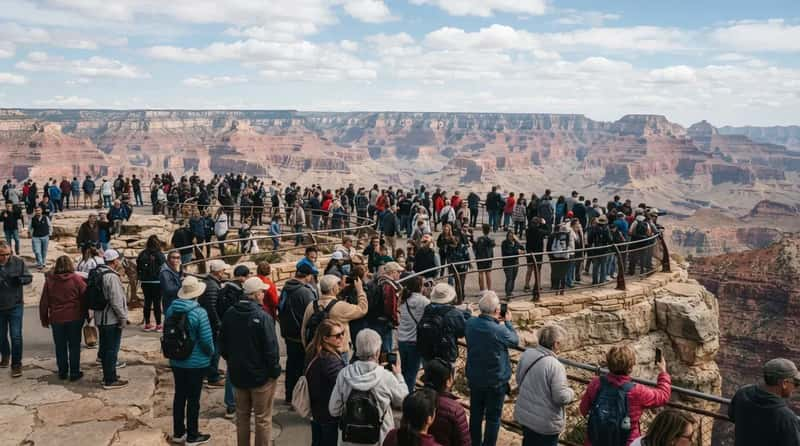
Mather Point sits close to the visitor center, so it’s where most people get their first jaw-drop. It’s also where many photographers say the railing is shoulder to shoulder. The park’s own guidance still points sunrise seekers there. The National Park Service says to try Mather or Yaki Points for a memorable sunrise.
Yaki Point offers a different mood, and it’s shuttle-only all year. Fewer cars usually means a quieter railing and a little more room to just stand there. The tradeoff is that you have to build your morning around the bus.
Quick Compare
- Mather Point: Close to the visitor center, so it’s the easy first look.
- Mather Point: Often crowded, with a busy railing at peak times.
- Yaki Point: Shuttle-only all year, so it’s usually calmer.
- Both: Named by the park service as sunrise options.
And the clock has its own surprise for visitors from other states…
#4 Arizona Never Changes Its Clocks, and Your Schedule Can Pay for It
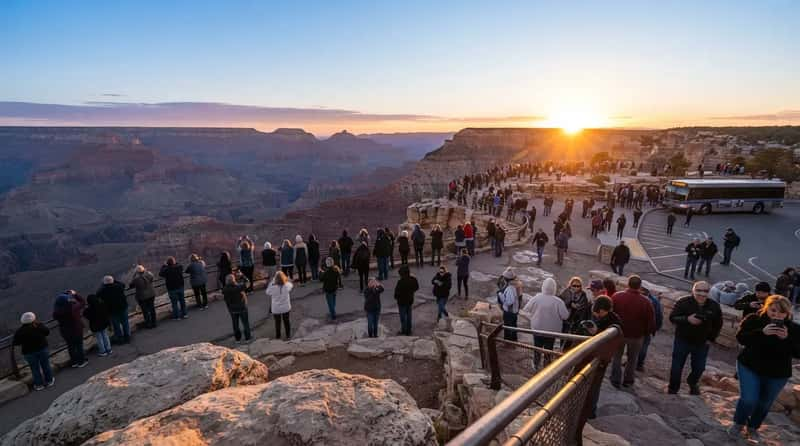
Arizona skips daylight saving time, and the South Rim stays on Mountain Standard Time all year. Visitors from states that spring forward and fall back can show up an hour off from where they think they are. That can mean a missed sunset bus or a closed counter.
In early November the day gets short. On November 4, 2026, sunrise at Grand Canyon Village was 6:54 am and sunset was 5:29 pm. That leaves roughly ten and a half hours of usable daylight. Add a 90-minute sunset wait and a long lunch, and the schedule tightens fast.
Speaking of sunsets, the most hyped one on the rim comes with a price…
#5 The Hopi Point Sunset Is Legendary, and So Is the Crowd
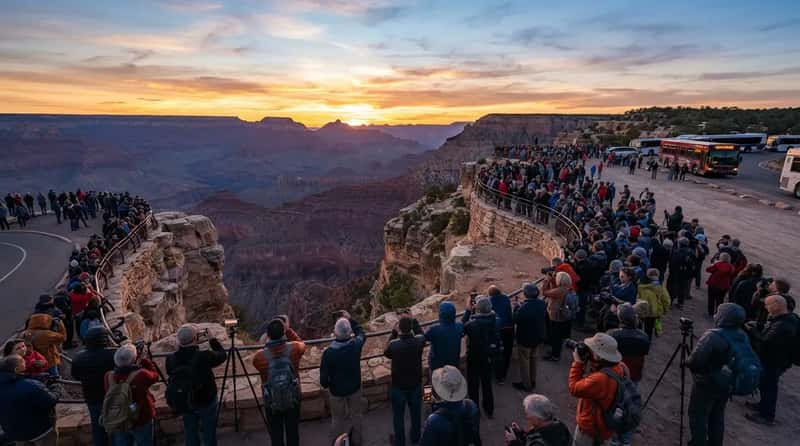
Hopi Point is the sunset spot everyone has heard of. The park service calls it unquestionably desirable for sunset, and says it draws crowds of people and buses, especially in summer. Getting there is a project too. Between March and November you reach it only by the Red Route shuttle, or by walking the 2.5-mile Rim Trail from the village.
The park’s advice is to arrive as much as 90 minutes before sunset. Some regulars say that wait is the biggest chunk of daylight you’ll give up on the rim. They point to Pima Point, farther down the road, where fewer visitors make the trip and the sunset feels quieter.
But first, the canyon has a scale problem that photos can’t fix…
#6 Photos Flatten It, and the Real Scale Is Almost Rude
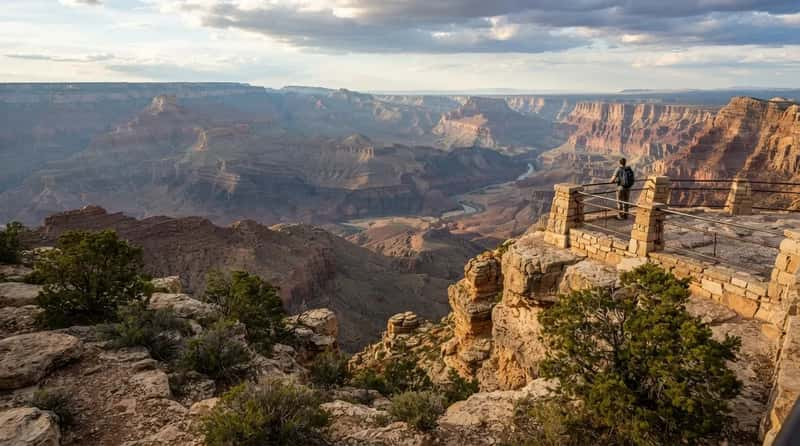
Every visitor has seen the photos. Almost nobody is ready for the drop. The canyon is 277 river miles long, up to 18 miles wide and more than a mile deep. Those are the figures the park service commonly gives.
From the rim, the far wall looks close enough to touch, and it isn’t. Geologist Clarence Dutton, who wrote about the canyon in the 1880s, was struck by how dramatically evening light transforms it. That’s why two visits to the same railing can feel like two different places.
Fast Facts
- Length: 277 river miles.
- Width: Up to 18 miles across.
- Depth: More than a mile from rim to river.
- Visitors: Nearly 5 million people a year come to see it.
Standing still is one thing, and walking the edge is another…
#7 Walking the Rim Trail Beats Driving Between Stops
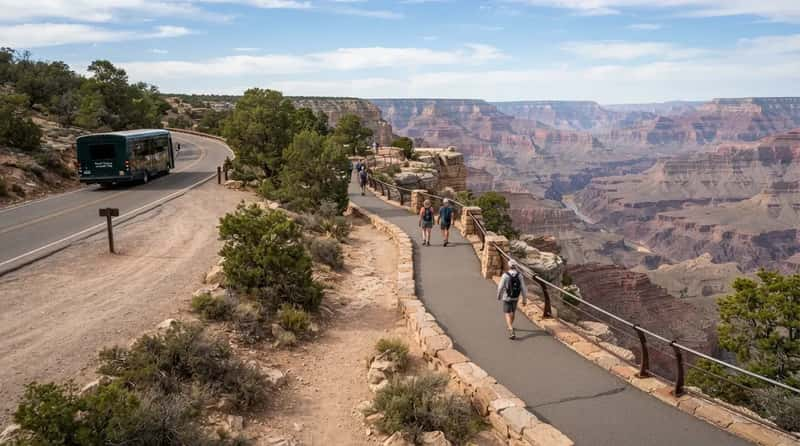
Drivers insist the car is faster. Regulars say the trail wins. The Canyon Rim Trail runs alongside Hermit Road, so you can walk a stretch, hop on a bus, and skip the parking hunt entirely. The park notes the Hermit Road shuttles work great in combination with the Canyon Rim Trail.
Parts of the trail are paved, and the park map marks both paved and unpaved sections. That makes it easy to build your own mini-itinerary around the buses. Most people only realize how much better the combo is after the first mile. The tempting part comes next, and it’s where plenty of first-timers overreach…
#8 Hiking Down Is the Easy Part, and Coming Back Up Is the Mistake
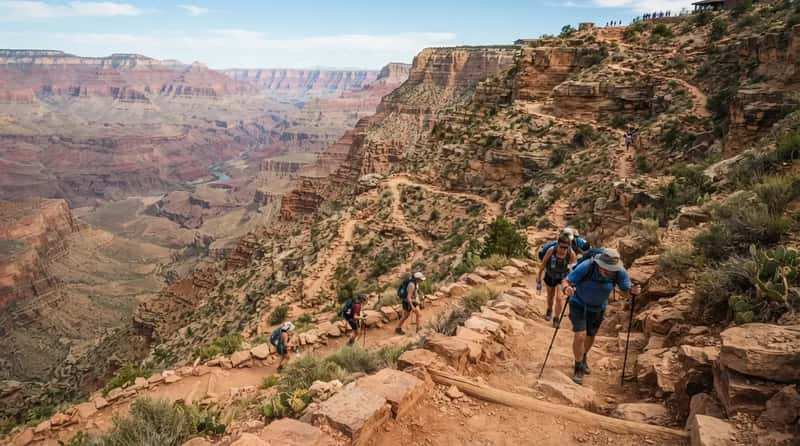
The trails into the canyon look inviting from the rim. The catch is that going down feels optional and coming back up is not. Park rangers consistently advise against hiking from the rim to the river and back in a single day. The climb out is slower and harder than the descent.
There are smarter options. The Hikers’ Express Shuttle is in operation this fall and runs from Bright Angel Lodge to the South Kaibab Trailhead in the early mornings. Many visitors hike a short way down, soak it in, and turn back. The turnaround point is a choice, and plenty of people make it too late.
If your knees would rather skip that debate, the east side of the park offers an easier way to see more…
#9 Desert View Drive Is the One Scenic Road Open to Your Own Car All Year
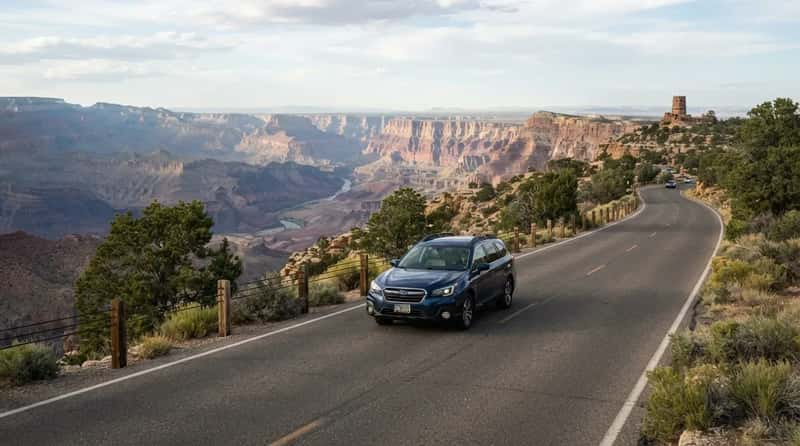
When the shuttle roads feel limiting, there’s one open route. Desert View Drive is the only South Rim scenic road open to private vehicles all year. The 23-mile road leaves Grand Canyon Village and heads east to Desert View. The park’s shuttle routes don’t serve Desert View, so you need your own wheels or a tour.
The payoff is the quiet. The Desert View entrance tends to be less crowded than the South Rim’s main entrance.
At a Glance
- Distance: 23 miles from Grand Canyon Village to Desert View.
- Access: Open to private vehicles all year, and not served by the park shuttles.
- Services: A market and deli, a trading post with coffee and ice cream, and a pay-at-the-pump gas station.
- Crowds: Usually lighter than at the main entrance.
About three miles west of Desert View sits Tusayan Pueblo, a small Ancestral Puebloan village inhabited around 800 years ago. And the drive ends at a building many people think is far older than it is…
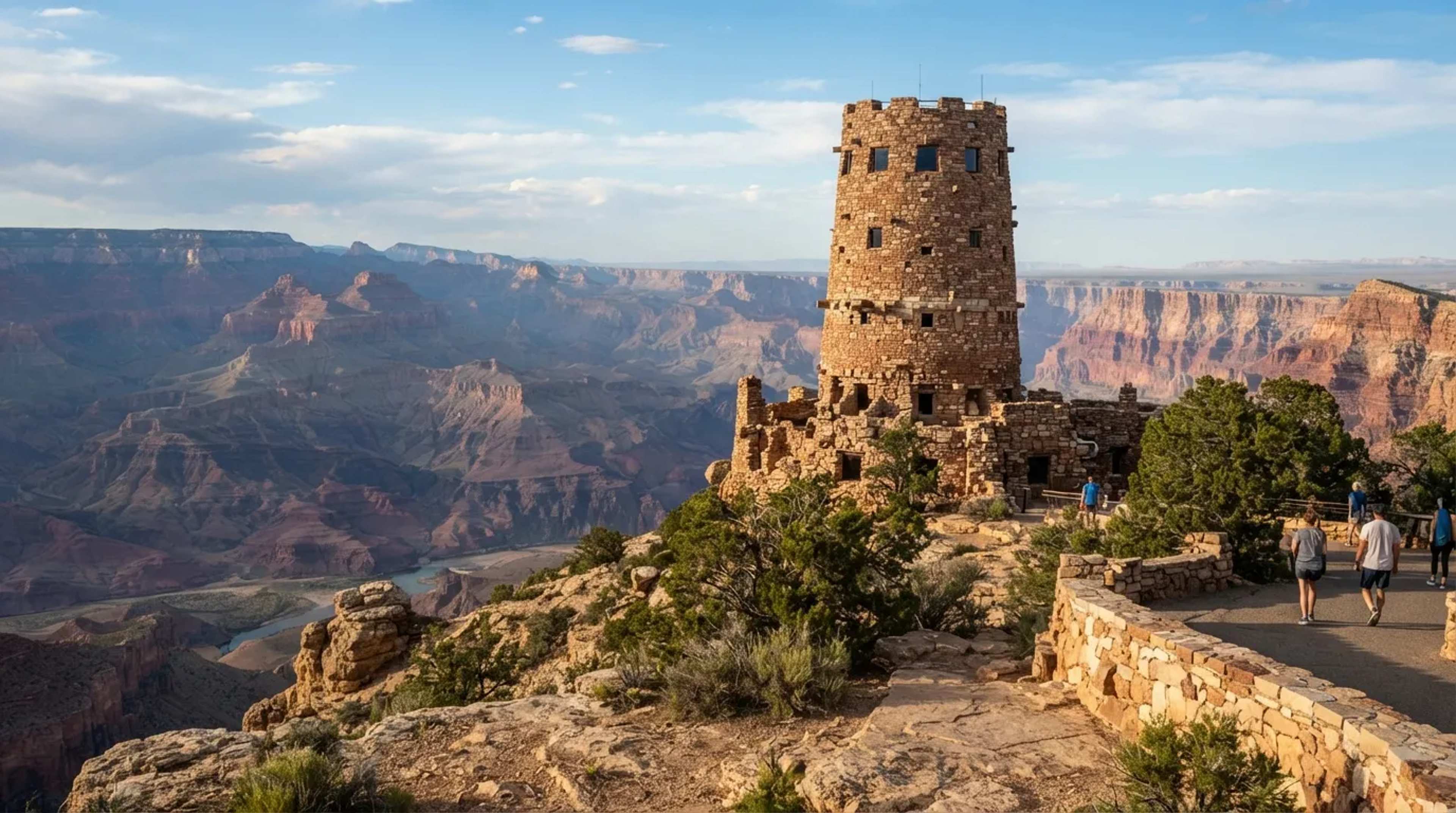
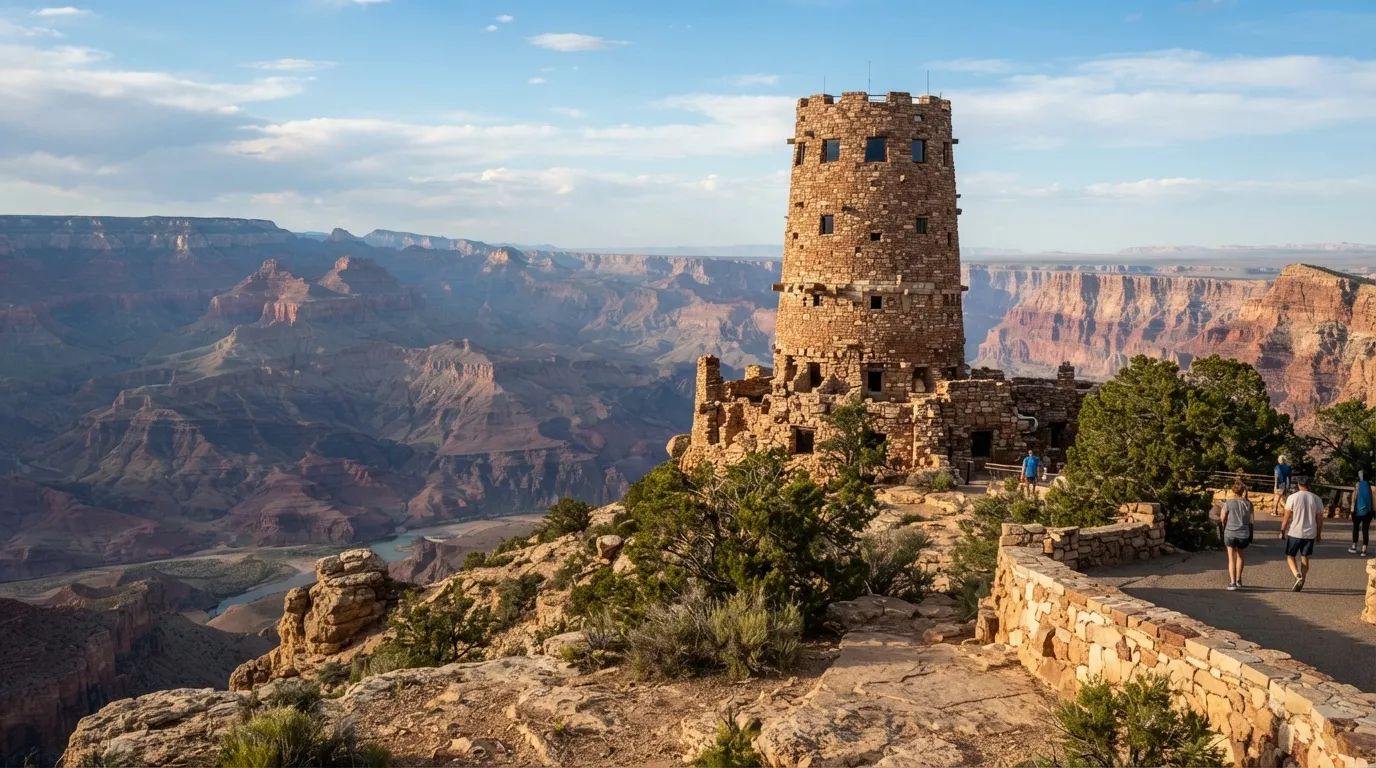
#10 The Desert View Watchtower Looks Ancient, but It’s Newer Than You Think
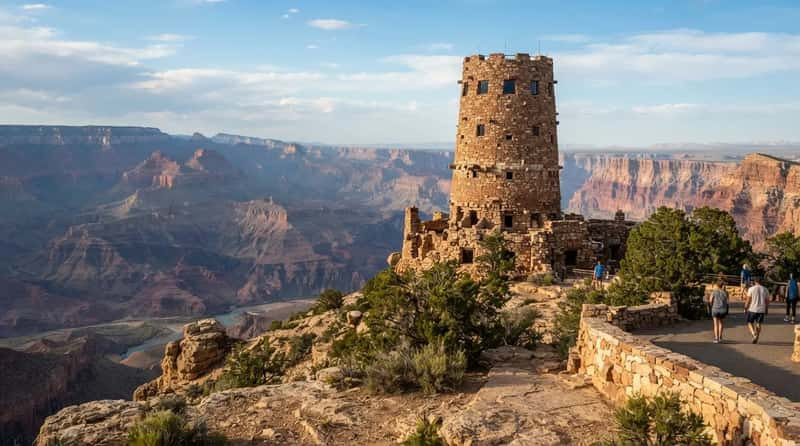
It looks like a ruin that’s been standing for centuries. It was actually designed in the 1930s. The Watchtower at Desert View was built in 1932 by architect Mary Colter, who modeled it on Ancestral Puebloan towers. It’s a deliberate tribute, and it works.
Colter’s fingerprints are all over the rim. She also designed Hopi House, Lookout Studio and Hermits Rest, the last stop on the Hermit Road Route. Some visitors argue her buildings are the best reason to come, ahead of the canyon itself. That’s a hot take, but you can judge for yourself from the top of the tower.
The real shock, though, sits in the rock beneath your feet…
#11 The Rim You’re Standing On Used to Be the Bottom of a Sea
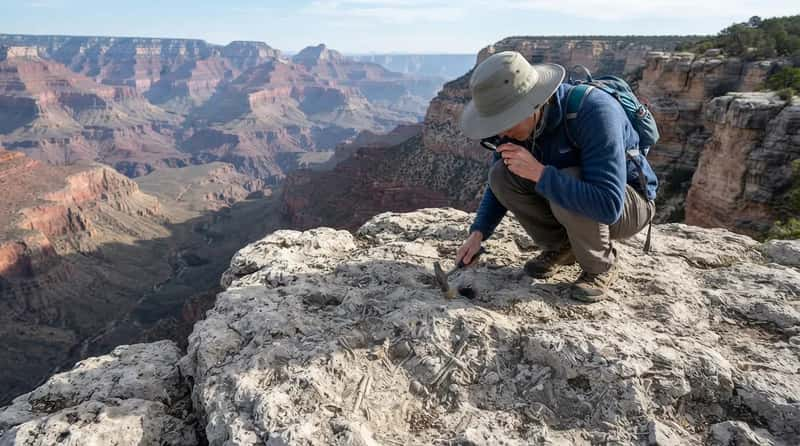
The rock at the top of the South Rim is Kaibab Limestone. It formed about 270 million years ago, which is before the age of dinosaurs. The limestone is full of marine fossils, because this rim started out as a sea bottom. The canyon’s famous red layers sit below it.
Go deep enough and the story gets older. At the bottom, the dark rock called Vishnu Schist is roughly 1.8 billion years old. The carving of the canyon itself is a much younger story, often put at around 5 to 6 million years, though scientists still debate the timing. One glance at those walls is a billion-year timeline.
Why It Stands Out
- The rim: Kaibab Limestone, about 270 million years old and full of marine fossils.
- The floor: Vishnu Schist, roughly 1.8 billion years old.
- The carving: Often put at around 5 to 6 million years, with the timing still debated.
- The twist: The rock is far older than the canyon cut through it.
And the rim has living residents too…
#12 The Village Elk Look Calm, but They’re Not Pets
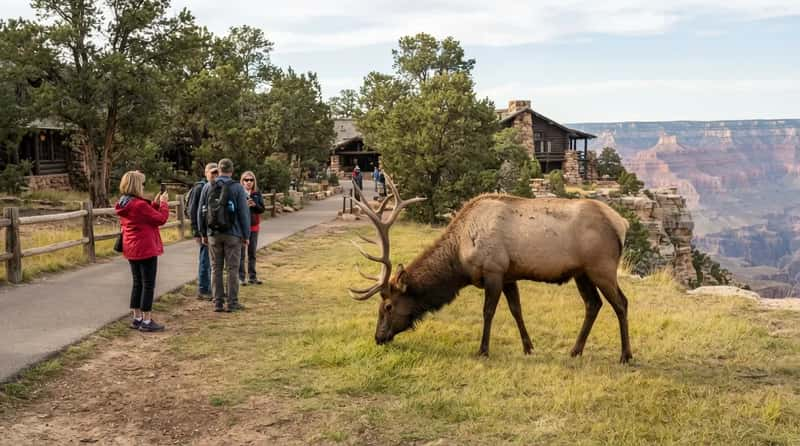
Elk stroll through Grand Canyon Village like they own it. They’re wild animals, and visitors who treat them like pets are making a mistake. The park’s rule is simple: don’t feed wildlife, and keep your distance. A relaxed-looking elk can still react fast.
Overhead, the biggest bird in North America sometimes sails past the rim. The California condor has a wingspan of up to about 9.5 feet. It nearly went extinct and was reintroduced in northern Arizona in the 1990s. Spotting one tops most visitors’ checklists.
Which brings us to the last lesson, and it’s the one nobody can schedule…
#13 The Best Moment of the Day Can’t Be Booked
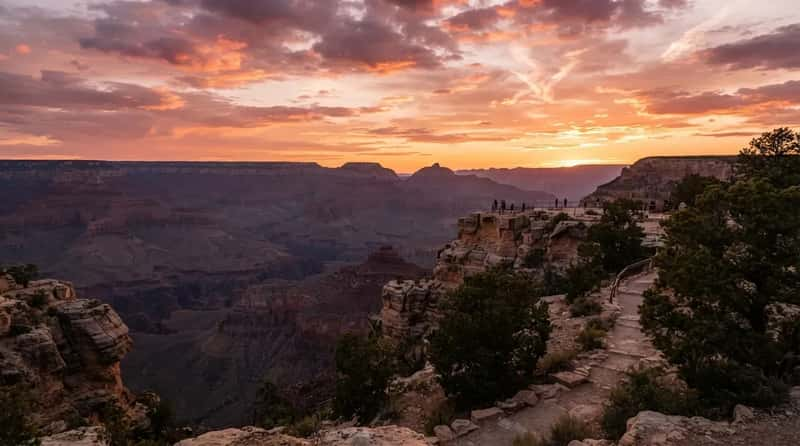
You can plan the shuttle, the trail and the sunset spot. You can’t plan the sky. The park service says predicting the quality of a Grand Canyon sunset is about as uncertain as predicting the weather. Just the right amount of dust or smoke can make a sunset more colorful.
Morning has its own gamble. If the night has been calm and clear, sunrise may offer great clarity before breezes stir dust into the air. That’s why one day feels like a first chapter. You see one version of a canyon that never looks the same twice, and you start wondering what the other versions look like.
So the shuttle is free and sometimes mandatory. Your $35 pass runs for a week. Arizona’s clocks never change, and the hike down is the easy part.
The rim you’re standing on was once the sea floor, and the sky has the final say on how your day ends. Which of these would have changed how you spent your first day at the canyon?