A rental car feels temporary, which is exactly why so many travelers treat it that way. You toss your phone charger in the console, plug in your navigation history, maybe leave a printout of your hotel address on the seat, and drive off without a second thought. Security professionals who study vehicle theft and data exposure say that casual attitude is precisely what creates risk, and the list of things people forget to remove before returning the keys is longer than most travelers realize.
1. The key fob left inside an unattended car

Leaving the fob in the cupholder while you run into a gas station feels harmless, but rental agreements often treat it as a red flag. Rental agreements often carry language about negligence, meaning a stolen car with the fob left inside can leave you personally liable for the vehicle’s full value.[1] Most renters assume their credit card insurance or the rental company’s coverage absorbs that risk entirely.
That assumption turns out to be wrong more often than people expect. Most travelers assume rental insurance covers everything, but it doesn’t cover negligence.[1] A few seconds of convenience can turn into a five figure bill if the car disappears before you get back.
2. Your home address saved as “Home” in the GPS
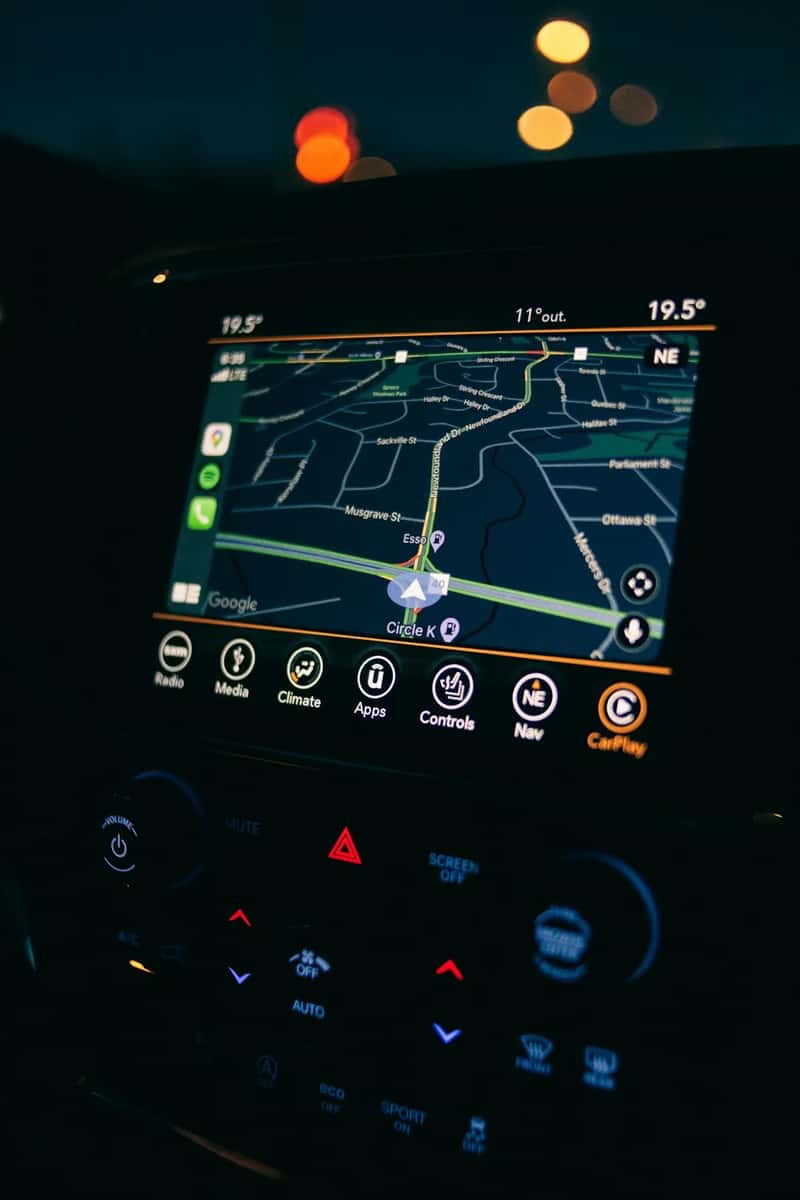
Rental car navigation systems let you save favorite destinations the same way your own car does, and that convenience becomes a liability the moment the car is stolen or broken into. This is the one security experts bring up first, and a saved “Home” address in the navigation system, paired with a garage door opener clipped to the visor, doesn’t just describe where you live, it hands a stranger a working set of directions to your front door while you’re a thousand miles away on vacation.[2] It sounds theoretical until you consider how many people never think to delete a saved address before returning the keys.
The fix takes thirty seconds: open the settings menu and clear saved locations before you hand back the vehicle. Skipping that step means the next renter, or worse, someone who breaks into the car overnight, inherits a map straight to your front door.
3. A garage door opener clipped to the visor

Garage remotes get left in cars constantly, and law enforcement groups have flagged this habit for years as a direct pathway from car theft to home burglary. Auto theft prevention guidance specifically warns against leaving a garage door opener on the dashboard, above the visor, or on the seat, advising drivers to hide it or take it with them instead.[3] In a rental car, that opener may not even be yours, but if you paired a portable one or synced a smart garage system through the vehicle, the risk still applies.
Real cases back up the concern rather than just theoretical worry. In one documented case, a California man had his car stolen after thieves broke into one of his vehicles, found his garage door opener and home address, then entered his garage and stole his other car while his wife and children were asleep inside the house.[4] That sequence of events is exactly why security experts treat the garage remote as more dangerous than it looks.
4. Vehicle registration or rental agreement paperwork
Every rental car glovebox holds a rental agreement with your name, license number, and often your home address printed on it. Security researchers describe this kind of document in stark terms. According to vehicle security experts, a registration card is essentially like a social security card for your car, with the VIN functioning as the car’s social security number.[5]
The consequences go beyond a simple break-in. With a VIN and a few other details from that document, a criminal can obtain a title for the car in some states, clone the vehicle’s identity onto a stolen car to make it look legitimate, and file fraudulent insurance claims.[5] Photograph the paperwork for your own records instead, and keep the physical copy with you rather than in the glovebox.
5. Your phone’s Bluetooth pairing and call history

Connecting your phone to a rental car’s infotainment system for hands-free calls and music feels like basic road trip prep, yet it quietly transfers more information than most drivers realize. Each time your phone connects with the rental car, information including call history and other personal data is synced and stored until manually deleted from the car’s infotainment system, and disconnecting from Bluetooth does not mean that information is erased.[6] The data sits there for the next renter or a rental employee to find.
Privacy advocates have pushed for rental companies to handle this automatically, but that hasn’t happened at scale. Right now there are few protections for car rental customers, and an easy fix would be wiping a car’s data as part of the detailing process between customers, but instead the responsibility falls on the customer.[6] Before returning the car, go into the Bluetooth settings and manually delete your device pairing.
6. A phone charging cable left plugged into the USB port

A charging cable seems like the most forgettable item on this entire list, which is exactly the problem. Leaving a phone charger plugged into a rental car overnight seems harmless, but it’s rarely just a cable, it’s a paired connection, and most infotainment systems quietly hold onto the last device that charged or synced through the USB port.[1] That pairing does not vanish the instant you unplug and walk away.
What lingers behind that connection can be surprisingly detailed. The bigger issue is what’s attached to that connection, since depending on the make and model, the system can quietly store the device’s name, phone number, recent call logs, and even chunks of the address book.[1] Unplugging the cable does nothing to erase what the car already absorbed.
7. Firearms, even in a locked glovebox or trunk
This is one item where rental companies, security consultants, and law enforcement rarely disagree. Security experts and rental agencies are unusually aligned that a firearm should never sit in a rental car overnight, locked compartment or not, since gun laws vary wildly by state and a firearm legally transported in one jurisdiction can create serious legal exposure the moment you cross a line you didn’t know existed.[1] Travelers crossing state lines on a road trip may not even realize the law changed underneath them.
Rental contracts typically address this directly, and insurance rarely simplifies the problem. Rental agreements themselves often prohibit leaving weapons in the vehicle unattended, and insurance coverage can get complicated fast if a firearm goes missing from a rented car overnight, making this one of the few items where the consequence isn’t just financial loss but a legal mess that can follow someone home.[1]
8. Your car title or ownership documents

Some travelers mistakenly toss their own vehicle’s title into a rental car’s glovebox for safekeeping during a trip, not realizing how sensitive that document really is. Security guidance is consistent on this point. Auto theft prevention advice specifically instructs drivers not to keep their Certificate of Title in the car.[3] A title in the wrong hands can be used to attempt a fraudulent transfer of ownership.
The safer approach is to leave that document at home entirely, whether you’re driving your own car or a rental. Leaving important documents at home or in a safe protects them, and this includes your car title, since keeping photos of the documents on your phone is enough if you ever need to show them to police or reference the information.[4] There is rarely a real-world scenario where you need the physical title with you on a trip.
9. Mail with your name and address visible

People sometimes toss unopened mail onto a rental car’s passenger seat during an airport pickup or a long drive, forgetting that it sits in plain view for anyone glancing through the window. Local law enforcement guidance treats this as a real risk rather than a minor annoyance. Guidance from local crime prevention programs advises against leaving outgoing or incoming mail in a car, especially where visible, since it has a name and address on it and thieves target mail for identity theft and checks.[7]
If you absolutely must carry mail during a trip, keep it in a bag rather than loose on a seat or in a door pocket. A glance through a car window should never be enough for a stranger to learn your legal name and home address.
10. Laptops, tablets, and other visible electronics

Electronics left in plain sight remain one of the most consistently targeted items in any parked car, rental or otherwise. Laptops, tablets, and other electronic devices are easy to steal and resell, especially if left in an unlocked car or out in the open where they are easy to see, since thieves can simply break a window and grab them before anyone notices.[8] A rental car offers no extra protection against this kind of opportunistic theft.
The safest habit is treating a rental exactly like your own vehicle: take electronics with you, or at minimum lock them out of sight in the trunk. A five second decision to grab a laptop bag on the way into a restaurant can prevent a very expensive afternoon.
11. Wallets, purses, and loose credit cards

It sounds obvious, yet travelers leave wallets and purses in rental cars constantly, usually while running a quick errand. Leaving a purse or wallet in your car while you pick up food or drop off something is a great invitation for thieves to spring into action.[8] The same applies to loose credit cards left in a cupholder or door pocket.
Cards left behind carry their own specific danger beyond simple theft. Credit cards are easy to steal and use fraudulently, which makes them a target for thieves, so the guidance is simple: never leave credit cards in your car.[8] Even a short stop is long enough for a determined thief working a rental car lot or hotel parking area.
12. Your license plate number and identifying stickers, unaddressed
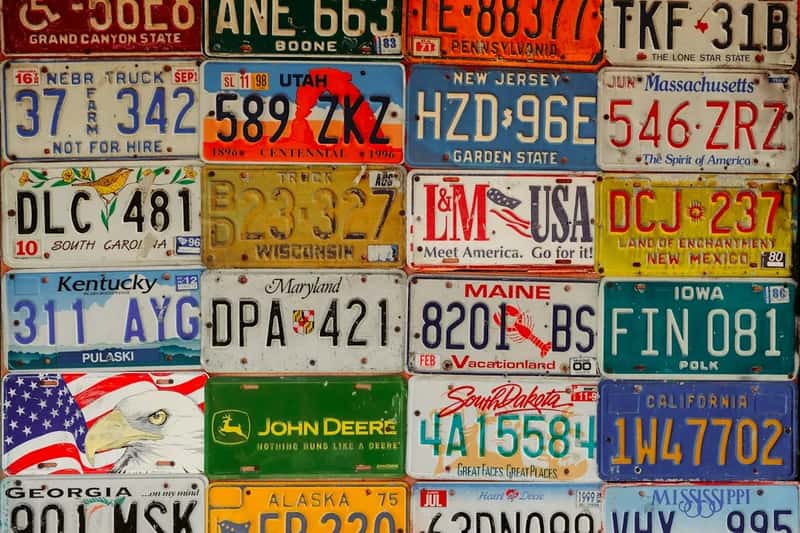
This one is less about what you leave inside the car and more about what you leave visible on the outside, though it belongs on the same list because it shapes how thieves choose targets. Discussions among security-minded drivers have raised the concern that certain visible markers, from parking permits to city stickers, can signal to a thief which vehicles are worth breaking into. Some drivers caution about having vanity plates and bumper stickers or decals on a vehicle because it can help thieves target the vehicle, even though not everyone finds that theory fully convincing.[9]
Rental cars typically arrive without personal decals, which is one small advantage over your own vehicle. Still, if you have added a temporary parking pass or hotel tag that reveals where you’re staying, it’s worth removing it before leaving the car unattended for long stretches.
13. The car itself, left unlocked or running
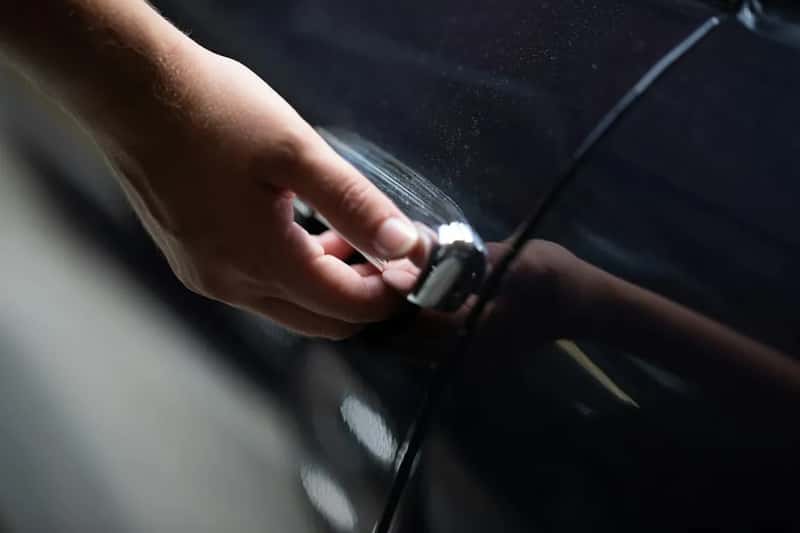
The most basic mistake is still the most common one: leaving a rental car unlocked, running, or idling while you step away for even a minute. Auto theft prevention guidance is direct on this point, advising drivers to never leave keys in the car when parked and never leave a car running and unattended.[3] A rental car is not immune to opportunistic theft just because it belongs to a company instead of an individual.
Rental lots themselves are not always as secure as travelers assume. Most retailers lock up their entire inventory at night, sometimes behind multiple layers of security, but rental cars can’t reasonably be stored anywhere but in the lot, leaving them vulnerable and in plain view of potential thieves.[10] Locking the doors and taking the keys every single time you step away remains the simplest, most effective habit on this entire list.
Most of these risks share a common thread. They are not about dramatic hacking or elaborate criminal schemes, they are about ordinary habits that quietly leave a trail of personal information behind in a vehicle that will belong to a stranger within hours of you returning it. A few minutes of deliberate checking before handing back the keys, wiping paired devices, clearing saved addresses, and removing paperwork, closes most of the gaps that security experts spend their careers warning people about.