Most travelers treat a locked rental car like a hotel safe on wheels – toss the bag in the trunk, hand the keys to the valet, and forget about it until morning. That habit is quietly behind some of the messiest vacation disasters on record, from drained bank accounts to break-ins that happen while you’re asleep two floors above the parking garage.
A rental car isn’t just less secure than your own car – it’s a completely different kind of risk, one almost nobody thinks about until it’s too late. Here’s what security experts, rental agencies, and the people who’ve actually lost something overnight say you should never leave behind.
#16 – The Charging Cable Nobody Remembers to Unplug
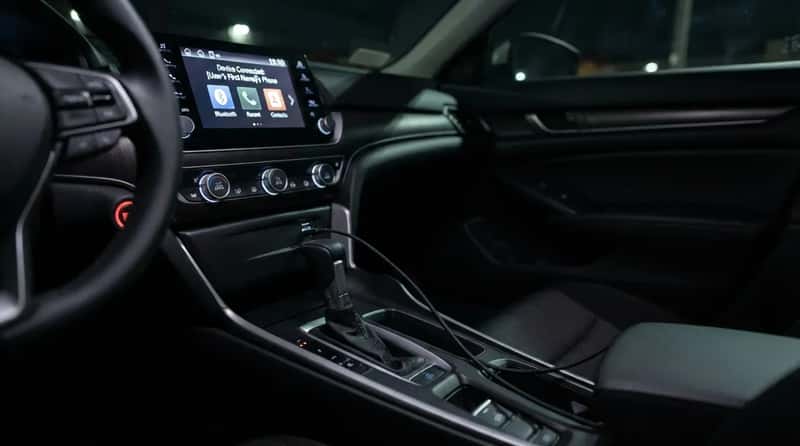
Leaving your phone charger plugged into a rental car overnight seems harmless, but it’s rarely just a cable – it’s a paired connection. Most infotainment systems quietly hold onto the last device that charged or synced through the USB port, and that pairing doesn’t always disappear the moment you unplug and walk away.
The bigger issue is what’s attached to that connection. Depending on the make and model, the system can quietly store the device’s name, phone number, recent call logs, and even chunks of your address book. Leave the cord and the pairing intact overnight, and the next renter could end up scrolling through more of your digital life than you’d ever guess.
#15 – Snacks, Drinks, or Anything With an Expiration Date
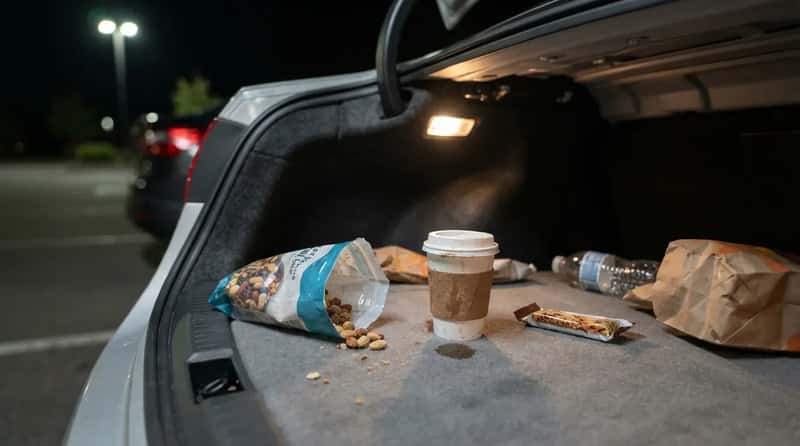
It sounds trivial compared to stolen electronics, but leftover food is one of the most common – and most expensive – mistakes renters make. A half-finished coffee or a bag of gas station snacks left in a hot trunk overnight doesn’t just smell bad by morning; it can attract bugs before you’ve even checked out of your hotel.
Rental companies routinely charge cleaning fees for spills, stains, and pest evidence, and those fees show up on your card weeks after you’ve forgotten the trip ever happened. Most renters have no idea the “cleaning fee” line item is often triggered by nothing more than a forgotten fast-food bag wedged under the seat.
#14 – Your Toll Transponder or EZ-Pass Tag
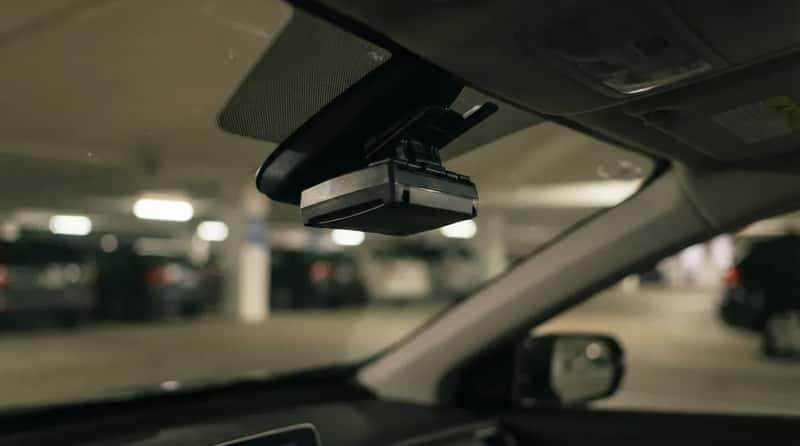
Toll tags feel like a convenience item, not a security risk, which is exactly why so many renters leave them clipped to the windshield overnight without a second thought. The problem is that a transponder left inside an unlocked or easily-entered rental car keeps working even after you’ve handed the keys back at the counter.
Anyone who finds it – a car thief, an overnight valet, even the next renter – can rack up tolls that get billed straight to your account before you ever notice. It’s a small plastic object with an outsized ability to drain your card long after the trip has ended.
#13 – Gift Cards and Store Credit Sitting in the Console
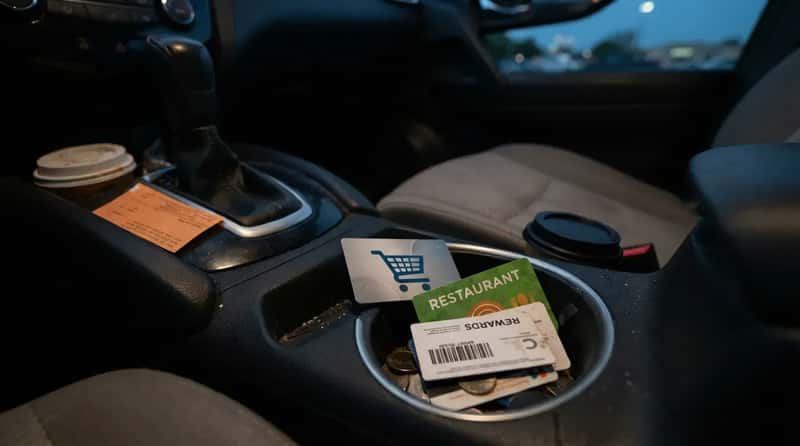
Gift cards feel disposable, which is exactly why nobody thinks twice about tossing one in the cupholder for a week-long trip. But an unregistered gift card is essentially untraceable cash – whoever finds it can spend it immediately, with zero way for you to prove it was ever yours.
Loyalty cards and store credit slips get overlooked the same way, sliding into seat pockets until they’re forgotten entirely. Most people don’t realize a lost gift card has almost no legal recovery path, unlike a stolen credit card that can be frozen with one phone call.
#12 – Hotel Key Cards Linked to Your Room
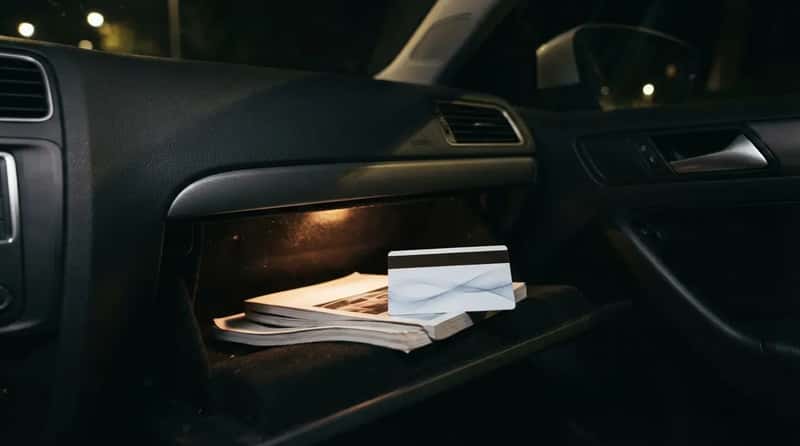
A hotel key card looks like a harmless piece of plastic, but many of them are printed with your room number, and some hotel systems encode it right onto the card’s magnetic strip. Leave it in the glovebox overnight and you’ve essentially handed a stranger a map straight to your door.
This is one of those overlooked risks that security consultants bring up constantly, and travelers almost never think about it until someone explains it out loud. It’s not paranoia – it’s a documented weak point in hotel security that takes about two seconds to fix.
#11 – Prescription Sunglasses (Yes, Really)
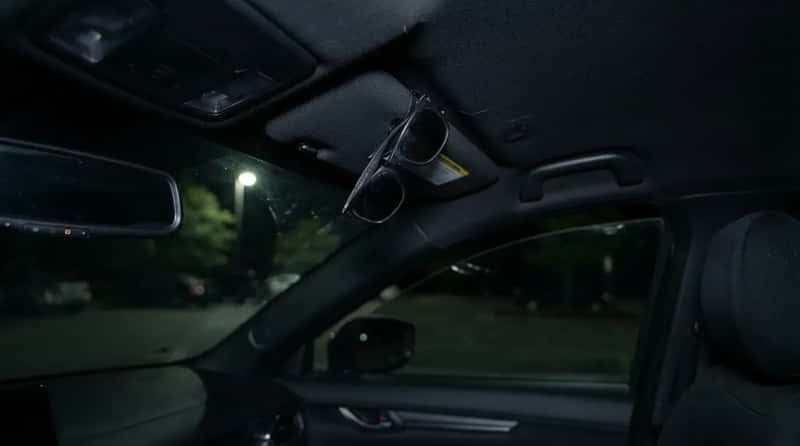
Sunglasses are among the most commonly forgotten items in rental cars, and prescription pairs are the most expensive version of that mistake. A $300 pair of prescription sunglasses left on a visor overnight is an easy grab through a cracked window or an unlocked door.
Rental return staff say non-prescription sunglasses occasionally get turned in, but prescription ones rarely make it back to lost-and-found at all. They’re small, valuable, and instantly usable – exactly the profile thieves look for when they’re scanning a dark parking lot for an easy target.
#10 – Car Seats and Booster Seats
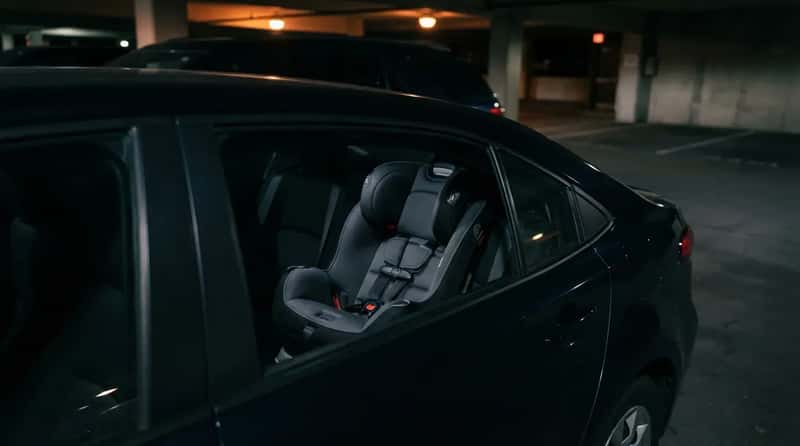
Parents often leave the car seat installed overnight to save themselves the hassle of hauling it up to the hotel room. It seems practical, but a car seat left in an unattended vehicle overnight is exposed to heat, theft, and tampering – and replacing one on short notice in an unfamiliar city is neither cheap nor easy.
There’s also a safety wrinkle nobody talks about: once a seat has been left unattended in an unlocked vehicle overnight, you have no real way of knowing whether it was interfered with. Most safety experts recommend treating it the same way you’d treat a car seat left at a stranger’s house – bring it inside every single night, no exceptions.
#9 – Prescription Medication

Leaving medication in a rental car overnight creates two separate problems, and most travelers only ever think about one of them. The first is theft – certain prescriptions have real resale value on the street, which makes them a specific target during break-ins.
The second problem is simpler and far more common: heat. A car interior can swing well outside the temperature range most medications are rated for, quietly degrading their effectiveness before you even notice anything looks wrong. Insulin, EpiPens, and controlled substances are the highest-risk items to accidentally leave behind, and replacing them mid-trip in an unfamiliar city can turn into its own kind of nightmare.
#8 – Your Passport and Boarding Pass
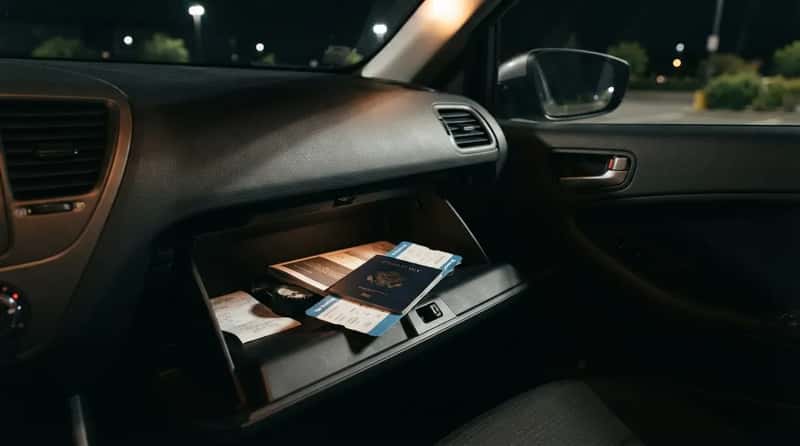
It sounds obvious until you remember how often people leave their travel documents in the glovebox “just for the night” between flights or hotel check-ins. A stolen passport doesn’t just cost money and time to replace – it can strand you in another city, or another country, while you deal with a consulate that’s closed on weekends.
Boarding passes are quietly dangerous too, since they often contain a frequent-flyer number and booking reference that can be used to access your travel account online. Combine a stolen boarding pass with a stolen ID from the same glovebox, and a thief suddenly has enough pieces to attempt identity fraud. It’s a bigger risk than most travelers realize until it happens to someone they know.
#7 – Laptops, Tablets, and Any Visible Electronics
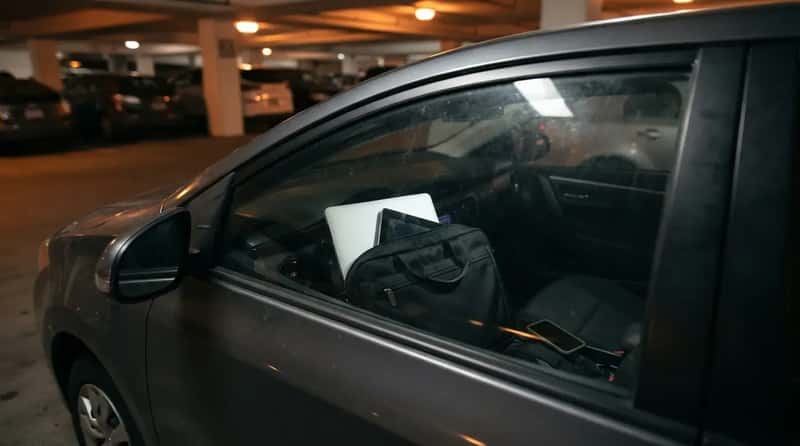
Electronics left in the front seat overnight are essentially an invitation. Roads, driveways, and open lots are consistently among the most common places vehicles get broken into, and electronics, bags, and anything visible through the window remain some of the most commonly stolen items from parked cars.
Rental car parking lots – hotel garages, airport structures, downtown street parking – check almost every box thieves look for: low lighting, unfamiliar vehicles, and owners who are asleep and won’t notice a smashed window until morning. A visible laptop bag through the glass is one of the clearest signals to a thief that a car is worth breaking into. Cash left behind, though, is an even bigger draw.
#6 – Cash, in Any Amount
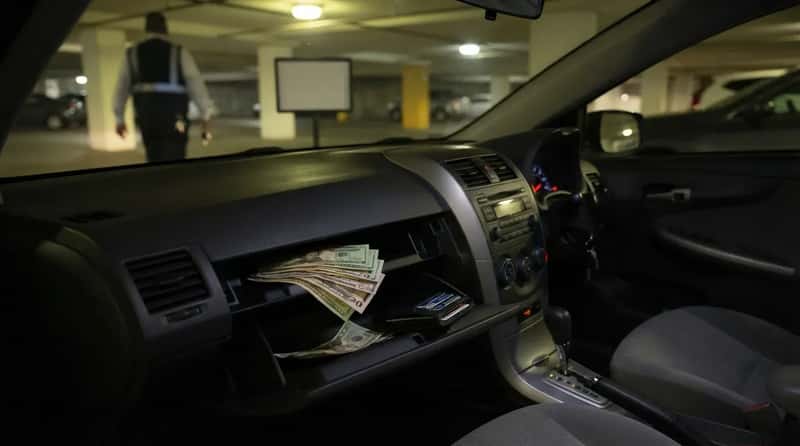
There’s a version of this story that gets repeated by rental car staff in almost every major tourist city, and the details always land the same way: a traveler hands cash to a valet for safekeeping, and by morning it’s gone, with no camera angle and no witness willing to talk. It’s the kind of story that sounds exaggerated until you realize how routinely it happens.
Cash has zero traceability once it leaves your hands, unlike a credit card that can be frozen instantly with one call. Whether it’s tucked in a locked trunk or handed to a valet stand, cash left overnight in a rental car is essentially handed over to whoever finds it first, with no paper trail and no recourse. It’s the single hardest stolen item to ever get back.
#5 – Luggage and Shopping Bags Left in Plain Sight
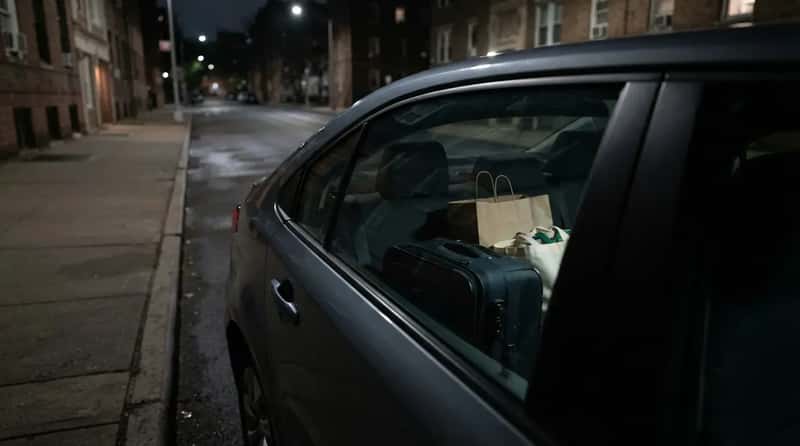
Break-ins aren’t random – they’re opportunistic, and visible bags are one of the biggest triggers. A large share of vehicle break-ins happen overnight, when streets are quiet, foot traffic disappears, and nobody’s around to notice a shadow crouched next to a back window.
A suitcase or shopping bag sitting on the back seat overnight tells a thief exactly what might be inside without them having to guess. Popping open a trunk takes seconds, and by the time anyone notices, the car – and whoever left it there – has been asleep for hours. Covering bags or moving them out of sight isn’t paranoia; it’s just basic math about what a thief is willing to risk for a guaranteed payoff.
#4 – Firearms, Even If They’re Legally Owned
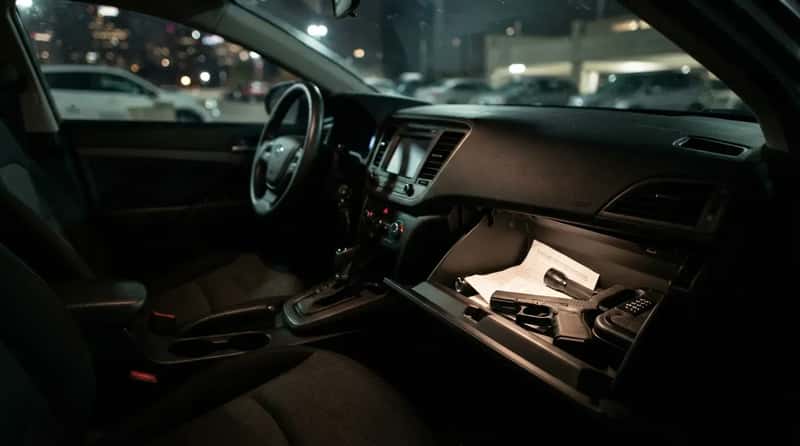
This one triggers real debate, but security experts and rental agencies are unusually aligned on it: a firearm should never sit in a rental car overnight, locked compartment or not. Beyond the obvious theft risk, gun laws vary wildly by state and even by city, and a firearm that’s legally transported in one jurisdiction can create serious legal exposure the moment you cross a line you didn’t know existed.
Rental agreements themselves often prohibit leaving weapons in the vehicle unattended, and insurance coverage can get complicated fast if a firearm goes missing from a rented car overnight. It’s one of the few items on this list where the consequence isn’t just financial loss – it’s a legal mess that can follow you home long after the trip is over.
#3 – Your Paired Phone Data and Saved Navigation History
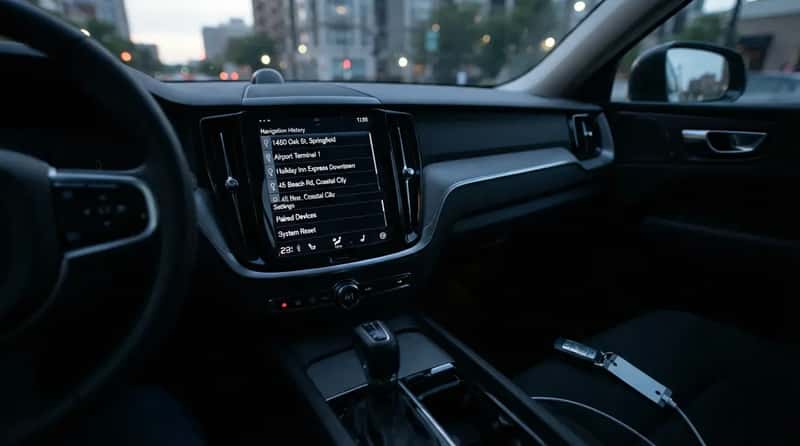
This is the mistake almost nobody thinks to fix, and it’s become a bigger deal as rental fleets have gotten more connected than ever. The responsibility falls entirely on you to delete your own data, which may be stored either on the car’s onboard computer or synced to the cloud through an app you forgot you ever linked.
Consumer advocates now recommend a specific sequence before handing the keys back: unpair your phone from the car, remove any saved credit card or banking information, and factory-reset the infotainment system if the option exists. Most renters never do a single one of these steps, which means the next person to rent that same car could be looking at your saved contacts, texts, and destination history. This is exactly why the next item on this list matters more than people assume.
#2 – Your Key Fob, Anywhere You Can’t See It
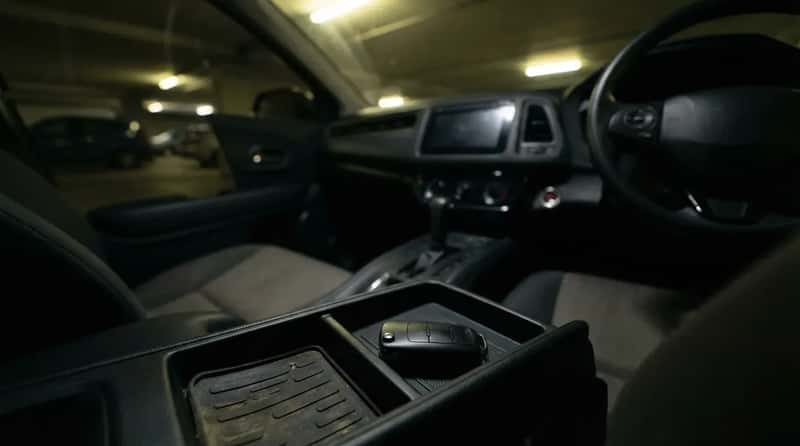
Handing your key fob to a valet, leaving it in the ignition “just for a minute,” or setting it down inside the car overnight sounds harmless – until you look at how often stolen cars are taken with the keys still inside them. Insurers have flagged this pattern for years in major cities, and it’s one of the most preventable ways a rental disappears overnight.
Rental agreements often carry language about negligence, meaning a stolen car with the fob left inside can leave you personally liable for the vehicle’s full value. Most travelers assume rental insurance covers everything – it doesn’t cover negligence. A key fob left overnight isn’t a convenience. It’s a decision that can cost thousands of dollars if the car disappears before sunrise.
#1 – Your Garage Door Opener and Home Address in the GPS
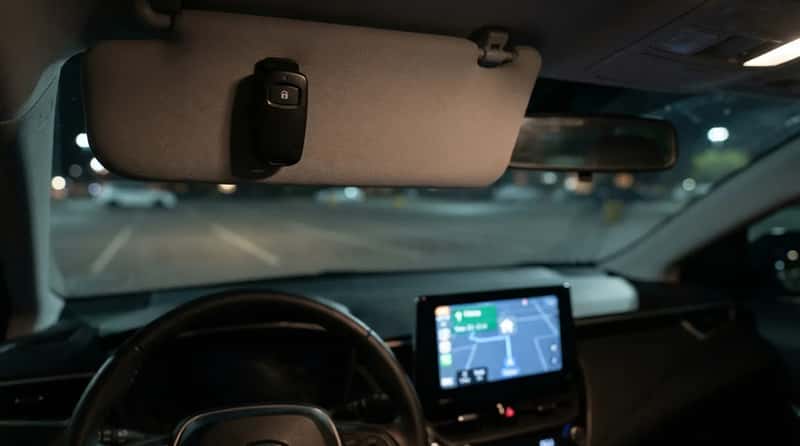
This is the one security experts bring up first, and it’s the one almost nobody thinks about. A saved “Home” address in the navigation system, paired with a garage door opener clipped to the visor, doesn’t just describe where you live – it hands a stranger a working set of directions to your front door while you’re a thousand miles away on vacation.
It sounds like a stretch until you realize how many rental returns skip this exact step entirely. Some systems even learn your patterns and start suggesting destinations, and manufacturer apps that let you control the car remotely can matter even more with connected models that show live location or allow remote unlocking. Clear the saved “Home” label, remove any garage remote, and disconnect the car from any linked home app before you ever hand the keys back. Skipping this single step turns a forgotten cable or a lost gift card into something far more serious – a stranger holding a set of directions to your front door.
Add it all up and the pattern is clear: the biggest overnight rental car risks aren’t the dramatic ones you’d expect, they’re the small, forgettable habits – a plugged-in phone, a key left in the ignition, a “Home” address nobody bothered to delete. None of it requires a criminal mastermind. It just requires one night, one unlocked door, and one person who didn’t think to check.
Most of these mistakes take less than sixty seconds to fix before you walk away from the car. The renters who never think twice about it are usually the same ones telling the worst stories afterward. Which one of these have you actually done without realizing it? Drop it in the comments – you’re probably not the only one.