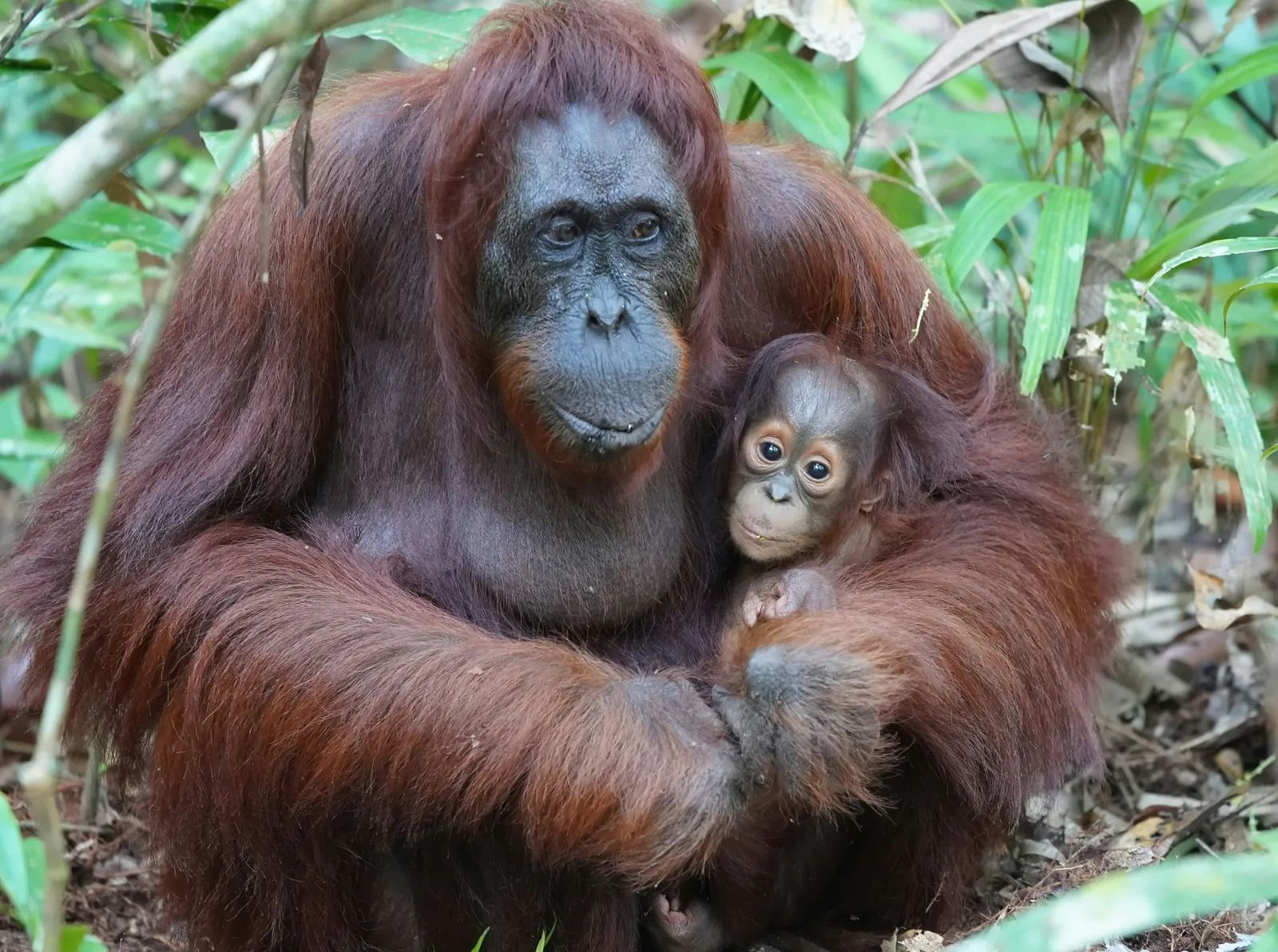
Rescue teams in Indonesia are working against the clock as El Niño-driven fires move through forests that endangered orangutans call home. As Indonesia’s El-Niño driven fires spark a race to save endangered orangutans and other wildlife ([1]). Yet the danger to primates may not end when the smoke clears. A recent review published in the journal Oryx argues that the harm from drought and fire can persist for months and years, and that scientists know far less about it than they would like.
Surviving the fire is only the first test
For a primate, escaping the flames is a major accomplishment, but it does not settle what comes next. Elizabeth Barrow, the lead author of the review and conservation research director at the Gunung Palung Orangutan Conservation Program in Indonesia, has pointed out that survival alone says little about whether an animal will find enough food, keep a suitable home range, or stay healthy enough to reproduce. Her concern runs deeper than a single fire season.
Barrow described the issue as a huge conservation issue for primates in Southeast Asia. The region is already under pressure, with researchers noting that a large majority of its primate species face the risk of extinction. Against that backdrop, the researchers describe El Niño’s effects as poorly understood but serious for populations that are already fragile.
How drought and smoke reshape primate lives
The review found that habitat loss and degradation tied to drought and fire can alter the way primates eat, move and behave. Physical condition can also decline, which makes an animal less able to cope with the next stress. These changes rarely arrive alone, and they often compound one another over time.
The researchers describe several pathways through which these pressures can damage primate communities:
- Changes in diet as familiar food sources disappear or thin out
- Shifts in behavior, including altered movement and social patterns
- Declines in physical condition that weaken an animal’s resilience
- Crowding as forest areas shrink, along with displacement and local extinctions
- Increased infant mortality, which can affect a population for years
Crowding deserves particular attention. When forest fragments become smaller, more animals compete for the same resources in less space. Those already displaced may have nowhere suitable to go, which can leave their populations more vulnerable to the next drought or fire.
A thin body of evidence with large gaps
Perhaps the most striking finding is how little research exists. The review identified only 15 papers on the effects of El Niño-linked drought, fire and smoke on primates. Those studies covered just seven of the region’s 105 primate species, and all of them focused on Indonesia. Neighboring countries, where similar fires and droughts can occur, are absent from the record.
Barrow acknowledged the limited literature while stressing the strength of what has been documented. In her words, the effects on primates are quite clear. That tension between a small evidence base and a clear pattern is at the heart of the review’s message: the warning is credible, but the full scale of the harm remains uncertain.
What the review shows
Related Stories From Travelbinger

- Only 15 papers examined El Niño-linked drought, fire and smoke effects on primates
- Research covered seven of 105 primate species
- All studies focused on Indonesia, leaving major knowledge gaps elsewhere in Southeast Asia
Why the story extends past the fire season
For conservation teams, the review is a reminder that emergency response is only part of the work. Rescuing animals from burning forest addresses the immediate danger, while the longer effects on food supply, health and breeding depend on what happens across months and years. Without more data, it is difficult to know which populations are most exposed or how quickly they might recover.
Closing those gaps would give researchers and wildlife managers a sharper picture of where primates are most at risk. It would also help clarify which species, and which regions beyond Indonesia, need attention before the next dry season arrives. The fires may fade from the headlines sooner than their effects fade from the forest.