
You’ve probably asked it yourself: “Is this itinerary worth the price?” It’s the obvious first question, and tour operators say it tells you the least. The real trouble rarely shows up at the famous landmark. It shows up on day four, at a charming hotel with 40 steps and no elevator, when the coach pulls out at 7:15 a.m. sharp.
The questions that decide whether a trip feels like a dream or a slog are the ones almost nobody asks at booking. Some are about stairs and suitcases. A couple involve deadlines that quietly expire, and one involves a card in your wallet that may stop working the moment you leave the country. Here’s what insiders wish you’d ask before you hand over a deposit.
#13 – “How Many Steps, Hills, and Cobblestones Are We Talking About?”

A tour’s “easy” label can mean almost anything. Brochures lean on vague words like “moderate” and “leisurely,” and one company’s leisurely is another’s endurance test. Operators wish travelers would ask for specifics instead. How many hours a day are we on our feet? Are there stairs without handrails? Is the ground paved, gravel, or ancient cobblestone?
Old European towns, hillside temples, and hilltop forts are often tough going on foot. Even a short walk can feel long on polished, uneven stone. A good operator can describe a typical day in plain terms, and a fuzzy answer is your first red flag.
- Ask for the longest walk of the trip, not the average one.
- Ask what the plan is if you need to skip a stop.
But the walking is nothing compared to what happens before you even leave the hotel in the morning, and that’s #12…
#12 – The 6:45 a.m. Wake-Up Call Nobody Mentions

The daily schedule shapes how a trip feels more than the destination does. Many group tours run on early starts. Bags go outside the door at one time, breakfast opens at another, and the coach rolls out on a tight timetable. If you love slow mornings, that rhythm can wear you down by day three.
Operators wish travelers would ask what a typical morning looks like, and how often the group changes hotels. Moving every night means packing and unpacking every night. Many travelers find that two or three nights in one place changes the whole feel of a trip, though others love a packed schedule. The trick is knowing which one you’re buying.
At a Glance
- Ask what time bags go out and when the coach departs.
- Ask how many hotels the trip uses in total.
- Ask how many nights you stay in each place.
- Ask whether any mornings are free or unscheduled.
The morning scramble is only half the grind. The other half is a pricing surprise for anyone traveling alone, in #11…
#11 – The Single Supplement That Quietly Adds Hundreds

Here’s a mistake that stings: assuming the advertised price is what a solo traveler pays. Many tours price per person based on two people sharing a room. Travelers going alone may face an extra charge, often called a single supplement. The amount varies widely from one operator to the next.
Operators wish solo travelers would ask three things up front. Is there a single supplement, and how much is it? Do you offer roommate matching? Are there departures where the supplement is reduced or waived? Some companies run promotions like that and others never do, and you only find out if you ask.
That’s the price tag. The next surprise waits at the hotel door, in #10…
#10 – Who Actually Carries the Suitcase Up Those Stairs?

Luggage handling varies a lot between tours, and it can come as a shock on day two. Some trips include porters at every hotel. Others include them only at certain stops. On some, you’re expected to roll your own bag over curbs, up steps, and across a lobby.
Operators wish travelers would ask exactly what’s included. Is porterage offered at every stop? Is there a weight or bag limit? What happens at hotels without elevators? Historic hotels, small inns, and river docks often have far more stairs than the website photos suggest.
- Ask if there’s a limit of one bag per person.
- Ask whether you can request a ground-floor room.
Your bag is one thing, but the people sharing your bus are another thing entirely, and that’s #9…
#9 – Who Else Is on the Bus? The Group Question

The brochure photo shows smiling travelers, but it doesn’t show you your actual group. Operators wish people would ask how big the group is and what the usual mix of ages and fitness levels looks like. A group of 16 moves very differently than a group of 45.
Quick Compare
- Smaller groups: fit into tight streets and little restaurants, and usually mean more time with the guide.
- Larger groups: often come with lower prices, but more people means more waiting.
Group size changes almost everything. It affects how long boarding takes, how slowly lunch crawls along, and how much time you get with the guide. Neither size is wrong, but they feel like two different trips.
Next comes a question almost nobody thinks about until it’s urgent, in #8…
#8 – How Long Between Restroom Stops on Drive Days?

It’s not glamorous, but it’s the question operators say they hear too late. On long drive days, how often does the coach stop? Is there a restroom on board? Are the stops at proper facilities or just a roadside pull-off? The answers differ a lot between companies and countries.
Ask about the longest stretch on the road without a scheduled stop. Then ask how the guide handles a request for an unplanned one. A good operator answers without hesitation. A flustered answer tells you something about how the whole trip is run.
Drive days are one hidden cost of a tour. Another is tucked into the fine print of the “extras,” coming up in #7…
#7 – What’s “Included” and What’s an Add-On?

The headline price often leaves out the things that make a trip memorable. A tour may include the bus, the hotels, and some meals, then offer extras like a boat ride, a folk show, or a special dinner. Those add-ons can change what the trip really costs. Operators wish travelers would ask for the full list before booking.
Ask which meals are included, whether drinks are covered, and whether tips for the guide and driver are in the price. Ask what the group does while others go on an optional outing. Some travelers find the extras are the best part of the trip. Others feel quietly pressured into spending.
- Ask for a written list of what’s included.
- Ask what travelers on past departures typically spend on extras.
Money is one worry. Health is the bigger one, and the next question gets overlooked constantly, in #6…
#6 – What Happens With My Medications and Diet?
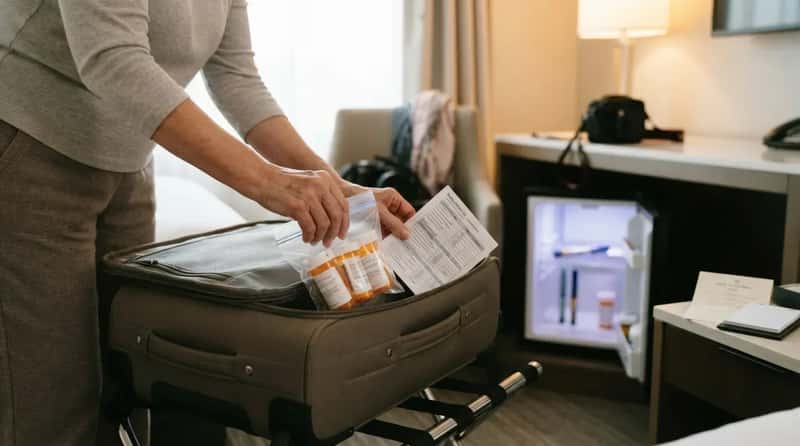
A lot of problems start with small health details nobody raised in advance. Does the tour have set mealtimes that clash with a medication schedule? Can the kitchen handle a diabetic meal plan, a low-sodium diet, or a food allergy? Does the hotel room have a fridge for medicine that needs to stay cool?
Operators wish travelers would mention these things at booking, not at the first dinner. A kitchen can plan ahead for a special request, but it struggles with one made at the table. Ask your doctor about carrying medications in original labeled containers, and keep them in your carry-on. Check the rules for your destination country too.
Health needs paperwork, and so does the border itself. Europe’s rules have changed lately, as #5 shows…
#5 – The New Europe Border Step Many Americans Don’t Expect
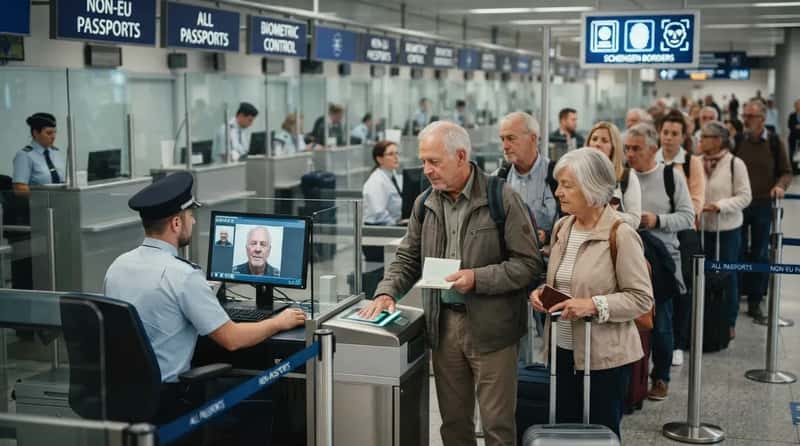
Europe’s border system has changed. The EU’s Entry/Exit System began a phased rollout on 12 October 2025 and was set to be fully operational at external Schengen borders by 10 April 2026. It replaces passport stamping with digitally recorded fingerprints and facial images for non-EU short-stay visitors. For many Americans, that means a new step at the border and possibly a longer line.
A separate pre-travel authorization called ETIAS has also been in the pipeline, but its launch timing has shifted more than once. Rules and dates like these move, so operators wish travelers would ask how the company keeps up with them. Ask what it does if lines run long, and whether your connection times allow for that.
Paperwork aside, the next question is about money you could lose, and #4 is where it gets painful…
#4 – The Cancellation Policy Nobody Reads Until It’s Too Late

Cancellation rules are where many travelers get hurt financially. Deposits are often non-refundable, and the refund shrinks the closer you get to departure. Operators wish travelers would ask: if I get sick before the trip, what do I get back? Is it cash, or a credit for a future trip?
Ask for the full schedule in writing. Ask what happens if the operator cancels or changes the itinerary. Some people look into flexible options. For example, Travel Guard lists Cancel For Any Reason as an optional add-on with certain plans. Those add-ons usually cost more and come with their own rules, so read the terms.
And there’s a hidden clock on travel insurance that most people never hear about until it has already run out, in #3…
#3 – The 14-Day Clock on Travel Insurance

Here’s a mistake operators see again and again: buying insurance too late. A pre-existing medical condition waiver is generally available only if you buy within roughly 14 to 21 days of your initial trip deposit, and only if you insure the full nonrefundable cost of the trip. Miss that window, and the waiver is usually gone.
That matters more as we get older, since many travelers manage at least one ongoing health condition. Without a waiver, insurers typically use a look-back period, commonly 60 to 180 days, to decide whether a condition is covered. Eligibility can also depend on your health when you buy, so read the policy wording carefully and ask which window applies to your plan.
Fast Facts
- Waiver window: generally about 14 to 21 days from your first trip deposit.
- Coverage usually requires insuring the full nonrefundable trip cost.
- Look-back periods commonly run 60 to 180 days.
- Ask which dates apply to your specific plan before you pay.
That’s the clock. But the next question holds the biggest shock on the list, in #2…
#2 – “Doesn’t Medicare Cover Me Overseas?” It Usually Doesn’t

Your Medicare card may be useless abroad. The U.S. State Department says Medicare does not cover medical costs outside the United States. The CDC says that except in limited circumstances, Medicare doesn’t cover care abroad or medical evacuation. Medicare Advantage plans usually don’t cover treatment outside the U.S., though some may include emergency care.
Medigap can help a little. Plans C, D, F, G, M, and N cover some emergency care abroad if it begins during the first 60 days of travel. After a yearly $250 deductible, they may cover 80% of billed charges for certain emergency care, with a $50,000 lifetime maximum. Cruisers should check too, since Medicare will likely not cover medical costs on ships more than six hours from a U.S. port.
Now picture the scenario operators worry about most, because it combines everything above, in #1…
#1 – “What Happens If I End Up in a Hospital Mid-Tour?”

This is the question operators wish every traveler asked, and almost nobody does. The tour has a schedule, and the bus keeps moving. So who stays with you? Does the guide help with translation? Does the company help you reach family and your insurer? Ask for the actual procedure in plain terms.
The money side is just as sobering. Foreign providers often aren’t in any U.S. network and may demand payment upfront, sometimes in cash. Commonly cited estimates put an air ambulance flight back to the U.S. anywhere from $20,000 to $200,000, depending on location and condition. Medical evacuation coverage and a 24-hour assistance line can matter more than any sightseeing stop.
- Ask who rebooks your flight if you’re hospitalized.
- Ask whether the company has a 24-hour emergency contact.
That one question changes how you read every other line in the brochure.
The glamorous questions about destinations rarely decide how a trip goes. The boring ones do: stairs, schedules, luggage, cancellation terms, insurance deadlines, and what Medicare won’t pay for abroad. Operators say travelers who ask early tend to have far fewer ugly surprises.
The biggest shocks on this list were the short window for insurance waivers and the fact that Medicare usually stops at the border. Which question do you wish someone had told you to ask? Drop it in the comments.