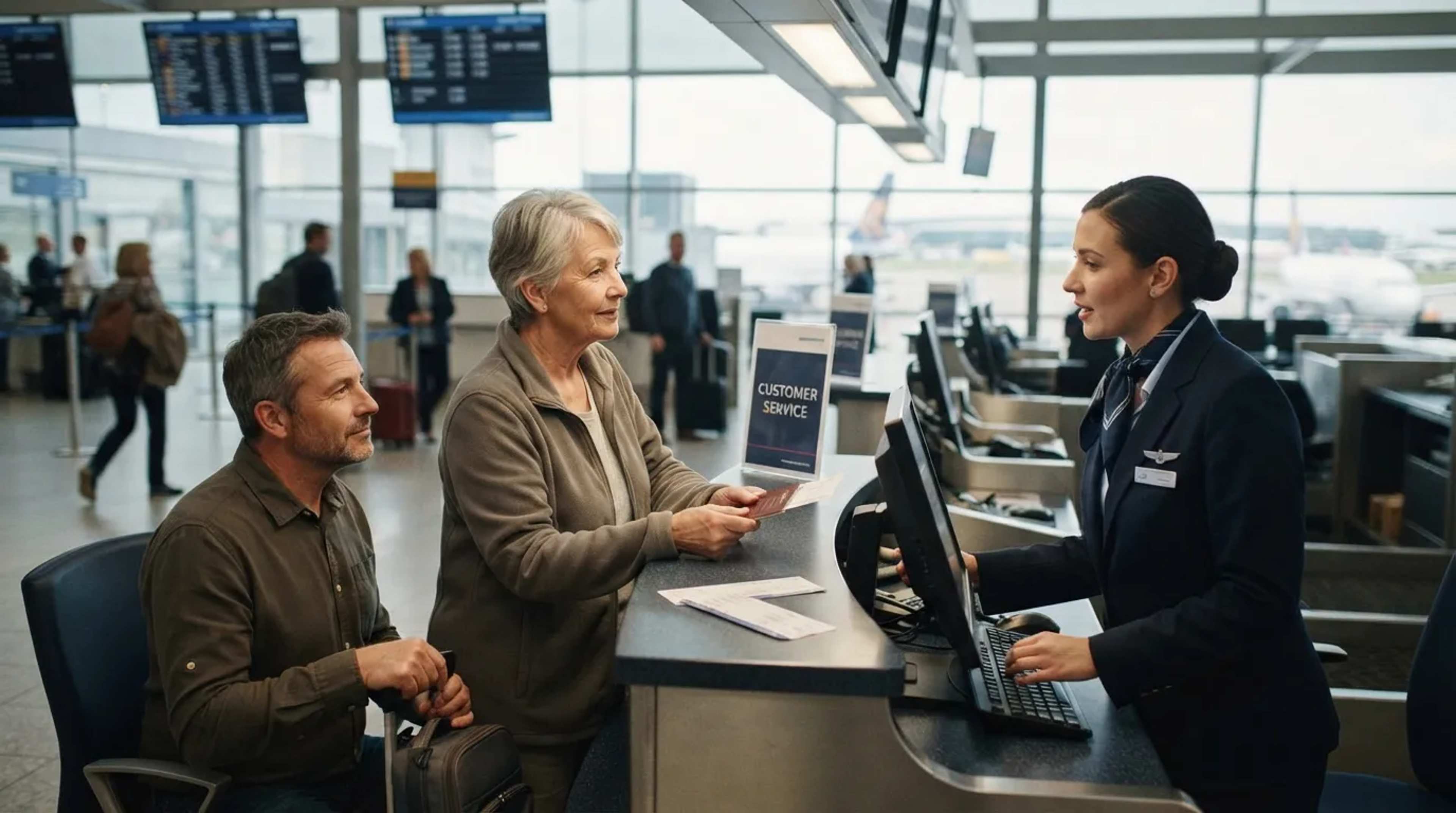
Yes, some airline charges really do disappear at the counter for travelers over 60 who ask. But here’s the twist: your birthday is rarely the magic key. Most of the savings come from fare rules, card perks and federal protections that agents almost never volunteer.
That changes what you should say at the desk. Several items below are free by law, yet people pay for them every day without knowing it. One famous senior perk also turns out to be far narrower than the viral lists claim. We’re counting down from #15, and the heaviest payoffs are still ahead.
#15 – The “Adult Fare” Premium Quietly Charged to Over-65 Flyers

American, Delta and United all still file senior fares for passengers 65 and older on select routes. Delta’s own fares page admits that certain discounts are not available at delta.com. Delta’s senior fares have to be requested by phone, while American offers a “Senior 65+” option in the online traveler dropdown. If you never ask, the system simply charges you the standard adult price.
The savings are patchy, though. One guide says that on most United searches the “Senior (65+)” price equals the adult price, so compare both every time. American’s senior fares are reported at 10% to 15% off the base fare, mostly on international routes to Latin America. Southwest hasn’t sold senior fares since December 11, 2019, and some overseas carriers play this game far more generously.
#14 – The Overseas Senior Pass That Can Slice Up to 30% Off

Air France’s Senior Pass is for travelers 65 and older. It gives up to 30% off Standard fares for 49 euros a year, on departures from metropolitan France. The Air France discount only works if you buy the pass first.
Air India gives passengers 60 and older a flat 10% off base fares on international flights booked through its website or app. That makes it one of the few programs that starts at 60 rather than 65. Don’t trust old deals, though. British Airways ended its AARP discount in January 2026, and sources disagree on whether Frontier’s 55-and-up offer is still running. When the internet can’t agree, ask an agent what is actually loaded today.
Still, the biggest fee story for older travelers isn’t a fare at all. It’s a policy change that caught a lot of loyal flyers off guard.
#13 – The Southwest Bag Fee That Age Alone Won’t Erase
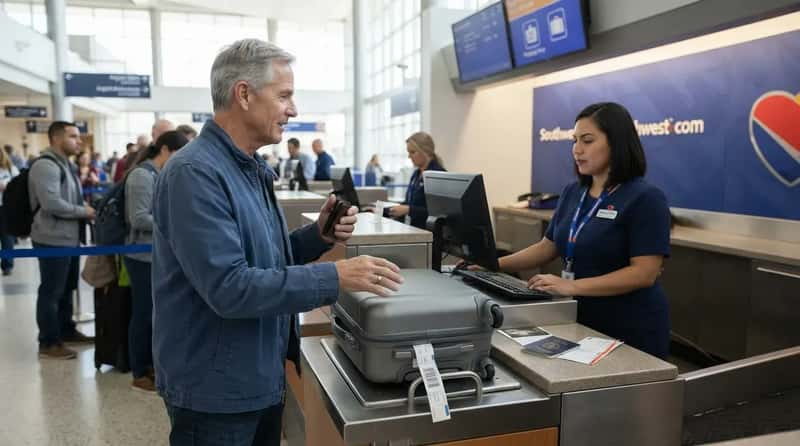
Many travelers still assume Southwest’s famous free bags are waiting for them. That policy ended on May 28, 2025. For tickets booked on or after April 9, 2026, the first checked bag costs $45, the second costs $55, and a third costs $150 on mainland flights. Nothing in the published exemptions mentions being over 60.
What does make the fee disappear is a different kind of status. The first bag costs $45 unless you hold A-List status, book a Choice Extra fare, or carry a Southwest credit card. Active-duty military customers are exempt too. One card can cover up to eight other passengers on the same reservation. The waiver is applied automatically at check-in, so the math comes down to how often you actually check a bag.
#12 – The Cash Refund Airlines Used to Dress Up as a Voucher

For years, airlines weren’t required to give cash back and typically pushed vouchers toward future flights. Under the current rules, a canceled flight, or a delay of 3+ hours domestic or 6+ hours international, entitles you to a cash refund. The catch is that you have to decline the airline’s offered alternative first. That one decision, saying no to the rebooking, is what turns a voucher into your money back.
The compliance date for these refund requirements was October 28, 2024. Parts of the framework are still under administrative review, so check the current wording before you fly. At the counter, “I’d like the refund instead of the rebooking” is a clear, calm request.
The refund doesn’t stop at the ticket, either. Add-ons you paid for and never received are covered too.
#11 – The Seat Fee You Paid For a Seat You Never Got

Paid seat selection is the easiest fee to forget once a trip falls apart. The refund rule also covers fees for services like seat selection or Wi-Fi that the passenger didn’t receive. Airlines must also notify affected passengers of their right to a refund of the ticket and extra service fees. That notification duty means you shouldn’t have to hunt for the rule yourself.
Seat fees matter more now at some airlines. Southwest began assigned seating on January 27, 2026, replacing its open-seating system. Once seats carry price tags, a paid seat that vanishes after a schedule change is real money. Ask the agent to confirm that any seat or extras charges were refunded alongside the fare.
#10 – The Delayed-Bag Fee You Have to Claim Back Yourself
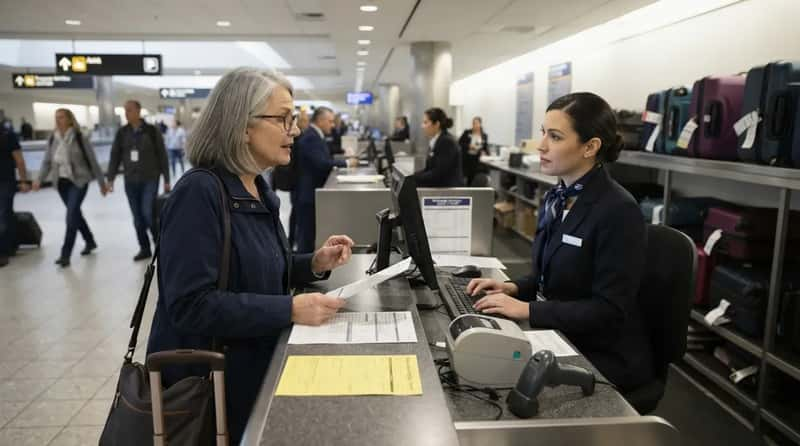
Waiting on a suitcase that never shows up is bad enough without losing the bag fee too. Airlines must refund bag fees if they don’t deliver checked luggage within a set window after the flight lands. For domestic flights, that window is 12 hours. Unlike other refunds, this one is not automatic, because passengers must file a mishandled baggage report. Most people don’t realize the paperwork is what triggers the money.
That detail is exactly where tired travelers get burned. You hear a courtesy delivery promise, head home, and never file the report. Many agents won’t bring up the fee unless asked. One line at the baggage desk can recover $45 or more per bag, depending on the airline.
Now for the charges that don’t depend on delays at all. The next group are free by law, and plenty of people still pay for them.
#9 – The Wheelchair Assistance Fee That Doesn’t Exist
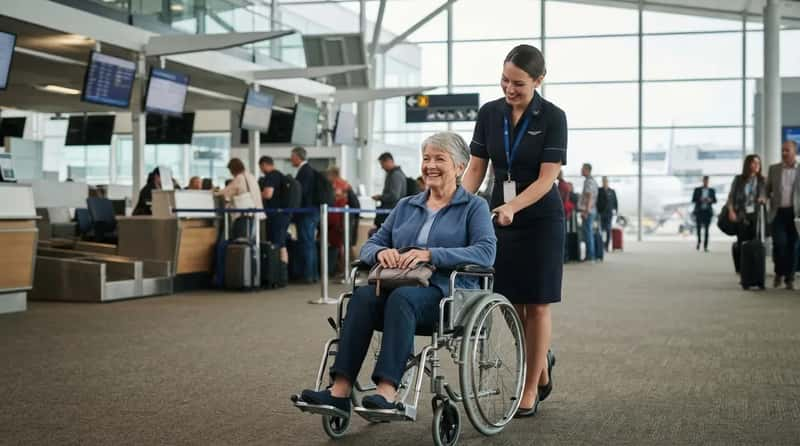
Airport wheelchair help is free. U.S. and foreign airlines flying to or from the United States must promptly provide wheelchair or other guided assistance to passengers with disabilities who ask. Airlines can’t charge for it and generally can’t require advance notice. The service costs the traveler nothing, even though many people tip or offer to pay out of habit.
It’s especially useful for people who can walk short distances but struggle with long concourses, crowds and standing in lines. The DOT still recommends calling ahead. If you arranged help in advance, you still need to identify yourself to airline staff at the airport or gate. The DOT has also said it is pausing enforcement of four requirements in its disability rules while it considers changes, so check its website before you travel.
#8 – The Gate-to-Gate Escort Nobody Mentions at Check-In
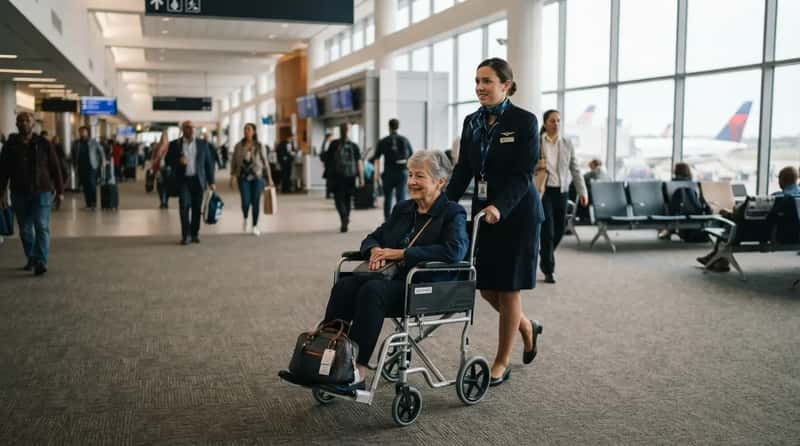
The DOT says airlines must provide prompt wheelchair or guided assistance to board, deplane or connect to another flight, in a safe and dignified manner. A tight connection in a huge hub can be the hardest part of a trip. The connection escort is part of the same free service, not a separate purchase. Asking for it at check-in lets the airline plan staff for your landing gate.
On board, the rules reach further than most people expect. On aircraft with more than 60 seats and no accessible lavatory, the airline must place an on-board wheelchair on the flight if you give 48 hours’ notice and can use an inaccessible lavatory but need the chair to reach it. Assistance inside the cabin is required, but not extensive personal services. That limit is worth knowing before you board.
Next up is a fee that thrives on the idea that you must pay to board in comfort.
#7 – The Priority Boarding Upgrade You Might Not Need to Buy

Priority boarding is sold as an upgrade at many airlines. But passengers who tell gate staff they need extra time to board, be seated, or stow accessibility equipment must be given the chance to preboard. The trigger is telling gate staff what you need, not buying a boarding tier. It’s one sentence at the podium.
The wording matters here. If an airline doesn’t give advance seat assignments, you can ask to board before other passengers if you need extra time. Plenty of travelers dislike announcing a need in public, and that’s a fair gripe. But the rule is built around the request itself. Seat choice is the next fee where the rules get more specific.
#6 – The Extra-Legroom Fee That Can Bend for a Real Medical Need

Airlines must provide a seat assignment that best accommodates a passenger’s disability if the passenger meets the airline’s procedures. One disability-travel resource lists a free seat assignment that meets disability-related needs among the key protections. If a stiff knee or mobility need makes a particular seat essential, the fee shouldn’t stand in the way. The rule follows the need, not the birthday.
There are limits. An airline isn’t required to let you pick a specific seat, though it must give you one that meets your needs, with restrictions for bulkhead and emergency-exit seats. Airlines also don’t have to move you to a different class of service than the one you bought. So a free first-class seat is not on offer, but a bulkhead seat for legroom is a different request.
Seating gets even more interesting when someone else is traveling with you.
#5 – The Second-Seat Charge for the Companion Who Helps You Fly
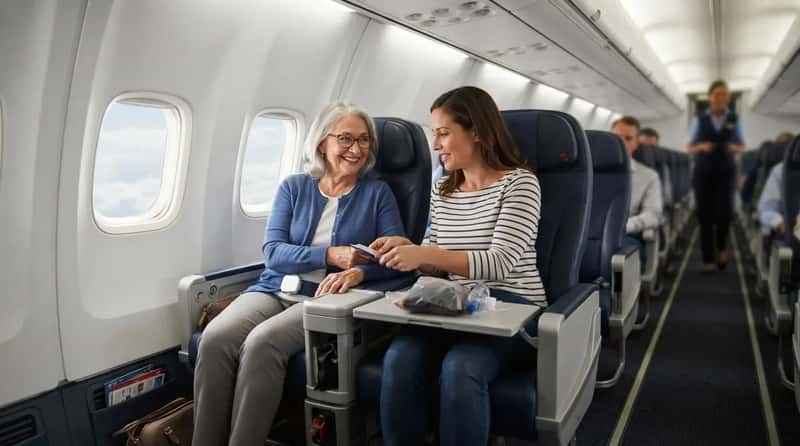
This one catches families off guard. Federal rules list four circumstances where an airline must provide an adjoining seat for a person assisting a disabled passenger. One is a personal care attendant who will perform a function during the flight that airline staff aren’t required to perform, such as helping with eating. After booking, notify the airline of your accessibility need and request a seating accommodation.
Canada and Europe have similar rules, and the details vary by country. For domestic travel within Canada, carriers are forbidden from charging an additional fare or fees to secure an adjacent seat for a qualified individual. Airlines in Europe are also prohibited from charging to seat a disabled passenger next to a companion who assists with daily living. Either way, the request only works if you make it.
A related rule can leave an airline footing the bill for someone else’s ticket.
#4 – The Free Ticket for a Safety Assistant the Airline Insisted On

Airlines may not require a person with a disability to travel with another person, except in certain limited circumstances where the rule permits them to require a safety assistant. If the passenger and airline disagree about the need, the airline can require the assistant but cannot charge for that person’s transportation. An airline that insists on an escort has to carry that escort for free. That surprises many people.
The flip side is worth knowing. If you choose to bring a personal care attendant and the airline doesn’t require one, the airline may charge for that person’s transportation. It’s also not required to find an assistant for you. If you disagree with a requirement at the counter, you can ask to speak with a Complaints Resolution Official, and staying calm and specific makes that conversation easier.
The next fee is one most travelers assume exists, even though the rules say otherwise.
#3 – The Baggage Fee Airlines Can’t Slap on a Wheelchair or Scooter
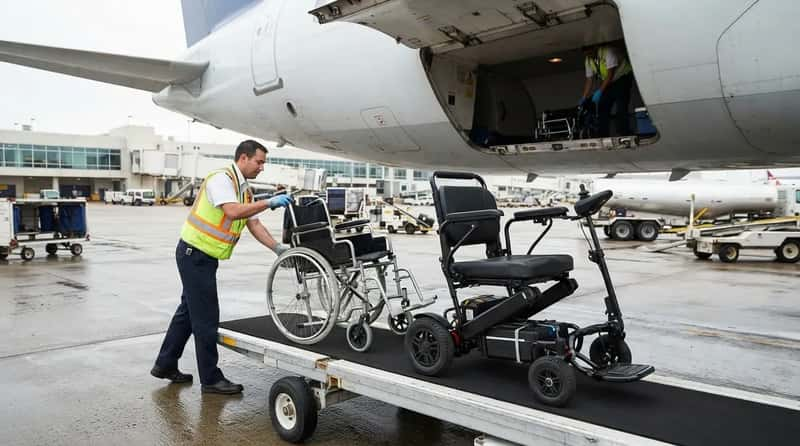
For many travelers, the biggest savings come from free transport of mobility devices. The wheelchair flies free. Mobility devices travel free even when ordinary checked bags cost $45 or more. Southwest, for example, charges $45 for a first checked bag on mainland flights.
Powered chairs come with extra rules. Airlines must accept a battery-powered wheelchair if it fits in the cargo compartment and can travel consistent with safety and security requirements. The same guide lists free service animal travel among the protections. If your chair is large, tell the airline when you book, not at the gate.
#2 – The Cabin Fee for Assistive Gear and Battery Packaging
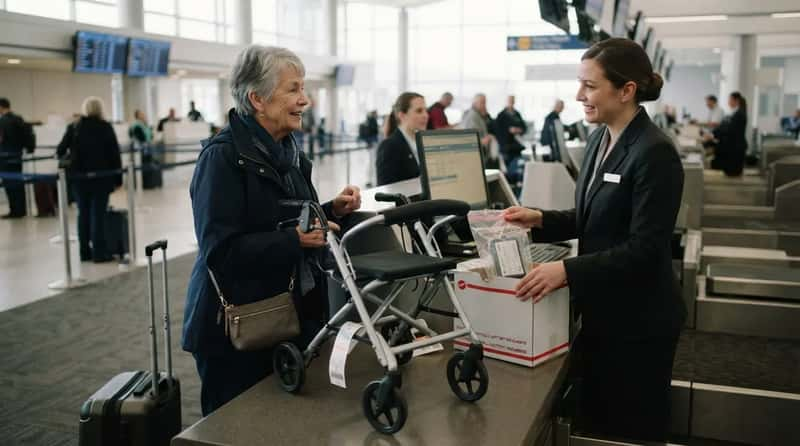
Airlines must allow assistive devices as carry-ons in the cabin free of charge, consistent with safety rules. Items stored in the cabin must still follow FAA rules on stowing carry-on baggage. That means a cane, walker or portable device shouldn’t count against your free carry-on in any fee calculation. An airline can’t bill you for the required accommodations.
That includes packaging. The airline provides the packaging for hazardous batteries, and it may not charge for accommodations the rule requires. There’s a limit, though. Airlines may charge for optional services such as providing oxygen, so confirm what counts as required. The last item on this list is the one that can matter most financially.
#1 – The Wheelchair Replacement Bill Airlines Have to Cover
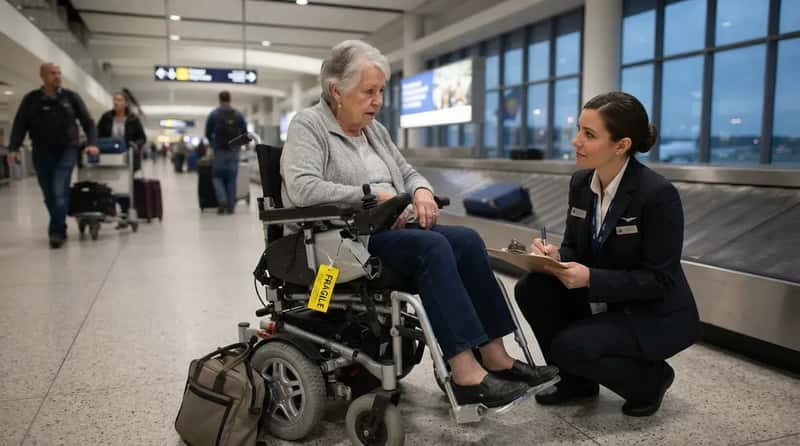
A damaged wheelchair can end a trip before it starts. If the airline loses, damages or destroys a wheelchair or other assistive device, it must compensate the passenger up to the original purchase price. The airline, not the traveler, is responsible for the cost of the device. Many power chairs cost far more than a typical airline bag fee.
There’s also protection for fit problems. Accommodation rules can force the airline to absorb fare differences in specific circumstances, such as when a passenger’s wheelchair won’t fit on the booked aircraft. If an airline refuses, you can call the DOT’s disability hotline at 1-800-778-4838 during business hours or file a complaint with the DOT. Report any damage at the airport before you leave, so there’s a record.
So can travelers over 60 skip airline fees just by asking? Sometimes. Age unlocks a handful of select-route fares and a few overseas programs, and most U.S. senior fares only cover specific routes. The rest comes from knowing the rule behind your request: need-based protections, refund rights, and card or status perks.
Rules also shift. The DOT has paused enforcement of some disability requirements, and parts of the refund rules are under review, so check current airline and DOT pages before you fly. The magic words at the counter were never “I’m over 60.” They’re “What rule covers this?”