Everyone assumes airlines are the ones fighting over your loyalty, showering elite flyers with perks while a train conductor just punches a ticket and calls out the next stop. That assumption is almost completely backwards. Conductors and the crews working beside them quietly handle dozens of small, human moments for older riders that no airline gate agent has the time, budget, or permission to offer.
None of this shows up on a boarding pass, and almost none of it ever makes it into a customer satisfaction survey. Most riders only stumble onto it the first time they actually need help – and by then, it’s usually too late to switch back to flying.
#13 – They Let You Skip the Line Entirely
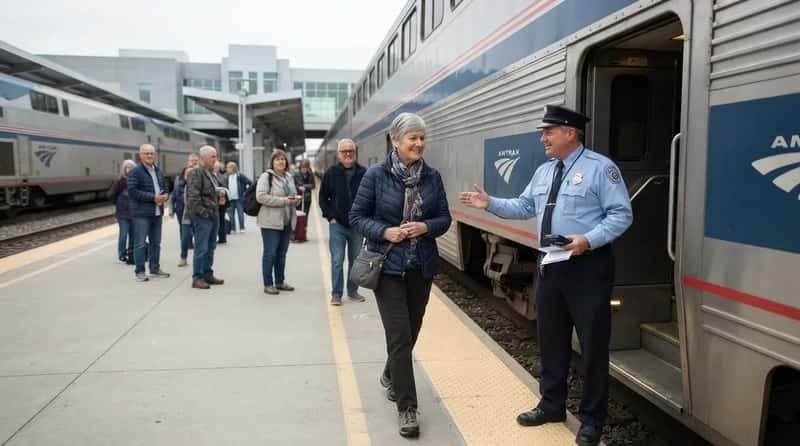
There’s no boarding group, no frantic scramble for overhead bin space, and no TSA-style bottleneck before you even reach the platform. Amtrak seating comes with more legroom than most airlines offer, and boarding itself skips the security-line grind altogether. For a 68-year-old with a bad hip, that single difference can decide whether a trip happens at all.
Airlines built an entire paid tier around priority boarding, charging extra just to skip a line they created in the first place. Trains never bothered gatekeeping the door to begin with. That alone should make more older travelers reconsider flying for anything under 400 miles – but the real surprises start once you’re actually on the platform.
#12 – They Send Someone to Walk You There, Free
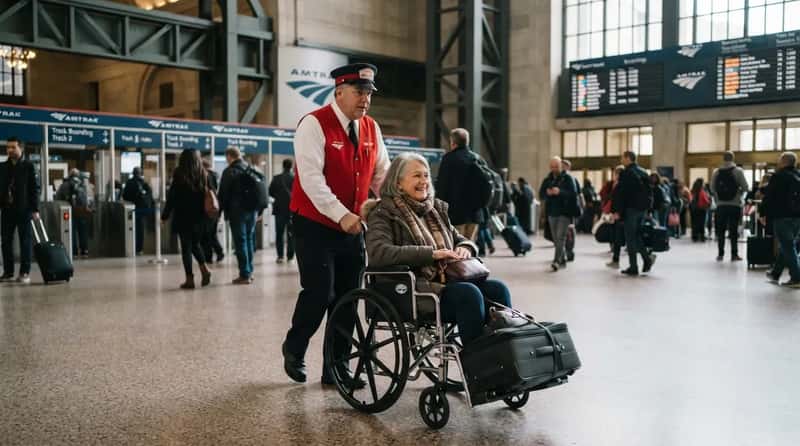
Amtrak’s Red Cap agents exist specifically to close the gap between the station entrance and your seat, and it doesn’t cost a dime. These agents aren’t just baggage handlers – they push wheelchairs, carry luggage, and guide passengers through the station to their train, lounge, or waiting area.
Most flyers have never gotten anything close to this without paying a separate wheelchair escort fee. Compare that to an airport, where the same help often means waiting alone at a gate for a contracted pusher who may or may not show up on time. What happens next is where the quiet care gets even more personal.
Whether navigating the station for the first time or more familiar with your route, everyone could use an extra pair of hands on their trips.
Amtrak spokesperson, via Travel + Leisure
#11 – They Handle Your Medication Without Making a Scene
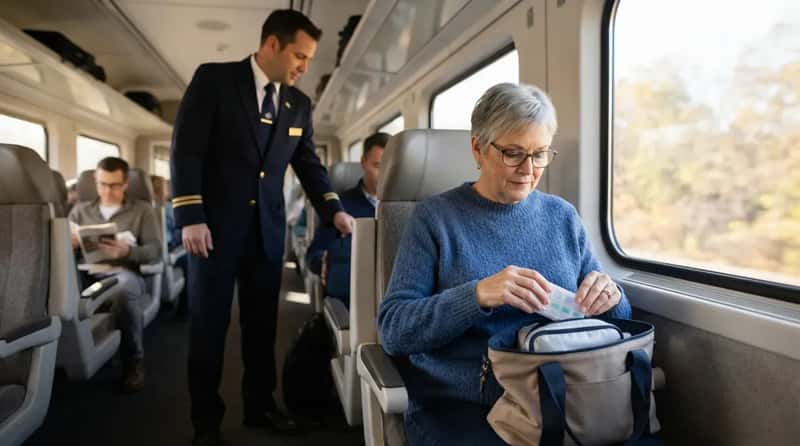
Conductors and onboard staff are trained to work around medical needs discreetly, not turn them into an announcement. Passengers with diabetes or other conditions are simply encouraged to carry enough supplies in case of delay, and to be able to manage their own medication on board.
Crews quietly make room for insulin kits, snack bags, and pill organizers without singling anyone out or drawing attention from other riders. It’s treated as routine, not a special case. That quiet normalcy is something airlines rarely replicate, since flight attendants are managing an entire cabin in a fraction of the time a train crew has.
#10 – They Flag Assistance Before You Ask
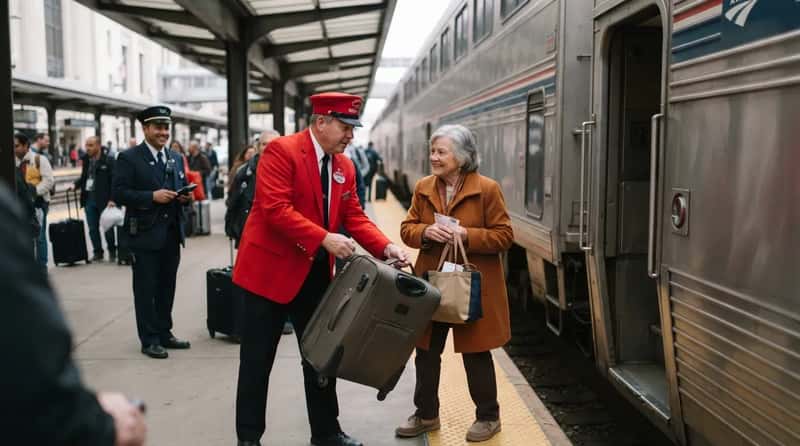
On many routes, crew members proactively loop in Red Cap agents for older passengers instead of waiting to be asked. Amtrak staff are trained to offer boarding support on their own, and seniors, large groups, and anyone unsteady on their feet are directly encouraged to lean on that help rather than wrestle a heavy bag alone.
Airlines almost never initiate that offer – you have to ask, and often more than once before anyone actually acts on it. This habit of stepping in first is one of the biggest quiet differences between the two industries, and it sets up the next item, which involves real money.
#9 – They Apply a Discount Airlines Would Never Give Away
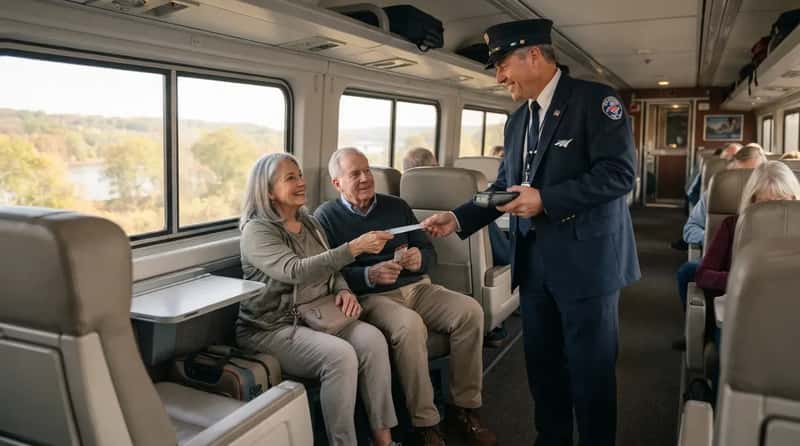
Every domestic airline in the country dropped blanket senior fare discounts decades ago. Amtrak never did. Travelers 65 and older get a 10% discount on most rail fares on most routes, no coupon code or phone call required – it stacks automatically once you select “senior” at booking.
On cross-border routes it’s even more generous. Amtrak and VIA Rail Canada extend that same 10% senior discount to travelers as young as 60. It’s a small percentage on any single ticket, but for a retiree who rides regularly, it adds up to savings flying simply stopped offering years ago.
Quick Compare
- Amtrak, U.S. routes: 10% off most fares starting at age 65, applied automatically at checkout
- Amtrak + VIA Rail Canada cross-border routes: the same 10% discount, but eligibility drops to age 60
- Major U.S. airlines: no standing senior fare program to select at booking
- No promo code needed on Amtrak – just choose “senior” as the passenger type
#8 – They Stretch the Companion Discount Further Than You’d Expect
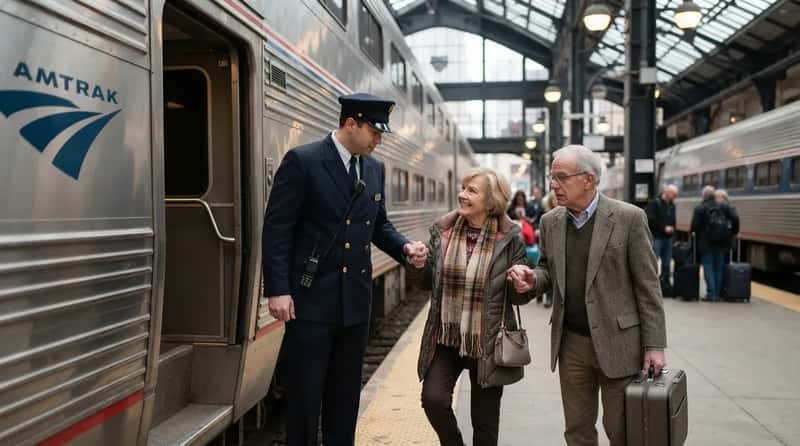
If a senior passenger travels with someone who provides real assistance, that companion often qualifies for savings too. Amtrak offers a 10% discount for a designated traveling companion of a passenger with a disability, on top of any senior discount already applied.
The catch is simple but rarely explained clearly at booking: the companion has to actually be capable of providing that assistance, not just along for the ride. Airlines treat a caregiver’s seat as just another full-price ticket, no exceptions. Trains quietly build the relationship into the fare structure itself.
#7 – They Point You Toward the Good Seat, Not the Leftover One
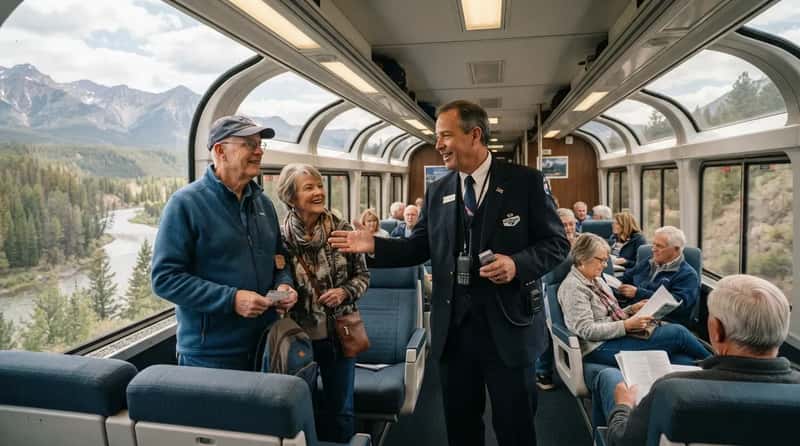
Conductors and attendants often nudge older riders toward the cars with the best views rather than whatever seat happens to be assigned. On many long-distance routes, passengers are encouraged to walk down to the Sightseer Lounge instead of staying boxed into a standard coach row for the whole trip.
This kind of seat steering almost never happens on a plane, where the good seat is a paid upgrade, not a friendly suggestion. It costs the crew nothing to mention, and for a retiree on a scenic route, it can turn a routine trip into the highlight of the year. Some rail veterans argue this one small habit does more for passenger happiness than any airline loyalty program ever has.
#6 – They Let Service Animals Actually Stretch Their Legs
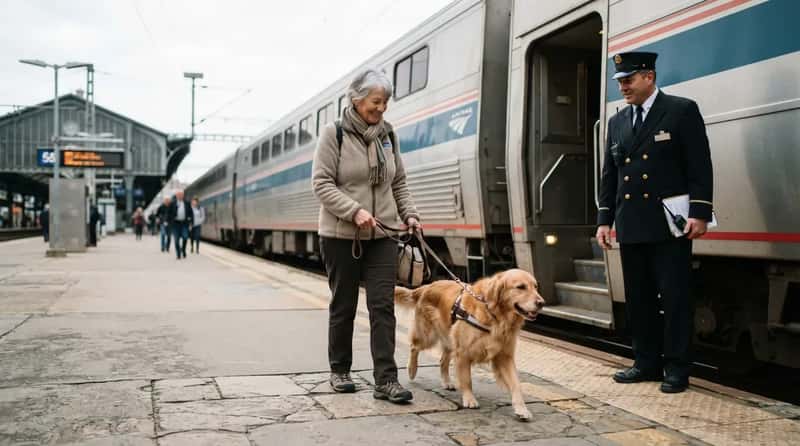
Flying with a service animal usually means hours confined to a tight patch of floor. Trains build in real breaks – where the schedule allows, passengers can walk their service animal at station stops, staying close by and ready to re-board the moment they’re called.
Crews even help coordinate the timing, and passengers are encouraged to check with the conductor at boarding to learn which stops will be long enough for a real walk. That’s a level of flexibility no aircraft cabin can physically offer, no matter how understanding the crew is. For a senior who relies on a service animal daily, this one accommodation can decide train over plane every time.
Worth Knowing
- Service animals must stay under control at all times and can’t sit on seats, beds, or in the aisles
- Where the schedule allows, riders can walk their animal at station stops, as long as they stay close and re-board promptly
- Conductors recommend checking in at boarding to learn exactly which stops give enough time for a real break
#5 – They Check In More Than Once, Not Just Once
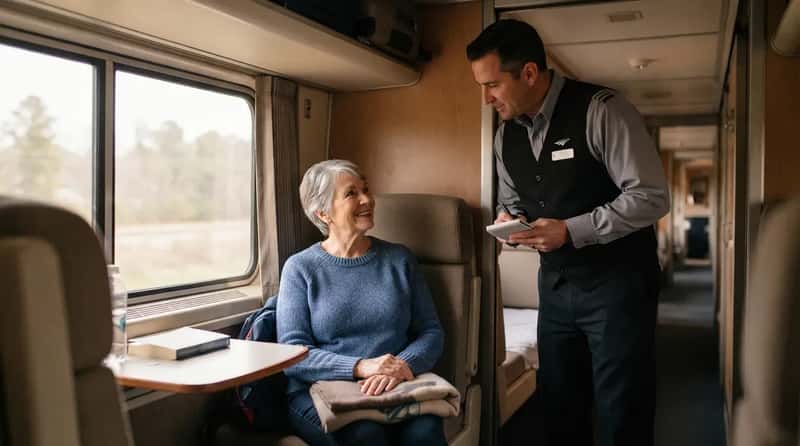
On overnight and long-distance routes, attendants build ongoing check-ins into the whole trip instead of one pass with a beverage cart. A dedicated sleeping car attendant greets passengers at boarding, handles turndown service, helps with meals and luggage, and checks back throughout the journey.
Most fliers never interact with the same crew member twice on a single flight, let alone build any rapport. On a train, that same attendant might check on an older passenger’s comfort three or four times over a twelve-hour trip. It’s a small thing that quietly changes how safe and cared-for a senior traveler feels.
#4 – They Remember Faces on Routes Riders Take Again and Again
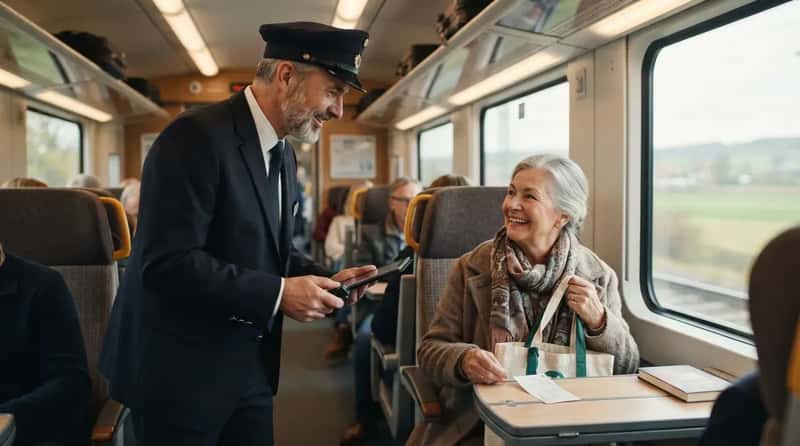
Ask any senior who rides the same regional line every month, and they’ll tell you the same thing – certain conductors remember them by name, not by ticket number. It’s not an official policy. It’s just what happens when the same crews work the same corridors for years and get to know their regulars.
That kind of continuity simply doesn’t exist in commercial aviation, where crew rotations mean a passenger might never see the same flight attendant twice in a decade of flying. For an older traveler who values routine and a familiar face, that consistency is quietly one of the most underrated perks of the rails.
#3 – They Turn Down the Bed and Talk to You Like a Person
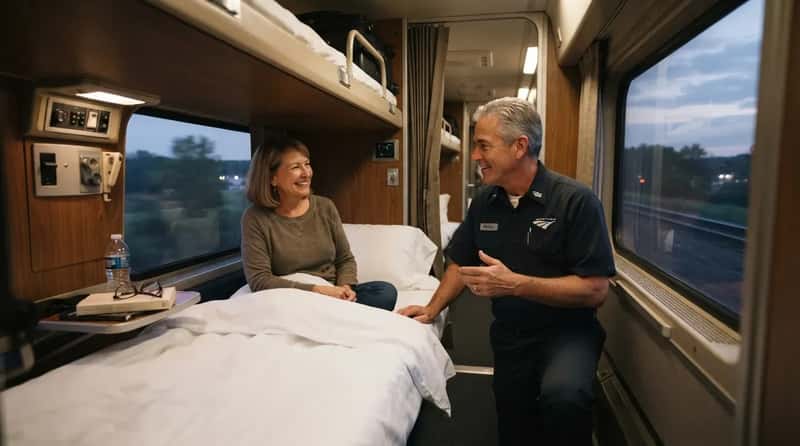
Sleeper service on long-distance Amtrak routes includes a hospitality touch that has nothing to do with efficiency metrics. The attendant turns down the bed, checks in throughout the night, and often shares stories about life on the rails – all as part of the standard overnight experience, not a paid upgrade tier.
Airlines reserve anything resembling this kind of personal hospitality for first- and business-class cabins that cost thousands more than coach. On a train, it comes built into a modestly priced roomette. Some travel writers now make the genuinely controversial argument that a long-distance rail sleeper beats any domestic first-class seat for value.
#2 – They Help You Off First, Not Last
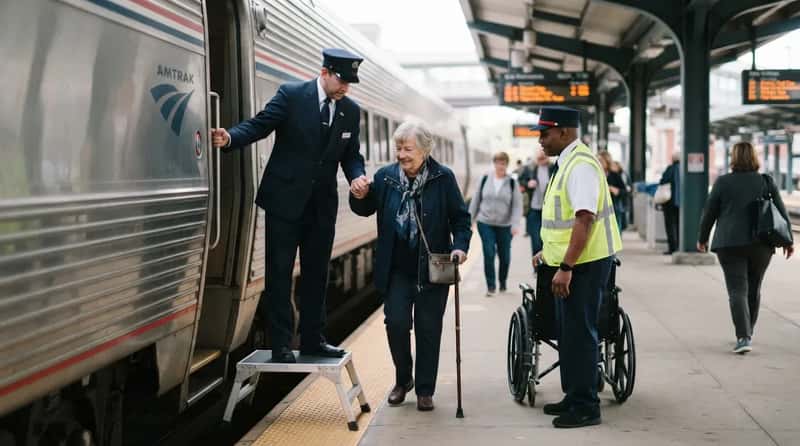
Boarding priority gets all the attention, but disembarking assistance matters just as much for someone with limited mobility. Crews and Red Cap agents coordinate so passengers who need extra time or a wheelchair lift are ready to go the moment the train stops, instead of waiting for the aisle to clear first.
On an airplane, deplaning almost always happens in strict row order, no exceptions, no matter how slowly someone up front is walking. On a train, staff quietly rearrange that order so the passenger who needs it most gets off safely and without pressure.
#1 – They Treat Slow Walkers Like People, Not Delays
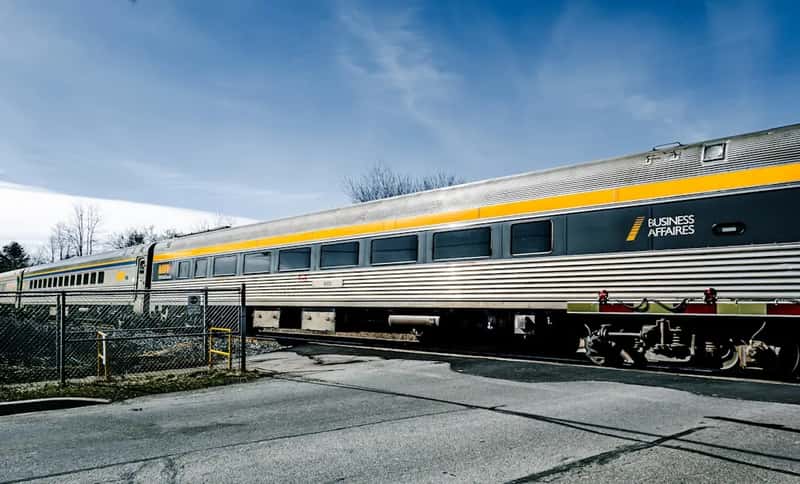
This is the habit that separates rail crews from almost every other transportation industry: patience without a stopwatch running. Amtrak’s own accessibility obligations reinforce it – failing to properly assist a mobility-impaired passenger isn’t just poor service, it’s a legal violation the company takes seriously, and staff are trained accordingly.
Airlines run on tight turnaround schedules where every extra minute at the gate costs real money, and that pressure trickles straight down to how passengers get treated. Trains simply don’t operate under that same brutal math. A conductor waiting an extra beat for someone using a cane isn’t going out of their way – on the rails, it’s just the job.
At a Glance
- Amtrak treats mobility assistance as a legal obligation, not just a courtesy
- Accessible seating and accessible restrooms are required in at least one coach car on every train
- Each sleeping car includes one dedicated accessible bedroom built with wheelchair space
- Accessible features are first-come, first-served, so early booking matters
Add it all up, and the picture is clear: train crews aren’t quietly going above and beyond because of some marketing initiative. It’s baked into how the entire system runs, from free Red Cap assistance to discounts airlines abandoned decades ago. Most riders only discover these thirteen things by accident, usually the first time they truly need help – and for millions of Americans over 60, that quiet difference is exactly why the train keeps winning.