

Most travelers assume a wheelchair attendant just pushes the chair from point A to point B and calls it a day. That assumption is quietly wrong, and it’s costing older travelers a smoother trip every single time they fly. Behind every “quick escort” is a web of federal rules, radio calls, and split-second judgment calls that almost nobody riding in the chair ever notices.
What actually happens between curbside and the gate is far more coordinated – and in some cases far more protective – than the average passenger over 60 realizes. Here’s what insiders, federal regulators, and the attendants themselves actually say about what’s really going on.
#13 – They Radio Ahead So a Chair Is Already Waiting at Your Next Gate
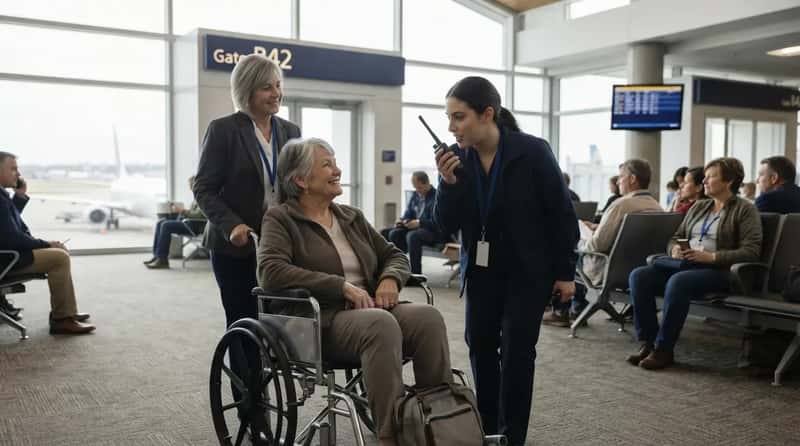
When a connection is tight, the crew pushing your chair isn’t the only one working on your behalf. If you need help making a connecting flight, airlines arrange for a wheelchair and an assistant to meet you at the appropriate gate. That handoff is arranged before you even land, not after you’re standing confused in a new terminal.
Most passengers assume this coordination is automatic and effortless. In reality, it depends on someone confirming your request ahead of time. If you’ve confirmed your mobility needs when booking, that request is supposed to follow you through every connection on your itinerary, not just your first flight.
#12 – They Know Hidden Shortcuts Regular Passengers Never Even Notice
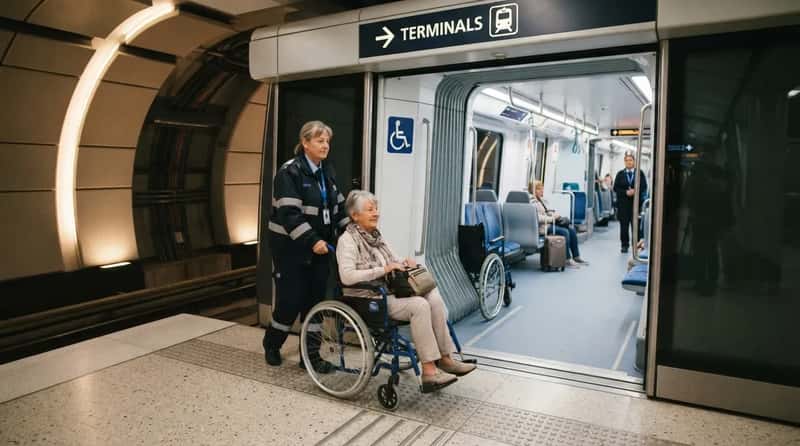
Experienced attendants aren’t just walking you in a straight line – they’re routing you around the parts of the airport that slow everyone else down. Some airports have entire transit systems built for exactly this kind of movement.
Above-ground people-movers and below-ground inter-terminal trains are fully wheelchair accessible, letting travelers skip long walks between terminals entirely. Most passengers over 60 never learn these systems exist because nobody points them out. Attendants use them constantly, quietly cutting travel time without you ever seeing the long way you avoided.
#11 – They’re Legally Forbidden From Leaving You Alone for More Than 30 Minutes
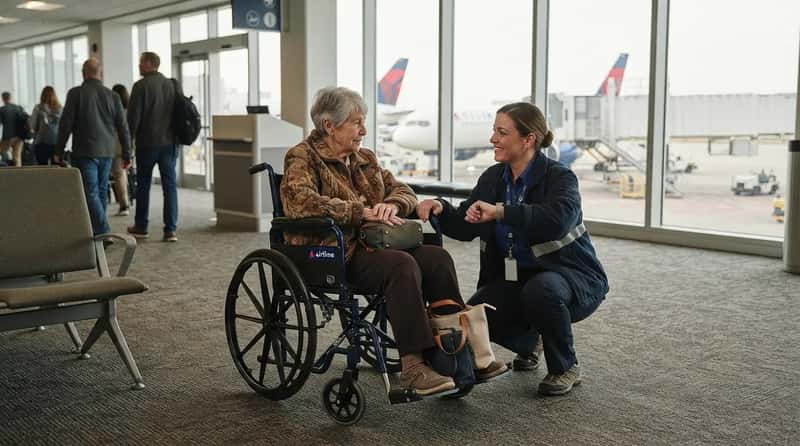
Here’s a protection almost no traveler over 60 knows exists until they need it. It’s not a courtesy. It’s federal law.
If you’re using a wheelchair or any mobility aid, airlines are required to make sure you’re not left unattended for more than 30 minutes barring unusual circumstances. Most travelers assume they’re at the mercy of whoever remembers to come back for them, but that’s not how it works. Attendants are quietly tracking the clock on your behalf, and a delay past that window is a reportable violation, not just bad luck.
Fast Facts
- The rule flows from the Air Carrier Access Act, the same federal law that governs disability protections in air travel.
- The 30-minute clock applies at every stage of the journey – curbside, security, gate, and after landing.
- Exceptions are generally limited to unusual circumstances, like severe weather or air traffic delays.
- Passengers can escalate a violation to the airline’s designated Complaints Resolution Official on the spot.
#10 – They Flag Your Battery Type Before You Even Reach the Counter
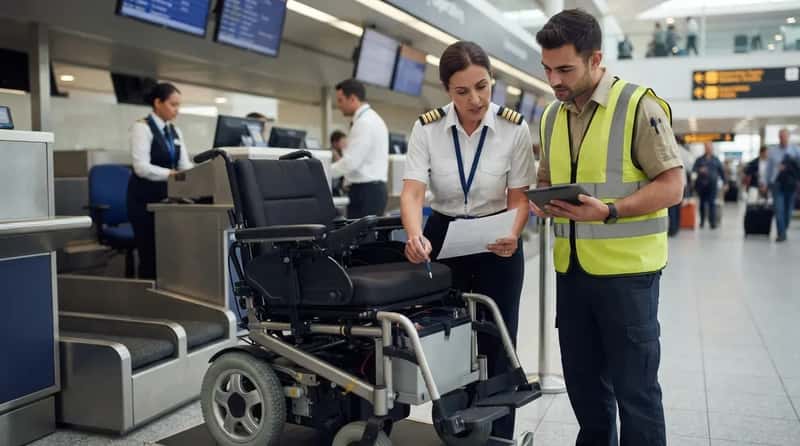
If you travel with a power wheelchair, there’s a paperwork process happening in the background that has nothing to do with your ticket. It’s about chemistry, not comfort.
Passengers with battery-powered wheelchairs are asked to check in two hours early so crews can prepare the chair for cargo, loading it upright and keeping components connected whenever possible. Some batteries are still subject to dangerous-goods handling and special packaging rules. Attendants sort all of this before it ever becomes your problem at the gate, since a single unflagged battery can delay an entire flight.
#9 – They Quietly Rank Airports, and a Few Major Cities Fail Miserably
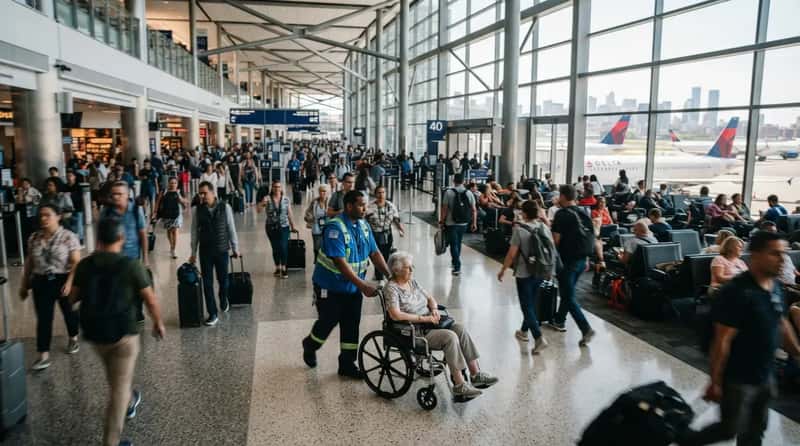
Not every airport treats older travelers the same way, and industry insiders aren’t shy about saying so. This is where the friction starts.
Travel specialists who work with mobility-limited clients point to Las Vegas, Miami, and Orlando as tourist hubs that go out of their way to accommodate older travelers. New York’s LaGuardia, by contrast, has long had a reputation for being tougher to navigate. Most travelers pick flights based on price alone, never realizing the airport itself can make or break an assisted trip.
Quick Compare
- Las Vegas, Miami, Orlando: Frequently praised for smoother staffing, tourist-friendly layouts, and shorter waits for mobility assistance.
- LaGuardia: Regularly cited by travel specialists as one of the tougher airports for assisted travelers to navigate.
- The takeaway: Two travelers with the same needs can have wildly different experiences depending solely on which airport they land in.
#8 – They Handle the Kiosk Fumbling So You Don’t Have To
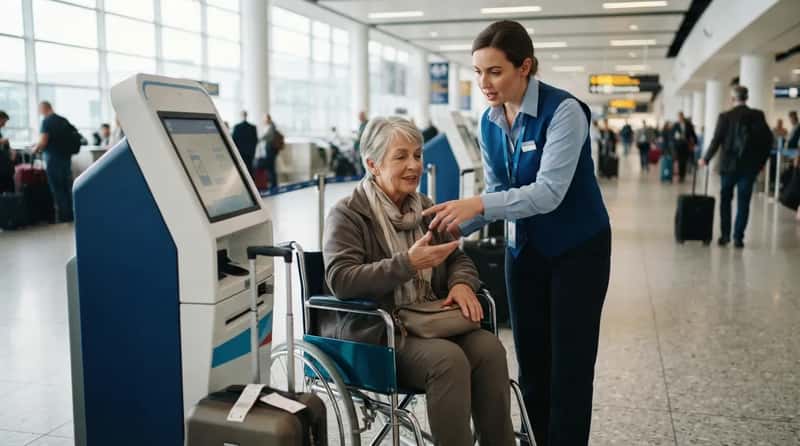
Digital check-in kiosks are one of the quiet reasons airports feel hostile to older travelers, and attendants know it before you even open your mouth.
With mobility support, you don’t have to juggle paperwork, manage luggage, or fight with a touchscreen alone. Staff check you in properly, get your bags handled safely, and make sure any medical equipment is documented and stored correctly. Most travelers over 60 think asking for help with a screen is embarrassing, but it’s actually one of the most requested, least talked-about parts of the entire job.
#7 – They Move You Through Security Faster Than You’d Ever Ask For Yourself
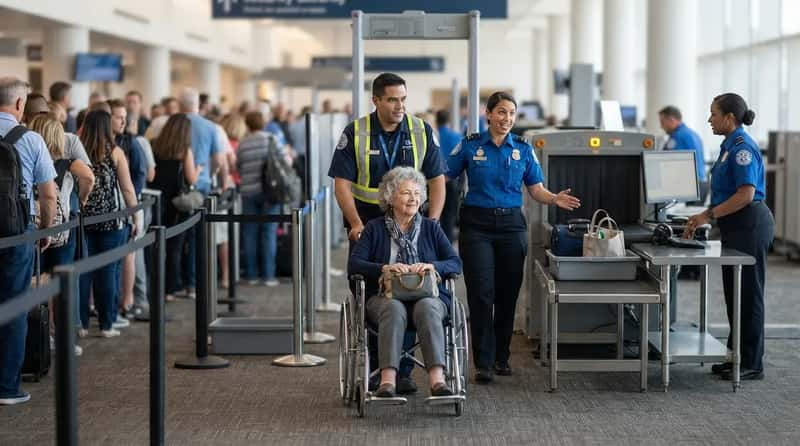
There’s a quiet screening track many older travelers don’t even know to request, and attendants often trigger it automatically.
Major airports support TSA Cares, a program built for travelers with disabilities, medical conditions, or anyone needing extra screening time, and it can be arranged at least 72 hours ahead of a flight. Attendants frequently loop this in behind the scenes so you’re never stuck in a slow-moving line for no reason. Most passengers assume slow security is just part of flying older, but it genuinely doesn’t have to be.
Worth Knowing
- You can call the TSA Cares helpline directly at (855) 787-2227 to request a Passenger Support Specialist.
- Requests are best made at least 72 hours before departure, though same-day help can sometimes be arranged at the checkpoint.
- A Passenger Support Specialist can walk you through what to expect and answer questions before you ever reach the line.
- The service is free and covers far more than wheelchair users – it includes anyone with a disability, medical condition, or special circumstance.
#6 – They Keep a Mental Map of Every Companion Restroom in the Terminal
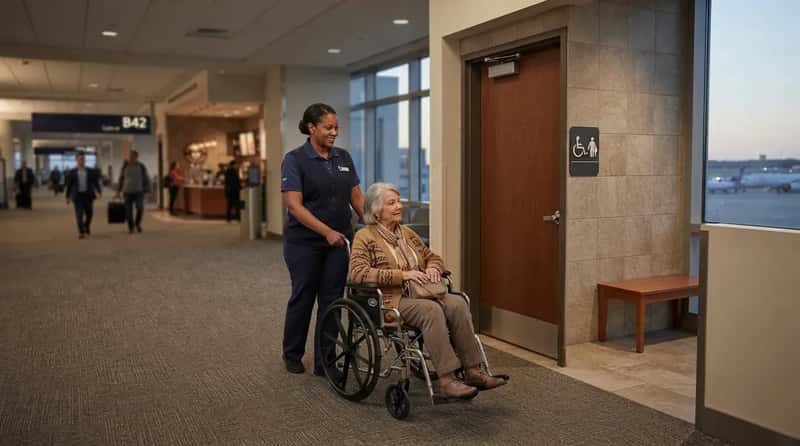
This one sounds small until you actually need it mid-connection, and it’s one of the most requested unofficial services attendants provide.
At major hubs, companion care restrooms are tucked between gates, next to coffee shops, or across from quiet chapels – rarely where signage actually points. Attendants memorize these locations because official maps rarely make them obvious. Most travelers over 60 have no idea these specialized facilities even exist until an attendant quietly detours them there.
#5 – They Coordinate a Transfer Most Travelers Have Never Even Heard Of
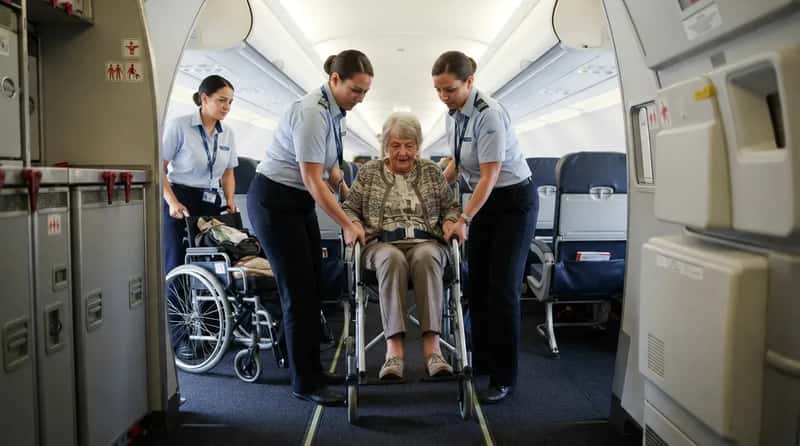
Boarding isn’t always as simple as rolling up a ramp. On many aircraft, your wheelchair physically cannot fit down the narrow aisle.
For travelers with more significant mobility needs, a narrower aisle chair is used instead, and airport staff handle the transfer from your regular wheelchair before escorting you onto the plane. Most first-time flyers over 60 are genuinely startled the first time they’re moved into this second, smaller chair just to reach their seat. It’s routine to the crew, but it’s rarely explained in advance.
#4 – They’re Contractors, Not Airline Employees, and Tips Quietly Matter
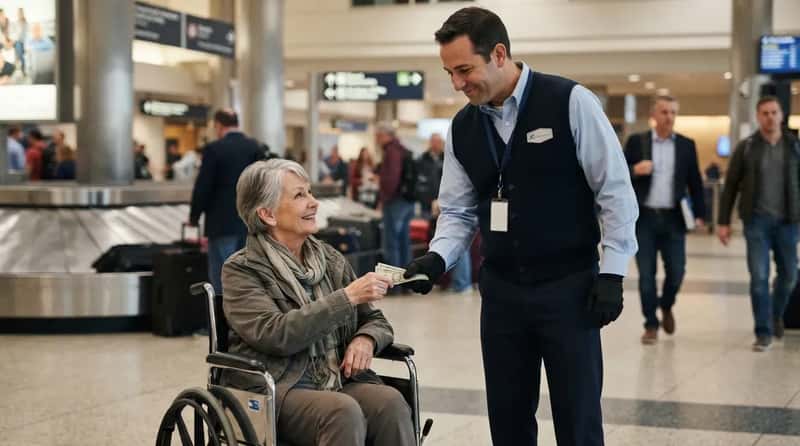
Here’s the part that surprises almost everyone: the person pushing your chair likely doesn’t work for the airline at all.
Wheelchair attendants are usually contractors, and while tipping is technically discretionary, most accessibility experts say it’s commonly expected. One accessibility expert put it bluntly, explaining they’ll tip $5 for a short trip but up to $20 if the attendant waited through baggage claim, adding that anyone who can afford to travel should be able to be generous to the people helping them get there.
If you can afford to travel, you should be nice to the people who help you.
Most travelers assume this “free” service comes with fair, guaranteed pay for the person providing it. It often doesn’t.
#3 – They’re Trained and Retrained to Handle You With Dignity, Not Just Speed
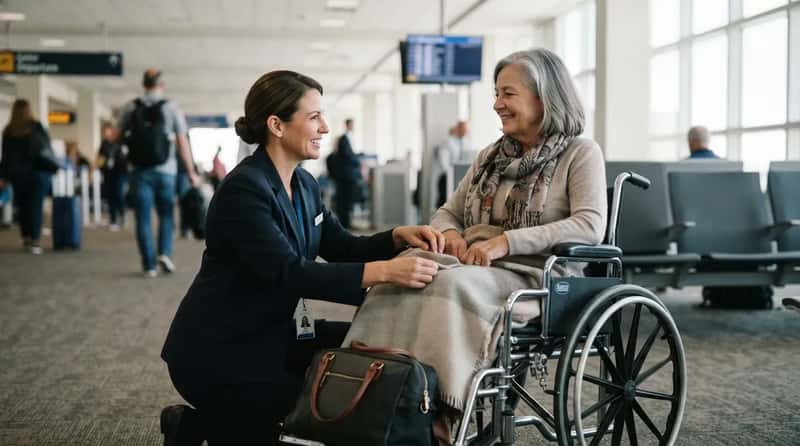
This isn’t a one-time onboarding video. It’s an ongoing legal requirement most passengers never think about.
Airline personnel are required to be trained on assisting travelers with disabilities respectfully and safely, with mandatory refresher courses every few years. Most travelers assume attendants are just temp workers with minimal preparation. In reality, there’s a recurring compliance structure behind every interaction, built specifically so older and disabled passengers are never treated as an afterthought.
#2 – They Let You Keep Your Own Wheelchair Until the Very Last Second
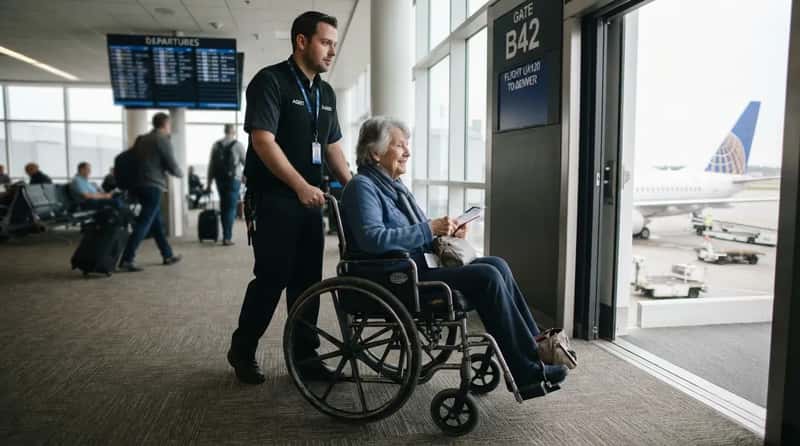
Most travelers assume they have to switch into an airport-provided chair the moment they walk in. That’s often not true, and it matters more than people realize.
Most airports let passengers stay in their own wheelchair for the bulk of the journey through the terminal, preserving both comfort and independence. Using your own chair also means no unfamiliar controls and far less risk of accidental damage. Attendants quietly push to delay the swap as long as possible, specifically to protect equipment that may have taken years to custom-fit.
#1 – Federal Law Quietly Guarantees You Board First and Leave Last

This is the one most travelers over 60 have benefited from for years without ever knowing it was a legal guarantee, not a favor.
If you use wheelchair assistance, you’re usually among the first to board, and the rule holds just as firmly on the other end. Airlines are required to provide deplaning assistance promptly, which in practice means you’re helped off after other passengers who didn’t request assistance have cleared the aisle. Most passengers think they’re simply witnessing kindness toward slower travelers, when really they’re watching a federally mandated sequence built so no one over 60 is ever rushed, skipped, or left scrambling.
At a Glance
- Priority boarding for wheelchair users is a requirement under the Air Carrier Access Act, not an airline policy that can vary by mood or staffing.
- Prompt deplaning assistance is required, regardless of how full the flight was or how late it’s running.
- The rule applies the same way whether you’re flying economy or first class.
- Confirming your wheelchair request at booking is what keeps this sequence running smoothly on both ends of the flight.
None of this happens by accident. Every quiet radio call, every early flag on a battery type, every extra minute spent finding the right restroom is the result of rules, training, and habits built specifically around protecting older travelers, even when nobody explains it out loud. The system isn’t perfect, and it clearly works better in some cities than others, but the protections are real, and they’re bigger than most people over 60 ever realize.