Most people assume the check-in desk is just where you drop a bag and grab a boarding pass. But for solo travelers over 60, that counter can quietly unlock a completely different trip – one most 30-somethings never even know exists. Gate agents rarely announce these perks out loud, and airline apps bury them three menus deep.
The strange part? Many of these upgrades aren’t officially “senior discounts” at all. They’re accessibility, comfort, and priority services that just happen to line up perfectly with what an older solo flyer actually needs. Here’s what actually gets unlocked once you say the right words at the desk.
#13 – The “Special Assistance” Code That Changes Your Whole Airport Day
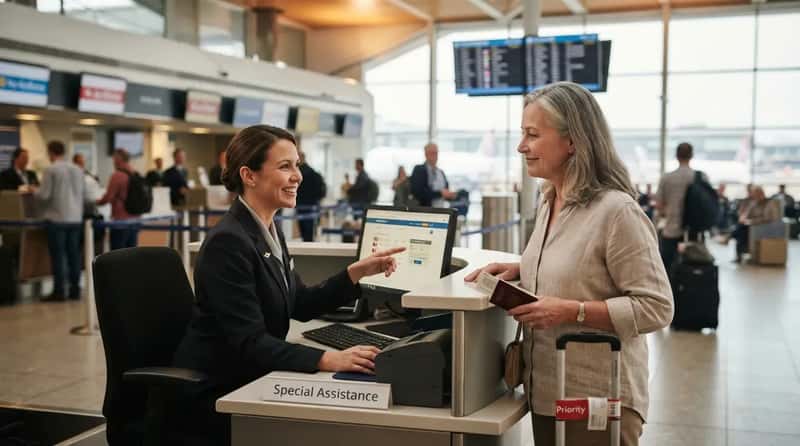
Saying the phrase “special assistance” to a desk agent isn’t just about wheelchairs. It triggers a coded flag in the airline’s system that follows you for the entire trip. Most travelers over 60 never ask, assuming it’s only for wheelchair users, but airports and airlines actually provide help with wheelchairs, transport through the terminal, and getting to and from gates for anyone who requests it.
The surprising part is that once that code is attached to your reservation, it often stays visible to every agent who touches your file, from check-in to the connecting gate. Most airlines run a dedicated line for passengers with disabilities and special needs, and many airports have curbside programs that dispatch personnel to help travelers from their cars all the way through security. That single sentence at check-in can quietly rewrite your entire itinerary. But that’s nothing compared to what happens at the curb.
Fast Facts
- The flag covers wheelchair help, terminal transport, and gate-to-gate assistance
- It follows your reservation from check-in through every connecting gate
- Most airlines run a dedicated help line just for these requests
- Curbside programs can start the moment you’re dropped off, not just at the counter
#12 – A Curbside Escort That Skips the Chaos Entirely
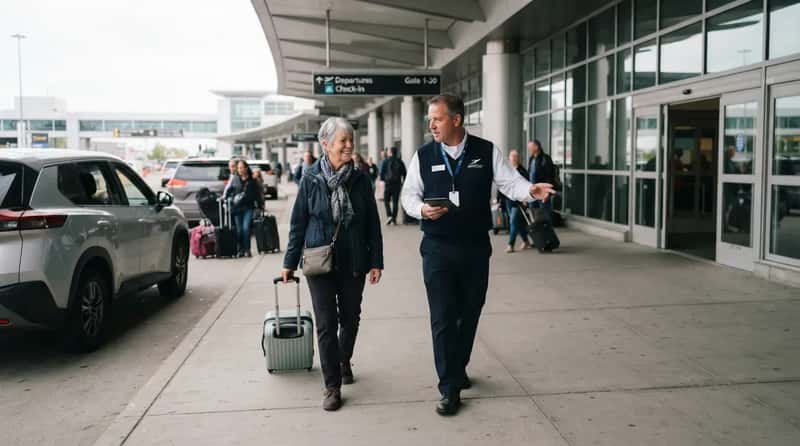
Solo travelers over 60 who ask at the curb often get walked, not just wheeled, straight through the front of the line. Curbside assistance staff can also help passengers return rental cars and find transportation, but fewer people realize this same team can meet you the moment you step out of a car or rideshare.
Most flyers never request it because they assume it’s reserved for wheelchair users only, but curbside programs are built for anyone who feels overwhelmed navigating a packed terminal alone. It quietly removes the most stressful ten minutes of the entire trip: the scramble from curb to counter. Once you’re flagged this way, staff often walk you personally instead of pointing toward a hallway. That’s the upgrade nobody advertises – a human escort instead of a sign.
#11 – Priority Boarding Without Buying an Upgraded Fare
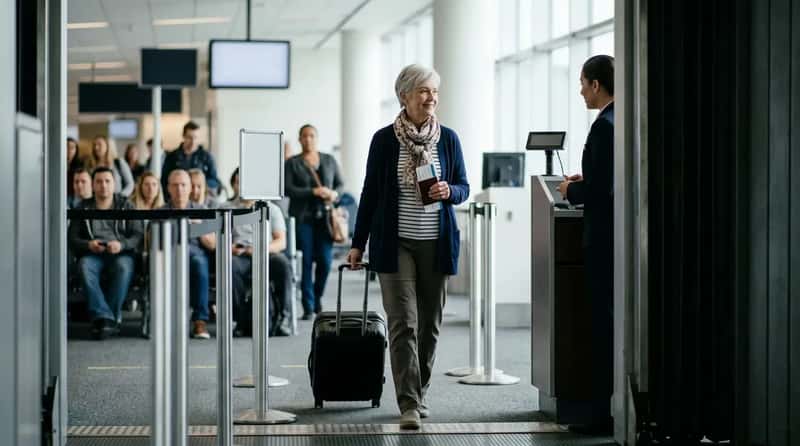
You don’t need first class to board first, you just need to ask the right way. Priority boarding for unaccompanied seniors provides early access to the aircraft, which means avoiding the jammed jet bridge and the overhead-bin scramble entirely.
Most economy passengers over 60 don’t realize this exists outside of paid upgrades. It’s typically granted the same way as wheelchair or mobility requests, through the special assistance flag, not a fare class. Once boarded early, you also get first pick of seating adjustments if your assigned seat feels wrong. It’s a small ask that changes the entire physical experience of getting onto the plane.
#10 – A Dedicated Check-In Counter That Skips the Regular Line Completely
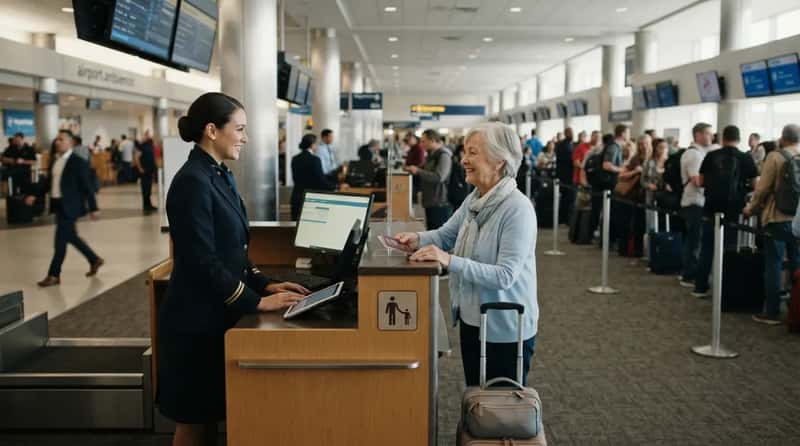
Some carriers still run a separate counter that most travelers walk right past without noticing. International carriers in particular are known for this: check-in at a dedicated counter, with a staff member assigned after immigration inspection to accompany the passenger all the way to the boarding gate.
The most surprising part is that this counter often has shorter waits than the regular line entirely, not just a “special” designation for optics. On U.S. domestic routes, the equivalent version usually shows up as a shorter special-services queue near baggage drop. Ask specifically for it by name, because many agents won’t volunteer it unless you do. This isn’t just a courtesy stop, it’s a functional shortcut.
#9 – Someone Waiting for You on the Other End, Too
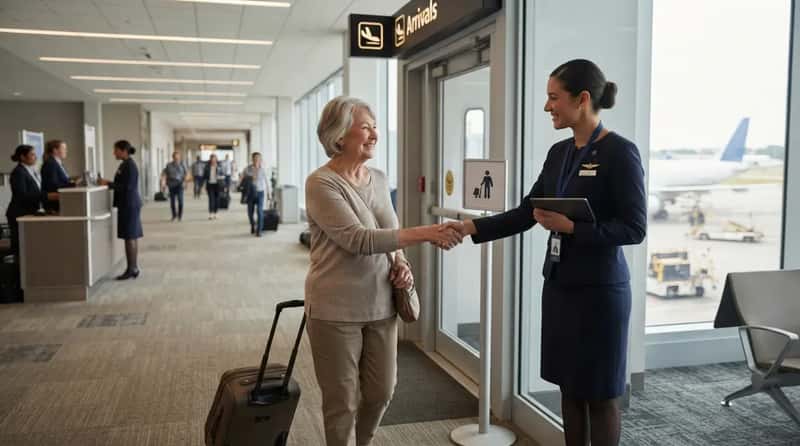
The upgrade doesn’t stop when you land, it often restarts the moment the plane door opens. Once the passenger arrives at the destination city, a staff member is frequently on standby to help with immigration, baggage claim, and the walk to the arrival gate.
Most solo travelers assume assistance ends at takeoff, but many carriers pre-notify the arrival airport before the plane even touches down. That means someone can be physically waiting at your specific gate, not a general help desk somewhere in the terminal. It’s a detail almost nobody mentions when they talk about senior travel perks, yet it’s often the most reassuring part of flying alone.
#8 – The Service Gap Nobody Warns You About at Some Big Airports
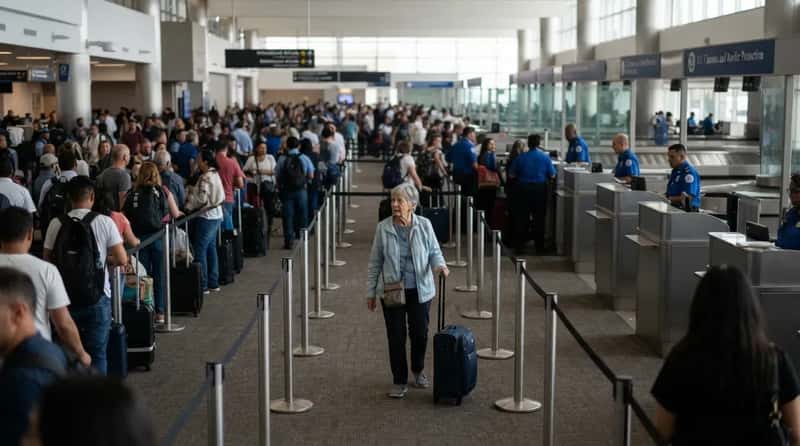
Not every upgrade travels cleanly through every hub, and this is where the friction starts. Escort assistance during arrival immigration procedures, for example, is not available at San Francisco International Airport or Los Angeles International Airport.
Most people assume a bigger airport means more services, but it’s often the opposite. Smaller regional airports frequently offer more hands-on staff attention simply because they handle fewer daily passengers. If your itinerary routes through one of the giant hubs, you may need to lean harder on TSA-level help instead of airline escorts. It’s a frustrating blind spot in an otherwise generous system.
#7 – Priority Seating You Can Request Days Before Departure
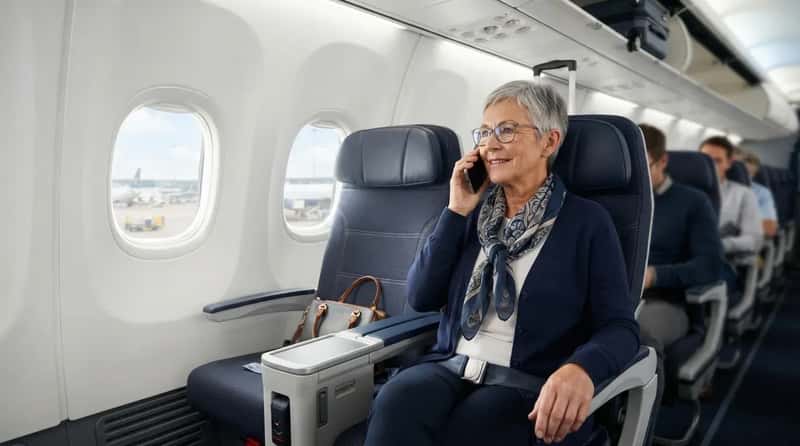
You don’t have to wait until the gate to lock in a better seat, the window opens earlier than most people think. Priority seats may be requested on a first-come, first-served basis 48 hours before an international flight and 24 hours before a domestic one.
The catch is that this window is short, and seats fill fast once flagged. Waiting until you’re physically at the airport often means the best options are already gone. Calling ahead, even a full day before a short domestic hop, puts your name in the system before the general public even starts checking in online. It’s a quiet head start that costs nothing but a phone call.
Quick Compare
- International flights: request window opens 48 hours before departure
- Domestic flights: request window opens 24 hours before departure
- Both are first-come, first-served, so earlier calls get better seats
#6 – TSA’s Own Support Team, Separate From the Airline Entirely
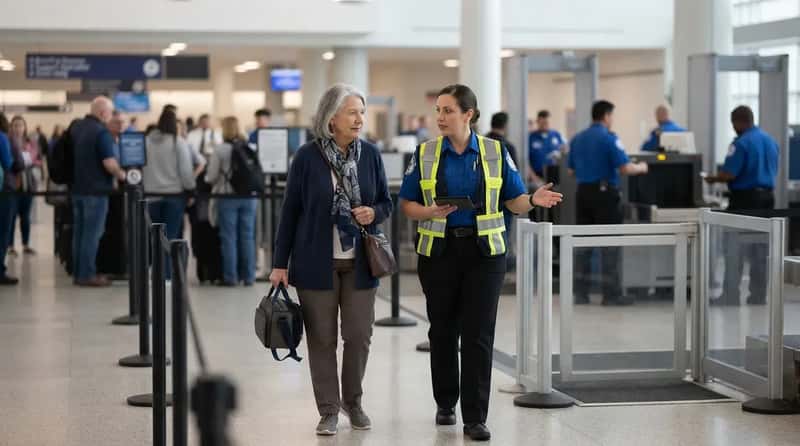
This one doesn’t even come from the airline, it comes from TSA itself, and it’s completely free. TSA Cares provides free assistance to travelers with disabilities, medical conditions, and other special circumstances, including expedited screening for passengers 75 and older.
Most travelers under 65 have never heard of it, yet it’s been running for over a decade. You can call 72 hours before travel, weekdays 8 a.m. to 11 p.m. ET and weekends and holidays 9 a.m. to 8 p.m. ET. A Passenger Support Specialist can then walk you through screening step-by-step so nothing feels rushed or confusing. It’s arguably the single most underused resource on this entire list.
At a Glance
- Call at least 72 hours before your flight date
- Weekday hours: 8 a.m. to 11 p.m. ET
- Weekend and holiday hours: 9 a.m. to 8 p.m. ET
- Includes expedited screening for travelers 75 and older
#5 – Sitting Down During Screening, Legally, Without Holding Up the Line
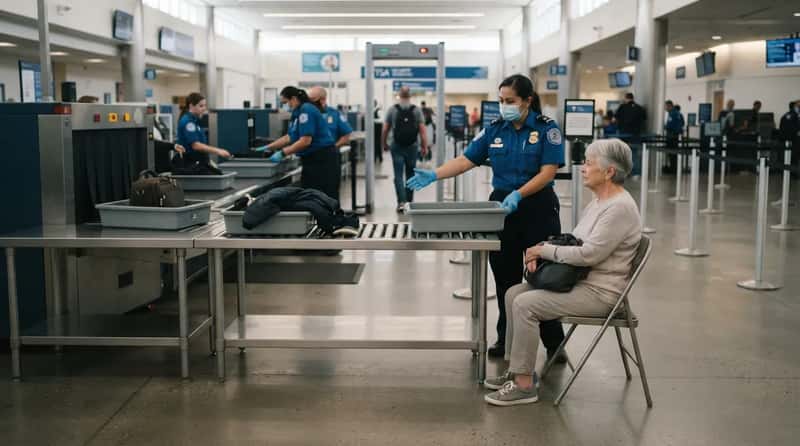
Most people don’t know they’re allowed to ask for a chair during security, but the rule exists specifically for older flyers. TSA has special screening guidance for passengers 75 and older, including keeping shoes on initially and requesting to sit during parts of the screening if needed.
The part that shocks most people is that this isn’t a favor from a friendly officer, it’s official written guidance. TSA Cares can also assist with collecting items if you have difficulty bending or reaching, which means the belongings-and-bins scramble that stresses out even young travelers can be handled for you entirely. It’s a dignity-first approach that almost nobody requests because almost nobody knows to ask.
#4 – New Protections If Your Mobility Device Gets Damaged or Delayed
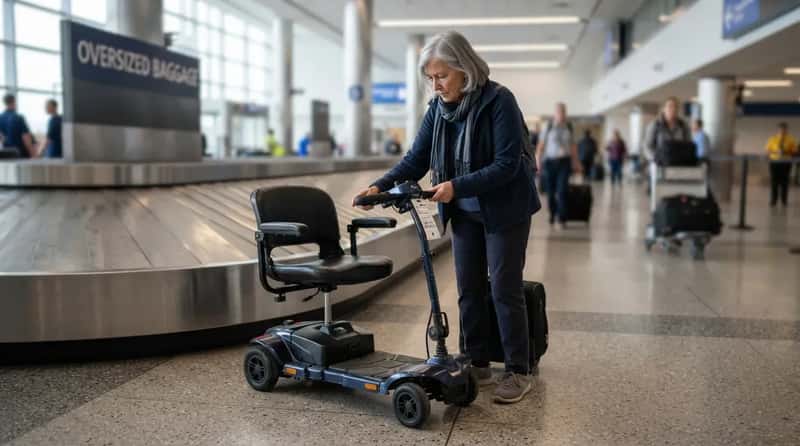
If you travel with a wheelchair or scooter, the rules around what happens if it’s broken have quietly gotten stronger, then got complicated. New federal rules require airlines to return checked wheelchairs and scooters without damage, provide loaner equipment when issues occur, let passengers choose the repair vendor, and reimburse ground transportation costs if a device is delayed in transit.
The twist most people miss is that enforcement of parts of this rule has since been paused while regulators revisit it. For now, airlines remain responsible for paying to repair or replace a wheelchair or scooter they damage, up to its original purchase price. That older protection still stands even while the newer rules sit in limbo, so it’s worth knowing exactly which promise is currently guaranteed before you fly.
Worth Knowing
- New rule: checked wheelchairs and scooters must come back undamaged
- New rule: airlines must provide loaner equipment when issues occur
- New rule: passengers can choose their own repair vendor
- Enforcement of these newer protections is currently paused pending review
- Older, active rule: damaged devices must be repaired or replaced up to original purchase price
#3 – Why “Wheelchair Assistance” Requests Are Suddenly Harder to Get
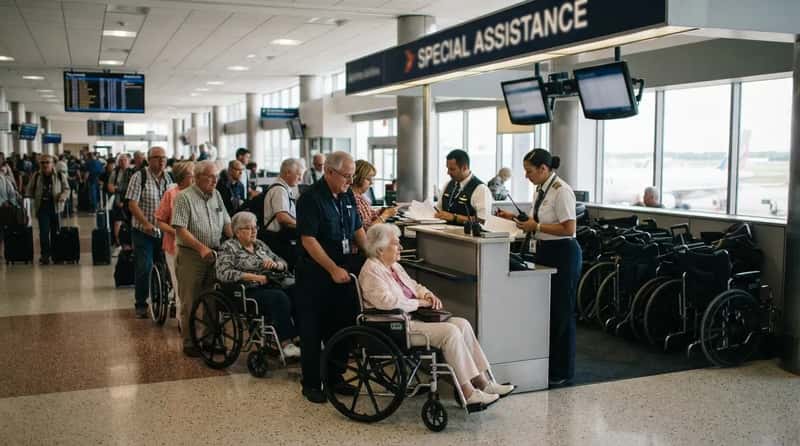
Here’s an uncomfortable truth airline desks won’t say out loud: demand has exploded, and it’s straining the exact service older solo travelers depend on most. Requests for airport assistance have grown significantly year over year, with increases reported around 30 percent at some airports.
Some of that growth is legitimate need from an aging population, but not all of it.
Airport accessibility staff, on the strain of rising requests
Many assistance requests now come from passengers who don’t have a physical disability but simply don’t feel confident navigating a busy airport. The controversial part is that this surge means genuinely mobility-limited seniors sometimes wait longer for a wheelchair than they used to, because the system is stretched thin by convenience requests. It’s an unpopular thing to say, but staff at busy hubs will admit it privately.
#2 – Airport Lounges and Quiet Rooms You Don’t Need Elite Status to Enter
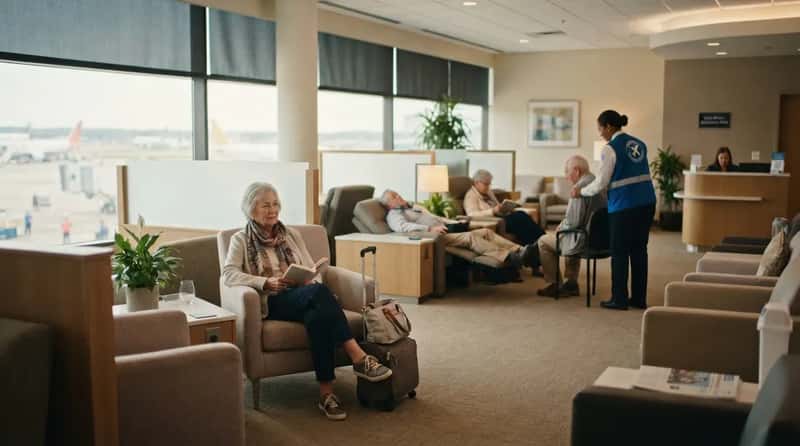
Some of the best hidden upgrades aren’t from the airline at all, they’re built into the airport itself. Some larger airports run private lounges specifically for passengers needing additional assistance or a place to rest, with comfort features designed for travelers who need a break from the noise and crowds.
Most flyers assume lounges require a credit card or a business-class ticket, but assistance-designated rest areas often don’t. Pair that with airport chaplain and volunteer navigator programs. Some airports run interfaith chaplain services around the clock, and some connect passengers needing assistance with volunteers who guide travelers to ticket counters, gates, and baggage claim. These quiet, human-staffed spaces are some of the most underused resources in the entire airport.
#1 – The Federal Push That’s Reshaping How Airlines Treat Older, Disabled Flyers
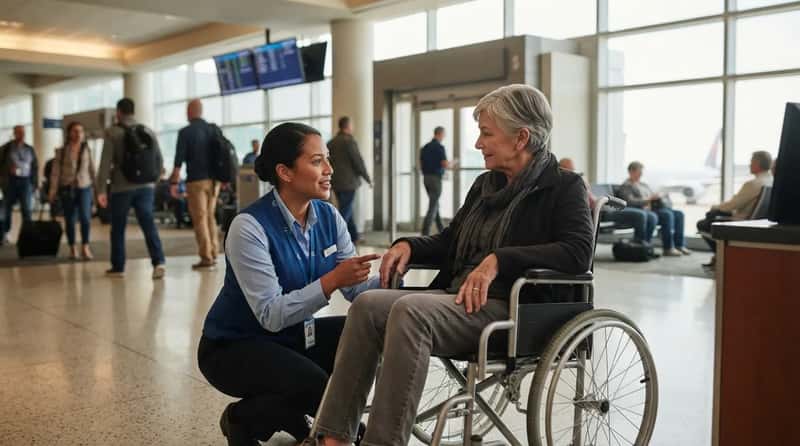
Everything on this list exists inside a much bigger shift happening in U.S. aviation right now, and it’s not finished yet. Federal officials announced enhanced protections for people with disabilities traveling on commercial airlines, aimed in particular at protecting passengers who use wheelchairs, after a string of violations of existing laws by airlines.
The rule requires training for airline workers responsible for physically assisting passengers with disabilities, in an effort to make the skies friendlier for the roughly 5.5 million Americans who use a wheelchair. The most important fact for solo travelers over 60 is that this training requirement, and the broader protections around it, are still being finalized and revisited by regulators. That means the services available at your local desk today may keep expanding, quietly, without a press release, over the next couple of years.
At a Glance
- About 5.5 million Americans use a wheelchair
- New rules require training for staff who physically assist passengers
- The push follows a string of documented violations by airlines
- Final training requirements are still being reviewed by regulators
None of these upgrades show up in a boarding pass email or a loyalty program brochure. They exist because airlines, airports, and federal regulators are all responding, sometimes clumsily, sometimes generously, to a wave of older Americans flying solo more often than ever before.
The system isn’t perfect, and some of it is genuinely strained by overuse. But asking the right question at the right counter still unlocks far more than most people ever try for.