Most people assume flight attendants treat every passenger exactly the same, running through a script that never bends no matter who’s sitting in 34C. But sit near a boarding line or watch a long-haul cabin fill up enough times, and you start noticing something different happening for passengers over 60 – small, unspoken adjustments that never make it onto the safety card.
None of these courtesies are printed in the airline’s fare rules or mentioned in the boarding announcement. Most crews won’t bring them up unless you happen to ask the right question at the right moment – so here’s what’s actually happening once those cabin doors close.
#14 – The Early Boarding Call Nobody Asks You to Justify
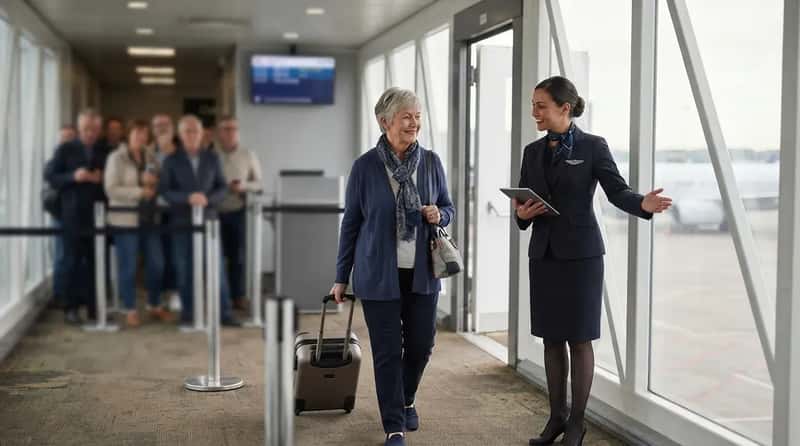
You don’t need a wheelchair, a diagnosis, or a doctor’s note to board before the crowd. Most major airlines let passengers who need a little extra time board before the general groups are called, and gate staff rarely make anyone explain themselves out loud. You don’t need elite status or an official disability designation – just a quiet word at the counter.
A short, low-key request to the gate agent is usually all it takes to trigger it. Some carriers have even built this into policy: Southwest allows passengers who need a special seat or extra assistance to board between the A and B groups, no questions asked. It’s one of the simplest accommodations on this list, and one of the least talked about.
Fast Facts
- No medical proof or documentation is required to ask for early boarding
- Southwest lets qualifying passengers board between the A and B groups
- A quiet request at the gate is usually the only step involved
- The courtesy applies on most major U.S. carriers, domestic and international
#13 – The Overhead Bin Rescue Before You Even Struggle
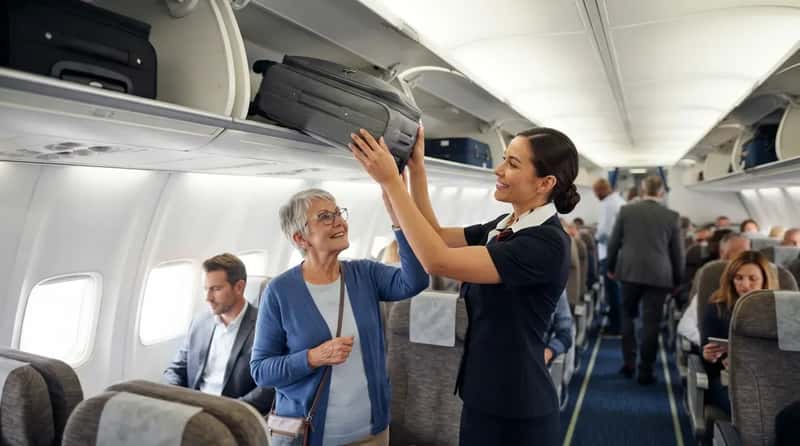
Crews aren’t required to lift your bag, but plenty of them do it anyway. Flight attendants are trained to watch for passengers who might struggle with an overhead bin, and many step in before a struggle even starts – but usually only when they know ahead of time that help might be needed.
The trick is timing. A quick heads-up to the gate agent before boarding tends to translate into a crew member standing ready near your row, bag already half-lifted before you even ask. Most travelers never realize that one sentence at the gate quietly changes how the entire boarding process treats them for the rest of the flight.
#12 – The Safety Briefing Whispered Just for You
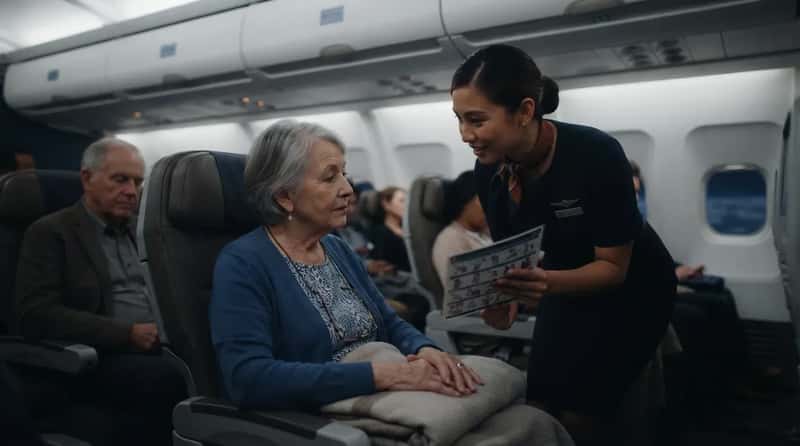
If the overhead announcement flies past you, crews are trained to notice and repeat it privately. A huge number of travelers over 60 experience some degree of hearing loss without ever formally identifying as disabled, which is exactly why this accommodation exists in such a low-key form – no forms, no fuss, just a quiet repeat at your seat.
Passengers with visual or hearing difficulties are encouraged to flag a flight attendant, and safety instructions will be personally conveyed to anyone who may not have heard or seen the standard briefing. Sight-impaired passengers can even request safety cards in large print or braille. Most passengers have no idea this exists until the moment it happens to them.
#11 – The Free Extra Bag Nobody Advertises
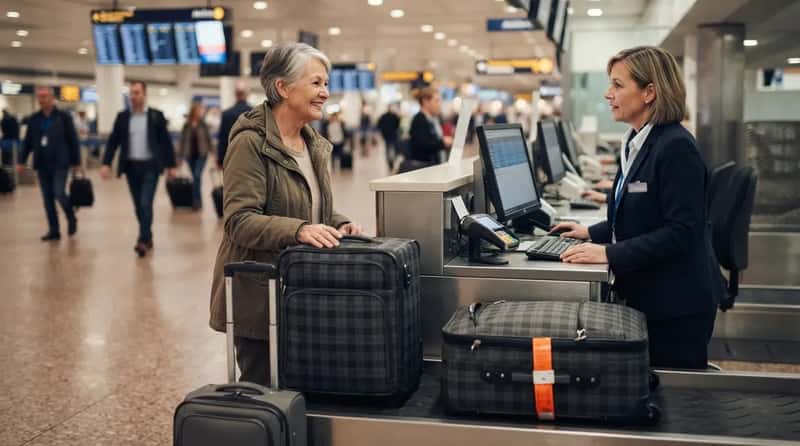
On certain international long-haul routes, an extra checked bag can quietly appear on your reservation without a fee attached. Some airlines allow senior flyers to check an additional bag for free on select long-haul international routes, and carriers including Air France, Iberia, and British Airways have been known to make baggage exceptions when asked directly and politely.
Even outside that specific perk, agents often have more discretion than passengers realize. When carrying a bag onboard creates a genuine safety or mobility concern for a traveler over 60, agents can simply absorb the checked-bag fee on the spot. The catch is that no airline volunteers this upfront – you almost always have to ask.
Quick Compare
- Air France: known to waive fees when a mobility-related need is explained
- Iberia: has made similar exceptions on select long-haul routes
- British Airways: agents have discretion to absorb fees case by case
- U.S. carriers: fees are more often waived when a bag is tied to a genuine mobility concern
#10 – The Seat Swap That Keeps You Next to Your Travel Partner
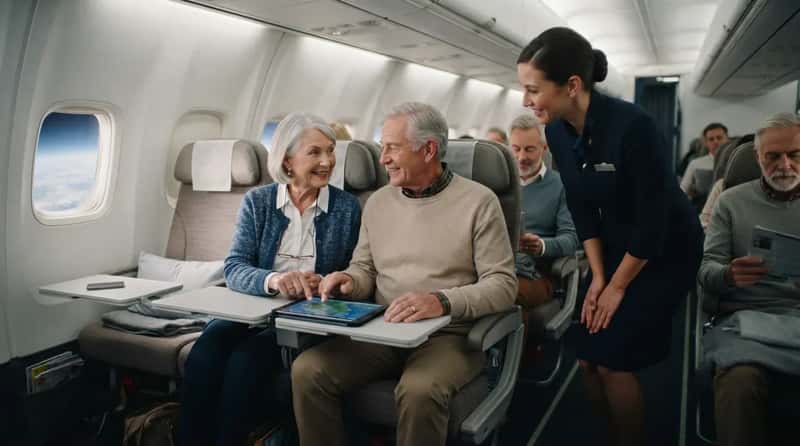
If you’re flying with someone who helps you get around, crews will usually work to keep the two of you together. Adjoining seats for a traveling companion who provides assistance are part of the standard accommodations airlines try to honor, subject to what’s actually available on that flight.
Some airlines go even further at check-in. Southwest, for example, offers a pre-board option that lets a passenger board before every other group and works to keep an empty seat open beside them for a companion. It’s not a guarantee across every carrier, but plenty of airlines quietly try.
#9 – The Onboard Wheelchair They Keep Just Out of Sight
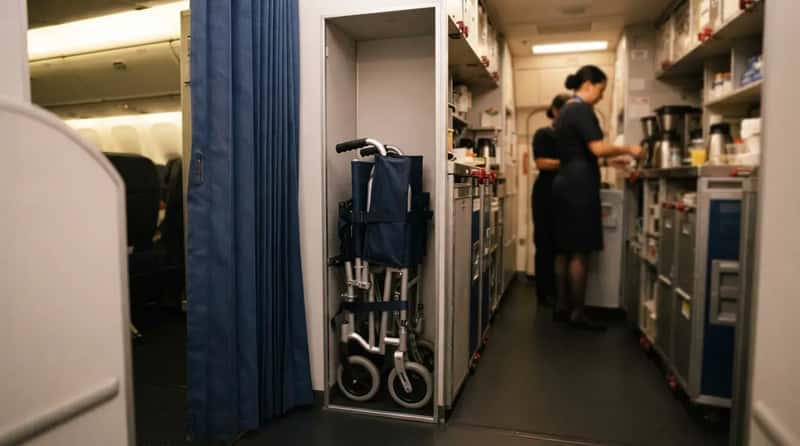
A narrow chair, tucked near the galley, exists purely to move passengers who can’t easily walk the length of the cabin. Flight attendants use onboard wheelchairs to transport passengers to and from the lavatory or their seat, helping them transfer between the chair and the seat – though crew members generally won’t lift or carry a passenger themselves.
It’s not optional equipment, either. Any aircraft with a wheelchair-accessible lavatory is required to carry one of these chairs onboard. Most passengers fly for decades without ever noticing it exists, tucked just out of view near the galley curtain.
#8 – The Armrest That Lifts Away When You Need It
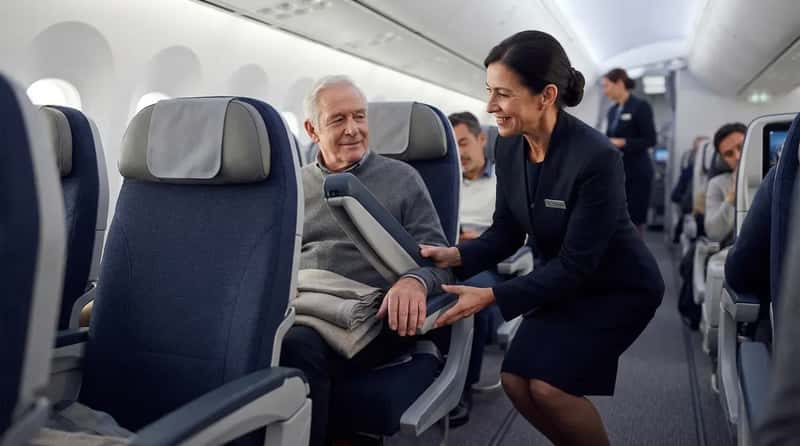
Some aisle seats hide a feature most flyers never test – an armrest that flips completely out of the way. Federal rules require at least half the aisle seats on aircraft delivered or refurbished after 1992 that seat 30 or more passengers to have these movable armrests.
Getting one isn’t automatic, though. Passengers should notify the airline of their need for a movable-armrest aisle seat when booking, or at least 48 hours before departure, and it’s worth asking the gate agent to double-check the assigned seat actually has one. Skip that step, and you might end up in a seat that looks right but doesn’t function the way you need it to.
Worth Knowing
- The rule applies to aircraft delivered or refurbished after 1992 with 30 or more seats
- At least half the aisle seats on those planes must have a movable armrest
- Requests should go in at booking or at least 48 hours before departure
- Older or smaller aircraft may not have any movable-armrest seats at all
#7 – The Solo Traveler Check-Ins That Never Feel Like Checking In
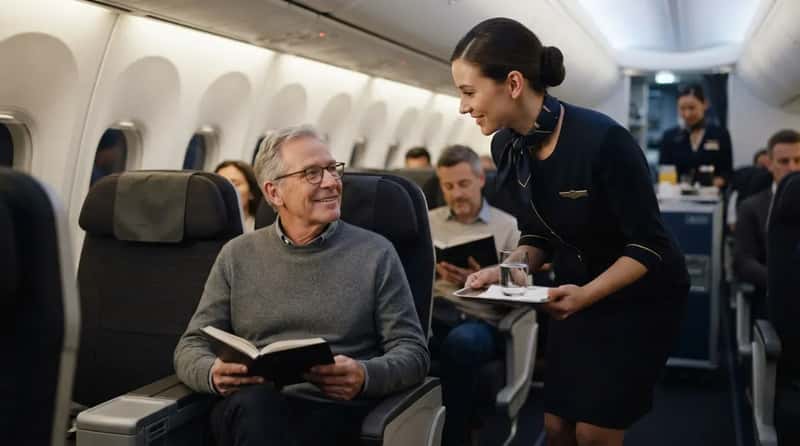
Flying alone changes how closely a crew watches you, even when nothing looks wrong. A solo older traveler means there’s no one in the next seat to flag a problem if one develops at altitude, so crews quietly adjust their service plan without ever announcing it.
It’s deliberate, not accidental. If you’re 68 and traveling solo, the attendant working your section will check on you more often – never intrusively, just consistently – and that steady attention shapes how closely your well-being gets tracked for the entire flight. Most passengers never clock it, because it’s designed to feel invisible.
#6 – The Missing Meal They Actually Chase Down
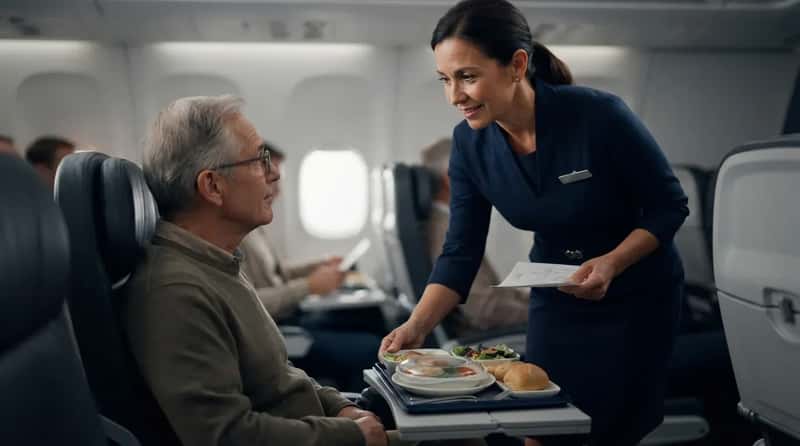
Special meals go wrong more often than airlines like to admit – wrong tray, late tray, or sometimes no tray at all. Occasionally the correct meal never gets delivered, sometimes it isn’t what was ordered, and sometimes it never made it onto the aircraft in the first place.
Experienced crews know older passengers are less likely to complain loudly, so they check twice instead of once. On longer flights, many airlines let senior passengers request specialty meals for low-sodium, diabetic-friendly, or vegetarian needs, and asking about meal options at booking helps that food actually show up when it matters. It turns out crews are often quietly compensating for a system that fails more than most passengers realize.
#5 – The Special Assistance Flag That Follows You Home
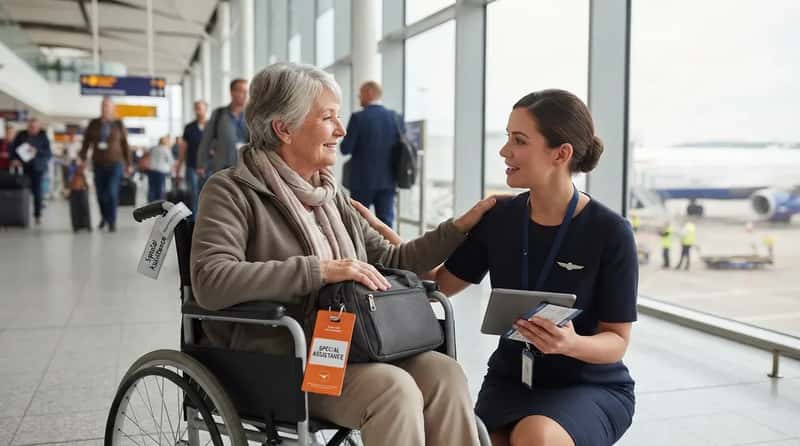
One quiet conversation at check-in can protect your entire itinerary, not just a single flight. Self-identifying at check-in or the gate as someone who needs assistance gets your reservation marked with a special assistance note – a flag that travels with your booking through every connection, activating support at each airport without you having to explain yourself all over again.
It’s one of the least understood tools in senior travel. A wide range of accommodations sits buried inside airline policy and federal law, quietly capable of turning a grueling itinerary into something manageable – and none of it is marketed. It’s just sitting there, unannounced, waiting for someone to ask.
At a Glance
- One flag set at check-in can cover your entire itinerary, not just one leg
- It automatically activates support at every connecting airport
- You typically don’t have to re-explain your situation at each gate
- Most travelers never set the flag simply because nobody mentions it exists
#4 – The Priority Deplaning You Never Had to Request
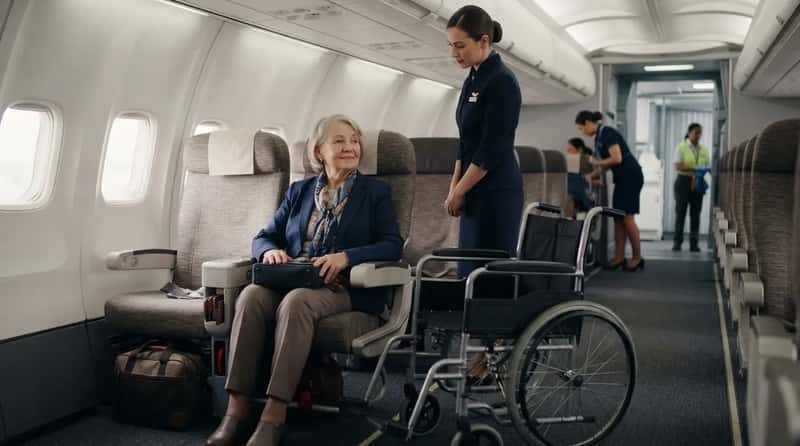
Getting off the plane last isn’t always a punishment – sometimes it’s a protection. If a passenger needs wheelchair assistance exiting the aircraft, airlines are required to provide it promptly, meaning help arrives right after the last passenger who didn’t request it has already deplaned.
Most passengers assume this timing is random luck, when it’s actually a federal requirement working quietly in the background. It’s a promise written into the rules, not a courtesy that depends on which agent happens to be working that gate on a given day, and it exists specifically so nobody gets left waiting indefinitely at the jet bridge.
#3 – The Bathroom Detour Built Into Your Walk
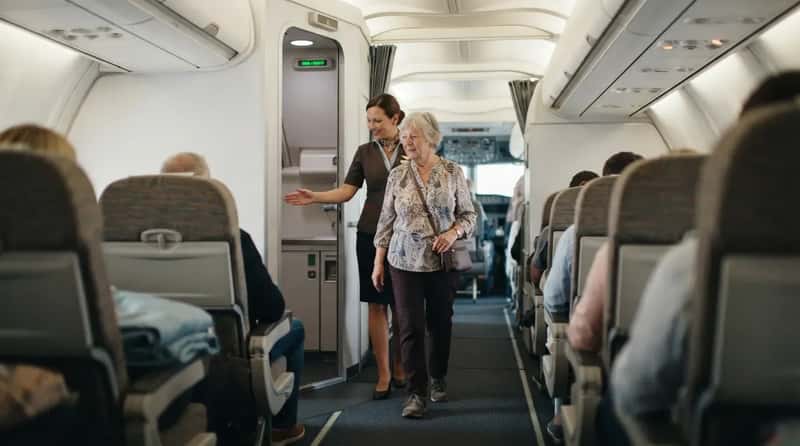
The walk from your seat to the jet bridge can include a stop most passengers never request out loud. Crews are technically only required to stop if the restroom is on the way and won’t cause an unreasonable delay, but in practice, attendants often route the walk through it anyway, folding the detour into the trip instead of treating it as an interruption.
Most people would never guess a crew member is quietly planning their route around a passenger’s comfort. It’s a tiny adjustment, but on a 14-hour flight, it can matter more than almost anything else on this entire list.
#2 – The Quiet Second Look When Something Doesn’t Add Up
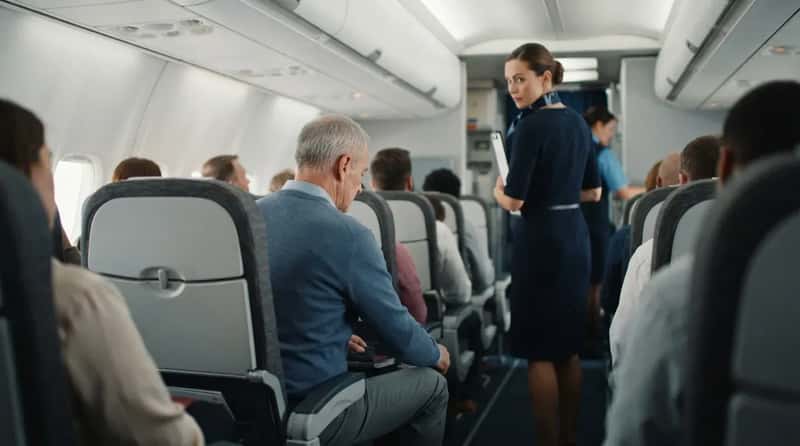
Sometimes a passenger looks perfectly fine but the paperwork says otherwise – and crews are trained to notice the gap. A traveler who looks completely steady but has a special assistance flag on the manifest often gets a discreet, unspoken check to confirm what kind of help might actually be needed.
This isn’t about singling anyone out; it’s built into how crews prepare for emergencies. Flight attendants stay aware throughout the flight of who might need extra help during an evacuation, and that includes elderly travelers and anyone with reduced mobility. That quick glance during boarding is really a safety calculation happening in real time, long before anything ever goes wrong.
#1 – The Extra Minutes at the Gate Nobody Rushes
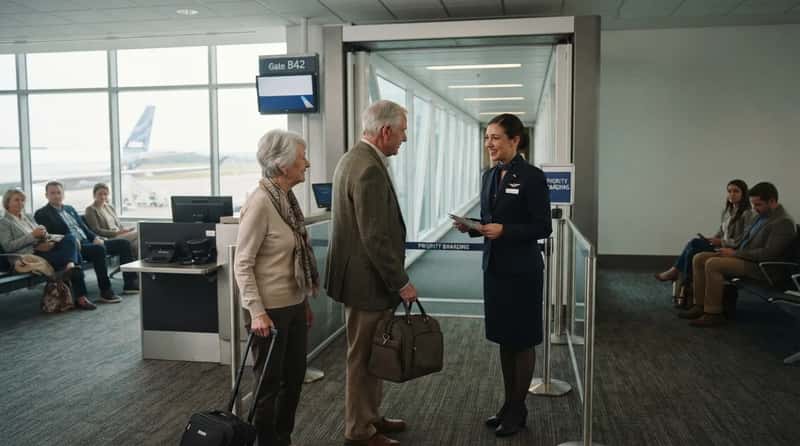
The single most consistent courtesy has nothing to do with equipment or paperwork – it’s simply time. Airlines actively encourage seniors to pre-board because it keeps the aisle from turning into a traffic jam, and that early boarding window opens the moment a passenger self-identifies to a gate agent before boarding starts.
The legal backbone behind it is stronger than most travelers realize. Federal regulations under 14 CFR §382.93 require airlines to offer preboarding to any passenger who self-identifies at the gate as needing extra time or assistance to board, stow equipment, or get seated. Most passengers over 60 never invoke this rule simply because nobody ever told them it exists – and once you know it, every long-haul flight looks a little different.
Why It Stands Out
- Backed directly by federal law under 14 CFR §382.93
- Covers boarding time, stowing luggage, and getting seated without rushing
- Applies to any passenger who simply self-identifies at the gate
- No age cutoff or medical diagnosis is required to use it
None of these courtesies show up in an airline’s ad campaign, and most gate agents won’t bring them up unless you ask first. Some, like priority deplaning and pre-boarding, are backed by federal rules. Others, like a chased-down meal or a quietly repositioned walk to the gate, come down to a crew member’s own judgment on a given day.
The pattern across all 14 is the same: the accommodation almost always exists, but the airline rarely volunteers it first. Someone has to ask – and now you know exactly what to ask for.