Everyone assumes solo cruising after 60 means quiet dinners for one, awkward silence at the pool bar, and crossing your fingers that nothing goes wrong far from home. That assumption is almost completely backwards. Behind the scenes, officers and crew run a whole set of unwritten routines built specifically for guests sailing without a spouse, friend, or travel group.
None of it gets announced over the intercom, and most first-timers stumble into it purely by accident. Here’s what’s actually happening above and below deck for the solo traveler nobody else notices.
#14 – An Officer Sits Down at Your Table Without Being Asked
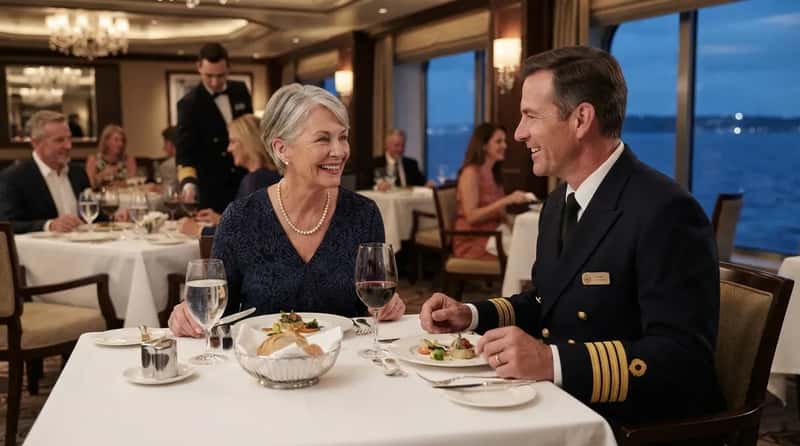
Solo dining doesn’t have to mean eating alone unless you want to. On several major lines, officers and senior staff are quietly rotated through solo tables at dinner, joining passengers who are sailing without a companion. It isn’t charity work squeezed in between duties – it’s a built-in system for handling solo travel gracefully.
The catch is that it only works if the crew actually knows you’re on your own. Guests who slip silently into a table for two often get skipped entirely, night after night. One quiet word to the maître d’ on embarkation day is usually all it takes to get pulled into the rotation.
#13 – Medical Staff Are a Phone Call Away, Not an Appointment
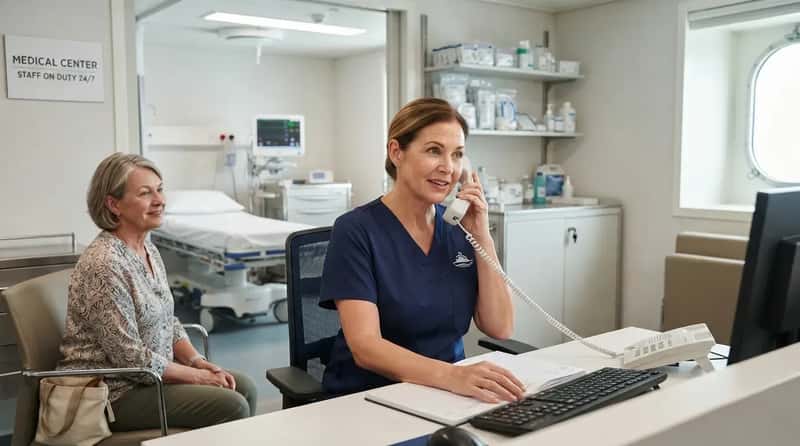
Traveling alone past 60 makes plenty of people quietly nervous about what happens if something goes wrong hundreds of miles from the nearest hospital. Ships are built around exactly that fear. Medical staff are on duty around the clock, not on a business-hours schedule.
The ship’s doctor and nursing team handle everything from minor issues to real emergencies, day or night. That matters more than most first-time cruisers realize, especially for anyone managing a chronic condition or a strict medication schedule while sailing without someone to double-check on them.
#12 – Your Cabin’s Emergency Button Isn’t Decoration
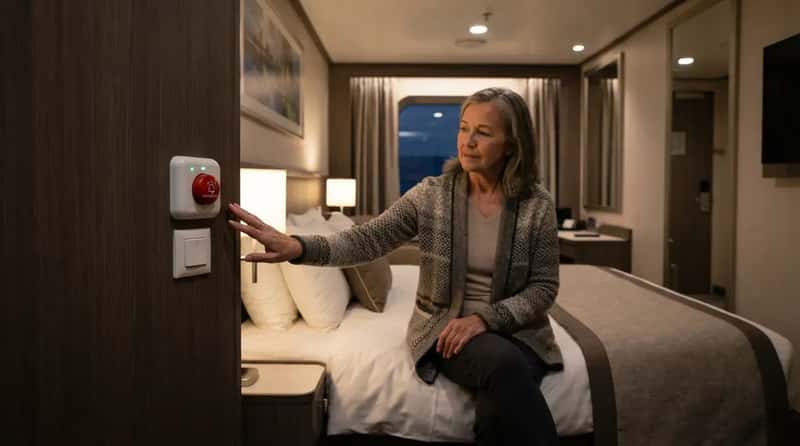
Solo travelers often worry, quietly, about being alone overnight with no one to notice if something feels wrong. That worry gets addressed by a small piece of hardware most guests never think twice about. Every cabin has an emergency call button, and it isn’t just for show.
It’s monitored around the clock, and crew respond fast, because an unanswered call triggers an actual follow-up protocol. For a solo guest with no one checking on them personally, that little button quietly functions as a safety net almost nobody tests but everyone is glad to have.
#11 – Crew Are Trained to Notice Before You Have to Ask
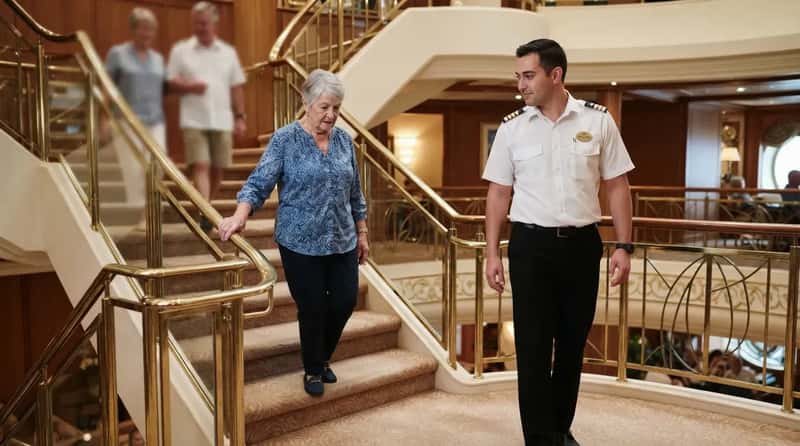
Nobody enjoys flagging down a stranger to ask for physical help, especially on a first solo trip. Crews are trained to skip that awkward moment entirely. Staff are taught to spot mobility struggles and step in before a guest has to say a word.
It shows up in small, easy-to-miss ways – a steward slowing near a stair landing, a waiter quietly clearing a wider path near a table. Nobody announces it, and it’s rarely something a guest specifically requested. It’s simply baked into how staff are trained to read a room.
#10 – There’s a Free Lounge Built Just for People Sailing Alone
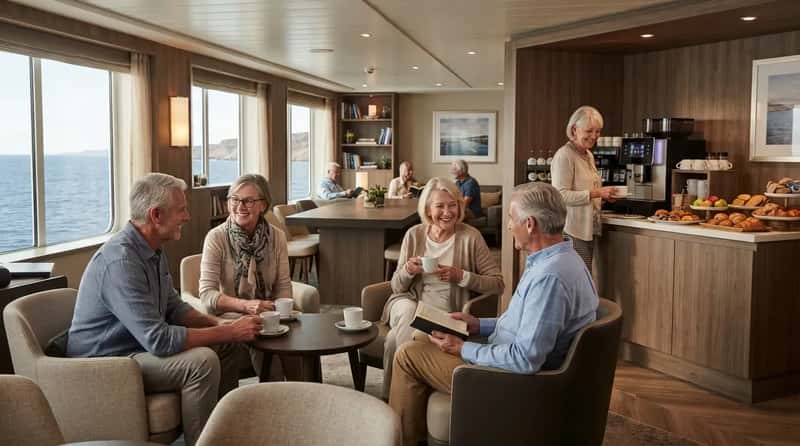
Most solo cruisers over 60 have no idea a dedicated hangout for single travelers even exists on some ships. Norwegian Cruise Line was the first to build solo cabins and matching lounges, and its Studio Lounge offers free coffee and snacks as a daily meeting spot for solo guests.
It’s tucked near the solo cabin cluster, easy to walk right past if nobody points you there. Once discovered, it tends to become the unofficial gathering point, especially for older solo travelers who’d rather have a low-key coffee chat than fight for a lounge chair on a loud pool deck.
Fast Facts
- Norwegian was the first cruise line to design staterooms and social spaces specifically for solo travelers, kicking off the trend other lines later copied.
- Studio, Solo Inside, Solo Oceanview, and Solo Balcony categories are now spread across Norwegian’s ships, all priced without a single supplement.
- Entry to the Studio Lounge is keycard-only, so it stays a genuinely solo-only space all cruise long.
- The lounge stocks complimentary coffee, espresso, and snacks throughout the day, with a relaxed TV lounge setup.
#9 – The Single Supplement Sometimes Quietly Disappears
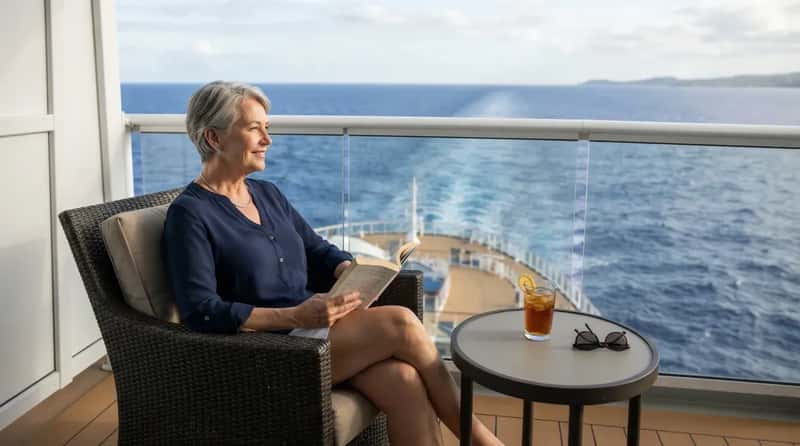
Most solo travelers brace themselves to eat the notorious single supplement fee without question. That’s no longer a guarantee. Some lines now offer dedicated solo cabins at fair rates, while others waive or shrink the supplement on select sailings.
The industry has made real progress here over the past decade, with more lines rolling out solo cabins, discounted solo fares, and social programming built around single travelers. Guests who simply ask a travel agent directly about solo pricing sometimes find that fee shrinks or disappears with no big public announcement at all.
Quick Compare
- Traditional supplement: many mainstream lines still charge up to 75-100% extra for a solo traveler in a double cabin.
- Norwegian Cruise Line: no single supplement at all on Studio, Solo Inside, Solo Oceanview, or Solo Balcony categories.
- Silversea: supplements trimmed to just 10-25% above the solo fare on select luxury sailings.
- Windstar: discounted single supplements as low as 120% of the standard per-person rate on select voyages.
#8 – Shore Excursions Quietly Group You With Other Solo Guests

Wandering a foreign port completely alone can feel intimidating at any age, and cruise lines know it well. Excursion teams often group solo travelers together automatically, providing both safety in numbers and easy companionship for the day.
This grouping usually happens without any formal request from the guest. A single name on a booking is often enough for the desk to slot that traveler in with others sailing solo. Booking excursions directly through the ship also guarantees return transport, which matters most to older travelers who don’t want to risk missing the ship’s departure.
#7 – One Officer’s Whole Job Is Remembering Your Face
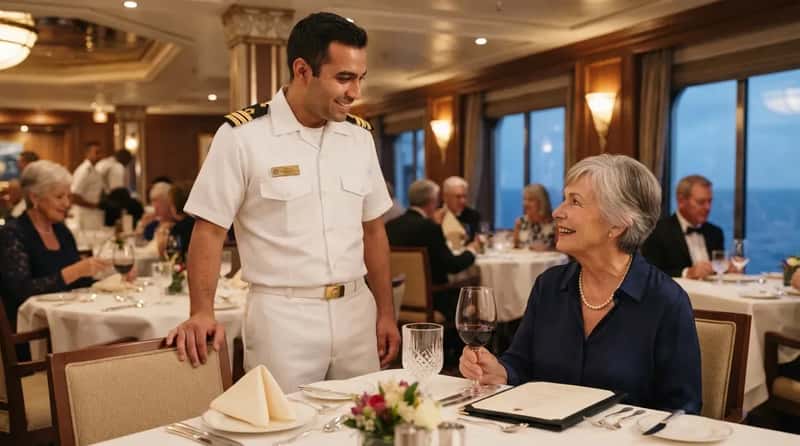
Some officers carry a job description most passengers never see written down anywhere. Part of the role is acting as a kind of social ambassador, deliberately engaging with guests every single day of the sailing.
That daily engagement is intentional, not accidental. For solo travelers over 60 who might otherwise go a full day without a real conversation, an officer remembering a face from breakfast and greeting them again at dinner does more for morale than anything printed on the daily activity sheet.
#6 – A Table for One Requires Zero Explanation
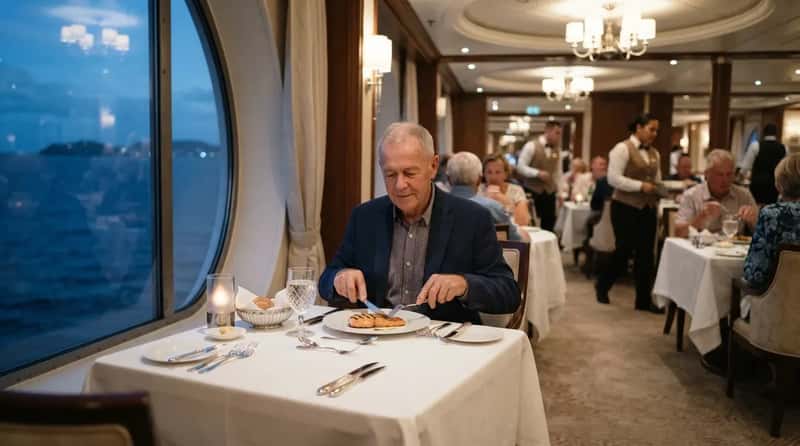
Some solo cruisers genuinely want quiet meals, not constant chatter, and staff accommodate that too, no questions asked. Requesting a private table for one in the dining room is a completely normal request, not an awkward outlier.
Dining staff rarely push back or raise an eyebrow. Many solo travelers over 60 use this option early in the cruise, then switch to communal seating later once they’ve found their footing socially. Staff quietly accommodate either preference without ever making a guest justify the choice.
#5 – On Smaller Ships, Officers Know Your Name by Day Two
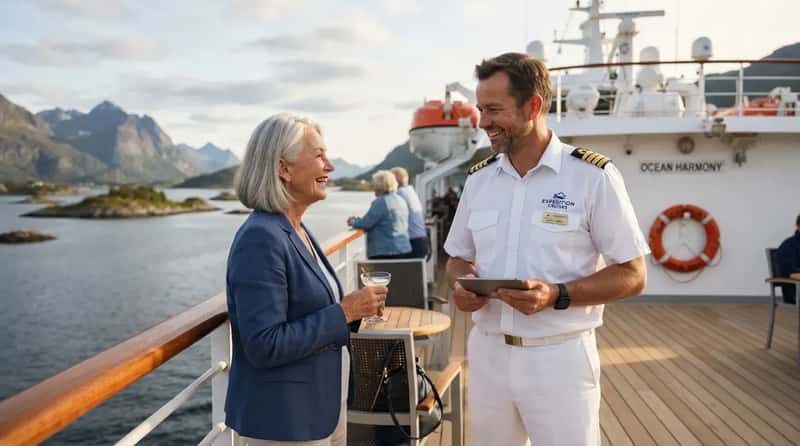
Not every ship is a floating city, and that difference in scale changes everything for someone traveling alone. The yacht-style intimacy of smaller ships means the whole community is small enough for genuine connections to form, instead of endlessly bumping into strangers.
On these smaller vessels, officers and senior staff don’t just recognize faces – they remember names, drink orders, and even which excursion a guest already mentioned wanting to try. That kind of continuity is nearly impossible on a 4,000-passenger megaship, which is exactly why many solo travelers over 60 gravitate toward smaller lines on purpose.
At a Glance
- Small ships and expedition vessels: often a few hundred guests, small enough that crew learn names within a day or two.
- Mid-size ships: usually a couple thousand guests, still manageable for officers to recognize regulars by sight.
- Today’s largest megaships: some now carry more than 6,000 passengers at once, making personal recognition far harder.
#4 – A Cocktail Reception Exists Just for People Sailing Solo
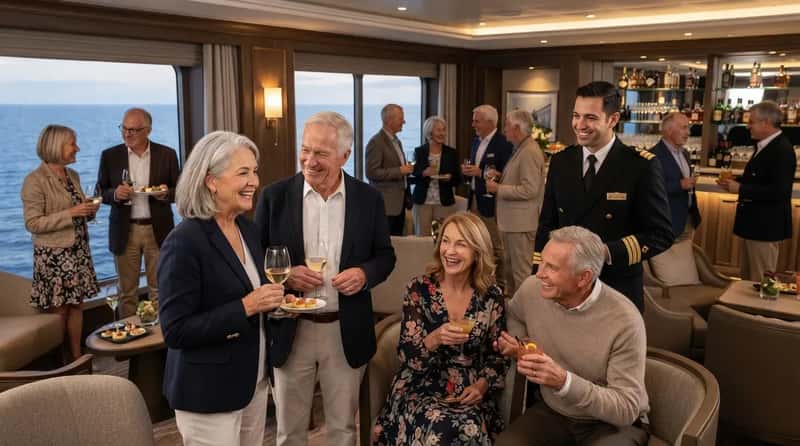
Solo travelers often assume onboard social events are built with couples and friend groups in mind by default. Several lines quietly do the opposite. Curated cocktail receptions and mingling events are built specifically for solo guests to meet like-minded cruisers.
These gatherings are usually tucked into the daily program under some vague, easy-to-skip name. Guests who do show up describe them as the single fastest way to meet other solo travelers over 60 without the pressure of a formal meetup or an awkward icebreaker game.
#3 – The Daily Program Is Built to Prevent Overwhelm, Not Cause It
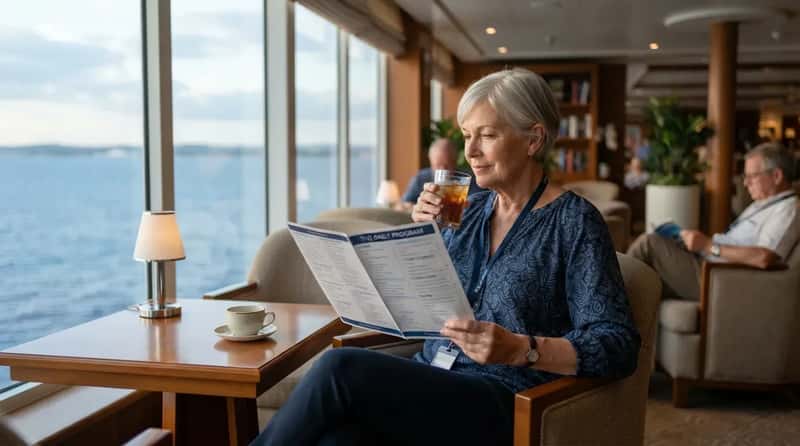
A packed itinerary can feel exhausting to a solo traveler with nobody to divide the tasks with. The structure is actually designed to ease that pressure, not add to it. Meals land at set times, shows are scheduled, and excursions are organized – a printed program lists tomorrow’s options, and guests simply pick what interests them and skip the rest.
Nobody is required to attend everything, and staff aren’t tracking who opts out. For solo travelers over 60, this built-in permission to skip things without explanation is one of the quieter comforts of cruising compared to traveling independently on land.
#2 – Trivia and Bar Nights Work as Built-In Icebreakers
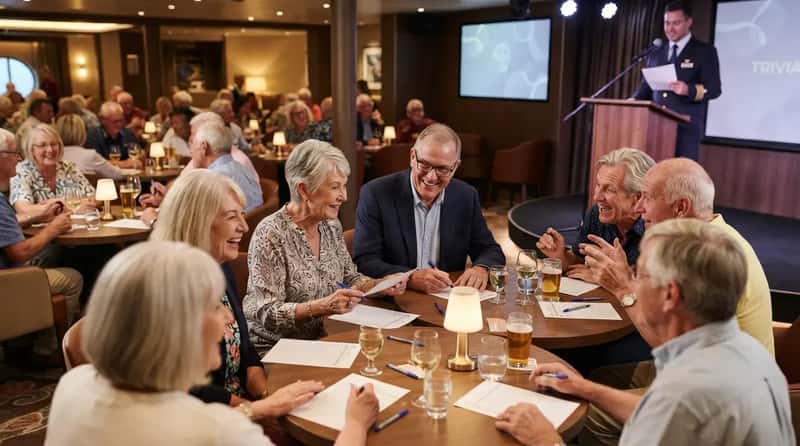
Structured group activities do more social heavy lifting than most solo travelers expect walking onboard. Trivia, a book club, or a group fitness class puts strangers into the same small circle without anyone having to make an awkward first move.
Lines with strong solo programming often list these meetups directly in the onboard newsletter, alongside wine tastings and fitness classes built around the same rotating group of solo passengers. By day three, that same small group is often eating dinner together like old friends.
#1 – A Captain Who Notices When You’re Sailing Alone
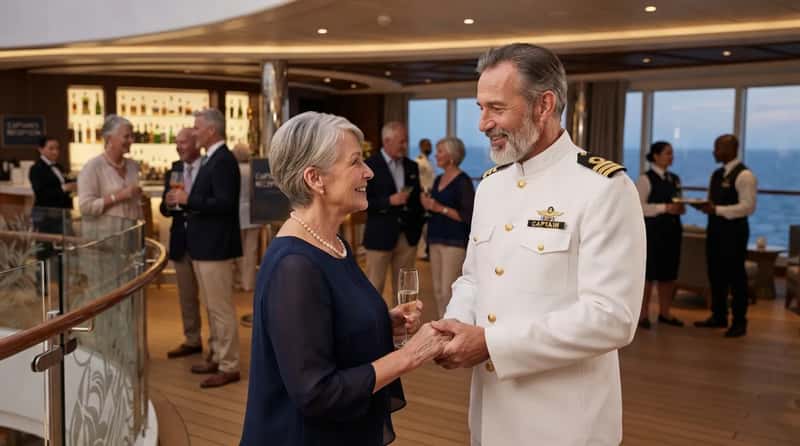
The highest-ranking person on the ship carries a responsibility most passengers never fully register. The captain holds ultimate legal responsibility for everyone onboard, crew and passengers alike, and that includes the guests traveling completely on their own.
Solo guests over 60 frequently mention being personally greeted by name at a captain’s reception, or having an officer check in specifically because a booking flagged them as traveling solo. It’s rarely dramatic. It’s usually just someone senior quietly making sure nobody sailing alone feels invisible for a full week at sea.
Worth Knowing
- Solo cruising has grown fast industry-wide – about 12% of cruisers sailed solo in 2024, up from just 6% the year before.
- Baby Boomers make up a meaningful share of that solo segment, a reflection of more older travelers choosing to sail on their own.
- Roughly two-thirds of cruisers today are 55 or older, meaning solo guests over 60 are sailing alongside plenty of peers, not standing out as an anomaly.
None of these courtesies show up in a brochure, and most solo travelers over 60 stumble into them by accident rather than by asking directly. The common thread is simple – cruise lines have quietly built an entire support system for solo guests, they just never advertise it loudly.
The way to unlock most of it is almost embarrassingly simple: tell the crew you’re traveling alone on day one, and let the rest happen on its own.