

Picture this: a woman in her 70s glides up to the checkpoint. She’s flown a hundred times. She knows the drill. And then, in front of a growing line of strangers, she gets pulled aside for something that didn’t even exist as a rule two years ago.
It happens every single day, and it’s rarely about breaking a rule on purpose. It’s outdated habits colliding with quietly changed policy, and agents almost never get the five minutes it would take to explain why. Here’s what border officials wish they could say out loud before you ever reach the line.
#14 – The License in Your Wallet Might Already Be Useless
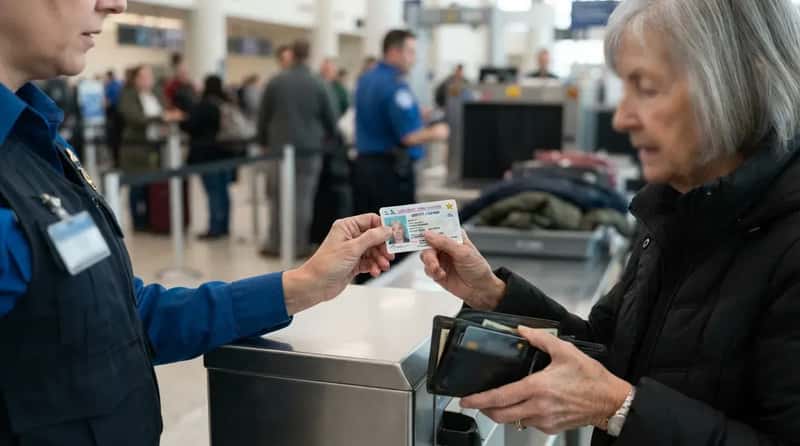
Millions of older travelers still carry a standard driver’s license to the airport, assuming it works exactly like it always has. It doesn’t anymore. Federal identity requirements for air travel reached full enforcement in 2025, and only IDs meeting REAL ID standards now pass the identity check at U.S. airports.
Agents say the confusion hits older travelers hardest because many haven’t renewed a license in over a decade and never noticed the star marking is now required. The fix is simple: check the corner of your card for the gold or black star before you leave the house. A passport works too, and agents quietly wish more seniors carried one even for domestic flights, just as a backup.
Fast Facts
- REAL ID enforcement began May 7, 2025, at every TSA checkpoint nationwide.
- Compliant licenses show a gold or black star in the upper corner of the card.
- Starting February 1, 2026, travelers without a compliant ID face a new identity-verification fee at the checkpoint.
- A valid U.S. passport, passport card, or Global Entry card works as an accepted alternative.
#13 – The Shoes-Off Rule You’ve Been Dreading Doesn’t Exist Anymore
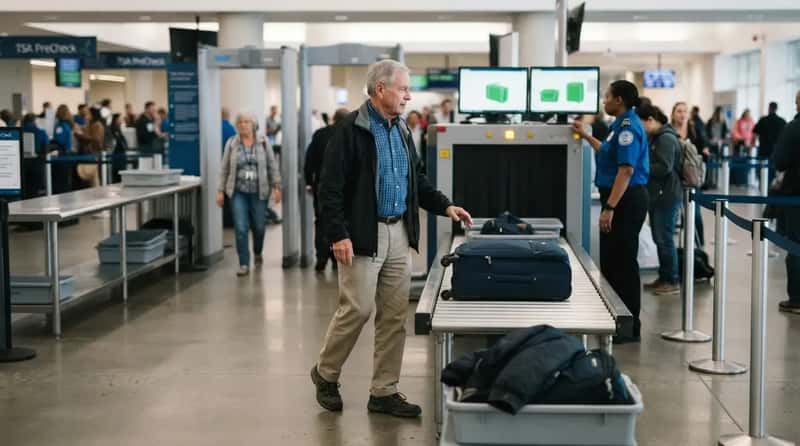
For almost twenty years, taking off your shoes felt like an unavoidable part of flying. Plenty of older travelers still brace for it out of pure habit. That rule was dropped nationwide in July 2025, thanks to upgraded scanners and stricter ID checks at checkpoints across the country.
Agents say the biggest slowdown now isn’t shoes at all – it’s travelers who still instinctively bend down to untie laces out of muscle memory, holding up the whole line behind them. Officers can still ask you to remove shoes during random enhanced screening, so don’t assume you’re fully exempt. But that’s nothing compared to the myth we heard next…
#12 – Turning 75 Does Not Automatically Give You PreCheck
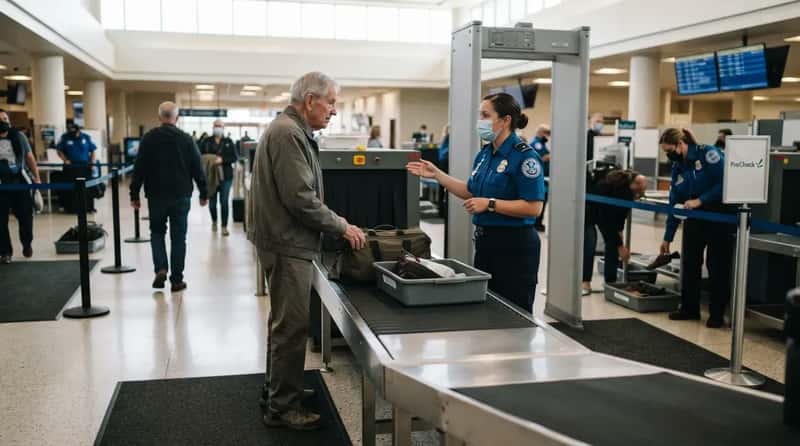
This is one of the most persistent myths at the checkpoint, and agents rarely correct it because there’s no time. Reaching age 75 does not automatically enroll you in TSA PreCheck. Anyone who wants that status still has to apply for it separately, just like everyone else.
What travelers over 75 do get automatically is something different, and often better than they realize. Under TSA’s risk-based screening approach, passengers 75 and older can keep their shoes on during standard screening with no enrollment and no special request needed. Agents wish more seniors understood this distinction, because confusing the two leads to needless frustration when a PreCheck lane isn’t even open.
#11 – That Sparkly Outfit Is Costing You a Pat-Down
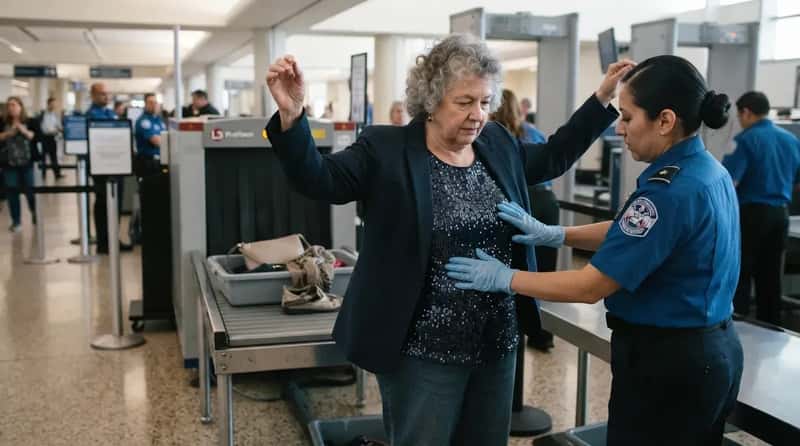
Nobody tells you this before a trip, but your travel-day wardrobe might be the reason you keep getting pulled aside. Sequined tops, blouses with decorative metalwork, and jeans with rhinestones on the back pockets reliably trigger the imaging scanner and lead straight to a pat-down.
None of these items are actually prohibited – they’re just guaranteed to slow you down. The same goes for underwire bras, heavy belt buckles, and layered metal jewelry, since none are banned but all set off alarms every time. Agents privately admit the fix is boring but effective: save the sequins for the destination and wear something plain on travel day.
#10 – A Messy Carry-On Gets Flagged Before You Even Reach the Belt
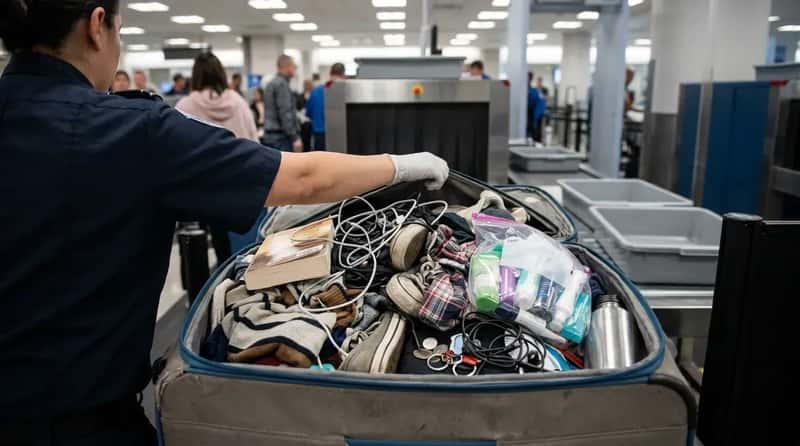
Here’s something screeners rarely say out loud: the contents of your bag matter less than how they’re arranged. The single biggest predictor of whether a bag gets pulled for a secondary search isn’t what’s inside it. It’s how organized it is.
A jumbled bag produces a cluttered X-ray image that’s nearly impossible to read cleanly, and that alone triggers a hand search. The fix agents recommend is simple layering: shoes on one level, folded clothes on the next, electronics on their own visual plane. Travelers who’ve packed the same way for thirty years are often the most resistant to changing it, and it costs them every time.
#9 – Kiosks and Paper Forms Are Not Interchangeable
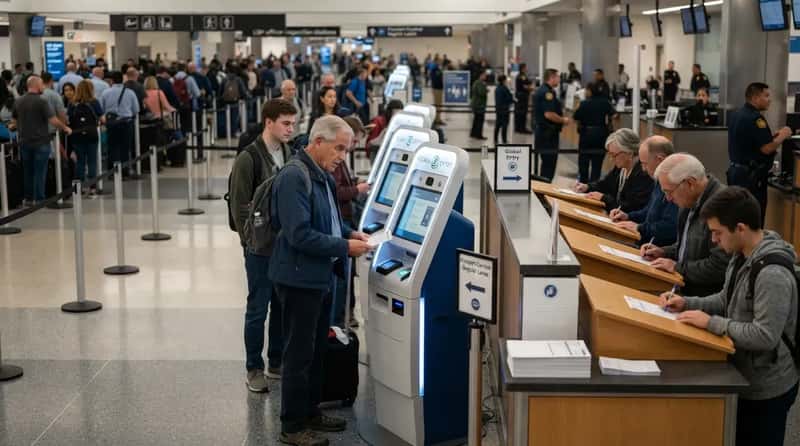
At the customs hall, older travelers frequently assume any kiosk will work for them, and that’s simply not true. Travelers can complete a paper form at the port of entry, or use a Global Entry kiosk, but the Global Entry kiosk is reserved strictly for preapproved members.
Standing in the wrong line wastes precious time, especially for travelers who already dislike touchscreens. Keeping every purchase receipt in one envelope inside your carry-on makes the whole declaration process noticeably smoother. Agents say this single habit alone eliminates most of the back-and-forth they see at the counter.
#8 – Your Medication Bag Doesn’t Follow the Same Rules as Everyone Else’s
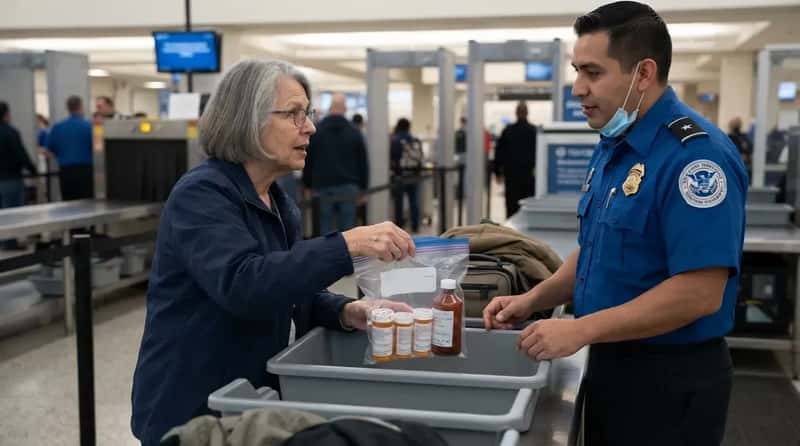
Most travelers know about the 3.4-ounce liquid limit, but older travelers managing multiple prescriptions often panic unnecessarily. Pills and liquid medications should be clearly labeled, and if a liquid exceeds 3.4 ounces, it must be separated from other carry-on items and declared as a medical necessity.
What agents wish more people knew: declaring medication isn’t a hassle, it’s the fastest way through. Keeping extras in checked baggage is smart for backup, but what you need during travel should stay with you. Saying the word “medical” out loud to an officer, instead of staying silent and hoping nobody notices the bottle, is what actually speeds things up.
#7 – Wheelchairs and Walkers Get Screened Too, Every Time
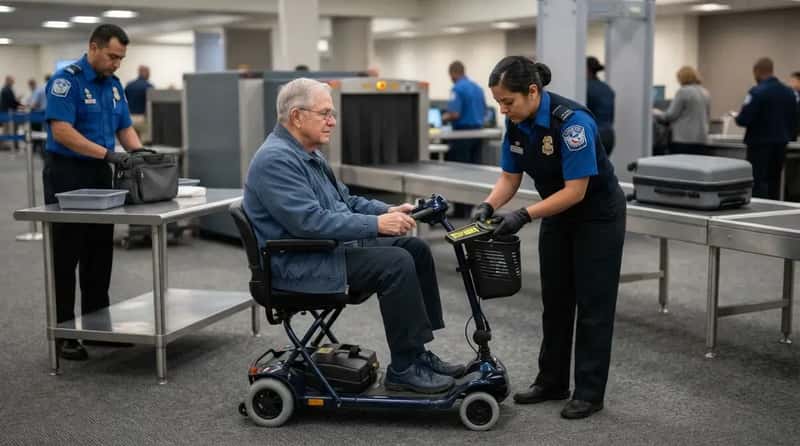
Plenty of travelers assume a mobility device is exempt from inspection because a person clearly needs it. Agents wish that were true, but it isn’t. TSA requires everyone with a scooter, wheelchair, walker, or cane to be screened in some fashion, because unauthorized items have been found hidden in mobility devices before.
The screening itself is usually gentle, but it takes extra time that catches people off guard. Any bags or satchels attached to the device must come off and go through the X-ray belt separately. Calling ahead to confirm the exact process at both airports is a step almost nobody takes, and agents say it would save enormous frustration on travel day.
Worth Knowing
- Every wheelchair, scooter, walker, and cane goes through some form of screening, no exceptions.
- Attached pouches or bags must be removed and X-rayed separately from the device.
- Officers may swab hands or equipment for a quick trace-detection check.
- Calling the airport’s disability services line before travel day can shave real time off the process.
#6 – Oxygen and CPAP Machines Need a Conversation Before the Belt, Not After
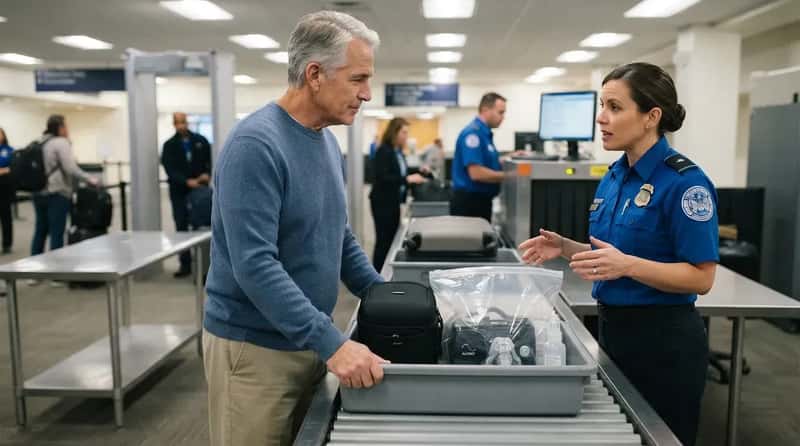
Respiratory equipment causes more checkpoint confusion for older travelers than almost anything else on this list. Oxygen and other respiratory devices must be screened before the checkpoint, and if the oxygen cannot be disconnected, telling the officer allows them to arrange an alternate inspection process.
CPAP and nebulizer users face a similar surprise the first time they travel with the equipment. It should be packed in a clear plastic bag inside its carrying case for X-ray screening, and liquids used with a nebulizer are exempt from the standard 3-1-1 rule. Agents say the travelers who struggle most are the ones who assume medical equipment is invisible to screening. It isn’t, but it’s also never treated as suspicious once it’s declared.
#5 – That Sandwich in Your Bag Can Trigger a Real Investigation
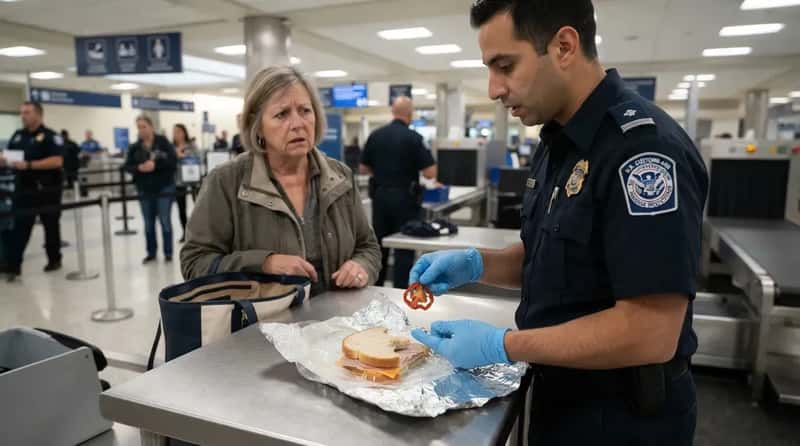
This is the mistake agents describe with the most exasperation, because it happens constantly and it’s completely avoidable. Agricultural violations are among the most common reasons travelers run into customs trouble, and many are stunned that a forgotten apple or leftover sandwich can create real consequences.
Older travelers who grew up packing snacks for every trip are often the most likely to forget what’s tucked into a jacket pocket or purse. Fresh fruit, vegetables, many meats, soil, and unpermitted seeds are commonly restricted, and CBP may send undeclared items for agriculture screening or simply confiscate them on the spot. Declaring the item almost never causes a problem. Hiding it does.
#4 – The $10,000 Cash Rule Doesn’t Work the Way Most Families Think
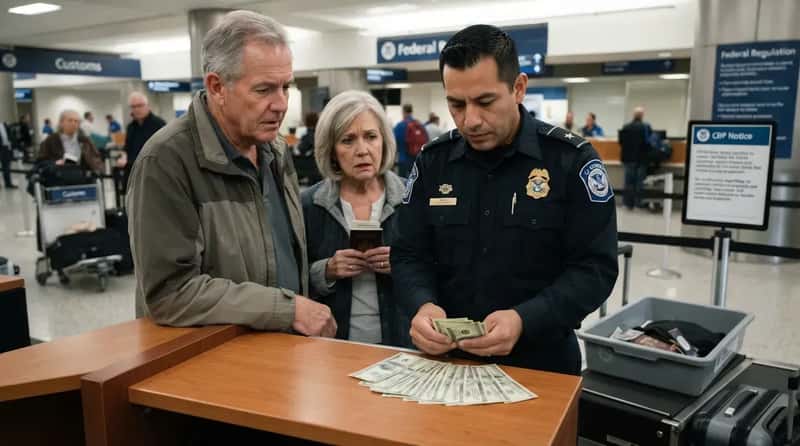
Travelers assume this threshold applies per person, and that assumption gets otherwise honest people into real trouble. Many travelers incorrectly believe the $10,000 currency reporting threshold applies per individual rather than per family or traveling group.
Splitting cash between spouses to stay “under the limit” feels harmless, but agents see it very differently. Trying to evade the rule by dividing cash among travel companions is considered structuring, and CBP treats a traveling family as a single unit for reporting purposes. The penalty isn’t a warning. It’s often full seizure of the money, with no guarantee it’s ever returned.
Quick Compare
- What travelers assume: The $10,000 limit applies separately to each person in the family.
- What’s actually true: CBP treats a traveling family or group as a single combined unit.
- The risky move: Splitting cash between spouses to stay under the number.
- The real consequence: Full seizure of the money, with no guarantee it’s ever returned.
#3 – Declaring Something Almost Never Costs You What You Think It Will
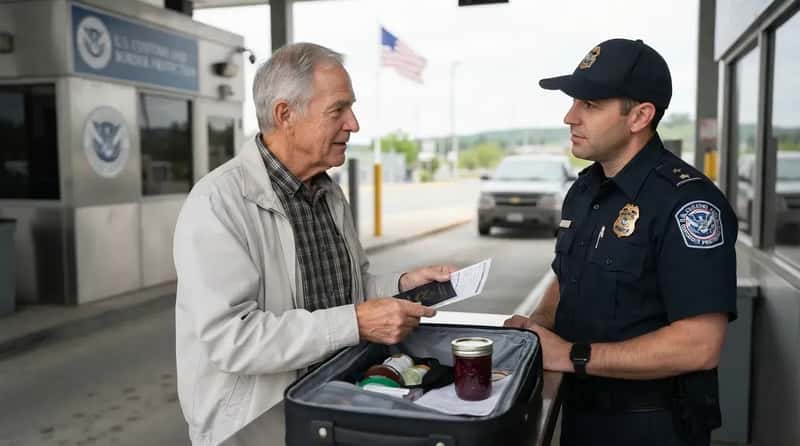
The fear of “getting in trouble” causes more bad decisions at the border than almost any other factor, especially among older travelers who grew up assuming customs officers are looking for a reason to punish honesty. The longstanding CBP advice is simple: if in doubt, declare it. Officers do not penalize honest declarations; at worst you might lose an item that isn’t allowed or pay a modest duty.
If in doubt, declare it.
U.S. Customs and Border Protection
What actually escalates a situation is silence, not disclosure. Declaring something doesn’t automatically mean you owe money or did anything wrong, but failing to declare a required item often leads to delays, fines, or outright seizure, even for things that would have been perfectly fine to bring in. Many agents say this single mindset shift would eliminate most of their hardest conversations.
#2 – Your Duty-Free Allowance Is Bigger Than You Assume

Older travelers frequently under-shop or panic about souvenirs because they overestimate what they’ll owe coming home. It’s an unpopular opinion, but that caution is often unnecessary. Personal exemptions that require no duty payment run $200, $800, or $1,600 depending on which countries were visited, as long as items are for personal or household use or intended as gifts.
Most U.S. residents don’t realize how generous the baseline actually is. Residents are normally entitled to a duty-free exemption of $800 on items they bring back. Agents wish more travelers relaxed about modest souvenir shopping instead of leaving good finds behind out of a fear of taxes that, in most cases, will never apply.
At a Glance
- $200 exemption applies for travel from most countries without special trade agreements.
- $800 is the standard exemption most returning U.S. residents can count on.
- $1,600 exemption is possible when returning from certain U.S. insular possessions.
- Items must be for personal or household use, or intended as gifts, to qualify.
#1 – There’s a Hidden Hotline Built Specifically for You, and Almost Nobody Uses It
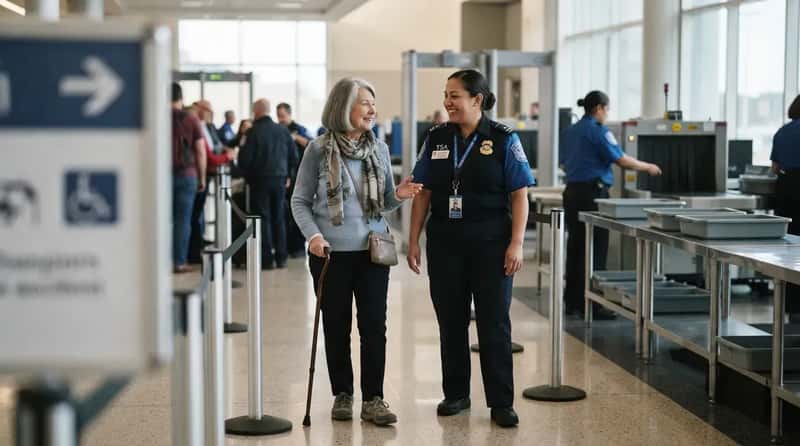
This is the one agents bring up most often when asked what they wish every older traveler knew, because it exists purely to help and gets used so rarely. TSA Cares operates a dedicated hotline for travelers with disabilities and medical conditions, reachable toll-free, and calling 72 hours before a flight gives enough time to arrange accommodations in advance.
Beyond the phone line, there’s help waiting at the checkpoint itself that most travelers never think to ask for. Requesting a passenger support specialist connects you with someone whose entire job is answering questions and getting you through quickly. Agents genuinely wish this were common knowledge, because the travelers who use it consistently have the smoothest, least stressful experience in the entire building, and it costs absolutely nothing.
None of these fourteen truths are secrets because agents are hiding them on purpose. They’re secrets because airports move fast, checkpoints change policy every year, and nobody hands out a briefing before you board. The travelers who move through security and customs the fastest aren’t the ones with the most experience. They’re the ones with the most current information.
A little curiosity before your next trip could save you an hour standing in the wrong line, or worse, a seized item you never needed to lose. Which of these caught you off guard? Chances are, you’re not the only one who didn’t know.