Most travelers over 60 step off the plane after a long international trip and walk into U.S. Customs expecting the usual ritual – hand over the passport, answer two questions, grab the bags, go home. What almost nobody realizes is that experienced CBP officers routinely share things with older returning travelers that never appear on any sign, any airline pamphlet, or any travel website. There’s an entire layer of programs, accommodations, and quiet adjustments built into the border entry process that agents can offer – but almost nobody asks for them.
The gap between what customs agents know and what they say out loud is enormous – and for travelers over 60, that gap gets wider. More medications, more expensive purchases, more complicated travel histories, less patience for bureaucratic surprises after 14 hours in the air. What follows is what CBP’s own published programs and years of documented policy actually make available to you the moment you land. Some of it will surprise you. A couple of items may save you real money before your next trip ends.
#14 – A Dedicated Accessibility Lane Through the Customs Queue

A two-hour line at the customs hall is hard on anyone. For a traveler over 60 dealing with a bad hip, a cane, or compression stockings after a transatlantic flight, it can be genuinely brutal. Most people in that situation just grit their teeth and shuffle forward. Turns out, that’s the last thing they need to do.
Passengers with disabilities or limited mobility can request special queueing assistance when moving through the U.S. Customs and Border Protection area. At airports like Miami International, travelers can submit an accessibility lane request 48 hours before arrival – and when they reach Customs, they’re directed to a dedicated lane for CBP processing. Submitting the request gets you access to that lane, though it doesn’t guarantee faster service. The key is that you have to ask. Nobody announces it at the gate.
#13 – The Right to Request a Reasonable Modification to the Inspection Process
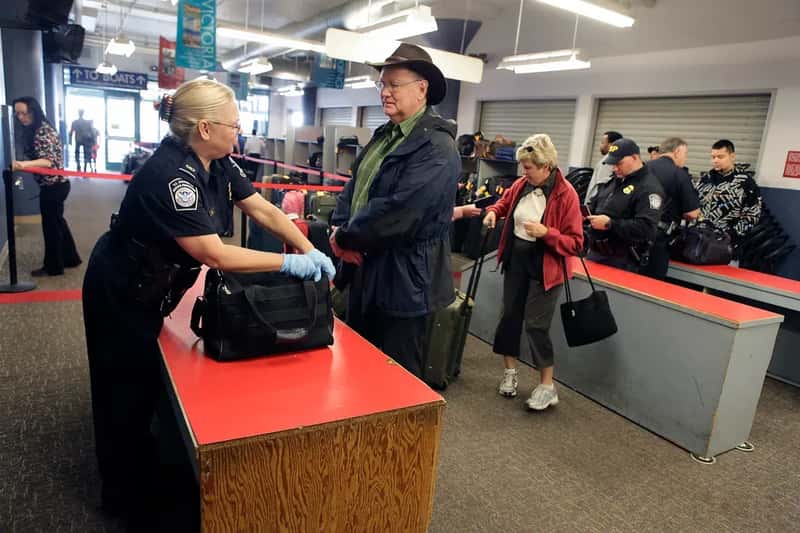
Here’s one almost nobody knows: if the standard CBP inspection process creates a genuine hardship – because of a mobility issue, a medical device, a hearing impairment, or any disability – you can formally request that it be changed. Not worked around. Actually changed, on the spot, by the officer in front of you.
CBP policy allows travelers to immediately inform an officer of their need for a reasonable modification or auxiliary aid during inspection. That can mean seating during the interview, alternative communication formats, or modified document handling. Experienced officers know the process cold. The vast majority of travelers over 60 don’t know it exists at all – which means most of them suffer through something they had every right to adjust.
#12 – Skip the Paper Declaration Form Entirely With a Free App

Most returning travelers still fill out that paper CBP Declaration Form on the plane – the one with the tiny boxes and the pen borrowed from the stranger in 34B. There’s been a free digital alternative available for years, and the majority of travelers over 60 have never heard of it.
CBP’s Mobile Passport Control app lets travelers submit their information before landing, skip the paper form entirely, and access a designated queue that typically moves faster. No pre-approval required. You can submit information for multiple people from one device, making it ideal for couples or families returning together. Download it before you fly. It costs nothing, takes about four minutes to set up, and quietly makes the whole arrival process feel different.
#11 – Wheelchair Assistance That Continues Through the Entire CBP Process
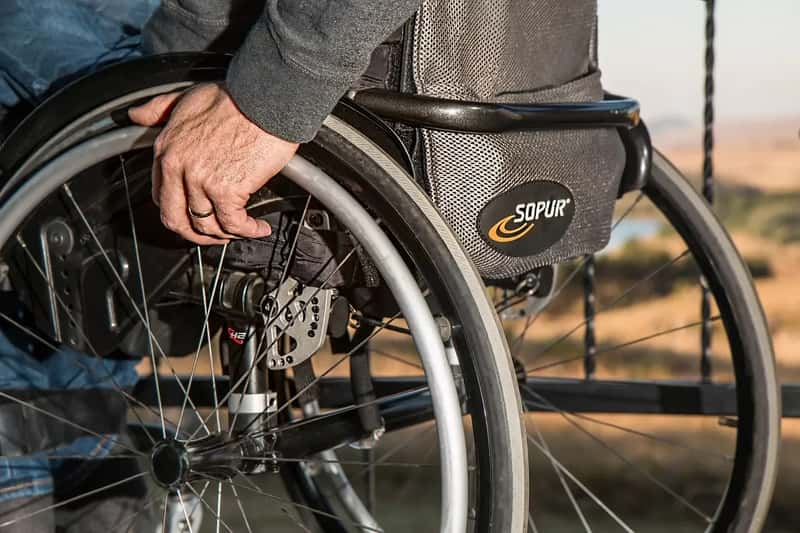
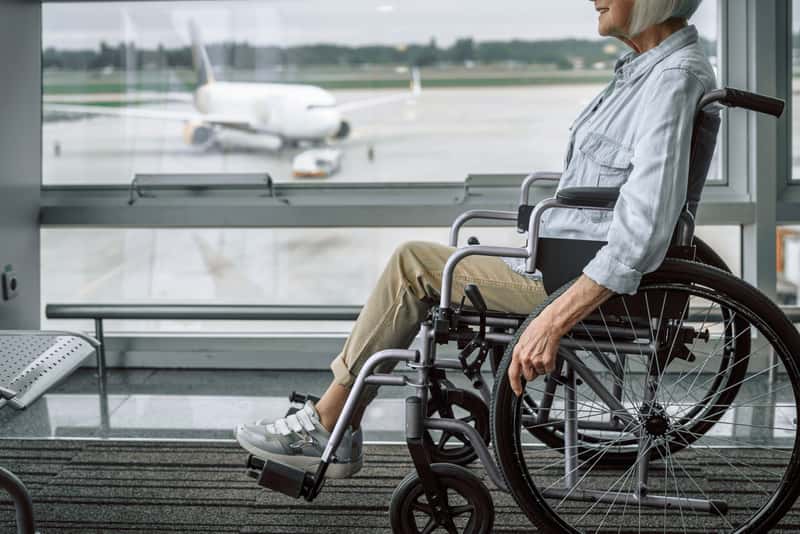
Most travelers who request wheelchair assistance from their airline assume that help ends once the jet bridge is behind them. It doesn’t have to – and border agents can be part of making that handoff work. The problem is that most people never think to flag it on the customs side specifically.
A wheelchair request to your airline should be communicated to cover the CBP processing area as well, not just the gate and baggage claim. The gap in coverage almost always happens because the traveler assumed the airline’s single request automatically covered every step – it often doesn’t. Tell both the airline and the airport, separately, exactly what you need and how far into the process you need it. One extra sentence at check-in can save a genuinely painful experience at the other end.
#10 – Declaring Medications the Right Way So They Don’t Get Flagged

Travelers over 60 travel with more medication than almost any other demographic. And a surprising number of them walk into customs holding a bag full of prescription bottles that are about to trigger a much longer conversation than necessary – not because they’ve done anything wrong, but because they don’t know exactly how to declare what they’re carrying.
CBP requires all medicine and similar products to be declared upon entry. Prescription medications should be in their original containers with the doctor’s prescription printed on the label, and a general guideline is no more than a 90-day personal use supply. Agents consistently say the fastest path through this moment is to have medications organized, labeled, and declared upfront before the officer asks. The travelers who get pulled aside are almost never the dishonest ones – they’re the unprepared ones.
#9 – The Joint Family Declaration That Combines Your Purchasing Power
Traveling with a spouse? Most older couples coming home from a European river cruise or a two-week trip abroad declare their purchases separately and often end up paying duty on things they didn’t need to. There’s a smarter option that agents can walk you through right at the counter – if you know to bring it up.
A joint declaration allows family members living in the same household who return to the United States together to combine their purchases under a single flat duty rate, regardless of which family member owns a given item. For a family of four, the combined value subject to that flat rate reaches $4,000. Most couples filing separately are leaving money on the table – or paying duty they didn’t legally owe. The moment you approach the counter together, tell the agent you’d like to file a single joint declaration.
#8 – Registering Your Valuables Before You Leave So They’re Never Questioned Coming Back
Imagine landing home with the expensive camera you’ve carried for ten years, only to have an agent question whether you bought it abroad and owe duty on it. That scenario is more common than it sounds – and there’s a free, permanent fix available before your next departure. It’s called a Certificate of Registration, CBP Form 4457, and it’s one of the least-used tools in the entire border re-entry system.
Before your next international trip, take your high-value items – cameras, laptops, jewelry, watches – to any CBP port of entry and register them for free. The officer documents the serial numbers and descriptions, stamps the form, and hands it back. When you return, you show that form and the conversation ends in seconds. No duty assessment. No questions. The form never expires. Agents watch travelers stress over this at the counter constantly, and every one of them will tell you the same thing: register it before you go.
#7 – The Duty-Free Truth That Most Travelers Over 60 Still Get Wrong
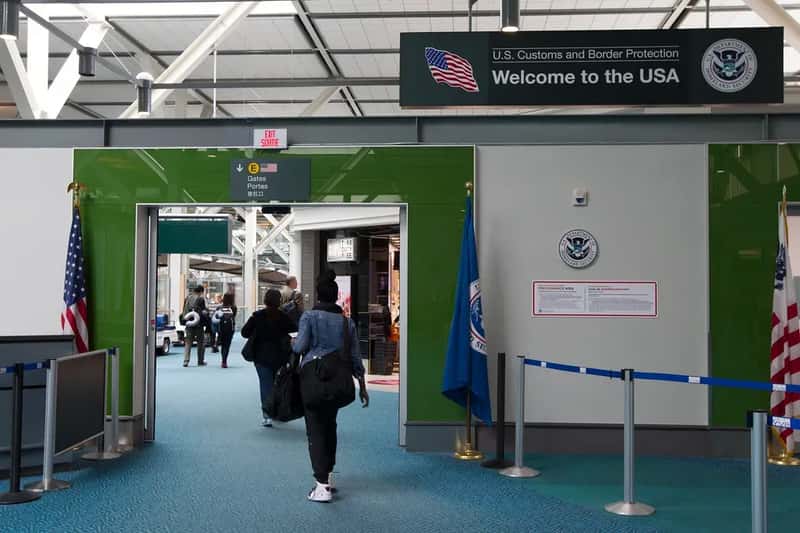
Here’s a fact that genuinely surprises a huge percentage of returning travelers, including very experienced ones: buying something at a duty-free shop does not mean you can bring it home without declaring it or counting it against your exemption. This misconception costs older travelers money every single year.
The “duty-free” label means you didn’t pay the foreign country’s tax – it says nothing about what U.S. Customs will do with it when you land. That bottle of Scotch or designer perfume still counts toward your $800 personal exemption. Even a $20 souvenir technically goes on the declaration form. Undeclared items can be seized on the spot, and civil penalties start at the full retail value of what you failed to report. It’s one of the most avoidable problems at the customs counter – and one of the most common.
#6 – How to Handle Jewelry or Watches You Took Abroad for Repair

Almost nobody knows this one. You took your watch to Switzerland to have it serviced. Your ring needed a stone reset in Italy. You’re walking back through customs wondering if you need to declare a $3,000 piece of jewelry – and the answer is more nuanced than almost any traveler expects.
The declared amount is the cost of the repair itself, not the value of the item. A $2,000 watch that cost $80 to service means declaring $80. Agents say this is one of the least-known rules at the border and one that almost never results in serious consequences when travelers are honest about it. Walking past the agent without mentioning it at all is a very different legal exposure – and one that’s easily avoided with a single line on the form. Ask the agent how to handle it correctly. They will tell you exactly what to write.
#5 – Global Entry Enrollment on Arrival – No Appointment Needed
Most travelers over 60 who qualify for Global Entry never apply because they’ve heard about the wait for an enrollment interview and decided it wasn’t worth the effort. What they don’t know: you can now complete that interview the moment you land, right there in the customs hall, with no appointment scheduled in advance.
When landing at an international terminal, follow the signage to CBP officers who can complete your Global Entry interview during your standard admissibility inspection. The application fee is $120 and membership lasts five years – all applicants must pass a background check. Once enrolled, you bypass the standard passport control line entirely every time you return from abroad. For frequent travelers over 60, that single investment pays off in time saved and stress eliminated within the first two or three trips home.
#4 – The Free Trusted Traveler Program That Works at the Canadian Border
Most travelers know about Global Entry for international flights. Far fewer know about NEXUS – a sister program that offers the same kind of fast-lane processing specifically for U.S.-Canada crossings, and which agents say is even more underused by older travelers who regularly visit Canada.
NEXUS members use dedicated lanes at northern border ports of entry, kiosks when entering Canada by air, and Global Entry kiosks when arriving via Canadian preclearance airports. The program also covers expedited processing at marine reporting locations – a detail that matters if you arrive by cruise ship or private boat. The application runs through the same CBP portal as Global Entry. If you cross between the U.S. and Canada more than once a year, ask the agent about it at the counter. Most won’t volunteer it unless you bring it up first.
#3 – The Hidden Rule About Foreign Prescriptions That Can Cost You Everything

This is the rule that genuinely shocks travelers over 60 who have been filling prescriptions abroad for years without incident. You ran out of blood pressure medication in Portugal. A local doctor wrote you a script. You picked it up at the pharmacy. It seemed perfectly reasonable – and it might not be legal to bring home.
Virtually all foreign-made medications face FDA import restrictions at the U.S. border, and the customs counter is where that enforcement begins. CBP’s own published guidance recommends traveling with a full supply from home and packing extra for delays. Counterfeit drugs are also genuinely common in some countries, which compounds the risk. If you’ve been abroad for an extended period and ran short, tell the CBP officer exactly what happened and ask how to handle it honestly. There is discretion built into the process – but only if you declare first.
#2 – The ADA-Backed Right to Ask for a Private, Modified Inspection

Most travelers assume a customs inspection is a one-size-fits-all encounter – take it or leave it. That’s not true. Under ADA-aligned CBP policy, travelers with disabilities or medical conditions have the explicit right to ask for an inspection that actually works for their situation, including privacy, seating, or modified procedures.
You can immediately inform the interviewing CBP officer of your need for a reasonable modification or auxiliary aid – and if the accommodation isn’t readily available at that exact moment, the process can be adjusted to a later point. This applies to everything from hearing aids and cognitive conditions to joint replacements that trigger screening equipment. Requests made before arrival give the port time to prepare, but the right applies on the spot too. Most travelers over 60 never exercise it, not because they don’t qualify – but because they had no idea it existed.
#1 – The One Sentence That Changes Everything at the Counter
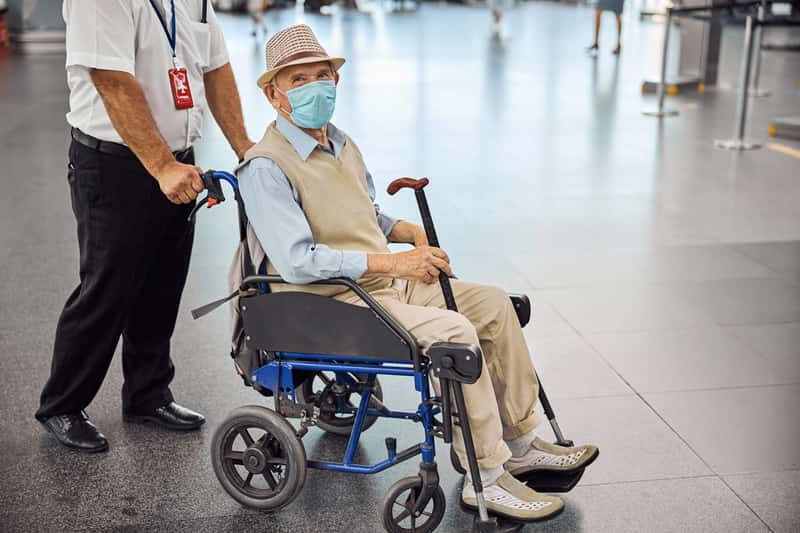
This is the one seasoned travelers and savvy border agents both know – the single most quietly powerful thing a returning traveler over 60 can do at the customs counter. It’s not a program, not an app, not a form. It’s four words: “Can I ask something?”
Experienced CBP officers routinely have discretion to walk older travelers through declarations, point out filing options they’d qualify for, clarify medication rules on the spot, and flag when something a passenger is nervous about declaring is actually not a problem at all. The travelers who walk away having learned something – who discover the joint declaration, the repair exemption, or the medication rule before it costs them – are the ones who asked a direct question when they had the opening. CBP officers welcome nearly a million international travelers into the United States every single day. Most of those officers know far more than they have time to say unprompted. Give them the opening, and you might be surprised what comes next.
The customs hall after a long international trip is not where most people expect to discover they had more options than they used. But the programs, exemptions, and accommodations above are real, documented, and available to every returning traveler over 60 – they just don’t come with a flashing sign. Whether it’s a free app that kills the paper form, a joint declaration that eliminates unnecessary duty, or a quiet ask for a seated private inspection, the difference almost always comes down to one thing: knowing the option exists before you need it.