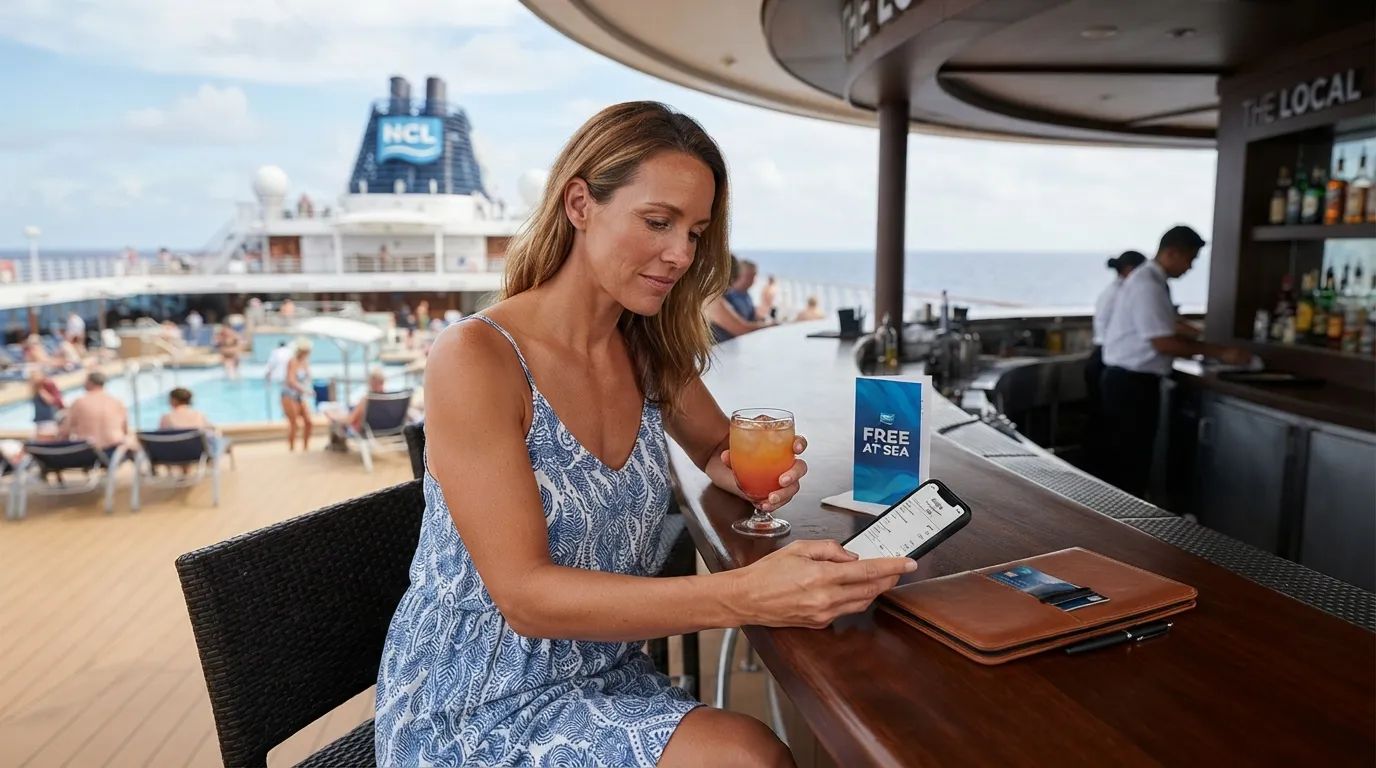
Yes, this really happens. You can be handed a bill for something at one counter while the same thing is being given away a few steps (or one deck) from you. Cruise fares look like bargains until you reach the bar, the coffee counter, or the Wi-Fi login.
The gaps aren’t random. Some come down to a machine, a time of day, or the logo on your boarding pass. And the last item on this list is a “free” perk with a catch that many people only discover on their final bill.
#14 – The $5 Specialty Coffee While Drip Coffee Flows Free Upstairs
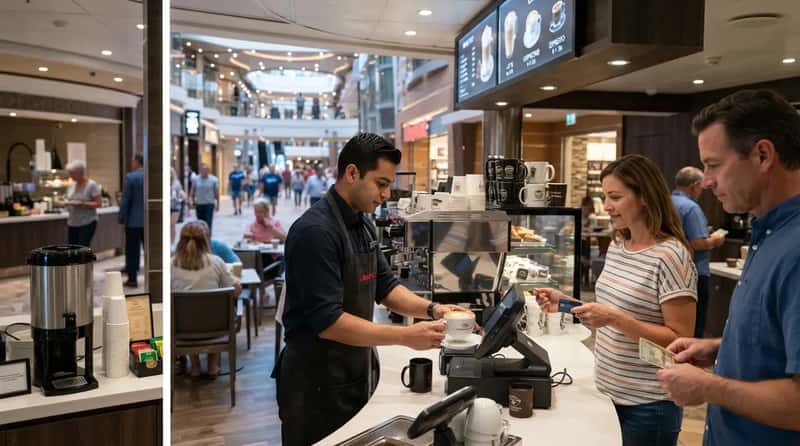
The café line on the promenade is often the first place new cruisers spend money. Lattes, cappuccinos, and flavored coffees usually carry a per-cup charge on mainstream ships. Meanwhile, one cost breakdown notes that plain drip coffee, tea, iced tea, lemonade, and dispenser water are typically free in the buffet and dining areas.
The difference is the espresso machine and the barista, not the caffeine. Plenty of passengers walk right past the free urn with a $6 drink in hand. On Viking, the story flips: specialty coffees, teas, and bottled water are available 24 hours a day at no extra charge. Same ocean, very different rules.
Fast Facts
- Drip coffee, tea, iced tea, and lemonade are typically free in the buffet.
- Espresso-style drinks usually carry a per-cup charge on mainstream ships.
- You’re paying for the machine and the barista, not the caffeine.
- Viking includes specialty coffee, tea, and bottled water around the clock.
#13 – Bottled Water That Costs Money Beside a Free Tap
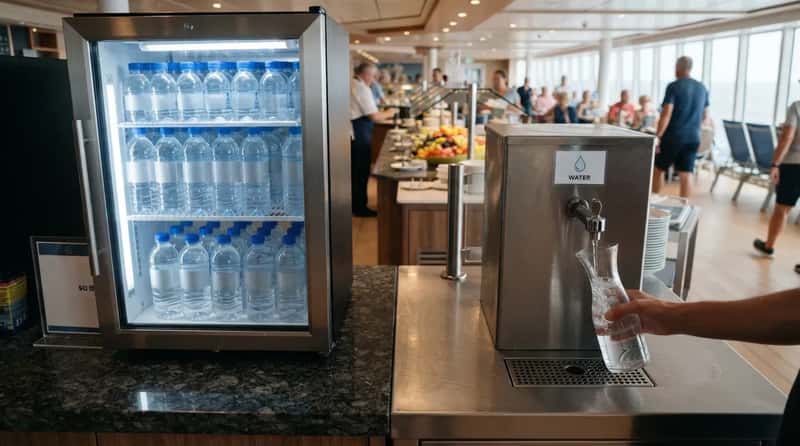
Paying for water on a ship feels absurd once you notice the dispensers. Most ships have free water stations in the buffet and often around the pool deck. Even so, bottled water is sold at bars, in shops, and through add-on packages.
Cruise lines know that people grab a bottle before a port day for convenience. That convenience is what they charge for. An empty reusable bottle filled for free at the buffet does the same job. And the pricing gets even stranger once soda enters the picture.
#12 – Fountain Soda Is Billed, But Lemonade and Iced Tea Aren’t
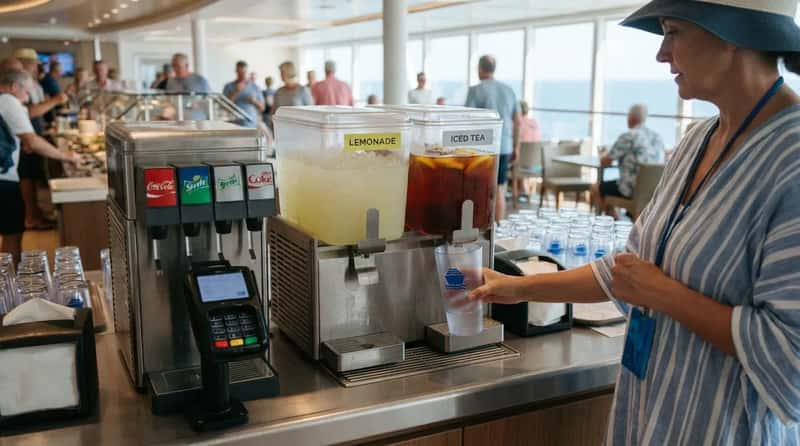
Soda on many mainstream ships is a paid item, either by the glass or through a soda package. Yet drip coffee, tea, lemonade, iced tea, dispenser water, and buffet juice usually cost nothing. That’s a very thin line between a “free sugary drink” and a “paid sugary drink.”
In other words, you’re paying for the bubbles. Some travel guides suggest skipping the soda package for exactly this reason and sticking with the free lemonade, iced tea, and water. Most people never test it, and the glass in their hand costs them every single day.
#11 – Room Service Fees vs. the Same Food Downstairs
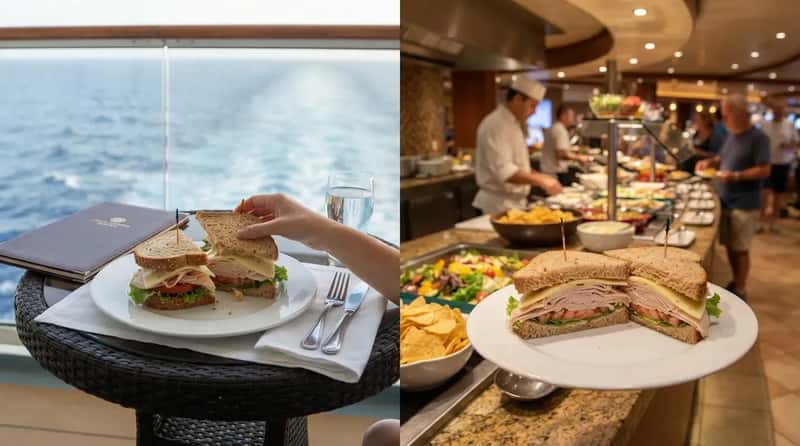
The sandwich on your balcony table might carry a delivery fee, while the identical sandwich in the buffet costs nothing. Policies vary a lot by line. Some mainstream brands charge a service fee or a late-night fee, while the dining room and buffet stay free.
Higher-end lines work differently. Viking’s fares include 24-hour room service, and Oceania also lists room service as included. Where you sail decides whether that midnight snack is a perk or a surcharge.
#10 – Premium Ice Cream Gets a Price Tag, Soft-Serve Doesn’t
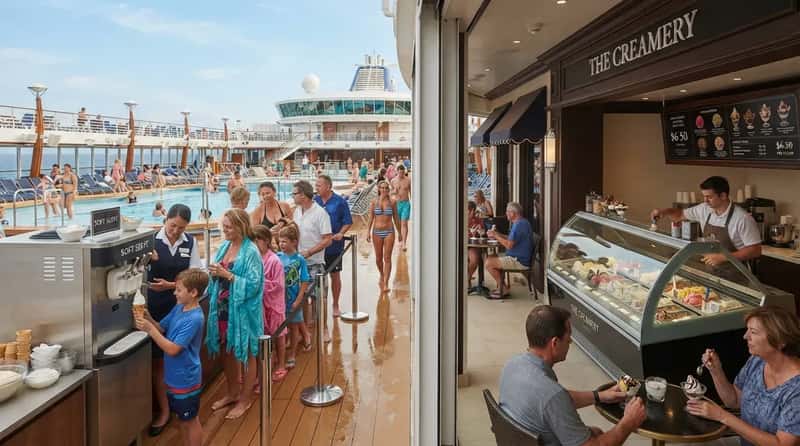
Soft-serve ice cream is free on many mainstream ships and pulls long lines by the pool every afternoon. Hand-scooped or branded ice cream parlors on some ships are a different matter. They commonly charge per scoop.
That split is intentional. A free cone satisfies the craving, while the fancier option plays on the “I’m on vacation” mindset. Kids often can’t tell the difference, but the bill can. Since this varies by ship, check the menu board before the line gets long.
#9 – Paid Spin Classes Beside a Free Gym
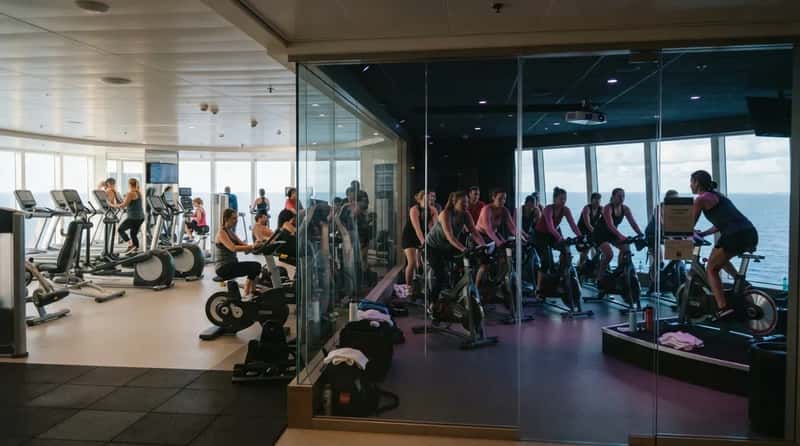
The fitness center is typically included in your fare. The instructor-led classes inside it often aren’t. On many ships, the same room that’s free at 7 a.m. becomes a paid studio at 8.
According to The Points Guy, river lines, luxury lines, and Virgin Voyages often offer fitness classes at no extra charge, while on most mass-market ships you should expect to pay. The workout itself is free. The coaching is the product.
#8 – The Thermal Suite Upcharge Next to Free Hot Tubs
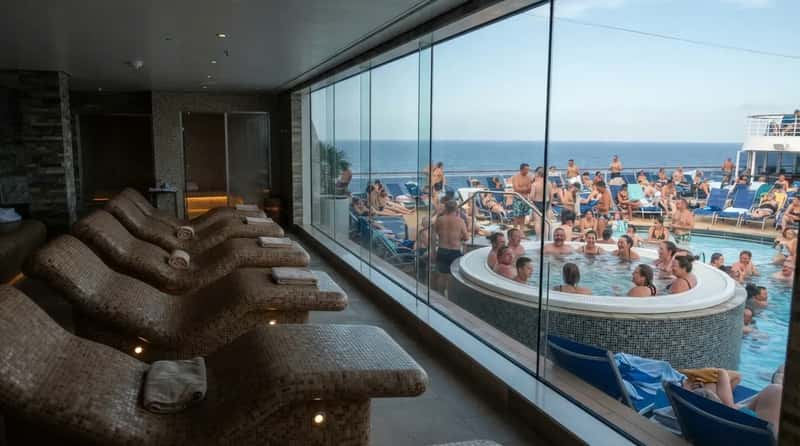
Pools and hot tubs are free on virtually every ship. Yet the heated tile loungers and steam rooms in the spa area can carry a daily or weekly fee on many mass-market lines. You can often get plenty of warmth and relaxation up on deck for nothing.
Some lines have gone the other way. Viking has made free access to the thermal suites in its spas a hallmark of the line, as has Explora Journeys. One cruise line’s premium add-on is another’s standard feature.
#7 – Specialty Restaurant Cover Charges vs. Free Dining Rooms
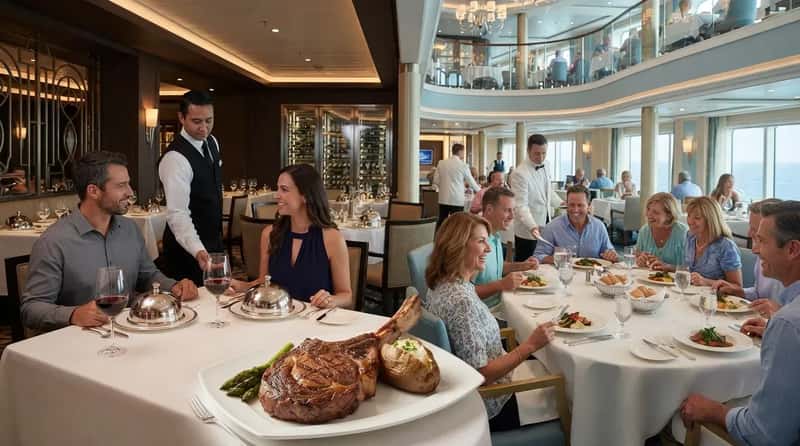
Main dining rooms and the buffet are included on mainstream ships. Specialty steakhouses and sushi bars aren’t. A pricing guide puts specialty dining at $25-$75 per meal, and a separate breakdown notes that an 18% gratuity is typically added automatically at specialty restaurants on most lines.
Plenty of cruisers argue the upgrade isn’t worth it, because the main dining room often serves a steak of its own with no cover charge. Meanwhile, Viking offers alternative dining options at no extra charge. Paying extra for a nice dinner isn’t a universal cruise rule.
Quick Compare
- Main dining room and buffet: included on mainstream ships.
- Specialty restaurants: about $25-$75 per meal, plus a typical 18% automatic gratuity.
- Viking: alternative dining at no extra charge.
#6 – Ship-Booked Excursions While the Free Shuttle Waits at the Pier
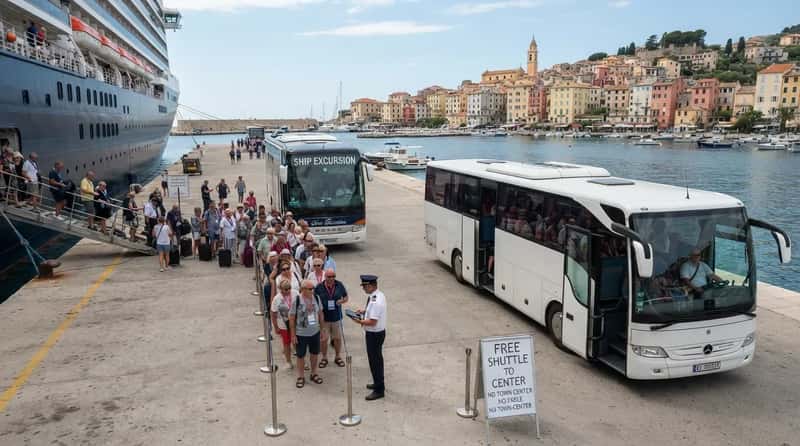
Ship-booked tours are convenient, but they usually come at a premium. Many ports offer a free shuttle into town or a cheap round-trip ride. Some cruise lines or ports also provide complimentary shuttle buses, which makes a self-guided day easy.
Independent tours can be much cheaper, but there’s a trade-off. The ship will not wait for you if you book on your own and run late. The free option comes with the risk. Booking through the ship removes that worry, and that peace of mind is what the markup covers.
#5 – Wi-Fi Priced by the Day While Port Cafés Give It Away
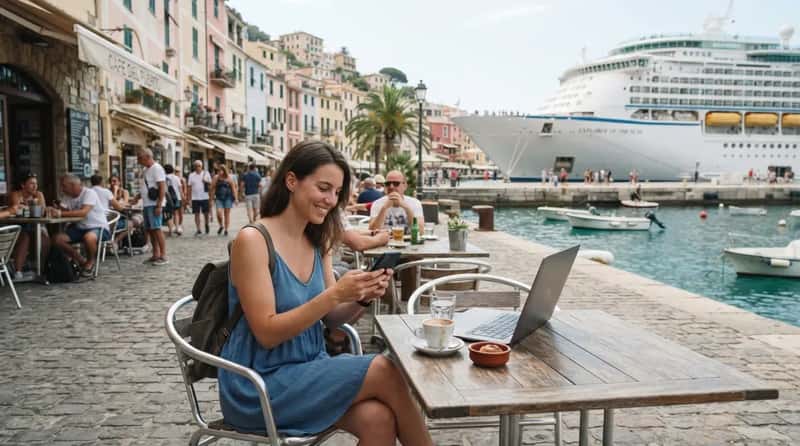
Shipboard internet is satellite-based and shared among thousands of guests. That’s why it’s pricey. One 2026 breakdown puts Wi-Fi at $100-175 for a typical 7-night cruise, and another pegs it at $15-$25 per day.
Many ports have cafés and public spots with free Wi-Fi, so you can check email on shore at no cost. On Viking, free Wi-Fi is part of the fare. The same message can cost you nothing on land and real money at sea.
#4 – Evening Babysitting Fees After a Free Kids Club Day
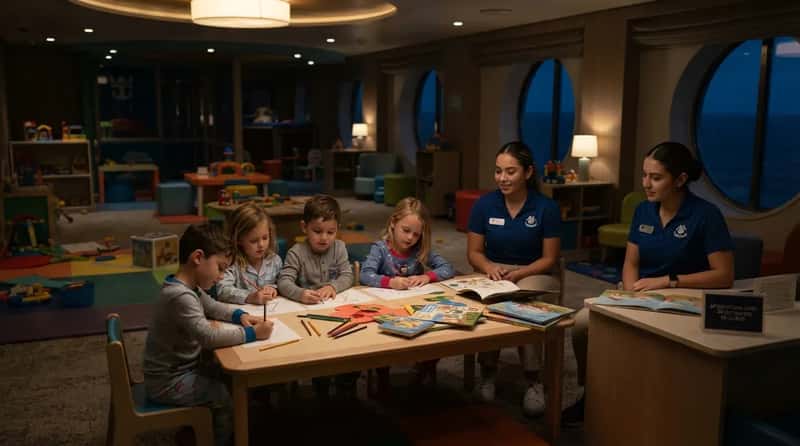
Kids clubs on many mainstream ships offer daytime programs at no extra charge. Then evening group care or late-night sitting often turns into an hourly fee. Parents who didn’t expect it find out when the charge appears on the account.
The logic is staffing. Late-night supervision costs more, so the line charges for it. Details vary by cruise line and ship, so it pays to check the policy before you book dinner reservations. The daytime club that costs nothing makes the nighttime price sting more.
Worth Knowing
- Daytime kids club programs are often included on mainstream ships.
- Evening group care and late-night sitting commonly bill by the hour.
- Policies differ by cruise line and even by ship.
- Check the rules before you lock in dinner reservations.
#3 – Daily Gratuities That Other Cruise Lines Fold Into the Fare

Service charges are a big add-on for mass-market cruisers. NCL, for instance, lists a $20 daily service charge for Club Balcony Suite and below and $25 for The Haven and Suites. A pricing guide puts the general range at $14-$20 per person, per day.
Other lines treat it differently. The Points Guy lists Explora Journeys, Azamara, Crystal, Ponant, Regent, Scenic, Seabourn, SeaDream, Silversea, and Virgin Voyages among lines that cover gratuities in their fares. Whether you tip the crew separately depends on the line you booked.
#2 – Drink Packages That Cost Hundreds While Dinner Wine Is Included Elsewhere
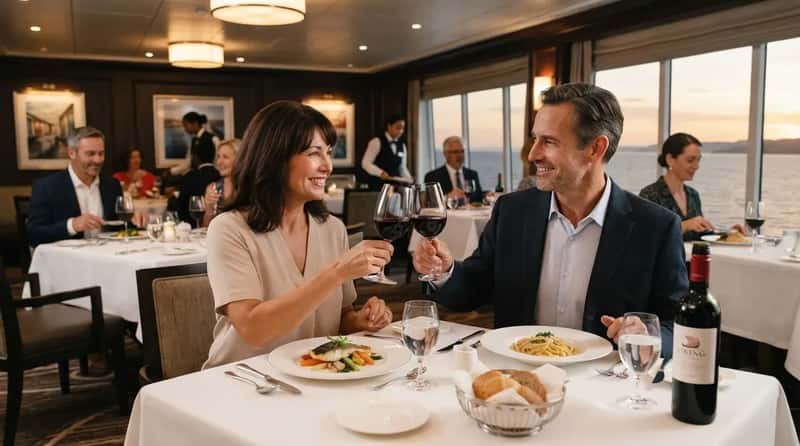
Alcohol is where bills balloon. One breakdown estimates that drinks run $300-600, or a $400-550 package for a 7-night cruise. On top of that, bartender gratuities of 18-20% are automatically added.
That’s not true everywhere. Viking includes free beer, wine, and soft drinks with lunch and dinner on the ship. The dinner wine that is a paid line item on one ship is simply included on another. But there’s one more twist, and it’s the most surprising of all.
#1 – The “Free at Sea” Perks That Come With Their Own Charges
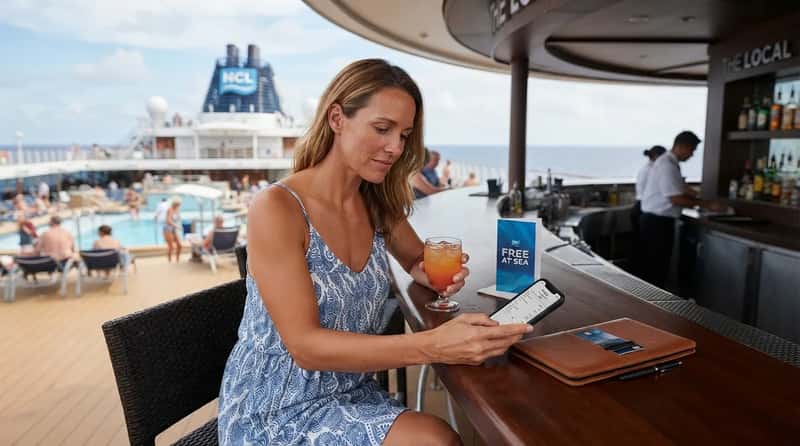
Norwegian’s “Free at Sea” promotion sounds like free drinks and dining, and the line does advertise an open bar. But according to TheTravel’s breakdown of promotional terms, NCL charges a mandatory daily package gratuity fee of $28.50 per person, per day, plus a 20% gratuity on specialty dining and add-ons. In other words, “free” isn’t always zero dollars.
The details matter, though. A separate 2026 guide notes that current Free at Sea Plus materials list daily charges as included, which is a different offer from the standard one. The word “free” in a cruise promotion can still leave you with a bill at the end. Read the fine print before assuming a perk covers everything.
At a Glance
- The headline: an open bar and dining perks that sound fully free.
- The catch: a $28.50 per person, per day package gratuity, per TheTravel’s breakdown.
- The add-on: a 20% gratuity on specialty dining and extras.
- The exception: Free at Sea Plus materials list daily charges as included.
The pattern runs through the whole list. Cruise lines often charge for convenience, branding, or timing, not for the thing itself. Drip coffee is free while lattes aren’t. The buffet is free while room service may not be. The gym is free while the class isn’t.
What you pay depends on the cruise line you booked, not just the ship you boarded. Which charge surprised you most on your last cruise?