Most travelers over 60 step off the plane after a long international trip and walk into customs expecting the usual ritual – hand over the passport, answer two questions, grab the bags, go home. What almost nobody realizes is that experienced CBP officers routinely share things with older returning travelers that never appear on any sign, any airline pamphlet, or any travel website. Some of it is about rights you actually have. Some of it is about rules most people get wrong every single trip. And some of it can save you from losing your medication, your purchases, or a surprising amount of cash right there at the counter.
The gap between what customs agents know and what they say out loud is enormous – and for travelers over 60, that gap gets wider. More medications, more expensive purchases, more complicated travel histories, less patience for bureaucratic surprises after 14 hours in the air. The things agents quietly mention to this group, when the line isn’t pressing and there’s a moment to actually talk, are genuinely worth knowing before you ever leave the house. Here are 14 of them, starting with the ones most people get wrong.
#14 – Your $800 Duty-Free Exemption Still Applies Even to Things You Bought in a “Duty-Free” Shop

This is one of the most persistent misconceptions at the customs counter, and agents see it derail older travelers constantly. Goods purchased in a duty-free shop are not automatically free of U.S. duty when you land back home. That bottle of Scotch or that designer perfume you picked up at the airport shop abroad? It still counts toward your personal exemption limit. The “duty-free” label means you didn’t pay the foreign country’s tax – it says nothing about what U.S. Customs will do with it when you arrive.
The standard personal exemption is $800, meaning you can bring back that much in goods without owing customs duty – but the declaration requirement applies regardless of value. Even a $20 souvenir technically goes on your form. Getting this wrong carries real consequences: undeclared items can be seized on the spot, and civil penalties start at the full retail value of what you failed to report. Agents quietly tell experienced travelers the same thing every time: there is no penalty for over-declaring. There is only a penalty for under-declaring.
Fast Facts
- The $800 personal exemption applies to most international trips of at least 48 hours, once every 30 days.
- If you return from U.S. territories like the Virgin Islands, Guam, or American Samoa, your exemption rises to $1,600.
- Duty-free shop purchases still count toward your exemption – the “duty-free” label only refers to the foreign country’s tax.
- Fine art is generally duty-free and does not count against your $800 limit.
- If you owe customs duty, it must be paid before you finish CBP processing – cash or exact-amount personal check only.
#13 – Loose Pills in a Daily Pill Organizer Can Get Your Medication Confiscated at the Counter

Travelers over 60 often pack a weekly pill organizer because it’s convenient – one compact box, all your morning meds sorted by day. It’s a completely reasonable habit at home. At the customs counter, it can become a real problem. Loose pills without original packaging give agents no easy way to verify what you’re carrying, what it is, or whether it’s legally prescribed to you. That ambiguity alone can trigger a secondary inspection or outright confiscation.
Prescription medications should travel in their original pharmacy containers with the label intact. If that’s not possible, a copy of the prescription or a letter from your doctor is the next best thing. Agents consistently flag the pill organizer as the single most common medication mistake they see from travelers over 60 – and the easiest one to avoid. Even if it means carrying a slightly bulkier bag, original bottles are the only container customs will never question.
#12 – Declaring Food Isn’t Optional – Even That Wrapped Cheese in Your Tote Bag

A lot of returning travelers think food declaration is for people who packed actual groceries. They don’t think twice about the leftover crackers from the flight, the cheese from a French market, or the bag of dried mango their grandkid asked for. Agents see this assumption play out badly several dozen times a day. Beyond cash and foreign purchases, you’re required to declare all food, agricultural products, medications, alcohol, tobacco, gifts, and even repairs made to personal items while abroad – full stop.
Fresh fruits and vegetables are generally prohibited from entering the U.S. due to agricultural contamination risks – foreign pests and plant diseases that can devastate domestic crops. A single undeclared piece of fresh fruit can trigger a $500 civil fine, even for a first-time offender. Almost all fresh, frozen, and dried fruits and vegetables must be declared. The agent’s quiet tip: if it came from outside the U.S. and you can eat it, it goes on the form. No exceptions, no gray area.
#11 – The $10,000 Cash Rule Covers a Lot More Than the Bills in Your Wallet

Most travelers know there’s some rule about cash and $10,000. What agents find almost nobody understands is exactly what counts toward that threshold. It’s not just paper currency. “Monetary instruments” under U.S. law includes traveler’s checks, money orders, and certain negotiable instruments – not just the cash folded into your passport holder. Travelers may carry as much currency as they want into or out of the United States, but anything at or above $10,000 in total monetary instruments must be reported to customs agents on arrival.
Failure to report can result in the currency being seized on the spot – no court order required – plus potential criminal charges. This catches older travelers off guard particularly after trips to countries where carrying significant cash is still common practice. The agent’s real-world advice is simple: if the combined total of everything that could be called a “monetary instrument” is anywhere near $10,000, declare all of it. The reporting costs nothing. The failure to report can cost everything you’re carrying.
Worth Knowing
- The $10,000 threshold applies to your group total, not per person – a couple each carrying $6,000 must report the combined $12,000.
- Splitting cash among travel companions to stay under the limit is called “structuring” – a separate and more serious federal offense.
- Foreign currency counts too: it must be converted to its U.S. dollar equivalent for reporting purposes.
- The required form is FinCEN Form 105, available from any CBP officer or electronically in advance.
#10 – Gifts You Received Abroad Must Be Declared Too – Not Just Things You Bought

This is the one that quietly stings returning travelers who visited family overseas. You didn’t spend a dime at any shop. Your sister gave you a beautiful silk robe. Your cousin pressed a bottle of olive oil into your hands at the door. None of it feels like a customs issue – and that’s exactly why agents see it become one so often. All items received as gifts while abroad must be declared, just like purchases. The rule doesn’t hinge on whether money changed hands. It hinges on whether the item was acquired outside the U.S.
Agents note that the most common declaration error among travelers over 60 is genuinely forgetting about gifts received during family visits – not intentional evasion, just an honest blind spot that the form closes. The good news is that gifts can fold into your $800 personal exemption. The bad news is that only works if you declare them first. Skip the form and there’s no exemption to claim – just an undeclared item and the consequences that come with it.
#9 – Items You Had Repaired or Altered Abroad Need to Be Declared – and Almost Nobody Knows That

You brought your watch to a jeweler in Switzerland to fix the clasp. You had a hem taken in on a blazer in Hong Kong. You got your antique ring re-sized in Italy. None of those feel like purchases – but every single one creates a customs obligation most people have never heard of. The declaration requirement covers any value added to an item while you were outside the U.S., not just new purchases. If you took something abroad and had it repaired or altered, you must declare the value of the work done.
The key detail: the declared amount is the cost of the repair itself, not the value of the item. A $2,000 watch that cost $80 to repair means declaring $80. Agents say this is one of the least-known rules at the border and one that almost never results in serious consequences when travelers are honest about it. Walking past the agent without mentioning it at all, though – that’s a different legal exposure entirely, and one that’s easily avoided with a single line on the form.
#8 – Registering Your Valuables With CBP Before You Leave Is Free and Takes Five Minutes

Imagine landing home with the expensive camera you’ve carried for ten years, only to have an agent question whether you bought it abroad and owe duty on it. That scenario is more common than it sounds – and there’s a free, permanent fix available before your next departure. CBP Form 4457, the Certificate of Registration, lets you register expensive personal items – cameras, laptops, jewelry, medical devices – before you leave the country. It takes about five minutes at any port of departure and proves the item was in the U.S. before you traveled.
Once registered, the certificate is valid indefinitely for that item – as long as the document remains legible. You only have to do it once. Agents consistently flag this as one of the most useful, least-used tools available to frequent international travelers – especially those over 60 who routinely travel with expensive medical equipment, quality watches, or professional cameras. The only reason most people don’t know it exists is that no one ever thinks to mention it until there’s already a problem at the counter.
At a Glance: CBP Form 4457
- What it is: A free Certificate of Registration for personal items you’re taking out of the U.S. and bringing back.
- Who issues it: Any CBP officer at a U.S. airport or port before you depart – must be signed in person.
- What qualifies: Items with serial numbers or unique markings – cameras, laptops, watches, jewelry, medical equipment.
- How long it’s valid: Indefinitely, as long as the certificate is legible (replace it if it becomes worn).
- Key limit: Does not cover items purchased or repaired abroad – those still require declaration.
#7 – Secondary Inspection Does Not Mean You Did Anything Wrong
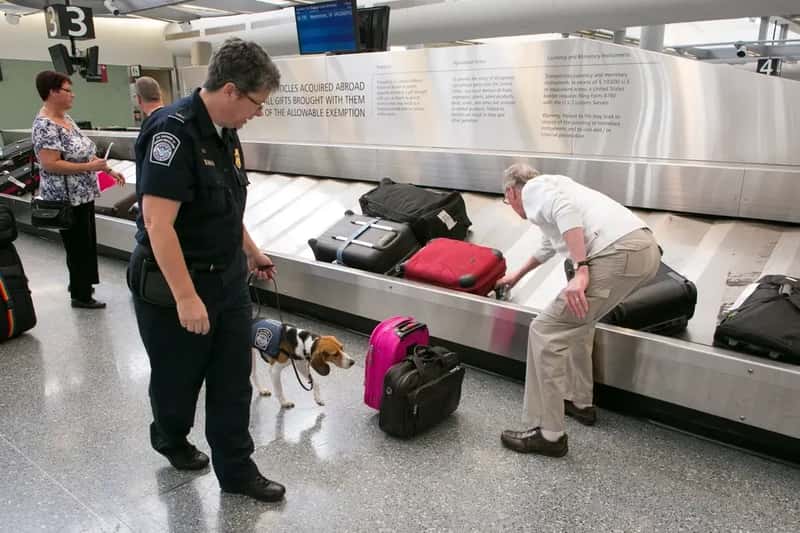
Few things rattle an older traveler more than being pulled from the line and handed a slip directing you to secondary inspection. The heart rate goes up. The mind starts racing through everything packed in the checked bag. Agents who see this reaction dozens of times a day will often say the same thing quietly before sending someone over: calm down, this is routine. Secondary inspection is used to verify details, review travel history, or resolve a documentation question – and travelers are sometimes selected entirely at random.
The most important thing agents say to do in secondary is answer calmly, briefly, and honestly. Have everything organized and within reach. Do not be combative, do not volunteer long explanations nobody asked for, and do not assume the worst. Secondary inspection typically resolves quickly for travelers with nothing to hide and everything in order. The ones who take longest are almost always the ones who arrive visibly defensive – which tends to prompt more questions, not fewer.
#6 – Global Entry Still Helps Over 60, But It No Longer Means Sailing Through Untouched

Global Entry has been the gold standard for frequent international travelers for years – pay a fee, pass a background check, skip the long customs line. Many travelers over 60 treat it as a near-guarantee of frictionless re-entry. Agents will quietly tell you that expectation has shifted. Ports of entry have become noticeably stricter in recent years, and even Global Entry members are fielding more questions at arrival than they used to. The program still delivers real value – but it’s not a magic bypass.
Global Entry can dramatically reduce your average re-entry time, and it automatically includes TSA PreCheck for domestic travel. There is always the possibility of random searches or secondary screening regardless of membership status. The travelers who get rattled are the ones who arrived assuming the card made customs optional and weren’t prepared when it didn’t. Show up with your declarations ready, your receipts organized, and your medications labeled – and Global Entry does exactly what it promises. Arrive unprepared and assume the card handles it, and you’ll find out quickly that it doesn’t.
Quick Compare: Global Entry vs. No Program
- Application fee: $120 (non-refundable), valid 5 years
- Includes TSA PreCheck: Yes – a separate PreCheck membership costs $85 alone
- Secondary screening: Still possible at any time, for any member, per CBP policy
- Declaration still required: Yes – answered at the kiosk, not skipped
- Bottom line: Faster lanes and kiosk processing – not immunity from customs rules
#5 – Don’t Joke. Don’t Be Sarcastic. Not Even When You’re Exhausted.
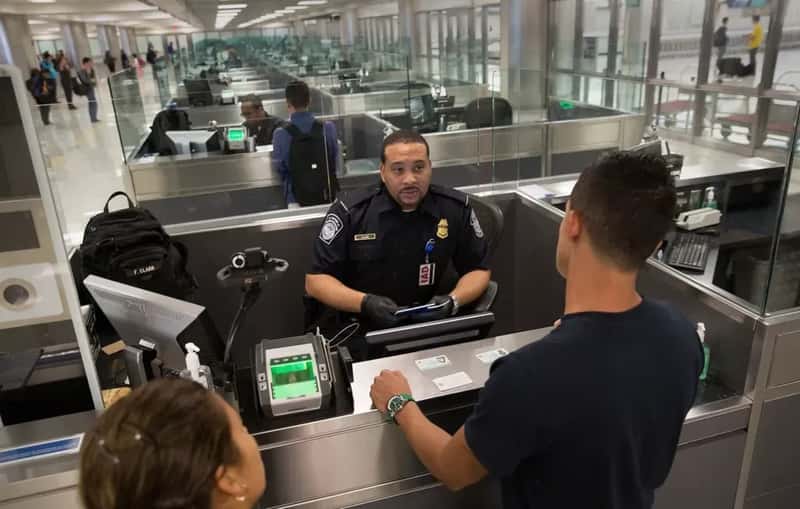
This one seems obvious until you’re jet-lagged and trying to lighten the mood with the agent who just asked if you’re bringing anything back from abroad. Something like “just memories and a bad back” might seem harmless after 14 hours of travel. To a customs officer on hour ten of a shift, it lands differently. Customs is not the place for jokes or sarcasm – and any comment that even obliquely references drugs, weapons, smuggling, or “getting away with” anything can turn a 60-second interaction into a very long afternoon.
The formula agents describe as fastest is brief, direct, friendly, and literal. Where did you go? Europe. How long? Two weeks. Anything to declare? Yes, some gifts and a bottle of wine. Done. Travelers who add color commentary or offer more than was asked tend to end up in longer conversations than they intended. The people who move through customs fastest, agents say, are the ones who treat it like a short job interview – prepared, calm, and to the point.
#4 – Foreign Medications May Be Prohibited Even If a Local Doctor Prescribed Them

This is the rule that genuinely shocks travelers over 60 who’ve been filling prescriptions abroad for years without incident. You ran out of blood pressure medication in Portugal, saw a local doctor, got a local prescription, picked it up at the pharmacy. Seems perfectly reasonable. Might not be legal to bring home. Virtually all foreign-made medications face FDA import restrictions at the U.S. border, and the customs counter is where that enforcement begins. A local prescription from a foreign doctor does not grant U.S. import rights for a drug the FDA hasn’t approved.
The FDA’s personal importation policy does allow some discretion for small quantities of foreign medications intended for personal use – but that discretion is not a guaranteed right. Agents quietly advise travelers over 60 to consult their U.S. doctor before any long international trip if there’s any chance they’ll need a refill abroad – and to bring enough U.S.-prescribed medication from home to cover the entire stay, with a few extra days built in. Running out and refilling abroad creates a customs complication that almost nobody anticipates until they’re standing at the counter trying to explain it.
#3 – You Can Ask for a Supervisor, and Knowing That Changes the Entire Dynamic
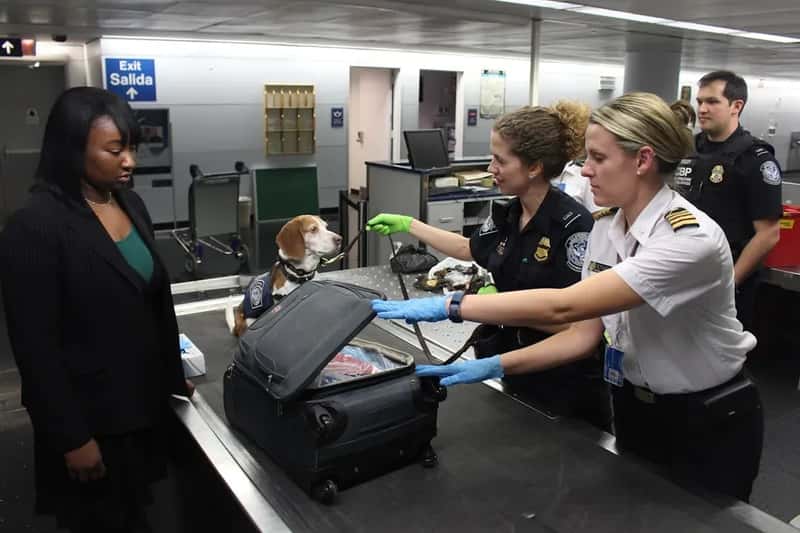
Most returning travelers treat the customs agent in front of them as the final, unchallengeable word on everything. Whatever that officer says, goes. What agents will sometimes quietly tell older travelers is that this isn’t actually how it works. CBP policy requires that travelers be treated with dignity and respect – and if you feel that isn’t happening, you have the right to request a supervisor. That right applies in primary inspection, in secondary, and even if you simply disagree with how a situation is being handled.
This matters most for travelers over 60 dealing with complex medication situations, unusual travel histories, or genuine language barriers creating real confusion at the counter. You can ask for clarification about what’s being requested of you, and you can request a translator if needed. The travelers who know they can ask for a supervisor – and ask calmly, not combatively – are the ones who don’t get steamrolled. Agents say the request almost never escalates a situation. It usually resolves one. Most customs misunderstandings involve information gaps, not actual violations, and a supervisor can close that gap in minutes.
#2 – Keep Every Receipt From Every Purchase in One Envelope in Your Carry-On
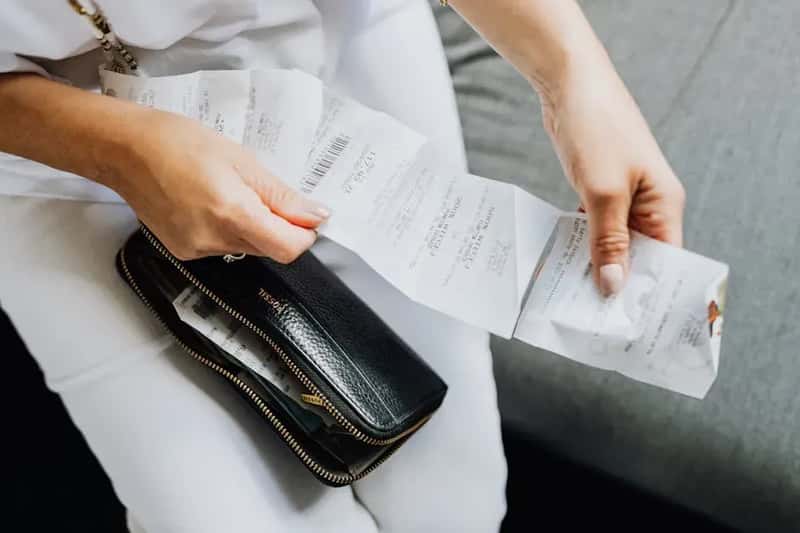
This is the one practical habit that experienced agents say separates travelers who sail through declaration from the ones who stand at the counter guessing at prices and descriptions. It sounds almost insultingly simple: keep all your purchase receipts in a single envelope in your carry-on. But agents report that the single most common cause of declaration delays among older travelers isn’t dishonesty – it’s arriving without being able to remember what they bought, when, or for how much.
A small envelope, a rubber band, or even a phone photo of every receipt – that’s all it takes to turn a five-minute back-and-forth into a sixty-second wave-through. U.S. residents must declare all articles acquired abroad and brought back into the country, and all purchased merchandise must be itemized. If you received a gift, a note of its approximate value goes in that same envelope. If you had a repair done abroad, the receipt from that shop is your best friend at the counter. Organized travelers get waved through faster – not because the rules are different for them, but because there’s nothing left to question.
Why It Stands Out: The One-Envelope Rule
- Repair receipts from abroad belong in the envelope too – the declared amount is the repair cost, not the item’s value.
- A phone photo of each receipt works just as well as paper if you prefer to travel light.
- Note approximate values for gifts received – even handwritten estimates on a scrap of paper help at the counter.
- Keeping receipts organized also protects you if CBP later questions a declared value – it’s your paper trail.
#1 – “When in Doubt, Declare It” Is the Most Valuable Sentence in All of Customs

This is what experienced CBP agents say almost universally when they have a moment to offer one real piece of advice to an older returning traveler. Not a legal strategy. Not a loophole. Just this: when you’re not sure whether something needs to be declared, declare it. That instruction is CBP’s own official guidance – and it’s the one most people ignore because they’re afraid declaring something will cause a problem. The reality agents describe is exactly the opposite.
There is no penalty for over-declaring. There are steep penalties – fines, seizures, and in serious cases criminal charges – for under-declaring. Declaring something gives the agent the information they need to clear you. Not declaring something gives them a reason to hold you. For travelers over 60 carrying more medications, more gifts, more purchases, and more complicated travel histories than most, this principle covers nearly every gray area they’ll encounter. The customs counter is not a test you pass by saying less. It’s a checkpoint you clear by being forthright – and the agents who see hundreds of travelers a day know exactly the difference between someone hiding something and someone who just didn’t know the rules.
The thread connecting all 14 of these tips is the same: the system has more flexibility, more nuance, and more built-in protection for honest travelers than almost anyone walking through those doors realizes. But that protection only works for you if you know it exists. Show up organized, declare everything, keep prescriptions labeled, save your receipts, and answer questions directly. The travelers who leave fastest aren’t the ones who knew how to game the system. They’re the ones who came in prepared.