By the time the first boarding announcement crackles over the speaker, your flight’s fate has already been decided by people you never noticed. Seat assignments swapped. Standby names cleared or crossed off. A late connection quietly written off before you’ve even landed. All of it happens at a podium while you’re still parked in a plastic chair, half-watching the departure board.
Most travelers picture gate agents as scanner-and-microphone operators reading names off a screen. What’s actually happening back there is closer to a mini control tower: a countdown clock, a stack of federal rules, and a string of split-second calls that shape your entire boarding experience – most of which you’ll never even realize were made.
#14 – Crew Credentials Get Checked Before You Even See a Line Form
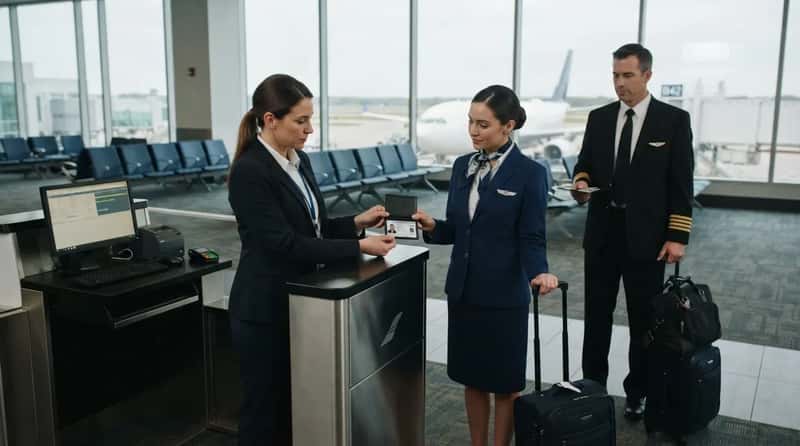
Long before passengers gather near the podium, gate agents are already verifying paperwork that has nothing to do with you. Agents must verify the credentials of all flight and cabin crew before boarding can begin. No pilot, flight attendant, or cabin crew member steps onto that aircraft without clearing this check first.
No credentials? No entry. It sounds bureaucratic, but it’s the first domino in the entire boarding sequence. If a crew credential doesn’t check out cleanly, the whole boarding process can stall before a single passenger name is ever called.
#13 – Who’s Allowed Onto the Jet Bridge, and Who Isn’t
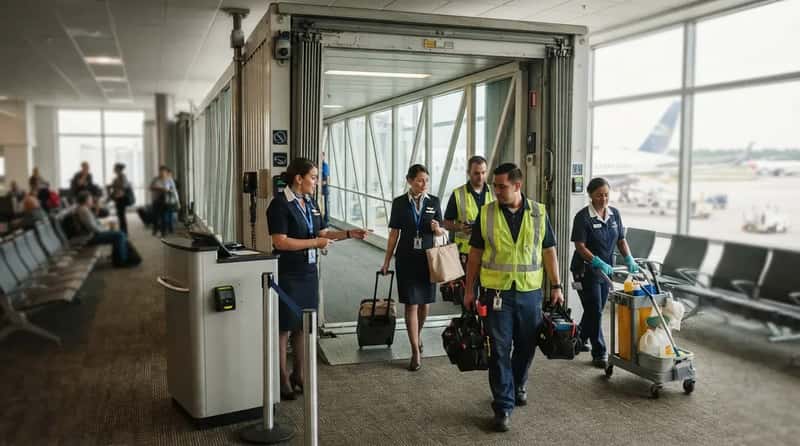
The jet bridge isn’t just a hallway to the plane – it’s a controlled space, and the gate agent decides who walks through it. The gate agent controls who can enter the bridge and when, and that includes flight attendants, pilots, cleaning crews, caterers, and maintenance staff.
That means caterers restocking snack carts, cleaning crews doing a turnaround wipe-down, and maintenance staff checking a flagged issue all funnel through the same person managing your boarding line. If any of those groups run behind, your boarding time quietly slips with them, long before an announcement ever explains why.
Fast Facts
- Gate agents control every entry point onto the jet bridge, not just passenger boarding.
- Caterers, cleaning crews, and maintenance staff all need clearance before doors open.
- A slowdown from any one of those groups can quietly push back your boarding time.
- None of this ever shows up on the departure board – it’s tracked at the podium only.
#12 – The Standby List Gets Quietly Rewritten in the Final Hour
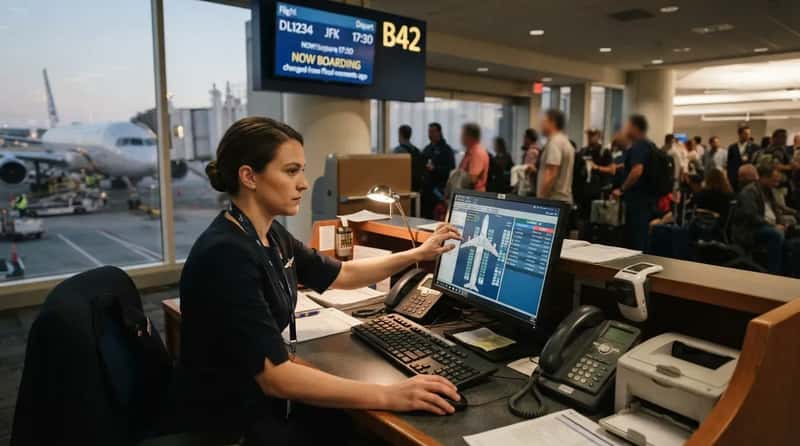
Standby passengers assume they’re simply waiting for luck. In reality, the list is being actively reshuffled behind the scenes as departure gets closer.
Many airlines block seats for families or those who need assistance, so there may be times when you won’t get a seat assignment right away, but gate agents are working hard to get you an assignment before departure. Blocked seats for elite frequent flyers, unsold inventory, and family holds all get released or reassigned in the final stretch, which is exactly why standby names sometimes clear minutes before boarding and not a second sooner.
#11 – Late Connections Trigger a Silent Countdown You Never See
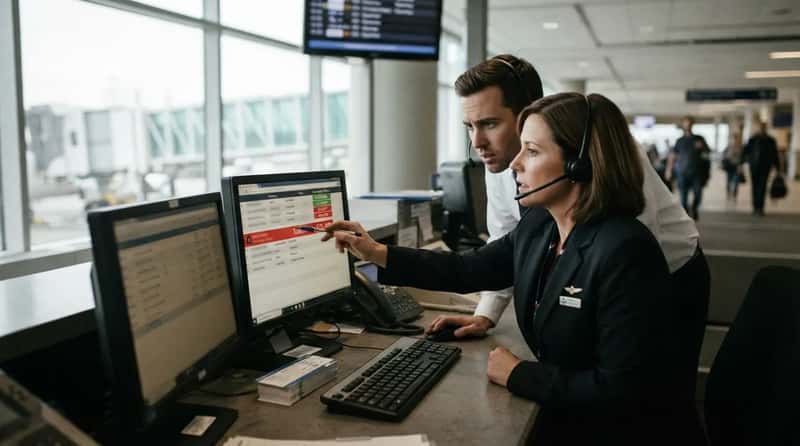
If you’re running through the terminal from a delayed connecting flight, someone at the next gate already knows it. Airline computer systems can alert agents to passengers who might miss a flight because of a late connection, and gate agents are monitoring the record of passengers who might be en route to determine if they should give their seat away to someone else.
That decision only happens once it’s clear a passenger genuinely won’t make it – not the instant a connection looks tight. There’s even industry slang for these sprinting latecomers: “runners.” The gate crew is quietly tracking your itinerary before you even reach security on the other end.
#10 – Empty Seats Get Reassigned Before Your App Even Refreshes
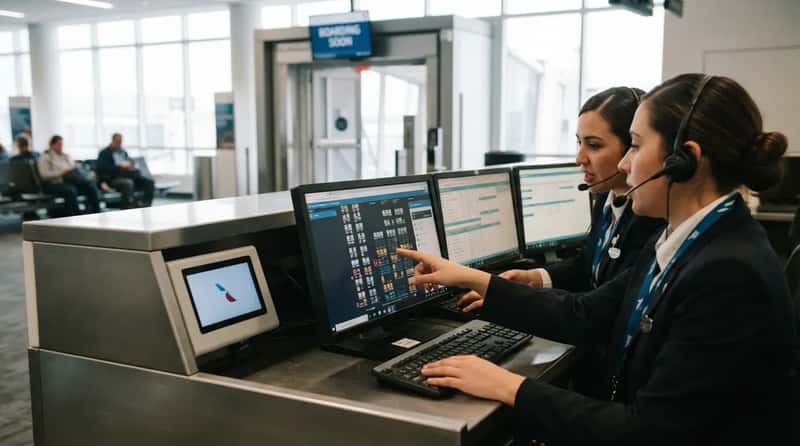
Unassigned seats don’t sit open by accident – gate crews are quietly working the inventory behind the scenes long before boarding starts. Some open seats are being held for families who haven’t cleared yet, others are reserved for elite flyers who might still show up, and a few are simply unsold and back on the market.
This is also why moving into an empty row without asking can backfire. Moving seats without informing the crew can cause delays, particularly if agents are placing standby passengers in empty seats, so it’s worth confirming that everyone is boarded before claiming that open spot. The seat that looks free might already have someone’s name attached to it.
#9 – Upgrade Clearing Is Decided by an Algorithm, Not a Smile
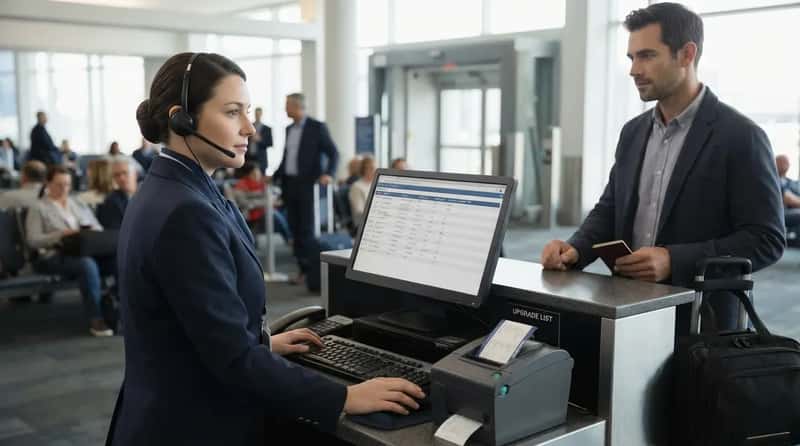
Here’s an unpopular truth: charm at the podium rarely moves an upgrade list anymore. The romantic idea of charming your way into first class quietly died out years ago, replaced by a cold, data-driven system, where status still counts but fare class, points, aircraft type, and plain algorithmic math now decide nearly everything before you even reach the gate.
The real surprise was never who gets upgraded – it’s how little control any single gate agent actually has over the outcome. When a boarding pass gets swapped at the counter, you’re not watching a decision get made, you’re just watching one get delivered. The list was locked long before you ever approached the desk.
Quick Compare
- Old belief: A friendly smile at the counter could talk your way into first class.
- Current reality: Fare class, elite status, and aircraft type feed an automated list long before you arrive.
- Old belief: The gate agent personally picks who gets upgraded.
- Current reality: The agent mostly delivers a list the system already finalized.
#8 – Agents Are Already Scanning the Room for Who Needs Help
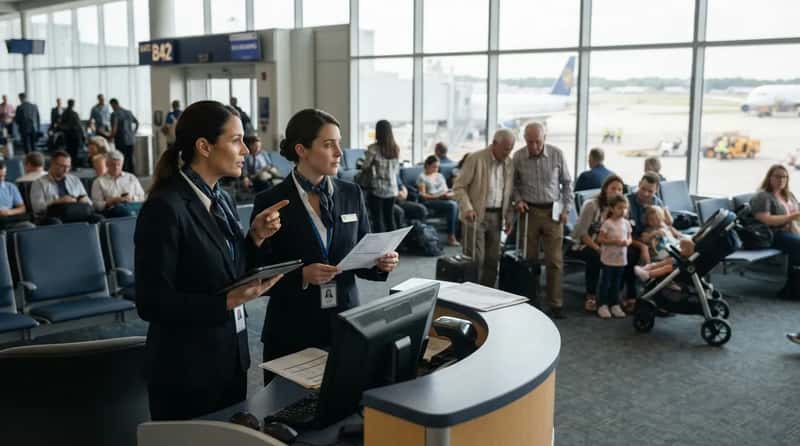
Passengers often think they’re invisible until they step up to the podium. Experienced agents disagree entirely, and they’re clocking the room from the moment it fills up.
A seasoned agent is constantly reading the room, watching who walks in, how they’re moving, whether anyone is struggling with a bag, and who looks like they need to be on a priority list before boarding even begins – all while juggling seat assignments, crew issues, and last-minute changes. That mental checklist gets built long before any announcement plays, which is why some passengers get quietly flagged for extra help without ever asking for it.
#7 – Families and Accessibility Needs Get Sorted Long Before the Call
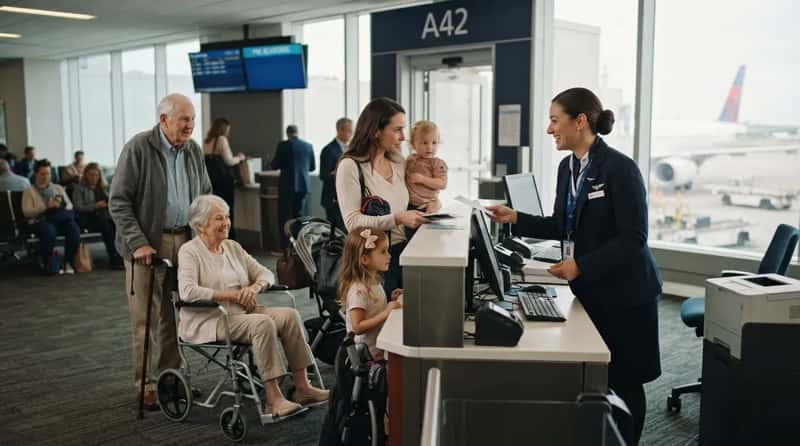
Pre-boarding isn’t a first-come, first-served scramble – it’s arranged ahead of time, and the phrasing you use matters more than most travelers realize. Whether you’re traveling with a mobility aid, medical equipment, or simply prefer a slower pace, early boarding is available as long as you self-identify to a gate agent before boarding begins. The key phrase isn’t “Can I board early?” – it’s something closer to “I need a little extra time to get settled.”
An experienced, empathetic agent will often extend early boarding to one travel companion without requiring a separate justification, especially on flights that aren’t full, though the companion perk is rarely announced out loud. Most of this gets arranged quietly, minutes before the first zone is ever called.
#6 – The “Gate Lice” Crowd Gets Silently Flagged
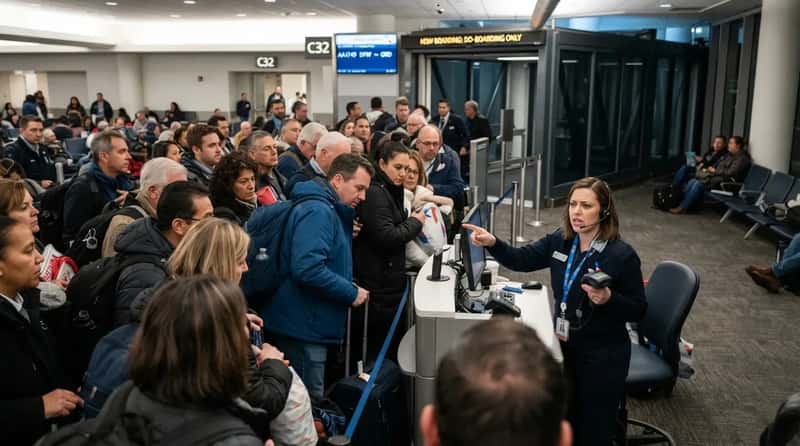
Ask any agent about the crowd that clusters near the podium before their group is called, and you’ll get an eye-roll and a nickname. There’s even a term for the people who swarm the area before their designated time to board: “gate lice.”
There’s really no point in waiting around and crowding the boarding area, since it usually just makes the process more chaotic for everyone.
Former gate agent, American Airlines
Some airlines have even started enforcing early attempts more strictly – one agent working a full flight out of DFW announced that any passenger trying to board before their group would be forced to gate check their bag.
#5 – Overbooked Flights Mean the Bump Math Starts Early
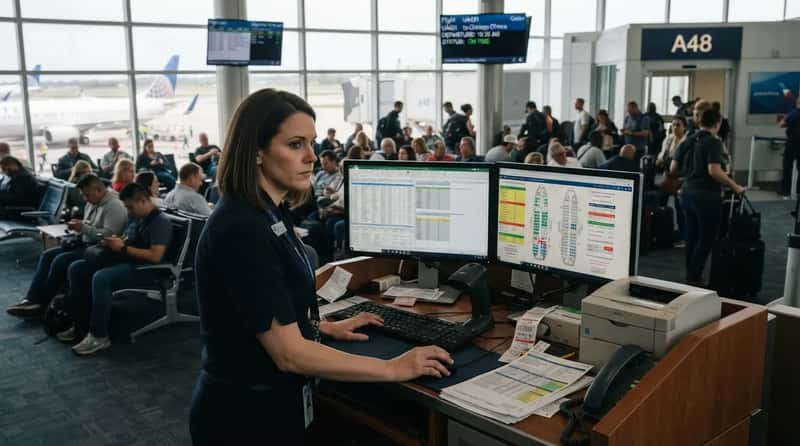
Overselling seats is standard practice, and the moment a flight looks full, gate crews are already running numbers on who might get bumped. During irregular operations, gate agents handle rebooking, denied boarding procedures, and compensation offers for affected passengers.
This isn’t decided at random once boarding starts – it’s calculated well before the first name is called, factoring in fare class, loyalty status, and how many volunteers can be found before the situation turns involuntary. The agent standing at the podium already has a rough plan in mind long before anyone hears the words “we’re looking for volunteers.”
#4 – Aircraft Swaps and Gate Changes Get Decided Fast, and You’re Told Last
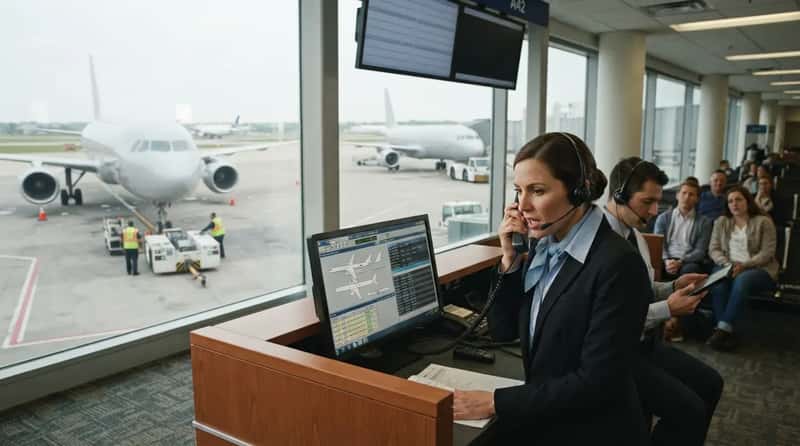
When a plane gets swapped or a gate suddenly changes, the decision happens in operations long before it reaches the display board. Gate agents verify travel documents, handle seat assignments, make departure announcements, and resolve passenger issues during delays and cancellations, and their work directly shapes a flight’s on-time departure and how disruptions are handled.
By the time you hear an announcement about a new gate or a different tail number, the crew has already been coordinating with ramp teams and dispatch for several minutes. The gate agent must keep passengers informed clearly and frequently while staying in constant communication with ramp personnel, customer service teams, dispatchers, and the flight crew. You’re always hearing about the decision after it’s made, not while it’s happening.
#3 – Priority Lane Order Isn’t Just Status – It’s Real-Time Math
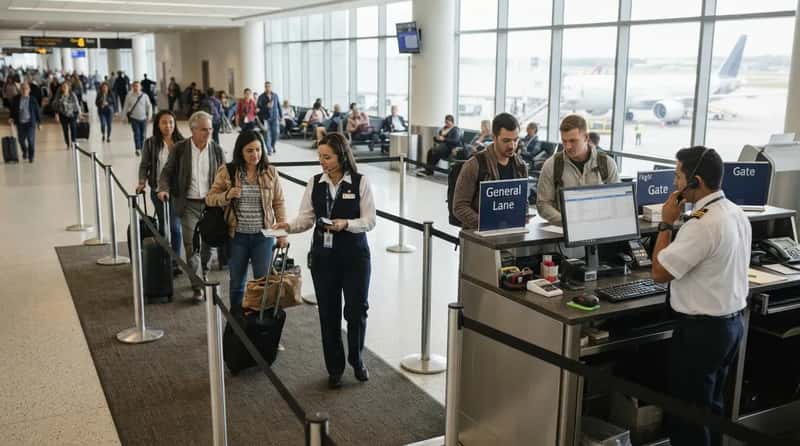
Boarding order looks simple from the outside, but it’s constantly being adjusted behind the scenes based on who’s actually present. Some airlines run a priority lane and a general boarding line, calling passengers to their respective line only when it’s their group’s turn to board.
Not every airline handles this the same way, either, which is exactly why the process feels different from carrier to carrier. Unlike queues where passengers line up in their assigned group far in advance, some airlines don’t push travelers to waste time standing in line before it’s actually their turn. That structure is decided at the gate, group by group, minute by minute.
#2 – Whether to Hold the Plane for Latecomers
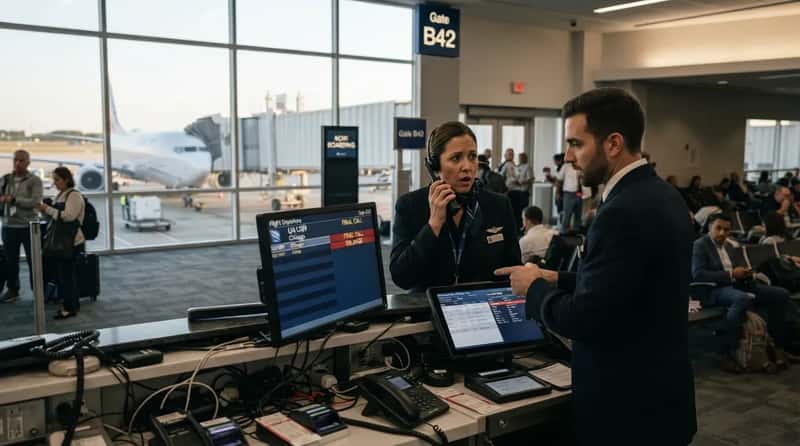
This is one of the biggest calls a gate crew makes, and it’s rarely as simple as sympathy. If a large group of passengers is delayed by a connecting flight, or if agents are boarding the last flight of the day, they might hold a plane – but they have to weigh a lot of factors, including whether the crew will “time out,” since pilots and flight attendants can only legally work a limited number of hours.
They also don’t want to strand any unaccompanied minors or elite frequent fliers, so a late passenger could get lucky, but it’s never guaranteed. This single decision can ripple into dozens of missed connections down the line, which is exactly why it’s never made lightly.
#1 – The Final Boarding Cutoff Is Federally Mandated, Not a Suggestion
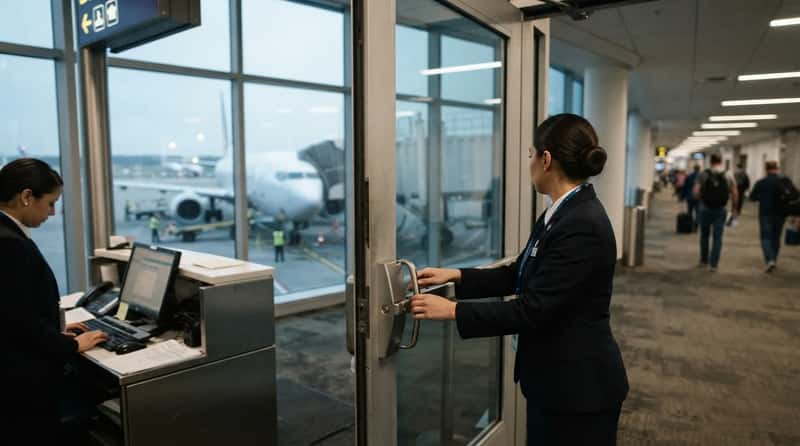
Here’s the decision that overrides everything else on this list: the moment the door closes. Gate agents enforce the final boarding time, usually 10 minutes or more before departure, and that deadline is federally mandated and non-negotiable.
That’s exactly why sprinting to a gate after the cutoff rarely works, no matter how close the plane still looks. If boarding has finished before a passenger breathlessly charges the gate, there’s a good chance the agent will have already given away that seat, since agents have to print paperwork listing all passengers plus weight and balance information that pilots use for flight calculations, and redoing that paperwork for one late passenger would delay the flight even more. It isn’t the agent being harsh – it’s federal timing that no amount of pleading can reverse.
At a Glance
- Boarding typically closes 10 minutes or more before scheduled departure.
- The cutoff is set by federal timing rules, not airline preference.
- Final paperwork lists every passenger plus weight and balance data pilots rely on.
- Reprinting that paperwork for one late arrival can delay the entire flight.
None of these fourteen decisions happen the moment your zone gets called. They’re made quietly, in the background, sometimes an hour before you ever approach the podium, while you’re still sipping an overpriced airport coffee. The next time boarding feels smooth, remember it wasn’t luck – it was a dozen small calls stacked perfectly on top of each other. Notice something happen at your gate that lined up with one of these? Drop it in the comments – chances are, a gate agent already saw it coming.