Most guests think a hotel porter’s job comes down to bags, elevator buttons, and a tip. That’s the part you can see. The real work happens in the hour before the dining room opens, when the lobby is hushed, the coffee is still brewing, and an older guest is about to be rescued from a problem they may never know existed.
Here’s the twist: the best help is designed so the guest never notices it. Practices vary by property, but the same small rescues show up again and again. Some are practical, a few are quietly moving, and one explains why certain guests return to the same hotel for decades. We’re counting down from #16, and the biggest payoff is saved for the very end.
#16: The Delayed Suitcase Gets Carried Up Before Anyone Asks
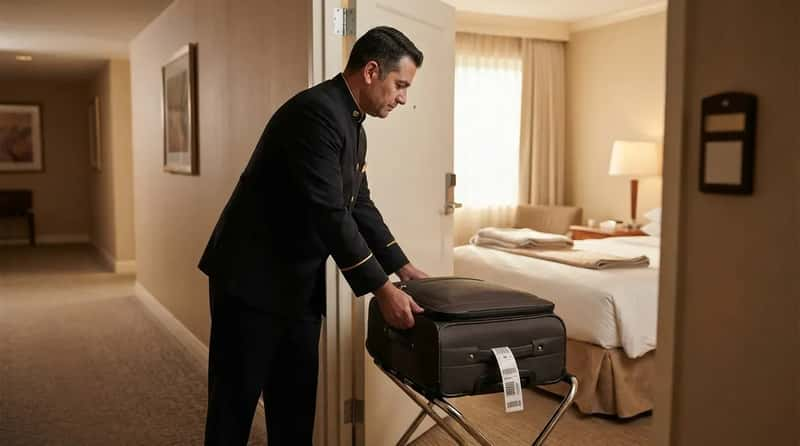
Airlines delay bags every day. When a courier finally drops one at the hotel, someone has to match the tag to the guest and get it upstairs. In many hotels, that someone is bell staff.
For an older traveler who has spent a night without a change of clothes, a charger, or a pill organizer, that suitcase is no small thing. Picture walking down to breakfast in yesterday’s outfit, then finding your bag already waiting in the room.
Practice differs between a small inn and a huge convention hotel, but the pattern is common. The bag is logged, a note goes to the desk, and a porter makes the problem disappear before the guest has to chase it.
That warm “good morning” at breakfast may be about a suitcase the guest never knew had been found. But what happens inside the room itself at #15 is even sneakier…
#15: The Five-Minute Room Tour That Prevents a 5 A.M. Phone Call

Modern hotel rooms can feel like cockpits. There are touch panels, unlabeled switches, shower handles that turn backward, and a TV remote with forty buttons. A good porter doesn’t drop the bags and vanish.
They show the guest where the thermostat is, how the lights work, and how to start the shower without a cold-water surprise. The best ones also read the guest. A sharp, hurried traveler gets the thirty-second version, while an unsure one gets a slow demo with the porter pressing the buttons instead of just describing them.
At a Glance
- Thermostat: Where it lives and how to change it without a mystery menu.
- Lights: Which switch runs the bedside lamps and which runs the overhead glare.
- Shower: Which way the handle turns for warm water.
- Remote and safe: The one or two buttons that matter, plus how the safe locks.
That short walkthrough is a big reason the front desk phone doesn’t ring at dawn with a frustrated guest on the line. And the next item involves moving things the guest never knew were in the way…
#14: The Furniture Gets Quietly Moved Out of the Walking Path
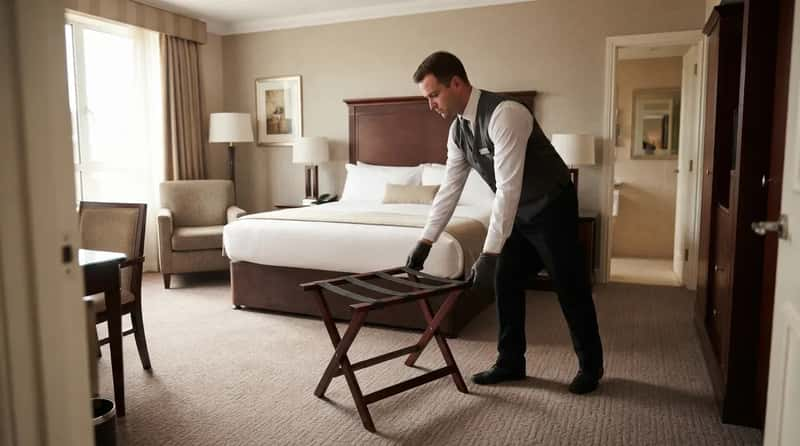
Luggage racks, ottomans, and extra chairs can turn a hotel room into an obstacle course at 3 a.m. Porters often slide them aside during check-in without making a point of it.
Federal accessibility rules cover hotels built after January 26, 1993. But plenty of older guests aren’t in an accessible room at all, which means the path to the bathroom depends on someone thinking ahead.
A clear path really should be standard in every room, not a favor from a thoughtful porter. Until it is, that quiet rearranging is doing real safety work. The easiest way to prevent a fall in the dark is to move the obstacle before anyone finds it.
And the equipment waiting at the bell stand is about to surprise you at #13…
#13: The Bell Stand Is Secretly the Hotel’s Mobility Closet
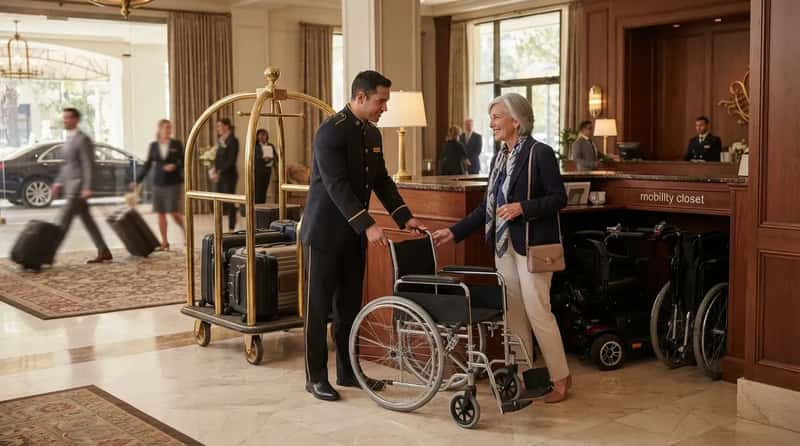
Walk up to a busy bell stand and you’ll see luggage carts, umbrellas, and often a lot more. Many hotels keep a wheelchair or two on hand for guests who need help from the car to the front desk.
After a long flight, a porter who appears at the car door with a chair can change the whole arrival. Nobody has to ask, and nobody has to announce a limit in front of strangers.
Porters also handle the awkward logistics around mobility aids. They fold walkers, lift lightweight scooters into trunks, and rescue canes before they get stranded in lobby corners.
It’s unglamorous work that almost never shows up in reviews, yet an older guest’s whole day can hinge on these small handoffs. Next up is a request guests often whisper at the desk…
#12: The Medication Fridge Shows Up Without a Fuss
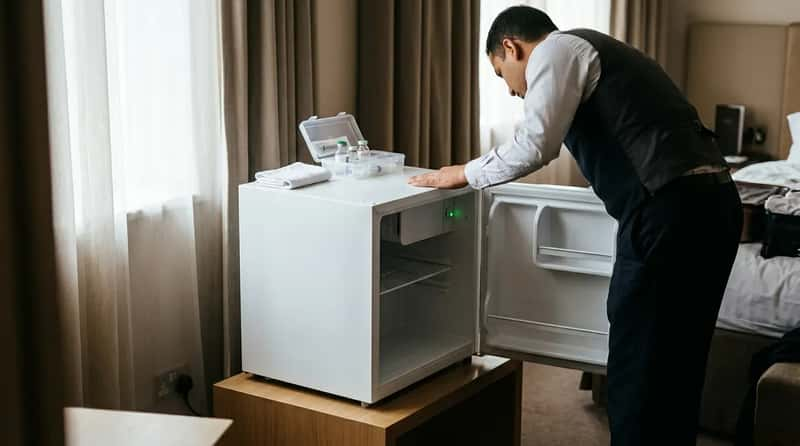
Some medications, including certain injectables, need to stay cold. Many hotels will supply a small refrigerator on request. Depending on the property, it’s bell staff, housekeeping, or engineering who deliver it.
Guests often ask quietly, a little embarrassed, as if it were a strange demand. It isn’t, and the staff have usually heard it many times.
The best staff treat the request as completely ordinary. They plug it in, place it away from the bed, and check that it’s actually cooling instead of just humming.
Policies and fees differ, and some guests are surprised to see a charge for something medical. It’s worth asking before you travel. But the weather creates a bigger hazard at #11…
#11: The Umbrella Escort and the Wet-Floor Watch
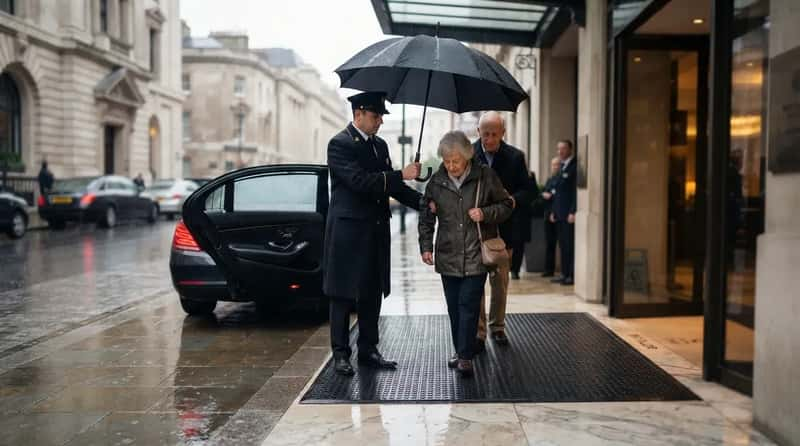
At 7 a.m. in the rain, a porter with an umbrella at the car door is doing more than being polite. Wet lobby floors, slick curbs, and soaked entry mats are real fall hazards, and falls are a leading cause of injury among older adults.
So the sharpest bell staff watch the entrance like lifeguards. They put out mats and signs, and they walk guests across the tricky stretches.
The job is all about timing. A porter notices the first drips on the marble before anyone slips, not after.
It may be one of the most valuable things on this list, and almost nobody thanks them for it. And the walk to breakfast turns out to be its own small operation at #10…
#10: The “Walk You to Breakfast” Move That Nobody Advertises
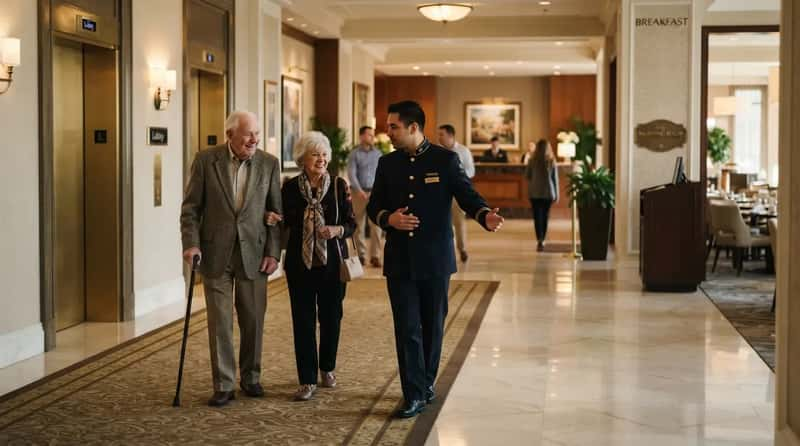
Big hotels can be mazes. The breakfast room might be on a mezzanine, past a second elevator bank, down a corridor that looks like every other corridor. Porters will often point guests in the right direction.
For an older guest who seems unsure, the better ones simply say, “I’m headed that way,” and walk along. On the way they hold elevator doors, mention the step down at the entrance, and sometimes tell the host that a guest would like a table near the door.
Quick Compare
- Pointing the way: Fast, but easy to forget by the second corridor.
- Walking along: Lets the porter flag steps, doors, and elevator quirks in real time.
- Tipping off the host: Gets a comfortable table sorted before the guest even arrives.
None of it appears on a menu or in a brochure. But a short walk with a friendly person can set the tone for the whole day. The next item happens in the dark, before the sun is up at #9…
#9: The 5 A.M. Airport Run Gets Choreographed Like a Stage Show
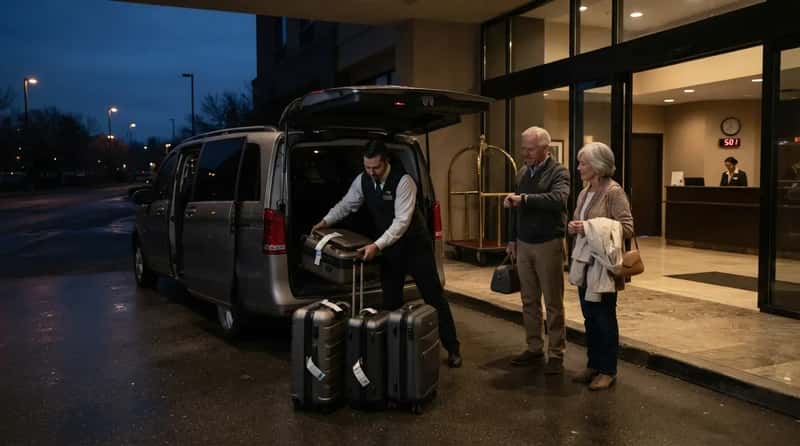
Early departures are stressful for everyone. For older travelers, they can be dizzying. Porters line up the bags, confirm the shuttle or ride is actually coming, and load the trunk in the right order.
They also do a last sweep for the things people leave behind in a sleepy rush, like a jacket or a pill bottle on a lobby table.
The money behind this service is real income. Typical tipping guides suggest anywhere from $1 to $5 per bag, with $2 to $3 common at mid-scale hotels.
And for tax years 2025 through 2028, baggage porters and bellhops appear on Treasury’s list of occupations that customarily receive tips. That means reported cash tips can qualify for a deduction of up to $25,000 per return, subject to income limits. What happens to your bags after checkout is about to get complicated at #8…
#8: Your Bags Spend the Afternoon in a Tag-Number Vault
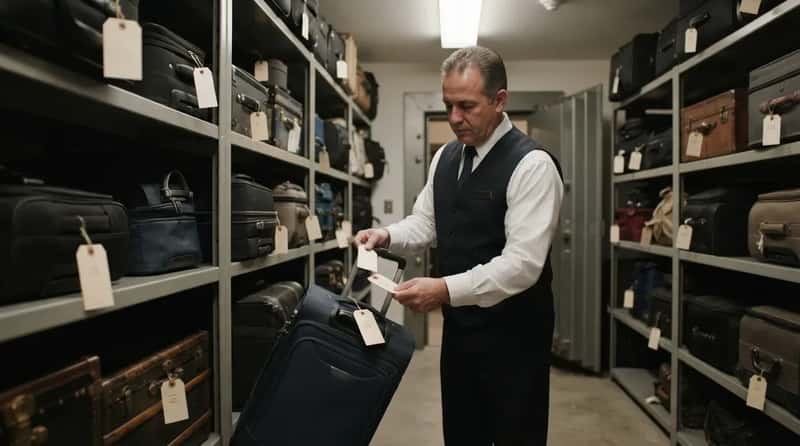
After checkout, many guests still have hours before a flight or a ride. Bell staff will usually hold their luggage in a storage room and hand over a claim tag. The system works because every bag is tagged, logged, and matched.
One mix-up can ruin someone’s whole trip, so the good porters treat that little paper tag like a bank receipt.
Here’s a point that sparks arguments. Some travelers feel a second tip for pulling the bags back out is overkill. Most tipping guides disagree, noting that if another bellhop stores or retrieves your bags on checkout day, you should tip again.
Whichever side you take, the person behind the counter is usually a different worker doing a separate job. But group travel makes the whole thing far more intense at #7…
#7: The Tour-Group Luggage Shuffle That Runs on Pure Memory
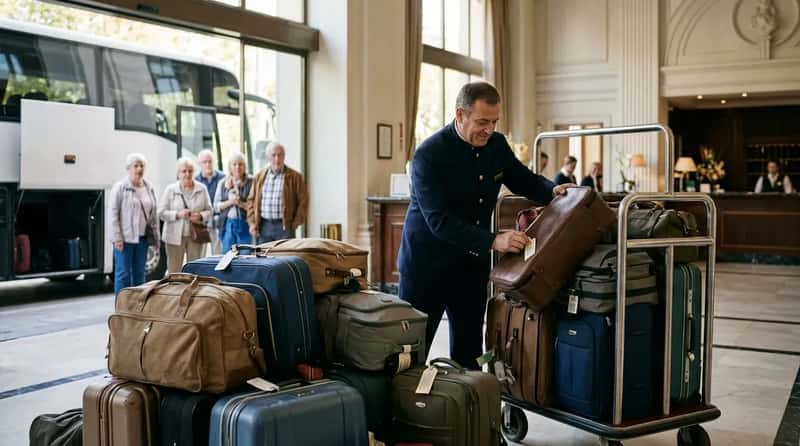
When a tour or cruise group checks out, dozens of suitcases hit the lobby at once. Porters tag, stack, and load them onto a coach in a very specific order. Many travelers in those groups are older, and plenty are nervous about letting their bags out of sight.
The porters know that, so the good ones narrate. They say which bags go on which bus and where the guest will see them next.
A wrongly labeled suitcase is the nightmare scenario, so the tiny habit of double-checking tags matters enormously. That calm confidence is half the service. And next comes the item guests only notice when it goes wrong at #6…
#6: The Reading Glasses Rescue Mission
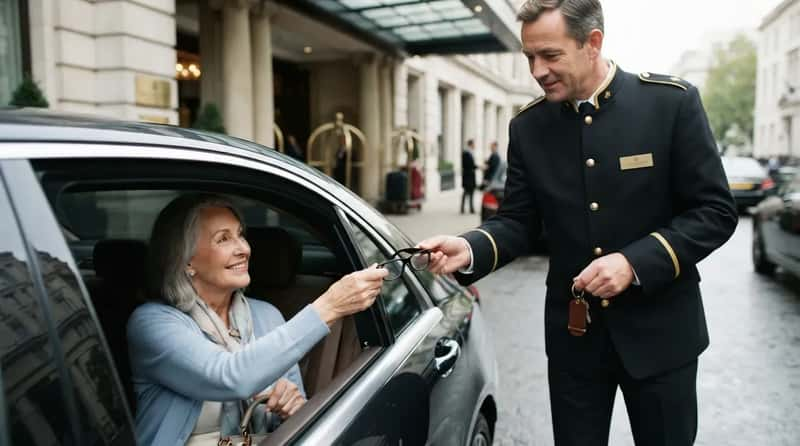
The most common “lost” items on departure morning are boring but vital: reading glasses, phone chargers, hearing aid cases, pill organizers. Bell staff are often the ones sent running when a guest realizes something is missing.
A porter might check the room, the lobby, or the trunk of a car still idling at the curb.
These rescues usually take less than five minutes and rarely make it into reviews. Yet the difference between a good trip and a stressful one can be a pair of glasses handed through a car window.
The next item is more serious, and it happens when nobody has asked for help at #5…
#5: The Porter Who Spots the Unsteady Guest Before Anyone Else
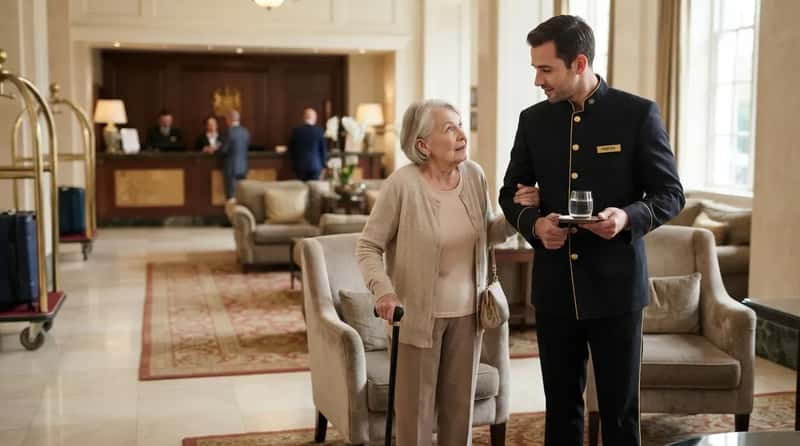
Porters see more guests than almost any other staff member. They watch people walk, wait, and wrestle with luggage. When someone looks unsteady, pale, or confused in the lobby, a good porter doesn’t look away.
They offer a seat, bring a glass of water, or quietly alert the front desk or a manager.
Many hotels train staff on respectful language and practices for guests with disabilities. Still, the best instinct is human, not procedural. The porter who simply says, “Can I walk with you?” has often prevented a much bigger problem.
And some resorts take this kind of help to a whole new level at #4…
#4: The Golf-Cart Ride That Saves a Half-Mile Hike

On large resorts, the walk from the lobby to the breakfast terrace can be longer than anyone expects. Bell staff often run the golf-cart shuttles, and older guests are some of their quietest regulars. A ride to the pool, the restaurant, or the far wing can turn a tiring morning into an easy one.
The key is how it’s offered. A good porter never announces, “You look tired.” They say the cart is heading that way anyway.
Why It Stands Out
- The ride is framed as routine, never as a rescue.
- The guest keeps the choice and can say yes or no with zero awkwardness.
- Saved energy means more of the day for the pool, the garden, or the grandkids.
- Nobody has to explain why they’d rather not walk.
That small social move lets a guest accept help without feeling singled out. It’s a script, and a smart one. The next item is about something the porter never writes down at #3…
#3: They Remember the Repeat Guest’s Habits, Down to the Newspaper
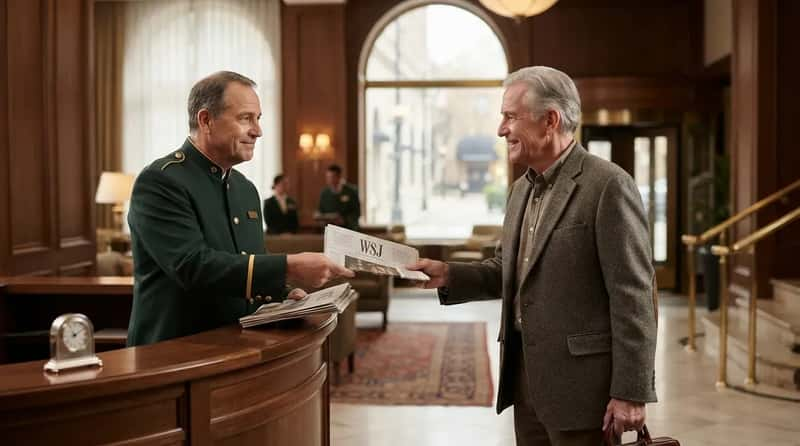
Older guests are often loyal, repeat visitors. Porters become the keepers of tiny facts: which room they prefer, which entrance they use, which driver they trust.
Some will have the paper waiting or the car ready before the guest even reaches the lobby. It’s not in any system, just in the staff member’s head.
That memory is a form of loyalty, and it runs both ways. Guests return to a property in part because one person there remembers them. It’s the kind of detail you can’t buy with a rewards program.
And the next item involves a moment most people would rather not talk about at #2…
#2: They Walk the Disoriented Guest Back to the Right Door
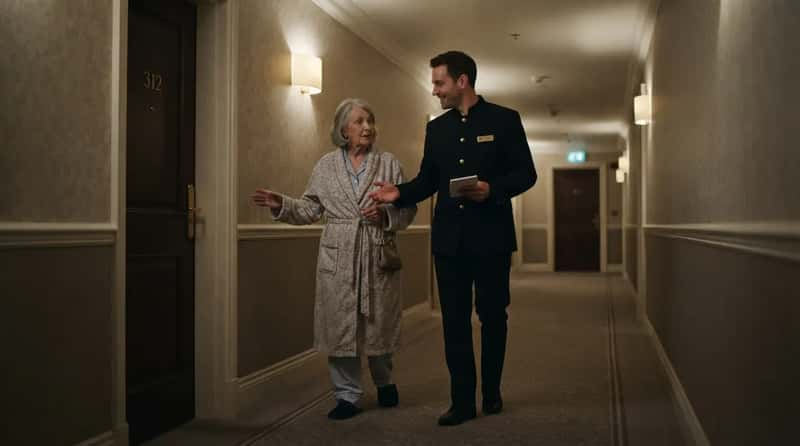
Hotel corridors are famously identical. At 6 a.m., an older guest in slippers can easily end up at the wrong door, or on the wrong floor, unsure which way to turn. A good porter doesn’t make a scene.
They strike up a casual conversation and walk the guest back to the room as though that was the plan all along.
Worth Knowing
- An easy opener like “Which floor are you headed to?” lands softer than “Are you lost?”
- Walking beside the guest, not ahead, keeps them in charge of the pace.
- A quiet word with the front desk lets staff check in later without any fuss.
It’s a delicate skill. The staff member has to help without embarrassing, guide without grabbing, and make the moment feel completely normal. The best version leaves the guest believing they just had a pleasant chat with a friendly stranger. The most important item on the list is saved for last at #1…
#1: They Ask Before Taking the Bag, and That One Question Says Everything
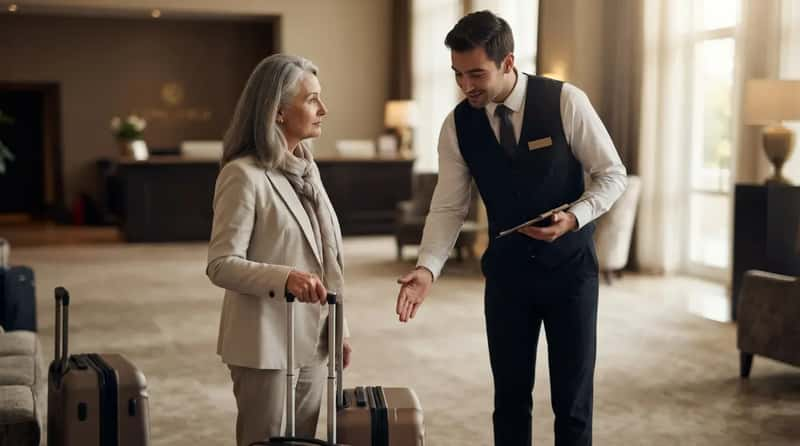
The single most respectful thing a porter does for an older guest is also the quietest. They ask. “Would you like me to carry that, or just walk with you?”
Some guests want every bag taken. Others have been hauling their own suitcase for sixty years and aren’t about to stop.
The best porters treat independence as part of the service. They offer, they match the guest’s pace, and they let the guest decide how much help to accept. It’s a small act of dignity that no training manual can fully teach, and it may be the reason some guests come back year after year.
Most of what a porter does for older guests before breakfast leaves no trace. A bag arrives, a path is clear, a door is found. The guest sits down to coffee and never learns how much went right in the last hour.
That’s the whole job, really. The best help is the kind you almost can’t see, and it often starts with one question.