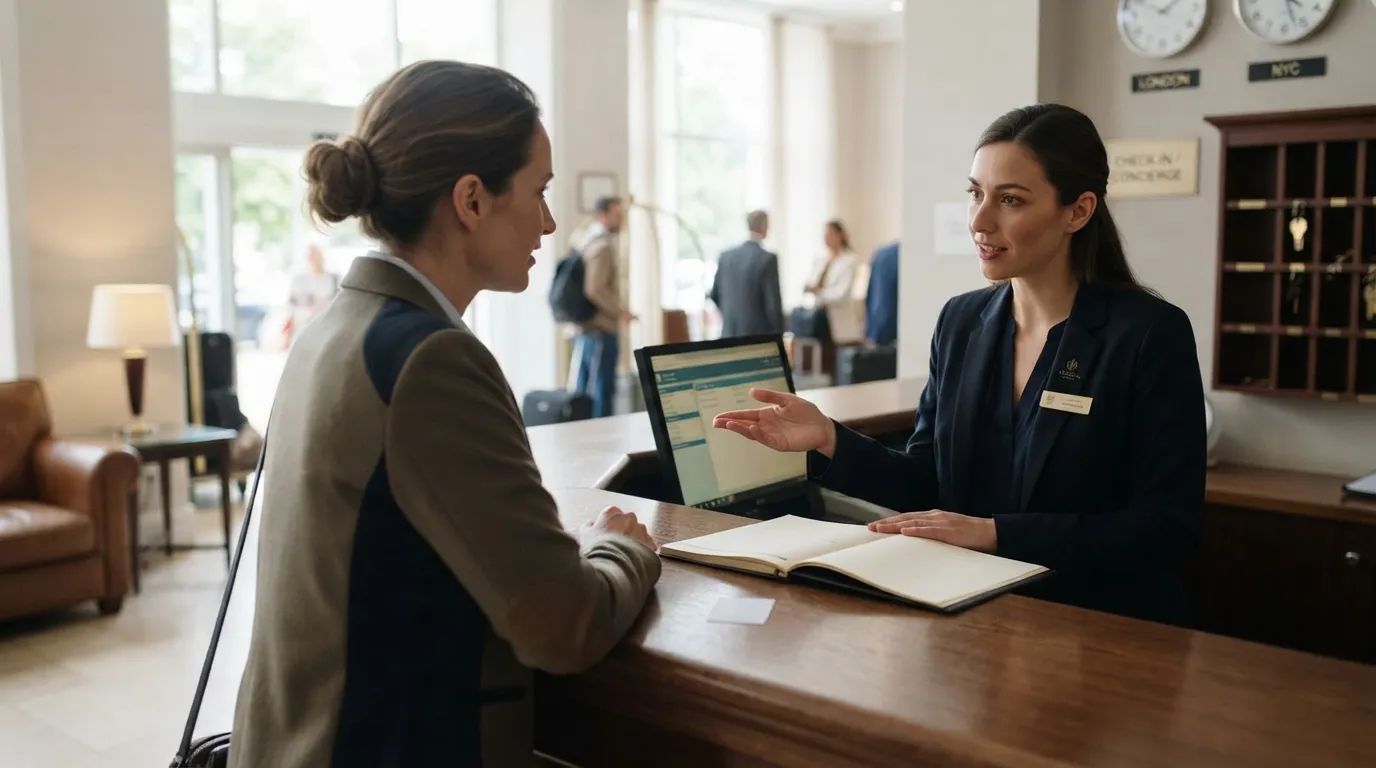
You ask for a 2 p.m. checkout, the desk agent smiles and says, “Sure, we’ll try.” You walk away feeling like you just won something. Here’s the twist: that answer often isn’t a yes at all, and it’s the first of how late checkout really works.
Behind the counter, the real decision is shaped by sold-out nights, a housekeeping clock and rules most guests never see. Some travelers are quietly guaranteed a 4 p.m. departure, while others get a knock on the door at noon. The gap between them has far less to do with charm than you’d expect, and the first surprise is hiding inside one very friendly phrase.
#14 – “Sure, We’ll Try” Is Not the Same as “Yes”

That warm nod at the desk may be a polite maybe. Travel-fee guides separate three states: requested, confirmed and guaranteed, and only the last one is protected by written terms. A request means the hotel has your preferred time on file. Confirmed means someone approved a specific time, with or without a fee.
Guaranteed means a paid booking, package or qualifying loyalty benefit backs it up. Staff rarely spell this out because “we’ll see” sounds friendlier than “no promises.” Guests who hear “should be fine” and book a 3 p.m. flight around it are the ones who end up stuck in the lobby with their luggage. And the clock itself holds an even bigger surprise.
#13 – The “Late” in Late Checkout Is Much Earlier Than You Think
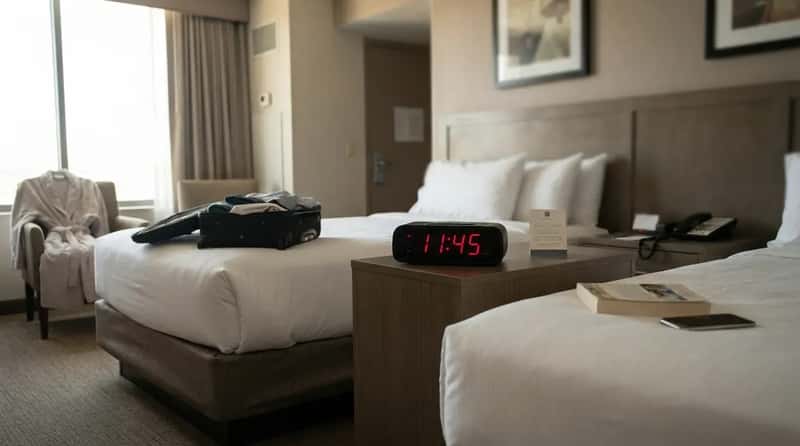
Many guests picture a lazy 4 p.m. departure, but the free version is usually far shorter. Most hotels set standard checkout between 11:00 a.m. and 12:00 p.m. A complimentary late checkout usually runs to 1:00 or 2:00 p.m., depending on occupancy.
Some hotels are stricter still. Certain properties offer a 30 to 60 minute courtesy grace period, while others charge late fees the moment the standard hour passes. So the same “late” request can mean an extra hour of pajamas at one hotel and a surprise charge at the next. What decides it has almost nothing to do with you.
Fast Facts
- Standard checkout: usually 11:00 a.m. to noon.
- Free late checkout: typically stretches to 1:00 or 2:00 p.m.
- Grace periods: some hotels allow 30 to 60 minutes.
- Strict hotels: some start charging as soon as standard checkout passes.
#12 – Your Odds Hinge on a Spreadsheet You Never See

The biggest factor in your request is a screen full of numbers behind the counter. Approval depends heavily on hotel occupancy. A half-empty hotel can say yes without thinking, while a sold-out one can’t spare a single room.
Averages hide a lot here. U.S. hotel occupancy averaged 62.3% in 2025, but New York City hit 84.1%. So a yes in a quiet market tells you almost nothing about your odds in a busy one. Weekends, conventions and holidays can flip the answer overnight, and behind that spreadsheet sits a team racing a deadline.
#11 – Housekeeping Is Fighting a Hard Deadline

Those rooms aren’t being turned over slowly out of spite. Major chains such as Marriott and Hilton typically start check-in around 3:00 p.m., with checkout around 11:00 a.m. to noon. That leaves a few hours to strip beds, scrub bathrooms and restock supplies, for every room in the building.
One guest lingering until 2 p.m. can mean a room that isn’t ready when a family arrives at 3. Late departures squeeze a cleaning window that was already tight. Housekeeping supervisors usually know which rooms are flexible, but the front desk may not have that full picture in the moment. That gap between the desk and the back of the house matters more than most guests realize.
#10 – The Person Smiling at You Isn’t Always the One Deciding

Many guests assume the agent at the counter holds all the cards. In practice, the answer can depend on today’s arrivals, cleaning progress and manager discretion. Policies also vary considerably by chain and by individual property.
That’s why two staffers can give different answers about the same room. One is looking at the arrivals list, the other at the housekeeping board. Neither is lying. When you hear “let me check” and then get silence, that pause often means someone is doing real math, and timing makes a huge difference to how that math turns out.
#9 – Asking at 10:45 a.m. Is the Worst Possible Moment
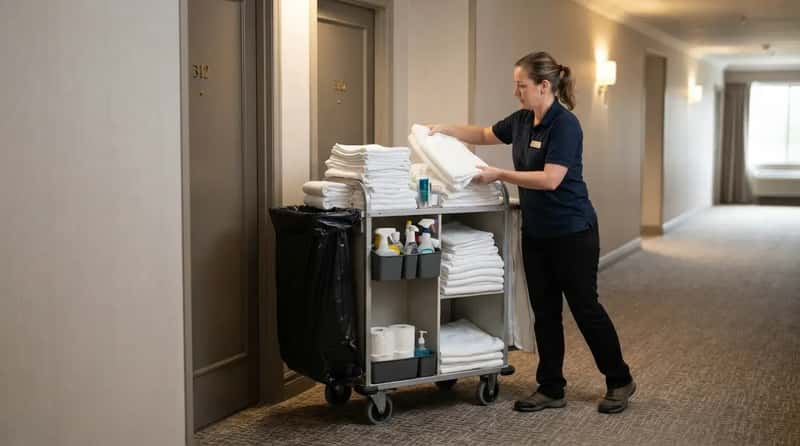
The classic mistake is waiting until the morning of departure. By then, the day’s rooms are already assigned and housekeeping is already rolling carts down the hall. The best moment to ask is usually at check-in, when the desk can add a note to your reservation.
It also helps to be specific. Guides recommend asking for a particular time and reconfirming on the same day. “Could we have until 1 p.m.? Our flight is at 5” is far easier to approve than “Can we stay a bit longer?” Ignore all of that, though, and the next item shows what can happen.
#8 – Overstaying Can Lock You Out Without a Word of Warning
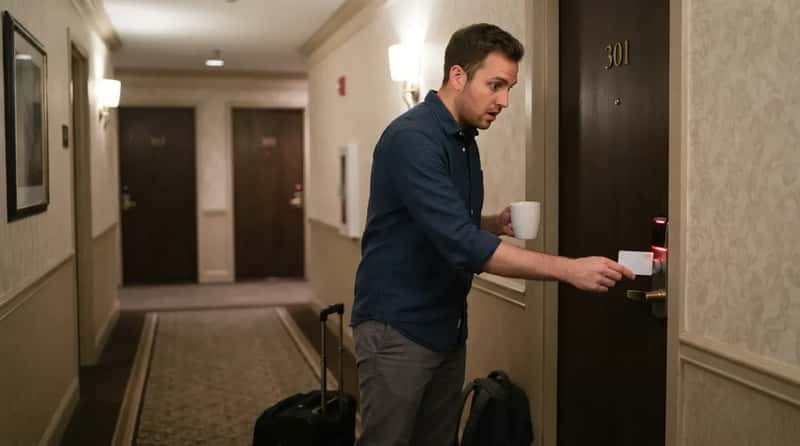
Some guests simply stay past checkout and hope nobody notices. That gamble can backfire fast. Unapproved overstays can trigger automatic keycard deactivation and possible fee penalties. The first sign may be a door that won’t open while you’re standing there holding a coffee.
The bill can be bigger than expected too. Charges can range from a half-day fee to a full nightly rate. Staff rarely mention it at check-in because most guests leave on time. By the time you learn the policy, you’re already in the hallway, and the perks that actually protect you start at the next entry.
Worth Knowing
- Unapproved overstays can deactivate your keycard automatically.
- Fees can run from a half-day charge to a full nightly rate.
- Some hotels begin charging the moment standard checkout passes.
- An approved, noted time is what keeps you on the safe side.
#7 – The Guaranteed 4 p.m. Club Is Real, but It Has Fine Print
Elite status is where “maybe” becomes a promise. Marriott Bonvoy Platinum Elite members get guaranteed 4 p.m. late checkout at most properties, and so do World of Hyatt Globalist members. Resorts and casino hotels, however, may be subject to availability.
That exception matters, because resorts are often fully booked on the very days you want extra time. A top-tier member can still be told no at a busy resort. It’s worth reading the exact terms before you plan a long, lazy last morning.
#6 – Hilton’s New Top Tier Costs Real Nights and Real Money
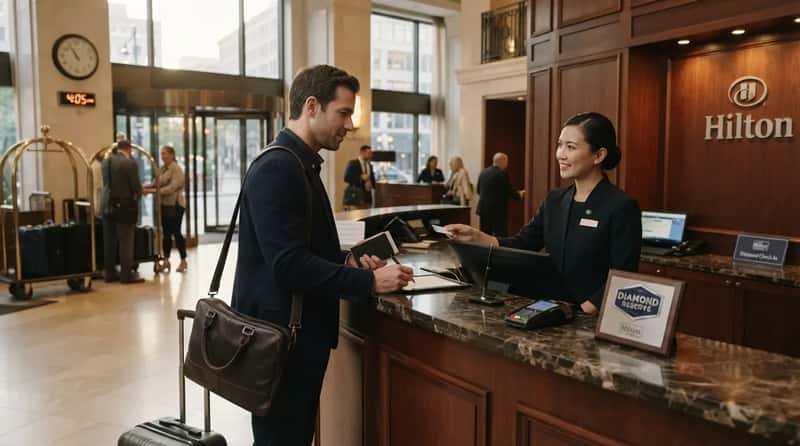
Hilton added a new tier for 2026. Diamond Reserve requires 80 nights and $18,000 in eligible annual spend, and it includes guaranteed 4 p.m. late checkout. It’s clearly built for the heaviest road warriors.
It can’t be earned through co-branded credit cards, so it takes actual nights in actual beds. Reports on lower tiers disagree. Some say regular Diamond gets a guaranteed 4 p.m. departure, while others say it’s only subject to availability. The safest move is to check Hilton’s current terms before you count on it, since the next item may be the most debated change of all.
#5 – Some Hotels Now Sell Late Checkout Like an Upgrade
Late checkout used to be a favor. Increasingly, it’s a product with a price tag. One 2026 guide reports that Hilton is rolling out confirmed late checkout for $40 to $60, bookable 72 hours in advance. Terms may vary by hotel, so check before you book.
Critics call it a cash grab on something that used to be free. Supporters say a paid, confirmed time beats an uncertain favor every time. Across U.S. hotels there’s no standard fee, and the cost can range from free to an extra night’s rate. Paying isn’t the only shortcut, though.
Quick Compare
- The free favor: costs nothing, usually ends around 1 or 2 p.m., and is never certain.
- The paid option: one 2026 guide cites $40 to $60 at Hilton, booked 72 hours ahead, with a confirmed time.
- The overstay: unapproved, and it can cost anywhere from a half-day fee to a full night.
#4 – Your Credit Card May Already Include It
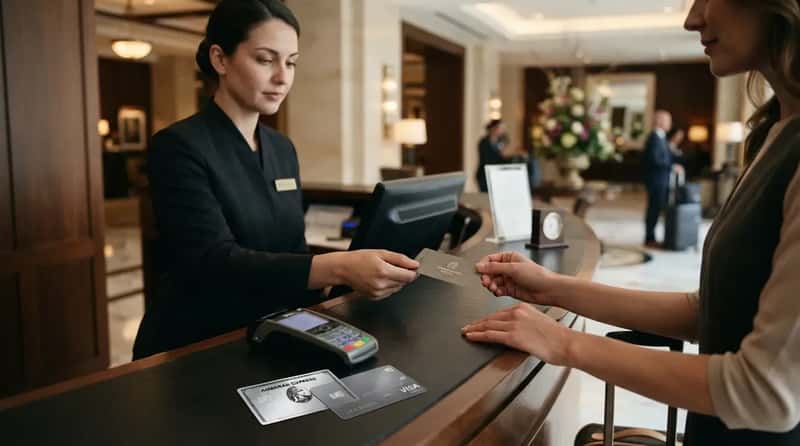
Some travelers pay for a perk they already own. American Express’s Fine Hotels & Resorts program has advertised a guaranteed 4 p.m. late checkout, while Visa Signature’s Luxury Hotel Collection has offered 3 p.m., depending on availability. Programs change, so confirm the current terms.
The catch is where you book. Perks often apply only through the program’s own portal. Book through a third-party site and the benefit may simply vanish. Most front desks won’t explain this at checkout, because by then the booking channel is already locked in.
#3 – Some Giant Chains Never Publish a Guaranteed Time
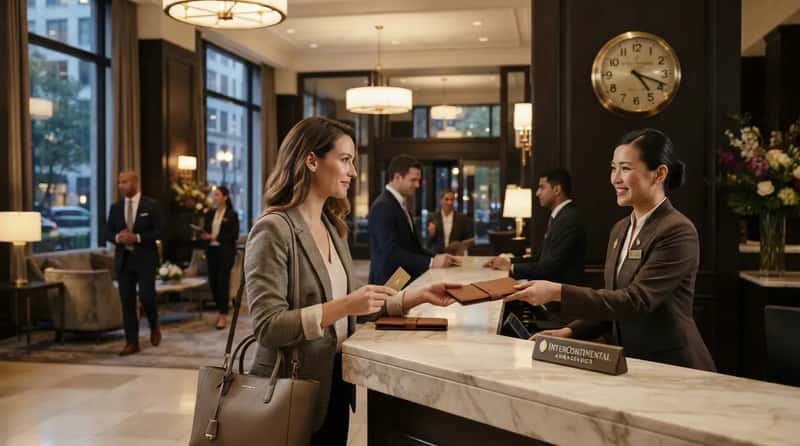
Not every loyalty program works like Marriott or Hyatt. IHG, Choice and Wyndham offer only availability-based requests, often capped at 2 p.m. Even IHG’s Diamond Elite tier has no published guaranteed time.
There is one exception worth knowing. InterContinental Ambassador members get a guaranteed 4 p.m. checkout at InterContinental hotels. If the hotel can’t honor it, IHG specifies compensation of a $50 credit or 10,000 points. Check current terms, since programs evolve.
#2 – The Free Loyalty Account Quietly Does the Heavy Lifting

Many guests skip loyalty sign-ups, assuming they’re only for frequent flyers. That’s a missed opportunity. Travel guides advise joining every major hotel loyalty program, since they’re free, and booking direct.
Why does it matter? Staff can see your profile. A direct, member booking gives the desk something to work with when your request comes in. It won’t guarantee a yes, but it often puts you ahead of a stranger on a third-party booking. It’s the cheapest way to nudge your odds, and the last item is the part almost nobody does.
Why It Stands Out
- Joining major hotel programs costs nothing.
- Your profile is visible to staff when you ask.
- Booking direct gives the desk more to work with.
- It nudges your odds without promising a yes.
#1 – The Ten Seconds That Turn a Maybe Into a Plan

The biggest secret is also the simplest. A “maybe” works best when you leave the desk with it written down. Guides stress asking for a specific time and telling a request apart from a confirmed approval.
So ask three things. What time exactly? Is it noted on my reservation? Will I be told if it changes? If the answer is “we’ll see,” you don’t have late checkout yet. You have a hope, and it’s far better to find that out the day before than at noon with a suitcase in your hand.
Late checkout was never really about charm. It comes down to occupancy, cleaning schedules and whether your request is a favor or a written promise. Elite tiers, card portals and paid options can lock in a time, but each has fine print, and the terms keep changing.
So the next time someone behind the desk says “sure, we’ll try,” smile, say thank you, and ask for the time in writing. That one small habit is often the difference between a slow, easy morning and a scramble to the curb.