You’d think after decades of group bus tours, travelers would have this down to a science by now. But ask any tour director who’s spent years riding shotgun across Europe or the American West, and they’ll tell you the exact same handful of mistakes happen on almost every single departure, no matter how experienced the group looks on paper.
Most of these slip-ups seem laughably small in the moment, right up until they’re the one thing standing between you and a smooth, enjoyable travel day. Here’s what actually trips people up, item by item, counting down to the mistake that causes more frantic parking-lot phone calls than anything else on this list.
#14 – The Charger Nobody Realizes They’ll Need Until Their Phone Hits 12%

Coaches built even ten years ago simply weren’t designed with modern phone habits in mind, and plenty of fleets still don’t have an outlet at every seat. Travelers board assuming they’ll top off their battery somewhere along the ride, then spend the afternoon watching it bleed out from navigation apps, photo bursts, and translation tools working overtime in a foreign country.
A portable power bank solves this instantly, but it’s almost always the one item left sitting on a kitchen counter back home. By the time the group reaches the second or third stop of the day, half the bus is huddled around a single gift shop outlet, phones plugged in like patients on life support, just trying to survive the evening ahead.
#13 – The Snack Stash That Saves an Entire Afternoon
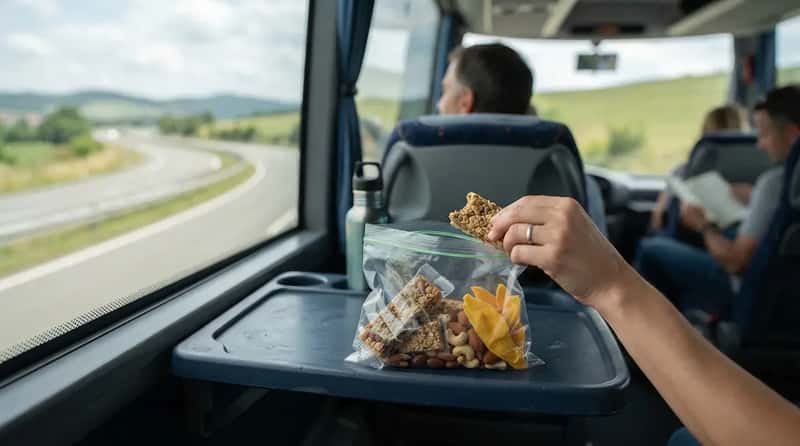
Coach tours run on a schedule, and that schedule rarely bends for hunger. Rest stops are spaced out, sometimes ninety minutes or more apart, and the food waiting there is often limited to a vending machine or a single sad gas station counter.
Experienced tour-goers pack a small bag of granola bars, nuts, or dried fruit and never think about it again for the rest of the trip. Everyone else learns the hard way, usually around hour three, when the whole bus starts loudly asking the driver how much longer until the next stop.
Fast Facts
- Rest stops on multi-day coach tours are typically spaced 90 minutes to two hours apart
- Highway service areas often have nothing more than vending machines or a single convenience counter
- Granola bars, trail mix, and dried fruit travel well without any refrigeration
- A refillable water bottle saves money at every stop and keeps you hydrated on long travel days
#12 – The Sleep Kit Almost Everyone Skips

Early wake-up calls are practically guaranteed on multi-day coach itineraries, and so is the guest a few rows back who falls asleep within minutes of pulling out of the parking lot. Between the engine noise, the overhead lights, and someone’s phone alarm going off at the wrong moment, actual rest on travel days becomes nearly impossible without a little help.
A simple pair of earplugs and a sleep mask fixes both problems at once, and it costs less than a single overpriced airport coffee. Tour directors will tell you it’s one of the most requested items at the front desk, right behind phone chargers, and yet almost nobody thinks to pack it on their own.
#11 – The Small Bag That Becomes the Real MVP of the Trip

Big suitcases stay locked under the coach for most of the day, which means they’re completely useless the moment the group steps off for a walking tour or a few hours of free time in a new city. Travelers who crammed everything into one large bag suddenly have nowhere to put a water bottle, a map, or the souvenirs they just bought.
Most coach operators specifically expect passengers to bring a separate daypack for exactly this reason, something small enough to carry through cobblestone streets and museum lines. Skip it, and you’ll spend every single excursion improvising with a jacket pocket or a crumpled shopping bag from the last gift shop you passed.
#10 – The Layers Everyone Assumes They Won’t Need

Coach air conditioning runs cold, often uncomfortably so, while the destinations outside can swing from chilly mornings to hot afternoons within the same twenty-four hours. Travelers who dress for the destination’s weather report and ignore the bus itself end up shivering under a blanket of someone else’s borrowed sweater for hours at a time.
Packing a light raincoat or windbreaker keeps you dry during a surprise downpour and doubles as a barrier against the arctic AC blast the moment you step back on board. A layer that goes on or off in seconds ends up mattering far more than the heavier jacket you packed based on the average forecast.
#9 – The Motion Sickness Fix Left in the Medicine Cabinet
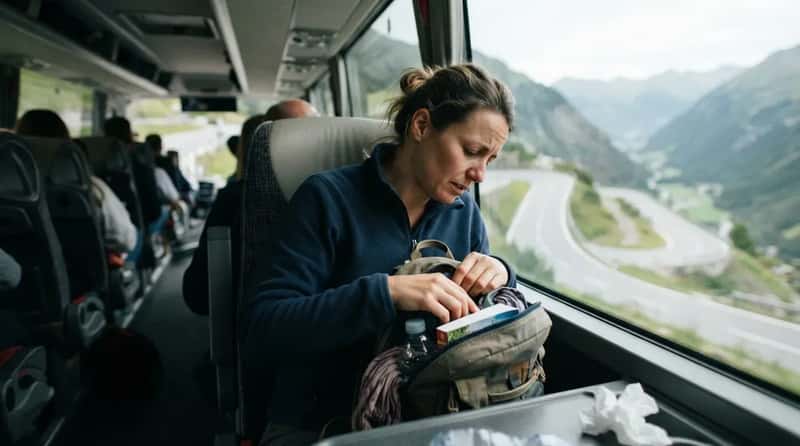
Winding mountain roads, hairpin turns near coastal overlooks, and long stretches of highway can all trigger motion sickness in people who’ve never experienced it before in their life. It sneaks up fast, and once it starts, there’s genuinely little a tour director can do beyond suggesting fresh air at the next stop, twenty minutes away.
Seasoned coach travelers keep an over-the-counter remedy tucked in their daypack even if they’ve never needed it on any previous trip. It’s one of those items nobody bothers to pack until the exact moment they’re desperately wishing they had.
#8 – The Printed Itinerary That Suddenly Matters

Phones die, WiFi at rural hotels can be spotty at best, and international data plans don’t always work the way travelers assume they will. When that happens, the digital itinerary saved in an email becomes completely useless at the exact moment it’s needed most, usually while standing confused in a hotel lobby at 6 a.m.
A single printed page with hotel names, addresses, and daily meeting times solves the problem instantly, no signal required. It sounds almost old-fashioned in 2025, but tour directors say it’s genuinely the difference between a minor hiccup and a morning that spirals into real stress.
#7 – The Coins Nobody Thinks to Set Aside

Public restrooms at many European rest stops and attractions still charge a small fee, usually payable only in coins, not cards or bills. Travelers who’ve spent everything on plastic or larger notes find themselves stuck at the turnstile, embarrassed, digging through pockets while the line builds behind them.
Keeping a small stash of local coins in an easy-to-reach pocket avoids the entire awkward scramble before it starts. It’s a tiny detail, but it’s one of the most common little frustrations tour directors hear about, day after day, on the road.
Worth Knowing
- Many European public restrooms charge a small coin fee, often less than a euro or two
- Card readers and bill acceptors are rare at turnstile-style restroom entrances
- Some rest-stop restrooms have no attendant on hand to break larger bills
- A small zippered coin purse keeps change separate and easy to grab in a hurry
#6 – The Shoes That Get Left Behind for the Sake of Fashion

Coach tours pack in an enormous amount of walking between the parking lot and the actual sight, and the terrain isn’t always smooth pavement. Itineraries built around old towns and historic centers frequently involve uneven ground, worn steps, or centuries-old cobblestones that punish anything but a real walking shoe.
Travelers who prioritize style over comfort regret it by the second stop of the day, quietly wincing through photos while everyone else keeps moving. Broken-in walking shoes matter more on a coach tour than on almost any other kind of trip, simply because there’s no option to skip a leg of the day when your feet give out.
#5 – The Neck Pillow That Turns a Long Day Bearable

Coach seats recline, but not far enough to make real sleep possible without support, especially on transfer days that stretch six or more hours between cities. Travelers who skip a neck pillow often arrive at the next hotel stiff, sore, and too worn out to actually enjoy the evening they paid for.
It’s a small, inexpensive item that experienced group travelers never leave home without, tucked into a daypack alongside the snacks and the phone charger. Everyone else usually ends up buying one at the first souvenir shop they pass, at triple the price and half the quality.
#4 – The Passport Copy Nobody Keeps Separate
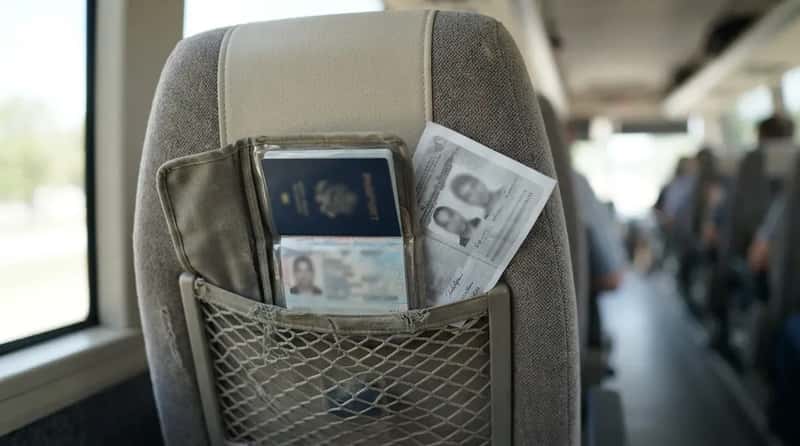
Losing a passport or ID on tour is rare, but it happens more often than people expect, whether from a stolen bag, a forgotten seat pocket, or simply misplacing it during a chaotic sightseeing day. Without a backup, replacing it abroad can eat up days of lost vacation time sitting in a local embassy waiting room.
A photocopy or photo of the identification page, stored separately from the original, along with a neck or money belt worn under your clothes, makes the whole situation far less stressful if it ever actually happens. It’s the kind of preparation nobody thinks about until the one moment they desperately need it.
#3 – The Small Bills Everyone Realizes They Need on the Last Day

Tipping a tour director, driver, and local guides is standard practice on most coach tours, but the actual cash rarely gets set aside ahead of time. Travelers scramble on the final morning trying to break a hundred-dollar bill or hunt down an ATM before checkout, all while the bus is loading outside.
Most tour companies recommend figuring this out well before departure day, and the industry norm hovers around eight dollars per person per day for the tour director, with an additional three dollars per person per day set aside for the driver. Tips should be handed over in cash and in local currency unless your director says otherwise, so packing a small tipping envelope before the trip even starts avoids the entire last-minute scramble.
Quick Compare
- Tour director: roughly $8 per person, per day
- Motor coach driver: roughly $3 per person, per day
- Local city guides: often a few dollars per person, per guided stop
- All tips are typically handed over in cash, in local currency
#2 – The Medication Packed in the Wrong Bag
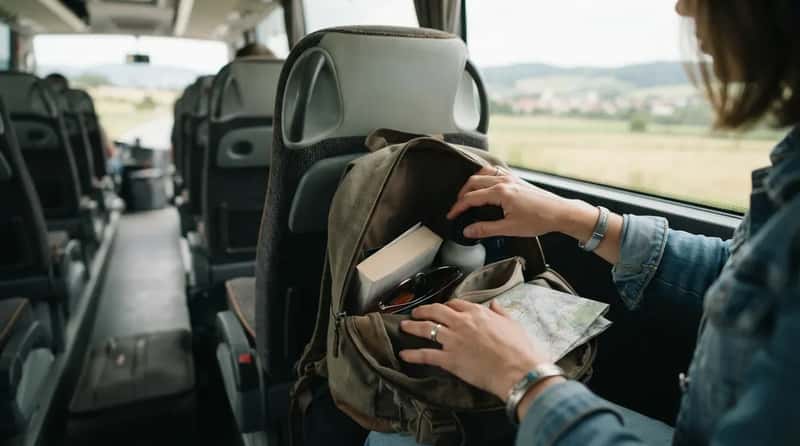
Big suitcases get stored in the luggage bay underneath the coach, and that bay generally doesn’t get reopened until the group reaches the hotel for the night. Travelers who pack daily medication, glasses, or other essentials in that bag instead of a daypack sometimes go an entire travel day without any access to them at all.
This becomes a real problem on transfer days that stretch from early morning until evening, especially for anyone managing a health condition that can’t wait twelve hours for a pill. The fix is simple: anything needed during daylight hours belongs in the bag that stays with you, never in the one that disappears under the bus until nightfall.
#1 – Actually Knowing Your Bus Number, Color, and Departure Time

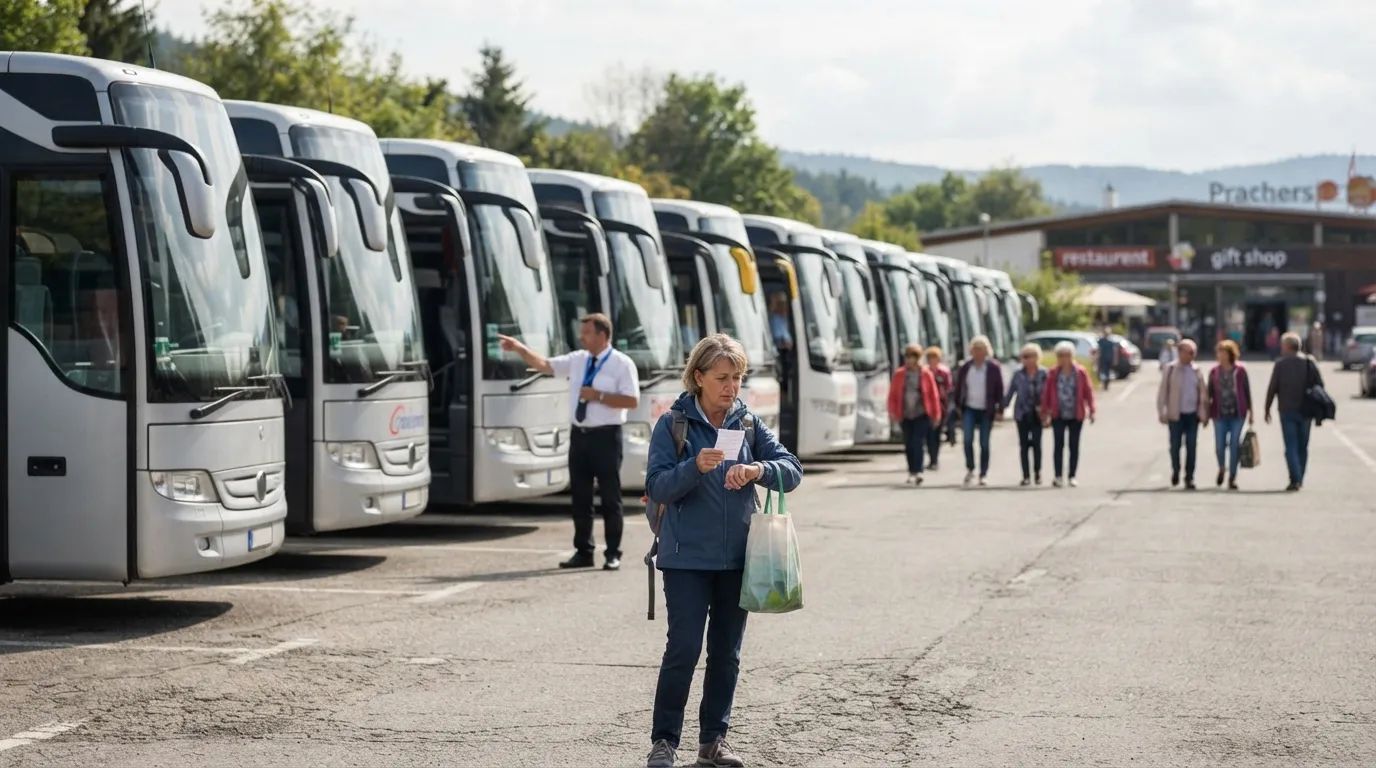
This is the one that catches even veteran travelers off guard, and it’s the single most common story tour directors tell about the moment a trip nearly went sideways. At a busy rest stop with a dozen coaches parked in a row, tourists step off, wander toward the restaurant or gift shop, and completely lose track of which vehicle was ever theirs to begin with.
The buses often look nearly identical from a distance, and departure windows are tight, sometimes just twenty minutes total. Travelers who make a habit of checking the bus number and color before walking away, and confirming the exact return time with the driver, avoid the genuine panic of watching a parking lot fill with strangers’ coaches instead of their own. It sounds almost too simple to matter, but ask any group leader which mistake causes the most frantic headcounts, and this is the answer nearly every time.
At a Glance
- Note the bus number and color before walking away at every single stop
- Confirm the exact return time directly with the driver, not just the group chatter
- Keep a hotel business card or itinerary page in your pocket as a backup
- Save the tour director’s phone number in your phone before day one
None of these fourteen things are complicated, expensive, or hard to plan for. They’re just easy to overlook when your head is full of the destination instead of the small mechanics that actually get you there in one piece, well-rested and reasonably sane.
The travelers who show up prepared for these details are almost always the ones who come home saying the tour went smoothly. Everyone else comes home with a great story about the time they nearly missed the bus, and a quiet promise to themselves that next time will be different.