The ride that looks cheapest on screen is often the one that leaves someone in their 70s clutching a railing in a packed station, dragging a carry-on and nursing a sore knee. That gap between the price you see and the price you actually pay once you land is what this list is about.
No formal poll sits behind this ranking. What sits behind it are fee schedules, transit rules, and service policies, and they show a clear pattern. The rides that win over travelers in their 70s and beyond are the ones that remove stairs, guesswork, and surprise charges, even when the sticker price is higher. Some picks are cheaper than you’d expect, a few cost more than they look, and one popular option, the one many people assume is the smart choice, turns out to be the shakiest of the bunch.
#15 – The “Free” Hotel Shuttle That Quietly Saves the Whole Morning
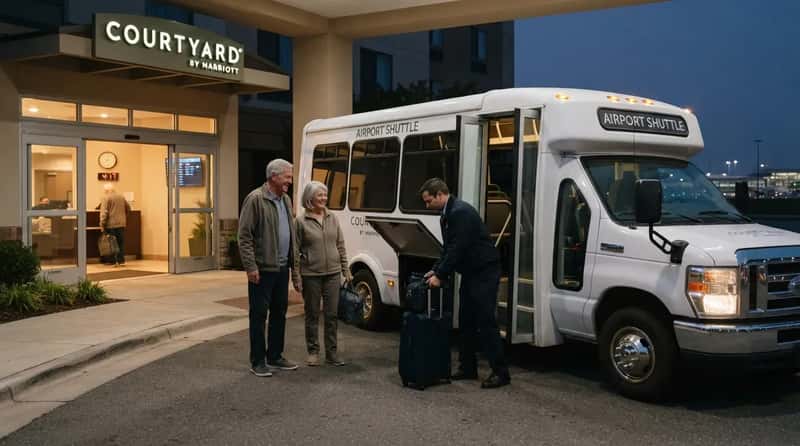
Many hotels near airports run complimentary shuttles. For a night-before-the-flight stay, that makes the airport ride effectively free. Travelers who hate early-morning scrambling often pick the airport-adjacent hotel for exactly this reason.
Drivers typically load bags at the curb, so you skip the parking garage and the long walk with a suitcase. The catch is timing. Shuttles usually run on a loop or a set schedule, and some stop running overnight, which can strand an early flight. Confirm the first departure of the day when you book the room, not when you check in. Plenty of people learn this at 4 a.m. in a silent hotel lobby.
#14 – Off-Airport Parking Where the Shuttle Handles the Heavy Lifting
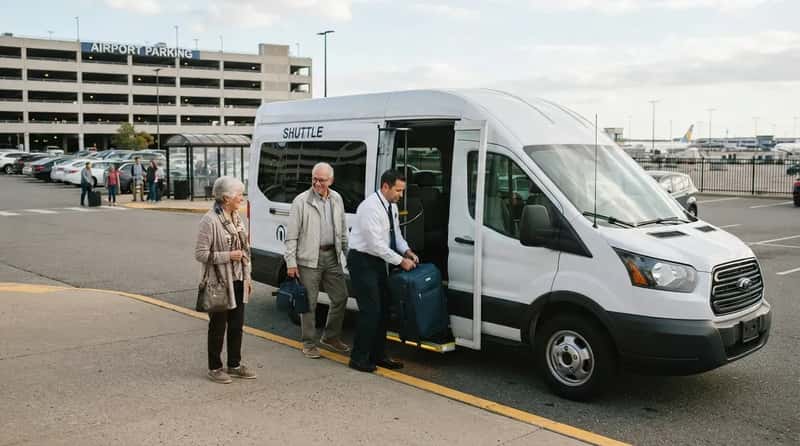
Some travelers still insist on driving themselves, and off-airport lots with shuttles are the compromise. You park, the shuttle pulls up, and the driver usually handles the bags. It’s a familiar routine for people who trust their own car more than a stranger’s.
Critics say the extra handoff adds a stressful step at both ends of the trip. Fans say it beats circling a crowded terminal garage. Either way, the shuttle vehicle matters more than the lot’s price. A high step into a van can turn a “cheap” transfer into a painful one.
#13 – Airport Rail With a Senior Fare (If You Pack Light)
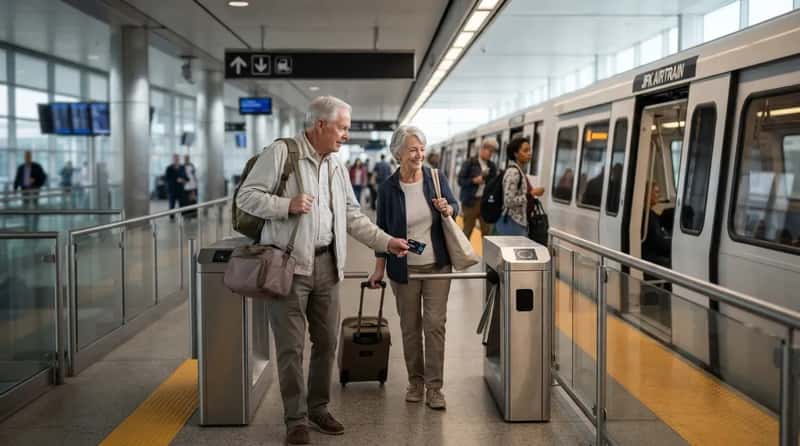
Public transit can be the cheapest ride to the terminal by a wide margin. In the U.S., transit systems that receive federal funding must offer at least half fares to older adults and people with disabilities during off-peak travel. Many systems go further. The MTA offers Reduced-Fare OMNY for riders 65 and older, and Washington’s Senior SmarTrip card cuts fares on Metrorail and Metrobus.
Here’s the honest twist. A New York car-service company argues that rail suits only healthy, very mobile seniors traveling light. That’s a self-interested source, but the stairs, crowds, and platform gaps are real. The cheapest transfer can be the most tiring one after a long flight.
#12 – The Amtrak Stop That Sits Right Next to the Terminal
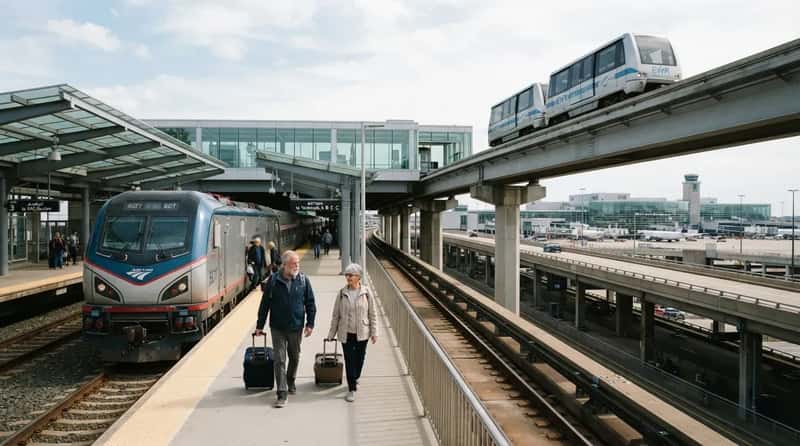
A couple of major airports have Amtrak stations nearby, including Newark Liberty and Baltimore/Washington (BWI). Each connects to the terminal by a short AirTrain or shuttle hop. For travelers who already love trains, that means a real seat, room for luggage, and no highway merging.
The money angle is decent too. One 2026 senior-travel roundup says Amtrak gives travelers 65 and older around 10% off most fares. Discount rules change, so confirm at booking. Riding the train to your flight can spare you airport-approach traffic entirely.
Quick Compare
- Newark Liberty: The station is served by Amtrak and NJ Transit, and the AirTrain carries you on to the terminals.
- BWI: The rail station is served by Amtrak and MARC, and a free shuttle bus covers the last stretch.
- Shared perk: Both spare you the highway approach and the parking-garage walk.
- Shared catch: Both add one more connection, so check that the last leg is step-free before you go.
#11 – The Flat-Rate Taxi That Ends the Meter Anxiety
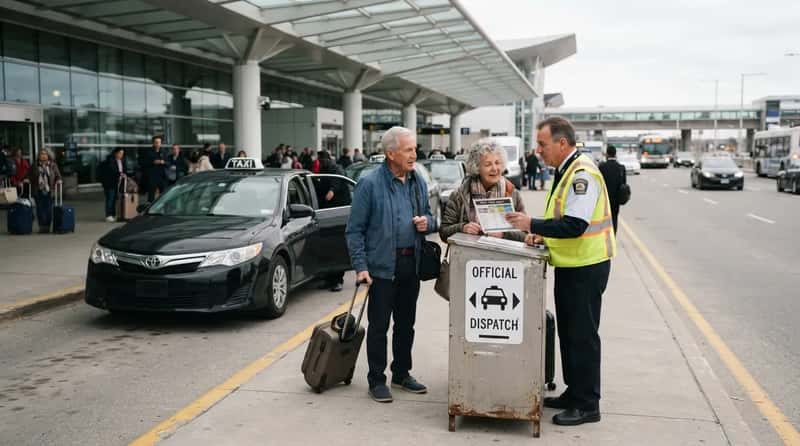
Some major airports post flat fares for rides to certain zones, such as downtown. The price is known before the door closes. For anyone who dreads watching a meter tick through traffic, that certainty is the whole point.
Many people assume rideshare is always cheaper. At peak demand, with surge pricing, a posted flat-rate taxi can actually come out ahead. Costs vary by city and time of day, so compare before you commit. The official taxi line is the safe place to find that fare.
#10 – Shared Shuttles With a Built-In Senior Discount
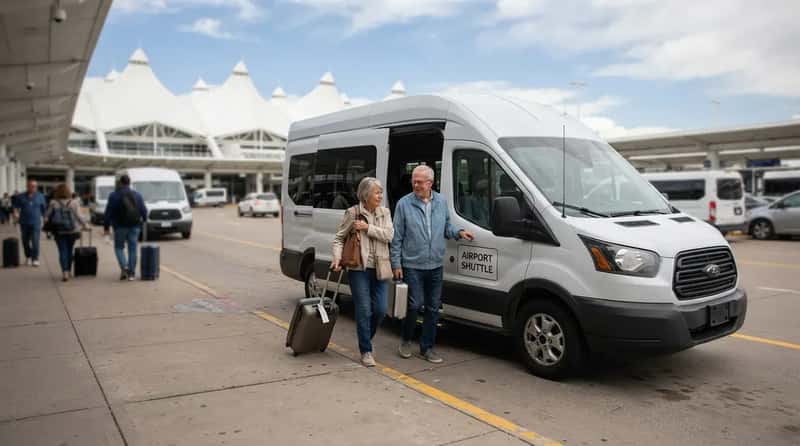
Regional shuttle companies sometimes price older riders lower. Denver’s ABC Shuttle, for example, says riders 65 and older get a senior discount once they show ID. The same company says it doesn’t raise prices for seasonal demand and posts its rates publicly. That kind of predictability is rare in ground transport.
The weak point is timing. Shared vans make multiple stops, and one car-service blog advises seniors with connections or early medical appointments to avoid them because arrival is unpredictable. The cheapest seat can mean the longest ride. For anyone on a tight schedule, this may be the most overrated option on the list.
#9 – The Cruise-Line Transfer That Covers You When Flights Go Sideways

Cruise lines sell airport-to-port transfers, and they make the most sense for travelers who fear watching the ship sail without them. Buying through the line generally ties the transfer to your sailing. Booked independently, you’re on your own if a delay strikes.
Older cruisers often value the simplicity: one booking, one meeting point, and staff who handle the boarding logistics. Buying through the cruise line can decide whether a delay becomes their problem or yours, though protections vary by line. Read the terms before you decide.
At a Glance
- Best for: First-time cruisers and anyone flying in on the same day the ship sails.
- Big upside: One booking, one meeting point, and no scramble to find the port.
- Trade-off: It often costs more than a taxi or rideshare, and you ride on the line’s schedule.
- Smart move: Ask what happens if your flight is late before you pay.
- Extra peace of mind: Flying in the day before the cruise leaves more room for surprises.
#8 – The Airport Courtesy Cart Nobody Advertises
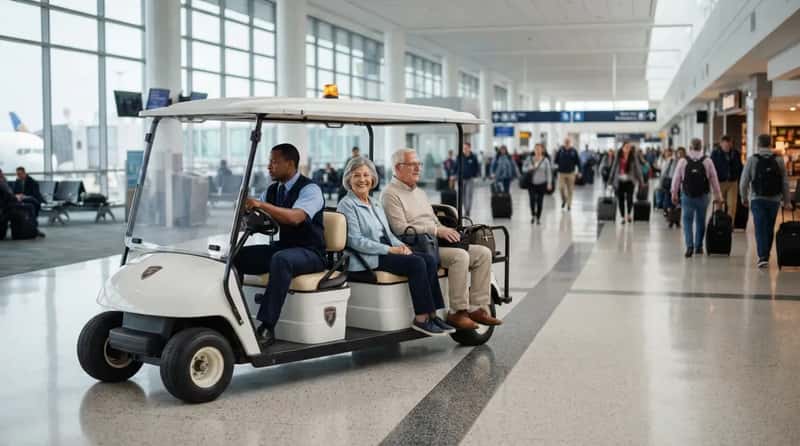
Those golf-cart-style vehicles in the terminal are real, and they’re a genuine relief on long concourses. Airport staff drive them to pick up passengers who need extra help or have tight layovers. Policies vary a lot between airports, so check the airport’s website or call your airline ahead of time.
Some airports provide the service at no charge, while others rely on paid contractors. Airporteo operates in more than 40 U.S. airports, according to one 2026 senior-travel guide. Many people don’t realize you can often arrange a cart before you ever leave home.
#7 – The Rideshare You Book by Phone Call, No App Required
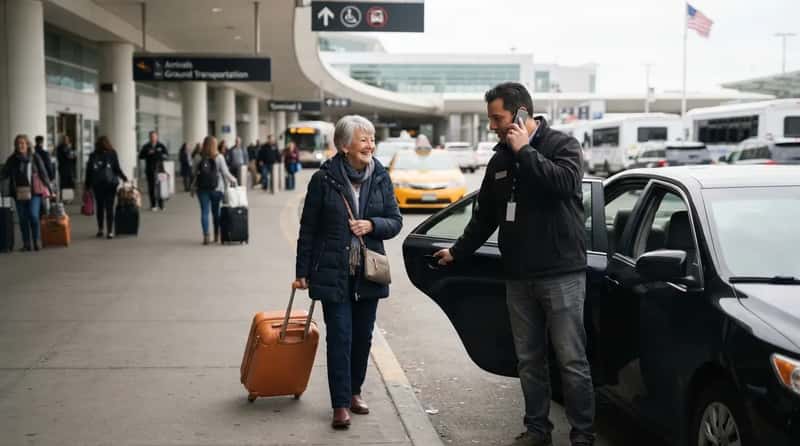
Not everyone wants a smartphone app standing between them and a ride home. Phone-based services, such as GoGoGrandparent, let you arrange rideshare-style trips with a voice call instead. It fixes the biggest complaint about app-based rides: they assume you’re comfortable with the app.
That convenience usually comes with an added service fee, so read the pricing before you sign up. Another roundup notes that Uber and Lyft now feature senior-friendly options. For some travelers, the best rideshare is the one they never have to open an app for.
#6 – The Scheduled Rideshare That Takes the Curb Chaos Away

Both Uber and Lyft let you reserve a ride ahead of time in many markets. That turns the airport scramble into a booked, confirmed pickup. It’s a small feature with a big effect on how the trip feels.
Scheduled rides aren’t a guarantee, and prices can differ from what you’d see in the moment. Still, a confirmed pickup beats standing at a crowded curb hoping a driver accepts. Hailing a car with two bags in a packed pickup zone is, frankly, the worst way to end a flight.
#5 – The Family Pickup That Beats Every Paid Option (With One Catch)

A son, daughter, or grandchild at the arrivals curb is the transfer nobody can put a price on. It’s familiar and unhurried, and you don’t have to explain where you’re going. Plenty of older travelers simply prefer it.
The catch is the curb itself. Airports limit how long drivers can wait at arrivals, and a loving relative circling the terminal can end up with a citation or a stern wave-off. Many airports offer a free cell phone waiting lot for exactly this reason. Have your ride wait there and text when your bags come off the belt.
Worth Knowing
- Send your relative your airline, flight number, and arrival terminal the day before.
- Agree on a pickup door number in advance, since terminals can have several.
- Text “bags in hand” the moment you have your luggage so the driver can head over.
- Plan a backup, such as a rideshare, in case a delay lands you at midnight.
#4 – The Accessible Van With a Ramp and a Patient Driver
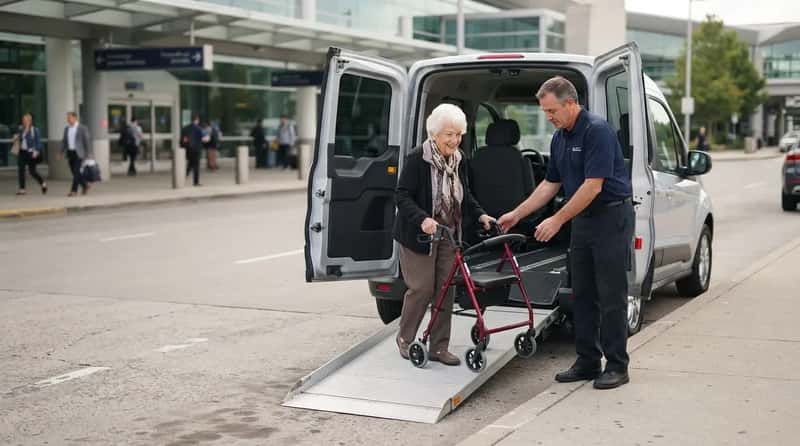
For travelers using a walker or wheelchair, the vehicle design is everything. Some services run wheelchair-accessible vehicles with secure ramps and spacious interiors. Several also train drivers to assist riders with mobility challenges.
Public paratransit exists too. In New York, Access-A-Ride serves eligible customers when regular transit isn’t usable because of a qualifying disability. Eligibility rules and advance-booking windows vary by region. Eligibility usually has to be approved before you need the ride, so start early.
#3 – Airline Wheelchair Assistance All the Way to Your Ride
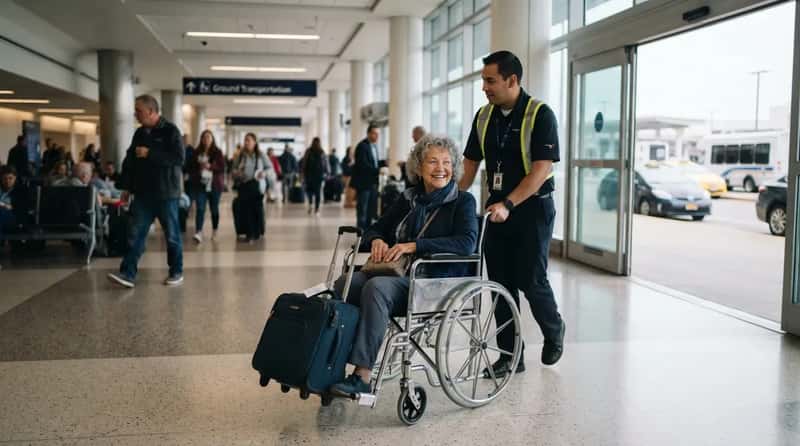
Under U.S. Department of Transportation rules, airlines must provide wheelchair assistance at no charge. That covers help from the curb to the gate, and again from the plane to ground transportation. You don’t have to use a wheelchair full-time to request it. Many people ask because the walk from gate to curb is simply too long.
Request it when you book, and confirm it again at check-in. The free help runs from the plane door to your waiting ride, which is the stretch many travelers dread most. Some people feel awkward asking, but the service exists for exactly this reason.
Fast Facts
- The airline provides the assistance at no charge to the passenger.
- You can ask for help at the curb, through security, at the gate, and after landing.
- You don’t need to be a permanent wheelchair user to request it.
- Asking early helps staff plan, so mention it at booking and again at check-in.
#2 – The Meet-and-Greet Driver Waiting at Baggage Claim

After a long international flight, a driver holding a sign at baggage claim can feel like a small miracle. Many private car services track your flight, so a delay doesn’t strand you. The driver typically handles the bags and walks you to the car.
One New York car-service company argues that most seniors visiting the city are better served by pre-booked car service. It’s a business with something to sell, so weigh it accordingly. But it points to a real issue. The same source cites the CDC, saying falls are the leading cause of injury for adults over 65.
#1 – The Round-Trip Private Car That Handles Both Ends of the Journey
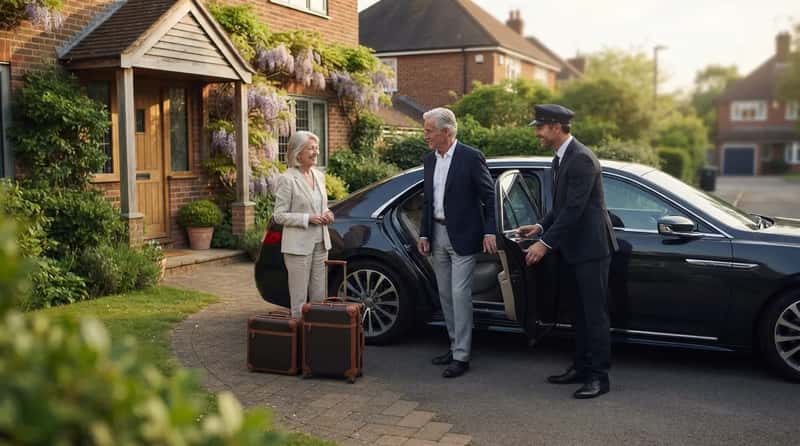
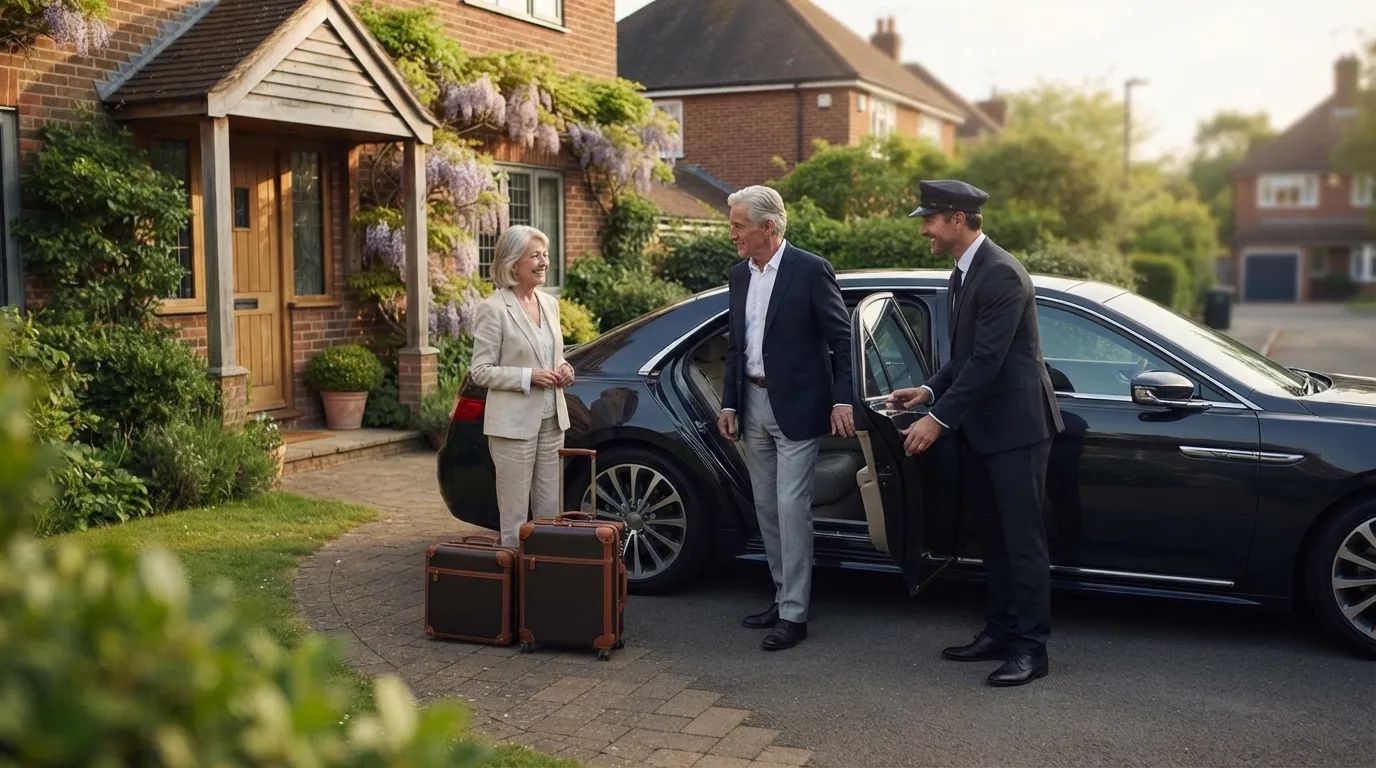
This is the transfer that consistently checks every box: door to door, bags carried, no transfers in between. One source notes that pre-booked transportation can reduce the number of transfers and allow pickup details to be arranged in advance. Another adds that private cars offer extra comfort and schedule control for airport transfers.
It costs more than a train or a shared van, and that’s the honest trade-off. The premium buys you the removal of nearly every step where things can go wrong. Booking the outbound and return trips together lets you lock in both pickups and the price before you leave. For plenty of travelers over 70, that peace of mind is exactly what “worth every cent” means.
The cheapest options, like rail and shared shuttles, can cost you energy and time. The priciest can spare you the hardest steps. And the most overlooked perks of all, courtesy carts and airline assistance, cost nothing. The best ride is simply the one that gets you home still feeling like yourself.