Most travelers over 65 assume the senior discount simply shows up at checkout, like a coupon the system already knows about. It usually doesn’t. Amtrak’s 10% off, Britain’s one-third-off railcard and half-price commuter rail in New York are all real, but many only appear if you pick the right option, carry the right ID, or ask.
And that’s just the start. Some of these perks begin at 60, not 65. One is free outright. One comes with a booking deadline in January. The rules are scattered across operators, and the truth is messier than any brochure lets on. Here’s what the fine print actually says, starting from the bottom of the list.
#15 – Amtrak’s 10% Senior Fare Hides Behind One Dropdown

The discount is real, but the booking page won’t hand it over on its own. Amtrak says travelers 65 and over are eligible for 10% off on most trains. You have to choose “Senior” as at least one traveler type when booking, and the discount then applies automatically. No promo code is involved.
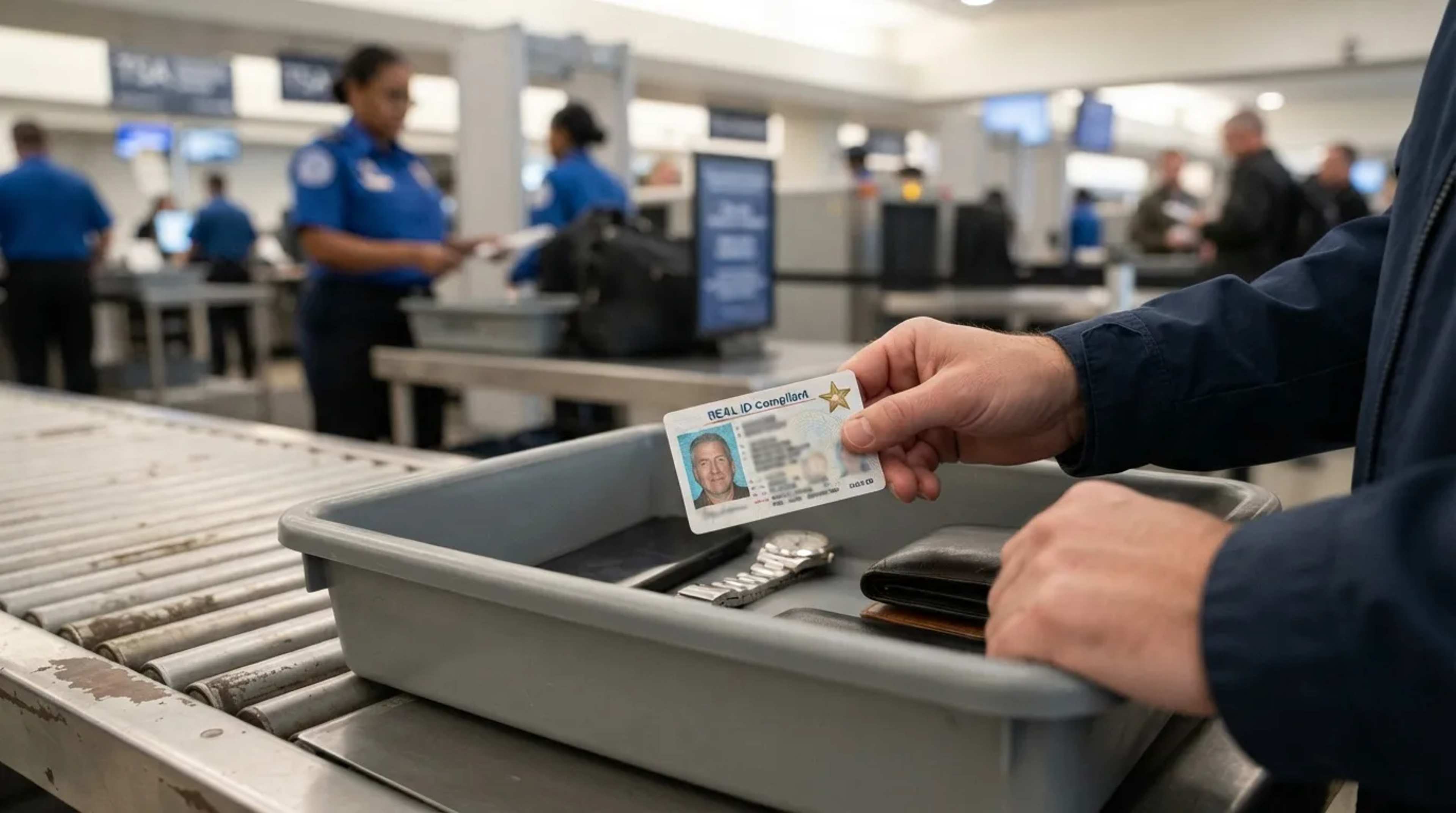
Here is the catch. Leave the default “Adult” selected and you simply pay full price. On a $200 ticket, 10% is $20, and that doubles on a round trip. Some riders say 10% is thin for a perk built around age, and that’s a fair argument. Still, valid photo ID proving your age is required at purchase and on board, so don’t leave it in the hotel safe.
But the age rule gets stranger once a train crosses a border, as #14 shows.
#14 – The Amtrak Rate That Quietly Starts Five Years Early
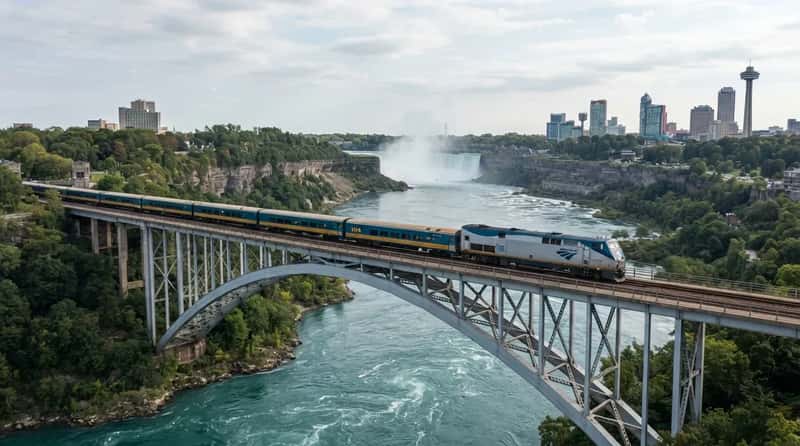
If you’re 60, you may already qualify. On cross-border services operated jointly with VIA Rail Canada, Amtrak’s senior discount starts at age 60. One recent FAQ names the Maple Leaf, which links New York and Toronto, as an example.
Nobody pushes this one at you. Passengers aged 60 to 64 who don’t ask about the cross-border discount can miss it entirely, because it isn’t automatic. That means five years of discounts can sit unused while travelers book as regular adults. Check the traveler options carefully, and confirm the lower total appears before you pay.
Even so, this discount has a gap that surprises people at the worst moment, and that’s #13.
#13 – The Senior Discount That Skips the Sleeper

Overnight travelers are in for a letdown. The 10% applies to the underlying rail fare, not to the sleeping-accommodation charge, which is usually the larger cost of a roomette or bedroom. The Auto Train and weekday Acela trains are excluded too.
It gets fussier. The discount also may not combine with Saver Fares or other promotional discounts. Travelers who budget around “10% off” can be caught out when the bedroom total barely moves. The biggest line item on a long-distance trip is the one the discount leaves alone.
Still, there’s a boarding perk that costs nothing, and it comes up next at #12.
#12 – Seniors Are Actually on Amtrak’s Priority Boarding List

That long line at the gate may be optional. According to a recent roundup of platform tips, Amtrak offers priority boarding to select passengers at many stations, including those 65 and over, anyone needing help to board, and passengers in private rooms. It isn’t loudly announced, so plenty of people stand in line anyway.
Stations differ more than you’d expect. Some platforms mean steps, lifts, bridge plates or a gap you have to step across, and a heavy bag makes every one of those harder. The help exists, but it usually goes to the person who asks first. Talk to station staff about boarding assistance before the train arrives, not as it pulls in.
#11 – California’s Capitol Corridor Reportedly Starts at 62
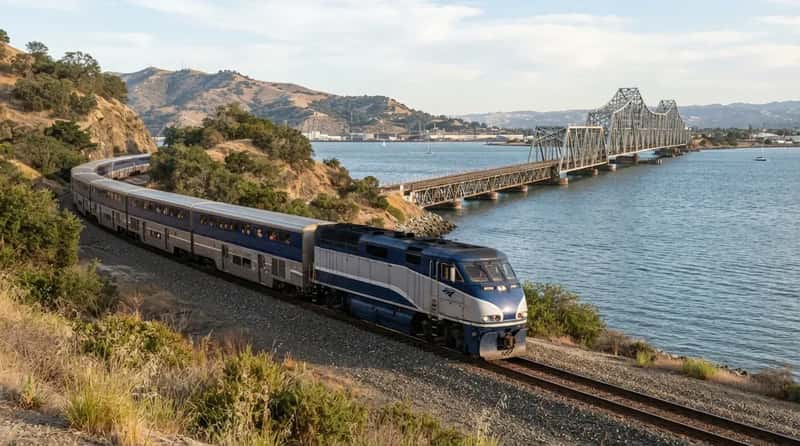
One short route is reported to beat the national rule. One senior-travel guide says that on the Capitol Corridor, a 168-mile route in Northern California, adults 62 and older are eligible for a 15% discount. That’s a lower age and a bigger percentage than the standard Amtrak perk.
The same guide hints that bigger savings exist elsewhere, noting that in some cases discounted senior fares may be even higher. Regional rules can quietly beat the national headline number. That guide is not recent, so confirm today’s terms on the operator’s own site before you count on it.
Quick Compare
- Standard Amtrak: age 65+, 10% off most trains
- Amtrak with VIA Rail (cross-border): age 60+, not automatic
- Capitol Corridor (as reported): age 62+, 15% off, confirm before booking
Across the border, though, one deal comes with a ticking clock at #10.
#10 – VIA Rail’s 15% Senior Deal Comes With a Deadline
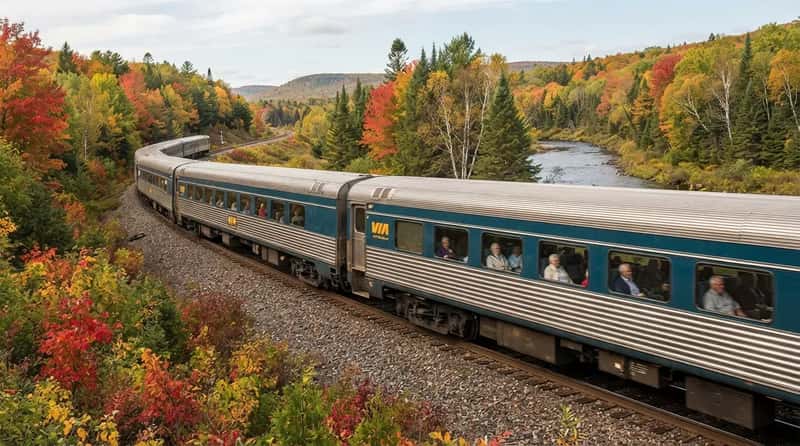
Canada’s national railway is currently offering more than Amtrak does. Passengers 65 and over can get 15% off Economy Plus, Business and Business Plus fares, any day of the week, on all VIA Rail routes, if they book at least 30 days ahead and select “Senior (65+)”.
The booking window runs to January 5, 2027, for travel between September 9, 2026 and April 30, 2027. VIA’s own page calls it a limited-time offer. Older guides still list 10% for age 60, so the age and the percentage may not match what you read elsewhere. Escape, Economy and Sleeper Plus fares are excluded.
VIA also makes arrangements that have nothing to do with price, and they’re at #9.
#9 – VIA’s Onboard Mobility Gear Rarely Gets a Mention
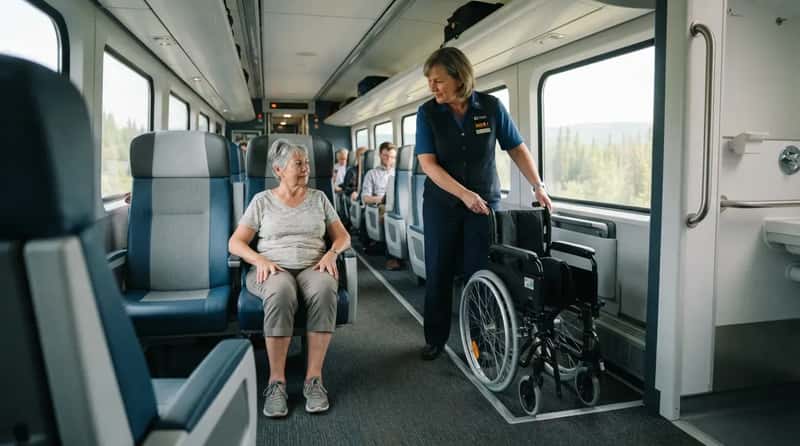
The practical help is easy to miss. VIA lists priority boarding and additional assistance for passengers with special needs, plus trains equipped with wheelchair tie-downs, grab bars in washrooms and narrow wheelchairs for boarding and reaching the washrooms.
There’s a storage option too. Some trains have baggage cars that offer another way to store wheelchairs or scooters during the trip. Most travelers never learn it exists until they’ve already booked. Call ahead, ask which cars suit your needs, and have it noted on the reservation.
#8 – New York’s Commuter Rails Take Half Off, and Nobody Mentions It

Locals know this one, and visitors rarely do. The Long Island Rail Road and Metro-North offer reduced fares to people 65 and older and customers with qualifying disabilities, at half of the one-way peak fare, usable at all times except certain morning peak periods.
The ticket also lasts longer than you’d think. Tickets are valid on all trains until 4 a.m. the day after purchase, which makes a late dinner or a long museum afternoon far less stressful. Half off a commuter ticket can cover a big slice of a day out of the city. Just avoid the weekday inbound morning rush.
At a Glance
- Who: riders 65+ and customers with qualifying disabilities
- Railroads: Long Island Rail Road and Metro-North
- Price: half of the one-way peak fare
- Valid until: 4 a.m. the day after purchase
#7 – The Onboard Ticket Surcharge Disappears for Seniors

Missing the ticket window usually costs you, but not for everyone. The MTA has said that buying on the train costs extra, but the surcharge is waived for senior citizens, passengers with disabilities, Medicare recipients and active-duty military.
The MTA also confirms the practical part. Reduced-fare tickets can be purchased from the conductor at no additional charge with the proper documentation. A late dash for the platform doesn’t have to cost you extra. Just keep the paperwork where you can reach it, not buried in a checked bag.
#6 – Your Medicare Card Can Prove Your Age, but Medicaid Won’t
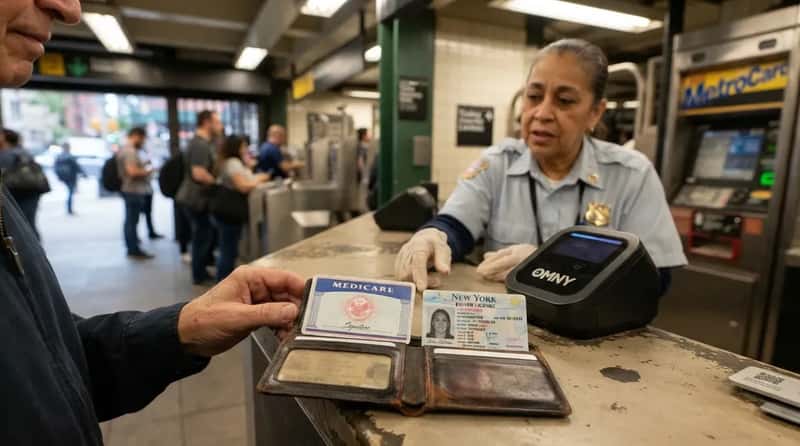
The wrong card can get you turned away. The MTA accepts a Reduced-Fare OMNY card or MetroCard as ID, plus a Medicare card, but says a Medicaid card is not valid for reduced fares. The two names look nearly identical, and the mix-up is easy to make at a crowded ticket counter.
There’s a second wrinkle. The MTA says a birth certificate or a Medicare card is accepted if accompanied by a different photo ID. A Medicare card alone may not be enough. A driver’s license or passport is the safer partner.
Across the river, New Jersey has its own twist on the age rule at #5.
#5 – NJ Transit Starts at 62, Then Changes the Rules at the Line Edge
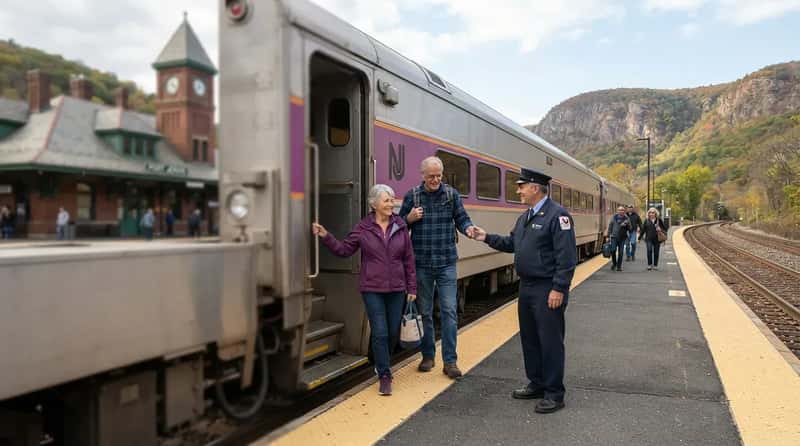
New Jersey’s age is lower, with one exception. NJ Transit customers 62 and older, and customers with disabilities, can ride trains, buses and light rail at half the regular one-way fare. You don’t need to be a New Jersey resident to be eligible.
The exception is on one line. When you travel to or from a Metro-North station on the Port Jervis Line, Metro-North’s policies apply, and reduced fares there start at 65. Another hidden detail: personal assistants ride free when the person with a disability presents proper identification. That means the age cutoff can change partway through a single trip.
Worth Knowing
- NJ Transit senior fares start at age 62
- The price is half the regular one-way fare on trains, buses and light rail
- No New Jersey residency is required
- On the Port Jervis Line, Metro-North’s age-65 rule applies
#4 – A Federal Rule Quietly Forces Half-Price Fares in Many Places

This one explains why so many systems offer a similar deal. Federal transit law has long required agencies that take certain federal funds to offer half-price fares off-peak to seniors 65 and over. Medicare cardholders are included in that rule.
That doesn’t mean every agency runs it identically. Details vary by agency, so ask how your local system applies it. The discount may exist even when the transit agency never promotes it. A quick question at the ticket window is cheaper than assuming the answer is no.
Go overseas, and the age thresholds scatter in every direction at #3.
#3 – Europe’s Senior Age Line Is a Moving Target, and High-Speed Trains Add Hidden Costs

There’s no single European rule. One guide says senior discount ages range from 60 to 67 depending on the country, with France, Italy, Spain, Britain, the Netherlands, Poland and Turkey all listed at 60. Many countries have different age thresholds for senior pricing, so a perk you used in one country may vanish at the next border.
Then come the extras. On high-speed routes across France, Spain and Italy, a mandatory supplement is charged on top of any pass. A senior discount may not reach the biggest add-on charge. Some guides suggest asking about reduced seat-reservation fees, but treat that as a question to try, not a promise.
Britain offers a cleaner version of the idea, and it’s worth knowing at #2.
#2 – Britain’s £35 Senior Railcard Takes a Third Off Almost Everything

This is the senior perk fans rave about. The Senior Railcard costs £35 for one year or £80 for three years and gets you one-third off Standard and First Class Anytime, Off-Peak and Advance tickets around the UK. Anyone aged 60 or over qualifies, with no upper age limit and no income test.
There’s a London bonus. You can link the railcard with an Oyster card to get one-third off Off-Peak travel around London. One site estimates the card pays for itself within about three return journeys. The one catch is a morning-peak restriction around London and the South East. Outside that window, the full third comes off.
But the biggest perk of all belongs to a small corner of the UK, and it’s #1.
#1 – In Northern Ireland, Seniors 65 and Over Ride the Trains Free

Here’s the one that stops people cold. Free travel is available to all senior citizens who are 65 or over and who have been resident in Northern Ireland for a minimum of three months. Not half price. Not a third off. Free.
Even the in-between ages are covered. If you are between 60 and 64 and a permanent resident of Northern Ireland, you’re eligible for a 60+ SmartPass, and SmartPasses must be shown when buying your ticket to claim a discount. The best deal on this list is aimed at residents, which means visiting Americans don’t qualify. That’s the real gap between what’s offered and what travelers hear about.
Why It Stands Out
- It is the only entry on this list that costs nothing
- Eligibility starts at 65, after three months of residence
- Residents aged 60 to 64 can get a 60+ SmartPass
- Visitors from the U.S. are left out
Look back over the list and the pattern is hard to miss. Amtrak’s 10% only appears when you choose “Senior.” The cross-border rate starts five years earlier than most people think. Sleepers sit outside the discount, and VIA’s 15% offer has a January 5, 2027 booking deadline.
None of these deals are secrets, exactly. They’re just tucked behind dropdown menus, ID rules and the one question nobody thinks to ask at the window. The savings go to the traveler who asks first.