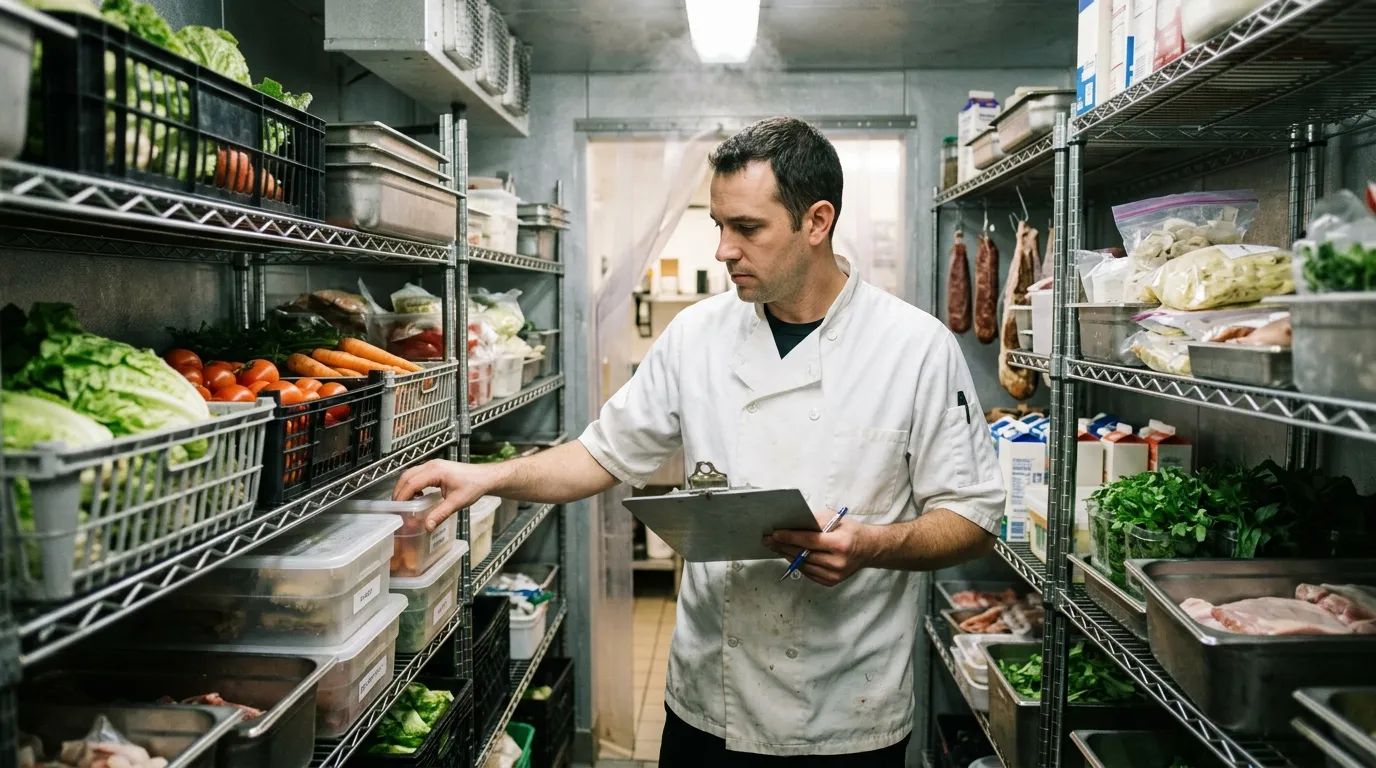
Most people think a restaurant meal begins the moment they sit down. It doesn’t.
The real work starts hours earlier, in decisions so quiet most diners never notice them – and getting even one wrong can turn a smooth night into a slow-motion disaster.
These aren’t glamorous choices. They’re precise, high-pressure calls made long before the first ticket prints – and here’s exactly what happens behind that kitchen door.
#15 – Reading the Reservation Sheet
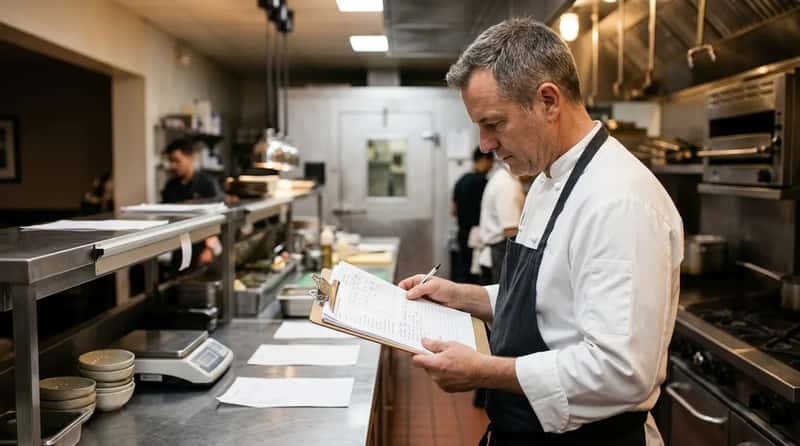
Most chefs don’t start with a knife. They start with a list.
The opener walks the walk-in and the line, compares what survived the night against the par sheet, then checks tonight’s reservation count. That number tells them everything – how much protein to pull, which dishes will move fast, and where tonight’s pressure points will be.
A 200-cover night demands a completely different setup than an 80-cover night, and mixing up the two is a mistake no experienced chef makes twice. Large parties can also mean special dietary needs that have to be flagged before a single burner is lit.
Miss this piece of paper, and the whole kitchen spends the night playing catch-up. Get it right, and the tempo is set hours before anyone smells a single dish cooking.
But knowing what’s coming isn’t the hard part – deciding what to tackle first is where things get tricky…
#14 – Prioritising the Prep List
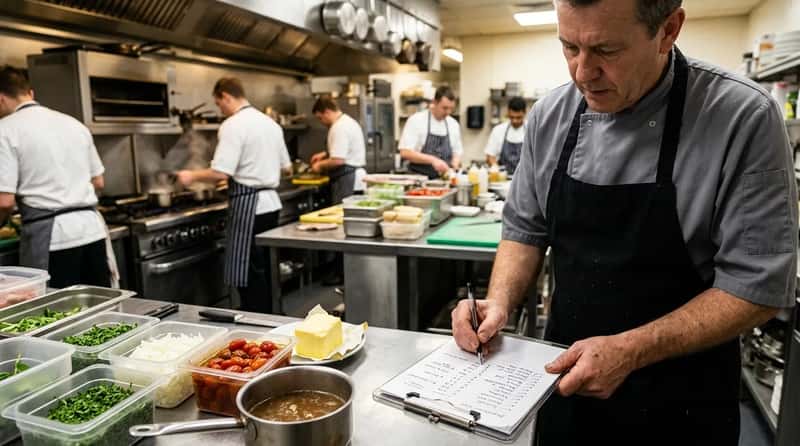
Knowing what needs doing isn’t the same as knowing what to do first.
Kitchens rarely fail from prepping too little overall. They fail from prepping the wrong things first, and hitting 4 p.m. with the fastest-moving item still unmade.
A sauce that needs three hours of reduction gets started early no matter how full its container looks right now – because the container shows the present, not tonight’s demand. Experienced chefs rank every task by how long it takes and how fast it sells, a combination that takes years to feel instinctive.
This is the decision that separates competent cooks from great chefs. The chaos onlookers see later isn’t random – it was scheduled hours ago.
Get this list wrong, and no amount of hustle saves you later. But once it’s locked, the next call involves the most expensive items in the building…
#13 – Breaking Down High-Value Proteins
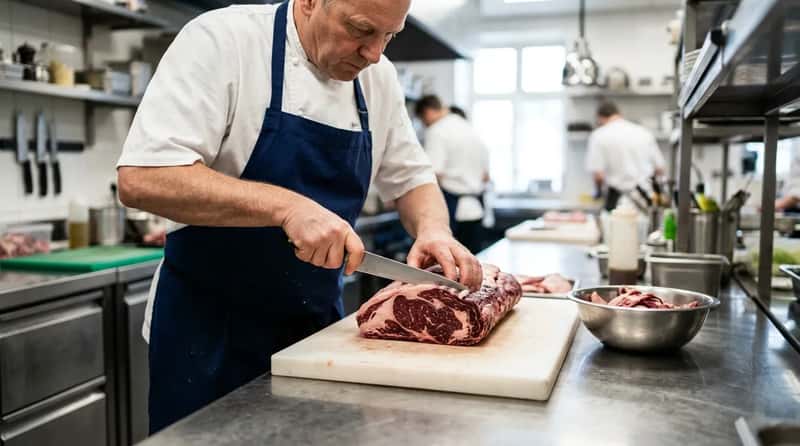
This is the task most chefs insist on doing themselves – and for good reason.
High-dollar fish and meat butchery gets handled by senior hands first, before anything else. Leaving a $40-per-portion dry-aged loin to an inexperienced cook is a financial risk no smart kitchen takes.
Inconsistent portioning is one of the biggest hidden costs in any restaurant. A cut that’s just 20 grams too heavy across 100 covers adds up to real money lost, fast.
At a Glance
- Senior cooks break down the priciest cuts first – never the newest hire on the line.
- A 20-gram overage on a $40 portion, repeated across 100 covers, quietly drains real money in a single night.
- Proper aging and trim technique can stretch usable yield from the exact same cut.
- Butchery mistakes on high-cost proteins are the hardest kind to fix once service starts.
This is also where knowledge of aging and muscle fiber actually pays off – it shapes how a chef trims and stores product for maximum yield. The next choice is closely linked, and it directly shapes a diner’s very first bite…
#12 – Starting the Stocks and Base Sauces
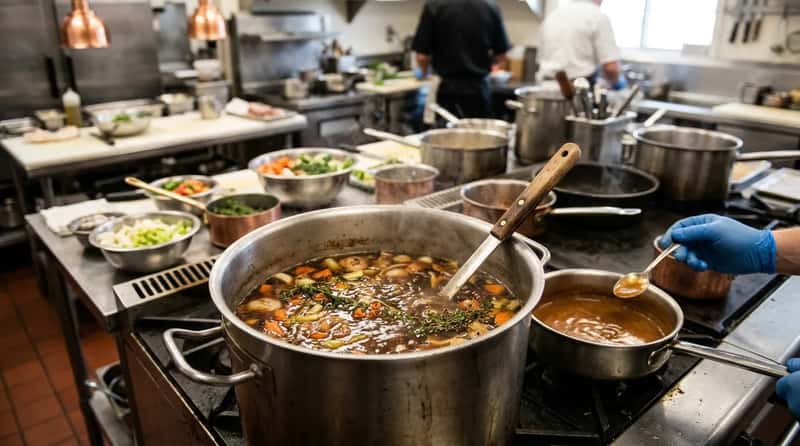
Here’s what most diners don’t realize: the sauce on tonight’s plate was started this morning.
Simmering stocks and building base sauces – tomato, beurre blanc, demi-glace – isn’t something you can rush. A proper demi-glace can take the better part of a day to develop.
The quality of a kitchen’s stock is one of the clearest signals of how seriously it takes its craft. Shortcuts here, like powder or pre-made concentrate, show up immediately on the plate.
These bases also have to be held above 135°F once made, so temperature management begins long before service starts. Every choice made on the stock pot at 9 a.m. echoes through every dish sent out at 9 p.m.
Next up: the decision that determines whether a chef’s knife is a precision tool or a liability…
#11 – Sharpening and Checking Knives
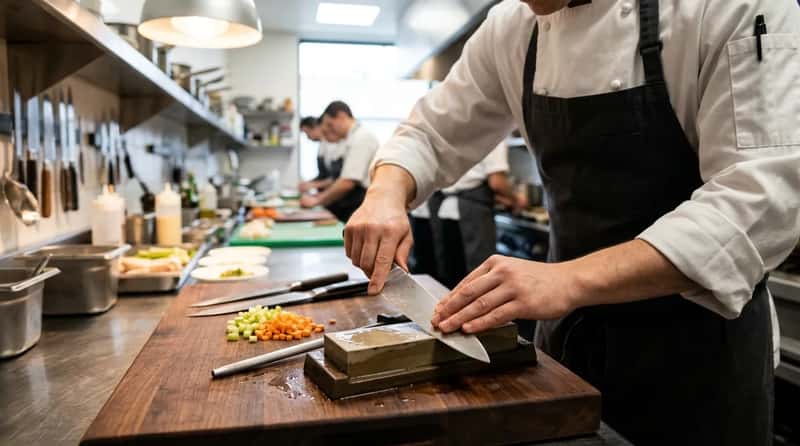
A dull knife is more dangerous than a sharp one. Every culinary school teaches it, and every serious chef lives by it.
It’s not ceremonial. A poorly maintained blade causes inconsistent cuts, which cause inconsistent cook times, which ruins dishes.
A brunoise that’s slightly uneven means some pieces overcook while others stay raw on the same plate. That’s not a small flaw – it’s the difference between a dish that reads as precise and one that reads as careless.
Professional chefs hone throughout the day but reserve a full whetstone sharpening for the start of the session. It’s a small decision with consequences that compound across every prep task that follows.
Once the tools are ready, it’s time to decide how much of each ingredient to actually make – and this is where kitchens quietly lose money…
#10 – Setting Par Levels for the Night
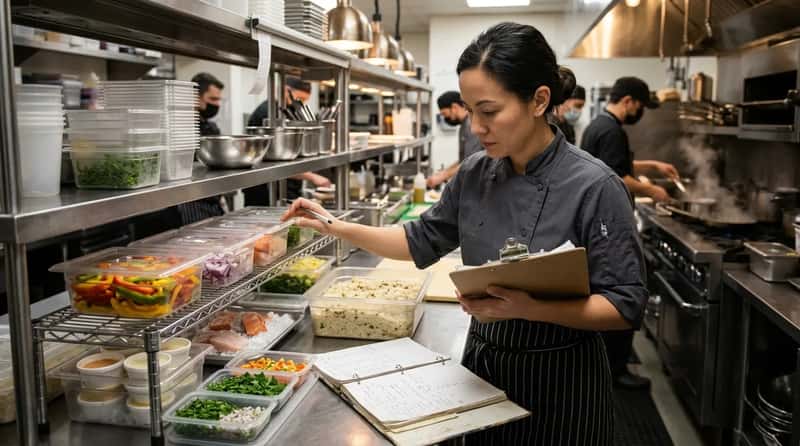
Par levels are the invisible guardrails that keep a kitchen from running dry mid-service – or throwing away money at the end of the night.
A chef checks what’s already prepped, confirms it’s still within its use-by window, and decides how much more of each item to make. Getting this wrong in either direction is costly.
Too low, and a popular dish gets 86’d at 7:30 p.m. with the dining room still packed. Too high, and expensive product gets thrown out at midnight.
A Tuesday dinner looks nothing like a Friday dinner, and a skilled chef adjusts without hesitation. They’re not guessing – they’re reading history to make a calculated bet.
The next decision catches even experienced kitchens off guard if they’re not careful…
#9 – Checking Refrigeration and Temperature Compliance
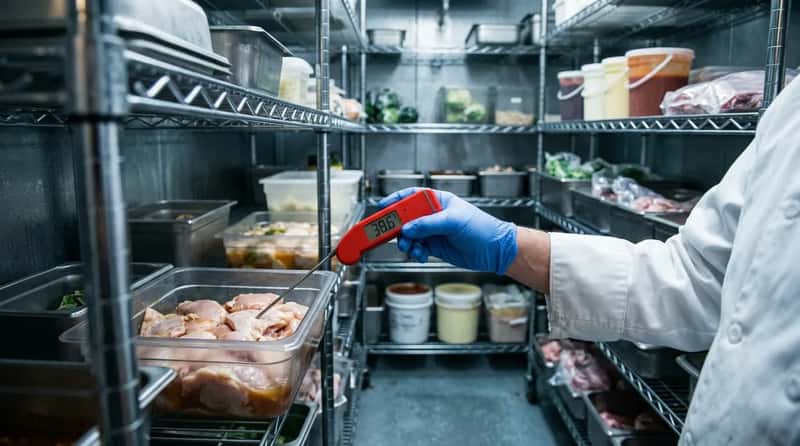
Before any food leaves the walk-in, a chef needs to know it survived the night safely.
Checking fridge temperatures and calibrating thermometers is non-negotiable – foodborne illness outbreaks linked to restaurants are consistently traced back to unsafe handling practices.
Fast Facts
- Bacteria grow most rapidly between 40°F and 140°F, doubling in number in as little as 20 minutes.
- Food safety agencies call this range the “Danger Zone” for good reason.
- Food left out for two hours or longer – or just one hour above 90°F – should be discarded, not risked.
- One missed thermometer check can put an entire night’s proteins in question.
A fridge that crept up to 48°F overnight can silently compromise an entire service’s worth of product, and a chef who skips this check won’t know until someone gets sick. That’s not a headline any restaurant recovers from easily.
If cold-holding failed, the chef has to decide immediately what’s salvageable and what has to go. It’s a decision that demands honesty over optimism.
But temperature isn’t the only thing that can ambush a kitchen before service. The next check is about something hiding in plain sight…
#8 – Conducting the Walk-In Inventory Check
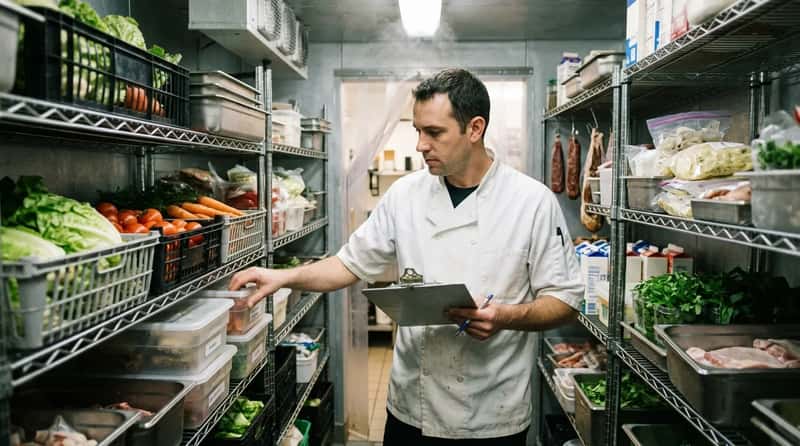
Every chef dreads the walk-in surprise. Ingredients don’t just disappear – they get used wrong, stored badly, or buried behind newer stock.
FIFO – first in, first out – keeps older product moving before it spoils. The walk-in check is where a chef discovers what tonight is actually working with, not what was theoretically ordered.
A short delivery, a bruised case of produce, a dairy item on the turn – all of it surfaces here, and each one forces an on-the-spot menu decision. Anything wilted or soggy gets tossed before it ever has a chance to hit a plate.
This isn’t just quality control. It’s reputation management, hours before a single guest arrives.
Once the raw materials are confirmed, the next call is about what gets made in bulk – and what doesn’t…
#7 – Deciding What to Batch-Cook and What to Cook to Order
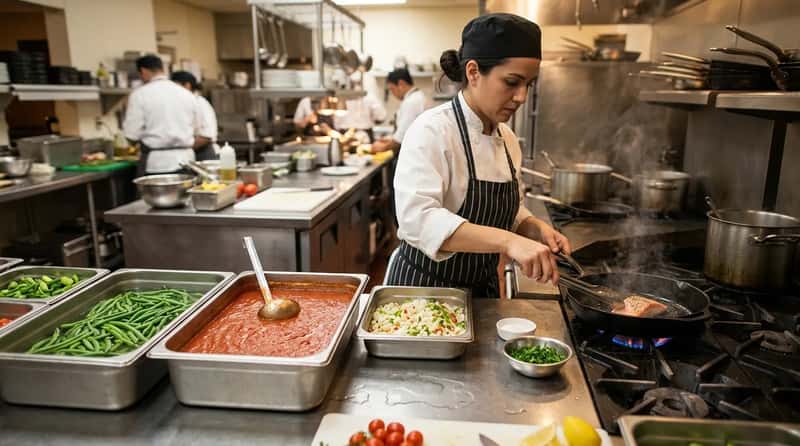
Not everything on a menu should be made fresh per order during a slammed service. This call has real consequences for speed, quality, and labor.
Repetitive tasks get batched – sauces, dressings, chopped vegetables, marinated proteins, all prepped in volume ahead of time. But batch cooking too much kills the made-to-order quality diners are paying for.
Quick Compare
- Batch-cooked: Faster tickets and consistent seasoning, but can taste “held” if not refreshed properly.
- Cooked-to-order: Peak freshness and texture, but slower under a packed dining room.
- The smart middle ground: Blanch and chill in bulk, then finish each portion fresh in the pan.
A blanched vegetable refreshes beautifully in a hot pan later. A seared piece of fish sitting in a warmer does not taste the same twenty minutes later.
So instead of holding a full batch of peas in a steam table, a chef blanches and chills them, then finishes a portion to order in a sauté pan. That single distinction is what separates a good restaurant from a great one.
The next decision involves something diners almost never think about – but that shapes every plate that leaves the kitchen…
#6 – Calibrating Plating Standards and Portion Sizes
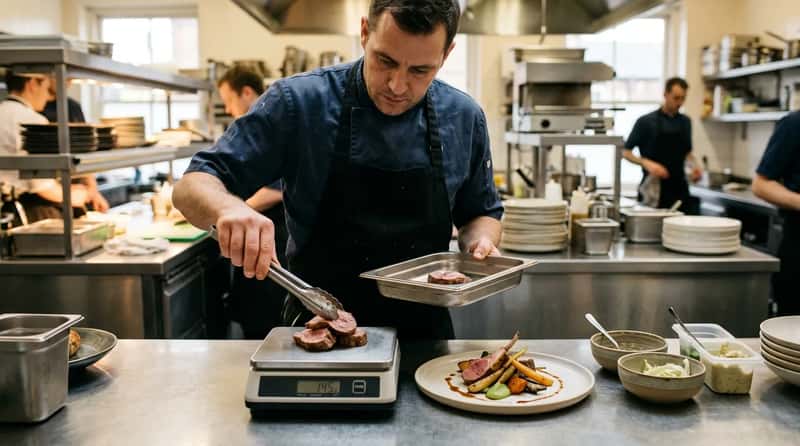
Before a single guest sits down, the chef has already decided exactly what every dish should look like when it leaves the pass.
Sauces get tasted, portions get measured against the recipe standard, and high-volume ingredients get checked for stock. This isn’t bureaucracy – it’s quality insurance.
Portion inconsistency is one of the most common complaints diners never consciously register – but always feel. If one table gets a generous plate and the next table gets a stingy one at the same price, that second table leaves unhappy without quite knowing why.
A good chef locks in these standards before service, not during it, while there’s still time to correct or retrain. Once portions are set, the final pre-service decisions start compressing fast.
The next one involves a ritual that separates the great kitchens from the average ones…
#5 – Running the Line Check
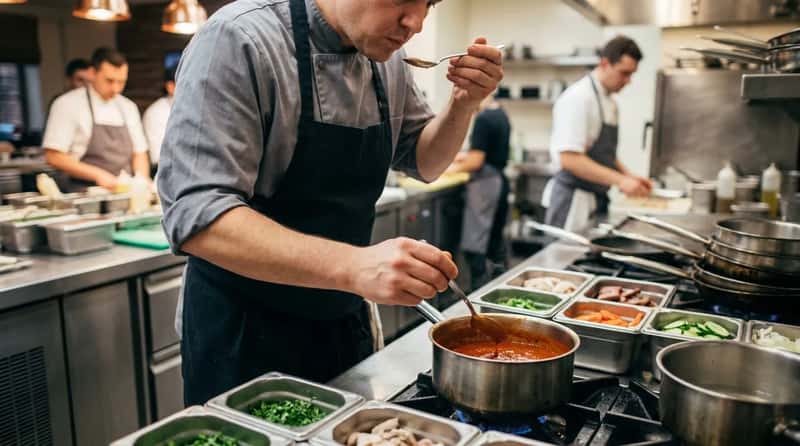
The line check is the last quality gate before the kitchen goes live. Miss it, and problems compound fast.
A chef moves station to station, tasting sauces, checking protein for freshness, confirming every mise en place is exactly where it should be. A sauce that’s slightly over-reduced or a protein that’s cut wrong is fixable at 4:30 p.m. and catastrophic at 7:00 p.m.
Once service starts and tickets are flying, there’s no time to discover a popular item is low or a sauce is off. The line check is the chef’s final moment of control before the chaos begins.
What happens right after this decision shapes the entire team’s mindset going into service…
#4 – Briefing the Kitchen Team
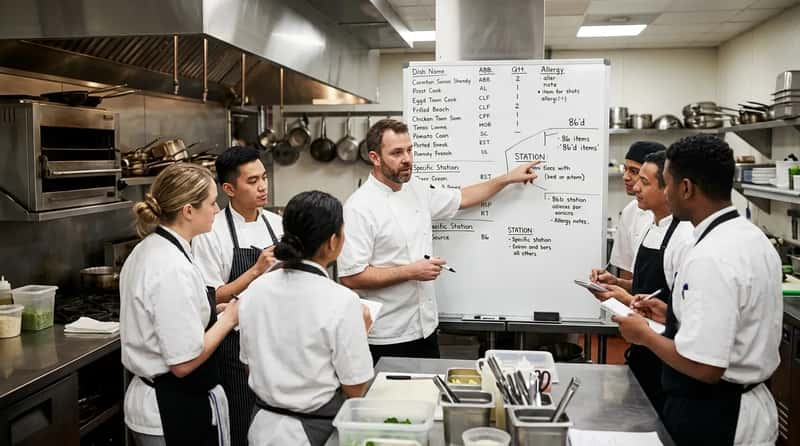
Preparation doesn’t stop at food. It extends to people.
Whiteboards, prep lists, quick check-ins – the goal is making sure every cook knows tonight’s plan before the first ticket prints. The best kitchens run on communication, not just technique.
A chef who briefs the team on specials, 86’d items, large-party timing, and allergy flags sets everyone up to move with confidence instead of firefighting mid-service. This is where kitchen culture actually gets built – quietly, one briefing at a time.
The next choice is one most diners would be shocked to learn happens before every single service…
#3 – Confirming Allergen and Dietary Restriction Protocols
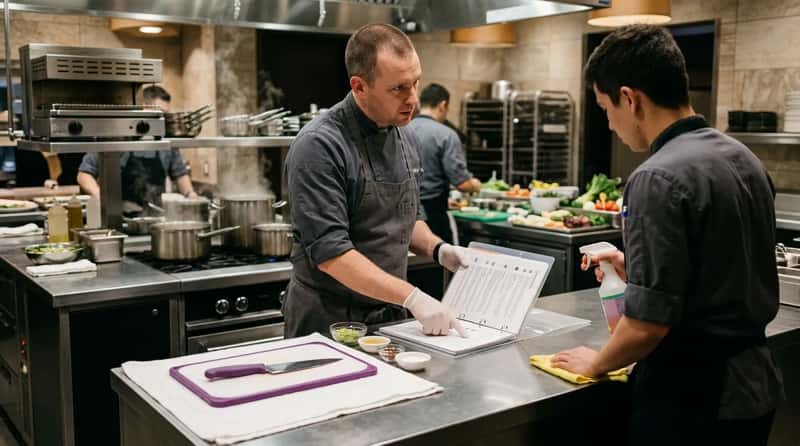
This is the decision that, if skipped, can end careers and close restaurants.
Before cooking begins, a chef confirms which dishes contain common allergens and which prep surfaces must stay separate. Cross-contamination during prep – not just during service – is responsible for a significant share of allergy incidents in restaurants.
Worth Knowing
- Approximately 32 million people in the United States have food allergies.
- Every 10 seconds, a food allergy reaction sends a patient to the emergency room.
- A single cross-contaminated knife or cutting board can turn a dinner into a medical emergency.
- That’s why allergen protocols get locked in before a single pan touches the stove.
A knife that touches a peanut sauce and then a “nut-free” dish can have serious consequences. The question isn’t just “are we ready to cook?” – it’s “are we set up to cook safely for every guest tonight?”
A great chef treats every reservation as if someone at that table has a life-threatening allergy, because often, someone does. Two decisions remain, and they’re the ones that truly separate seasoned professionals from everyone else…
#2 – Mentally Mapping the Flow of Service
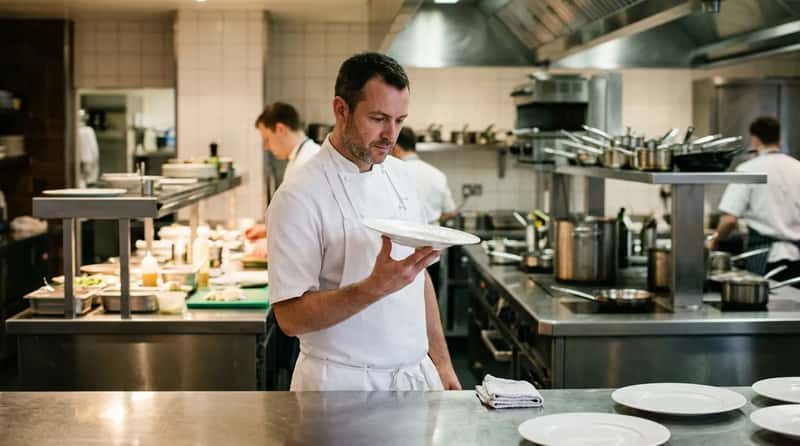
This is the decision no one sees – and it might be the most important one a chef makes.
Before service, a chef works ahead; after service, they clean. The rhythm is predictable in structure, but chaotic in execution once the doors open.
Great chefs mentally rehearse the entire night before it starts. Which stations will be under the most pressure, which dishes take longest, where the bottlenecks will hit – it’s not anxiety, it’s deliberate preparation.
The pass functions like an air traffic control center, and the chef’s job is coordinating pickups from every station so they land on the table at the same moment. That coordination starts in the chef’s head long before the first ticket ever prints.
Anticipation, not reaction, is what keeps a professional kitchen from cracking under pressure. And the final choice – the one every great chef makes last – is perhaps the simplest and most powerful of all…
#1 – Deciding That the Kitchen is Actually Ready
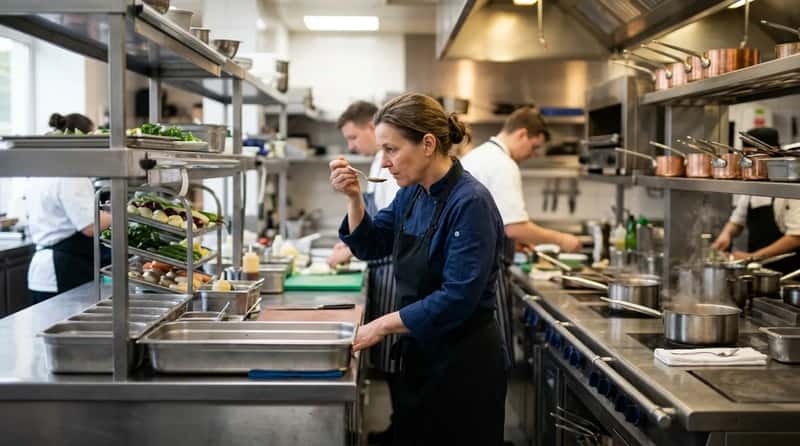
This is the choice nobody talks about – but every serious chef makes it deliberately.
The chef walks through the whole kitchen one last time: reviewing setup, tasting sauces, reading the readiness of every team member. There’s no room for error here.
This isn’t a checklist sweep. It’s a judgment call – a declaration that the kitchen can serve guests with confidence, because whatever can be done before service must be done before service.
Cooking is about creating something delicious for someone else. If you’re cooking for yourself, you don’t care.
Anthony Bourdain
Many veteran chefs describe this moment as the most important decision of the entire day – choosing to say “we are ready” instead of “we’ll figure it out as we go.” It locks in accountability and shifts the whole team from preparation into performance.
When the chef calls out “Is everyone ready?” the team fires back a resounding “Yes, Chef!” That collective readiness, built on hours of quiet, disciplined decisions, is what makes great service look effortless to everyone sitting on the other side of the pass.
The Bottom Line
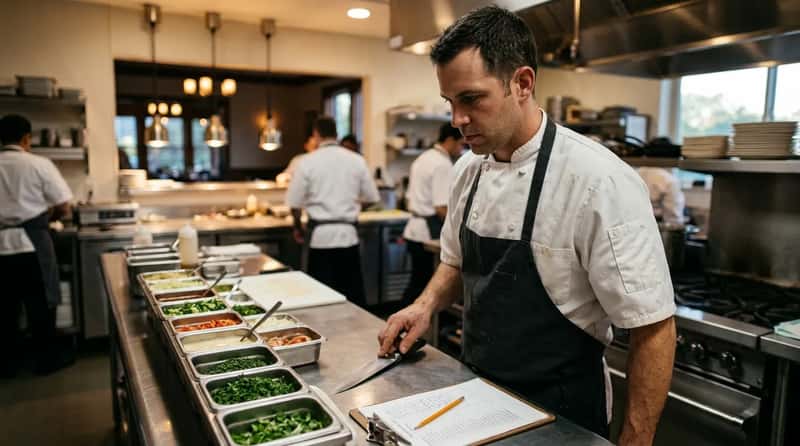
What happens before service is the real job. It’s where the evening is genuinely won or lost, hours before anyone smells food cooking.
From reading reservations and sharpening knives to running line checks and mentally mapping the night, every one of these 15 decisions compounds on the next. Skip one, and the chain starts to crack.
Nail them all, and service looks effortless – which is exactly the illusion great chefs spend their careers perfecting. Which of these surprised you most? Drop it in the comments – we’d love to know what you thought went on behind those kitchen doors.