Watch any gate during a bad weather day and you’ll notice something strange: two passengers get hit with the exact same cancellation, but one is rebooked on a nonstop in ten minutes while the other is still arguing at the counter an hour later. It’s rarely luck. It’s almost never status or a fancy credit card either.
The difference usually comes down to small, repeatable habits – the kind gate agents notice instantly, even when they never say so out loud. Here’s what actually separates the passengers who get quietly moved to the front of the line from the ones who get left standing in it.
#15 – The Golden Window: Showing Up Before the Delay Even Posts
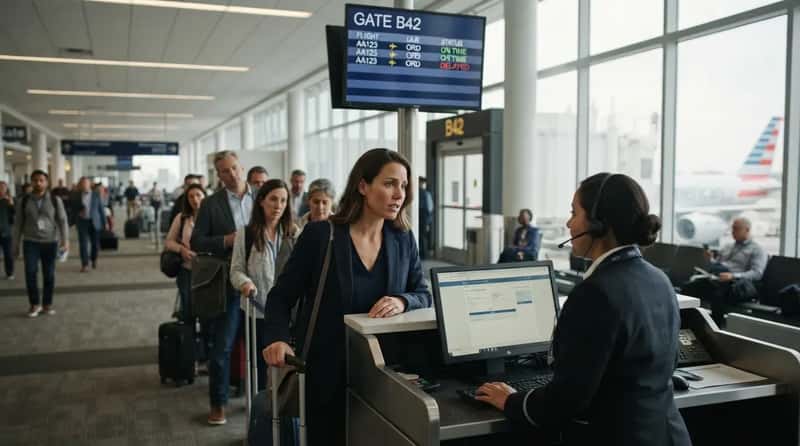
The people who get helped first are almost always the people who never left the gate area to begin with. Gate agents start working disruptions before the board even flips to “Delayed,” and passengers who are physically present get first crack at rebooking conversations that haven’t gone public yet.
This isn’t about arriving hours early out of habit. It’s about staying close enough to the podium that you’re the first face the agent sees when the flight starts to unravel. The passengers who wander off to a restaurant “for just a minute” are the ones who come back to find the best options already gone.
#14 – The Hidden Phone Trick That Skips the Whole Line
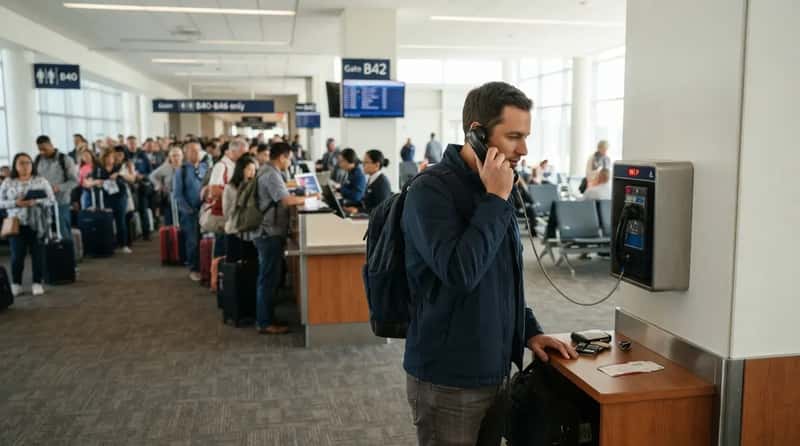
Some travelers never touch the customer service line at all, because they know about the small card gate agents hand out during a cancellation. If your flight is cancelled, they may hand you a “call this number” card, and the smart move is to actually use it – you’ll get through in minutes versus the hour and a half spent dialing the general line.
Even more specific: on some airlines like Delta, there are service desk phones built right into the gate area, offering a direct line to the airline’s service desk where picking up the receiver connects you to a human immediately. Most travelers never notice these boxes exist. The ones who do skip the entire line everyone else is stuck in.
Quick Compare
- Standard call center: often an hour or more on hold during mass cancellations.
- Gate agent’s “call this number” card: usually connects in minutes, straight to disruption specialists.
- In-terminal service desk phone: pick up the receiver and get a live agent instantly, no hold time at all.
#13 – Calling While You Wait Beats Standing While You Wait
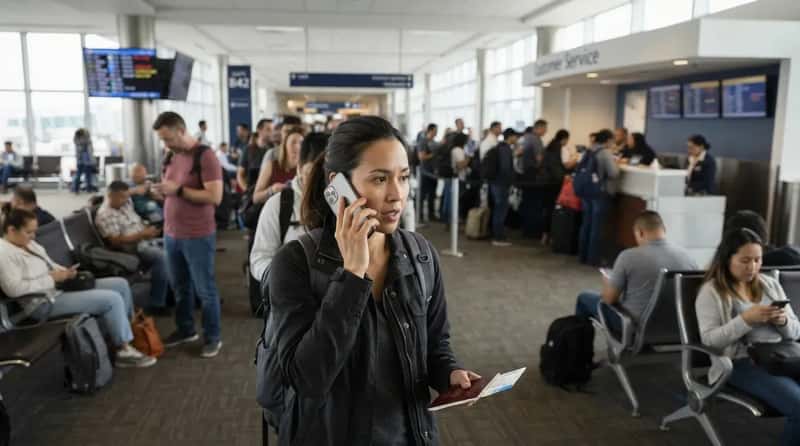
A tip that spread across travel forums turns out to be one of the most effective habits at the gate: never just stand in line and wait your turn. Travelers stuck after a cancellation or delay shouldn’t rely solely on the ticket or gate counter, because while you’re standing there waiting to be assisted like everyone else, seats are being snapped up by people further ahead – so pull out your phone instead.
The habit works because it runs two paths at once. “If your flight gets delayed or canceled, don’t just wait in the long customer service line at the airport – call the airline while you’re standing in line,” one traveler explained, adding that phone agents can often be reached before you even reach the counter and can rebook you faster. Whoever gets through first – phone or counter – takes the seat, and the other line loses it.
#12 – Using a Name Tag Turns a Stranger Into an Ally
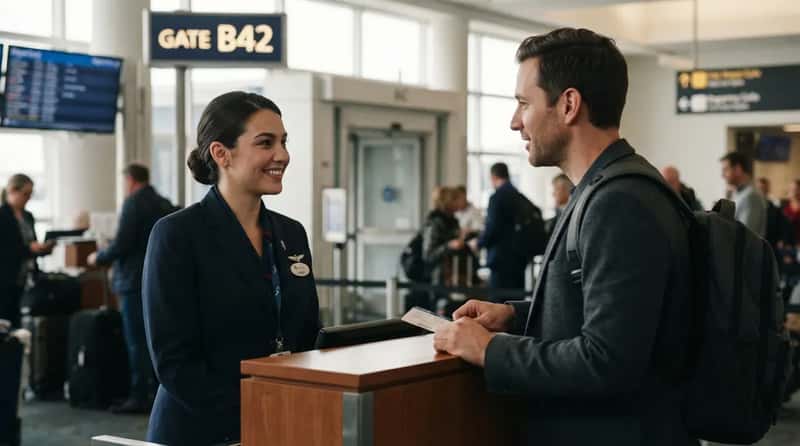
Gate agents wear name tags for a reason most passengers ignore completely. Using a first name, just once, in a normal tone, quietly resets the interaction from “another angry traveler” to “an actual person talking to me.”
It sounds small, almost silly, but staff who work irregular operations shifts report the same pattern over and over: the passengers who acknowledge them as people, rather than a machine that spits out boarding passes, tend to get more flexible answers. This single habit costs nothing and takes three seconds, yet most people never do it.
#11 – The Flight-Number Habit That Saves Ten Minutes Flat
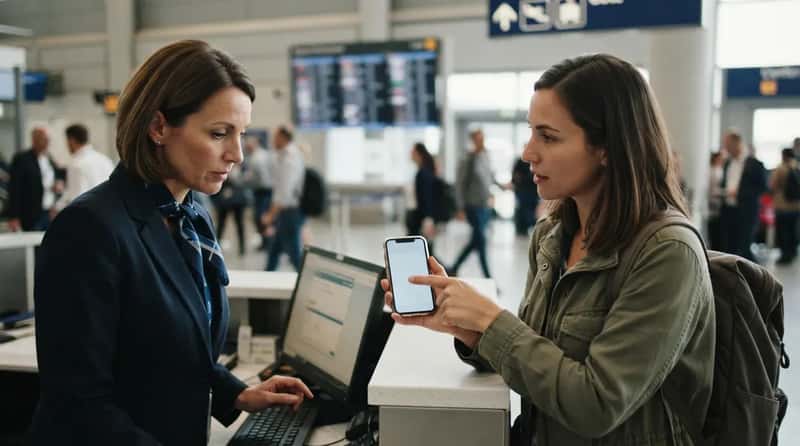
The fastest rebookings almost always start the same way: the passenger already knows exactly which flight they want. The habit is simple – lead with facts, your name, your flight number, where you were supposed to go, and when you need to arrive. Vague requests force the agent to do research the passenger could have already done from their own phone.
Having a specific flight number ready speeds up the process significantly, whether you’re rebooking at the counter or over the phone. Passengers who arrive with a flight number already picked out routinely get moved ahead of the person who just says “anywhere is fine.”
#10 – Asking the Specific Question Instead of the Vague One
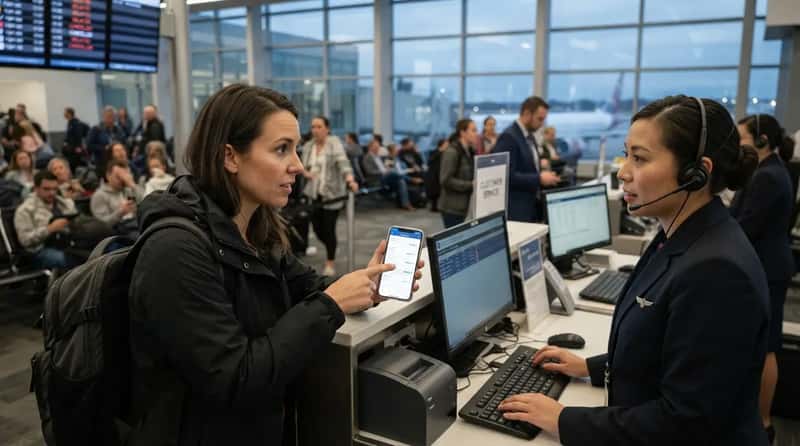
There’s a real difference between asking “what are my options?” and pointing directly at a solution. Gate agents have enormous power over your rebooking, but they’re also overwhelmed during disruptions, so the smarter move is naming the specific flight: “I see flight [number] has seats available.”
This habit does two things at once. It shows the agent you’ve done your homework, and it turns a slow, open-ended search into a quick yes-or-no decision they can approve on the spot. Passengers who name the flight instead of asking a general question consistently get answers faster.
#9 – Staying Calm Is the Real Line-Skip
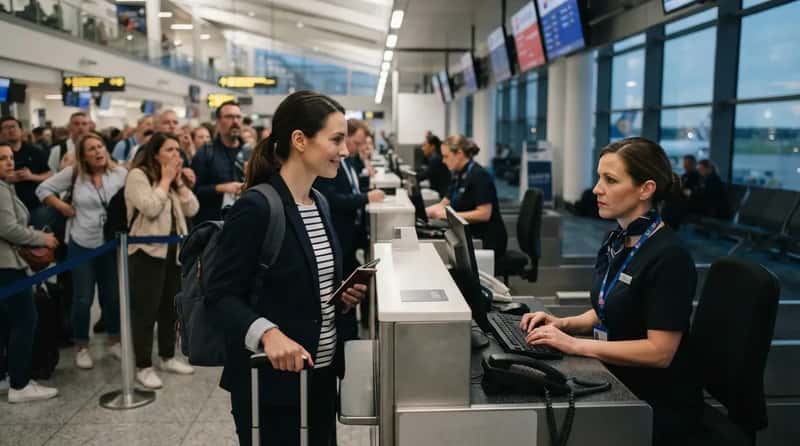
Every gate agent has a mental sorting system, whether they admit it or not, and calm passengers move through it faster. Staying calm – and knowing your rights – can go a long way if your flight is canceled, and agents notice who’s actually listening.
This isn’t a moral lecture, it’s a practical one. Agents facing hundreds of frustrated travelers during a mass disruption instinctively spend less time on the loudest person and more time actually solving problems for the person who isn’t yelling. The quietest passenger in line is often the one who gets the best seat on the next flight.
#8 – Getting It In Writing Before You Walk Away
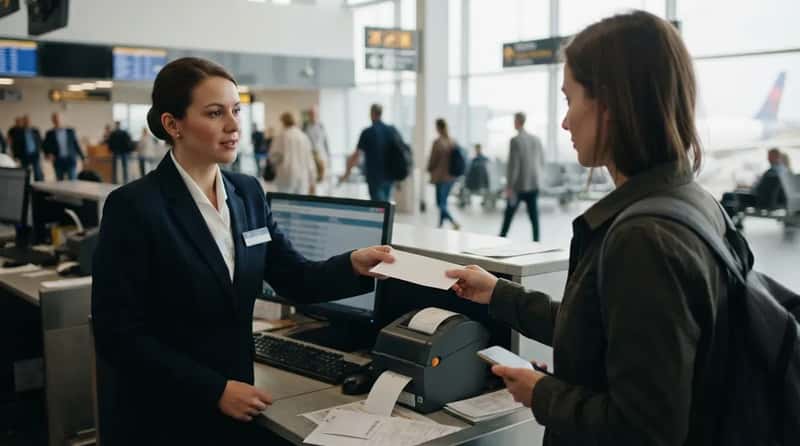
A verbal promise at the gate means almost nothing once you leave the counter. Always get rebooking information in writing – email or a printed boarding pass – because verbal confirmations can quietly “disappear,” even when agents genuinely want to help and are limited by policy and seat availability.
This single habit prevents one of the most common airport horror stories: showing up at a new gate only to find no record of the seat you were promised. Passengers who insist on a printed or emailed confirmation almost never get bumped from a seat they were told was theirs.
#7 – Knowing the Refund Rule the Airline Won’t Mention First
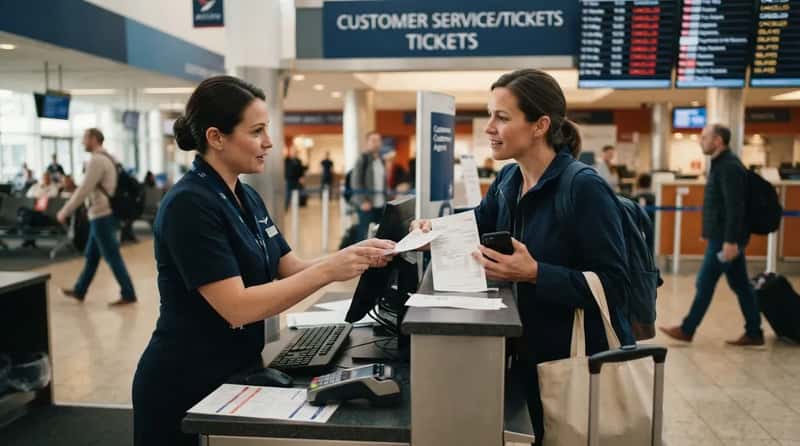
Most travelers still assume a voucher is their only option, but that changed in 2024. As of May 16, 2024, airlines are required to notify passengers of their right to a refund and to automatically issue one for a cancellation or significant delay of three hours or more domestically, or six hours or more internationally, regardless of when the ticket was purchased.
The habit that pays off here is simply asking for cash instead of accepting the first credit offered. Refunds must be processed within 7 business days for card payments or 20 calendar days for other methods, but you lose that right if you accept the rebooked flight or continue with a significantly changed itinerary. The passengers who decline the rebooking outright are the ones who actually see cash back in their account.
Fast Facts
- Rule took effect May 16, 2024, and applies regardless of when the ticket was bought.
- Domestic delays of 3+ hours qualify; international delays of 6+ hours qualify.
- Refunds must be issued within 7 business days for card payments, 20 calendar days for other methods.
- Accepting the rebooked flight can waive your right to the cash refund.
#6 – Asking About the Other Airline in the Building
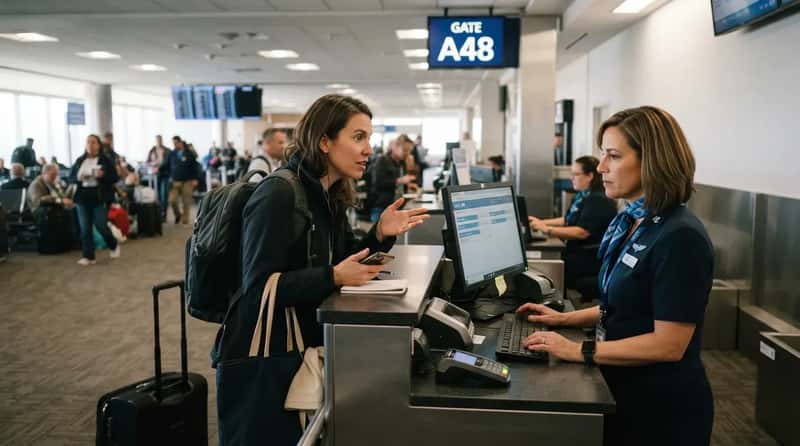
Most passengers assume their airline is the only option once a flight cancels, but that’s rarely true. Many airlines have interline agreements allowing them to book you on partner carriers, so it’s worth directly asking, “Can you rebook me on [other airline]?”
Agents don’t always volunteer this option because it takes extra steps on their end. The travelers who ask the question directly, rather than waiting to be offered it, are the ones who end up on a competitor’s earlier flight instead of their own airline’s next-day option. Nobody tells you this exists unless you ask first.
#5 – The Polite Escalation Line That Actually Works
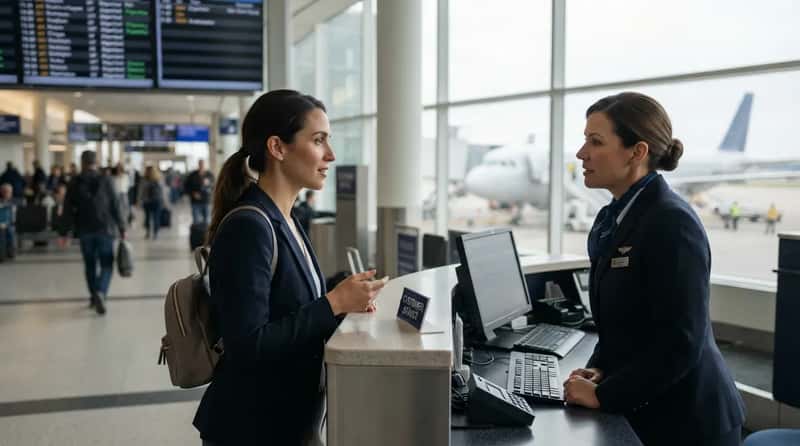
There’s a specific, non-confrontational way to ask for more help without sounding demanding. “Can you check if there’s a supervisor with additional authorization?” is a way to escalate reasonably without turning the conversation hostile.
The wording matters more than people realize. It frames the request as a system limitation rather than an accusation that the agent isn’t trying hard enough, which means agents are far more willing to actually make the call. Phrasing the ask around authority, not attitude, is what makes supervisors appear.
#4 – Keeping the Bag Tag Is the Habit Nobody Remembers Until It’s Too Late
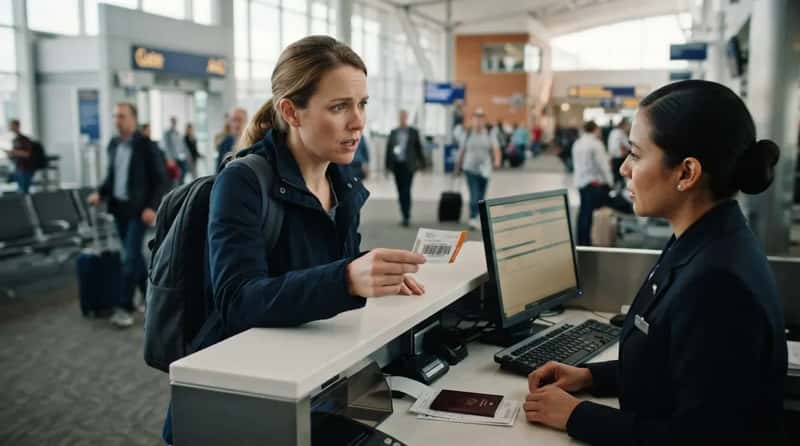
One overlooked habit separates the travelers who get their luggage back quickly from the ones who spend days chasing it. Always keep your bag tag receipt, because without it you’ll have a genuinely hard time proving your luggage was ever checked at all.
It sounds like a minor detail until a bag disappears during a rebooking chain across two or three airlines. If you’re rebooked on another carrier, ask about your checked luggage right away, since it may need to be retrieved and rechecked, especially on international routes. The tiny paper strip everyone throws away is often the only proof a bag was ever checked in the first place.
#3 – The Lounge Agent Secret Even Non-Members Can Use
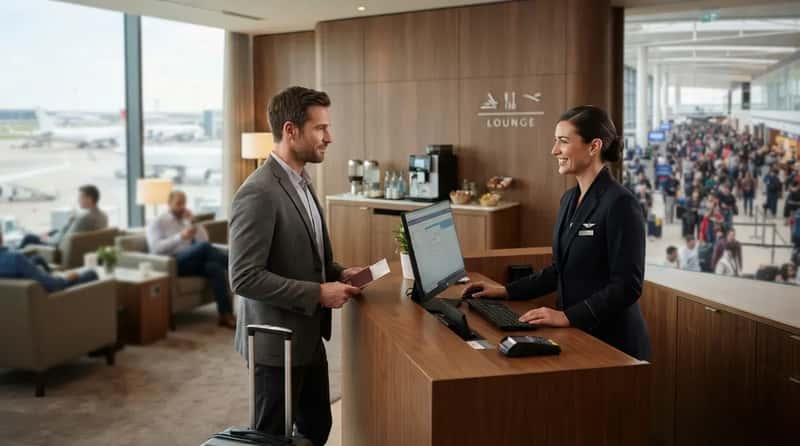
Lounge agents operate at a different pace than the main gate crowd, and travelers who know this use it to their advantage. One frequent flyer’s advice: ask the agents in an airline’s lounge if you have access, because these agents can work near-magic during irregular operations.
The habit here isn’t sneaking in, it’s simply asking a lounge agent for help if you already have day-pass or status access, since their systems often show inventory the main gate line hasn’t even pulled up yet. Fewer people in line means faster, more personal problem-solving, even for the exact same airline.
Worth Knowing
- Lounge agents typically handle far fewer travelers at once than the main gate line.
- A day pass or entry-level status is often enough – you don’t need top-tier elite status.
- Lounge desks can show live seat inventory before it ever shows up at the main counter.
#2 – Saying “I Know You Didn’t Cause This” Changes Everything
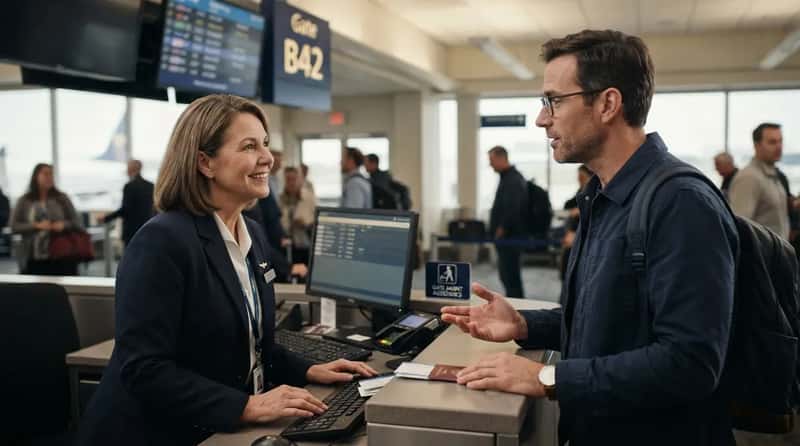
Weather delays, mechanical issues, and staffing shortages are almost never the gate agent’s fault, and the travelers who say so out loud get a different tone back immediately. Gate agents have enormous power over your rebooking, but they’re also overwhelmed during disruptions, and simply saying “I understand you’re doing your best – what are my options?” changes the entire conversation.
This isn’t about being a pushover. It’s a habit that removes the defensive posture agents naturally take on when they expect to be blamed for something out of their control. Passengers who separate the agent from the problem consistently get offered options that were never announced publicly.
#1 – Treating the Gate Agent Like a Person, Not a Kiosk
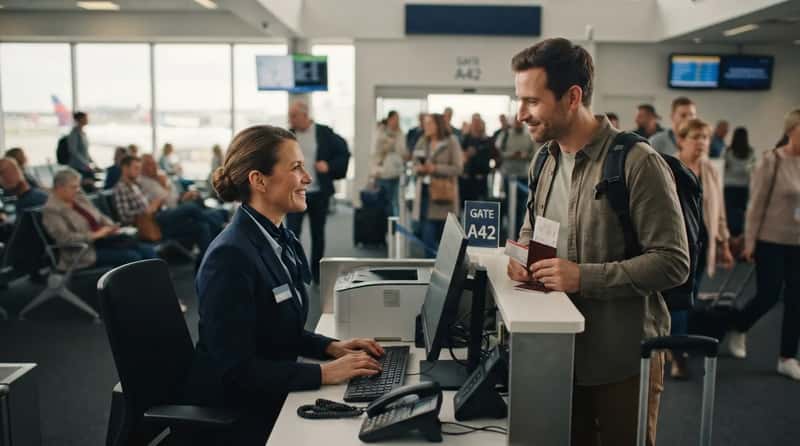
The single strongest habit isn’t a script or a phone number, it’s remembering that a gate agent is a person having one of the worst days of their week, surrounded by hundreds of strangers who are furious at them personally. During one especially chaotic cancellation, a gate agent rebooking a long line of inconvenienced travelers calmly told an irate passenger, “I’ll be happy to try to help you, but I’ve got to help these folks first, and I’m sure we’ll be able to work something out.”
That kind of moment sticks with agents for a reason: they remember who treated them with basic decency, and they remember who didn’t. The travelers who ask “how’s your day going?” before asking for anything are, almost without exception, the ones who walk away with the better seat, the faster rebooking, and the meal voucher nobody else at the gate got offered.
Why It Stands Out
- Costs nothing and takes seconds, unlike scripts or status perks.
- Works on every airline, every route, every kind of disruption.
- Changes how an agent treats you for the rest of the interaction, not just the first minute.
- Is the one habit almost every other habit on this list depends on.
None of these fifteen habits require status, money, or luck. They require showing up early, staying calm, asking specific questions, knowing your actual rights under the 2024 refund rules, and remembering that the person behind the counter is having a harder day than you are.
The travelers who master even five or six of these habits tend to walk away from a canceled flight with a noticeably better outcome than the ones who master none of them. The next time the board flips to red, it’s worth remembering: the gate agent isn’t the enemy, and the way you approach that counter might matter more than anything printed on your boarding pass.