
Most people assume their cabin steward is just quietly cleaning rooms and refilling ice buckets, invisible and uninterested in who’s actually staying inside. But stewards who work the same hallway for seven straight days pick up on patterns fast, and passengers over 60 have a rhythm that’s instantly recognizable next to younger cruisers. It’s not about age itself. It’s about decades of travel habits showing up in small, telling ways nobody thinks anyone is watching.
Some of these habits quietly earn a passenger VIP-level treatment without them ever asking for it. Others create a kind of friction the steward would never mention to your face, no matter how many times it happens. Here’s what veteran cabin attendants actually notice, and almost never say out loud.
#15 – They Ask for the Printed Daily Planner Nobody Else Wants

While most passengers just check the cruise line’s app, older guests are far more likely to ask for a physical copy of the day’s schedule. Stewards clock this preference almost immediately, usually within the first evening. Since most ships now push everything through an app, cabin attendants don’t automatically leave a paper planner in the room anymore, but if a guest wants one, it shows up like clockwork.
It seems like a tiny thing, but it tells the steward something bigger: this passenger trusts paper and routine more than screens. That single habit usually predicts a whole week of preferences, printed menus, paper folios, face-to-face requests instead of app messages. Stewards say this one request quietly forecasts an entire old-school week ahead.
#14 – They Tip Early, in Cash, Without Being Asked

Younger cruisers usually let the automatic daily gratuity handle everything and never think about it again. Older passengers, especially decades-long cruisers, often still carry cash specifically for tipping, and plenty hand it over on day one before a single towel animal appears.
Stewards notice instantly because it’s genuinely rare now. Some crew members have said online they’d almost rather guests skip the day-one cash, since it can feel like an upfront bribe for extra perks, and seasoned staff usually prefer a lump sum mid-cruise instead. But for passengers over 60, it isn’t strategy. It’s simply how they were raised to handle service, and stewards notice the intention even when the timing is a little off.
Fast Facts
- $21.00 USD per guest, per day will be applied to guests sailing on any suite; and $18.50 USD per guest, per day will be applied to guests sailing on all other stateroom categories on Royal Caribbean.
- Carnival Cruise Line gratuities will rise from April 2, 2026, with stateroom guests paying $17 per day instead of $16, and suite guests $19 per day instead of $18.
- Norwegian Cruise Line charges $20.00 for standard cabins and $25.00 for The Haven, among the highest automatic rates at sea.
- Effective June 1, 2026, Holland America Line will raise the daily gratuity rate by $1 per day, bringing the new rate for standard cabins to $18.00 per person.
#13 – They Keep the Exact Same Routine All Week

Younger passengers bounce between the pool, the casino, and late-night shows at wildly unpredictable hours. Older guests, by contrast, tend to lock into a near-identical schedule from day one: same breakfast time, same afternoon nap, same evening turndown window, every single day.
Stewards genuinely love this because it makes an impossible job easier to plan around. Someone covering a station of twenty or more staterooms depends on predictability just to stay on schedule. Guests who nap at 2 p.m. sharp, without fail, quietly become the easiest rooms on the entire hallway to service.
#12 – They Quietly Ask for Mobility and Comfort Items
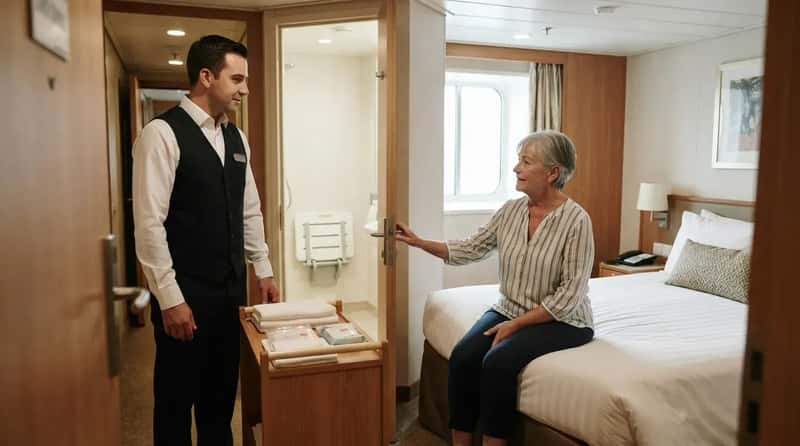
It’s one of the most common, least talked-about requests stewards field from older passengers: a shower seat, extra hand towels near the bed, or a sharps container for insulin needles. These requests are handled with total discretion, no questions asked.
Many cabin bathrooms already have sharps containers tucked under the sink, and stewards can bring one on request just as easily as a shower seat. They quietly track which cabins need these accommodations and restock them without ever making a guest feel singled out. Most passengers never realize how normal this request actually is, stewards handle dozens every single week.
#11 – They Leave Family Photos Out and Talk About Grandkids

Walk into a cabin belonging to an older couple, and there’s a good chance a small framed photo, or a phone propped up with grandkids on the screen, is sitting on the nightstand. Stewards notice, and many say it’s one of the more touching parts of the job.
It also opens the door to real conversation, which younger guests rarely start on their own. A steward who learns a guest’s grandchildren’s names by day three tends to remember that guest fondly for the rest of the voyage. Stewards say these small personal touches are the fastest way a passenger stops being a room number and becomes a person.
#10 – They Remember the Steward’s Name and Use It Constantly
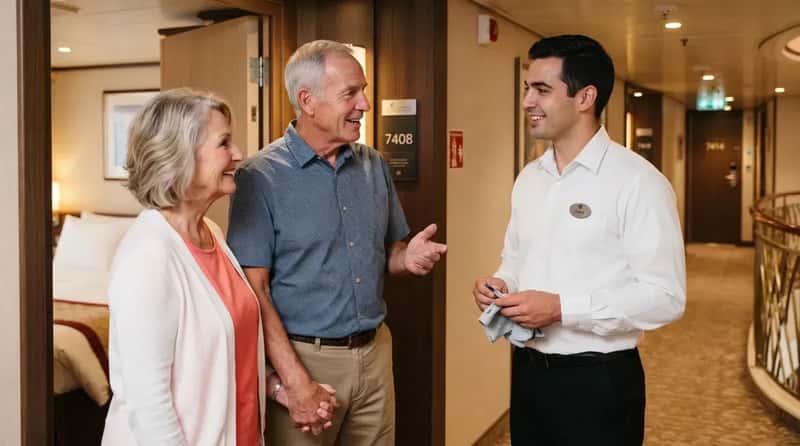
This is one of the clearest generational splits stewards report. Passengers over 60 are far more likely to actually use, and remember, their steward’s first name for the entire cruise instead of just nodding in the hallway.
Ask any cabin steward and they’ll tell you it’s easy to remember a passenger who remembers them back, a name, eye contact, maybe a quick smile is all it takes. Plenty of cruisers say a simple “Morning, James” on embarkation day changed the tone of their whole week. This one habit is consistently the fastest route to quietly better service, without ever asking for anything extra.
#9 – They Leave Cash and Jewelry Out in the Open

It’s meant as a sign of trust, but it actually puts stewards in an uncomfortable spot. Older passengers, more accustomed to hotel housekeeping norms from decades past, are more likely to leave watches, cash, or jewelry sitting right out on the desk.
It rarely occurs to some guests that this puts everyone in an awkward position, and stewards often say it’s genuinely stressful cleaning a room with cash on the nightstand or a watch by the sink. A dresser drawer, a closet, or the in-room safe is the safer call, since cruise lines have strict theft policies that can end a steward’s career over a single false accusation. Most guests have no idea this habit quietly stresses out the very person cleaning their room.
#8 – They Dress for Dinner Like It’s Still the 1990s
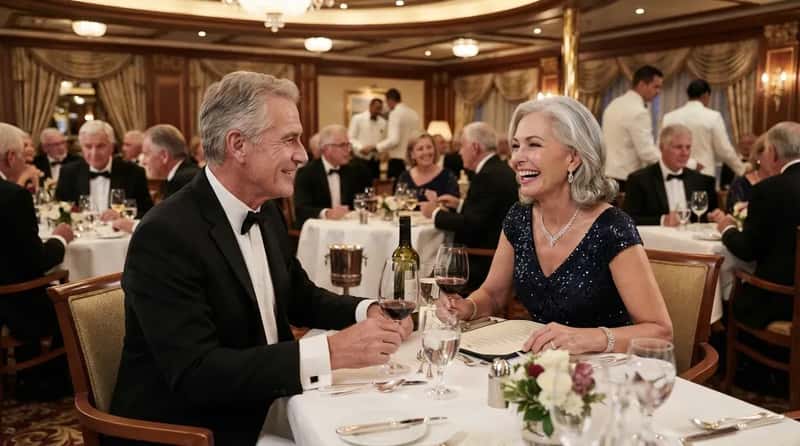
On ships with a formal night or classic dining room, older passengers are noticeably more likely to actually dress up, pressed shirts, real jewelry, polished shoes, rather than treating it as optional.
Stewards notice exactly which cabins send out garment bags for pressing and which guests request extra hangers just for suits and gowns. It’s not unusual for certain sailings, especially on lines that skew older, to feel noticeably more formal by the second night. The gap between “dress code as suggestion” and “dress code as rule” is one of the sharpest differences stewards see cabin to cabin.
Quick Compare
- Then: Formal night meant tuxedos, gowns, and a dining room dressed to match, no exceptions.
- Now: Many mainstream lines have softened it into a looser “elegant night” with no strict enforcement.
- Older cruisers: Still send suits and gowns out for pressing days in advance, just in case.
- Younger cruisers: Frequently skip the main dining room rather than change out of resort casual.
#7 – They Actually Read (and Follow) the Safety Briefing

Younger passengers often treat the muster drill like an inconvenience to get through as fast as possible. Older cruisers are far more likely to show up on time, listen closely, and ask the steward follow-up questions afterward.
Stewards often assist with safety procedures, including the initial drill, and they notice exactly which passengers take it seriously versus which ones scroll their phones the entire time. This habit isn’t really about compliance, it reflects a generation raised to trust formal instructions instead of skimming past them. Stewards privately say older passengers are almost always the easiest group to manage during any real onboard drill or delay.
#6 – They Fuss Over the Ice Bucket More Than Anyone Else
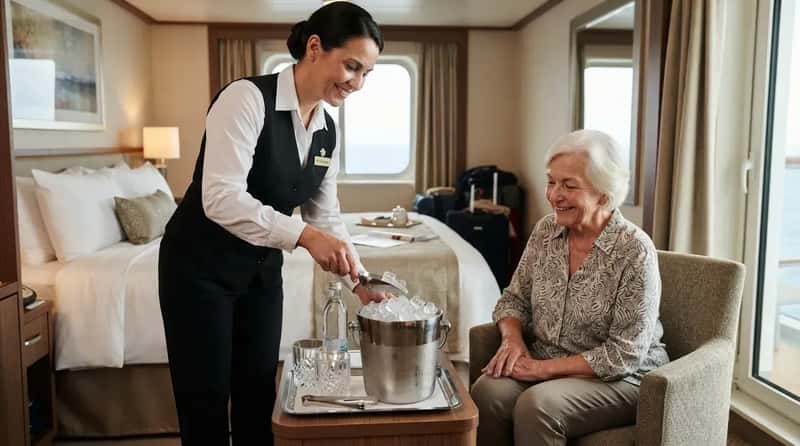
It sounds trivial, but the ice bucket request is one of the most reliable generational tells on the whole ship. Older passengers are consistently the group most likely to specifically ask for daily refills rather than skipping it entirely.
Ice is actually the single most requested item from cruise passengers, and whether a guest wants the bucket topped off nightly or at a specific hour, the steward makes it happen. Cruise lines stopped auto-filling ice buckets years ago after realizing most cruisers weren’t using them, so now it’s a specific, spoken request. Stewards say the passengers who care most about a full ice bucket are almost never the ones under 40.
#5 – They Leave Handwritten Thank-You Notes

This is the habit that stewards genuinely light up talking about. A handwritten card, even just a few sentences on hotel stationery, stands out dramatically against a sea of guests who say nothing at all.
Personal notes carry more weight than any trinket ever could, and one steward has shared that a passenger’s written praise for fixing a broken cabin light showed up weeks later in his contract review. Older passengers are statistically far more likely to actually write these notes than to leave a five-star review online. A single handwritten card can directly influence a steward’s job security in ways most guests never realize.
Why It Stands Out
- Writing a note takes real effort compared to tapping five stars on an app.
- Stewards can keep the physical card long after the cruise ends, unlike an anonymous online score.
- Naming a specific fix or kindness carries more weight in a performance review than a generic compliment.
- It’s a habit rooted in a generation raised on writing thank-you cards as basic etiquette.
#4 – They Ask for Port Advice Like the Steward Is a Trusted Local Guide

Rather than relying purely on excursion brochures, older passengers frequently pull their steward aside to ask what’s actually worth doing, and what to skip, at the next port.
Cabin stewards are a genuinely great resource for this, and one cruiser has noted their steward told them exactly which ports were safe to explore alone based on years of crew experience. This kind of direct, personal question rarely comes from younger travelers glued to review apps instead. Stewards say it’s flattering to be treated like a trusted insider rather than just staff, and they tend to remember exactly which guests asked.
#3 – They Complain Quietly Instead of Escalating Loudly
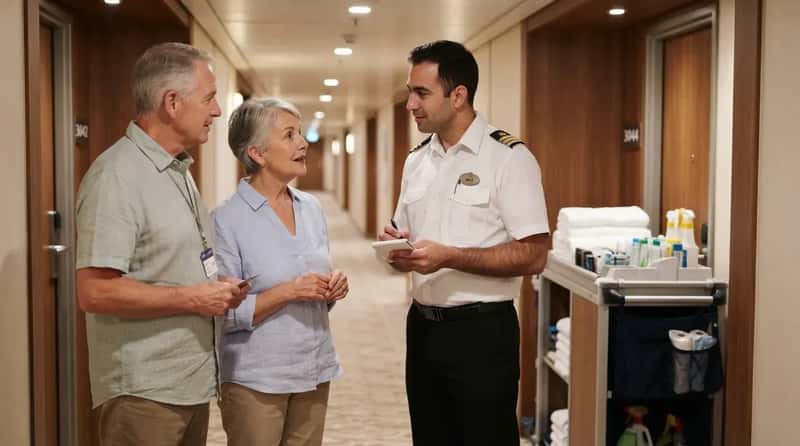
When something goes wrong, a broken air conditioner, a noisy neighbor, a late turndown, older passengers are far more likely to mention it gently to the steward directly rather than storming off to guest services.
Stewards genuinely appreciate this, since they can handle special requests and escalate real complaints to the hotel manager themselves when needed, without a guest going straight over their head first. This quiet-first approach often works in the passenger’s favor, since stewards tend to move faster for guests who haven’t embarrassed them publicly. The most demanding guests, oddly, are rarely the ones over 60, they’re just more direct behind closed doors.
#2 – Their Loyalty Status Quietly Shapes Everything

Decades of repeat cruising means many older passengers arrive with serious loyalty tier status, and stewards check this before a single bag is unpacked. It quietly changes what gets offered without a word ever being asked.
With 34.6 million ocean cruisers sailing in 2024, nearly double the 18.4 million just a decade earlier, repeat passenger volume has made loyalty tiers deeply embedded in how ships actually operate. Stewards ask about bathrobes, wine glasses, and bed configuration based directly on loyalty status, since higher tiers unlock perks like priority embarkation and cabin upgrades. Most first-time cruisers have no idea their tier status is being checked before they’ve even found the elevator.
At a Glance
- Top-tier loyalty members often board and disembark before standard passengers, sometimes hours earlier.
- Repeat cruisers can unlock free laundry, complimentary specialty dining, or automatic cabin upgrades based on status alone.
- Most loyalty tiers track nights sailed rather than dollars spent, rewarding frequency over fare price.
- Perks typically carry across a cruise line’s entire fleet, not just the ship where status was earned.
#1 – They’re the Ones Who Actually Write the Corporate Review

Here’s the habit that matters most to a steward’s paycheck, and it’s overwhelmingly driven by passengers over 60. While younger cruisers might toss out a quick star rating on an app and move on, older guests are far more likely to fill out the entire post-cruise survey by hand, mention the steward by name, and mean every word of it.
Those written survey mentions carry enormous weight. One steward’s single positive line from a guest ended up quoted directly in his contract review weeks later. That’s not a small detail in an industry where a steward manages twenty or more staterooms and needs consistently strong reviews just to stay employed and eventually move up. Passengers over 60 who take ten quiet minutes to fill out that survey are, without ever knowing it, directly protecting someone’s livelihood.
None of these habits are embarrassing, and stewards aren’t judging anyone for having them. If anything, most veteran cabin attendants say passengers over 60 tend to be the easiest, most predictable, and most rewarding guests on the entire ship, the quiet routines just make them easier to read. The real surprise isn’t that stewards notice all this. It’s how much a handwritten note, a remembered name, or a full ice bucket can quietly shape someone’s entire week at sea. Which of these habits sounds exactly like you or someone in your family? Drop it in the comments.