Picture the cruise ship hospital: gleaming operating rooms, a full pharmacy, a specialist for every ailment. Now picture what’s actually down there. Ships have a medical center, also called an infirmary, and it’s built for urgent care, routine treatment, and emergency stabilization. It isn’t a hospital, and the gap between those two images is where a lot of vacations quietly fall apart.
The 15 items below are what ship medical teams keep wishing passengers had brought. None of them is dramatic. Most cost less than a souvenir T-shirt, and a few sit in the one place people never think to look. Number one is the item that can decide whether a bad night at sea turns into a financial nightmare on land.
#15 – The Sandwich Bag of Loose Pills That Gets Passengers Questioned
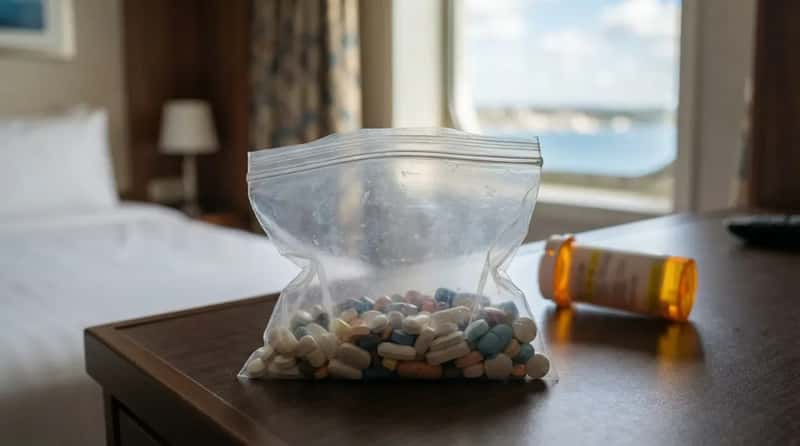
Ship doctors cringe at one very common packing habit. Passengers dump their daily pills into a baggie to save space. A bag of unmarked tablets can raise questions at customs, especially in international ports. It also leaves a medical team guessing, because a labeled bottle shows a ship doctor exactly what you take and how much.
Keep every prescription in its original pharmacy bottle with your name on it. Put the bottles in your carry-on, not your suitcase, because checked bags occasionally get lost or delayed. A doctor’s note is also advised for controlled substances. That small piece of paper can save an awkward conversation at a port gate. But the next item is the one that decides whether a delay becomes a crisis…
#14 – The Extra 10 Days of Pills Almost Nobody Brings
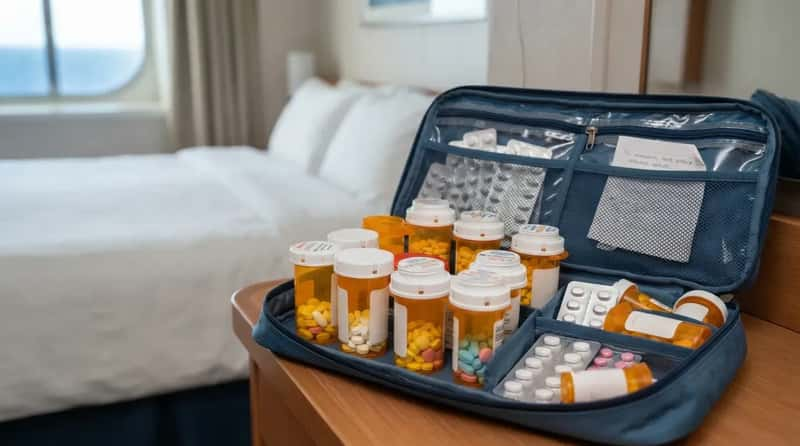
Most people toss in a spare dose or two and call themselves prepared. Ship doctors say that’s the classic mistake. The standard advice from major cruise lines is to bring enough medication for the entire trip, plus an extra 10 days’ supply.
Forgetting a prescription is harder to fix than it sounds. You’d have to see a nurse or physician, and since a ship can’t stock every medication, you may be offered an alternative. That means the drug you get could be a substitute you’ve never tried. Doctors would rather you never had to take that gamble. Still, there’s a storage problem that trips up even careful packers…
#13 – The Insulated Pouch for Medicines That Hate Heat
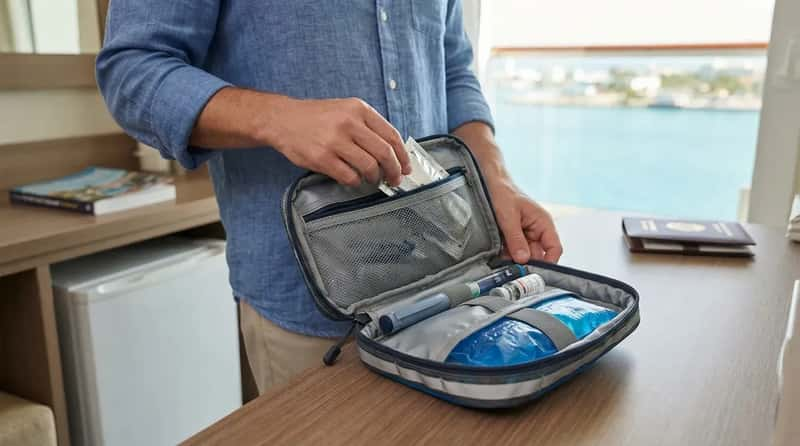
Some medications are fussy about temperature, and a hot port day doesn’t care. Insulin and certain biologics are the usual examples. They can typically be stored in a cabin mini-fridge or in the medical center’s refrigerator on request. That only works if you’ve planned for it.
Fast Facts
- Insulin and certain biologics are the classic heat-sensitive medicines.
- Storage options usually include the cabin mini-fridge or the medical center’s fridge on request.
- Calling the cruise line before sailing tells you what the medical center can support.
- A small insulated pouch covers excursion days when the fridge is far away.
Experts suggest calling the cruise line before you sail and asking what the medical center can support. Then pack a small insulated pouch for excursion days. A cabin fridge that isn’t cold yet on embarkation night catches first-timers off guard. It’s a ten-minute phone call that beats a ruined dose. Next up is something that isn’t about serious illness at all, at least not at first…
#12 – The Backup Seasickness Remedy Beyond the Free Pills

The free pills at the guest services desk are a decent start. Many doctors argue that relying on them alone is a mistake. For anyone prone to seasickness, a personal supply of options like diphenhydramine, dimenhydrinate, or scopolamine helps.
One physician-written guide calls the scopolamine patch the gold standard for multi-day sailings. It’s prescription-only in the U.S., so you have to plan ahead. Waiting until you feel queasy is the move doctors say works least. Taking something early beats chasing symptoms. And there’s a low-tech sidekick that medical staff quietly recommend…
#11 – The Ginger Chews Doctors Hand Out Like Candy

Not every wave of nausea answers to a pill. That’s where a humble candy comes in. Cruise medical staff regularly point travelers toward ginger candy as a gentle, non-drowsy option between doses.
The research on ginger is modest, so treat it as a helper, not a cure. It’s cheap, it fits in a pocket, and it won’t put you to sleep at the buffet. Its real job is filling the gap between two doses of medication. Keep it in your day bag, not buried in the suitcase. But if the nausea turns into something worse, the next item matters more than any candy…
#10 – The Tiny Packets That Beat a Bad 48 Hours
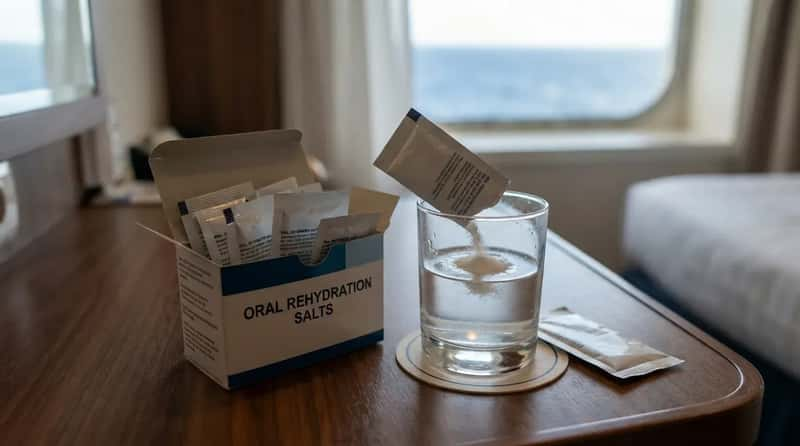
Stomach bugs and rough seas often end the same way: dehydration. Oral rehydration salts are the unglamorous hero here, and the physician-built kit mentioned above includes them. That guide lists them alongside anti-nausea medication and a prescription antibiotic for traveler’s diarrhea.
If it gets bad, the infirmary can step in. The medical center may give IV fluids for dehydration, and most stomach-bug cases resolve within 24 to 48 hours. Those two days can cost far more than a box of salt packets. Packing a few is some of the cheapest insurance on this list. Speaking of knowing when to worry, the next item gives you a number…
#9 – The Pocket Thermometer That Ends the Guessing Game

It’s one of the dullest items on any medical packing list. It’s also the one that answers the first question every nurse asks: do you actually have a fever? Travel medical guides list a thermometer and a small first-aid guide among the basics.
Quick Compare
- With a thermometer: you have a real number and can decide if a visit is worth it.
- Without one: you’re guessing, and a guess can end with a trip downstairs.
- The infirmary bill: several hundred to several thousand dollars, often not covered by U.S. health insurance.
Here’s why it matters at sea. Ships keep isolation and observation rooms for contagious illness or short-term monitoring. A reading in your hand helps you decide whether a visit is worth it. And visits aren’t free: the onboard medical center can charge several hundred to several thousand dollars, and most U.S. health insurance doesn’t cover it. Knowing your number can spare you a trip. Now for a problem that has nothing to do with germs…
#8 – The Blister Kit That Port Days Secretly Demand
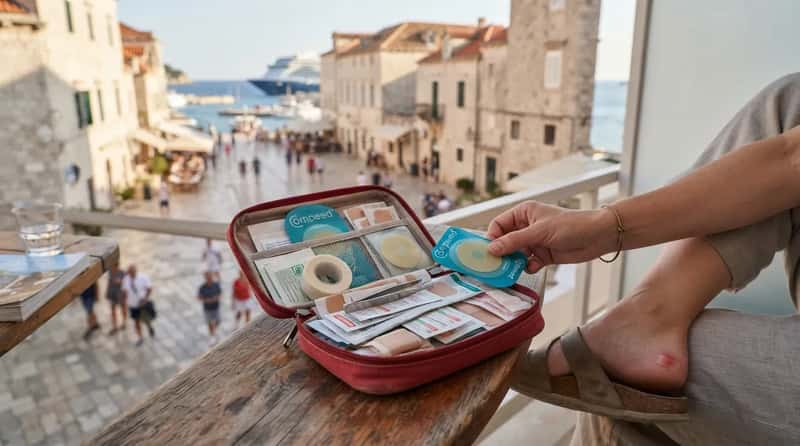
Cruisers underestimate how much walking a port day involves. Brand-new sandals, cobblestones, and heat are a reliable recipe for blisters. That’s the unglamorous reason foot trouble shows up in so many travel horror stories.
A basic kit is cheap. Bandages, antiseptic wipes, and tweezers can save a trip to the medical center for minor issues. Add antibiotic ointment and a few blister pads. Breaking in shoes on a cruise is a mistake that keeps repeating. Still, foot trouble is mild compared to the next item, which is a true emergency…
#7 – The Allergy Plan That Should Never Sit in a Cabin Safe
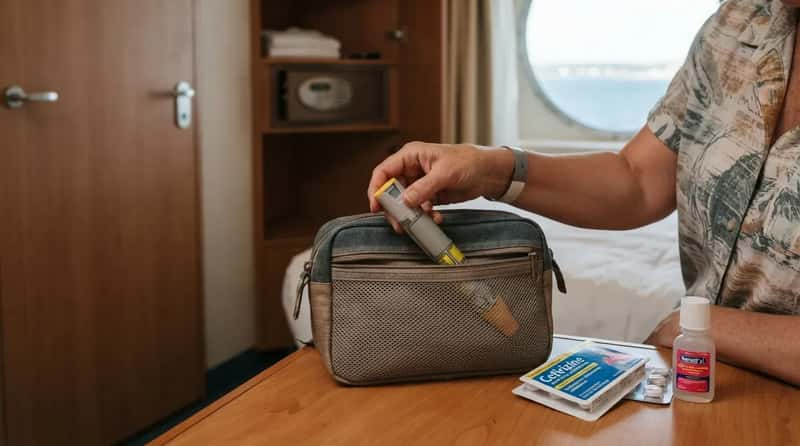
A ship is full of unfamiliar food, new ports, and new insects. For people with severe allergies, that’s a real risk. Medical guides recommend antihistamines and an epinephrine auto-injector if you have severe allergies.
Even a basic antihistamine deserves thought. Benadryl can work well but may make you drowsy, and non-drowsy options exist. Ask your own doctor which one suits you before you sail. Don’t guess at the buffet. And if you think the infirmary will cover everything else, the next item will make you rethink the price tag…
#6 – The Pain Relievers That Can Cost Several Times More Onboard
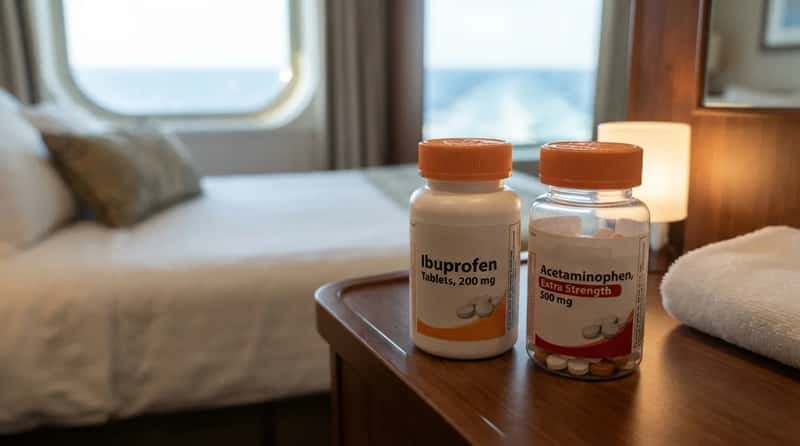
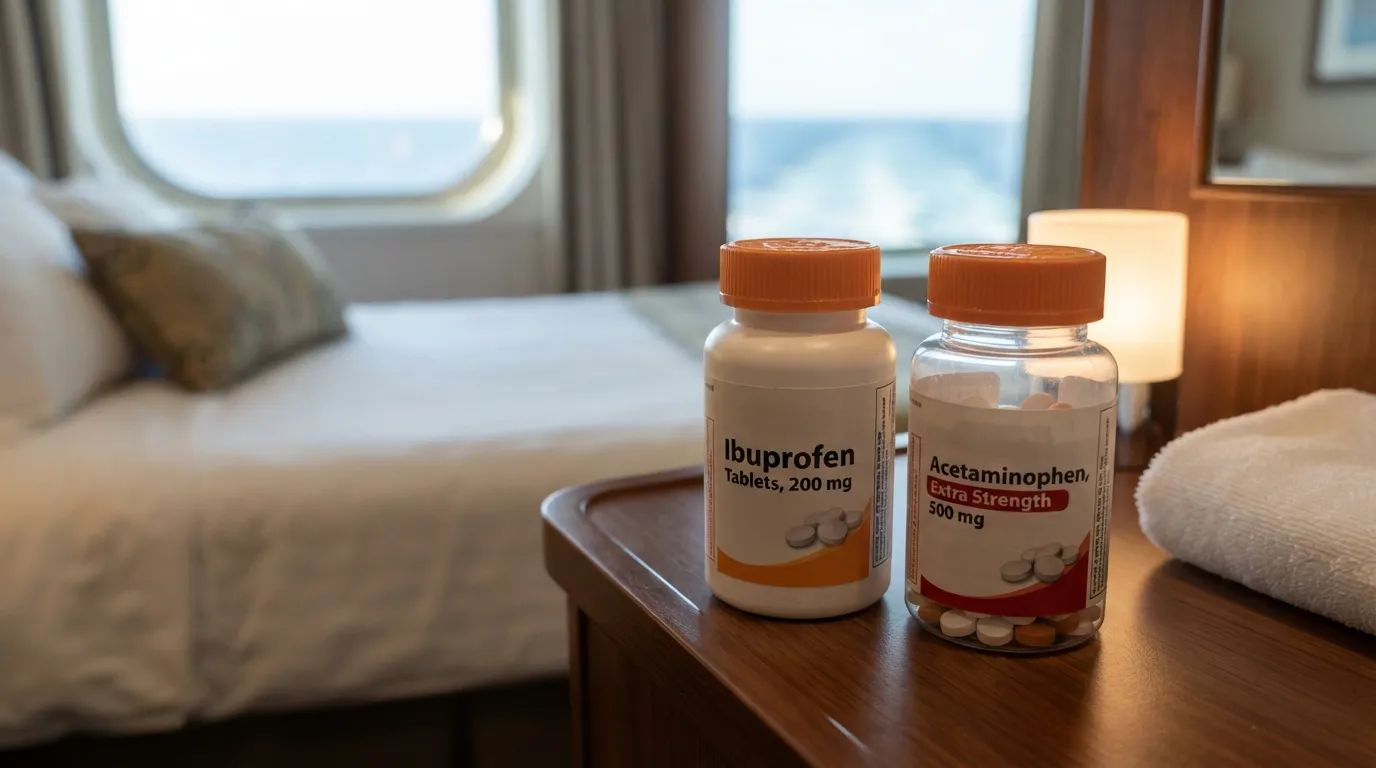
Headaches, sore backs, and sunburn aches show up on almost every sailing. Ibuprofen and acetaminophen are the classic pair, and guides list both among the basics to pack. They take up almost no room.
Worth Knowing
- One cruise guide claims onboard over-the-counter drugs can run $30 to $50.
- The same drugs cost about $8 at a regular pharmacy, per that guide.
- Prices vary by line, so treat the gap as a rough warning.
- Port pharmacies can stock them, but packing your own is simpler.
You can buy them onboard, but the price stings. One cruise guide claims passengers may pay $30 to $50 for over-the-counter drugs that cost about $8 at a pharmacy. Prices vary by line, so treat that as a rough warning. The infirmary may be the priciest place in the Caribbean to buy a headache pill. Port pharmacies can also stock them, but packing your own is simpler. And the next item protects you from an injury people book on purpose…
#5 – The Sunscreen Doctors See Left Behind

The sunburn nobody plans for is the one on the pool deck at 3 p.m. Physicians recommend SPF 30 or higher, broad-spectrum, for full daylight exposure on deck and at ports. It sounds obvious. It’s also routinely skipped.
Ship shops sell sunscreen, but it’s rarely a bargain. A deep burn on day two can take the rest of the trip’s fun with it. Reapply after swimming, and don’t forget your ears and the tops of your feet. Now for an item that guards you from something much smaller and far more annoying…
#4 – The Bug Spray and Itch Cream Port Days Call For
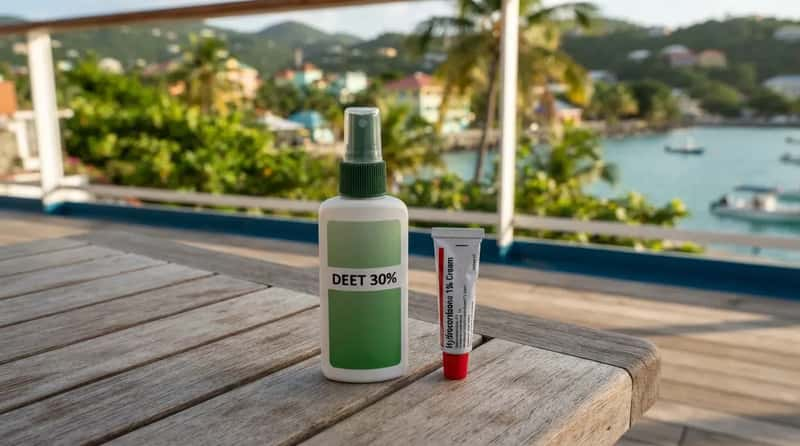
Ports aren’t just beaches and gift shops. Many itineraries pass through places with mosquitoes. A physician-written guide suggests permethrin-treated clothing or DEET 30 percent repellent for itineraries with mosquito risk in the Caribbean, Mexico, Central and South America, Africa, and Asia.
Add a tube of hydrocortisone cream for insect bites and minor rashes. It’s a small tube with a big payoff. A single bite can turn into a week of scratching. That’s a cheap problem to solve before you board. But the next item is the one people forget until it’s too late…
#3 – The Spare Cords and Parts for Medical Devices
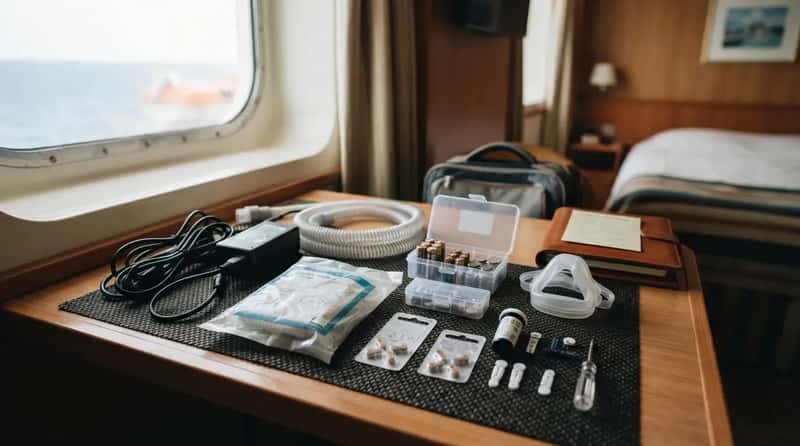
CPAP machines, glucose monitors, and hearing aids all need care at sea. Start with the obvious rule: if you use a CPAP machine, bring it as a carry-on. Losing it in checked luggage is a disaster waiting to happen.
Think about the small stuff. Device supplies, batteries, cords, and adapters belong on every checklist. One senior-travel guide puts it simply: small missing parts can become large problems. A dead hearing aid battery on day two can quietly ruin a week. Next comes the paperwork doctors say they’d frame…
#2 – The One-Page Medical Summary Doctors Praise Most

Ship physicians say the most useful thing you can hand them isn’t a pill. It’s paper. A written summary from your home doctor listing conditions, allergies, and prescriptions lets the ship’s medical team act immediately instead of guessing.
Keep it simple. Full name, date of birth, each medication and dose, allergies, and an emergency contact at home cover the essentials. Carry it separately from your medications. A copy in the cabin safe is a smart backup. But the item doctors bring up most isn’t in your suitcase at all…
#1 – The Evacuation Coverage Most Cruisers Quietly Skip
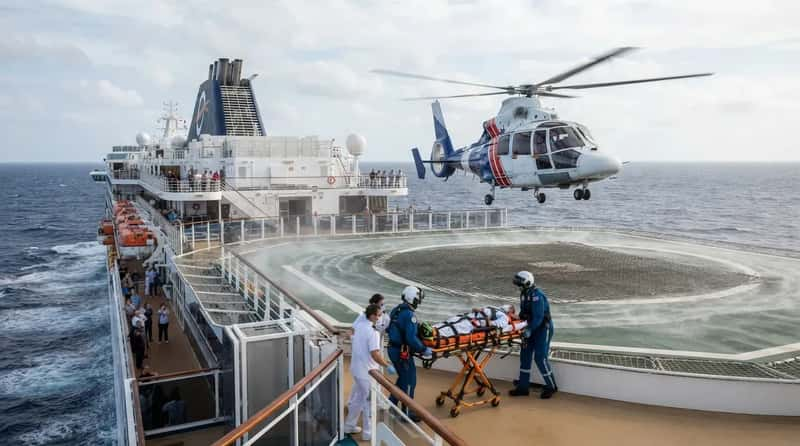
Here’s the uncomfortable truth. A ship’s medical center can stabilize you, but it can’t do everything. Passengers who need care beyond what the infirmary can provide often face temporary or permanent disembarkation. That means a hospital on land, sometimes in a country you never planned to visit.
Check your own coverage first, since most U.S. health insurance doesn’t cover the onboard medical center. Medical guides advise buying travel insurance that includes medical evacuation. Evacuation bills can climb into the tens of thousands of dollars. That’s why this is the item at the top of the list.
At a Glance
- What the infirmary does: urgent care, routine treatment, and emergency stabilization.
- What happens beyond that: temporary or permanent disembarkation to a hospital on land.
- Onboard visit cost: several hundred to several thousand dollars, usually not covered by U.S. health insurance.
- Evacuation cost: bills can reach the tens of thousands of dollars.
Ship medical teams don’t expect you to pack a pharmacy. They want the small, forgettable things: prescriptions in original bottles, ten spare days of pills, a one-page medical summary, and a safety net for the worst day. Those basics are what keep a bad night from becoming a bad week.
The odd part is that none of it feels like vacation. It feels like homework until the one moment you’re grateful for it. Pack the boring stuff, and the rest of the trip gets to stay fun.