Most people assume the person who saves their trip during a diversion is the pilot, or maybe the flight attendant standing in the aisle. In reality, the person pulling strings from a windowless operations center hundreds of miles away often has more influence over how an older traveler’s next few hours unfold than anyone on the plane.
Flight dispatchers rarely speak to passengers directly, yet their decisions ripple down to gate agents, ground crews, and hotel desks in ways that quietly reshape the experience for travelers over 60. Here’s what actually happens behind the scenes once a plane full of older passengers gets rerouted mid-flight.
#15 – They Steer The Plane Toward Airports With Real Jet Bridges, Not Just The Closest Runway
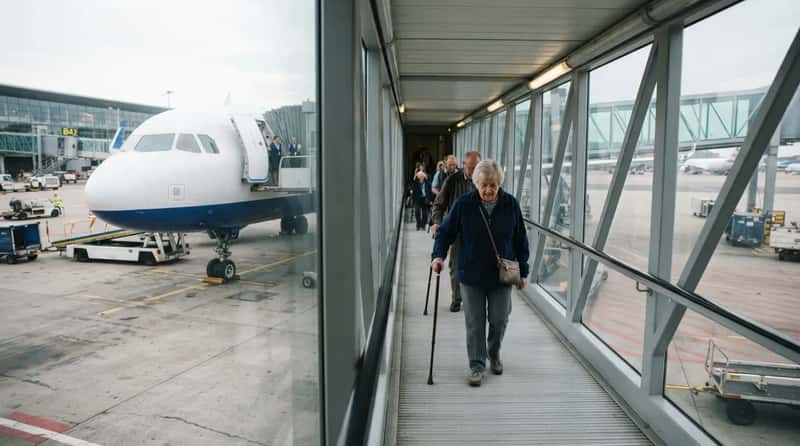
When a diversion happens, the nearest airport isn’t automatically the one chosen. Dispatchers weigh which alternate has the infrastructure to handle the aircraft without forcing passengers down a set of exposed stairs onto the tarmac. Airlines generally divert flights to an airport where they already have a presence or access to the services they’ll need, which matters enormously for someone with a cane or a recent hip replacement.
Underequipped airports create a different kind of chaos entirely. A diversion somewhere without extra fuel, jetways, stairs, or customs staff can turn a routine delay into a logistical nightmare for everyone on board. For a 68-year-old traveler already anxious about the unplanned stop, landing at a real gate instead of a remote pad is the difference between a manageable inconvenience and a genuinely stressful ordeal.
#14 – They Build In Extra Buffer Time Before Rebooking An Older Passenger Onto The Next Flight

A rushed connection is stressful at any age, but dispatchers coordinating rebooking logistics after a diversion often avoid slotting older travelers into the tightest possible window. Instead of chasing the very next departure with an eight-minute gap, ground teams working off the dispatcher’s rerouting plan frequently look for a connection with breathing room built in.
This isn’t written into any passenger bill of rights, but it shows up constantly in how diversions actually get untangled. The goal is fewer sprints through unfamiliar terminals and fewer moments where an older passenger feels abandoned by their own itinerary. It’s a small mercy that never gets announced, but it saves a lot of unnecessary panic at the gate.
#13 – Medical Needs Get Flagged To Ground Crews Before The Plane Even Touches Down
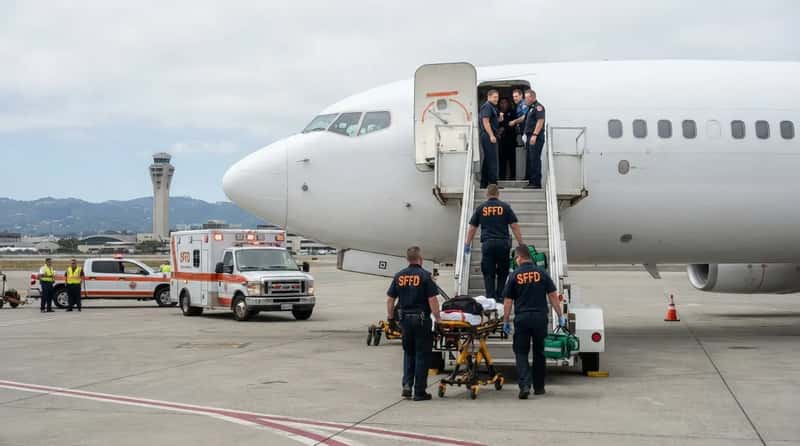
Diversions caused by a health scare in the cabin move faster than most people realize. Medical emergencies involving older passengers have forced entire flights to land unexpectedly, including one well-documented case where crew members had to use a defibrillator on an unresponsive elderly passenger before the plane reached the ground. Officials at San Francisco International confirmed that flight made an emergency landing specifically because an elderly passenger needed treatment, and crew had already deployed the defibrillator in the air.
In situations like these, the operations team relays details to the ground well before wheels touch down, so paramedics and medical staff are already waiting instead of scrambling. That advance notice, quietly coordinated between the cockpit and the operations desk, is often the single factor that turns a frightening moment into a survivable one. It’s not glamorous work, but it’s the kind of coordination that rarely gets credit.
Fast Facts
- In-flight medical emergencies occur in roughly 1 out of every 604 flights, according to a widely cited study in the New England Journal of Medicine.
- Cardiac symptoms and loss of consciousness are among the leading reasons a flight ends up diverting for a medical reason.
- Only a small share of in-flight medical events actually trigger a full diversion; most are managed on board.
- Automated external defibrillators are standard equipment on the vast majority of U.S. commercial aircraft.
#12 – Ground-Floor Or Near-Elevator Hotel Rooms Get Requested First For Older Travelers
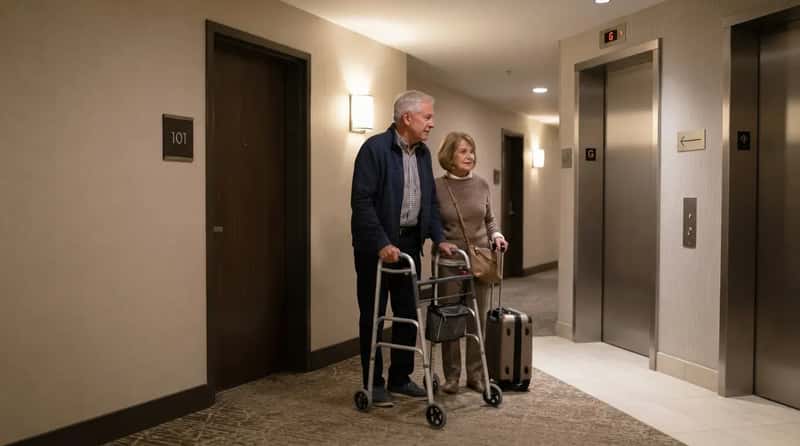
When a diversion turns into an overnight stay, most travelers assume hotel rooms are handed out in whatever order the front desk feels like. In practice, operations teams working the diversion often try to steer accessible rooms toward the passengers who need them most. Nine of the ten major U.S. airlines cover overnight accommodation costs when passengers are stranded, and the request for ground-floor or elevator-adjacent rooms frequently gets baked into that process for older guests.
It’s a detail nobody advertises, and one plenty of hotels quietly honor without ever mentioning it was requested. For a passenger managing a knee brace or a walker, not being assigned to a third-floor room with no elevator is a genuine relief. Frustratingly, this courtesy still depends entirely on hotel inventory that night, which means it doesn’t always work out.
#11 – Travel Companions Stay Together On The Same Rebooked Itinerary Whenever Possible
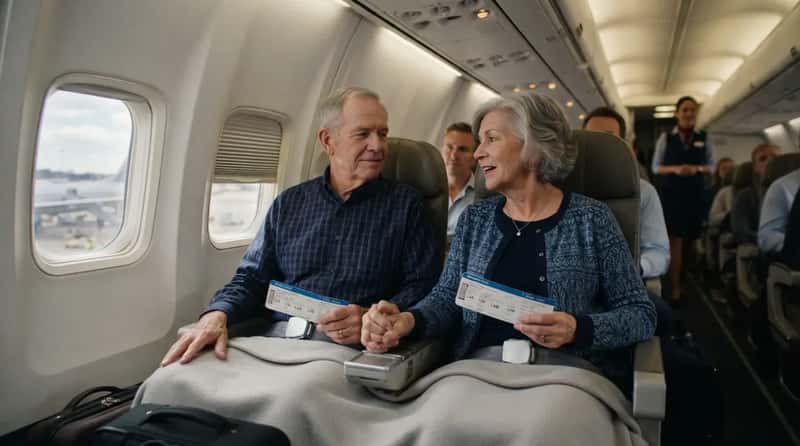
Separating an older couple, or a parent from their adult caregiver, sounds unlikely during a rebooking scramble, but it happens more than most people think when systems automatically slot passengers into whatever seats remain open. Ground operations teams coordinating with the dispatch desk try to catch these splits before they finalize, especially when a passenger’s file shows an age or mobility flag.
Keeping companions on the same new flight isn’t guaranteed by any regulation. It’s simply something experienced staff have learned to prioritize, because it’s often the difference between a passenger managing independently and needing crew intervention mid-flight. When it works, nobody notices. When it fails, an anxious 70-year-old ends up alone in an unfamiliar airport, which is exactly the scenario everyone in the chain is trying to prevent.
#10 – Wheelchair Service Gets Ordered For The New Airport Before The Plane Even Lands
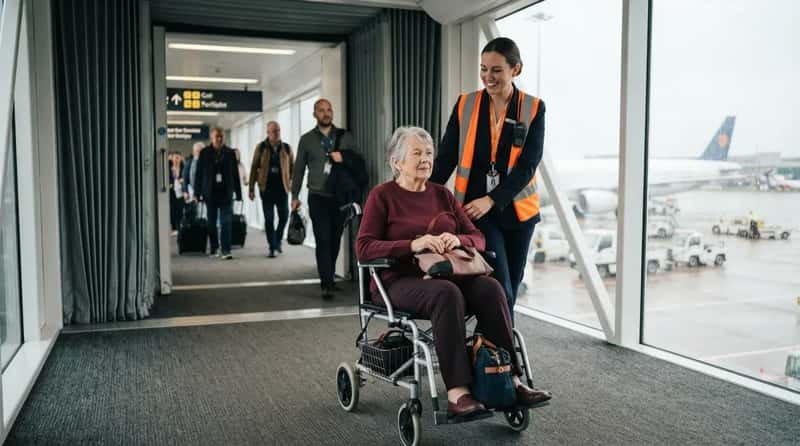
A diversion means landing somewhere the passenger never expected, often without any wheelchair service pre-arranged the way it would have been at the original destination. This is where the operations side quietly earns its keep: dispatchers and ground teams pass along passenger assistance needs so services are already in motion at the alternate airport, rather than leaving a frail traveler waiting indefinitely at the jet bridge.
Without that heads-up, a wheelchair request can take an hour or more to fulfill at an airport that wasn’t expecting the flight. With it, a chair is often already rolling toward the gate by the time the door opens. It’s a logistics fix, not a favor, but for the passenger sitting there wondering if anyone remembered them, it feels a lot more personal than that.
Worth Knowing
- Federal disability law requires airlines to provide wheelchair assistance to any passenger who requests it, including during irregular operations like diversions.
- Advance requests are supposed to carry over automatically to a rebooked itinerary, but a sudden diversion often slips outside that normal system.
- The wheelchair and the staff pushing it usually come from a ground handling contractor, not airline employees directly.
#9 – Gate Assignments Get Chosen With The Shortest Walk To Security Or Customs
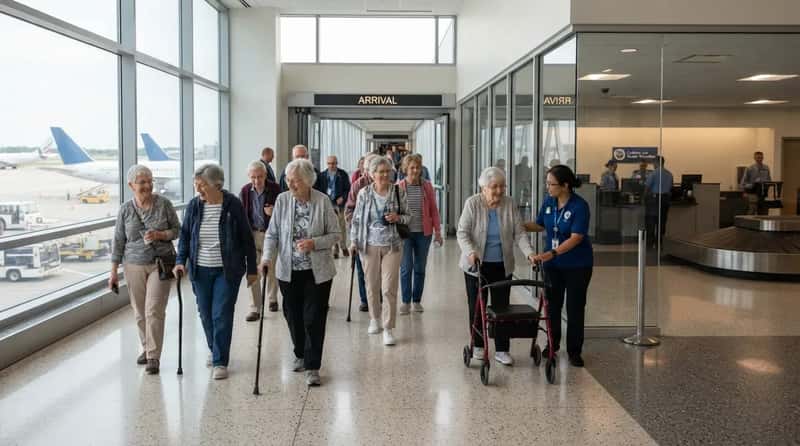
Not every gate at an alternate airport is created equal, and dispatchers coordinating with ground control sometimes have input into which gate a diverted flight actually parks at. When there’s a choice, the shorter walk to security, baggage, or customs tends to win out, especially once ground staff know a portion of the cabin is elderly or traveling with mobility aids.
This detail matters more than it sounds. A gate at the far end of a sprawling terminal can mean a fifteen-minute walk that’s genuinely painful for someone with arthritis or recovering from surgery. Most passengers over 60 never realize this choice was made on their behalf; they just notice, with quiet relief, that the walk wasn’t as bad as they feared.
#8 – Connection Windows Get Stretched By Holding A Tighter Departure Gate Nearby
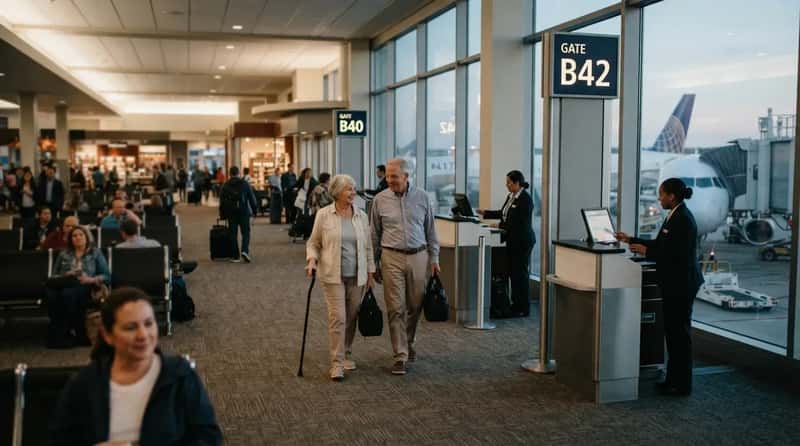
After a diversion disrupts a connecting itinerary, operations staff sometimes work to rebook older passengers onto a next flight departing from a gate physically close to where they’ll arrive, rather than one requiring a terminal transfer by train or shuttle. It’s a small adjustment with an outsized effect on stress levels.
The alternative is a passenger over 65 sprinting, or being pushed in a wheelchair at a dead run, across an unfamiliar airport to make a flight that was already rebooked under pressure. Most travelers never realize gate proximity was even a factor in how their new itinerary was built. When it’s handled well, the diversion feels like a hiccup instead of a crisis.
#7 – Dietary And Medication Needs Get Passed Along During Long Ground Delays
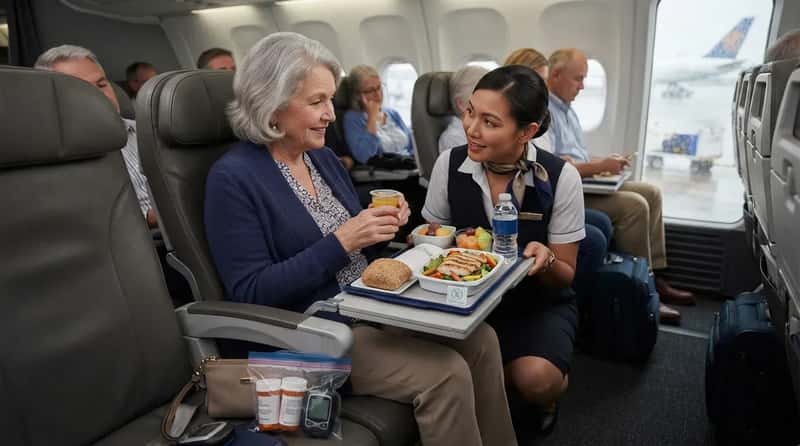
A diversion that stretches into hours on the tarmac or in a terminal creates real problems for passengers managing diabetes, blood pressure medication, or strict meal timing. Ground and catering teams working off information relayed through operations have, in many documented cases, prioritized getting food or accommodations to passengers with flagged medical needs first.
Airlines already build some of this into their broader service model, since special meal requests exist precisely to accommodate low-sodium, diabetic-friendly, or vegetarian needs for older travelers. During a diversion, that same information trail gets used to make sure the right passenger doesn’t get skipped when snacks or meal vouchers are handed out under chaotic, first-come-first-served conditions.
At a Glance
- Diabetic-friendly meals timed around medication schedules
- Low-sodium options for passengers managing blood pressure
- Soft or gluten-free meals for digestive and dental needs
- Kosher and vegetarian meals, typically available with advance notice on most major carriers
#6 – A Quieter Waiting Area Gets Found Away From The Crowded Gate
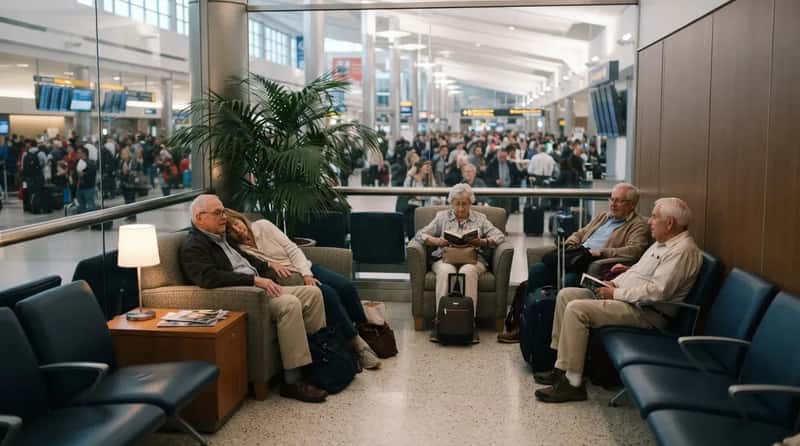
Diverted flights create packed, noisy gate areas fast, and that environment is genuinely hard on older passengers dealing with hearing aids, sensory overload, or plain exhaustion. Gate agents acting on guidance passed down through the operations chain sometimes steer a handful of vulnerable passengers toward a quieter corner, a nearby lounge, or an underused gate instead of leaving them in the scrum.
It’s an unofficial workaround, not a policy, and it depends heavily on which airport and which staff are on duty that day. When it happens, though, it can turn two exhausting hours into something almost bearable. Frustratingly, this is one of the least consistent kindnesses on this list, and plenty of older travelers never get offered it at all.
#5 – Morning Flights Get Prioritized Over Red-Eyes When Rebooking Is Possible

When a diversion forces a full rebooking, the system doesn’t automatically care what time of day the replacement flight departs. But experienced rebooking agents working off operations guidance often try to steer older passengers away from red-eye departures when a reasonable morning alternative exists, even if it means a slightly longer wait.
The logic is simple: an overnight flight after an already exhausting diversion day is a rough ask for a 72-year-old traveler who just wants to sleep in an actual bed. This preference isn’t guaranteed by any airline’s official rulebook, so it depends entirely on staff discretion and available seat inventory. When it works out, it’s one of the more genuinely thoughtful calls made in an otherwise stressful day.
#4 – Aisle Seats With Extra Legroom Get Prioritized On The Replacement Flight

Seat assignments during a rushed rebooking are usually whatever’s left, but operations and gate staff frequently try to route flagged older passengers into aisle seats or extra-legroom rows first. This lines up with standard airline accommodation practices, where passengers may request aisle seats, movable armrests, extra legroom, and adjoining seats for a companion who is providing assistance, subject to availability.
During a diversion, availability shifts by the minute, so this kindness is really a race against the clock. Staff who know to look for age or mobility flags in the passenger record before finalizing new seat assignments give older travelers a real advantage. Without that extra step, the last passengers rebooked often get stuck in the worst middle seats left on the plane.
#3 – Customer Service Reps Get A Heads-Up So Older Callers Skip The Queue
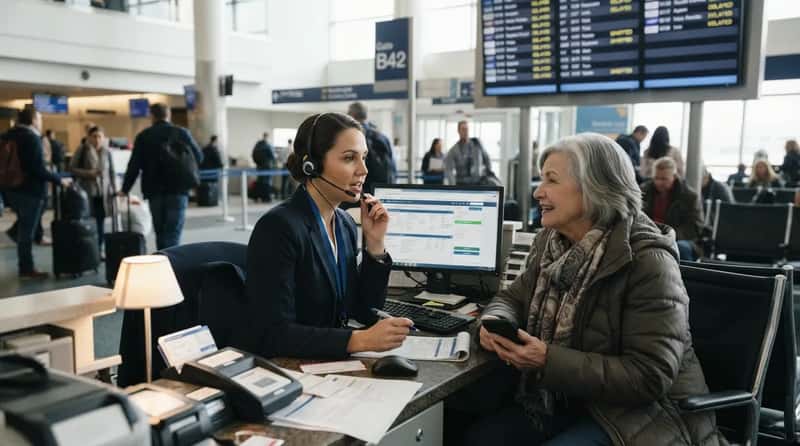
Calling an airline’s main customer service line during a mass diversion event can mean hold times stretching past an hour. What most passengers don’t know is that dispatch and operations teams sometimes flag specific passenger records for rebooking desks, letting phone reps identify and prioritize an older caller instead of leaving them stuck in a generic queue.
This matters because crew members and gate staff can’t provide ongoing personal care once a trip is disrupted, so getting a live human on the phone quickly is often the only real lifeline a stranded traveler has. It’s a quiet workaround, not an official service tier, and it varies wildly by airline and by how overwhelmed that day’s call center happens to be.
Quick Compare
- Standard call center wait during a mass diversion: often 30 to 60-plus minutes on hold
- A flagged older passenger’s record: sometimes routed straight to a rebooking desk within minutes
- The result: the exact same disruption, two very different waiting experiences
#2 – Priority Boarding And Deplaning Get Extended Without Being Announced
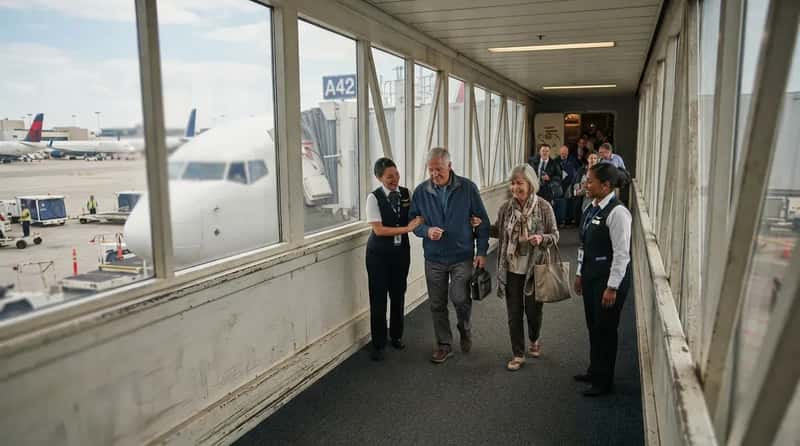
Pre-boarding for passengers who need extra time is a known, official service, but during the chaos of a diversion, that same courtesy often gets quietly extended to priority deplaning too, even when it isn’t formally requested. Airlines already build flexibility into their boarding process; Delta, for example, offers multiple boarding options and will pre-board certain passengers to help ensure an empty seat nearby for extra space.
On a diverted flight, staff working the gate sometimes extend that same logic in reverse, letting older passengers off first so they aren’t caught in a bottleneck of frustrated travelers all racing for the same rebooking desk. It’s a small sequencing decision that saves real time and real stress. Nobody makes an announcement about it, which is exactly why so few passengers realize it’s happening on their behalf.
#1 – The Diversion Decision Itself Sometimes Factors In Who’s On Board
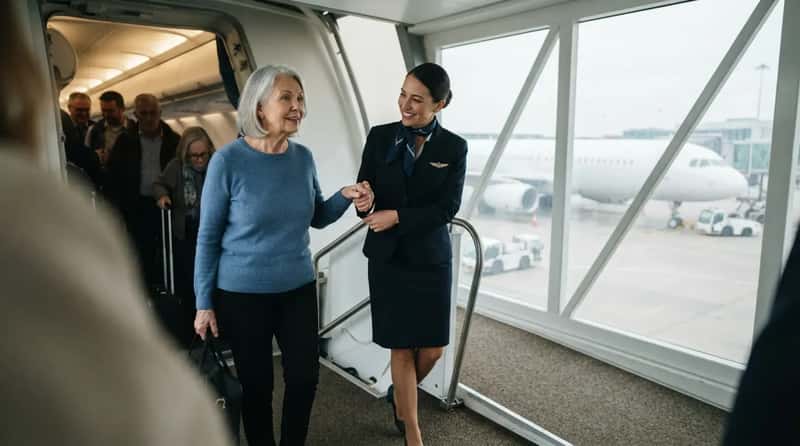
This is the one most passengers never think about at all. A dispatcher’s core job is deciding, alongside the pilot, where and when a flight lands when something goes wrong, and that decision-making process is often more attentive to vulnerable passengers than people assume. Dispatchers track progress in real time, watch for changing conditions, and help crews adapt quickly and calmly when the unexpected happens.
A dispatcher shares joint responsibility with the captain for the safety of a flight, from before departure until it lands.
Federal Aviation Administration
Because a dispatcher shares that legal operational authority with the pilot in command, known medical needs among older passengers can quietly shape which alternate airport gets chosen, not just which one is closest. It’s a sobering thought: the person who never speaks to you directly may be the one whose split-second judgment call, informed by exactly who’s sitting in seat 14C, determines how safely your trip actually ends.
None of these fifteen kindnesses show up on a boarding pass or in a terms-of-service agreement. They exist because people working invisible, unglamorous jobs decided, somewhere along the way, that a diverted flight full of older travelers deserved a little extra thought. Most of it will never be announced, confirmed, or even acknowledged, which is exactly why so few passengers ever know it happened at all.