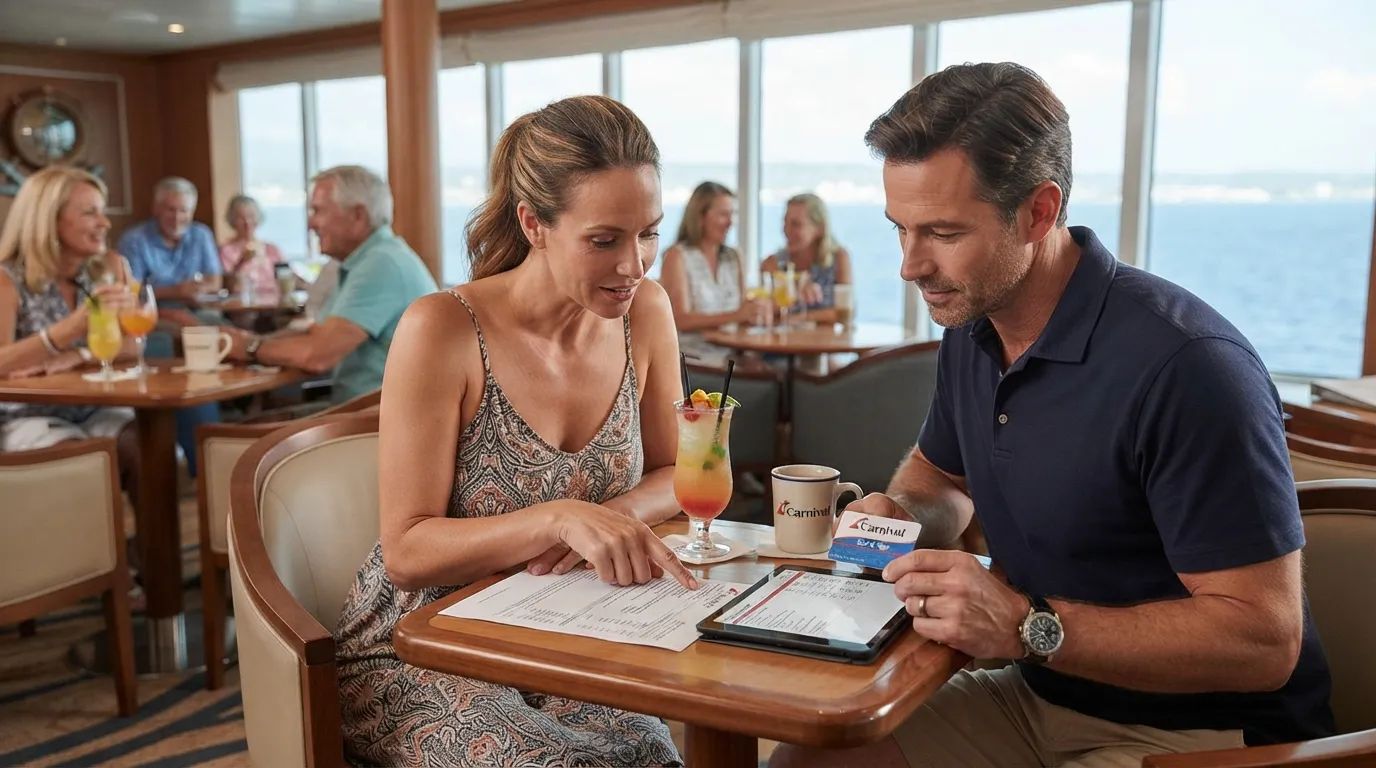
A seven-night drinks package can add $500 to $1,500 per person to a cruise bill. That’s the charge everyone warns you about, and it’s only one of fifteen.
The real damage often hides in small swipes that post to your cabin account while you’re busy having fun. Here’s what the 2026 pricing data shows about the fees repeat cruisers dodge, and the one that may follow you onto every ship.
#15 – The Wi-Fi Plan You Buy After You Board
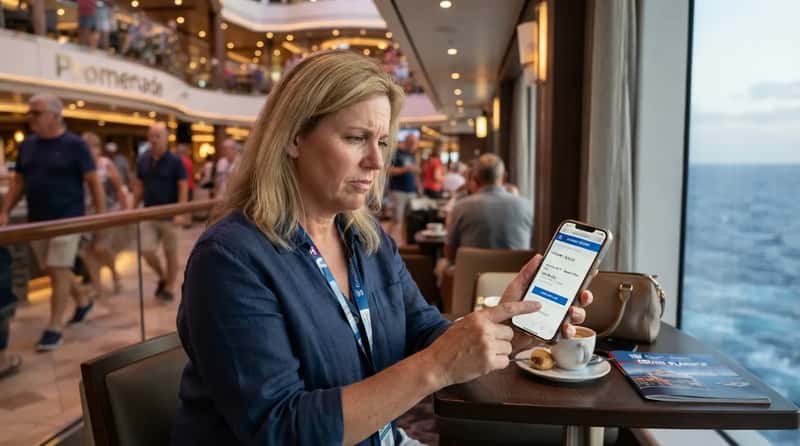
The same Wi-Fi plan can cost nearly twice as much once the ship leaves port.
Wi-Fi is on every major line in 2026, but it is rarely free. Expect roughly $18 to $45 per person per day.
Onboard pricing is where it stings. Royal Caribbean’s VOOM runs about $20 a day bought ahead and around $39 aboard.
Carnival’s Value plan goes from $23.80 to $32. Pre-cruise prices are typically 20–30% cheaper than buying onboard, so repeat cruisers buy through the app before they ever scan their cruise card.
But the price gets far worse when every phone in the family needs its own plan…
#14 – Paying Wi-Fi Rates for Every Device You Own
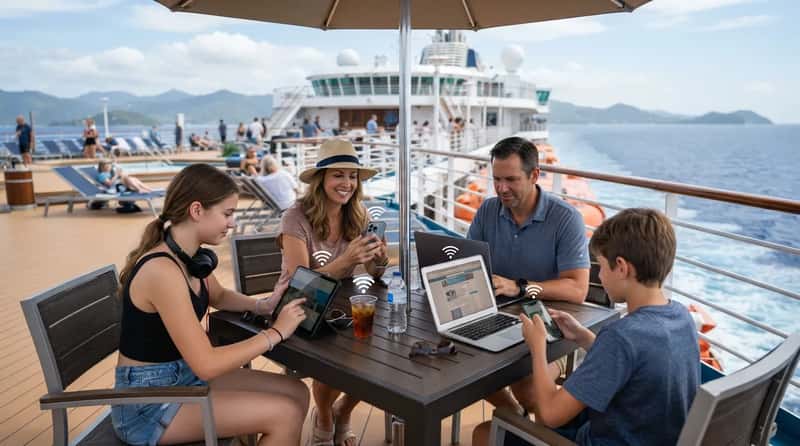
Per-device pricing quietly turns one Wi-Fi plan into a four-figure line item.
Per-device, per-day pricing hides how fast the numbers scale for a family. Most people don’t realize it until the math is done for them.
Take a family of four on a seven-day Disney cruise who want streaming-tier Wi-Fi on every phone. At $49 a device per day, that is $1,372 in Wi-Fi alone.
At the basic tier, the same setup runs $840. The choice between tiers is a $532 swing for one family on one sailing.
Royal Caribbean’s VOOM shows the same ladder. About $28.99 per person per day for one device, near $52 for two and near $80 for four.
Before you pay any of it, check the free options most passengers ignore…
#13 – Wi-Fi You Never Needed to Buy
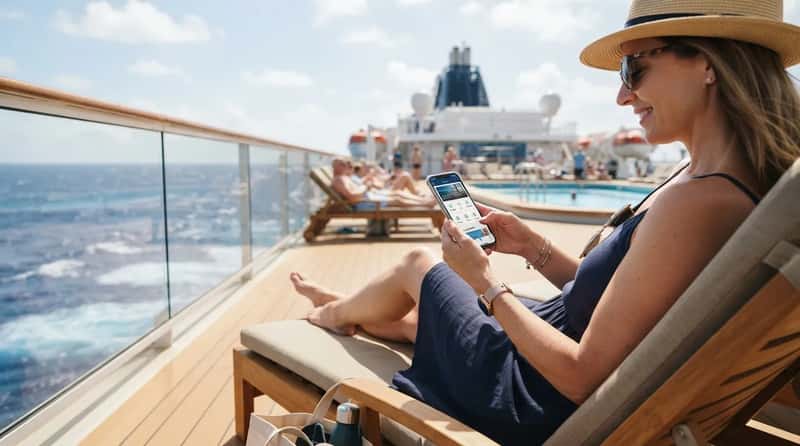
Some of the most useful cruise connectivity costs exactly nothing.
Keep your phone’s Wi-Fi on and connect to the ship’s network, which lets you use the cruise line’s mobile app for free. One Carnival guide suggests leaning on the free HUB app chat for onboard messaging and downloading entertainment before you sail.
Some lines go further. Virgin’s basic tier, Oceania, Viking and most ultra-luxury lines include basic Wi-Fi for everyone on board.
Loyalty status can also pay off. Royal Caribbean’s Diamond tier and above get complimentary days, and Princess Platinum and Elite members get 50% off.
Family at home can follow the ship’s position and arrival times on their own.
At a Glance
- Free: the cruise line’s app over the ship’s network, with your phone’s Wi-Fi on
- Included: basic Wi-Fi on Virgin’s basic tier, Oceania, Viking and most ultra-luxury lines
- Loyalty perk: complimentary days at Royal Caribbean Diamond and above
- Discount: 50% off for Princess Platinum and Elite members
Skip the internet, though, and the next temptation is much more expensive…
#12 – A Drinks Package You Never Break Even On
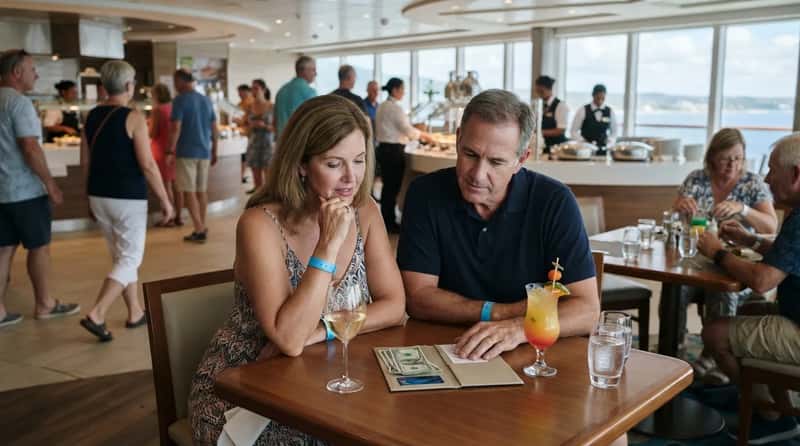
The “all-inclusive” drinks package only pays off if you drink like it’s your job.
Packages cost $60–100 per person per day, and they’re worth it only if you drink five or more alcoholic beverages daily. Carnival’s CHEERS! breaks even at about eight alcoholic drinks.
Picture a glass of wine with dinner and one poolside cocktail. At $12 a drink, that’s $24–36 against a $69–109 package.
Over seven nights, that’s $230–$600 wasted per person.
While cruise lines sell the package as the smart default, many experts now argue it’s a money drain for moderate drinkers. One analysis calls it a math problem, and the answer is personal.
And the package has a second catch that can drag a non-drinker into it…
#11 – The Cabin Rule That Makes Your Partner Pay Too
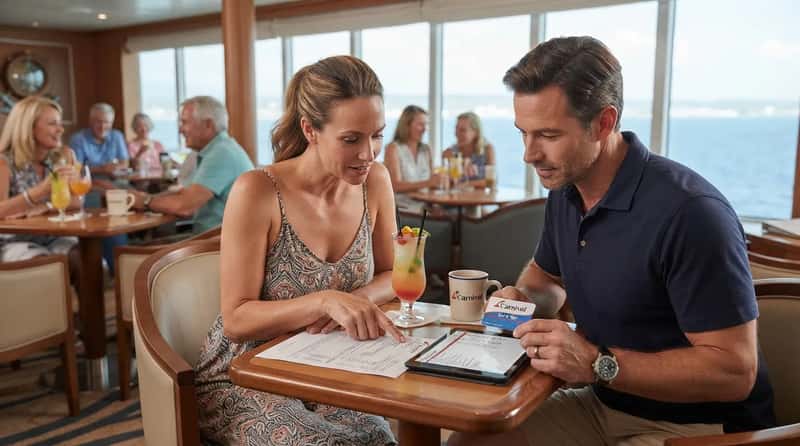
A drinks package isn’t always a solo decision.
On most lines, all adults in the same cabin must buy the same package, to stop people sharing one. One analysis calls this the biggest deal-breaker for mixed couples.
The math stacks up fast: for a couple on a 7-day Carnival cruise, CHEERS! comes to over $1,155. That’s for one person who wanted a cocktail and one who wanted a coffee.
If adults have an alcoholic package and travel with minors, many lines require the minors to have a non-alcoholic or soda package. Families rarely see that coming.
There is one place where even a package you did buy stops working…
#10 – Package Dollars Wasted at the Private Island
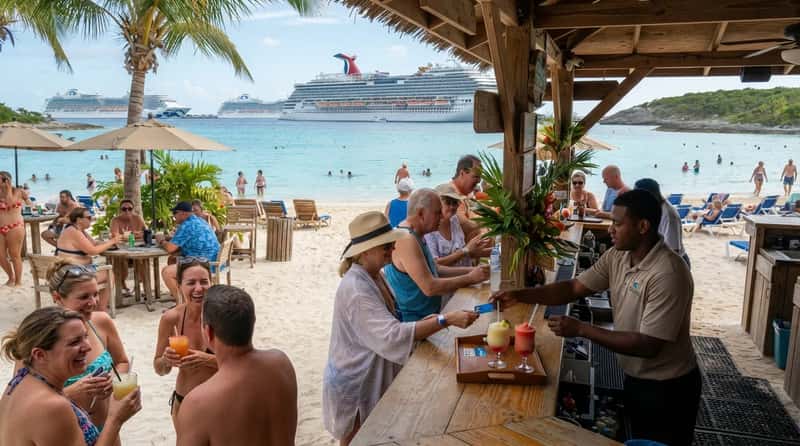
Your prepaid drinks may not be valid at the stop the brochure promotes hardest.
According to one pricing guide, Carnival’s CHEERS! does not cover beverages at Half Moon Cay, Celebration Key or Princess Cays. Every drink is a separate purchase.
That adds up on a warm afternoon. A couple having two or three drinks each can face $50–$75 in extra costs.
Itinerary matters too. On island-hopping routes with five or more port stops, you’re off the ship most days, leaving only the evening hours for onboard drinking.
Repeat cruisers count port days before buying. Package terms vary by line, so they read the fine print for their own ship.
Next, a sneaky wine habit that costs far more than the glass itself…
#9 – Buying Every Bottle From the Ship’s Wine List
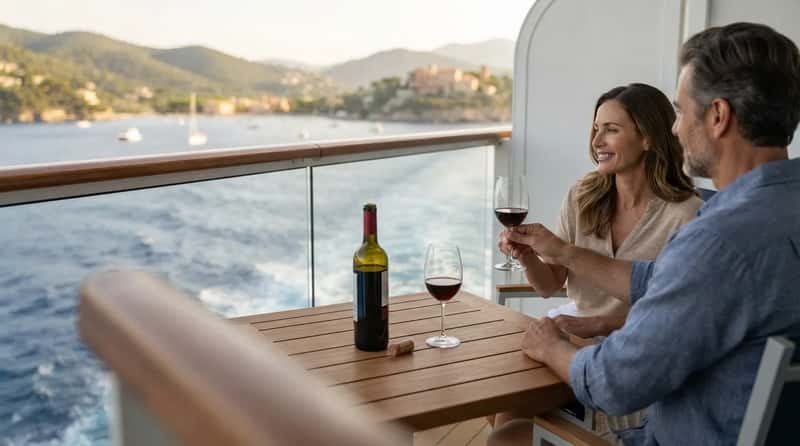
Seasoned cruisers often know a loophole that first-timers never ask about.
Many lines let each adult 21+ bring one 750ml bottle of wine or champagne at embarkation. Drink it in your stateroom and there’s typically no charge, while a restaurant or bar may add a corkage fee of around $15–$25.
Policies differ by line. NCL allows wine and champagne with no per-person quantity limit, but charges a mandatory corkage fee on every bottle.
Disney just tightened its rules. It used to allow two bottles at embarkation plus one per port.
Since June 3, 2026, it’s one bottle per adult for the entire cruise.
Now for the dinner bill that looks cheap right up until checkout…
#8 – Full-Price Specialty Dinners
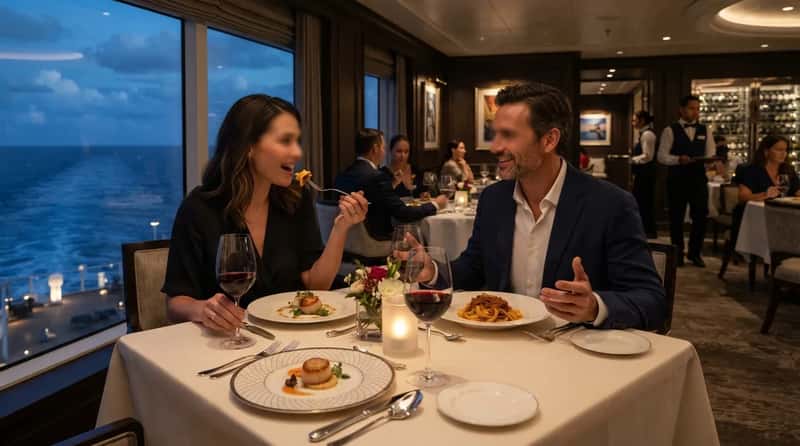
The “included” dining room is enough for more cruisers than the cruise lines want to admit.
Royal Caribbean fares already include several complimentary venues, with breakfast, lunch, dinner and snacks at no extra charge. Specialty restaurants are the upsell.
Cover charges typically run $40 to $75 per person, depending on venue and ship (mid-2026). Then Royal Caribbean adds 18% on top for specialty dining, turning a $65 cover into roughly $77.
Celebrity is similar. Its specialty dining runs $27 to $169 per person, with a 20% gratuity at checkout.
Some cruisers say specialty food is better. But one cruise site argues there’s no need to pay extra for food because the free food is excellent.
If you still want those dinners, the bundle deal has a trap of its own…
#7 – A Dining Package You Won’t Finish
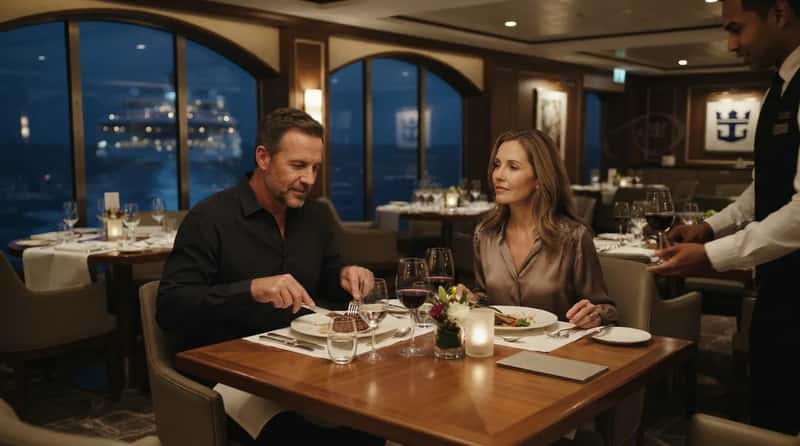
Bundles look like savings until the unused dinners become sunk cost.
Royal Caribbean dining packages cost $80–$150 for three nights and $180–$350+ for Unlimited in 2026, according to one booking site. That site claims savings of up to 40% versus per-restaurant pricing.
The rules bite, though. The Unlimited Dining Package must be bought for the length of the cruise, so a 7-night sailing means all 7 nights.
Refunds must be processed on the first day of the voyage, and packages are non-refundable after first use. Miss a night and that money is gone.
Fast Facts
- Three-night bundle: $80–$150 (2026, one booking site)
- Unlimited bundle: $180–$350+, covering every night of the sailing
- Refund window: the first day of the voyage only
- After first use: non-refundable, even if you skip a dinner
Pricing varies by package, ship and sailing length. Repeat cruisers only bundle when they’ve already mapped out which nights they’ll eat where.
Families, meanwhile, are often overpaying for something that may be nearly free…
#6 – Kids’ Cover Charges Nobody Checked
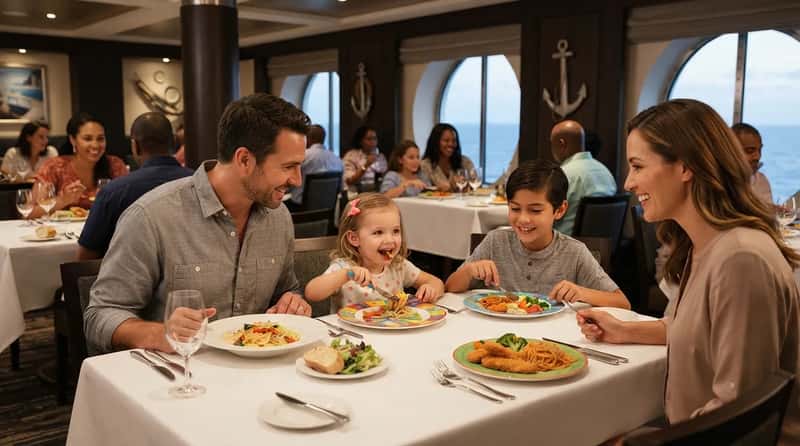
Parents often skip specialty dining because they assume the whole table pays full price.
On Royal Caribbean, that assumption can be wrong. Children aged 5 and under dine in specialty restaurants for free. Kids aged 6 to 12 pay $10 when ordering from the kids’ menu.
Those figures come from one cruise site, and prices vary by ship, itinerary and booking time. Your cruise planner has the final word.
So a family of four isn’t necessarily looking at four full covers. The adult-only math can look very different from the headline price.
Even when the kids eat cheap, one percentage on your account keeps creeping higher…
#5 – The Surcharge Stack on Every Swipe
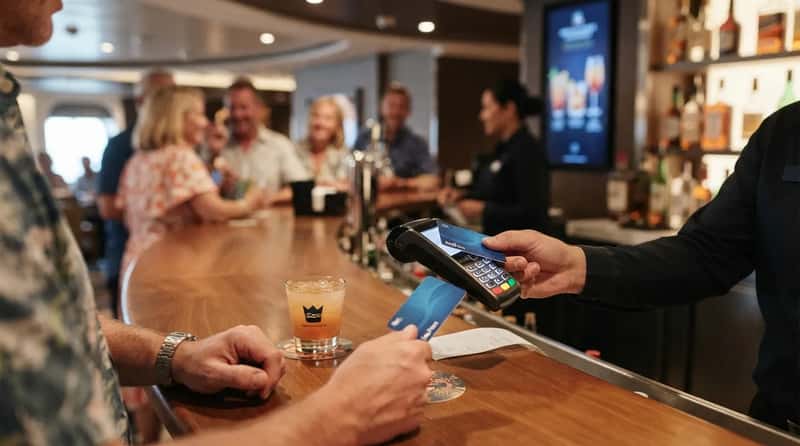
The menu price is almost never the price.
Daily gratuities are separate from percentage charges. Many lines add 18% or 20% to drinks, specialty dining, room service, spa treatments and other purchases.
Royal Caribbean adds 18% to beverages, beverage packages, specialty dining, room service and minibar purchases, plus 20% to spa and salon. Carnival adds 20% to beverages and many specialty dining charges.
Here’s a twist most people miss. Norwegian’s 20% beverage charge does not apply to its More At Sea drink and dining packages.
Worth Knowing
- Royal Caribbean: 18% on drinks, specialty dining, room service and minibar
- Royal Caribbean spa and salon: 20%
- Carnival: 20% on beverages and many specialty dining charges
- Norwegian: 20% on beverages, but not on More At Sea packages
That’s why repeat cruisers price out the final total, not the sticker. A “free” room-service snack or a minibar habit isn’t free once the percentage posts.
Speaking of “free,” one cruise-line promise gets misunderstood more than any other…
#4 – Believing the Gratuities Are Already Covered

One of the most repeated cruise myths turns out to be false.
The old claim that Norwegian was “gratuity-free” was false. NCL lists a $20 daily service charge, and $25 for The Haven and suites, for guests age three and older.
Promotions muddy it further. NCL’s standard Free at Sea is not the same as a package that includes prepaid service charges, and Free at Sea Plus lists daily charges as included.
Other bundles work differently. Princess Plus and Premier include crew appreciation, but package payments are bundled and can’t be removed for cash value.
Now a cost that has nothing to do with the ship itself, and plenty to do with the port…
#3 – Ship-Booked Shore Excursions by Default
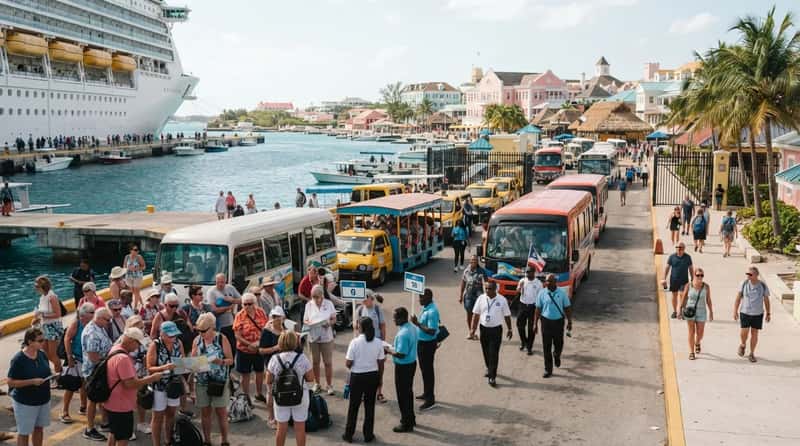
The easiest port-day purchase is often the most expensive version of it.
Ship excursions carry a premium for convenience. The main selling point is that the ship generally waits for its own organized tours if they run late.
Independent operators don’t offer that guarantee, so the real trade is money versus risk. Prices vary widely by port and operator, so compare the same tour rather than assuming either option wins.
Plenty of ports also offer walkable beaches, town centers and public transport for little or nothing. On some private islands, access is part of the fare, and CocoCay, for instance, is included, unlike Royal’s newer Nassau beach club.
But one paid port day has become the new cruise status symbol, and it isn’t cheap…
#2 – The Beach Club Day Pass
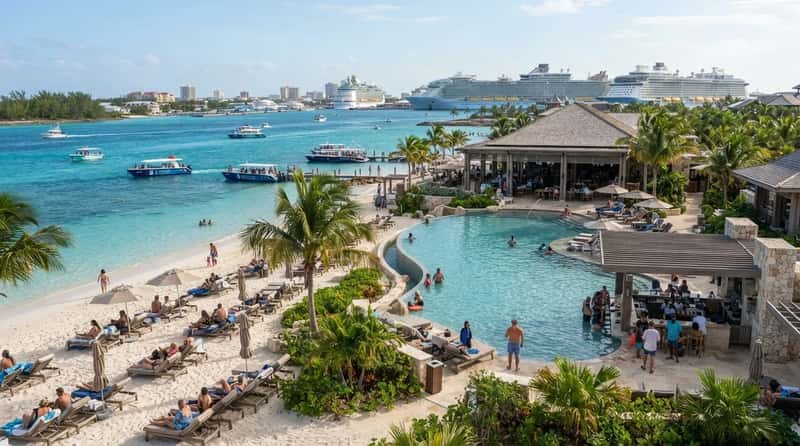
A single port day can cost more than a night in a hotel.
Royal Beach Club Paradise Island opened in December 2025. A dedicated water taxi from the Nassau cruise port takes you to a 17-acre beach club.
Access is not included in the fare. It’s a purchased day pass, capped at 4,000 guests, and it sells out.
As of May 2026, the open-bar pass starts at $169.99 per adult. That’s about $340 for two, before any tips or extras.
Cruise lines pitch beach clubs as the highlight of the trip. Many repeat cruisers argue the same money buys a full day ashore on their own terms.
But none of these add up to the charge that hits every single person, every single night…
#1 – The Daily Gratuity That Hits Before You Order Anything
It’s the one charge nearly every mainstream cruiser pays, and the one repeat cruisers plan for on day one.
For two people in standard staterooms on a 7-night sailing, 2026 totals run from $224 on MSC to $238 on Carnival, $259 on Royal Caribbean and $280 on NCL.
Quick Compare
| Cruise Line | Two People, 7 Nights |
|---|---|
| MSC | $224 |
| Carnival | $238 |
| Royal Caribbean | $259 |
| NCL | $280 |
And rates keep climbing. Carnival raised its charge on April 2, Princess on March 8 and Holland America effective June 1, while Royal Caribbean sits at $18.50 per person per day for standard cabins and $21 for suites.
Here’s the secret: many smaller and higher-end operators fold gratuities into base fares, and Oceania eliminated its automatic fee in 2025. Some promotional fares also include prepaid gratuities.
Adjustments exist, but they’re no budget plan. One 2026 guide advises not to build a budget around removing the charge.
The pooled amount covers dining, bar, culinary, stateroom and hotel crew. Repeat cruisers simply price it in or pick a fare that includes it.
The Bottom Line
Most onboard charges are avoidable with a little planning. Buy Wi-Fi before you board, use the free app, and do the break-even math before any drinks package.
The biggest shock is how the extras stack: 18–20% service charges on top of drinks, dining and spa, plus a daily gratuity of roughly $17–$20 per person. The one charge you probably can’t dodge entirely is that gratuity, unless your fare includes it.
Which onboard charge caught you off guard on your last sailing?