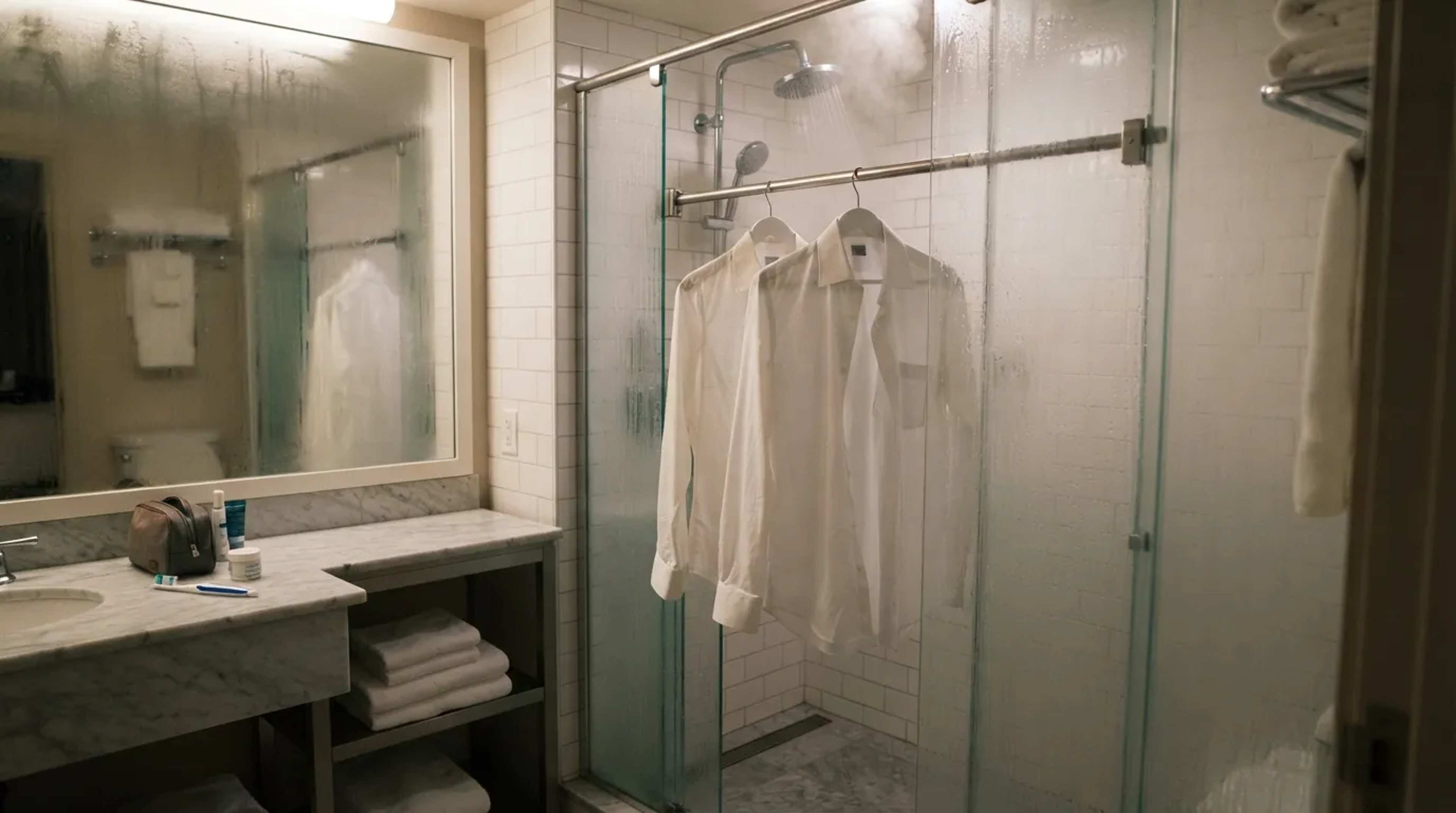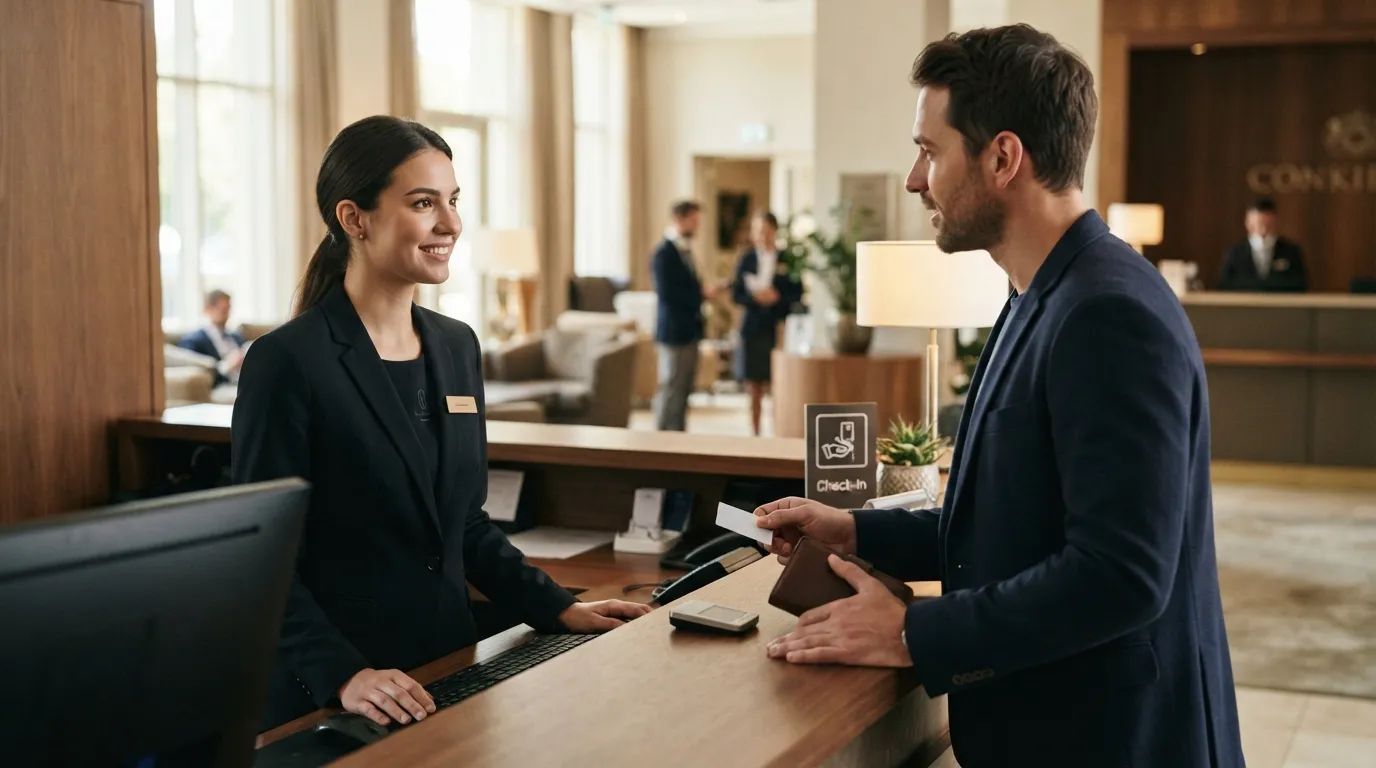
Same hotel. Same night. Same room type, same confirmation email. One traveler walks in, gets a warm hello, a high-floor room, and a key in under a minute. The other waits, hears “we’ll see what we can do,” and ends up beside the ice machine.
It feels random, and it almost never is. Behind the desk is a screen full of details you can’t see, and a few of them are decided before you ever pack a bag. The first one starts the moment you tap “Book.”
1. The Booking Site You Chose Quietly Changes the Math

Two reservations can look identical in your inbox. On the hotel’s side, the money isn’t. Online travel agencies typically charge hotels a commission, often cited in the range of roughly 15% to 25%, so the hotel keeps less from that same room.
Most major chains say every guest is treated the same, and plenty of desk agents mean it. Still, direct bookings are usually easier to change, simpler to credit with loyalty points, and fully visible to the hotel. Travelers argue endlessly about whether third-party bookings get the worst rooms, while hotels insist the room is the room. The truth sits in the middle: the room may be identical, but the leverage often isn’t.
2. One Missing Number Can Turn You Into a Different Guest

Hotel systems flag members of programs like Marriott Bonvoy, Hilton Honors, World of Hyatt, and IHG One Rewards the second their profiles open. Higher-tier members often get priority in room assignment and a real shot at upgrades. Those upgrades are almost always listed as “subject to availability.”
Here’s the part most people miss. A reservation with no member number attached may never enter the upgrade conversation at all. Even the free entry-level tier can mark you as someone the brand wants to keep. Two identical bookings can look very different on the same screen for that reason alone.
Quick Compare
- With a member number: your profile opens with status, preferences, and upgrade eligibility in view.
- Without one: you show up as a standard reservation, with nothing to flag you for extras.
- The cost of the gap: a few minutes of signup time, usually free, versus a quiet seat out of the upgrade line.
3. Your Rate Plan Is a Secret Code on the Reservation

“Standard king” is not one price. Hotels sell it under flexible, prepaid non-refundable, member-only, promotional, and package rates. Each plan carries its own rules about upgrades, points, and changes, and the agent can see all of it in seconds.
Some discounted plans exclude loyalty earnings or upgrade eligibility. The cheapest rate can be the one the hotel feels least able to sweeten. Guests who paid more for a flexible rate sometimes get more flexibility in return. It doesn’t sound fair, but it is exactly how revenue managers think.
4. Your Arrival Time Decides Which Rooms Are Even on the Table
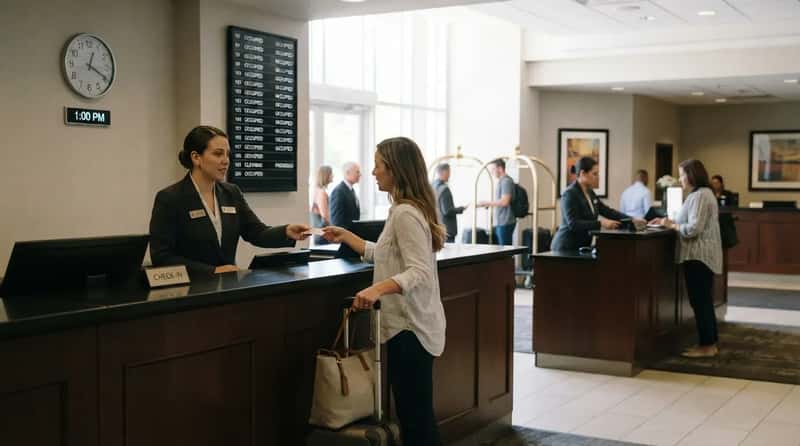
In the U.S., standard check-in typically falls in the mid-afternoon. A guest who walks in at noon is really competing with housekeeping, not with other guests. The best rooms may still be occupied or half cleaned, and the agent can only offer what is ready.
Evening arrivals face a different picture. By then the hotel knows which rooms are open and who is still on the road. A late arrival can end up with a better room simply because the hotel’s puzzle has been solved. The 1 p.m. guest may get whatever was scrubbed first.
5. “Same Room” Can Mean Two Very Different Physical Rooms
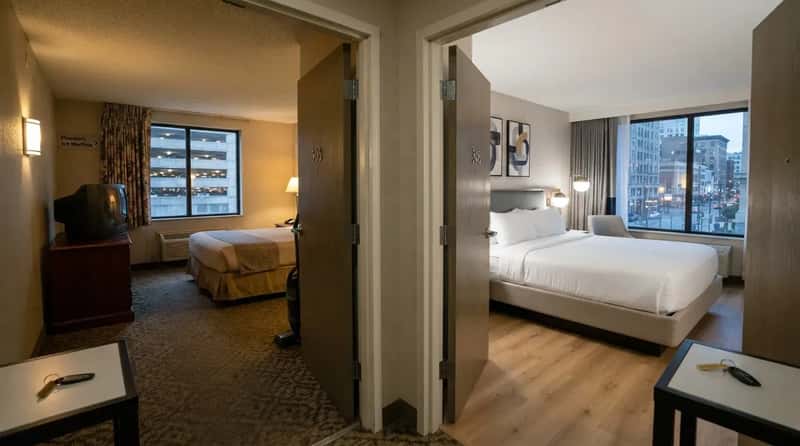
A “standard king” is a category, not a single room. In a large hotel it can cover dozens of rooms on different floors. Some sit by the elevator. Some face the parking structure. Others hum above the lobby bar, and the front desk picks which one is yours.
Hotels partway through a renovation add another twist. Two guests can pay the same price while one gets a freshly updated room and the other gets the old carpet. Both received exactly what they booked. Only one of them feels like it.
6. A Sold-Out Night Can Kill an Upgrade Before You Ask
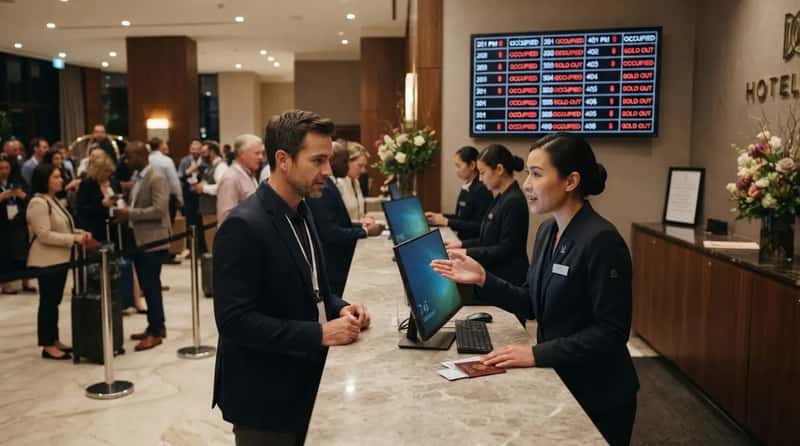
Upgrades are cheap for a hotel only when the better room would otherwise sit empty. On a slow Tuesday, handing over a nicer room costs almost nothing. On a sold-out convention weekend, every room is already spoken for, and there is nothing to upgrade into.
That’s why two friends with the same status can report opposite experiences. One stayed during a quiet week and got a suite, while the other hit a sold-out weekend and got the base room. The agent’s attitude may have been identical. The inventory wasn’t.
7. A Five-Night Stay Gets Treated Differently Than One Night

Hotel revenue teams dislike “orphan nights,” the single open nights stuck between longer bookings. A guest staying five nights fills the calendar neatly. A one-night guest can leave a gap that is hard to sell.
Agents also try to avoid moving long-stay guests mid-visit, so they look for a room that is free for the whole stretch. Sometimes the room you get depends less on you than on who is booked into it next week. It’s calendar Tetris, and you only ever see one piece.
8. The Note You Typed (or Didn’t) Changes the Welcome

Notes like “celebrating an anniversary,” “needs a quiet room,” or “traveling with a baby” show up on the agent’s screen. Hotels usually call them requests, not promises. Still, a clear note gives the agent a reason to say yes when a good option opens up.
Where you leave the note matters. Requests typed into a third-party booking form may not be flagged as clearly as ones sent to the hotel directly. Calling the property a day or two before arrival can put your request in front of an actual human being.
9. Corporate and Group Guests Play by a Rulebook You Never See
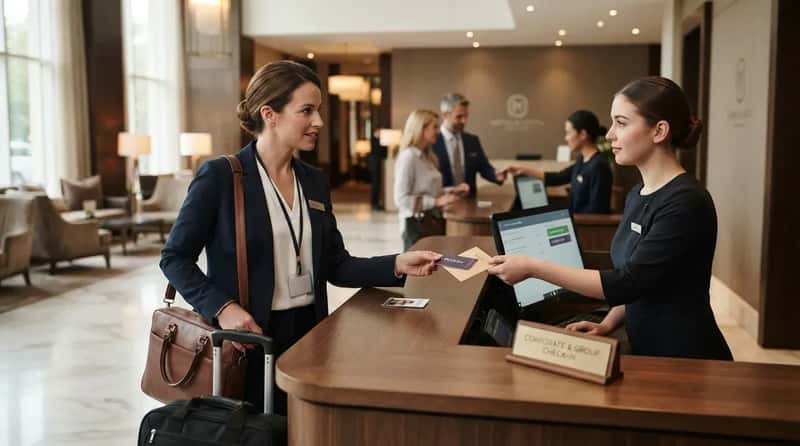
Some guests book under negotiated corporate rates or event blocks. A company that sends hundreds of nights a year can get perks written into its contract, such as breakfast, flexible cancellation, or priority room assignment. Wedding and conference blocks are often placed together on the same floors.
From the lobby, it all looks like a normal check-in. But the guest beside you may be operating under a contract you’ll never read. The agent follows the rules attached to each reservation, not just the face in front of them.
Worth Knowing
- Corporate perks can include breakfast, flexible cancellation, or room priority, depending on the contract.
- Event blocks are often grouped on the same floors, which can shape which rooms are left for everyone else.
- Each reservation carries its own rules, so two guests in the same line may have very different options.
- The agent usually can’t discuss another guest’s terms, which is why the difference can feel unexplained.
10. Your Payment Method Changes the Mood at the Counter

Hotels commonly place an authorization hold on a card to cover incidentals. On a credit card, that’s a temporary hold on your credit line. On a debit card, it can tie up real cash from your account for days, and some hotels ask for extra deposits or ID.
Prepaid third-party bookings add another layer. The hotel may already have been paid, yet still need a card on file for extras. A guest who didn’t expect that can get stuck in a slow, awkward exchange while the next person breezes through.
11. Housekeeping Silently Picks the Winners

Every room has a status in the hotel’s system, such as dirty, clean, inspected, or out of order. Agents can only hand out rooms marked ready. Housekeeping supervisors often prioritize certain rooms for early arrivals, VIPs, or members with a request on file.
That means a guest at the counter at 12:30 can be waiting on a cleaning order they never knew existed. Two people with the same booking may stand in the same lobby. One gets a ready room now, and the other is told to come back in an hour.
Fast Facts
- Typical room statuses: dirty, clean, inspected, and out of order.
- Only rooms marked ready can be assigned at the counter.
- Early arrivals, VIPs, and members with a note on file may jump the cleaning queue.
- Standard U.S. check-in usually lands in the mid-afternoon, so a midday arrival is often a gamble.
12. Pre-Check-In Quietly Makes You a Planned Arrival
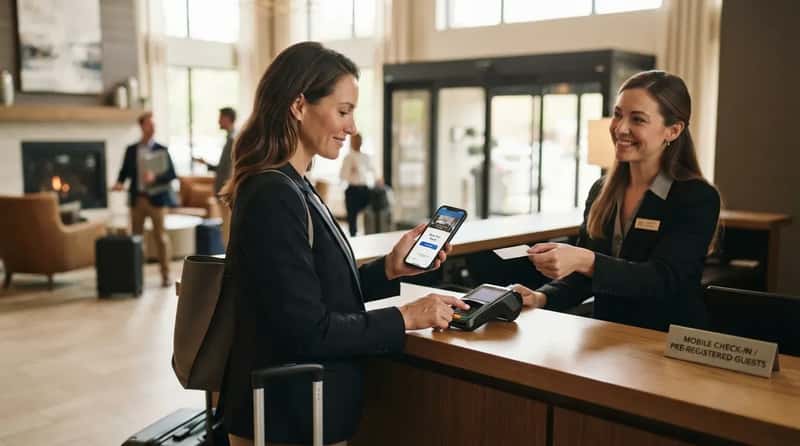
Many chains let guests check in through an app before they arrive. Hilton, for example, lets guests pick a specific room from a floor plan at participating hotels. Marriott and others offer mobile check-in and digital keys. In those cases the room can be locked in before you reach the doors.
A pre-registered guest is also easier for the desk to plan around. Walk-up arrivals compete for whatever’s left, while app users may have already claimed their favorite. It’s a small advantage, and most people never use it.
13. The Hotel May Remember You, for Better or Worse

Hotel systems store guest profiles. They can include past stays, room preferences, allergies, and noted issues. A returning guest who loved a corner room may find it waiting. A guest with a history of complaints or damage may be flagged for the next shift.
That’s the hidden side of an identical booking. One guest arrives with a record of good stays, and the other arrives as a blank slate. Chains typically tie these profiles to loyalty accounts, which is another reason a member number can matter.
14. Overbooking Means Someone Else Gets “Walked”

Hotels commonly sell slightly more rooms than they have, expecting some cancellations and no-shows. Most nights it works. Occasionally more guests show up than there are rooms, and the hotel has to send some of them to another property. The industry calls it “walking” a guest.
Who goes? Policies differ, but the guests with the weakest ties to the hotel tend to be the most exposed. That often means low-rate bookings, no loyalty status, and no guarantee of a late arrival. A guaranteed, prepaid, or elite reservation generally gets more protection.
At a Glance
- More exposed: low-rate bookings, no loyalty status, no late-arrival guarantee.
- More protected: guaranteed, prepaid, or elite reservations.
- What “walked” means: you’re sent to another property because the hotel ran out of rooms.
- What to expect: many hotels arrange the alternate room and help with transport, though policies vary.
15. The Human at the Desk Has More Say Than You Think

Policies set the limits, but the agent often decides what happens inside them. Some brands are known for empowering staff to fix problems on their own. The Ritz-Carlton has often been reported to let employees spend up to $2,000 per guest to resolve an issue. At smaller properties, a lot can come down to whoever is on shift.
Tone matters, and so does timing. A calm, specific request during a quiet moment can beat a demand made in a long line. Many travelers swear by slipping cash to the desk, while plenty of front desk workers call that overrated and awkward. Friendly, patient, and clear usually works better.
So the next time two “identical” bookings end up in very different rooms, remember how much happens off-screen: the channel, the rate, the clock, the housekeeping list, the history. Most of it isn’t personal, and a surprising amount of it can be nudged.
The last piece is simply how you treat the person holding the keys. Have you ever been the guest who got the upgrade, or the one who watched someone else get it?