You think the front desk decides who gets the royal treatment. It doesn’t. The real gatekeeper is usually standing by the curb in a name tag, and he’s already made up his mind about you before your car door fully opens.
A half-second pause at your suitcase. A glance at how you shift your weight getting out of the car. A quiet note passed to the front desk that you never see. These tiny moves stack into a silent VIP designation that most guests never clock – and once you know what to look for, you’ll never check into a hotel the same way again.
#15 – He Abandons the Podium the Second Your Car Door Opens
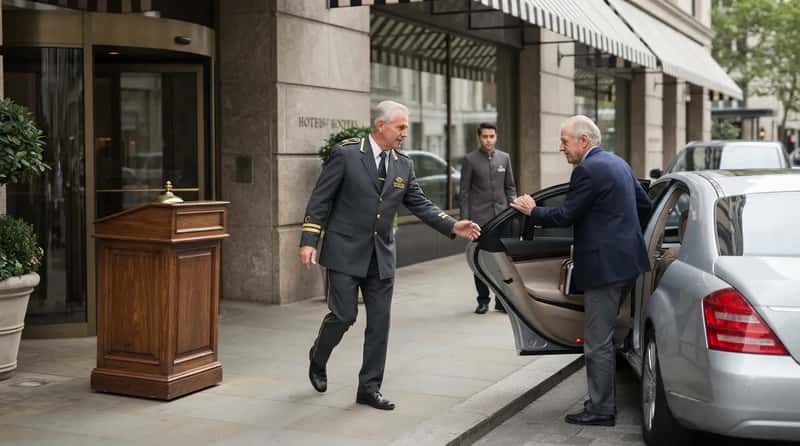
Most guests wait their turn for whichever bellhop gets assigned next. But if the bell captain himself peels off from his post the instant you step out of the car, that’s not a coincidence – it’s triage. Veteran bell staff read arrival cues in seconds, and a slower, deliberate step or a hand steadying on the door frame gets flagged almost instantly.
It isn’t about age, exactly – it’s about risk. A junior bellhop rushing through a handoff can mean dropped bags or a guest left confused in a hallway, and captains would rather intervene personally than gamble on it. Once that fast, personal grab happens once, it tends to become the pattern for the rest of your stay.
#14 – Your Room Quietly Moves Closer to the Elevator
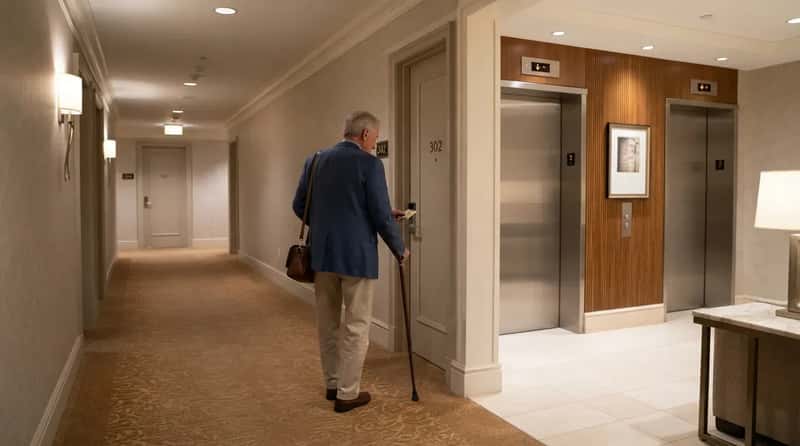
Room assignments look locked in, but they get reshuffled more than guests realize. If the number on your key packet doesn’t match what your confirmation email said, somebody upstream decided a shorter hallway mattered more than a better view. Hotels routinely hold back a small stash of elevator-adjacent rooms specifically for these last-second swaps.
Bell captains are usually the ones requesting the change, since they’re the first people to spot a cane, a slower gait, or a wince climbing a curb. It’s a small favor, but it says something bigger: someone decided your comfort was worth trading away a corner room for.
#13 – He Grills You About Your Flight Before Your Bags Even Come Up
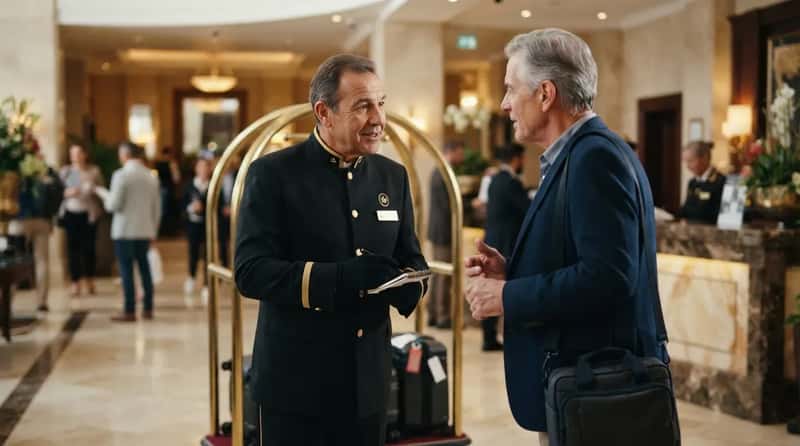
“How was your trip?” is filler. A pointed question about your layover, your connection time, or how long you sat on the tarmac is something else entirely. That’s a bell captain quietly gauging fatigue and mobility without ever having to ask your age.
Hospitality trainers describe this kind of questioning as a deliberate screening tool, not small talk. If your answer hints at exhaustion or a stiff back from six hours in coach, the rest of the interaction usually shifts toward speed and comfort over friendly chit-chat.
Fast Facts
- Experienced bell staff often size up new arrivals in just a few seconds, reading posture, pace, and grip on luggage before a word is exchanged.
- Elevator-adjacent rooms are typically held in a small reserve block specifically for mobility-related, last-minute swaps.
- Casual questions about layovers or connection times are a common industry shorthand for gauging fatigue without ever asking a guest’s age outright.
#12 – A Luggage Cart Shows Up Before You Even Ask
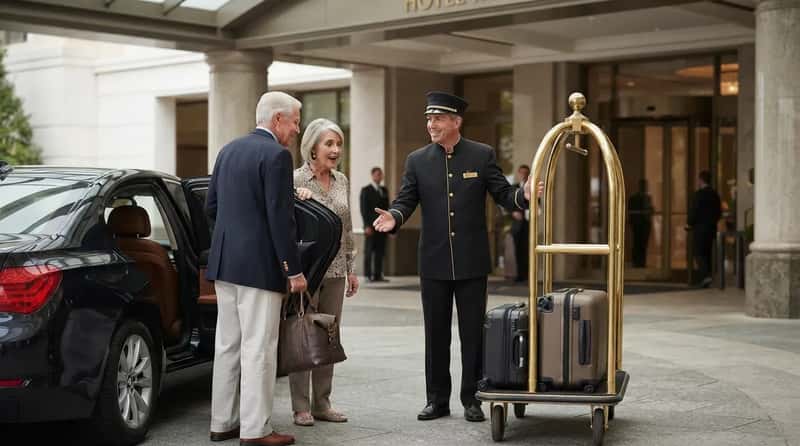
Most guests have to flag someone down for a cart. If one just appears the moment you step out of the car, that wasn’t luck – it was a judgment call. Bell staff are trained to offer carts more freely to guests who look like heavy bags might slow them down or strain something.
Some younger travelers find this a little presumptuous, and honestly, fair enough – plenty of 65-year-olds could outwalk a tired 30-year-old across any lobby. But bell captains would rather over-offer than watch someone struggle, so the cart becomes a default courtesy instead of a wait-and-see gesture.
#11 – He Walks You Straight to the Room Instead of Just Pointing
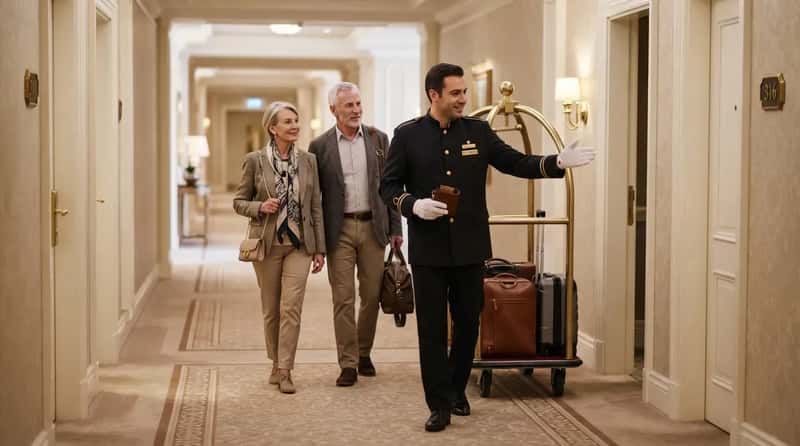
Pointing toward the elevator bank is the fast option. Personally walking the full distance eats into a busy shift, so when a bell captain does it anyway, it’s rarely just good manners talking.
Full-room escorts tend to go to guests staff suspect might get turned around in a sprawling resort layout or simply need the extra time to catch their breath. It also doubles as a quiet safety check – a way to confirm the room setup actually works before anyone walks away.
#10 – Your Thermostat Is Already Set Warmer Than Standard

Guests rarely think about this one, but bell staff and housekeeping talk to each other more than people assume. If your room feels a few degrees warmer than the usual check-in temperature, someone requested that ahead of time.
Cooler body-temperature regulation is a well-documented part of aging, and staff who’ve worked decades in hotels pick up on the pattern fast. A pre-warmed room is one of the most common invisible courtesies extended to older guests, done specifically so nobody has to pick up the phone and ask.
#9 – Your Suitcase Lands on the Rack, Never the Floor
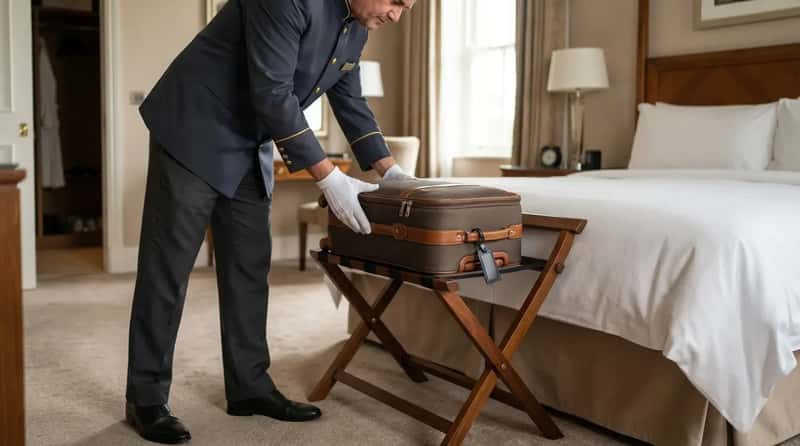
It sounds like nothing, but where a bellhop sets your bag says a lot. Placing luggage on a rack instead of the floor spares guests from bending or crouching to unpack, and it’s a specific habit taught for guests staff believe have limited mobility.
Plenty of hospitality veterans think this should just be standard for everyone, since nobody loves crouching after a long flight. In practice, though, the rack placement gets offered to older travelers first, and longtime bell staff will admit as much when you ask them directly.
#8 – He Maps Out the Ice Machine and Elevator in the Same Breath
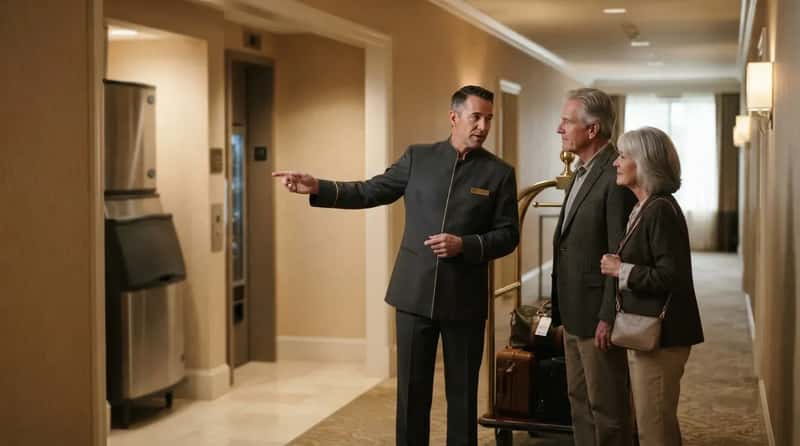
Most check-ins get a rushed rundown of amenities. If a bell captain slows down to specifically connect the ice machine, vending area, and elevator into one mental route, he’s quietly building you a path that skips stairs and long detours entirely.
This kind of layout-conscious orientation doesn’t happen for everyone. It shows up when staff suspect you’ll want fewer back-and-forth trips, and a single combined explanation like this is a quiet sign that comfort planning is already in motion behind the scenes.
#7 – Your Do Not Disturb Sign Gets Treated Like a Rule, Not a Suggestion
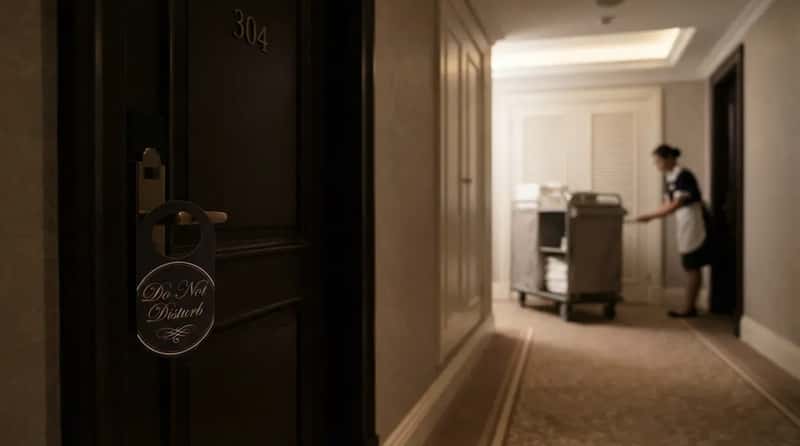
Housekeeping schedules are usually rigid on paper. But bell captains sometimes intervene on a guest’s behalf, and if your room mysteriously avoids an early morning knock or gets bumped to a later cleaning window without you asking, someone passed that preference along.
Guests over 60 are statistically more likely to sleep in after long travel days or early flights, and experienced staff know it cold. This informal scheduling adjustment never appears on any official policy sheet, yet longtime employees describe it as pure second nature.
Quick Compare
- Standard check-in: a quick point toward the elevator, default room temperature, and a luggage cart only if you ask for one.
- Quiet VIP check-in: a full room escort, a pre-warmed thermostat, and a cart that shows up before you say a word.
- Standard housekeeping: a fixed cleaning window regardless of what the door sign says.
- Quiet VIP housekeeping: a cleaning window quietly shifted later, with no request ever made out loud.
#6 – He Remembers a Detail From a Two-Minute Lobby Chat
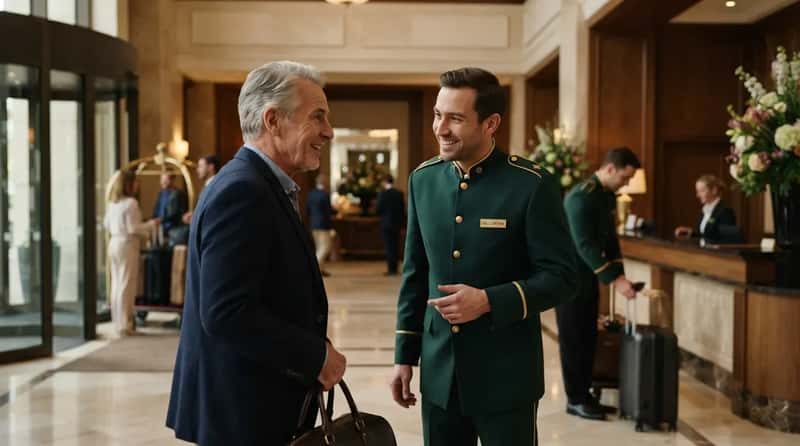
A bellhop who recalls your hometown, your grandkids, or some throwaway line from check-in isn’t just being friendly – he’s been trained to build rapport fast. But how much he actually retains often lines up with who he’s decided deserves the extra warmth.
Staff will openly admit older guests get more of this personalized memory treatment, partly because many visibly appreciate the recognition more than younger travelers who are used to feeling anonymous in a lobby. It costs the staffer nothing, but it buys real loyalty.
#5 – Your Car Gets Driven to the Door Instead of You Walking to the Garage
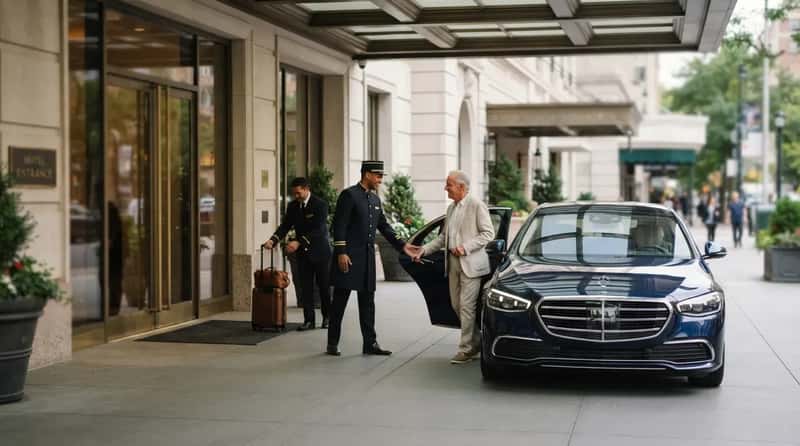
Valet retrieval is standard practice, but who gets it without asking is not. If a bell captain insists on bringing your car straight to the entrance instead of letting you make the walk to the garage yourself, that’s a deliberate override of the usual routine.
This override shows up most for guests staff worry might struggle on uneven pavement or a long garage walk. Some travelers see it as unnecessary hand-holding, but bell staff consistently call it one of the easiest ways to head off an embarrassing fall – all without ever mentioning age out loud.
#4 – He Personally Tips Off the Restaurant Host About You
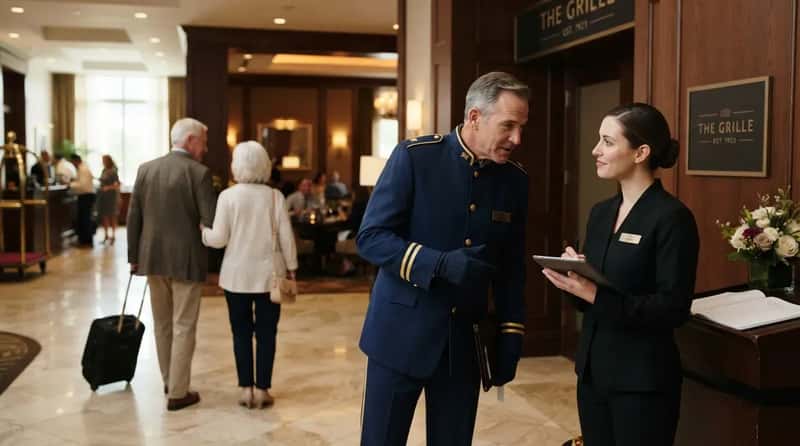
A quiet word between departments can quietly reshape your entire stay. If a bell captain walks over and flags your arrival to the restaurant host directly, instead of letting the reservation system handle it alone, you’ve likely just been marked for the smoother dining experience too.
That kind of cross-department heads-up usually means a quieter table, closer proximity to the restroom, or a host who checks on you more attentively than the standard once-per-meal glance. Hospitality workers describe this informal referral system as one of the most common hidden-VIP tactics in the industry, even at properties with zero formal loyalty program.
Worth Knowing
- Cross-department tip-offs, like a bell captain flagging your arrival to a restaurant host, happen even at hotels with no formal loyalty program at all.
- A dedicated luggage runner pulled from the general rotation is one of the clearest, most consistent signals that a guest has been quietly flagged for extra care.
- None of these courtesies are written into an employee handbook – they’re passed along informally, department to department, shift to shift.
#3 – Your Bags Beat You to the Room
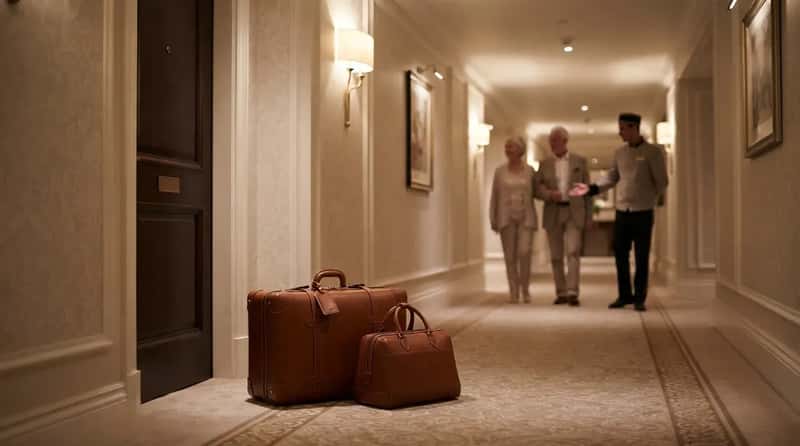
Normally, luggage trails a guest’s arrival by several minutes. So when your suitcase is already sitting by the door before you even get there, someone deliberately fast-tracked it – usually a bell captain who pulled your bags out of the general rotation and assigned a dedicated runner.
It’s a small logistical reshuffle, but it reflects a real judgment call: that standing around a hallway waiting isn’t something you should have to do. Longtime bell staff call this one of the clearest, most consistent signals of quiet VIP status – and admit it happens far more for older guests than anyone else.
#2 – He Calls Your Room Mid-Stay Just to Check On You

A callback isn’t standard hotel protocol. Most guests never hear from bell staff again after the initial greeting, so if your phone rings with someone asking whether everything’s comfortable, that’s a deliberate, unusual gesture, not a script.
This kind of mid-stay follow-up tends to happen when staff are genuinely thinking about a guest’s comfort beyond the first handshake. Veteran bell captains describe the callback habit as one of the strongest tells of who they’ve quietly decided to look out for, and it never shows up on any official guest survey.
#1 – He Says Your Name Before You Even Say His
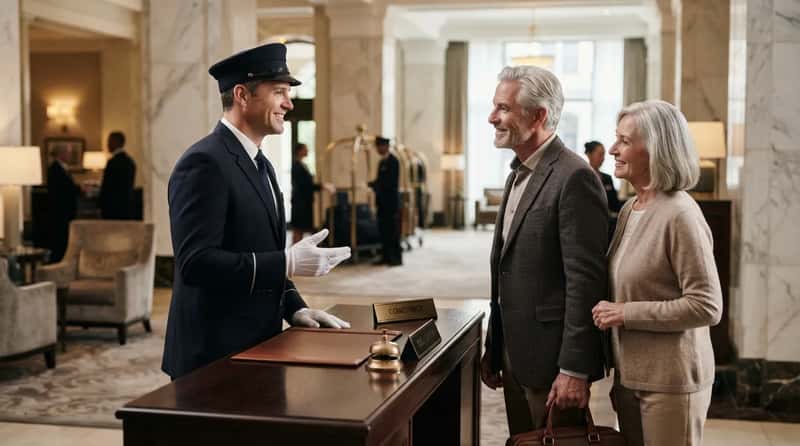
This is the ultimate tell. Getting remembered by name months later, with no computer check and no hesitation, means you left an impression strong enough that someone made a point of holding onto it. Bell captains see thousands of faces a year – this kind of recall is never an accident.
Longtime hospitality workers say this habit forms specifically around guests they’ve decided deserve extra warmth on return visits, and older guests tend to reciprocate that warmth more openly than anyone else. Being remembered by name is widely considered the single clearest sign of quiet VIP status in the entire industry, ranking above any free upgrade or bottle of wine sent to the room.
None of this is written into an employee handbook anywhere. It’s an unspoken system built on decades of reading body language, travel fatigue, and small cues most guests never realize they’re giving off.
Once a bell captain decides you’re worth the extra attention, it tends to follow you through the entire stay – and, more often than not, straight into the next one too.