

You probably picture summer camp as the same thing your kids do now: sunscreen stations, laminated permission slips, counselors trained in “positive behavior redirection.” That version barely existed fifty years ago. The camp your parents or grandparents got dropped off at in the 1970s ran on rules that sound less like nostalgia and more like a fever dream.
Real knives, real creek water, real gender lines nobody questioned out loud. Before you assume that’s exaggeration, know that former campers, counselors, and camp historians all confirm it happened, and some of it lasted way longer than it should have. Here’s what quietly vanished from camp life, one summer at a time.
#15 – Baby Oil Was the Only “Sunscreen” Anyone Used
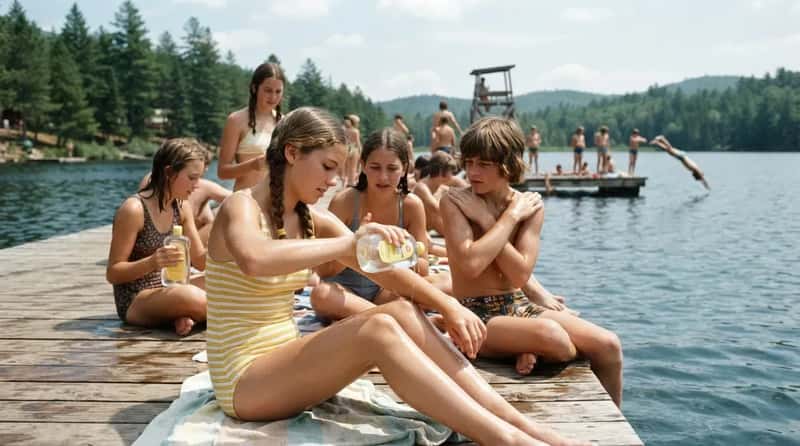
Getting as dark as possible wasn’t an accident at camp in the 1970s. It was practically the point of being there. Sunscreen sat untouched while campers slathered on baby oil, chasing a deeper tan without any idea what UV rays were actually doing to their skin.
Counselors would line kids up on the dock at midday, oil glistening, with zero SPF anywhere in sight. Nobody tracked burn risk or reapplication schedules because nobody thought to. Today’s camps monitor sun exposure like a checklist item, which makes the old baby-oil ritual feel almost reckless in hindsight. It’s a small thing, but it set the tone for just how loose the rules used to be.
#14 – Real Pocketknives Were Handed to Eight-Year-Olds
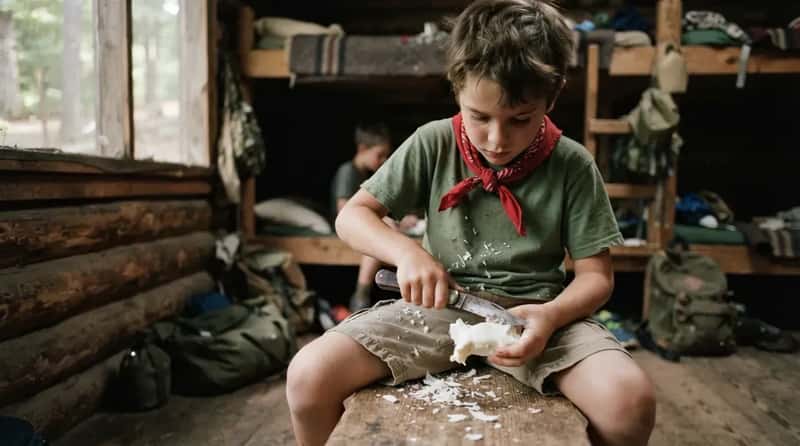
Whittling wasn’t a supervised craft table with dull tools. It was a bar of soap, a real blade, and a counselor saying “go shape something.” No safety gloves, no lesson on grip or angle, just kids figuring it out with steel in their hands.
Cuts and nicks were treated as part of the experience, not a reason to call anyone’s parents. After enough accidents piled up, camps quietly stopped handing out knives to campers who’d never held one. It’s strange to picture now: eight-year-olds carving soap in a cabin with nobody watching their hands.
Fast Facts
- Whittling badges were a staple of Scouting and traditional camp programs well into the 1970s
- Structured knife-safety courses didn’t become standard camp practice until the 1980s and 1990s
- Most camps that still teach whittling now require a signed waiver and supervised “knife time”
#13 – Movie Night Meant a Bedsheet and a Rented Projector
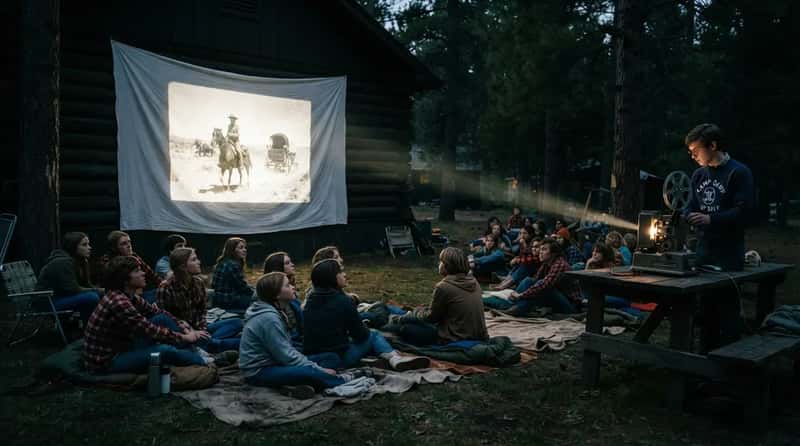
There was no streaming, no screen, no popcorn machine. Just a sheet nailed to a tree or draped over the mess hall wall, and one rented film reel for the entire week. If the projector jammed or the film snapped mid-scene, that was the whole show over.
Nobody voted on the movie and nobody expected to. The whole camp sat outside in the dark together, watching whatever showed up that week, glitches and all. Once camps added TVs, gaming rooms, and eventually tablets, that shared low-tech ritual disappeared almost overnight.
#12 – The Canteen Ran on Cold, Hard Cash
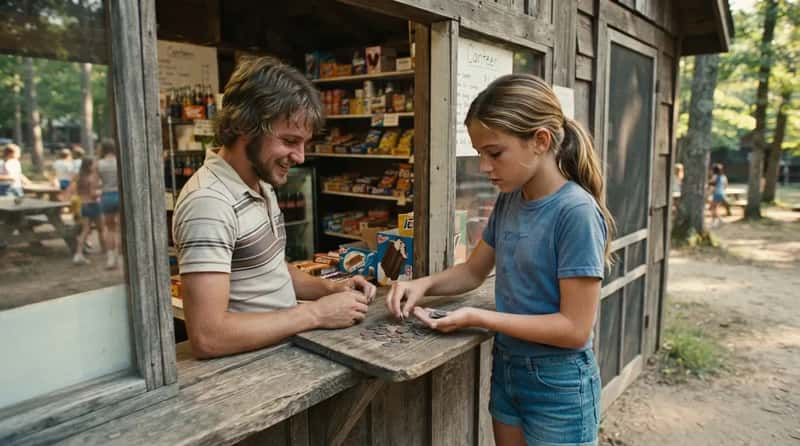
Every kid carried real coins in a pocket, and spending them wisely was practically a survival skill. Campers counted out nickels and dimes at a little window for an ice cream bar, and running out of canteen money for the week was a genuine crisis with no easy fix.
There was no digital tracking, no spending cap set by a parent back home, no way for anyone to know what you actually bought. That old cash economy has almost completely vanished from camp life, replaced by prepaid cards and apps that text mom a receipt. It sounds small, but losing that independence changed something bigger about camp culture too.
#11 – Boys Built the Fires, Girls Just Watched
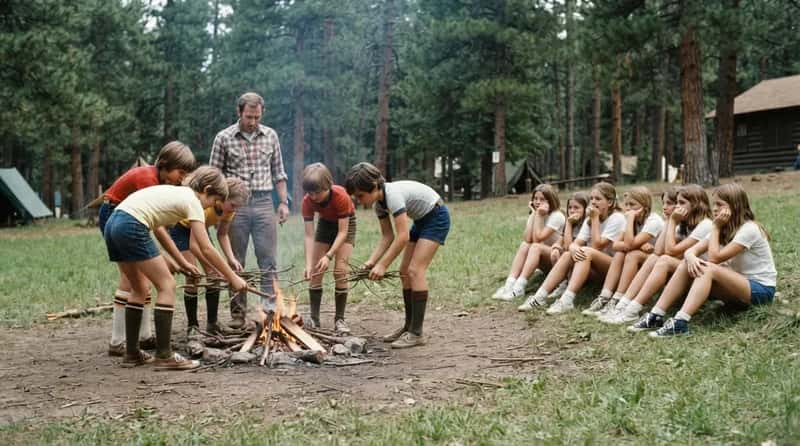
Camp activities in the 1970s were split sharply by gender, and almost nobody questioned it out loud. Fire-building contests were a boys’ event by default, while girls were usually told to sit on the sidelines and watch.
Title IX, the federal law passed in 1972, required equal treatment regardless of gender in education and activities, and once it took full effect, tasks like these began disappearing fast. Girls who’d wanted to build fires or learn survival skills for years suddenly had the door open. Unlike most entries on this list, this one didn’t fade slowly. It got legislated away almost overnight.
Worth Knowing
- Title IX became law on June 23, 1972, as part of the Education Amendments
- The law bars sex-based discrimination in any federally funded education program or activity
- Camps tied to schools or federally funded youth programs had to comply directly
- Enforcement spread gradually nationwide, but coed activity lists shifted fast once it landed
#10 – Snipe Hunts Sent Kids Wandering Alone in the Dark
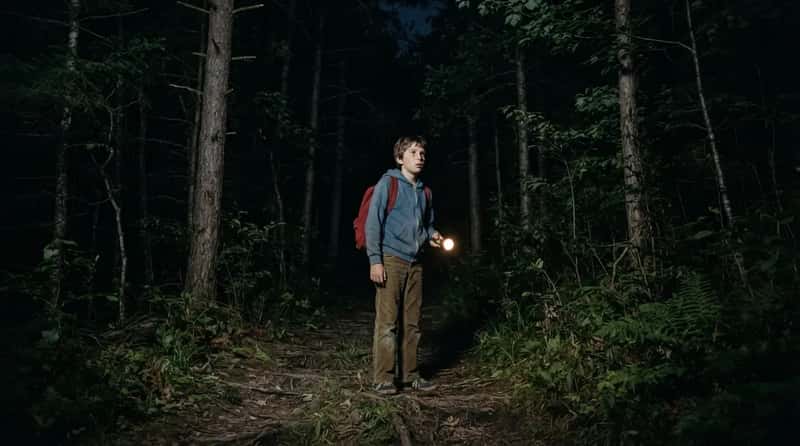
New campers were told a fake creature called a “snipe” lived somewhere in the woods, and finding one was treated as a rite of passage. In reality, it was a prank designed to bond the group at a new kid’s expense, and some campers spent hours wandering in the dark chasing something that never existed.
Some of those kids genuinely got lost or scared before anyone bothered checking on them. What once passed as harmless bonding now reads like a supervision failure waiting to happen, and the tradition quietly faded as modern safety expectations finally caught up. Few campers today would recognize the phrase “snipe hunt” at all.
#9 – Rope Swings Had Zero Safety Checks

The best part of the day was also the most dangerous, and nobody thought twice about it. Rope swings tied high to overhanging branches sent campers flying into creeks with nobody checking the water depth or scanning for hidden rocks below.
Nobody inspected the rope for fraying either, and the same swing often stayed up all summer, every summer, injuries and all. Modern camps that still keep rope swings pair them with depth checks, spotters, and mandatory life vests. The version from the ’70s would never pass an insurance walkthrough today.
#8 – Campfire Songs Nobody Would Sing Today
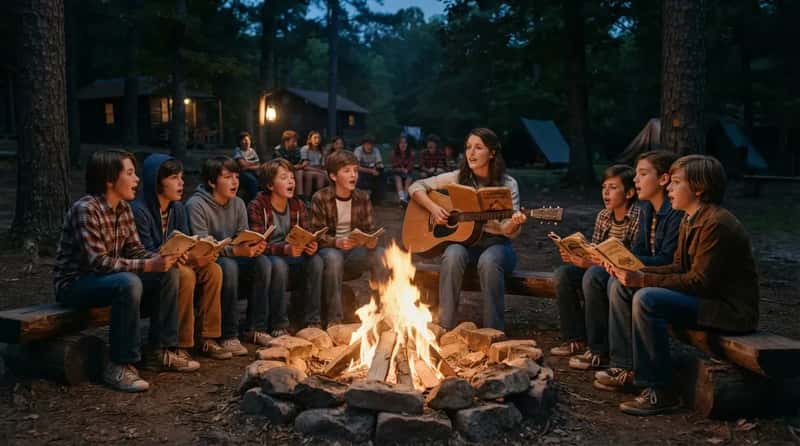
The nightly sing-alongs everyone remembers fondly weren’t as innocent as the nostalgia suggests. Many 1970s camp songbooks, handed down without anyone questioning the lyrics, included mock accents and jokes built around Native customs, played strictly for laughs.
Nobody in charge stopped to ask whether the material was appropriate, and it stuck around for years simply because it always had. As awareness of cultural respect grew, songbooks across the country were quietly rewritten or retired. It’s one of the clearest signs of how much camp culture has actually shifted since the ’70s.
#7 – Cabin Initiation Nights Scared New Campers on Purpose
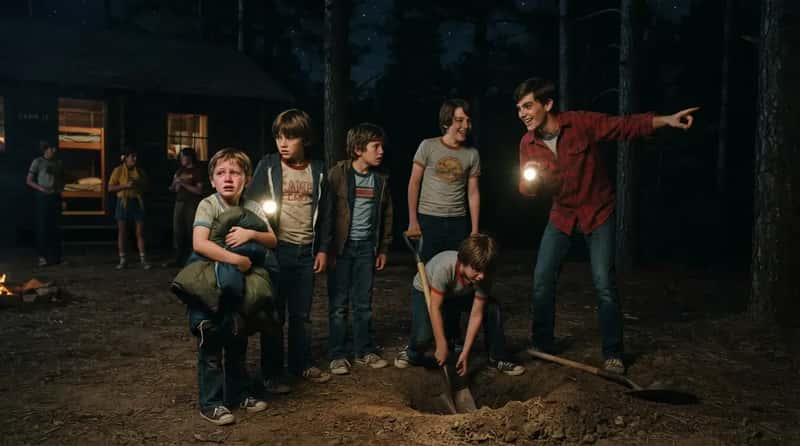
The very first night at camp was designed to unsettle you, not welcome you. New campers got sent to dig holes to “bury the flag” or search for imaginary animals in the dark, and older kids treated the whole thing as a joke while younger ones quietly panicked.
Counselors saw it as bonding, not fear, even for the homesick eight-year-old who genuinely believed something was out there. That first night sets the tone for an entire summer, and for a lot of kids, the tone was dread instead of excitement. These first-night pranks have almost entirely disappeared from mainstream camp programming today.
#6 – Barefoot Nature Hikes Were Considered Character-Building

Shoes were treated as optional, even on rocky trails through the woods. Staff encouraged barefoot hikes so kids could “feel the forest,” as if direct contact with roots and gravel built some kind of toughness store-bought sneakers couldn’t.
The consequences were more serious than scraped toes. Plenty of campers needed tetanus shots once summer ended, a detail that gets left out of the nostalgic version of this story. Today, a camp sending barefoot kids down a gravel trail would trigger an immediate incident report, not a badge of honor.
At a Glance
- Tetanus boosters are recommended every 10 years, exactly the kind of shot a rocky-trail cut could trigger
- Modern camp handbooks almost universally require closed-toe shoes on hiking trails
- Barefoot programming today is usually limited to soft, cleared grass areas, not gravel or forest floor
#5 – Kids Drank Straight from the Creek

Bottled water wasn’t really a thing yet, and neither was the concern that should have come with skipping it. Kids were taught to drink straight from the creek as a survival skill, with nobody mentioning Giardia or any of the other parasites hiding in that water.
Camps rarely, if ever, tested the water beforehand. When illnesses started spreading through cabins, worried parents finally pushed back, and that pressure is what brought filters and purification tablets into camp life. What was once framed as rugged outdoor wisdom is now viewed as a basic health hazard nobody would risk today.
#4 – Camp Mornings Started With a Bugle, Not a Phone Alarm
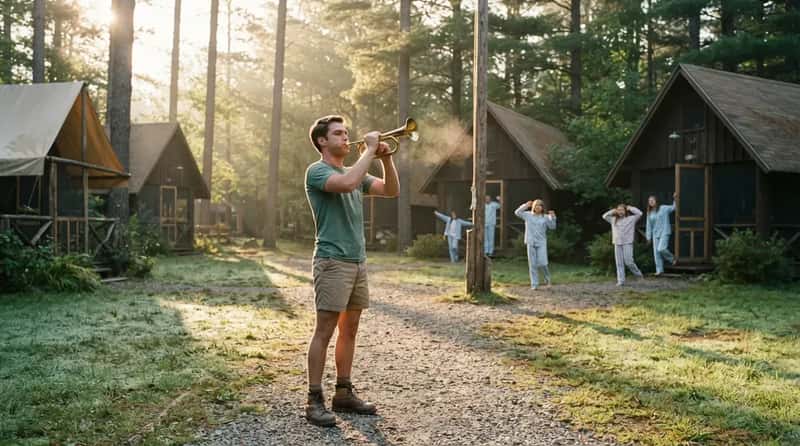
There was no gentle wake-up, just one loud, mandatory signal everyone had to obey at the same moment. Camps rooted in early 20th-century military-style traditions kept the bugle call alive well into the 1970s, using it to mark wake-up, meals, and lights-out with rigid precision.
Nobody snoozed through it, because there was nowhere to hide from the sound echoing across the whole property. That centralized schedule has mostly given way to individual cabin routines and flexible programming blocks. Kids today simply don’t experience one signal dictating every hour of their day the way 1970s campers did.
#3 – Color War Captains Were Named in Total Secrecy
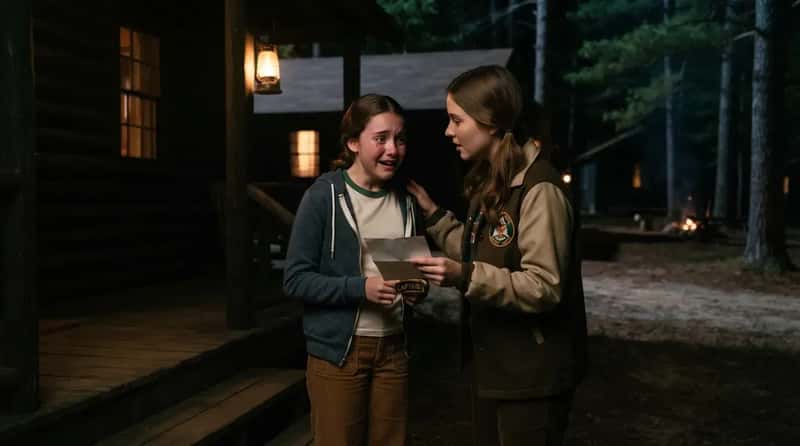
Getting picked as a Color War captain was treated like one of the biggest honors of a camper’s entire year. Color War split the whole camp into rival teams for days of competition, and kids waited all summer just for the chance to be chosen.
Finding out you’d been tapped as captain, usually pulled aside quietly at night, felt as thrilling as a college acceptance letter for a lot of former campers. That dramatic, secretive reveal has largely been replaced by casual, pre-announced team assignments at most modern programs. The competition survived. The ceremony around it mostly didn’t.
#2 – Awards Ceremonies Handed Out Plastic Crowns, Not Trophies for Everyone
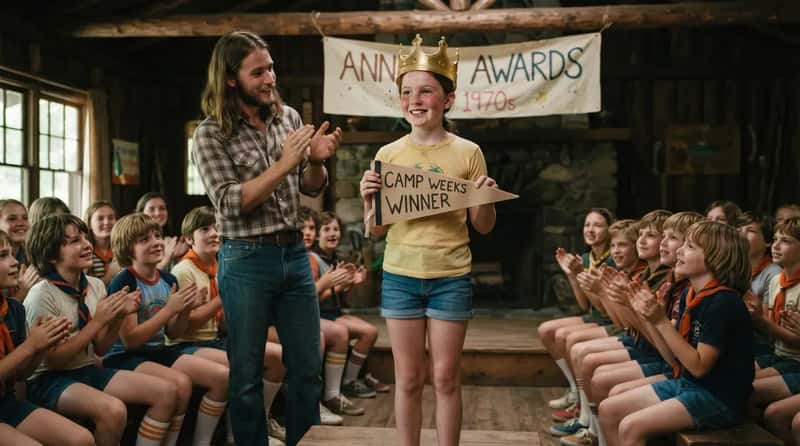
Only one winner walked away with recognition, and everyone else simply clapped. Plastic crowns and applause marked the end of a camp week, with no participation ribbon and no attempt to soften the loss for anyone else in the room.
A single camper wore the crown, and that was the whole point of the ceremony. This blunt, one-winner format has mostly disappeared as camps shifted toward inclusive recognition systems meant to protect every kid’s confidence. Whether that shift actually helped kids or just softened the sting is still argued about by former campers today.
Quick Compare
- 1970s camp awards: one plastic crown, one winner, one week
- Modern camp awards: ribbons, “most improved” honors, and small prizes for nearly everyone
- 1970s tone: blunt and competitive
- Modern tone: inclusive and confidence-focused
#1 – Mail Call Was the Only Contact With Home All Summer
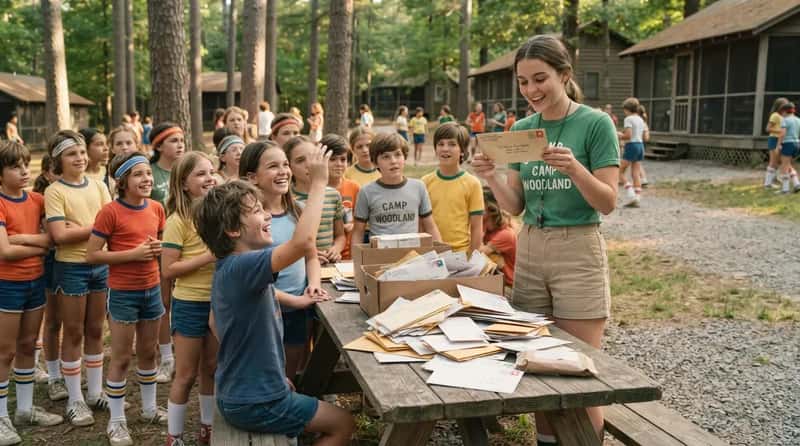
No phones, no video chats, no texting mom the second you felt homesick. Just a folding table, a stack of envelopes, and a counselor reading names out loud while kids either ran up grinning or walked away quietly.
Parents wrote days in advance knowing their words wouldn’t arrive for a while, and kids wrote back the same slow way, waiting patiently for a reply that might take a week. That one-way rhythm of communication has been completely replaced by instant messages and daily photo updates from camp staff. Ask any former ’70s camper what they miss most, and mail call usually wins without much debate.
Looking back, 1970s summer camp was a strange mix of freedom, risk, and genuine wonder that no modern program could legally recreate today. Some of it needed to go. Nobody’s lobbying for pocketknives and creek water to make a comeback. But somewhere between the safety waivers and the group texts, camp lost a little of its rough-edged magic too.
Which of these traditions do you remember from your own summers away? Tell us which one hit you hardest.