Somewhere between the security line and your gate, a strange kind of math takes over. A bottle of water that costs $1 at a gas station suddenly costs $6. A cart to push your own suitcase – something free in almost every airport on Earth – suddenly has a price tag in America. This isn’t a small “convenience markup.” It’s a completely different pricing universe, and most travelers walk through it without ever questioning why.
Once you line these charges up next to what the exact same thing costs on a normal street corner, the pattern gets almost funny – and then a little infuriating. Here’s what the receipts actually show, starting with the one that quietly drains your wallet before you even board.
#15 – The SIM Card Kiosk That Charges Tourist-Trap Prices for Data
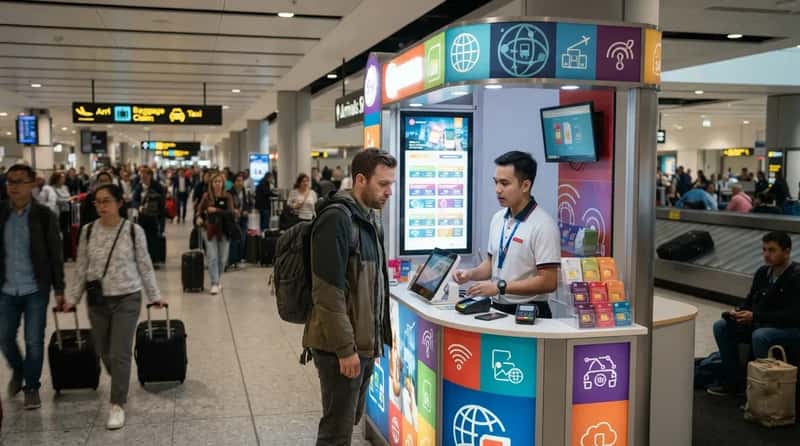
Airport SIM and eSIM kiosks sit right at the arrivals hall, banking on jet-lagged travelers who need connectivity the second they land. These kiosks routinely charge two to three times what the same carrier charges through an app or a local convenience store just outside the terminal. The convenience feels essential in the moment, which is exactly the point.
Most destinations now let you activate an eSIM online before you even board, often for a fraction of the airport price. A five-minute wait until you clear the terminal can turn a $40 data plan into an $18 one. The kiosk isn’t really selling data – it’s selling panic.
#14 – “Fast Track” Security Lanes That Used to Just Be Security
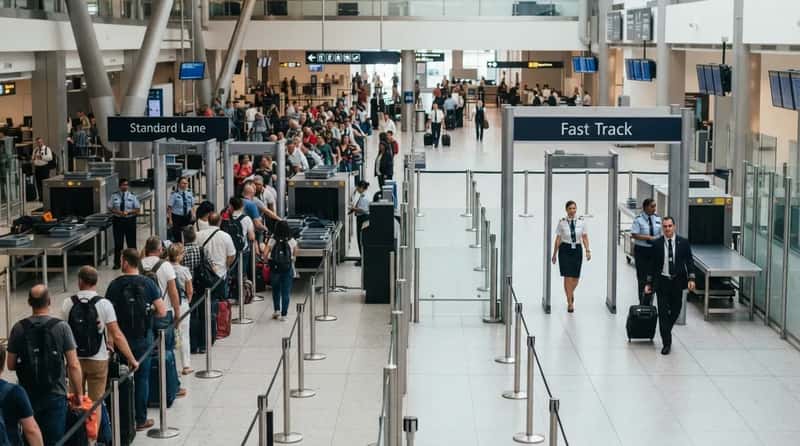
At a growing number of international airports, standard security screening has quietly split into a free, slow-moving standard lane and a paid “fast track” option that can run anywhere from a few dollars to well over twenty. The service itself – walking through a metal detector – costs the airport nothing extra to provide.
Outside the airport, nobody pays to walk through a doorway faster. Inside it, that exact experience has been repackaged as a premium product. Frequent flyer status or a specific credit card can get you the same lane free, which tells you everything about how manufactured the fee really is.
Quick Compare
- Standard lane: free, same metal detector, same screening steps
- “Fast track” lane: $5 to $20+, identical screening process
- Elite airline status or select credit cards: often unlock the fast lane at no extra cost
#13 – Baggage Wrapping That Turns Plastic Film Into a Luxury
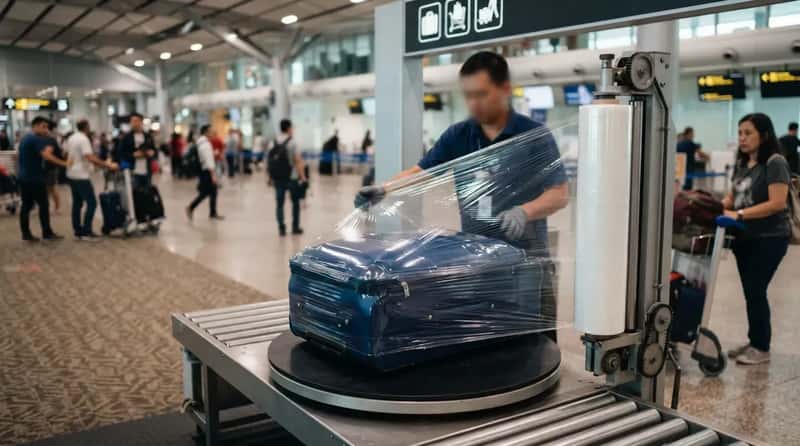
Airport baggage-wrap stations shrink-wrap suitcases in plastic film for anywhere from $10 to $25, marketed as protection against damage, theft, or rain. The actual plastic used costs the vendor pennies per bag, and the machine that applies it takes less than sixty seconds to run.
A sturdy luggage cover bought online for $15 does the same protective job for years, not just one flight. The wrap booth thrives entirely on the fact that you can’t bring your own wrap through check-in with the same dramatic, security-theater presentation.
#12 – Travel Pillows and Basic Gear Sold at Gift-Shop Markups
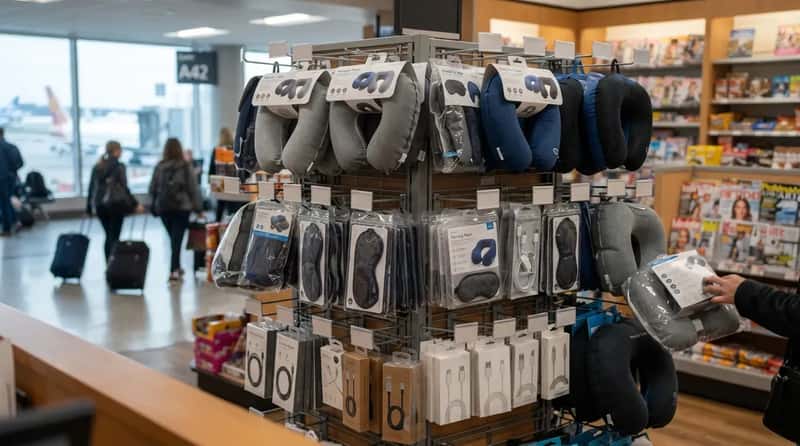
Neck pillows, eye masks, and phone cables sitting in airport gift shops are frequently priced two to four times higher than identical products at any big-box retailer or drugstore. The packaging is the same. The brand is often the same. Only the price tag has changed.
Travelers grab these items because they forgot to pack them, not because the airport version is better. That single moment of “I need this now” is the entire business model – a captive audience with nowhere else to shop and a flight boarding in twenty minutes.
#11 – ATM Withdrawals That Sting Twice Before You Even Leave
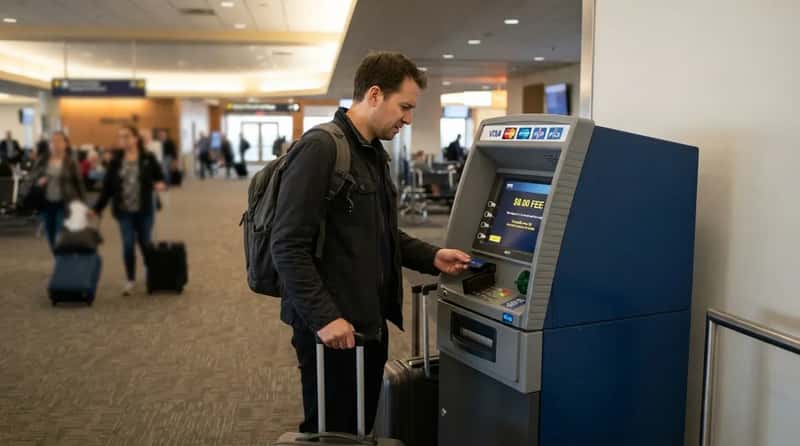
Airport ATMs, especially the standalone machines run by third-party operators rather than actual banks, often carry withdrawal fees noticeably higher than a bank ATM down the street. Add your own bank’s out-of-network fee on top, and a simple cash withdrawal can quietly cost you $8 to $10 before you’ve spent a dollar.
A regular bank ATM a mile away charges little or nothing for the same transaction. The airport machine isn’t dispensing different cash – it’s just positioned where you have no other option and a plane to catch.
Fast Facts
- Third-party airport ATMs: higher withdrawal fees than bank-owned machines nearby
- Your own bank’s out-of-network charge: frequently stacked on top
- Total damage on one airport withdrawal: often $8 to $10 before you spend a dollar
- A bank ATM a mile away: usually free or nearly free for the same cash
#10 – Currency Exchange Kiosks Built to Look Convenient, Not Fair
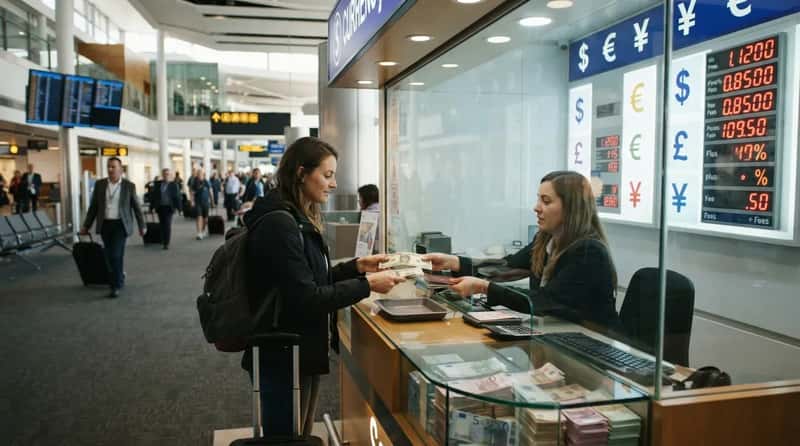
Airport currency exchange counters are widely considered the worst place in any country to swap money, and the numbers back that up. Airport kiosks typically charge exchange rates 5 to 10 percent worse than market rates, plus additional flat fees that can run $5 to $15 per transaction. On a few hundred dollars, that gap adds up fast.
Most airport kiosks land somewhere between 5 percent and 15 percent above the mid-market rate. A bank ATM abroad, or currency ordered from your own bank before you fly, delivers the same foreign cash for dramatically less. Airport kiosks know that by the time you’re standing there, you don’t have a lot of other options.
#9 – Lounge Day Passes for Amenities That Used to Be Free
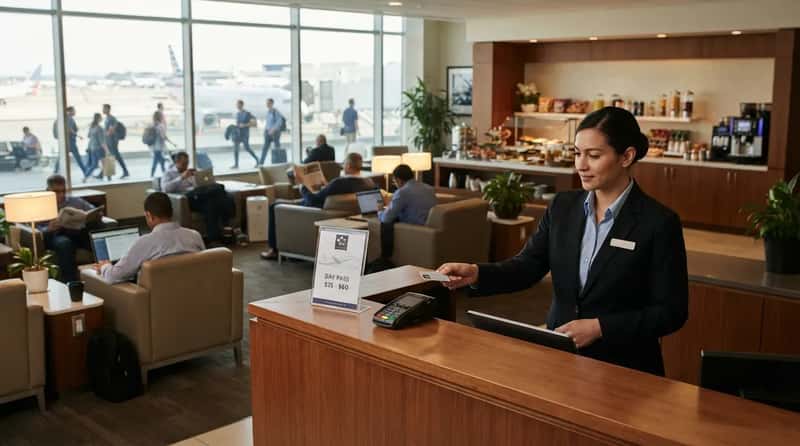
Airport lounges now sell single-visit day passes running $35 to $60 for access to seating, snacks, and Wi-Fi that gates used to offer at no charge decades ago. The pitch is comfort and quiet, but the underlying products – chairs, coffee, outlets – cost the lounge operator almost nothing per guest.
Outside the terminal, a coffee shop with comfortable seating and Wi-Fi rarely charges an entry fee just to sit down. The lounge pass essentially monetizes boredom, betting that a delayed flight or a long layover will make almost any price feel reasonable.
#8 – Seat Selection Fees for Seats That Exist Either Way
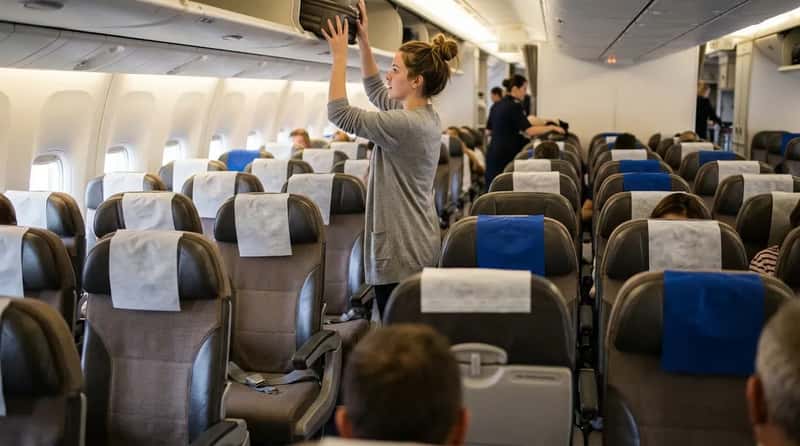
Many airlines now charge $10 to $60 just to pick a specific seat during booking, even though every seat on the plane is already built, installed, and going to be occupied by somebody regardless. Skip the fee, and you’re simply assigned a seat for free at check-in.
Nowhere else do you pay extra to choose which identical chair you sit in among a room full of interchangeable options. The fee doesn’t buy comfort – it buys the illusion of control over something that was always going to happen anyway.
#7 – Priority Boarding for a Line You’d Normally Just Join
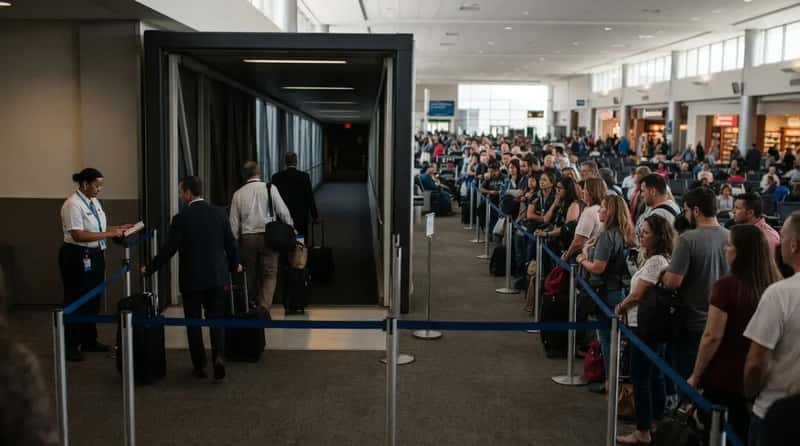
Priority boarding fees, often $15 to $25, sell travelers the right to walk down a jet bridge a few minutes earlier than everyone else. The plane leaves at the same scheduled time no matter when you board it. The only thing purchased is a shorter wait in a hallway.
Grocery stores, movie theaters, and concert venues don’t charge extra to enter a line closer to the front unless there’s an actual scarcity issue, like limited seating. On a plane, every seat is already assigned. Priority boarding is a fee for psychological comfort, not a physical resource.
#6 – Checked Bag Fees for Storage Space That’s Already Built In
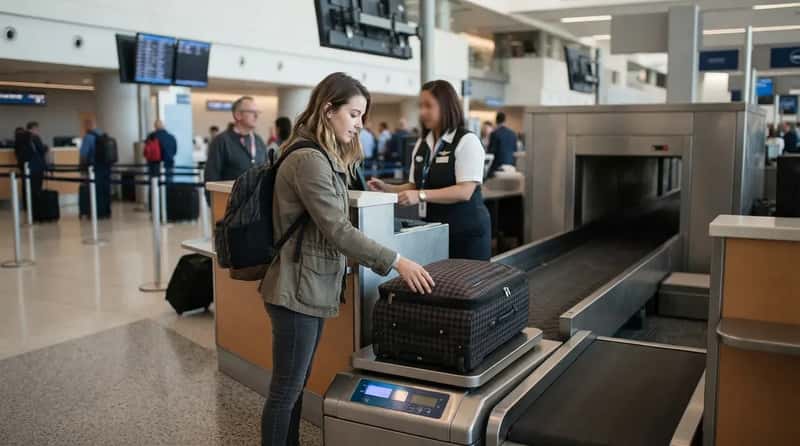
First checked-bag fees on major U.S. airlines now commonly run $35 to $40 each way, charging travelers to use cargo hold space that exists on every flight whether bags are checked or not. The plane isn’t lighter or cheaper to fly because fewer bags go underneath.
A parked car doesn’t charge extra to use its own trunk. A hotel room doesn’t bill guests to open the closet. Airlines are unique in monetizing storage space that was engineered into the aircraft from day one, regardless of how many passengers use it.
At a Glance
- First checked bag, major U.S. airlines: commonly $35 to $40 each way
- Cargo hold space: built into every flight, used or not
- Comparable free storage elsewhere: car trunks, closets, garages – none charge an entry fee
#5 – Airport Parking That Turns a Driveway Into a Premium Product
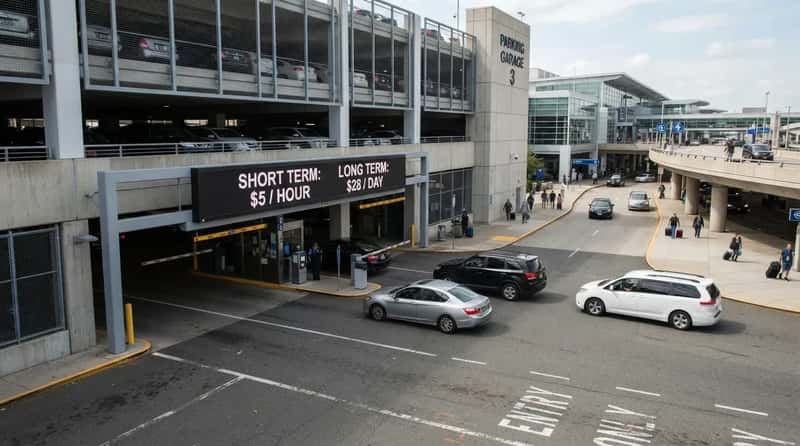
Short-term airport parking garages routinely charge $3 to $5 per hour, and long-term lots can still run $15 to $25 a day, for a service that amounts to leaving a car in a paved space. Curbside drop-off is often the only genuinely free option, and many airports now aggressively police how long you can idle there.
Compare that to parking at a regular shopping mall, office building, or residential street, where leaving a car for hours costs nothing at all. Airport lots justify the price with “convenience” and shuttle service, but the core product – asphalt and a parking spot – is identical to what’s free everywhere else in town.
#4 – Airport Wi-Fi “Premium” Speed for a Connection That Should Just Work
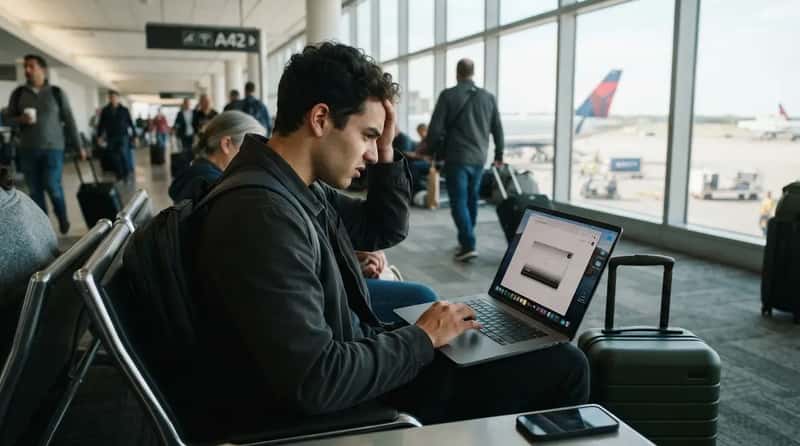
Plenty of airports now offer a free but painfully slow Wi-Fi tier alongside a paid “premium” tier priced anywhere from $5 to $20 that unlocks video-streaming speeds. Outside the terminal, coffee shops, hotels, and libraries hand over full-speed Wi-Fi with no tiered pricing at all.
The paid version isn’t a new network – it’s usually the exact same infrastructure with an artificial throttle removed once you pay. That’s the part travelers rarely realize: the slowdown on the free tier is often a business decision, not a technical limitation.
#3 – Luggage Carts That Are Free Almost Everywhere Except Here
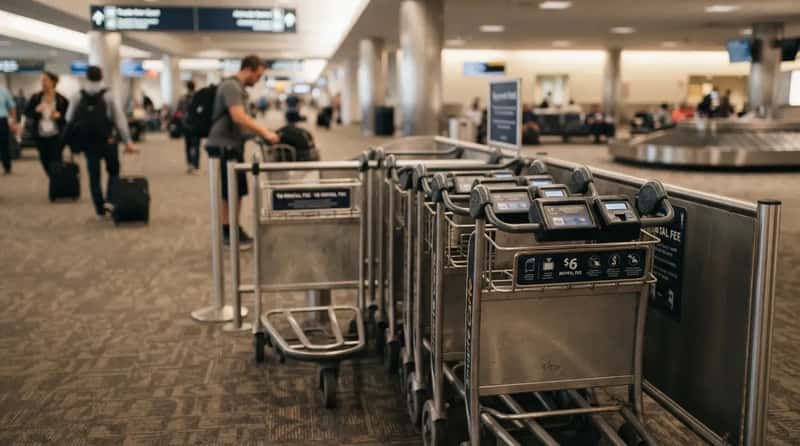
Renting a simple metal cart to wheel your own bags across a terminal is one of the strangest charges in American air travel. At most U.S. airports, luggage carts cost between $5 and $9 to rent, depending on location. That’s for a cart you push yourself, return yourself, and use for maybe ten minutes.
Carts are usually free at airports outside the U.S., but American airports charge for them almost everywhere. The reason isn’t operational cost – it’s contractual. In the U.S., most airport trolley carts are supplied and managed by a company called Smarte Carte under exclusive contract with individual airports, which take a cut of every rental. A shopping cart at Target has never once charged you $6.
Worth Knowing
- U.S. airport carts: cost between $5 and $9 to rent
- Most airports outside the U.S.: carts are simply free
- Behind the U.S. fee: an exclusive contract with a company called Smarte Carte
- The airport takes a cut of every rental: a contract decision, not a cost-based one
#2 – Phone Charging That Costs Money Only Because You Didn’t Bring a Cable
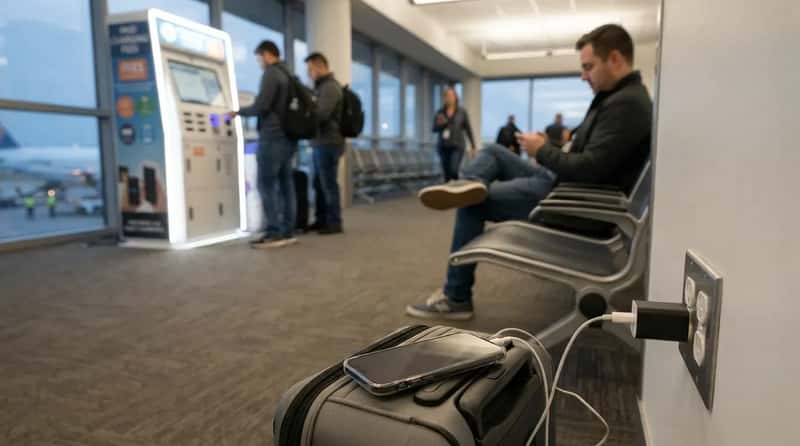
Standalone charging kiosks and locker rentals at airports now commonly charge for the privilege of powering up a dying phone. Portable power bank kiosks run $5 to $12 per 24 hours, and paid locker-style charging stations aren’t much cheaper, often $3 to $6 per 60 minutes.
Here’s the part that stings: it’s almost entirely avoidable. AC outlets cost nothing – your only investment is carrying a compact 30W charger and a short USB-C cable. Regular wall outlets, the same kind in your kitchen at home, are usually sitting free at the gate the entire time, ignored by everyone lined up at the paid kiosk.
#1 – Bottled Water That Costs Four Times More Than at Home
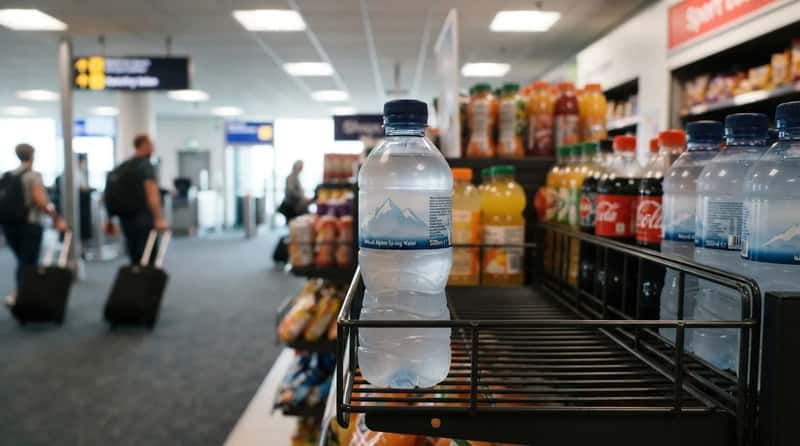
Nothing captures airport pricing insanity quite like a bottle of water. A 2009 USA Today report found that most American airports charged about $2.60 for a bottle of water, and prices have only climbed since. A more recent investigation found a 20-ounce bottle of LifeWater priced at $4.59 inside a terminal, while the same water at a nearby convenience store was $2.49 – an 84 percent markup for the identical bottle.
At some major hubs it’s even more dramatic: a 16.9oz/500ml bottle often runs $3 to $5 at U.S. airports, even in cities with a low cost of living, and one traveler at JFK reported being charged $7.66 for a single bottle of water at a terminal store. Meanwhile, Americans pay roughly $1.22 per gallon for bottled water almost everywhere else. The most maddening part? Many airports now have free water refill stations past security, sitting just a few gates away from the $6 bottle nobody thinks to skip.
Why It Stands Out
- Average airport bottled water: about $2.60, climbing to $4.59-$7.66 at some terminals
- Same bottle at a nearby convenience store: as low as $2.49, an 84% markup inside the airport
- Americans pay roughly $1.22 per gallon of bottled water almost everywhere else
- Free refill stations: often just steps past security, ignored by most travelers
None of these charges exist because the product costs more to make. They exist because you’re standing somewhere you can’t easily walk away from, and every operator in that building knows it. The water is the same water. The plastic wrap is the same plastic. The outlet delivers the same electricity it does in your living room. What’s different is leverage – and airports have built an entire economy around the ten minutes before your boarding call.
The good news is that almost every fee on this list has a free or cheaper workaround if you plan even slightly ahead: a refillable bottle, a personal charging cable, currency ordered before departure, a cart-free carry-on strategy. The fees only win when travelers get caught off guard. Which one of these surprised you the most – or made you the angriest? Drop it in the comments.