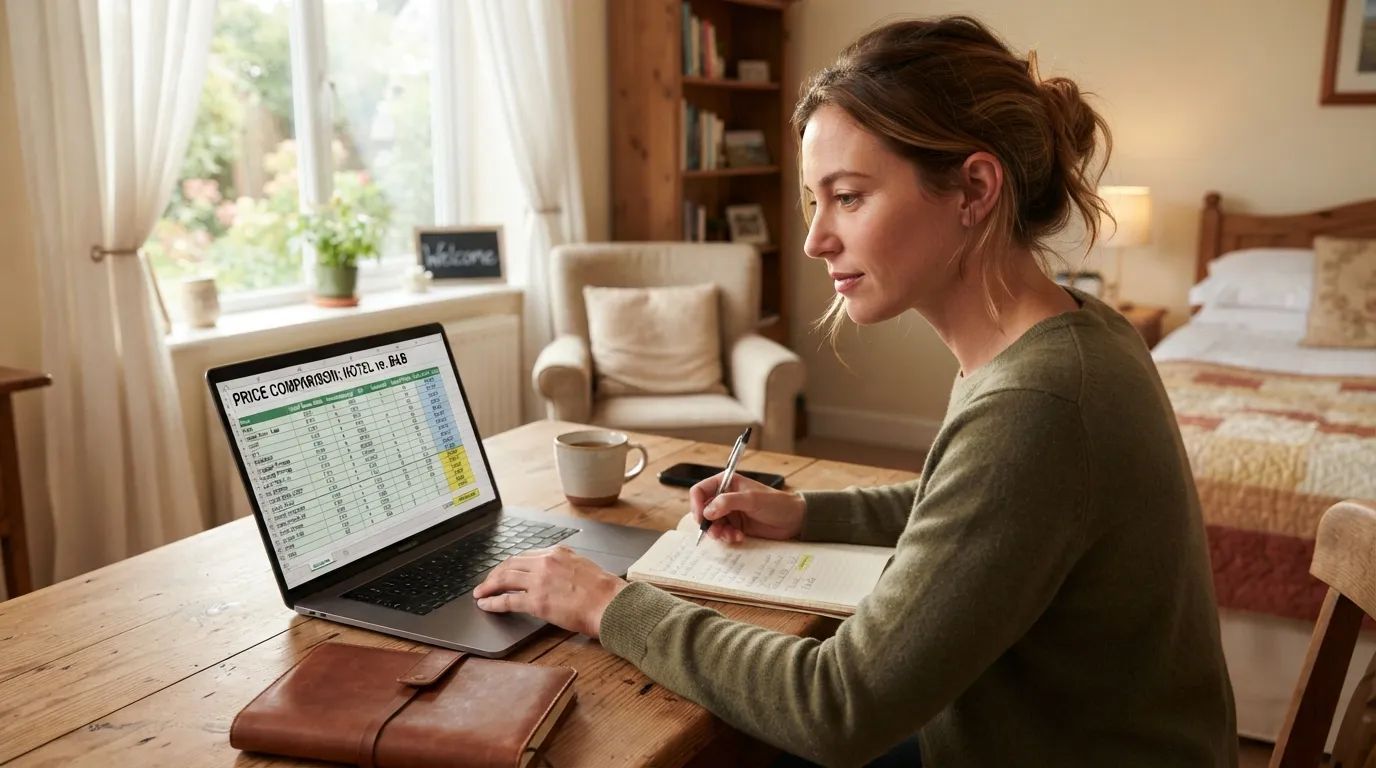
You booked the hotel because it looked cheaper. Then the resort fee showed up, then the parking fee, then an $18 Wi-Fi upgrade you never asked for.
By checkout, the “budget” room cost more than the charming B&B you almost skipped over. Here’s the part hotels don’t advertise: almost everything you’re now paying extra for used to just be included.
We compared what B&Bs still hand over for free against what the same items now cost at a major hotel chain. Some of the gaps are mildly annoying. A few are genuinely infuriating, and the last one on this list changes the entire math of which option is actually cheaper.
#15 – Free Wi-Fi, No Strings Attached
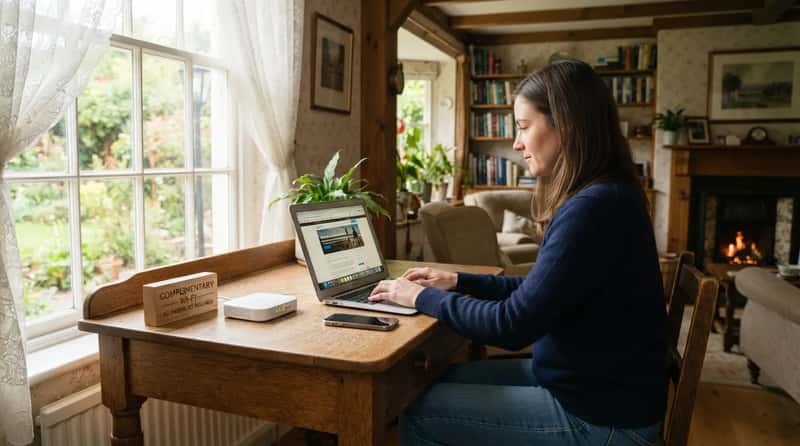
At a B&B, Wi-Fi is just… there. It’s baked into the room rate, no login codes, no upsell screen blocking your browser.
In a world where connectivity is basically oxygen for travelers, B&Bs treat it as a given across the entire property, not a privilege reserved for certain floors.
Big hotels went the opposite direction. What used to be one shared amenity – internet access – has been split into a slow free tier and a faster paid one, and the paid tier is where the real speed lives.
That faster connection is often listed as a resort-fee “benefit,” right alongside gym access and local calls nobody actually makes anymore.
That’s just the appetizer. Wait until you see what happens to breakfast.
#14 – A Real, Hot, Home-Cooked Breakfast
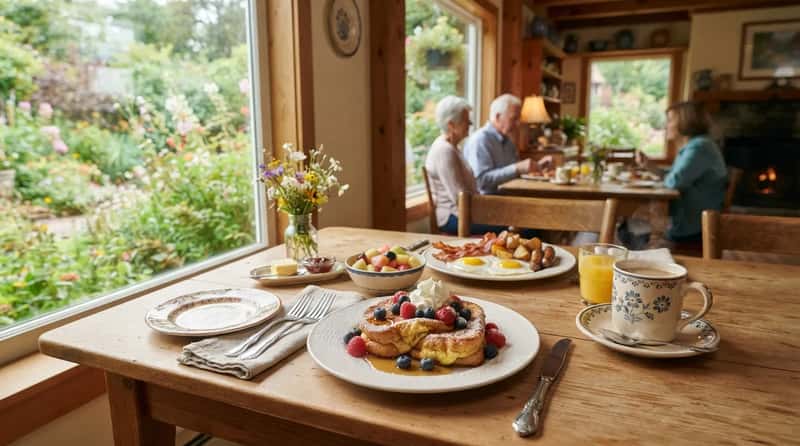
The “B” in Bed & Breakfast isn’t decorative. It’s where these properties actually flex.
Menus rotate daily – stuffed French toast one morning, berry-loaded pancakes the next, eggs made exactly how you like them. Some hosts even pull ingredients straight from their own gardens that morning.
Compare that to big hotels, plenty of which quietly ended free breakfast as a loyalty perk in the last few years. At many chains, breakfast is either absent from the rate entirely or buried inside a resort fee you never agreed to.
At a B&B, a hot, made-to-order breakfast is simply what you get. No loyalty tier required, no separate line waiting for you at checkout.
Now here’s the fee that can quietly add $400 to a week-long trip.
#13 – Free Parking, Right on Property
Parking at a big-city hotel has quietly become one of the most punishing charges on the whole bill.
Valet or self-parking at major hotels and resorts commonly runs $25 to $60 a night, for a spot you’d reasonably expect to come with the room.
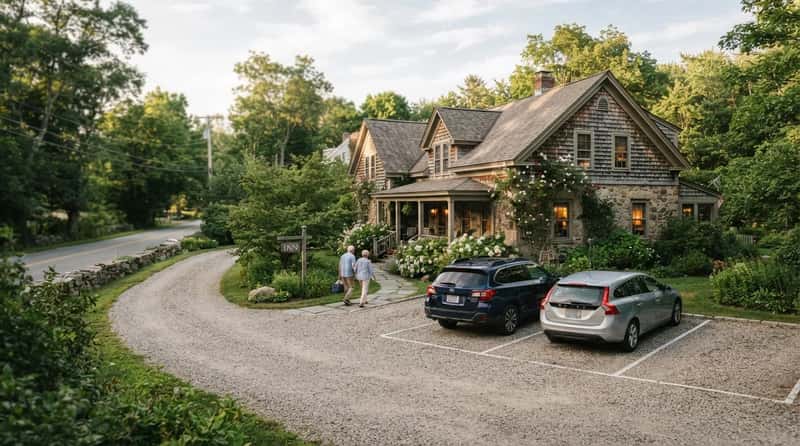
Most B&Bs just give you a spot on the property. It’s not marketed as a perk – it’s simply how the place was built, around welcoming guests instead of billing them for existing.
Some travelers have even reported mandatory parking charges appearing on hotel bills despite never having a car. The charge sticks unless you notice it and dispute it yourself.
Next up is the fee hiding inside your own minibar.
#12 – Complimentary Snacks and Beverages All Day
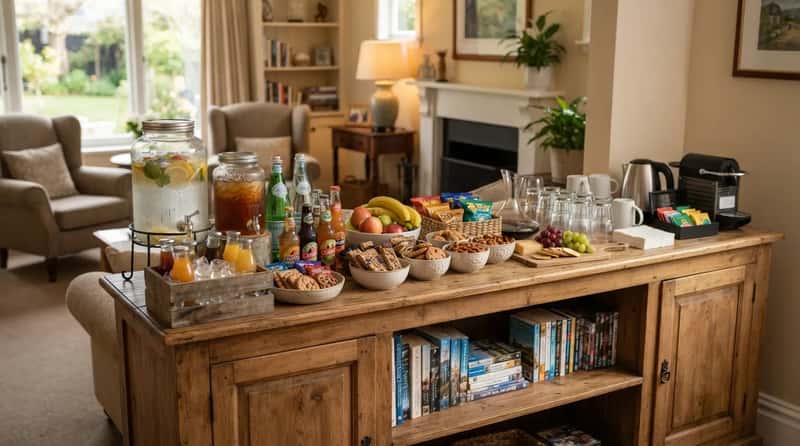
Open a hotel minibar and you’ve basically opened a bill. Touch the water bottle, pay for the water bottle.
B&Bs run on the opposite instinct. Many offer unlimited water, soda, and snacks throughout the day, plus a social hour with wine, cheese, and something sweet.
Some go further, stocking free drinks around the clock alongside a shelf of DVDs and books guests can borrow freely. That’s a level of generosity most hotel lobbies never attempt.
Hotels, meanwhile, have turned the minibar and room service into a genuine profit center. It’s one of the most common surprise charges guests find waiting at checkout.
Fast Facts
- Minibar markups often reach 300 to 400 percent over retail prices, according to industry reporting on hotel pricing.
- A can of soda that costs $1 in a store might be $4 or $5 in a minibar, and a bag of chips could run $6.
- Only about one in three guests actually uses the minibar, yet every room still gets stocked and monitored.
- A B&B’s free snack shelf and evening wine hour cost hosts far less than the profit hotels squeeze from a single overpriced water bottle.
Then there’s the advice you’re currently paying a hotel to fake.
#11 – Real Local Advice, Not a Concierge Script

Hotels have a concierge desk. B&Bs have an owner who actually lives there and knows every hidden spot in the zip code.
Guests at B&Bs consistently report richer, more genuine interactions with hosts and fellow travelers. That’s a byproduct of small-scale hospitality, not a marketing line.
At large hotels, “concierge service” is sometimes listed as a resort-fee benefit, even though it’s the same front desk staff fielding the same generic questions all day long.
A B&B host telling you exactly which taco stand to hit isn’t a paid amenity. It’s just Tuesday.
Now for the tiny detail that says a lot about who’s actually trying.
#10 – Quality Toiletries Without the Upcharge
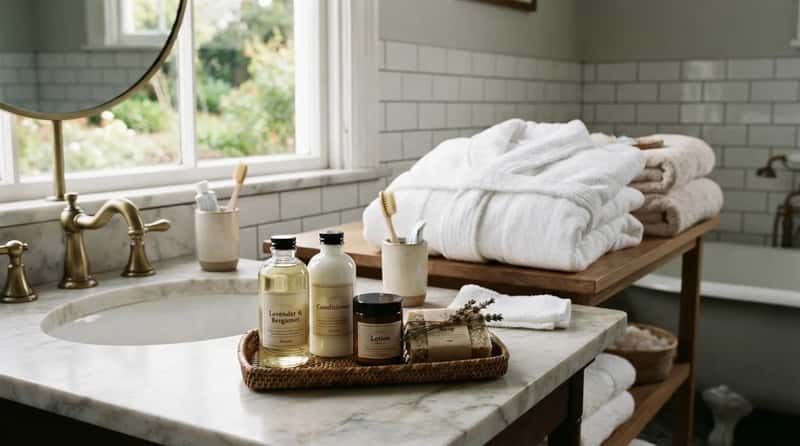
Most budget-to-midscale hotels give you the bare minimum – a shampoo bottle the size of your thumb, empty after one wash.
B&Bs tend to include real toiletries as standard, often homemade or genuinely nice, not bulk-ordered by the pallet.
Plush robes and small decadent touches frequently come standard with a B&B room rate. Hotels at the same price point often charge extra for the same robe.
It’s a small thing, but it says something bigger. B&Bs add these touches because they want you back – hotels add only what’s required because the fee model covers the rest.
The next one is about space – and who actually gets to use it.
#9 – Free Run of the Common Spaces
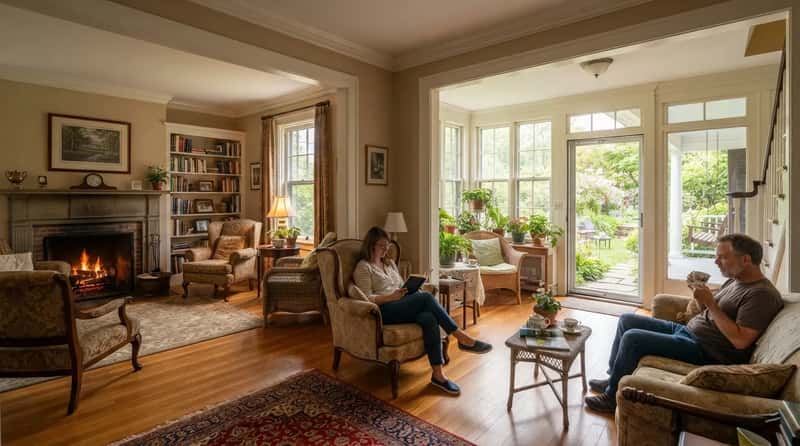
A hotel gives you a room. A B&B gives you the whole house.
Sunrooms, front porches with swings, gardens, cozy lounges – B&B guests are welcome in all of it, no reservation required.
Hotels have their own version of this: rooftop bars, lobby lounges, pool decks. But access often comes with a minimum spend or is roped off for higher room tiers.
At a B&B, the garden is just the garden. You don’t need to buy a drink to earn a seat by the fire.
Quick Compare
- B&Bs: Typically have between four and eleven rooms, with six being the average, so shared spaces rarely feel crowded or gated off.
- Big hotels: Can hold hundreds of rooms, so common spaces get carved into paid tiers and reserved sections.
- B&Bs: A porch swing or garden is open to every guest, every day, no card required.
- Big hotels: Rooftop bars and lounges often require a minimum spend or elevated loyalty status to access.
Next: the $18 movie rental you’ll never have to pay for.
#8 – Books, Games, and In-House Entertainment
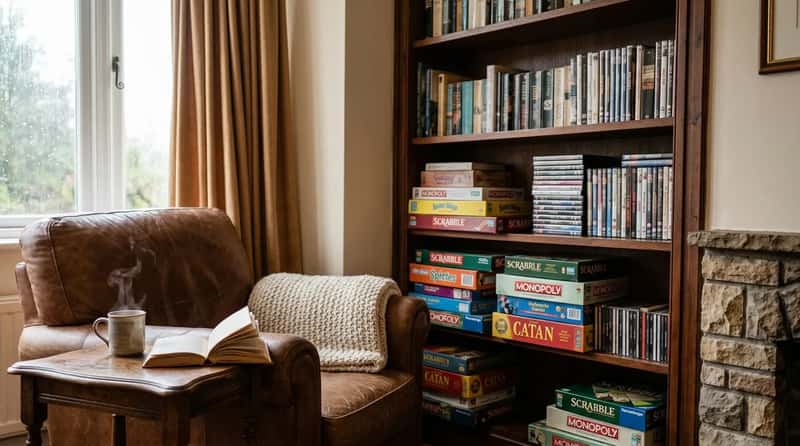
It sounds minor – until you’ve paid $18 for a hotel movie rental on a rainy afternoon with nothing else to do.
Some B&Bs keep a little library of books, DVDs, and board games for guests to borrow, entirely free, with no resort-fee line item attached.
Hotels routinely charge for anything beyond basic cable. Pay-per-view, streaming add-ons, even premium channel packages show up as extras on the final bill.
A shelf of worn paperbacks costs a B&B almost nothing to offer. To a guest stuck inside during a storm, it’s worth more than any pay-per-view menu.
Now the fee that punishes you just for showing up early.
#7 – Flexible Arrival Without a Fee

Hotels have turned “arriving early” into a revenue stream. B&Bs have not.
Show up more than 2 to 4 hours before the standard 3 p.m. check-in at many hotels now, and you’ll likely hit a fee – sometimes half the daily rate, sometimes the full rate if you arrive before 10 a.m.
Hotels frame these charges as necessary for managing demand in a shifting post-pandemic economy. In practice, free flexibility around check-in and checkout is quietly disappearing.
At a B&B, early arrival is usually a text to the host, not a card authorization. Because the owner is on-site, they can simply unlock the door.
This next one might be the most brazen fee of all.
#6 – No Resort Fee. Full Stop.
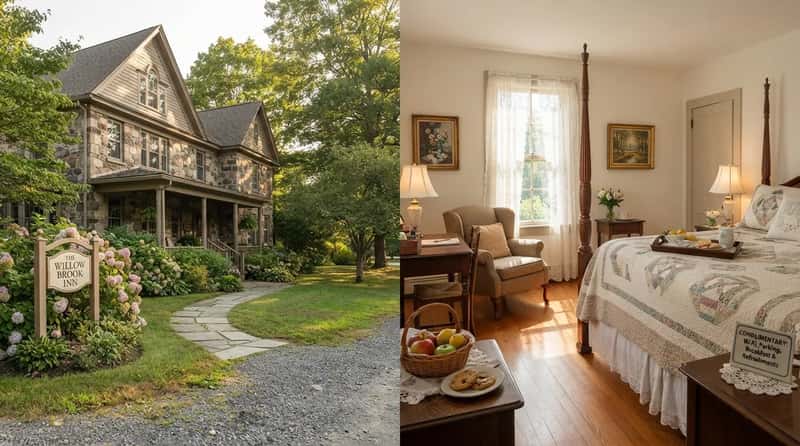
Worth saying plainly: most B&Bs don’t charge a resort fee, destination fee, facility fee, or anything wearing that costume.
Big hotel resort fees typically run $10 to $50 a night and are pitched as covering Wi-Fi, parking, gym access, and pool use – whether or not you ever touch any of it.
That’s the frustrating part: the fee applies even if you never leave your room. A B&B charges you for the room, and what’s included is included.
A $35 nightly fee turns into $245 over a single week. That money quietly disappears while the advertised nightly rate made the hotel look like the better deal the moment you booked it.
Then there’s the service hotels used to guarantee – and quietly stopped.
#5 – Housekeeping, Daily and Included
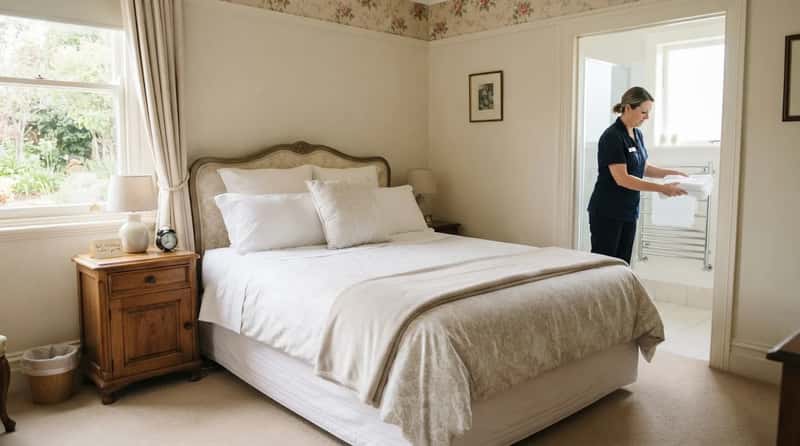
Hotels cut back daily housekeeping during the pandemic to save money. A lot of them simply never brought it back as a standard service.
What used to be baked into the room rate without a second thought is now, at some properties, something you have to request or pay for separately.
B&Bs never made that shift. Along with the room and the homemade breakfast, daily housekeeping is still just part of the stay.
At a B&B, the host has skin in the game – it’s their home, or close to it. A freshened-up room is a point of pride, not an upsell.
Worth Knowing
- Hilton provides daily housekeeping automatically only at its Luxury, Full Service, Lifestyle, and Embassy Suites brands, while other U.S. and Canada properties like Focused Service, Homewood Suites, and Home2 Suites default to every-other-day service.
- Guests at many chains now have to call or stop by the front desk just to request the daily cleaning that used to happen automatically.
- At least one full-service Marriott-affiliated hotel has been found selling daily room cleaning for $25 a day as an add-on.
- B&B hosts running a handful of rooms don’t need an opt-in system – tidying up is simply part of running the house.
Now for the knowledge you can’t buy back at a hotel front desk.
#4 – Local Maps and Real Recommendations
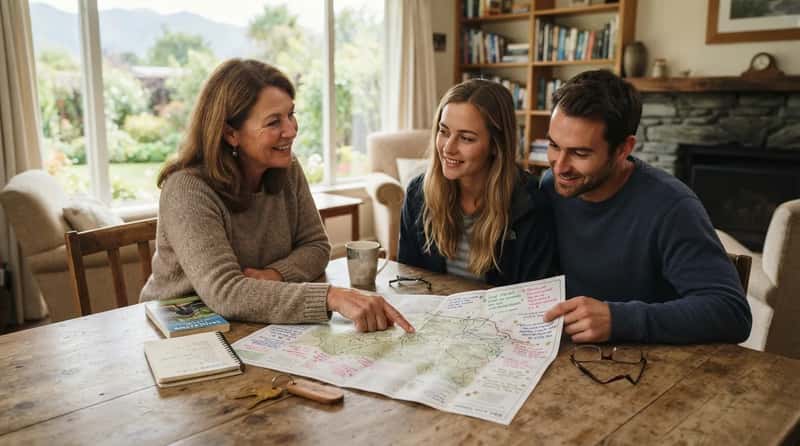
Hotels hand you a brochure rack full of paid partnerships. B&Bs hand you actual knowledge.
Maps, trail tips, dinner recommendations – B&B hosts usually live in the community year-round, so the advice comes from experience, not a laminated card at a concierge desk.
Larger hotels are increasingly bundling “local experience credits” into resort fees, charging you for access whether or not you ever use it. What actually counts as “covered” varies wildly from property to property.
A host who knows exactly which farmer’s market is worth the early alarm, or which trail has the best view this week, is an amenity no fee schedule can replicate.
Now we get to the part where hotels got legally caught.
#3 – Transparent, All-In Pricing
The biggest hidden advantage of a B&B isn’t one amenity – it’s knowing your total cost before you ever arrive.
Hotel fees often don’t show up until the very last step of booking, making it genuinely hard to compare two properties honestly. A B&B’s quoted rate is almost always the real rate.
Since May 2025, the FTC has required hotels and short-term rentals to display the full price, including mandatory fees, right from the start. That rule wouldn’t exist if hotels hadn’t spent years burying those fees in fine print.
B&Bs built their whole model around one honest number. Federal regulators had to force hotels to catch up to a standard B&Bs never abandoned.
Now for the one thing no hotel chain can buy at any price.
#2 – A Human Host, On-Site, Invested in Your Stay
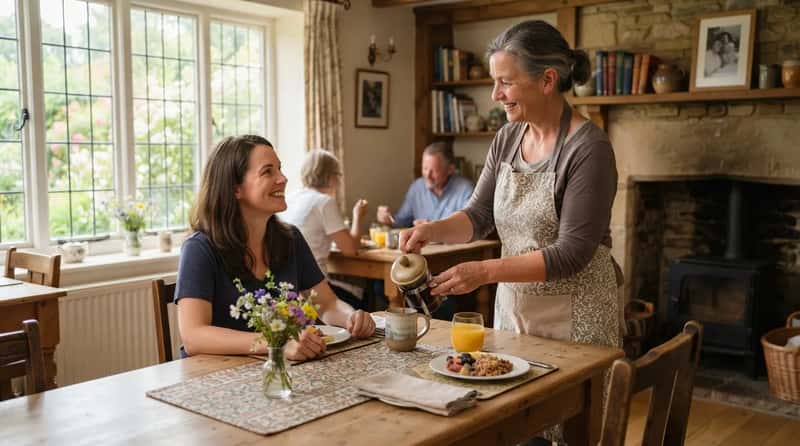
This is the amenity no resort fee can purchase and no hotel brand can replicate at scale.
A B&B owner might know your hot water runs slow in the morning, which room catches the best light, or that you tossed and turned last night.
That kind of attention isn’t manufactured – it’s structural. With three or four rooms instead of three hundred, a host simply notices things a front desk never could.
Hotel chains have poured money into “personalization” apps and loyalty tiers trying to recreate this feeling. None of it beats a host who remembers your coffee order from yesterday.
And now, the number that changes everything you thought you knew about which option is actually cheaper.
#1 – The Total Cost Is Actually Lower Than It Looks

Here’s what most travelers never sit down and calculate: once every hotel fee is added up, the B&B that looked pricier on paper is often the cheaper option in reality.
A NerdWallet study of 160 hotels found resort fees averaging around $33 a night, with Marriott properties running closer to $50. Add parking, breakfast for two, and a late checkout fee, and a “budget” hotel room can cost $100 to $150 more than its advertised rate.
B&B pricing varies by location and amenities, but the quoted rate is the real rate – nothing gets bundled on afterward. You’re comparing an all-in price to a price that’s designed to grow after you commit.
The B&B charging $40 more a night might actually save you money once you stop comparing headline rates and start comparing what you actually pay at checkout.
The Bottom Line

Big hotels have spent years quietly moving amenities out of the room rate and into mandatory fees, opt-in upgrades, and tiered add-ons. Daily housekeeping charges, luggage storage fees, early check-in premiums, and even “sustainability surcharges” didn’t exist a few years ago – now they’re standard.
B&Bs never adopted that playbook. Personal service, real food, free amenities, and genuine local knowledge all come bundled into one number, because nickel-and-diming guests was never the model to begin with.
Next time you compare a hotel rate to a B&B rate, open a spreadsheet and add every likely fee to the hotel’s nightly price before you decide. Do the math once, and you may never look at a hotel confirmation email the same way again.