Most people picture a border officer glancing at a passport and waving you through. U.S. Customs and Border Protection (CBP) processed about 419 million travelers in fiscal year 2025, and the screening behind that number goes well beyond a glance.
The strange part is how much of it happens where you can’t see it. It starts before you reach the booth, and it doesn’t always end when you walk away.
This list focuses on the U.S., where the public data is most detailed. Here’s what the official records and immigration experts actually say.
#15 – They May Know About You Before You Land
Your inspection can begin before you leave the departure gate. By the time you reach the booth, someone may already have read your file.
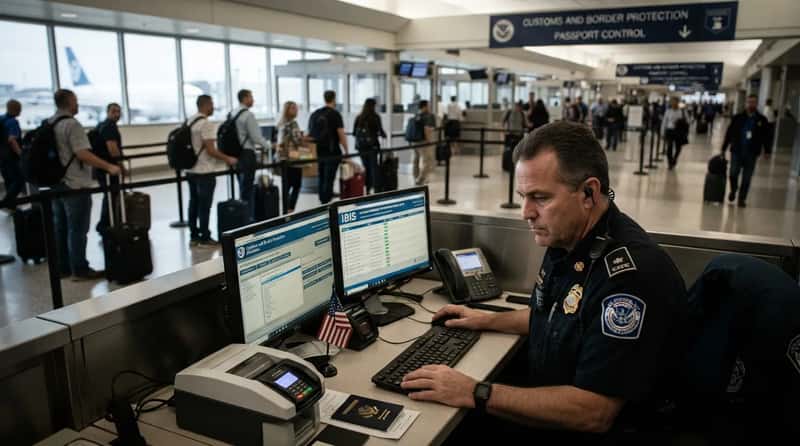
For air travelers, airlines send passenger information to CBP through the Advance Passenger Information System. Officers also use the Interagency Border Inspection System (IBIS) to decide who to target for secondary examination on arrival.
Turns out, that includes warrants. When travelers ask whether CBP is alerted about an inbound passenger with an arrest warrant, the agency’s own answer is yes.
And it isn’t alone: CBP and personnel from 20 other federal agencies or bureaus use that same system.
Other entities can also create lookouts that send a traveler to secondary inspection when they come up during primary. Most people don’t realize the trigger can sit in a database rather than in anything you say.
But the next check happens the moment you look straight into a camera.
#14 – Your Face Is Compared Before You Speak
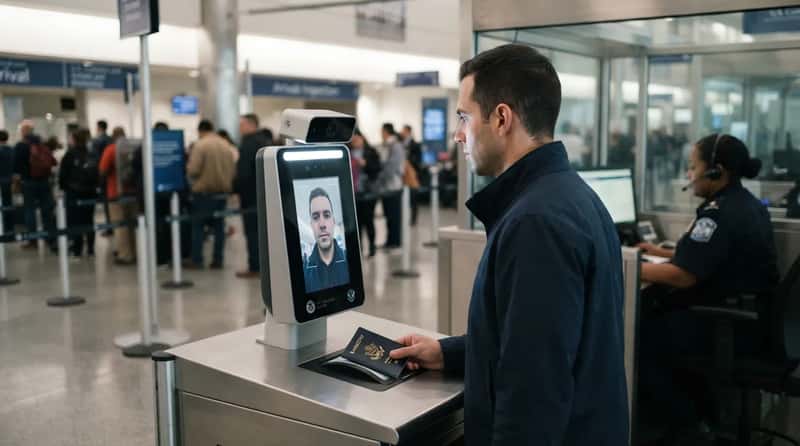
That quick photo at the booth isn’t a souvenir snap. At an international airport, you pause for it at the primary inspection point.
CBP compares it with a small gallery of high-quality images you’ve already given the government, such as passport and visa photos.
CBP says it uses facial comparison to process arriving travelers at 238 airports. It also says the technology has prevented more than 2,316 impostors from entering the country.
That is a count of people who arrived with someone else’s identity.
The rules differ by traveler: reporting on CBP’s current policy says U.S. citizens can opt out of facial photo capture at points that use it. Under DHS guidance effective December 26, 2025, CBP can require photos and other biometrics from all non-U.S. travelers entering and exiting.
But a camera only confirms who you are, and officers care just as much about whether your story holds together.
#13 – Your Answers Have to Match Your Paperwork
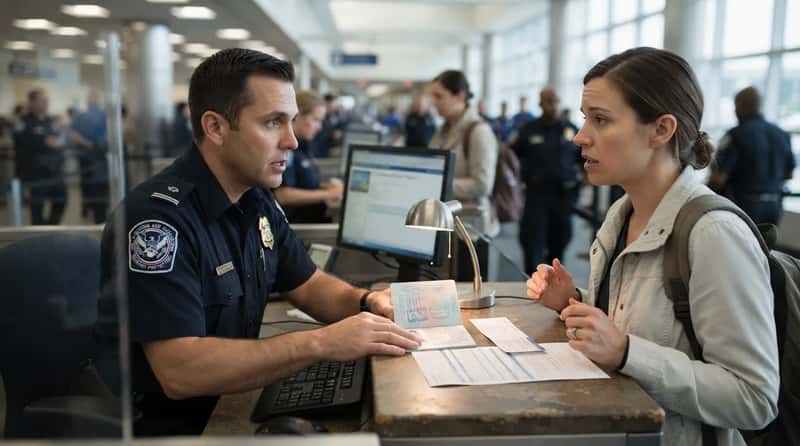
The officer isn’t only checking your passport but your passport against your answers.
At primary, officers generally work out your identity, citizenship and eligibility to enter, and they check whether anything you carry is prohibited or dutiable. For most travelers the process takes only a few minutes.
Questions can touch several areas:
- Your trip, your intentions, your finances and your contacts in the United States.
- Your reason for entering and your travel history, checked against your immigration documents.
Here’s the part that catches people off guard. Secondary inspection can be prompted randomly, or because an officer has concerns about your admissibility.
A referral doesn’t automatically mean you did something wrong.
Quick Compare: Primary vs. Secondary
- Primary: usually a few minutes, focused on identity, citizenship, eligibility and prohibited or dutiable items.
- Secondary: can be random or triggered by admissibility concerns, with deeper questions about plans, funding and intent to return.
- The referral itself: not proof that anyone suspects you of anything.
So what do officers listen for in how you answer?
#12 – Nervousness Isn’t the Only Signal
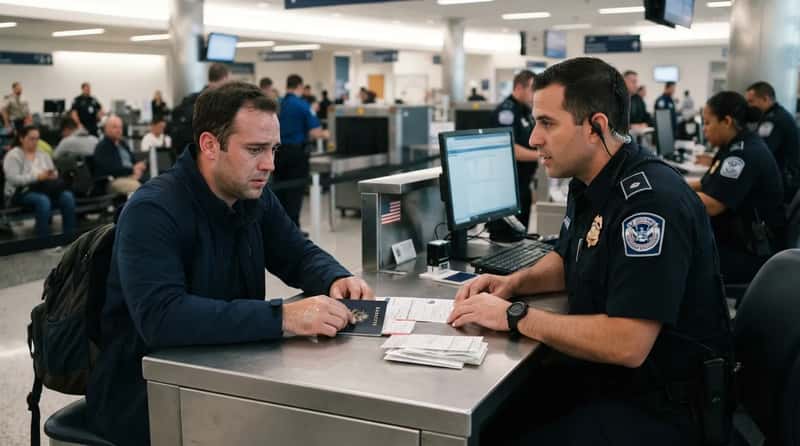
Everyone assumes sweaty palms get you pulled aside, but the real picture is murkier.
One visa-information service lists excessive nervousness, or unclear and contradictory statements during primary inspection, as a reason for secondary. Notice that contradictions sit right next to nerves on that list.
CBP is also candid about the limits of the method. It says officers use diverse factors to refer people for targeted examinations, and that sometimes those best judgments prove unfounded.
The agency itself admits some referrals turn out to be wrong.
That’s where opinions split: some travelers call the system arbitrary, while others say discretion is the only way to catch what forms can’t. Which camp you join may depend on which line you were standing in.
And if an officer asks you the same thing a second time, it isn’t a glitch.
#11 – The Same Question, Asked Three Ways
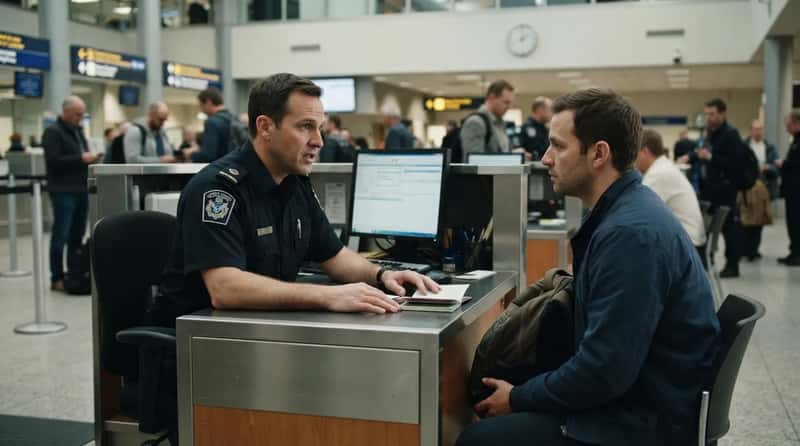
That repeated question is usually deliberate.
One immigration law firm says officers are trained to ask the same question in several ways, looking for inconsistencies between your answers and the documents in front of them. The aim is to see whether your details stay the same each time.
Secondary questioning can go deeper than most people expect. It can cover exact travel plans, the purpose of the trip, activities, conversation partners, financing and your intention to return.
Even your “conversation partners” can be fair game in a detailed interview.
Honest travelers trip up here for ordinary reasons, because dates blur, hotel names slip and plans change. The safest approach is to know your itinerary well enough that it doesn’t shift when the question does.
If you’re traveling with someone, there’s another test, and you won’t be in the room for it.
#10 – Your Travel Companion Gets Quizzed Separately
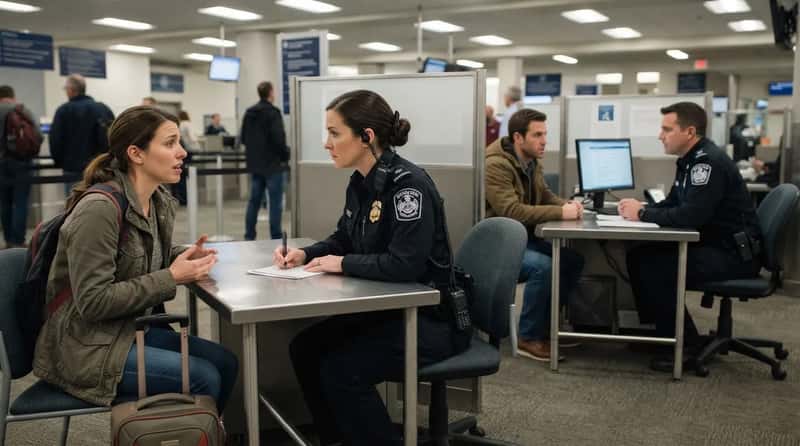
Traveling together doesn’t mean being interviewed together.
The same law firm says officers ask the same questions of any travel companion separately. That makes small disagreements easy to spot.
Think about who’s paying, how long you’re staying and where you’re sleeping. Two honest people can mix those up under pressure.
Most people don’t realize their partner’s answers can matter as much as their own.
Remember the baseline: secondary inspection can be random. Being separated from your companion doesn’t, on its own, mean anyone suspects you.
But nothing creates more trouble than the little form most people fill out on autopilot.
#9 – The Box You Tick on the Declaration Form
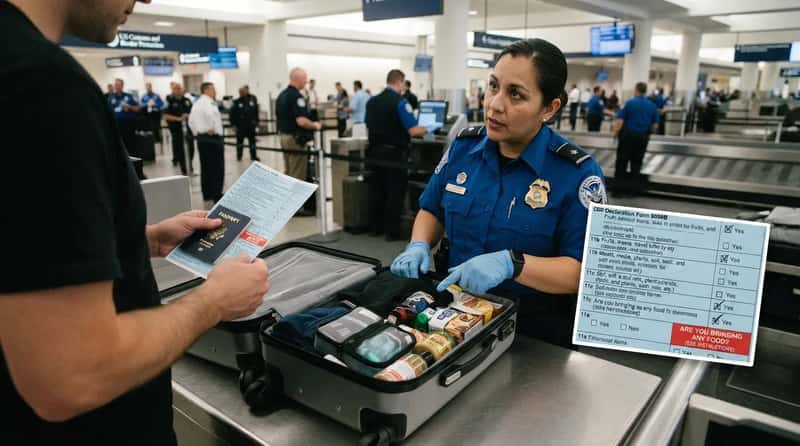
One checkbox quietly sets the tone for your whole inspection.
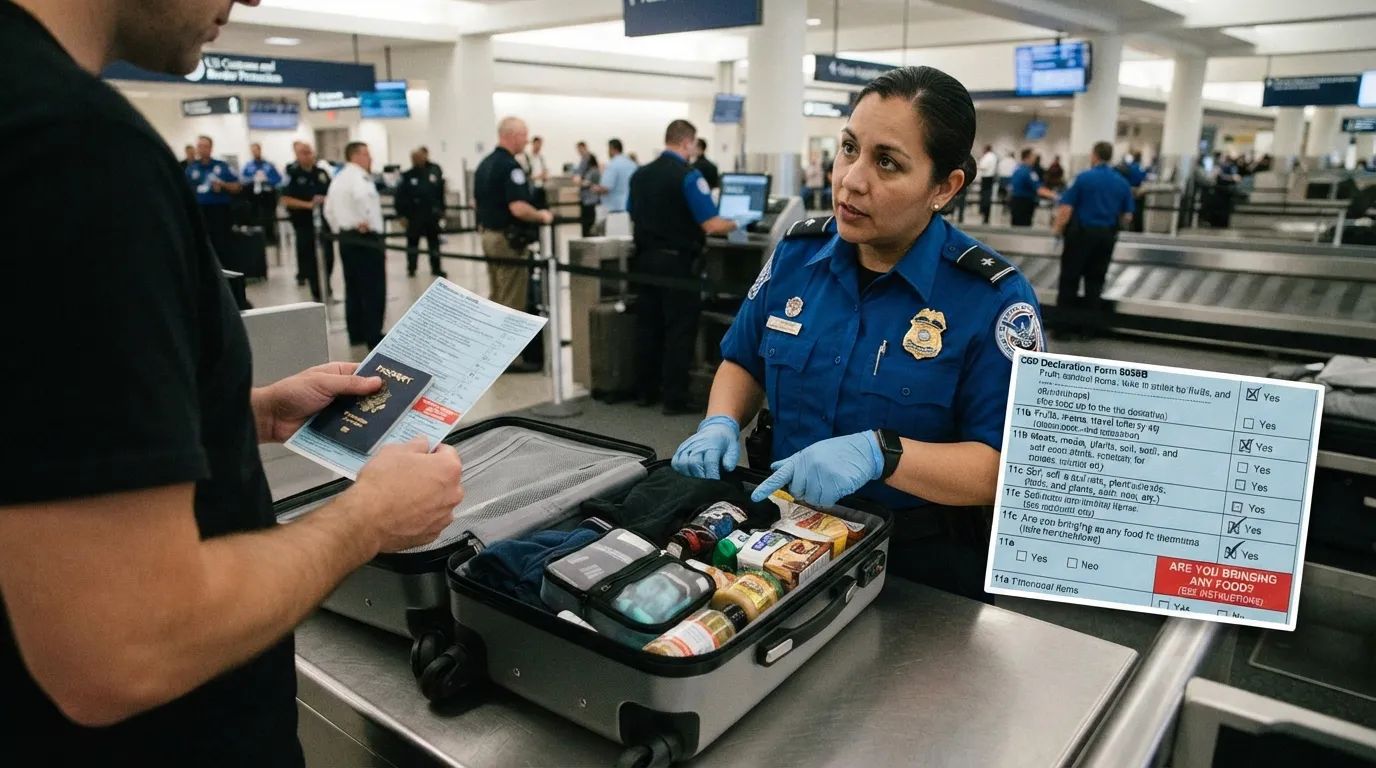
CBP requires you to declare meats, fruits, vegetables, plants, seeds, soil and animals, plus plant and animal products, including soup or soup products. The declaration covers checked bags, carry-ons and anything in a vehicle.
CBP says to check “Yes” on Question 11 of Form 6059B for agricultural items, and skipping it carries real penalties. Civil penalties can reach up to $1,000 for a first-time offense with non-commercial quantities.
That $1,000 ceiling applies to food you forgot about. USDA’s APHIS says that if you declare everything, you face no penalties, even if an inspector decides the items can’t enter.
The form also asks about something you might not think counts, and it has nothing to do with food.
#8 – The Soil on Your Shoes
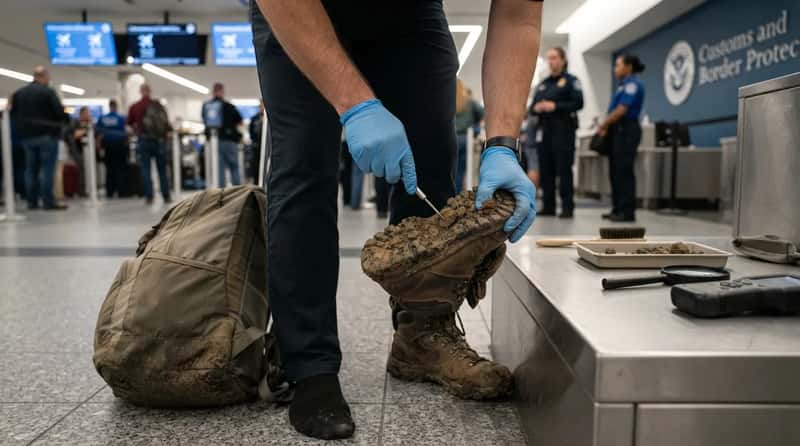
A farm visit can matter more at the border than anything in your suitcase.
CBP says to check “Yes” if you’ve been on a farm or near livestock. An agriculture specialist may need to check your shoes or luggage for soil that could carry foreign animal diseases such as foot-and-mouth.
That includes the hiking boots you packed. APHIS adds that you must also say if you visited a farm or had contact with animals before traveling to the U.S.
Your shoes can be a declaration item.
Worth Knowing: Easy-to-Miss “Yes” Answers
- A petting zoo, a countryside homestay or a trail through pasture can all count as farm or livestock contact.
- Shoes and luggage are what specialists may inspect for soil.
- The worry is disease, including foot-and-mouth, not the souvenir you bought.
- The rule turns on where you’ve been, not on what’s in your bag.
Most travelers never think of any of these as something to report.
Even the snack you grabbed in the air can land you in this conversation.
#7 – The Free Fruit From the Flight
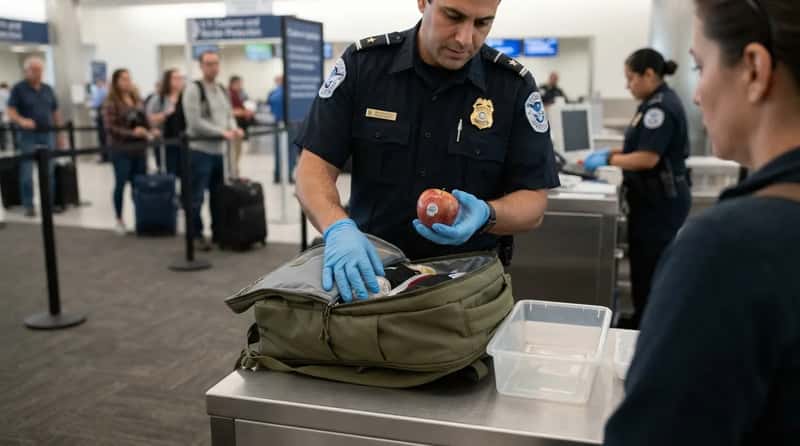
That apple from the airline can turn into an airport problem.
APHIS says almost all fresh fruits and vegetables, whole or cut, are prohibited, including ones handed to you on a plane or cruise ship. Its advice is to plan to leave them behind.
Frozen produce isn’t a loophole either. Almost all frozen fruits and vegetables are prohibited too, because some pests and diseases survive very cold temperatures.
Most people assume the rule is about what you bought. Actually, it’s about what’s in your bag when you reach the booth, wherever it came from.
And once you’re past the booth, some of the best detectors in the building don’t carry a badge.
#6 – The Dog That Already Knows
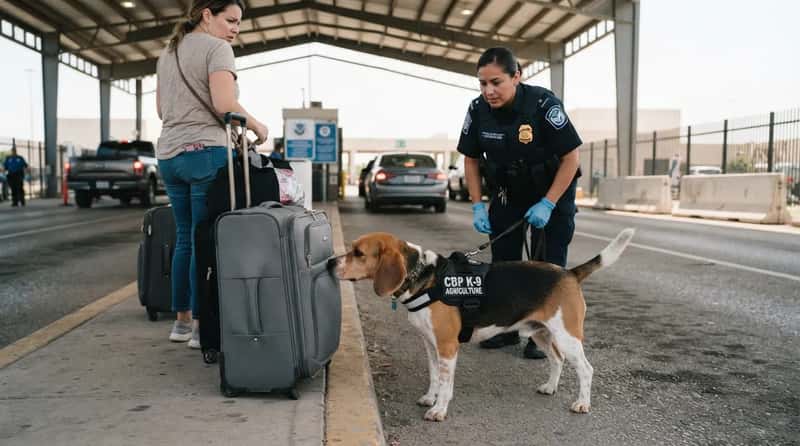
Some of the sharpest noses at the border belong to dogs.
In an August 2021 Laredo case, a pickup was randomly selected for agriculture inspection. The driver gave a negative declaration, and then a canine team alerted to a trained odor from the luggage and vehicle.
Officers found 11 kilograms of pork and four dragon fruits. A pest was found on one of the dragon fruits and sent to USDA for identification.
That’s the point of the exercise: the pest matters more than the fruit. The pattern repeats in other CBP reports.
At Hidalgo, a driver said no to prohibited items, and agriculture specialists then found roots, avocado leaves and more in an ice chest. The driver received a $300 penalty.
At land crossings, though, officers often spot trouble without any dog at all.
#5 – What Sits in Plain Sight in Your Vehicle
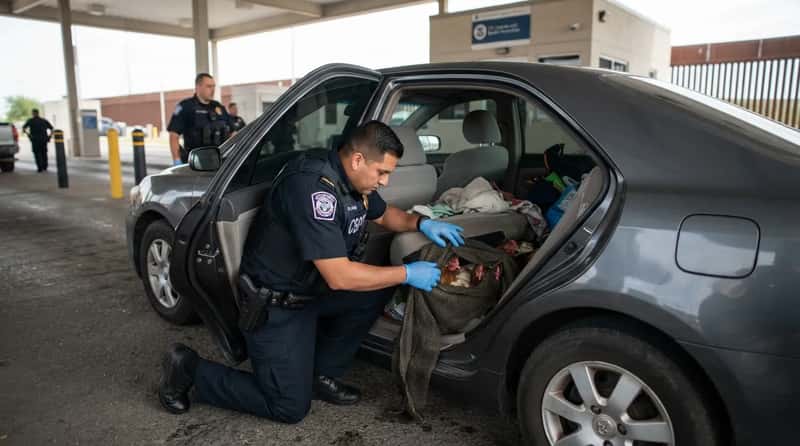
At land crossings, officers read your car as closely as your face.
In one Laredo case, an officer conducting primary inspection saw what looked like live poultry concealed under a rear seat and referred the vehicle to secondary. The referral came from a visual check, with no dog or database involved.
Five live birds were found wrapped in stockings, and the driver, who said they were to be sold in the U.S., received a $1,000 civil penalty. CBP also seized the vehicle under 19 USC 1595.
The car itself can be seized, not just the cargo. That was a commercial-intent case with a prior violation, so it’s an extreme example.
The everyday lesson is simpler: your declaration has to cover what’s in your vehicle, too. Officers may see things you’ve stopped noticing.
Next comes a fact that surprises even frequent crossers.
#4 – Trusted Traveler Status Won’t Shield You
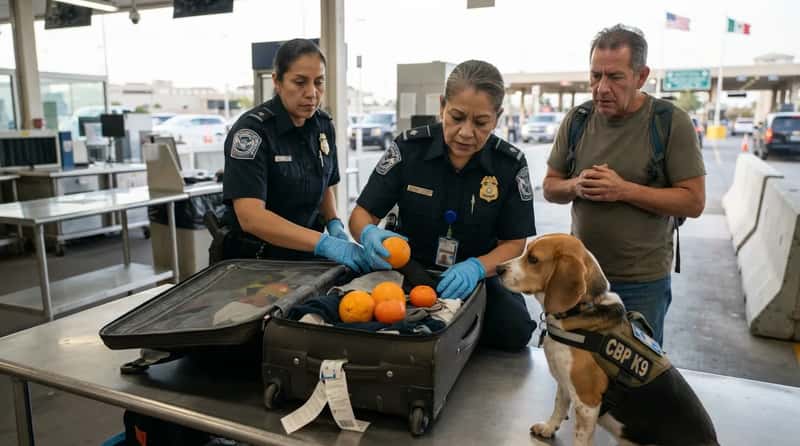
A trusted traveler card can disappear over a piece of fruit.
In a 2012 CBP release, a SENTRI participant declared some foods at Otay Mesa, but an agriculture specialist and his canine found undeclared oranges and a tangerine. He was assessed a $500 civil penalty, and CBP revoked his SENTRI privileges.
He lost his fast-lane membership over citrus. That’s the detail most frequent crossers never hear.
Many regulars assume the card means fewer questions, but CBP’s position is plain: all travelers crossing the border are subject to CBP inspection. Some frequent crossers find the penalty harsh for a few oranges, and the agency’s view is that declaration rules apply to everyone.
Which raises a fair question about why some people get pulled over in the first place.
#3 – “Random” Doesn’t Always Mean Random
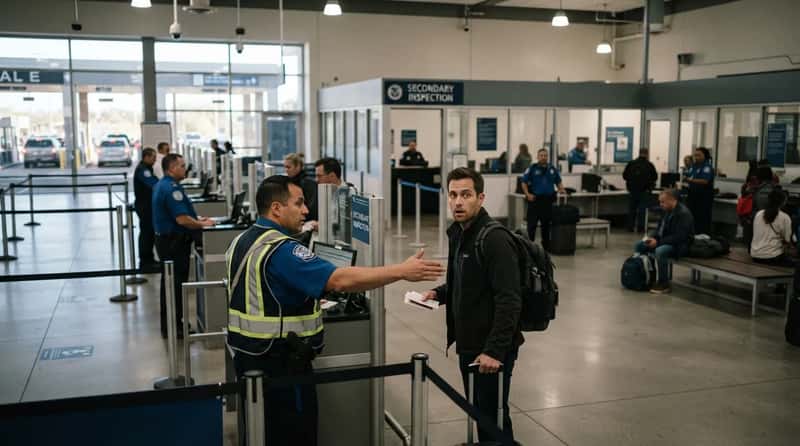
Being pulled aside doesn’t always mean you were flagged.
CBP says officers at primary have broad discretion to refer travelers to secondary, with or without any suspicion of wrongdoing. The agency says so openly on its own website.
The stated reasons are wide-ranging. They include issues with the documentation or information a traveler supplied, and potential administrative immigration violations.
CBP doesn’t hide the cost of this approach. It acknowledges its officers may inconvenience law-abiding citizens to detect illicit activity, and that inspection can be stressful for those selected.
Both sides agree on the facts. They disagree about whether the trade-off is worth it.
At a Glance: One Policy, Two Readings
- CBP’s stance: officers may refer travelers with or without suspicion of wrongdoing.
- Critics: that discretion amounts to a blank check.
- Supporters: screening can’t run on a script.
- Shared ground: inspection can be stressful, even for people who did nothing wrong.
Still, the thing that can turn a routine stop into a serious one is what you say next.
#2 – A Wrong Answer Costs More Than an Awkward One
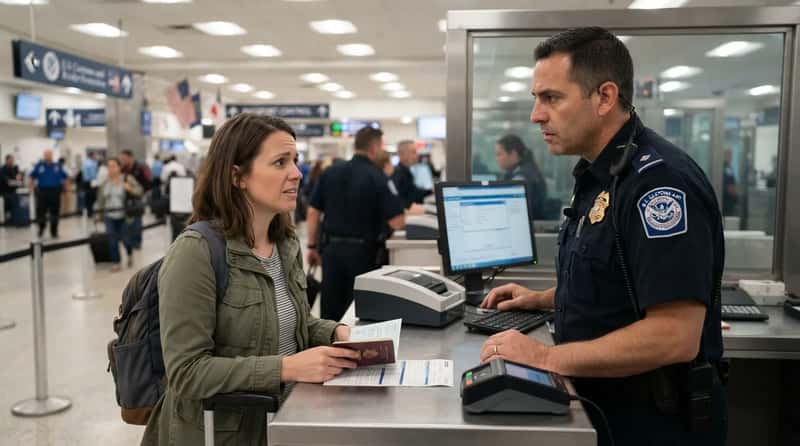
The costliest thing officers notice isn’t what you carry but what you misstate.
One immigration law firm says a misrepresentation about employment, marriage, immigration history, intent to remain, source of funds or who is meeting you can trigger the permanent fraud bar. That’s a serious, long-term consequence from a single answer.
The same firm says refusing to answer is almost always better than answering falsely. That’s a lawyer’s view, not CBP policy.
Silence isn’t risk-free either. Anyone seeking entry must establish admissibility to the satisfaction of a CBP officer.
The clearest path is an accurate answer, including an honest “I’m not sure.”
And the last thing officers may notice fits in your pocket.
#1 – The Phone in Your Pocket
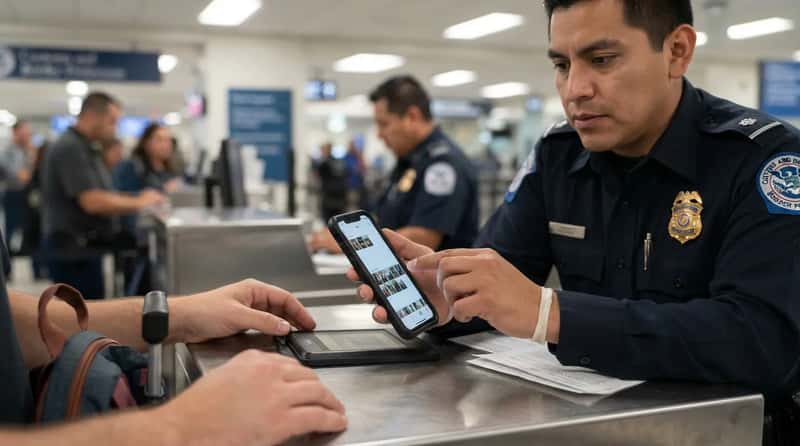
Your phone is the one item officers can ask to look through without any suspicion.
CBP says that on rare occasions officers may search a traveler’s phone, computer, camera or other device. Basic searches can be done without reasonable suspicion that you’ve done something wrong.
Officers searched 55,318 devices in fiscal year 2025, up 17.6 percent from 47,047 in 2024. Searches of American citizens’ devices rose from 8,657 in 2023 to 13,590 in 2025.
The two kinds of search differ:
- Basic: an agent scrolls through your phone, looks at photos and reads texts.
- Advanced: equipment is connected to your device to copy, analyze or extract data.
The odds remain low, and the two sides read them differently: about 0.01 percent of 419 million travelers, which CBP cites as evidence of restraint. The Electronic Frontier Foundation sees 55,318 people whose digital lives were exposed without judicial oversight.
Advanced searches require reasonable suspicion of criminal activity or a national security concern. Officers can also detain a device, usually for up to five days, and no federal appeals court has yet required a warrant.
The Bottom Line
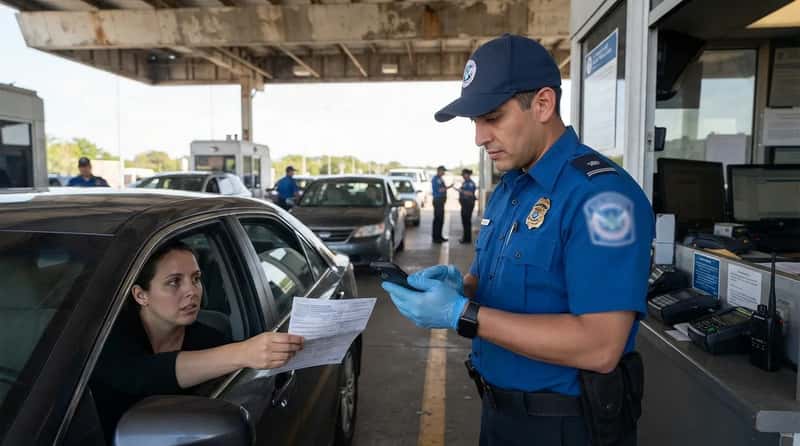
Border screening is broader than the booth. It can start with airline data and warrant alerts, continue with a face match, and hinge on whether your answers line up with your paperwork.
Officers also weigh what you declared, what’s in your car or on your shoes, and whether anything you said doesn’t match. On devices, the share is small and the volume is rising, and both CBP and its critics point to the same data.
The booth is only the moment you finally see the screening. Which part will change how you prepare for your next crossing: the declaration form, the companion interview or the phone?