Most campers think the check-in window is just a place to pay, grab a map, and leave. For guests over 65, it’s often something else: the spot where a handful of small decisions get made in your favor before you’ve said a word. Staff rarely announce any of it, which is exactly why so many people never notice.
Policies vary a lot from park to park, and none of this is guaranteed. Still, the pattern shows up again and again, from federal campgrounds to tiny family-run parks. Some of these perks land on your receipt. Others never will, and one of them has nothing to do with money at all. We’ll start with the one that hits your wallet first.
#15 – The Half-Price Federal Campsite Staff Quietly Apply
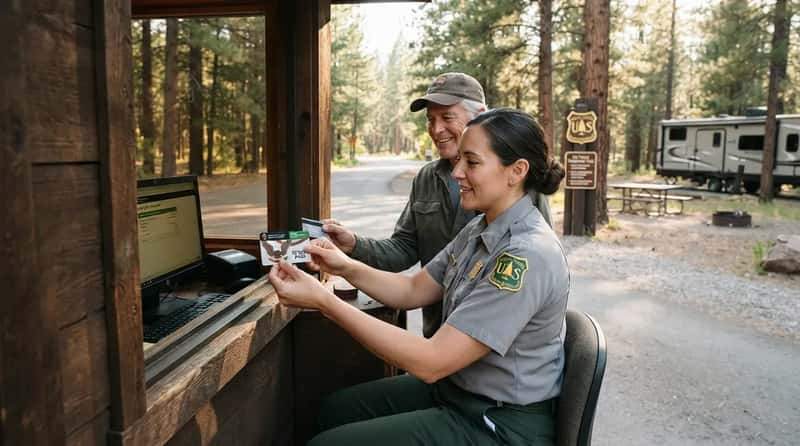
The federal Senior Pass is open to U.S. citizens and permanent residents aged 62 and older, so anyone over 65 clears that bar easily. At federal campgrounds, Senior Pass and Access Pass holders receive 50% off camping fees. Staff who see the card often apply the rate without a speech. Sometimes the price on the screen just drops.
Here’s the part most people miss: the discount applies at sites run directly by a federal agency, and the details differ by agency and by campground. Sites run by private concessionaires may follow their own rules, so it pays to ask. The card also can’t be stacked with other deals, because the 50% is already the final rate. Plenty of campers never mention the card, and some staff never ask. But that’s small compared to what state parks do with age cutoffs in #14…
#14 – The State Park Age Breaks Hidden on the Rate Sheet
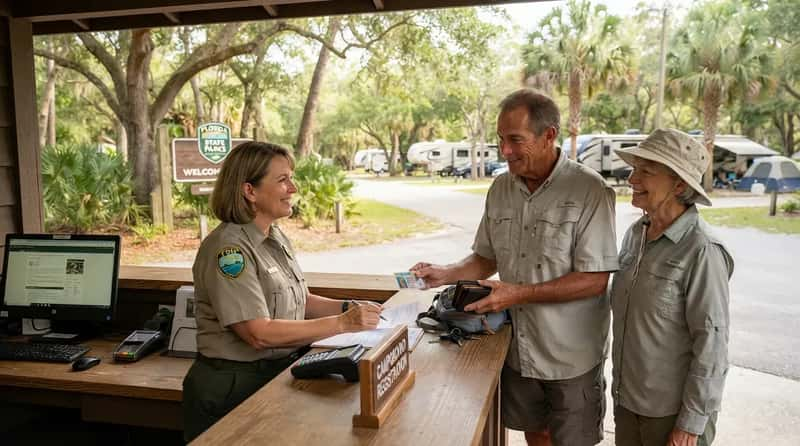
State parks write their own rules, and the age lines are all over the map. One 2026 roundup says Florida residents who are 65 or older receive 50% off camping fees. It also says Texas residents over 65 can qualify for a pass with 50% off park fees. Staff in those systems often know the cutoffs by heart.
The twist is that many of these breaks are tied to state residency, not just age. A camper from out of state may pay full price while the neighbor with a local license pays half. Staff often bring it up only once they see the ID. Next up is a perk that never shows on any receipt…
#13 – The Phone Call When a Perfect Site Suddenly Opens Up
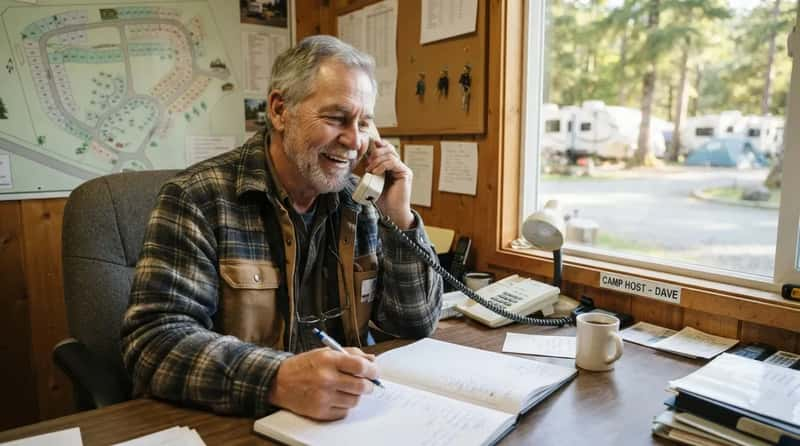
Popular sites book out fast, and many reservation windows open months ahead. That makes a last-minute cancellation pure gold. At many campgrounds, staff who know a returning guest will simply call or flag them when a good site frees up. It’s informal, and it’s never a promise.
Worth Knowing
- Many federal campsites on Recreation.gov are booked through a rolling window that opens months in advance, so cancellations are where the openings come from.
- Favors like this show up mostly at small private parks and municipal campgrounds, not at big online-only systems.
- Leaving a phone number and a friendly note about your rig makes you easy to call.
- Weekdays and shoulder seasons give staff far more room to help.
This works best at smaller private parks and local municipal campgrounds, where the same few people run the desk all season. A friendly regular can leapfrog a stranger on a waitlist without anyone writing a rule down. Not everyone loves that. Some campers call it quiet favoritism, and they have a point. But it gets more interesting when staff start choosing your actual spot in #12…
#12 – The Site Closest to the Bathhouse, Picked Before You Ask
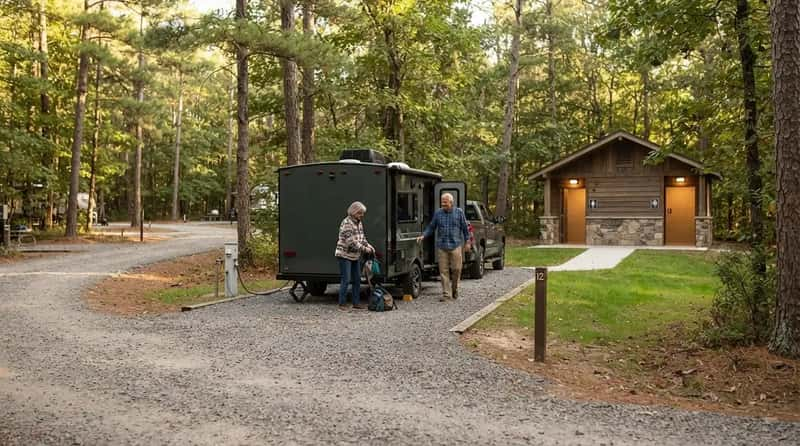
When there’s a choice, staff often slide older arrivals toward sites with a shorter walk to restrooms and water. It’s a judgment call, not a posted policy. A middle-of-the-night trip down a dark gravel loop feels very different at 70 than at 25.
Here’s the part that stings a little. Many campers brag about the secluded far-corner site, yet plenty of seasoned hosts say the “best” spot is usually the boring one near the amenities. You can still ask for the corner. They’ll just probably offer the practical one first. And the question they ask about your rig in #11 might save you more than a walk…
#11 – The Pull-Through Spot That Spares You the Backing-In Nightmare
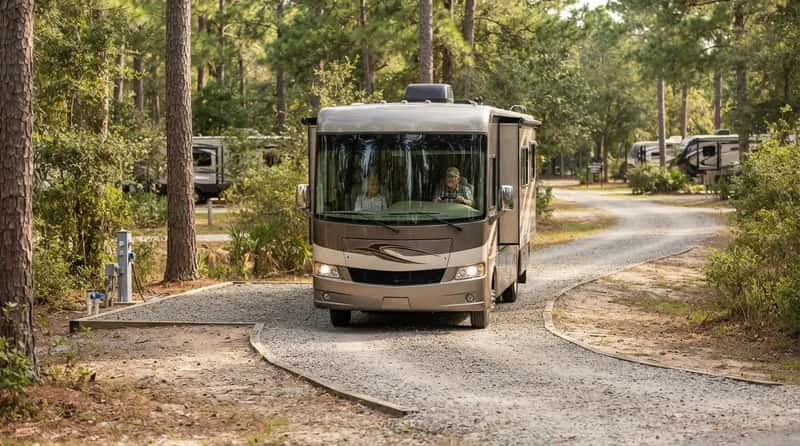
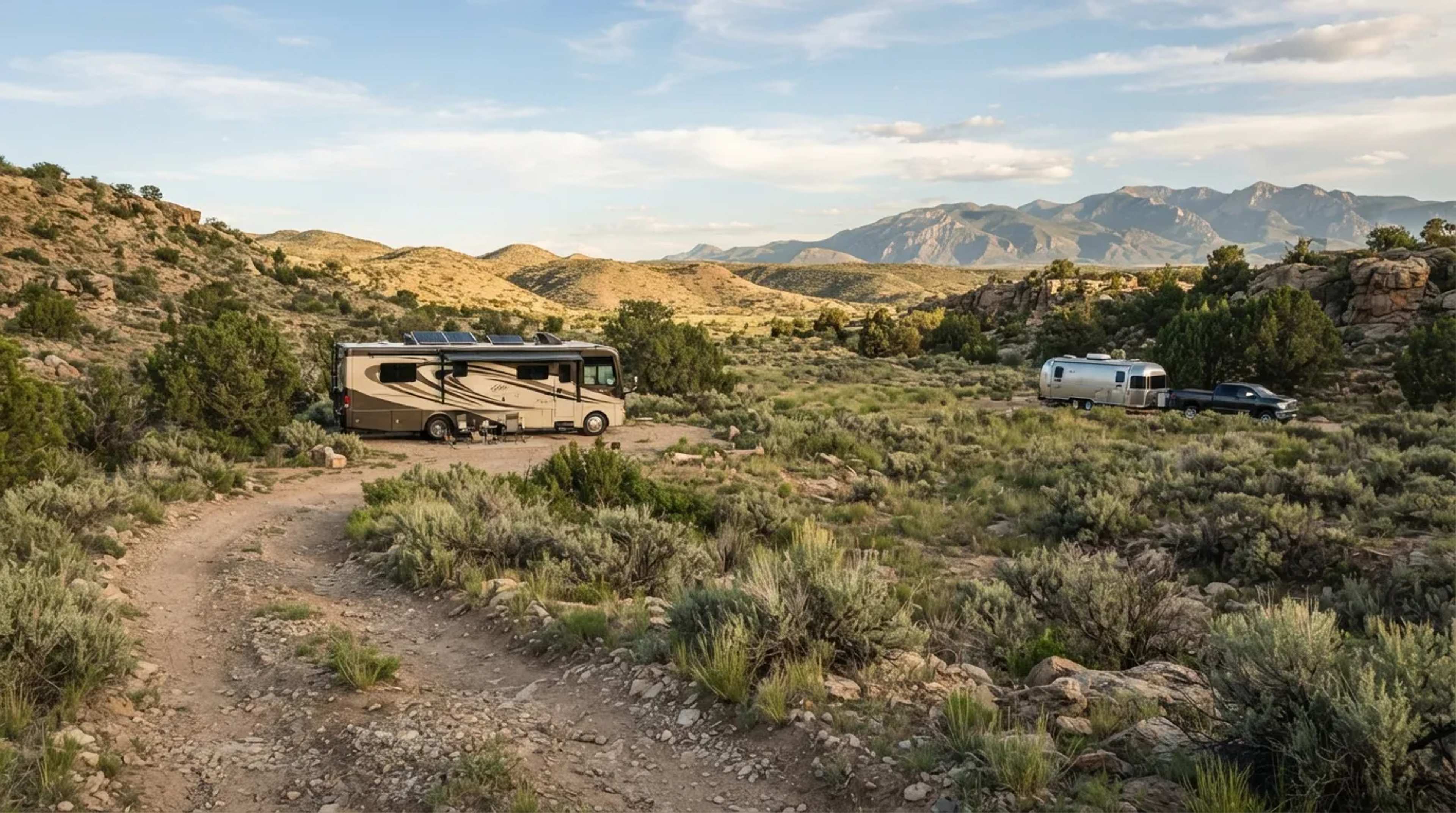
Backing a big trailer into a tight, tree-lined site is one of the most stressful moments of many camping days. Staff know it. When pull-through sites are open, they commonly steer arrivals with long rigs toward them. Nobody has to say why.
Staff also tend to ask your rig’s length at check-in, and that one question can save you a dented fender. Sites that look fine online can be too short or too tight in person. Some hosts will even walk out and spot you into a tricky site by hand. Still, that’s tame next to what they do for your sleep in #10…
#10 – The Quiet Loop, Far From the Party Crowd
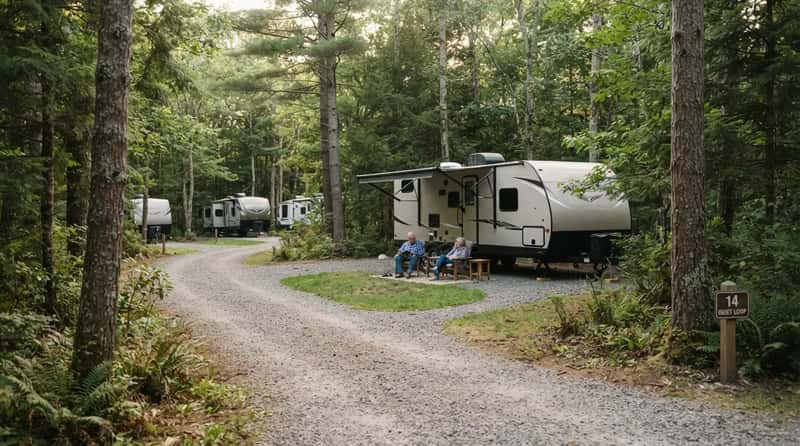
Every campground has a loop where the generators hum and the late-night laughter carries. Staff know exactly which one it is. When a guest says they want an early night, or just looks like they’d prefer one, they frequently route them somewhere else.
Opinions split here. Some campers say sorting guests by age is quietly unfair, while others call it simple common sense. Either way, the quiet loop is often a short walk from the loud one, and the difference is real. Now for a favor that costs the campground nothing, in #9…
#9 – The Shady Pad Saved for the Hottest Weekend
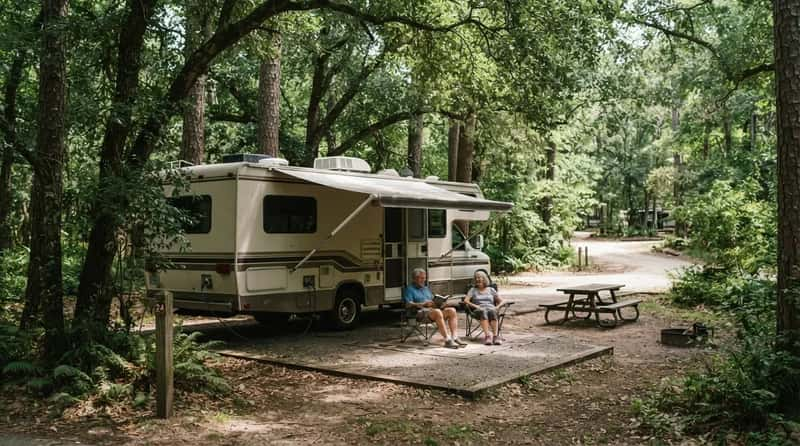
On hot weekends, shade can matter more than scenery. Staff who’ve watched a few heat waves roll through tend to hold their shadiest sites for guests who’d struggle most in a sunbaked lot. It’s an unwritten courtesy rather than a policy.
Quick Compare
- Shaded site: a cooler rig, an air conditioner that cycles off more often, and a nicer afternoon in a camp chair.
- Sunbaked site: an AC that runs nonstop, and a 30-amp hookup that tops out around 3,600 watts.
- The trade-off: shade can mean sap, falling branches, and weaker satellite or solar reception.
It’s a practical call too. A shaded site can keep an RV noticeably cooler and ease the load on the air conditioner, which matters on a campground’s older electrical system. Staff who’ve watched breakers trip on 95-degree afternoons remember it. Ask directly and you’ll often get a yes. But the next item is less visible than shade, and far more useful…
#8 – The Hookup Match That Keeps Your Rig Out of Trouble
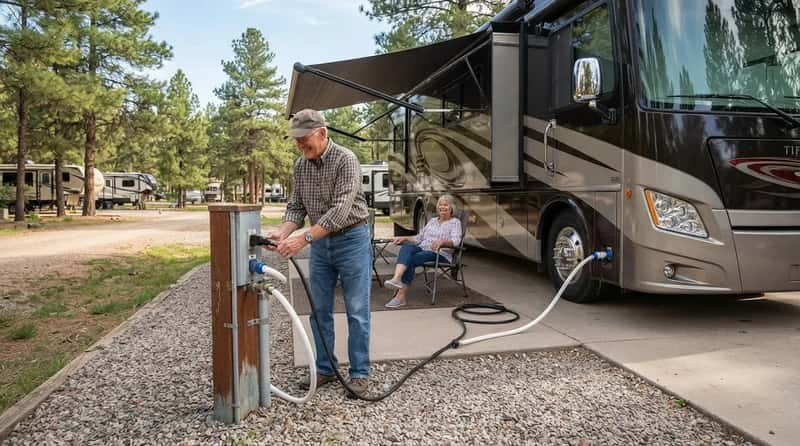
Good staff ask what power your rig needs before assigning a site. Many RVs need a 30-amp or 50-amp connection, and plugging into the wrong one causes headaches fast. A site with the right hookups close to the pedestal also means no tangled extension cords.
Here’s what newer campers rarely realize. Hookup placement can vary wildly from site to site, even in the same loop, and the staff are the ones who know which pedestals are awkward. A two-minute chat can spare you a long cord and a stretched hose. A different kind of site setup matters even more for some guests in #7…
#7 – The Accessible Site Nobody Advertises
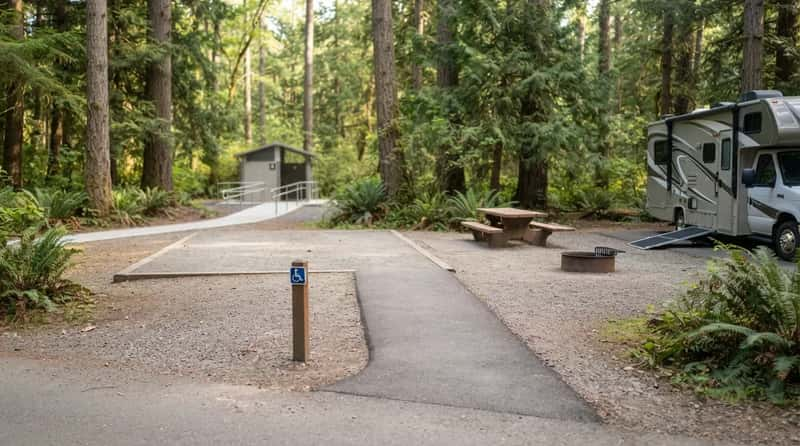
Many campgrounds keep designated accessible sites, with firmer, flatter surfaces and shorter routes to facilities. Staff don’t always mention them unless asked, and some are held back for guests who need them. If mobility is an issue, say so. The staff will usually know what’s open.
Here’s the surprise: the Access Pass is a separate pass from the Senior Pass, and some campers qualify for both without realizing it. Staff who handle passes all day are often the first to point that out. Just remember that the discounts don’t stack. Next comes a perk that depends entirely on the clock…
#6 – Early Check-In and Late Checkout, Offered Without a Fee
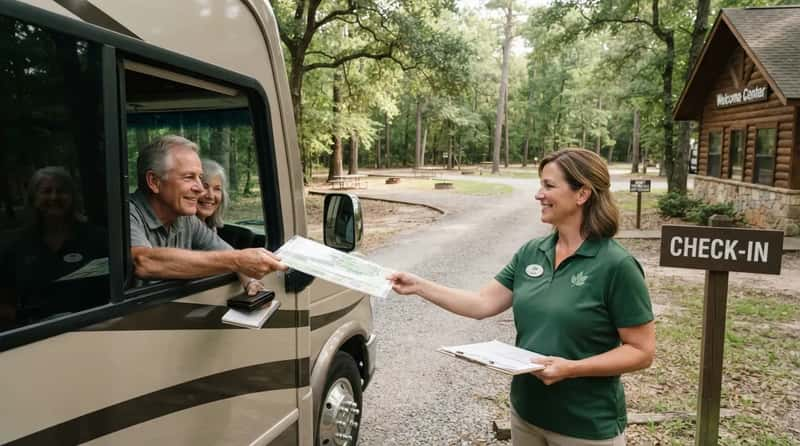
Checkout is typically around midday, and check-in in the afternoon. That leaves a gap that can wreck the end of a long drive. Staff with an empty site and a tired guest will often bend the rules, letting someone park early or linger past the cutoff when the next arrival isn’t due.
At a Glance
- Best odds: quiet weekdays and the off-season, when sites sit empty between guests.
- Worst odds: holiday weekends and sold-out Saturdays.
- Smart move: call the day before and ask, rather than waiting until you’re at the gate.
- Fine print: some parks do charge a modest fee for extra hours, so ask first.
It isn’t guaranteed, and busy holiday weekends are usually the exception. But on a quiet Tuesday, a polite question often gets a yes, and sometimes the offer comes first. The flexibility costs the campground almost nothing. For a worn-out traveler, it can feel like a small miracle. The next item might be the one that actually keeps you safe…
#5 – The Weather and Hazard Briefing You Didn’t Know to Ask For
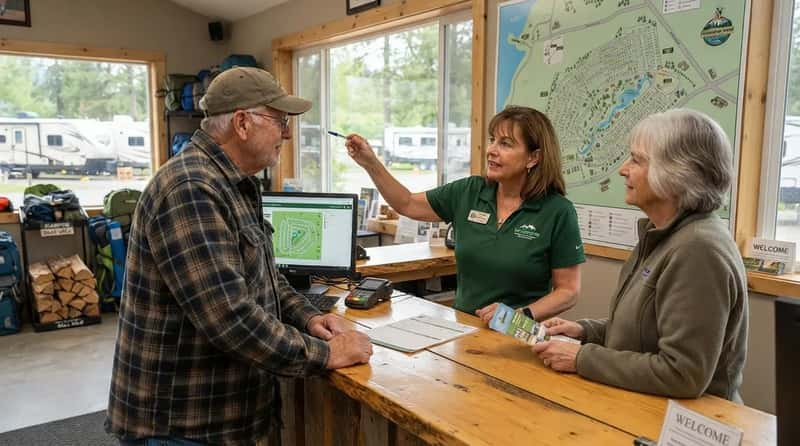
At check-in, staff often mention things that never made it onto the website. They’ll flag a washed-out road, a burn ban, a storm cell, or a dead-end trail. For travelers who don’t know the area, that information can reshape the whole stay.
Here’s why it matters: local conditions can change faster than any app updates, and the staff are standing right there when they do. Heat, smoke, and flooding all hit campers hardest when no one told them. The next item is smaller, and much more physical…
#4 – Firewood Delivered Right to Your Site
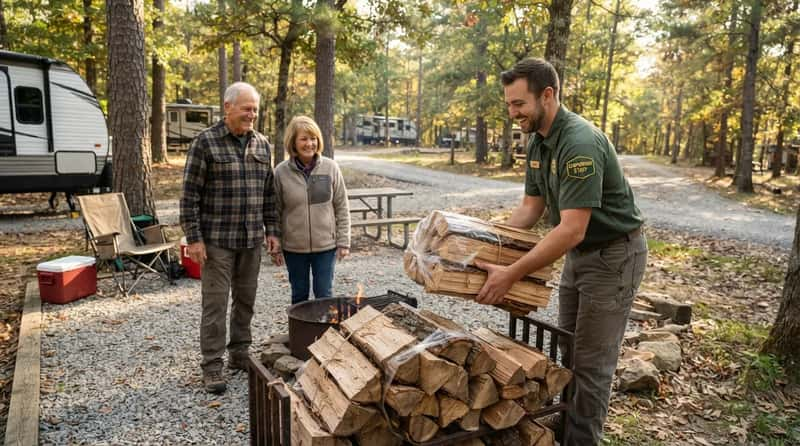
Hauling a bundle of logs across a gravel loop is easy at 30 and a chore later. At many campgrounds, staff or hosts will drive firewood to the site, sometimes as a courtesy and sometimes for a small fee. It depends on the park, so ask.
Here’s the twist: buying wood at the camp store is often the smarter move, not just the easier one. It’s usually local and ready to burn. The delivery is a bonus staff tend to offer to guests who look like they’d appreciate it. But the next one has nothing to do with wood or weather…
#3 – The Return-Visit Welcome That Changes How You’re Treated
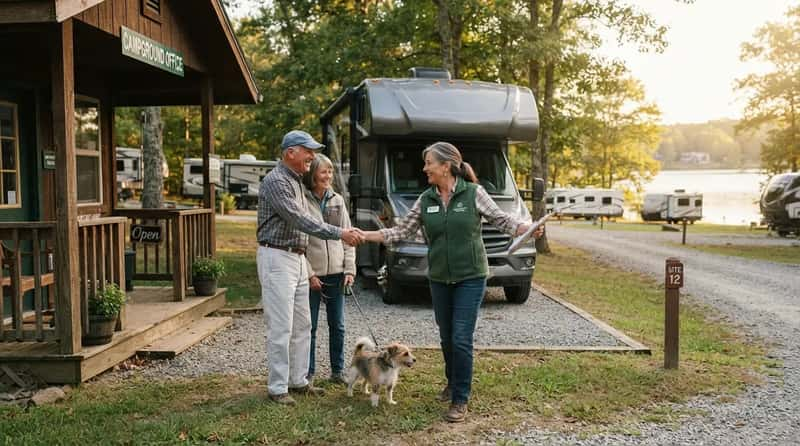
Come back to the same small campground a second time and something shifts. Staff start remembering the rig, the dog, the favorite site. They may hold it, set it aside, or mention it when it opens up. It isn’t a formal loyalty program, which is exactly why it feels so good.
Why It Stands Out
- No card, no app, and no points to track. Being remembered is the whole reward.
- Staff may hold your favorite site or tip you off when it frees up.
- Weekly and monthly rates often get mentioned mainly to guests who stay.
- Small favors tend to follow, like a better spot or a heads-up about a quiet week.
For retirees who camp for weeks or whole seasons, being known by name can be worth more than any posted discount. Some parks also run weekly or monthly rates that staff will mention mainly to guests who stay. It’s a quiet advantage that builds over time. Now for the two items that matter most, starting with a lifesaver in #2…
#2 – The Nearest Clinic, Pharmacy, and Dead Zone, Explained
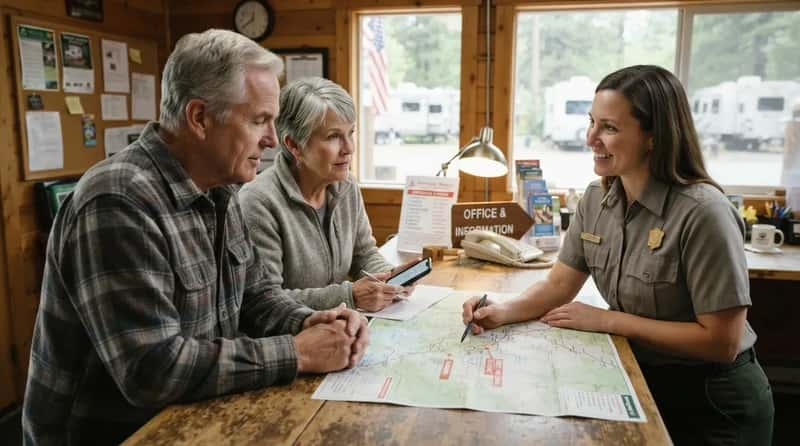
Many campgrounds sit far from town, and cell service can drop out entirely. Experienced staff know where the closest urgent care, pharmacy, and hospital are. They also know which corners of the park have no signal. They’ll often share that with older guests without being asked.
Here’s the part rarely mentioned. The campground office may be the only place with a working landline or reliable signal, and staff know the quickest route out. Ask where the nearest clinic is, and save the number before you need it. The final item is the one that tends to stick with people longest…
#1 – The Quiet Knock on the Door Nobody Ever Advertises
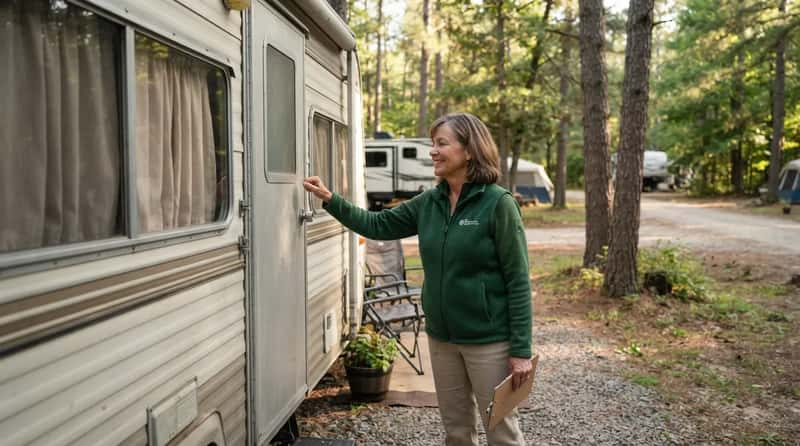
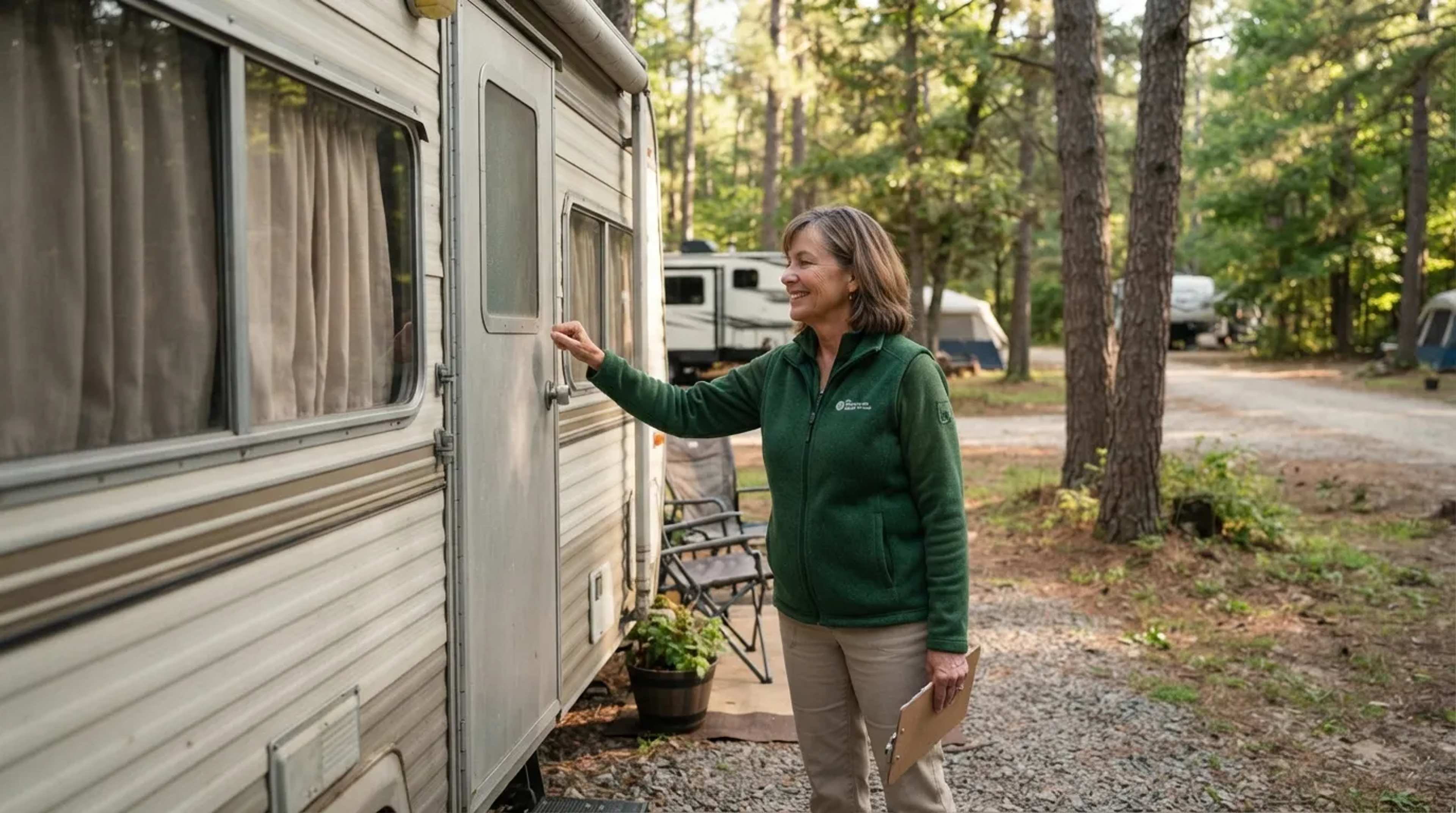
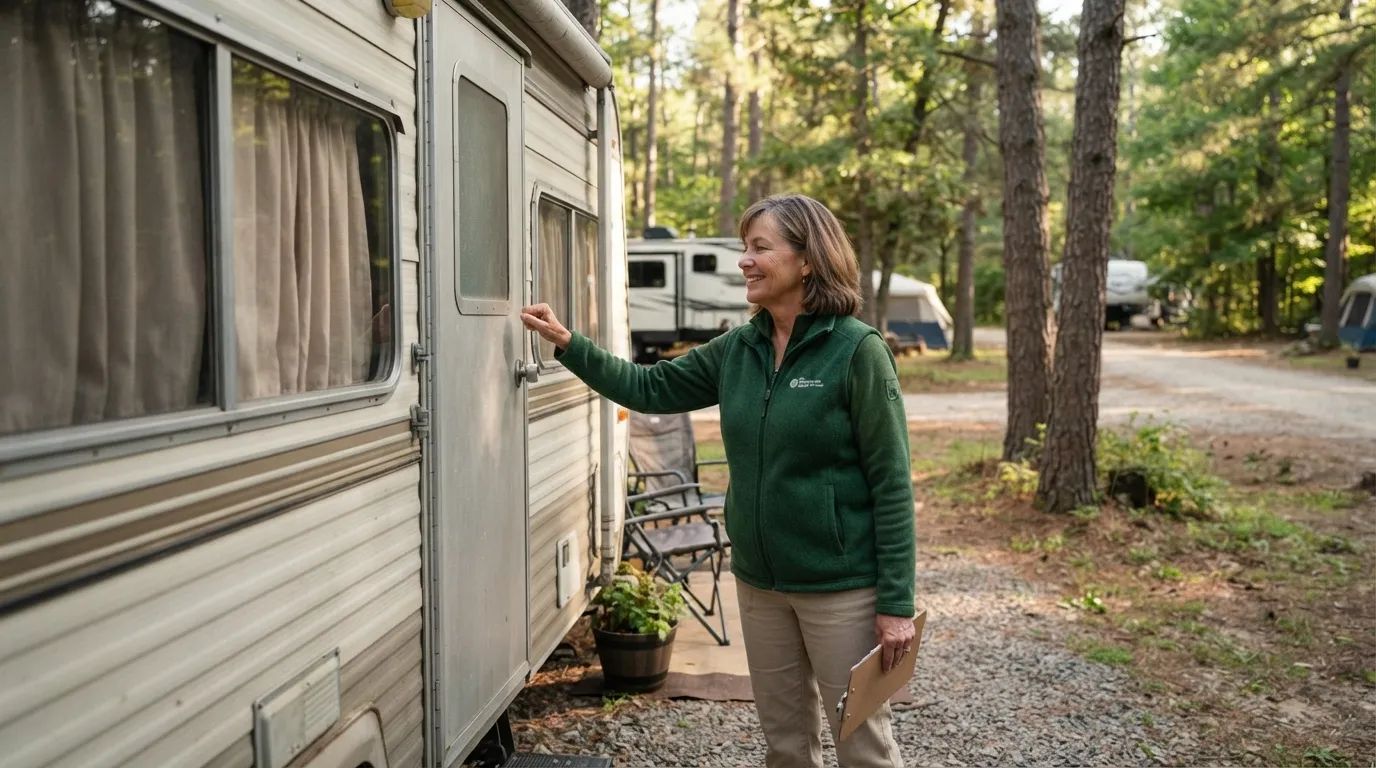
This is the one you won’t find on any website. At many campgrounds, especially smaller ones with live-in hosts, staff keep a loose eye on long-stay guests. If a camper’s lights stay off, the curtains stay closed, or a door hasn’t opened for a day, someone often walks over to say hello.
It’s not a formal program, and it varies by park. But for solo travelers, it can be the difference between a small problem and a serious one. Most people never realize it’s happening. They just remember the host who stopped by with a wave and a “how’s everything going?”
Campground staff don’t run a secret senior program. What they have is local knowledge, good instincts, and a little discretion. The official breaks are real: the federal Senior Pass at 62-plus, and age-based rates in some state parks. But the biggest perks aren’t discounts. They’re a better site, an honest warning, and someone paying attention.
Next time you pull up to that little window, notice who’s behind it. They may already be looking out for you.