Most first-time cruisers treat disembarkation morning like an afterthought – they wake up, throw things in a bag, and hope for the best. Cruise veterans know better. They treat the last morning like its own mini-mission, with a checklist just as strict as the one they used to pack for the trip.
What separates a smooth exit from a stressful scramble usually comes down to a handful of small, deliberate moves nobody warns you about before your first cruise. Here’s what experienced cruisers actually do before they ever step foot on the gangway.
#15 – They Confirm Their Exact Disembarkation Time (Not a Guess)
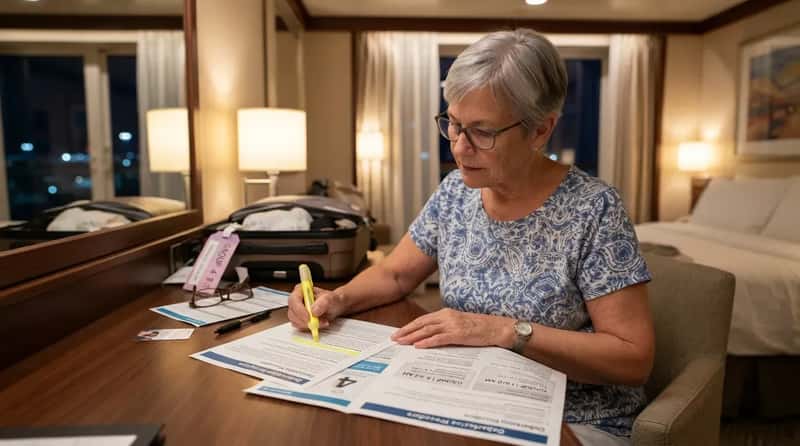
Veteran cruisers never assume they know when they’re getting off the ship. Before disembarkation day, they confirm all their booking details, meeting points, times, and who to contact if they are running late. That single habit saves them from the chaos happening one deck below.
Cruise ships can’t simply open gangways and let thousands of passengers pour off simultaneously, so debarkation follows structured procedures ensuring everyone clears customs, retrieves luggage, and exits safely. Veterans read every word of the instructions left in their cabin the night before, because generic advice rarely matches their specific ship and port.
#14 – They Refuse to Camp Out at the Gangway Early

New cruisers love to show up early “just in case.” Veterans know that’s a mistake. They listen for announcements calling their debarkation group or check the information displays instead of showing up before their group is called – because the crew will turn early arrivals away and they’ll waste time standing in unnecessary lines.
It sounds counterintuitive, but patience actually gets you off faster. Veterans grab a coffee, relax in a lounge, and wait for their number instead of standing in a hallway with fifty strangers and zero air conditioning. That patience pays off again a few hours earlier, at breakfast, in a way most first-timers never see coming.
#13 – They Order One Last Room-Service Breakfast Instead of Fighting the Buffet

While rookies rush the buffet on their final morning, veterans stay in their cabin. Some cruise lines still offer a room-service breakfast on disembarkation morning if you hang the order form on your door the night before, and eating in – especially with a balcony – is a great way to avoid the bustle as fellow shipmates rush to eat before disembarking.
Some cabin stewards will even let guests linger on the balcony while they clean the room, as long as belongings are stashed out of the way – especially if a little extra gratuity is involved. It’s a small trick, but it turns a rushed morning into one last calm moment onboard.
#12 – They Read the Final Bill Line by Line the Night Before

Veterans never wait until they’re home to look at their statement. The evening before disembarkation, guests receive a printed summary of their onboard account showing every charge accrued during the voyage, from drinks and service charges to spa and shore excursions – and cruise lines strongly advise checking this list carefully and reporting any errors immediately.
Mystery charges are more common than people think – a drink ordered by someone in a neighboring cabin, a spa treatment billed twice, a shore excursion that never happened. Catching it the night before means a five-minute fix at the desk instead of a frustrating phone call weeks later.
Worth Knowing
- Drinks or specialty coffees charged to the wrong cabin number
- Spa or salon treatments accidentally billed twice
- Shore excursions that were canceled but never refunded
- Gratuities charged again after being adjusted earlier in the week
#11 – They Screenshot the Bill Before the Wifi Cuts Off

Here’s a habit almost nobody talks about: veterans check their account digitally before the ship’s internet disappears for good. They know they don’t have to wait until the end of the voyage to review spending – they can view the onboard account at any point during the cruise, so adjustments and errors get corrected early, before the card is charged.
Once you’re off the ship, disputing a charge becomes a multi-step headache involving emails and hold music. A quick screenshot the night before is proof you can point to instantly if anything looks off after you’re home.
#10 – They Pre-Book the Ride Home Days in Advance

Nothing ruins a smooth exit faster than standing at the pier waiting for a cab. Experienced cruisers arrange transportation before they even leave home. One frequent piece of advice is to pre-book transportation, either through the cruise line or another service, because waiting for a taxi at the pier is a time suck that ends up costing more money.
Airports get crowded, ports get chaotic, and rideshare apps don’t always work well near the terminal. Veterans lock in their ride before they’ve even packed a suitcase, turning what could be a stressful scramble into a walk straight to a waiting car.
#9 – They Walk Their Own Luggage Off the Ship

This is the one that shocks a lot of first-timers: you don’t actually have to hand your bags over the night before. Passengers are able to walk their luggage off with them instead of leaving it in the hallway, and doing so can mean heading straight to customs to exit instead of hunting for bags in a sea of other people’s luggage.
Veterans who choose this route just make sure they’re comfortable wheeling their own bags through ramps and escalators, since disembarkation can be a bit of a maze. It’s more effort upfront, but it can shave a full hour off the total exit time.
Quick Compare
- Carry your own bags: Faster overall exit, no waiting on porters, but you’re on your own for stairs and escalators
- Tag and leave overnight: Easier physically, but bags are sorted by color and number and can take longer to relocate
#8 – They Finish (or Ditch) the Duty-Free Bottles Before Customs

Most people don’t realize cruise lines actually enforce alcohol limits – and they will take your bottles. There are specific limits to the type and amount of alcohol that may be brought aboard, and if you bring something beyond that limit, the cruise line will confiscate it and return it upon disembarkation.
Veterans keep close track of what they bought in port and make sure it’s within their line’s posted limit before their final morning, rather than discovering the hard way that a bottle is getting held at a locker until they’re already walking off the ship. It’s a small detail that turns into a frustrating goodbye gift nobody wants.
#7 – They Slip Extra Cash to the One Crew Member Everyone Forgets
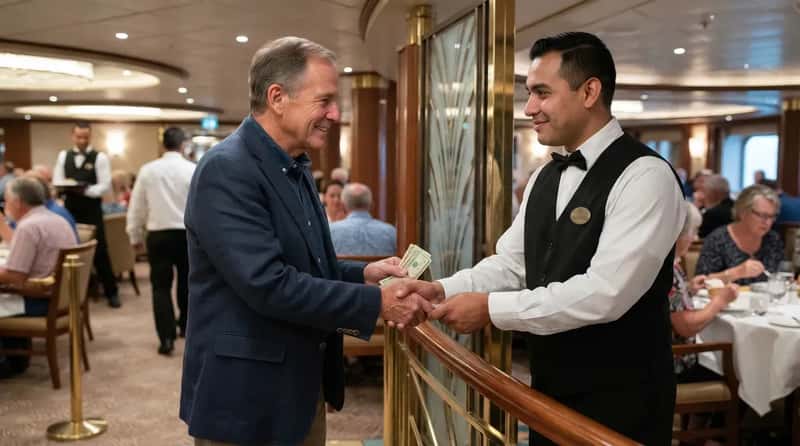
Auto-gratuities cover the basics, but veterans know the real appreciation happens in cash. Before automatic gratuities existed, cruise lines handed out envelopes with a suggested daily amount for the individuals who served guests every day – the cabin steward, the dining room waiters, even the maître d – though passengers could always give more, less, or none at all.
Veterans still lean on that older habit. They tuck a little extra cash for the person who refilled their coffee every morning or the bartender who remembered their order on day two – someone the standard gratuity pool often overlooks. It’s a controversial opinion among budget travelers, but plenty of experienced cruisers argue skipping this step is the biggest etiquette mistake on the ship.
#6 – They Pack a Separate “Off-Ship” Bag the Night Before
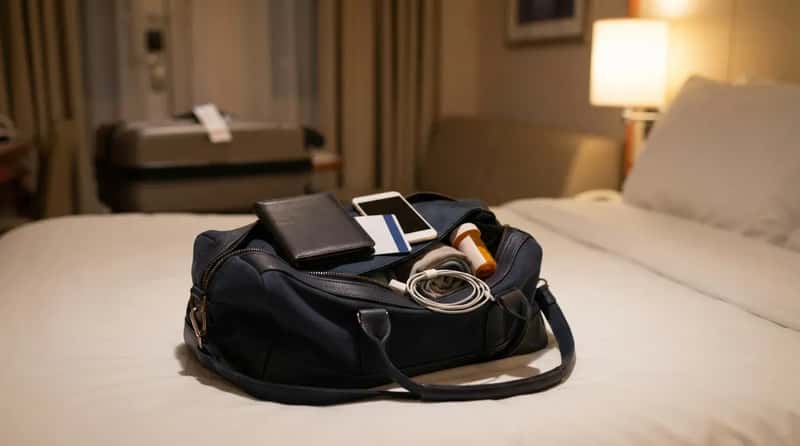
Rookies pack one giant suitcase and regret it by morning. Veterans always split things up. They pack essentials in a small carry-on rather than their tagged luggage – items like ID, medication, valuables, the ship key card, and a change of clothes stay on hand, not buried in a bag headed for cargo.
This one habit avoids the classic disembarkation panic: standing in a customs line realizing your passport is zipped inside a suitcase that’s already on a truck. Veterans build their off-ship bag first, then pack everything else around it.
At a Glance
- Passport, ID, and boarding documents
- Any daily medications
- Phone charger and headphones
- One full change of clothes
- Ship key card, wallet, and cash
#5 – They Hit the “Up” Button for a Faster Elevator Down
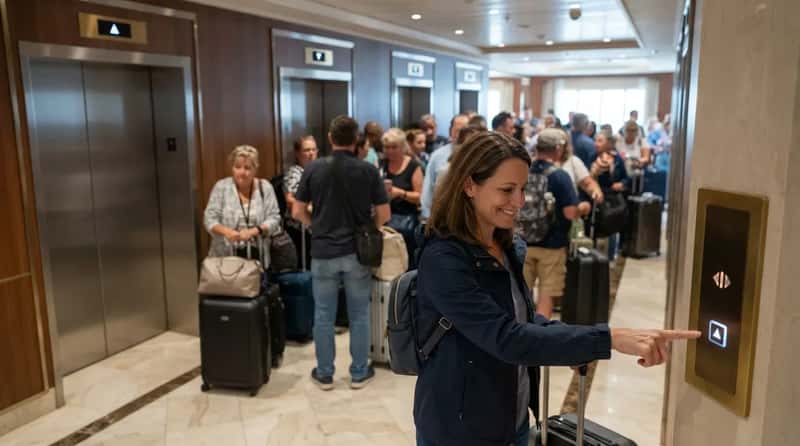
This trick sounds backwards, but longtime cruisers swear by it. The move is to press the “up” button when elevators are crowded during self-disembarkation, get on the empty elevator going up, and ride it down already inside instead of fighting a packed elevator heading straight down.
On a ship with thousands of people trying to leave at once, every elevator heading down fills instantly on the way up from lower decks. Veterans skip the crowd entirely by riding the “wrong” direction first – a weird little hack that consistently beats the line.
#4 – They Check Every Drawer, Balcony Chair, and Nightstand Twice
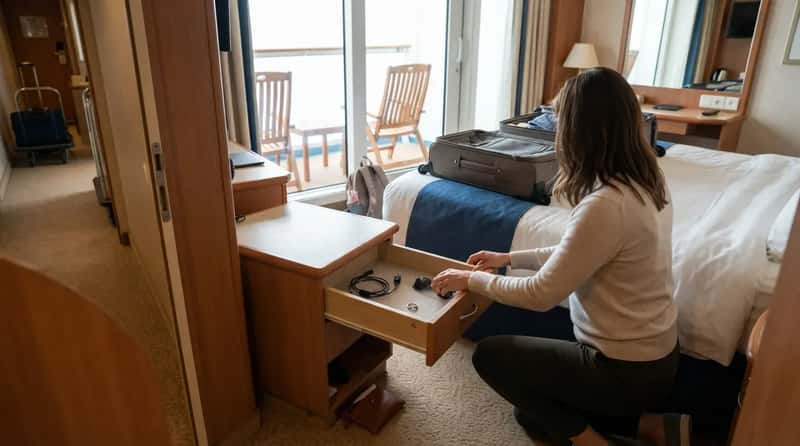
Cabins hide more items than people expect on a final morning. Veterans do a deliberate second sweep – balcony furniture, the space behind the nightstand, the little shelf inside the closet – because rushed final mornings are exactly when chargers, sunglasses, and jewelry get left behind for good. Once the door closes, most of it never makes its way back to its owner.
What makes this frustrating is how avoidable it is. A slow, deliberate lap of the cabin with the lights on – not a rushed glance while wheeling a suitcase out – is the only real defense. Veterans treat this walkthrough as non-negotiable, even if it means leaving the cabin two minutes later than planned.
#3 – They Open the Safe a Second Time
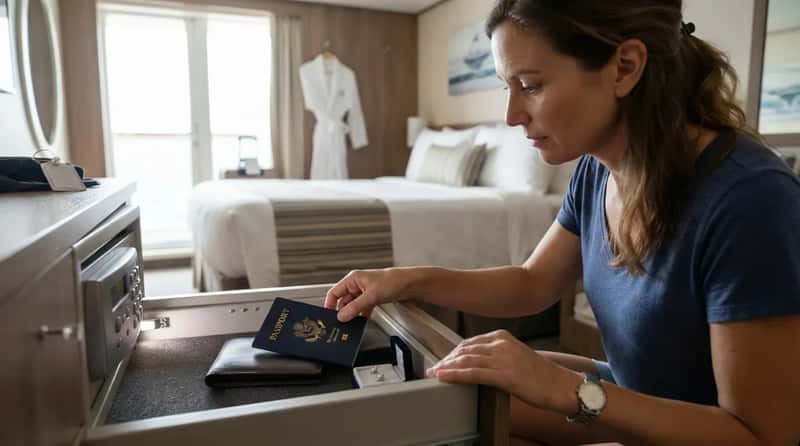
The in-room safe is where valuables go to get forgotten. Passports, cash, jewelry, spare credit cards – all locked away days earlier and easy to forget exists once the excitement of the final morning kicks in. Veterans build in a second, deliberate check of the safe specifically because the first check, done half-asleep, is unreliable.
It’s a small step that takes fifteen seconds, but it prevents one of the most gut-wrenching moments of any cruise: realizing hours later, already through customs, that a passport is still locked in a stateroom that now belongs to someone else’s vacation.
#2 – They Know Their Loyalty Status Buys Them a Faster Exit

Veterans who’ve sailed with the same line for years know status isn’t just about free drinks. Top-tier loyalty status across the major cruise lines can unlock complimentary drinks, shore excursion discounts, specialty dining credits, free internet, priority embarkation and disembarkation, reserved show seating, and in some cases a free cruise.
Priority disembarkation alone can mean walking off nearly an hour before general passengers. It’s one of the quiet reasons repeat cruisers stay loyal to a single brand instead of hopping between lines for the cheapest fare – the perks compound the more you sail.
Why It Stands Out
- Priority disembarkation, often up to an hour ahead of general passengers
- Complimentary or discounted WiFi packages at higher tiers
- Specialty dining credits or free nights in premium restaurants
- Reserved seating at shows instead of waiting in line for a seat
#1 – They Make Time for One Last Real Goodbye With Their Steward
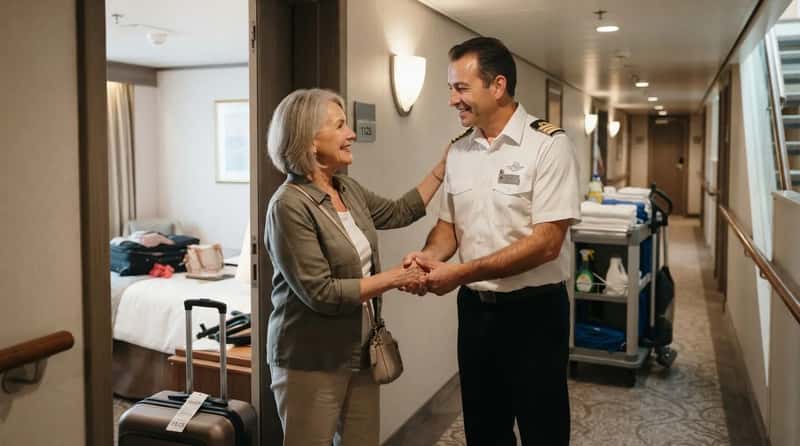
This is the one thing almost every veteran cruiser does, and it has nothing to do with logistics. They seek out their cabin steward – the person who made their bed, refilled their ice, and quietly kept their whole week running – for a genuine, unhurried goodbye instead of a rushed nod on the way out the door.
It’s a small gesture that sticks with the crew far more than most passengers realize. Room stewards and waitstaff work brutal hours, often away from their own families for months at a time, and a sincere thank-you carries more weight than most guests assume. Veterans treat that final conversation as part of the trip, not an afterthought – proof that the best cruise habits aren’t really about efficiency at all.
The most surprising truth about disembarkation day is that the smoothest exits have almost nothing to do with luck. They come down to reading the folio early, packing a separate bag, knowing exactly when your group gets called, and remembering that the crew who made your week easier deserve more than a rushed wave goodbye. None of it is complicated – it’s just rarely explained before your first cruise.