You hit 70, so the airport should roll out the welcome mat, right? It doesn’t. Crews see the gap between what older passengers expect and what actually happens every single day, and most of it comes down to rules nobody reads aloud at the gate.
Some of these surprises are small, like a screening perk that starts later than you’d guess. Others can cost you a flight, a bruised hip or a very long walk through a terminal. And one rule explains why nearly all the rest exist.
#15 – The “Senior Perk” Everyone Thinks Starts at 65 Actually Starts at 75
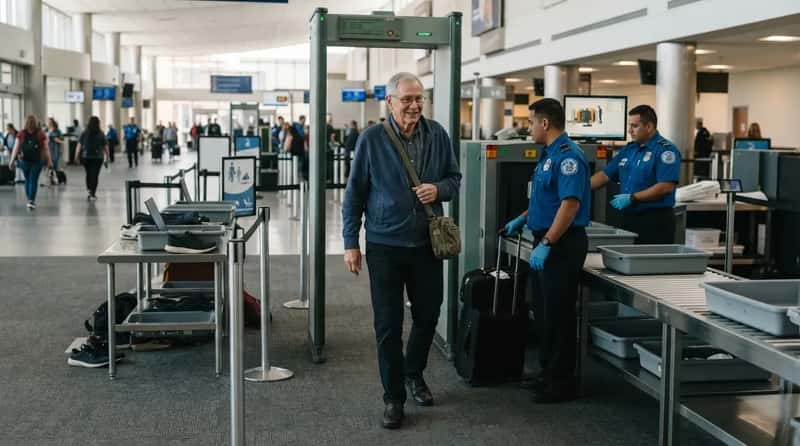
Plenty of older travelers walk up to security expecting to keep their shoes on. Passengers 75 and older can leave shoes and light jackets on at TSA checkpoints. Between 65 and 74, standard rules apply, no matter how many birthdays you’ve stacked up.
Even at 75, there’s a catch. Light jackets still have to come off for Advanced Imaging Technology screening. If an alarm goes off, you may need to remove your shoes or get a pat-down, and you can ask to sit during that part. There’s no card or sticker for any of this, so officers decide at the checkpoint.
#14 – The $45 ID Surprise That Hits Long-Time Drivers Hardest
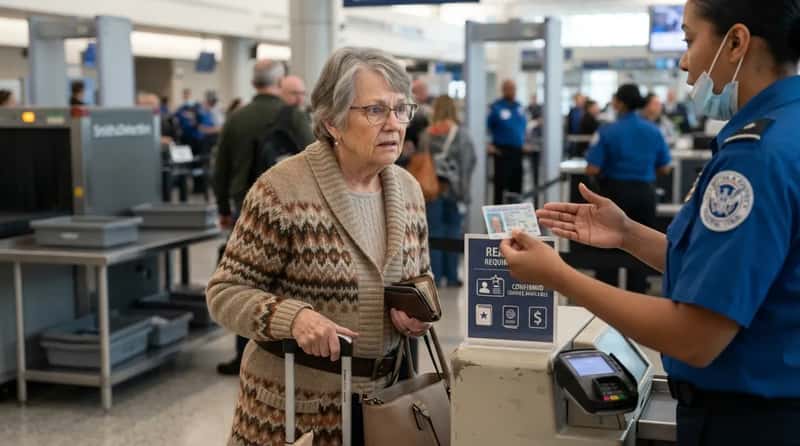
That trusty old driver’s license in your wallet may not get you through the checkpoint anymore. Since May 7, 2025, travelers 18 and older need a REAL ID or another federally accepted ID, such as a passport, to board domestic flights. Plenty of people who renew by mail or keep the same license for decades never made the upgrade.
The rules got tougher in 2026. TSA’s ConfirmID option began February 1, 2026, and lets travelers without acceptable ID pay $45 for alternative identity verification. Paying the fee doesn’t guarantee you’ll be verified, and travelers whose identity can’t be confirmed may be turned away. A valid passport is the simplest backup.
#13 – The Free Wheelchair Ride Many Proud Travelers Turn Down
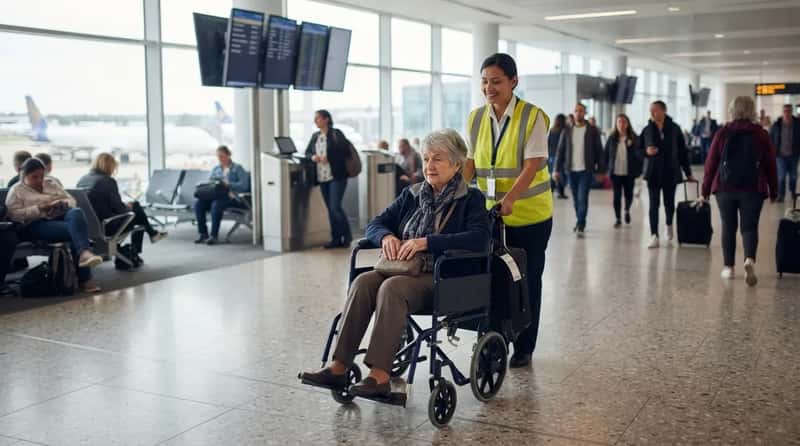
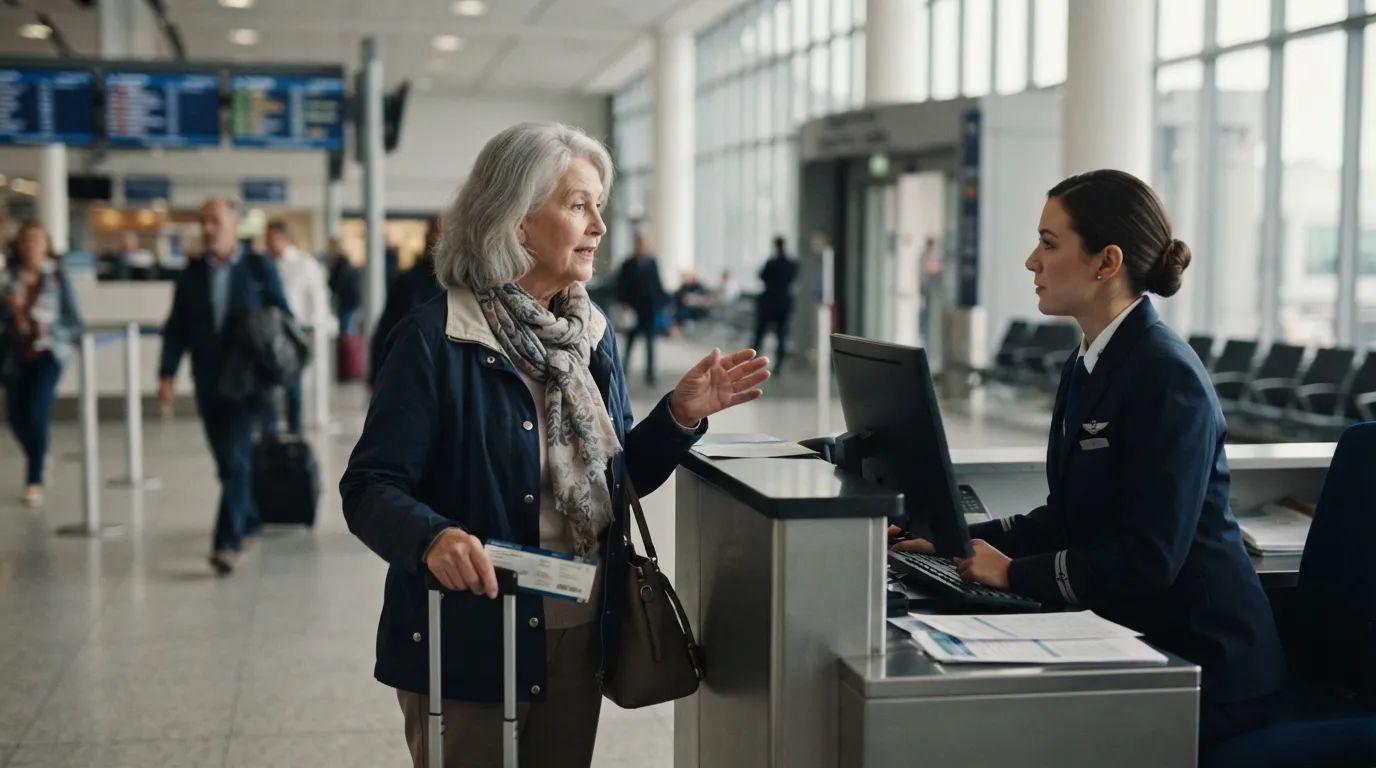
Airport wheelchair help costs nothing, and a surprising number of people wave it off. Under DOT rules, airlines must provide prompt wheelchair assistance on request, including help getting between gates to make a connection. It’s a rule, not a favor.
Fast Facts
- Price: Airlines can’t charge you for wheelchair assistance.
- Coverage: Help applies at the airport and during connections, not just at the first gate.
- Age limit: There isn’t one. The help is tied to your need, not your birthday.
- Your part: Ask for it and tell staff exactly what kind of help you want.
Pride is the usual reason people say no. But some travel advisers argue that skipping the chair to save face is a mistake when your gate is a half-mile hike away. A DOT rule finalized in December 2024 requires assistance to be “safe and dignified.” Saving your energy for the trip itself isn’t weakness. It’s strategy.
#12 – The Connection That Looks Fine on Screen and Fails in Real Life
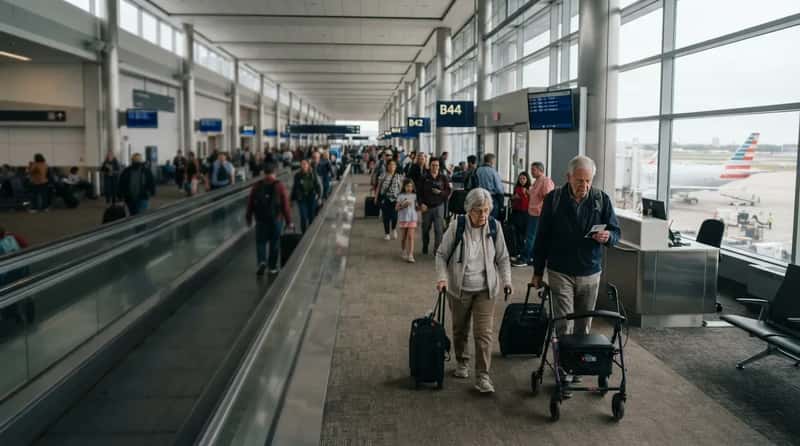
A 45-minute layover looks efficient on a booking screen. In real life it can mean a long terminal walk, a surprise gate change and a wait for an escort who’s helping three other people.
Airlines must help with connections, but nobody can promise the clock cooperates. One late arrival can put a slow-moving traveler at the back of every line. Many advisers suggest a layover of 90 minutes or more if walking is slow for you. Plenty of experienced fliers say the cheapest “upgrade” is simply more time.
#11 – The Window Seat Mistake That Costs Your Legs
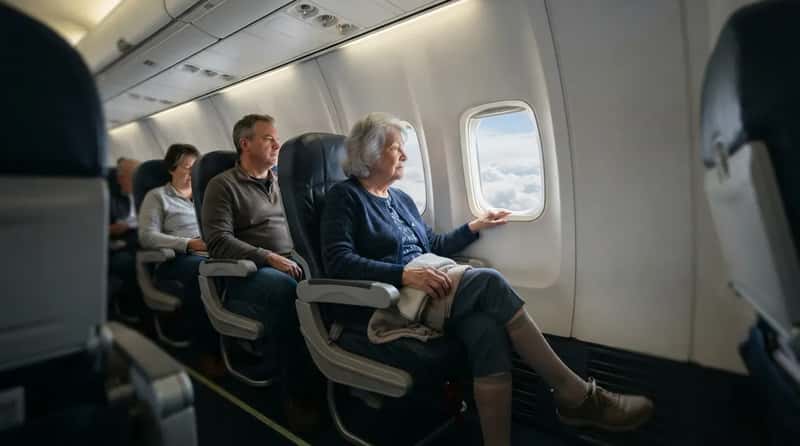
The window seat looks like the winner, with the view, the wall to lean on and no one climbing over you. For many passengers over 70, it’s the worst pick on the plane. Getting out means asking two strangers to stand up, so people quietly skip bathroom trips and stay seated for hours.
Sitting still isn’t harmless. The CDC lists age among the risk factors for blood clots on long trips, and longer flights add to the risk. Experts commonly advise standing and walking the aisle every couple of hours when it’s safe. An aisle seat makes that easy, and the view isn’t worth stiff, swollen legs.
#10 – The Onboard Wheelchair That Isn’t Automatic
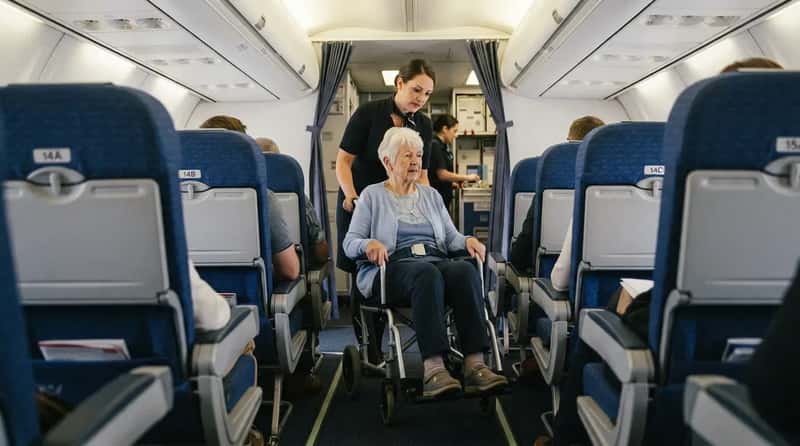
Reaching the lavatory can be a real ordeal on a narrow plane. A slim onboard aisle chair exists for exactly that, but it isn’t always aboard. Aircraft with more than 60 seats and an accessible lavatory must carry one. Smaller regional jets are a different story.
Worth Knowing
- Ask about the aisle chair when you book, then confirm at the gate.
- Use the terminal restroom right before boarding to cut down on mid-flight trips.
- On a small regional jet, a shorter or nonstop route can mean fewer lavatory worries.
- Speak up before the seat belt sign goes on, not after.
Don’t count on anyone offering it. Request the chair when you book and confirm it at the gate, because it won’t be offered automatically. Once you’re aboard, airlines must help you move to and from the lavatory, including with the onboard chair, if you ask. Asking is the key.
#9 – The Overhead Bin Standoff Nobody Warns You About
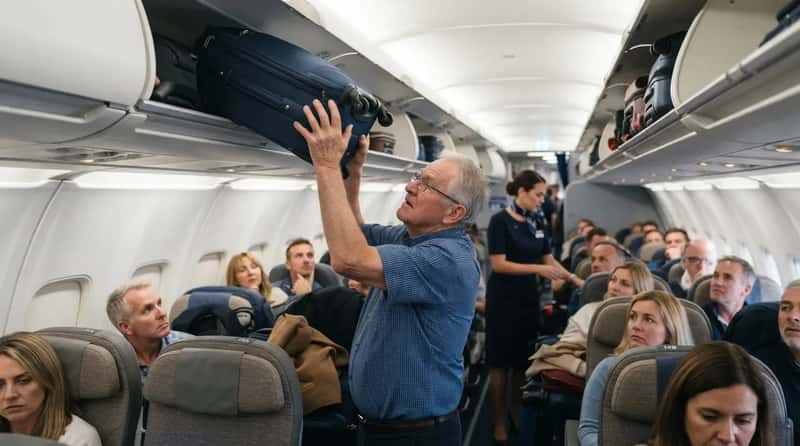
Lifting a bag overhead is where many trips quietly go sideways. Airlines must help passengers with disabilities stow and retrieve carry-on items if they request it. That sounds simple, but it depends on who’s free and whether you speak up.
The real fix starts at packing. A bag you can’t lift is a bag someone else has to lift for you, possibly while the whole cabin waits. Many fliers say the most overlooked solution is a smaller bag, or asking at the gate about checking it. Nobody hands out medals for heroics at row 14.
#8 – The Pill Bottle Rule That Saves Entire Trips
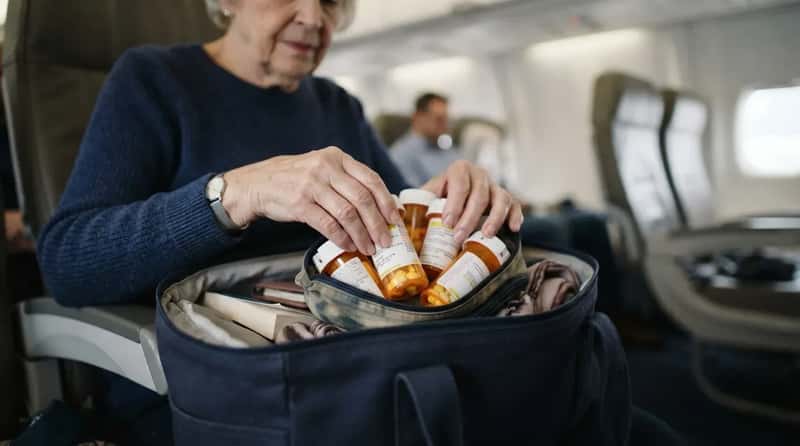
Medications belong in your carry-on, never your suitcase. Checked bags get delayed, rerouted and lost, and a missing bag shouldn’t mean a missing heart pill. Travel experts advise keeping medications clearly labeled and separated, with prescriptions and your doctor’s contact information within reach.
Don’t expect the crew to hold or manage them. DOT says in-cabin assistance is required, but not extensive personal services. That means you manage your own pills, timing and doses. A written list of your medications and conditions in your wallet can make a huge difference if something goes wrong.
#7 – The Free Drink That Hits Harder at 35,000 Feet

The cabin isn’t a normal room. Planes are pressurized to the equivalent of roughly 6,000 to 8,000 feet, and the air is extremely dry. Your body feels that, especially if you’re already dehydrated from a long morning in the terminal.
That’s why many doctors advise going easy on alcohol in flight. Cabin altitude, dry air and a free glass of wine can stack up in ways you’d never feel at home. Plenty of seasoned travelers say water beats the cocktail every time. Bring an empty bottle and fill it after security.
#6 – The Private Safety Briefing Most Passengers Never Request
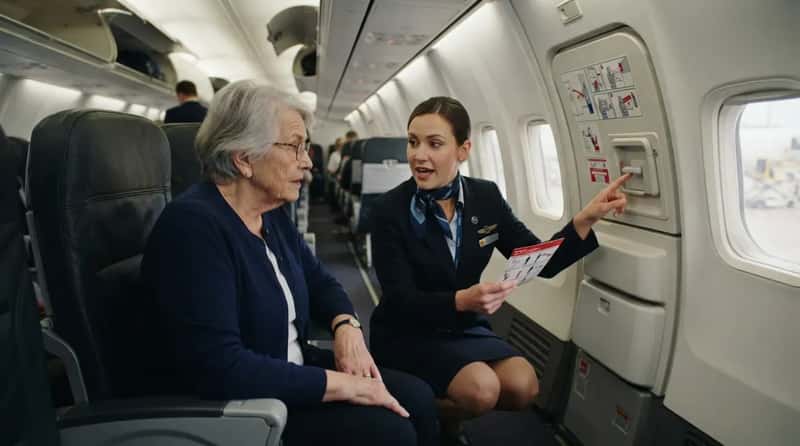
The standard safety demo depends on seeing the screen and hearing the speaker. If either is hard for you, you can ask for a personal briefing. Airlines are required to offer a one-on-one safety briefing to passengers with disabilities who request one. Very few people know that.
At a Glance
- Hard to see or hear the demo? Ask a crew member for a personal briefing.
- Best time to ask: At boarding, before the cabin fills up and the door closes.
- Exit row job: You must be able to open the exit and help others get out.
- Not sure you can? Tell the crew and ask to be moved.
The exit row is another place where age and ability collide. Federal rules require exit row passengers to be able to open the door and help others evacuate. Exit row legroom can look like a bargain, but it comes with a job. Be honest with yourself about whether you could do it in the dark with a cabin full of people behind you.
#5 – The Turbulence Injury That Almost Always Has the Same Cause
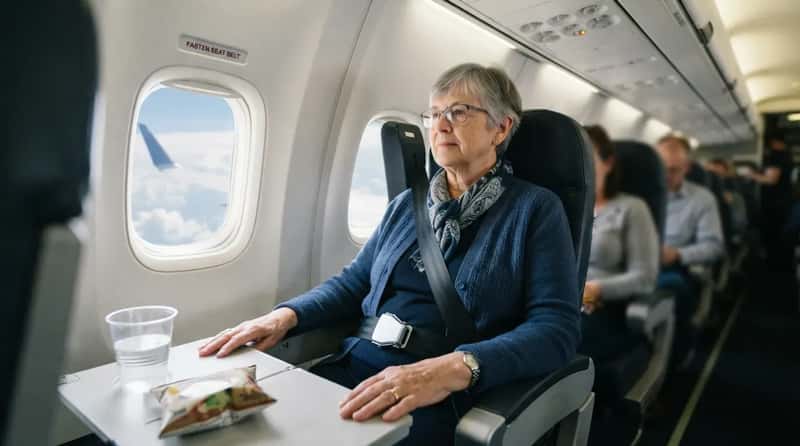
Turbulence is rarely a danger to the plane itself. It’s a danger to anyone who isn’t buckled in. Safety regulators have long reported that most turbulence injuries involve passengers or crew who weren’t wearing seat belts.
That matters more with age. Bones break more easily, and a sudden drop that throws you into an armrest or the ceiling can do real harm. A cup of hot coffee in your lap is a hazard too. Keep the belt fastened whenever you’re seated, even when the sign is off. It’s the cheapest insurance on the plane.
#4 – The Oxygen Rule That Can Ground a Trip
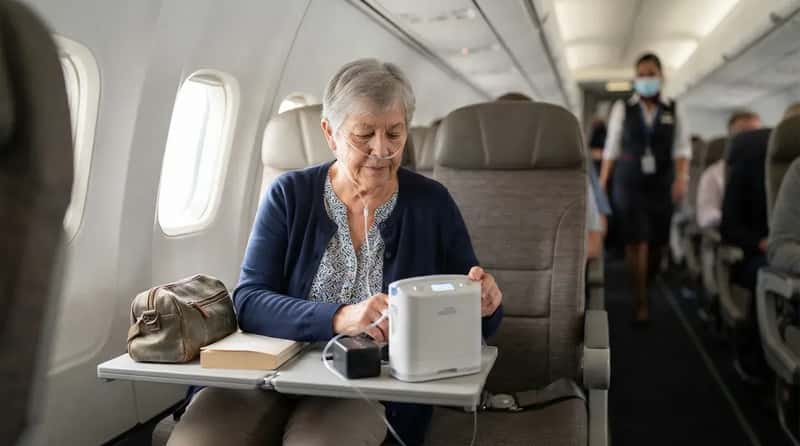
U.S. airlines generally don’t supply oxygen for passengers’ personal use. If you need it, you bring a portable oxygen concentrator approved for flight. The FAA keeps a list of accepted models, and airlines expect you to use one of those.
Batteries are where trips go wrong. Airlines typically require enough battery power to cover the whole journey, plus a large cushion for delays. Call the airline ahead and get its policy in writing. A gate agent can refuse a device if the paperwork doesn’t line up, and by then it’s too late to fix.
#3 – The Odds of a Medical Emergency Are Higher Than You’d Guess
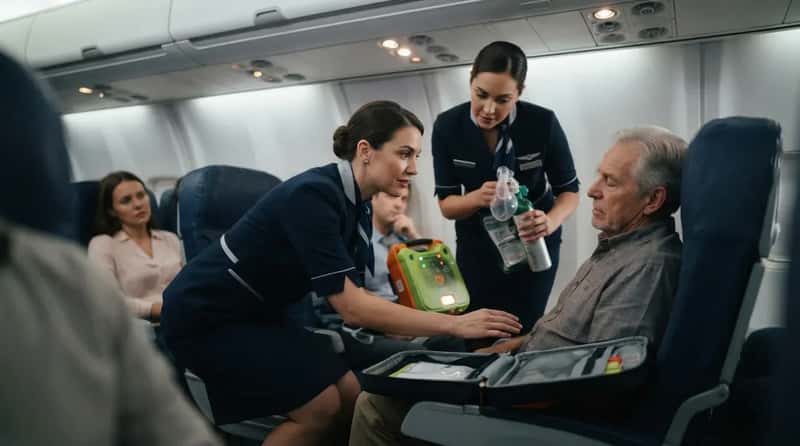
Most people picture an in-flight emergency as a movie plot. It happens more often than that. A 2013 New England Journal of Medicine study of calls to a ground-based medical center estimated about one emergency per 604 flights. That’s across the whole flying population, not just older travelers.
Crews are trained for it. Planes carry first-aid supplies and defibrillators, and airlines can connect with ground-based medical teams. But a crew can only help with what it knows. Tell an attendant early if you have a heart condition, diabetes or a medication that matters.
#2 – The Help Crews Can’t Legally Be Expected to Give
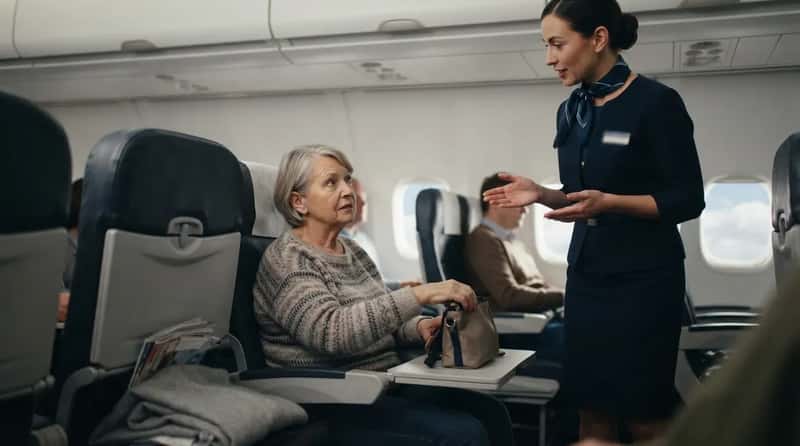
Flight attendants are on board for safety first, not personal care. DOT rules require help in the cabin, but not extensive personal services. In practice, crews aren’t required to feed you, help you inside the lavatory or give you medication.
That catches many solo travelers off guard. Some experts argue that anyone who needs hands-on help should not fly alone. A companion changes everything. If that’s not possible, plan the details in advance and call the airline well before departure.
#1 – The Quiet Rule That Decides Everything: You Have to Say It Out Loud
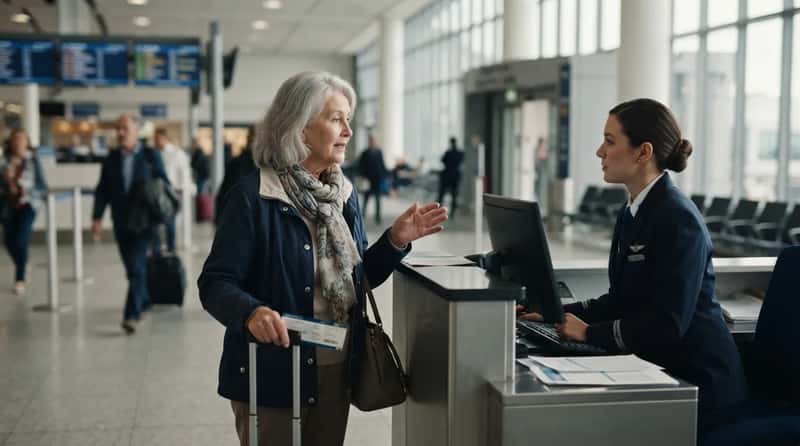
Almost every protection on this list hinges on one step. You have to ask. To receive airport assistance, the passenger must self-identify to airline staff as someone who needs the service. Nobody is checking birth dates and rolling out a red carpet.
Even advance requests don’t remove that step. Passengers who request help in advance still need to identify themselves to airline personnel once they arrive at the airport or gate. DOT also advises booking early and telling the airline exactly what help you need. If something goes wrong, you can ask for a Complaints Resolution Official, and airlines must make one available at no cost.
Quick Compare
- What many assume: Turning 70 brings automatic help. What’s true: Help responds to a request.
- What many assume: Booking ahead covers everything. What’s true: You still check in with staff at the airport.
- What many assume: Screening perks begin at 70. What’s true: The shoes-on rule starts at 75.
The biggest secret isn’t a trick. The rules do protect older travelers, but they respond to requests, not guesses. Turning 70 doesn’t unlock the screening perks that start at 75, and free help only reaches the people who speak up.
The best fixes cost almost nothing: an aisle seat, a longer layover, a lighter bag and your meds in the carry-on. The hardest one is saying “I need a hand” out loud. For the people who do, the whole system suddenly works.