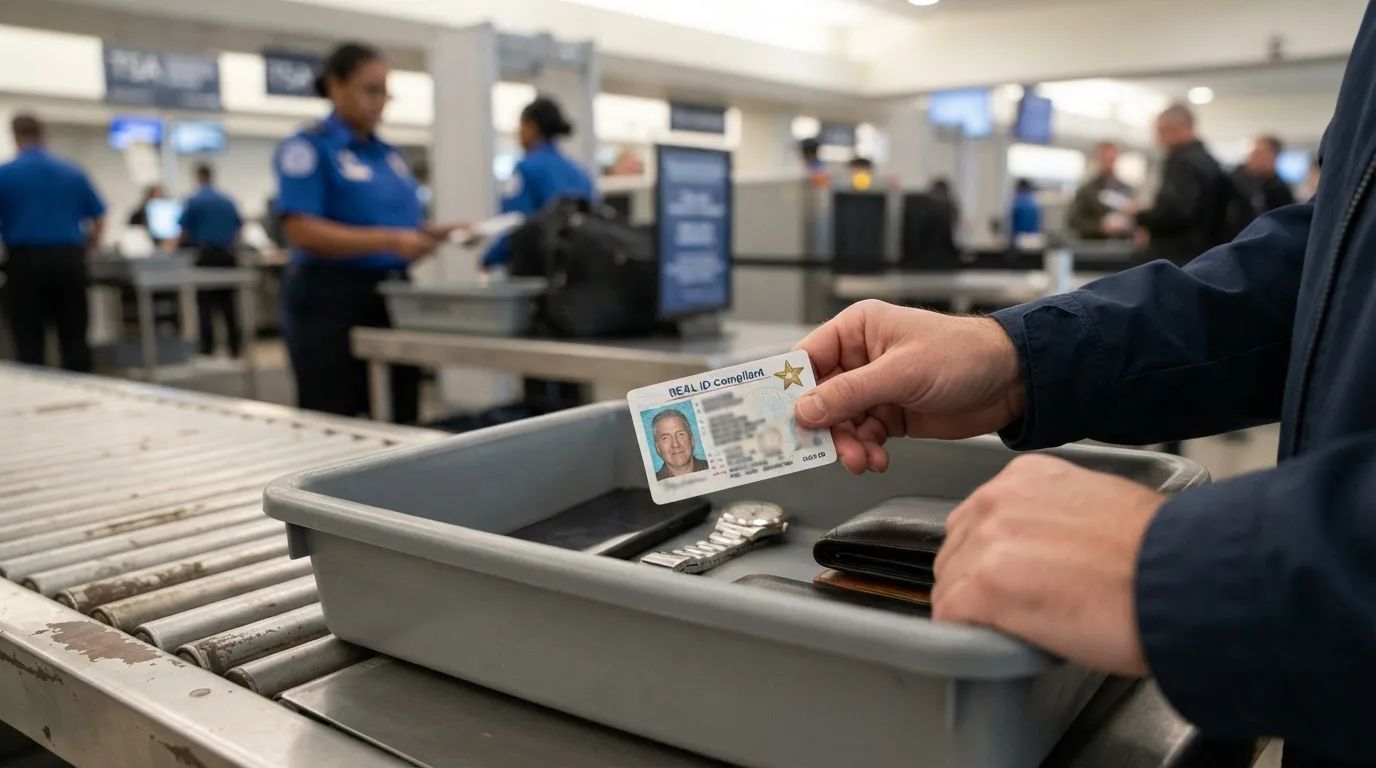
You remember how this goes: print the pass, flash an old license, kick off your shoes, then hover near the door until the line looks short. That script used to work. Now several of those habits can cost you a better seat, a chunk of cash or the flight itself.
The agent at the podium is trying to board a full plane and has no time to catch you up. So here are the 15 things that rarely get said out loud. One is a surprise $45 charge, and another is a payout that can run up to $2,150 if you know to ask. The last two are the ones that can end your trip before you ever reach the gate.
#15 – Your Boarding Group Was Decided Before You Left the Couch
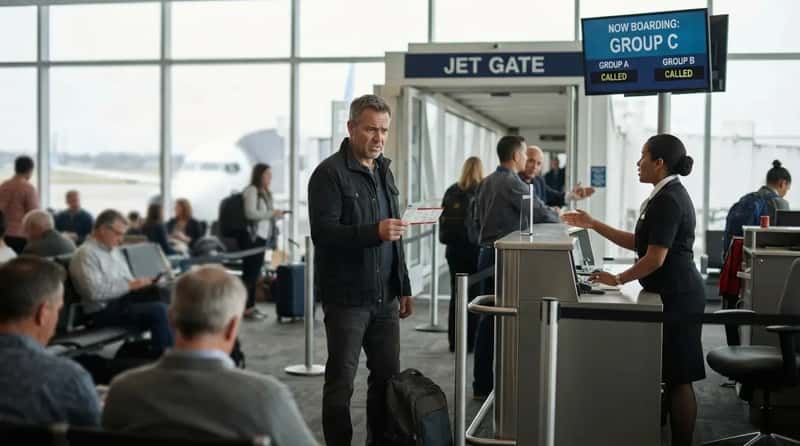
That number on your pass isn’t random, and it has nothing to do with who strolled up first. Southwest says its groups are based on fare type, seat type and location, Rapid Rewards status, and credit card benefits. Most big carriers run on similar logic: what you paid, what status you hold and which card is in your wallet.
So a traveler who got to the gate two hours early can still board near the end. Under Southwest’s new system, the cheapest fares sit in the final groups called. Plenty of returning flyers don’t realize the cheapest fare quietly puts them at the back of the line. The agent can’t change it, because the fare rule was locked in the moment you hit “buy.”
Fast Facts
- Fare type, seat type and location, status, and card perks all feed into your group.
- The cheapest fares land in the last groups called.
- Showing up early at the gate doesn’t change your group.
- The agent scans you in order and can’t rewrite the fare rule.
But the screen right next to the podium is hiding something else.
#14 – That Little Monitor by the Desk Is a Public Scoreboard
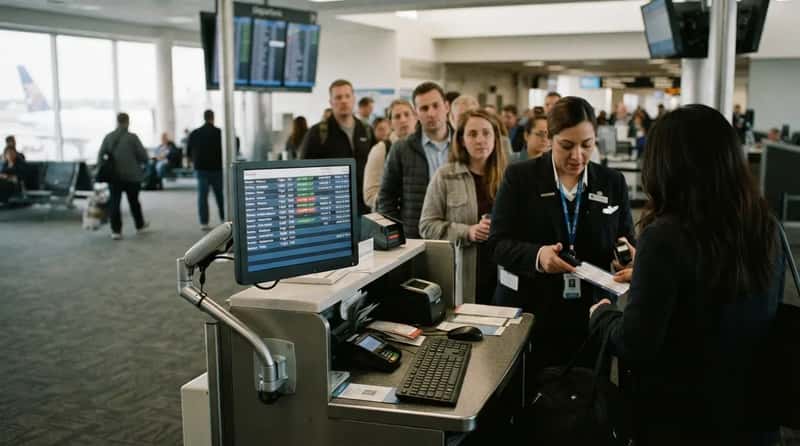
At many gates, a screen near the podium lists names for upgrades and standby. Nobody announces what it means, but the order isn’t a mystery. Priority on these lists usually follows fare class, loyalty status and sometimes check-in time. The exact rules differ by airline.
Here’s what the agent won’t say out loud. Hovering at the desk almost never moves you up a list that a computer already ranked. One polite question about where you stand is fine. After that, you’re mostly stalling the person trying to board 150 people.
And if you’re checking your status on your phone, there’s a catch with that too.
#13 – Your Phone Boarding Pass Can Die at the Worst Possible Moment
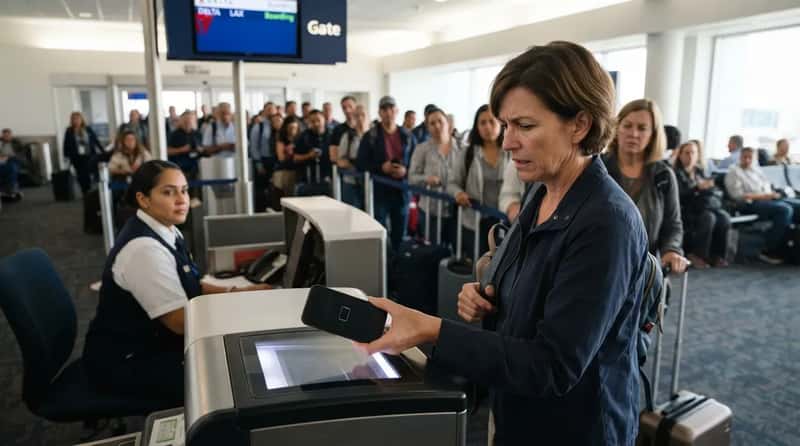
Airlines now push mobile passes hard, and gate scanners read phones all day long. It works great until the battery hits 1%, the app freezes or the airport Wi-Fi gives out. Then you’re the person holding up the line while a screen spins and forty people sigh behind you.
The fix is boring but real. Save a screenshot or add the pass to your phone’s wallet before you leave home, so it opens without a signal. A dead phone doesn’t have to mean a dead trip. You can usually get a printed pass at a kiosk or the counter, and it’s far easier to do that before boarding starts than at the moment your group is called.
Speaking of getting called, timing matters more than most people think.
#12 – The Door Closes Earlier Than the Departure Time on Your Ticket
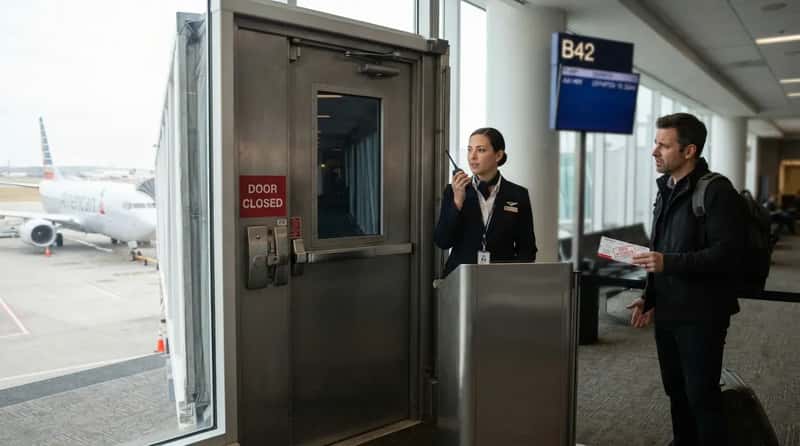
The time on your ticket is when the plane pushes back, not when you can still walk on. At many U.S. airlines, boarding closes roughly 10 to 15 minutes before departure. The exact cutoff varies by airline, so check your carrier’s policy.
That is why agents sometimes look unmoved when you jog up with “five minutes to spare.” Once the boarding door is closed, many agents can’t reopen it, even while the plane is still sitting right there at the gate. The bags, the paperwork and the crew count have all been finalized. Passengers who learn this too late tend to learn it loudly.
If you do make it on, though, your bag may not be coming with you.
#11 – Your Carry-On Gets Gate-Checked When the Bins Run Out
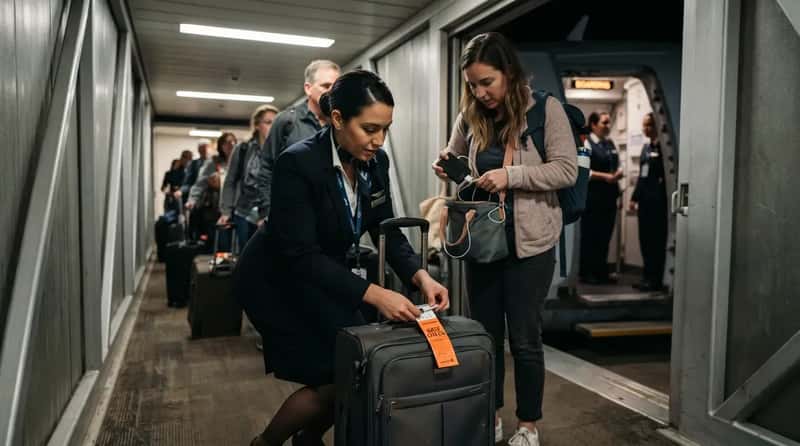
You can follow every size rule and still watch your roller bag get tagged at the jet bridge. When overhead space is gone, agents start gate-checking bags, usually at no charge when the airline forces it. Late boarding groups are the most likely to hear the request.
What no one mentions is the battery rule. If you’re asked to gate-check your carry-on, you must take out all power banks and spare batteries and carry them into the cabin. Spare lithium batteries are banned from checked baggage, and a gate-checked bag counts as checked. Laptops, medications and chargers should come out too, because that bag may be out of reach until you land.
That battery rule has gotten much stricter, and it’s not the same on every airline.
#10 – Power Banks Became the Most Policed Item in Your Bag
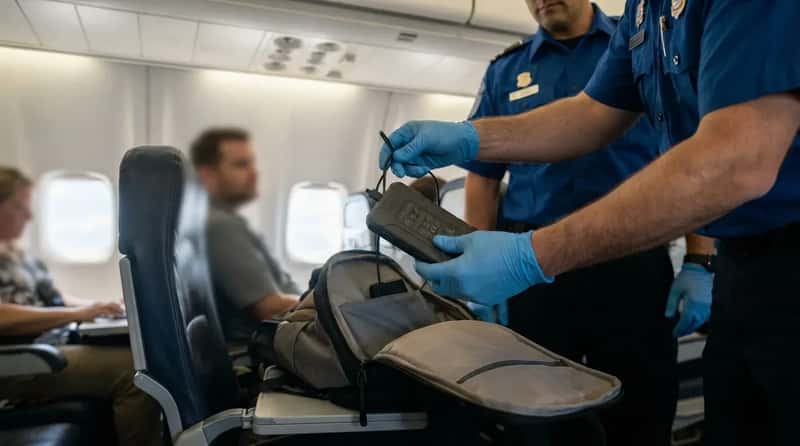
If you haven’t flown in a few years, your charger habits may be out of date. Some carriers now cap how many portable chargers each passenger can bring, and the usual size limit is 100 watt-hours per battery. Southwest asks that power banks be kept under the seat or on your person, not in the overhead bin.
Coverage of the crackdown often points to an October 2025 incident, when a power bank ignited in an overhead locker on an Air China flight. The old “toss it in the bin and forget it” habit is now against some airlines’ rules. Policies differ from carrier to carrier, so check yours before you leave the house.
Now for the part of gate life that feels the most unfair.
#9 – Overbooking Is Legal, Routine and Planned
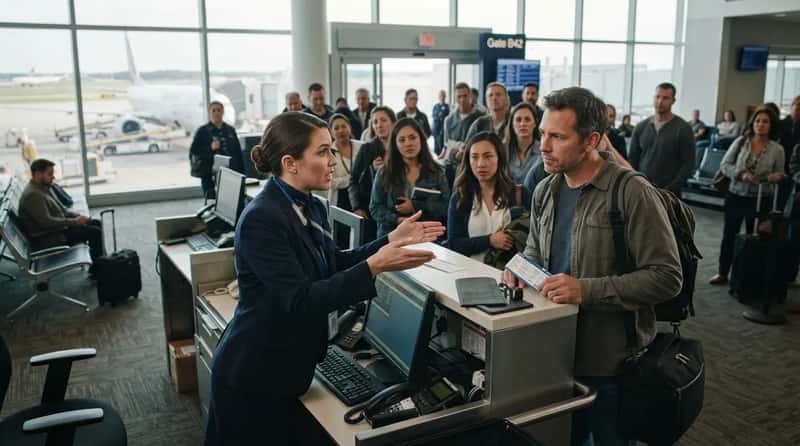
When the agent announces the flight is “a little oversold,” it isn’t a glitch. Airlines sell more tickets than there are seats, betting that some travelers won’t show up. Most of the time the math works. Sometimes it doesn’t, and someone has to stay behind.
The legal order matters. Under 14 CFR Part 250, airlines are required to ask for volunteers before denying boarding to anyone. That first announcement is a legally required first step, not a hint that you’re about to be thrown off. Critics call overbooking unfair, while defenders say it keeps seats from flying empty. Either way, it’s built into the system.
Quick Compare
- Volunteering: a negotiation with no legal minimum, often paid in vouchers.
- Being bumped: federal compensation of 200% or 400% of your one-way fare, depending on how late you arrive.
- Payout timing: involuntary compensation is made at the airport, in cash or by check.
The offer that follows is where people leave money behind.
#8 – “Volunteers Wanted” Is an Opening Offer, Not a Final Price
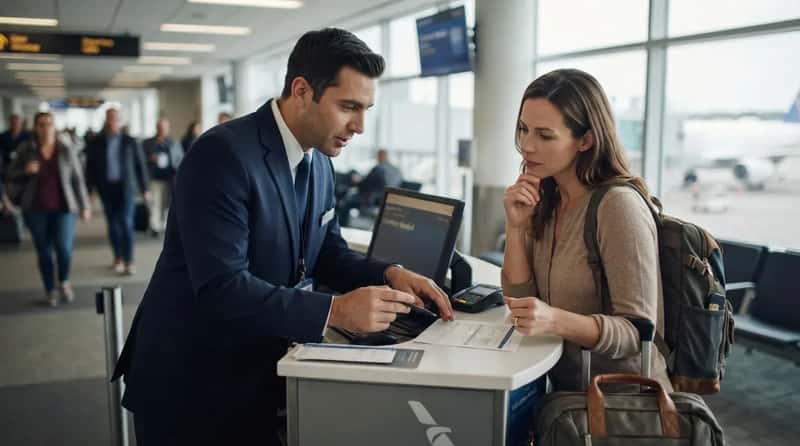
Gate agents rarely say it, but volunteering is a negotiation. One travel-rights guide describes it as a negotiation with no legal minimum, usually paid in vouchers. The first number you hear is often not the last one, especially as departure time gets closer and the airline still needs seats.
Before you say yes, ask what you’re really getting. Find out your new departure time, whether meals or a hotel are included, and whether the offer is cash or a voucher. Voucher terms can carry expiration dates and restrictions that cut their real value. Get the details in writing before you give up your seat.
And if nobody volunteers, a different set of rules takes over.
#7 – If You’re Bumped Against Your Will, the Law Sets a Floor
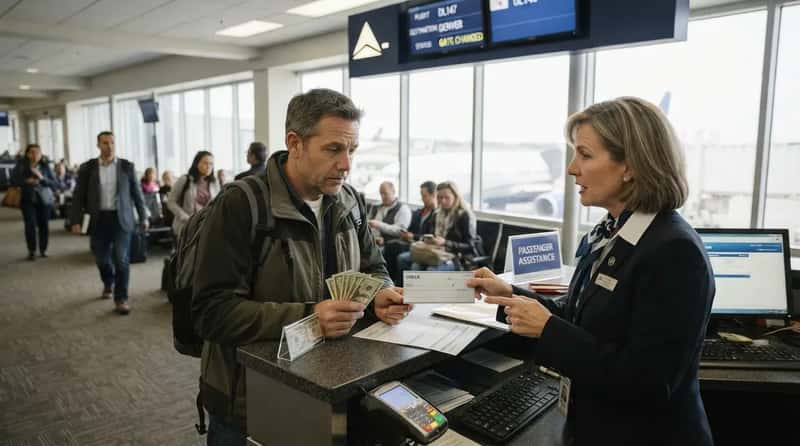
Involuntary bumping triggers federal compensation, and it’s measured by how late you arrive. The rule says no payment if you’re rebooked to arrive within one hour of the original time. For a one-to-two-hour delay on a domestic flight, you get 200% of your one-way fare. For more than two hours, it’s 400%.
There are caps, too. Airlines may limit the payout to $1,075 and $2,150 for those two tiers. You may be owed up to $2,150 in cash, and agents rarely volunteer that number. The payment is made at the airport in cash or by check. If you’re offered something else, ask whether you’re agreeing to give up the cash you’re owed.
Cancellations follow a different rulebook, and most people don’t know it.
#6 – When Your Flight Is Cancelled, Rebooking Isn’t Your Only Option
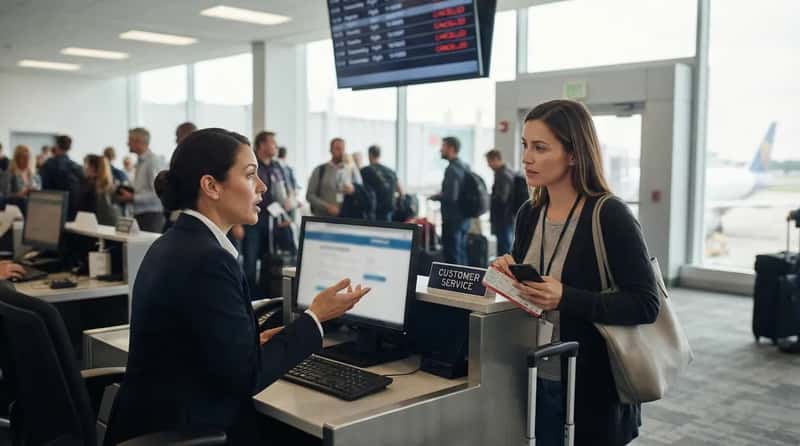
The agent’s first move is usually to rebook you. That’s fast, and it’s often exactly what people want. But if the airline cancels and you’d rather not travel on the new flight, a refund is on the table. DOT rules guarantee a refund or rebooking when the airline cancels your flight.
The DOT also finalized a rule in 2024 requiring airlines to issue automatic refunds in cases like cancellations. Many travelers accept a voucher or an awkward new itinerary without ever hearing the word “refund.” Don’t be rude, but do say the word out loud. Ask for the refund to your original form of payment.
Worth Knowing
- A cancellation by the airline puts a refund on the table, not just a new seat.
- The 2024 DOT rule requires automatic refunds in cases like cancellations.
- Ask for the money to go back to your original form of payment.
- Say “refund” out loud before you accept a voucher or a new itinerary.
Meanwhile, one airline changed the entire boarding game.
#5 – The Southwest You Remember Is Gone
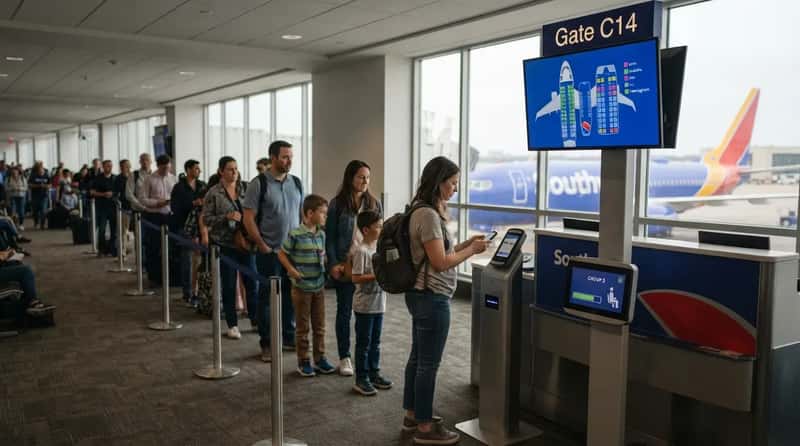
If you last flew Southwest years ago, the cattle-call system is history. On January 27, 2026, the airline ended its 54-year open-seating policy. Every passenger now gets an assigned seat, and the old A/B/C groups were replaced by Groups 1 through 8.
The old tricks went with it. EarlyBird Check-In was discontinued, and the old family boarding window is gone. Families on one reservation are now assigned to the same boarding group. Setting a phone alarm for exactly 24 hours before departure no longer buys you the best seat.
Security has changed in a way you’ll notice right away, too.
#4 – The Shoe-Off Ritual Isn’t Mandatory Anymore
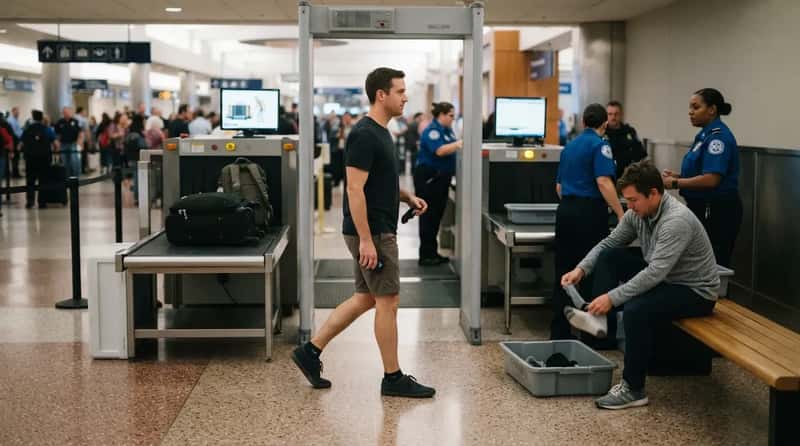
The shoe-removal routine most people remember is no longer standard. Starting in July 2025, TSA allowed travelers to keep their shoes on at checkpoints. A lot of returning flyers still stand there hopping on one foot, untying laces, while everyone around them walks straight through.
Not every lane works the same way, and officers can still ask for additional screening. The rule is “usually,” not “never,” so the officer’s instruction always wins. Watch the signs and the people ahead of you. It’s a small change, but it can save you a lot of fumbling and a lot of sock-floor time.
At a Glance
- The change: TSA began letting travelers keep shoes on in July 2025.
- The catch: officers can still request additional screening.
- The smart move: follow the signs and copy the people just ahead of you.
Now back to the gate, where the biggest myth is about lines.
#3 – Crowding the Podium Slows Boarding and Won’t Get You On Faster
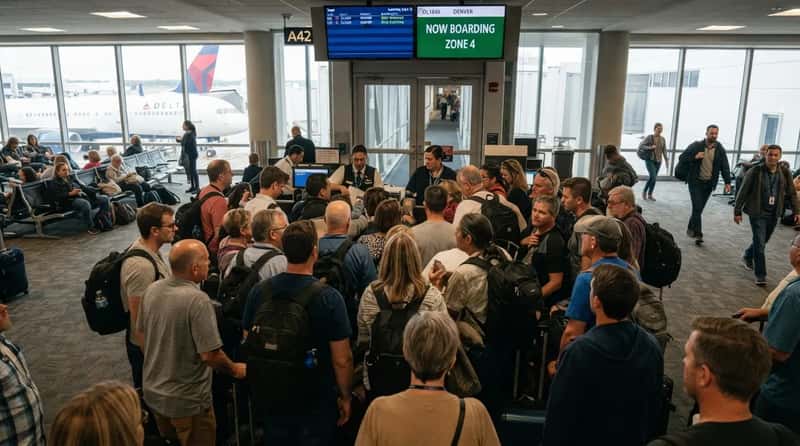
Every airport has “gate lice,” the people who stand shoulder to shoulder at the door long before their group is called. It looks like strategy, but it mostly creates a bottleneck. Agents scan in order, and a crowd blocking the lane can stall the whole line.
Here’s the unpopular opinion: the hover-at-the-door strategy mostly helps nobody, especially now that most seats are assigned. If you’re in Group 6, being first in the crowd doesn’t change when Group 6 is called. Your seat is already yours, and only the overhead bin is a gamble.
The next one is where the real stakes show up.
#2 – Your Old Driver’s License May Not Get You Through Security
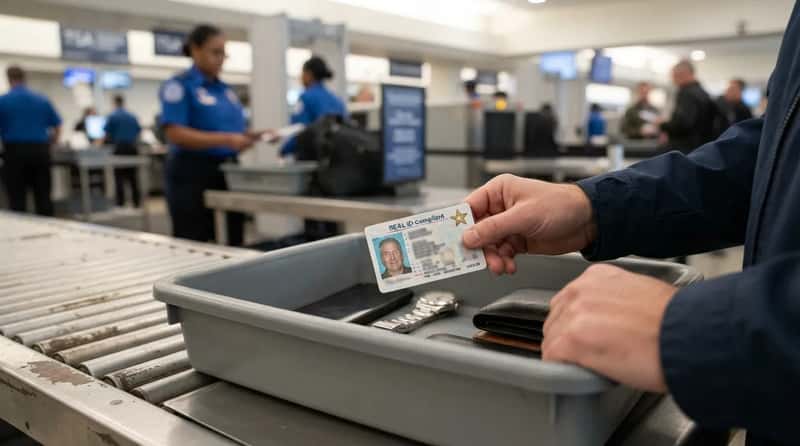
This one doesn’t happen at the gate, so the agent won’t warn you. TSA began enforcing the REAL ID requirement for domestic air travel on May 7, 2025. A license that was fine for years may not count anymore.
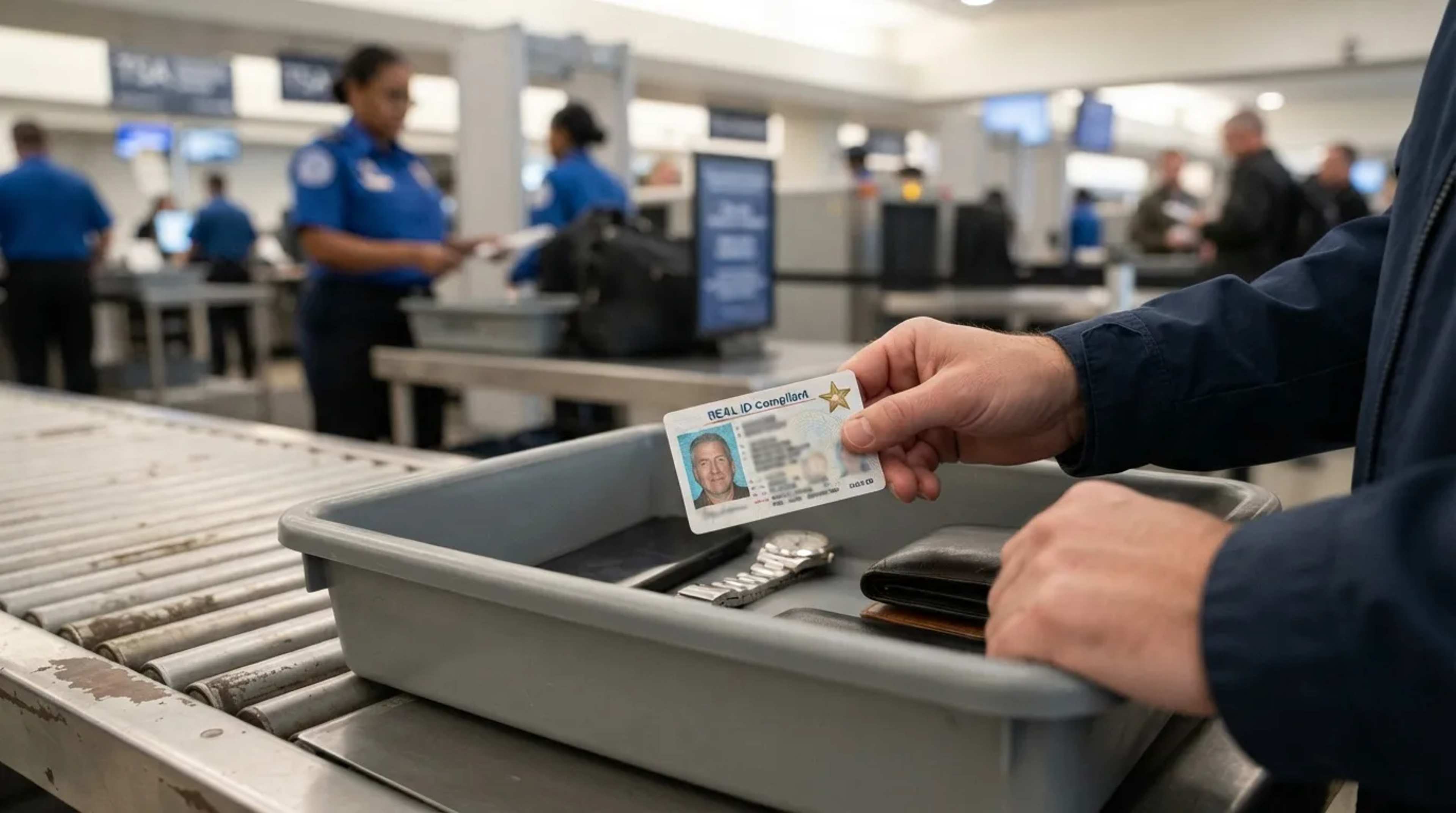
The check is simple. REAL ID-compliant cards have a star marking on the upper top portion of the card. No star and no passport can mean trouble at the checkpoint. TSA lists several accepted alternatives, including a U.S. passport, a passport card, trusted traveler cards like Global Entry and enhanced driver’s licenses.
And if you show up without either, there’s a price tag now.
#1 – Showing Up Without REAL ID Can Now Cost $45, With No Guarantee
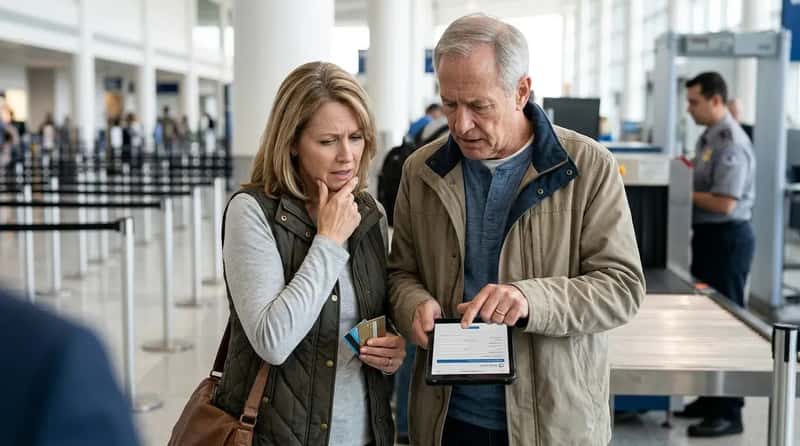
Since February 1, 2026, TSA has offered a fallback for travelers without acceptable ID. The program requires an online form and a $45 fee to use TSA ConfirmID to attempt to verify identity. The key word is “attempt.” Verification of identity is not guaranteed.
It’s a per-person charge, and it’s nonrefundable. The process typically takes 10 to 15 minutes, though it may take 30 minutes or more in some cases. The verification covers a 10-day period. Pay the fee and still fail the check, and you can be turned away from the secure area and miss your flight. No gate agent can fix that, because by the time you reach them, it’s already too late.
The scariest part of flying after a long break isn’t the plane. It’s the stack of unspoken rules around it. Your boarding group is set by your fare, doors close earlier than the ticket suggests, and overbooking is legal. A bump can pay up to $2,150, and a refund may be yours for the asking.
None of this is hard once someone says it out loud. The airport just moved on while you were away, and nobody stopped to tell you. Which surprise caught you off guard when you started flying again?