Ask most people what a difficult hotel guest looks like and they’ll describe someone screaming at the front desk. Hotel workers say that’s the cartoon version. The real tells show up earlier and smaller: a speakerphone in the lobby, a soaked towel on the floor, a hello that never happens.
Staff read these signals within minutes, and the verdict can quietly shape which room you get and how fast a problem gets fixed. Here are 15 of those tells, counting down from the smallest to the one hotel teams say matters most. Some of them will feel too minor to count, and the people behind the desk say that’s exactly why they notice them.
#15 – They Arrive With the Booking Sorted, and Staff Quietly Relax

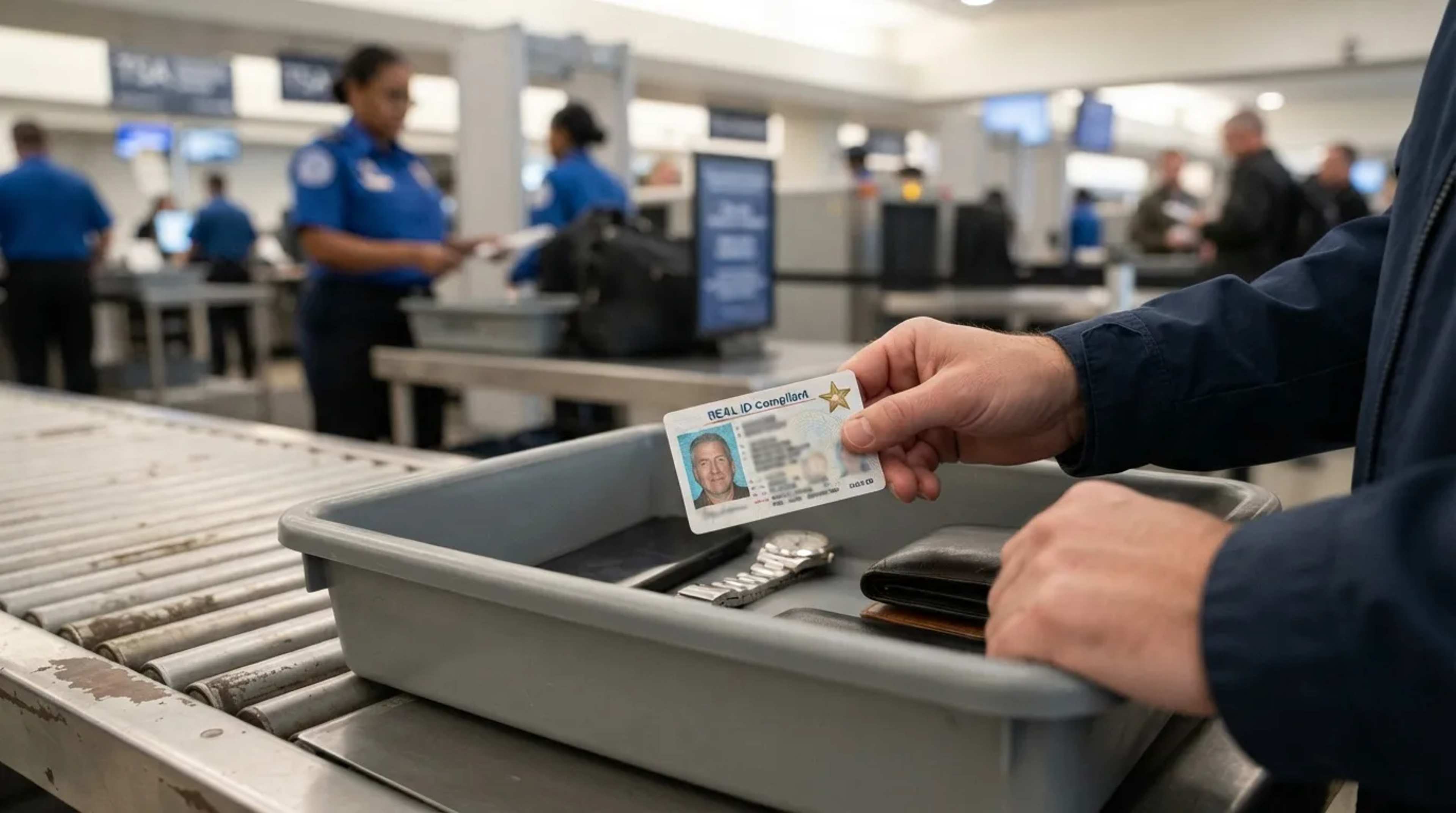
The easiest check-in starts before anyone reaches the counter. Easy guests know which name the reservation is under. They have their ID and payment card in hand, and they know roughly how many nights they booked.
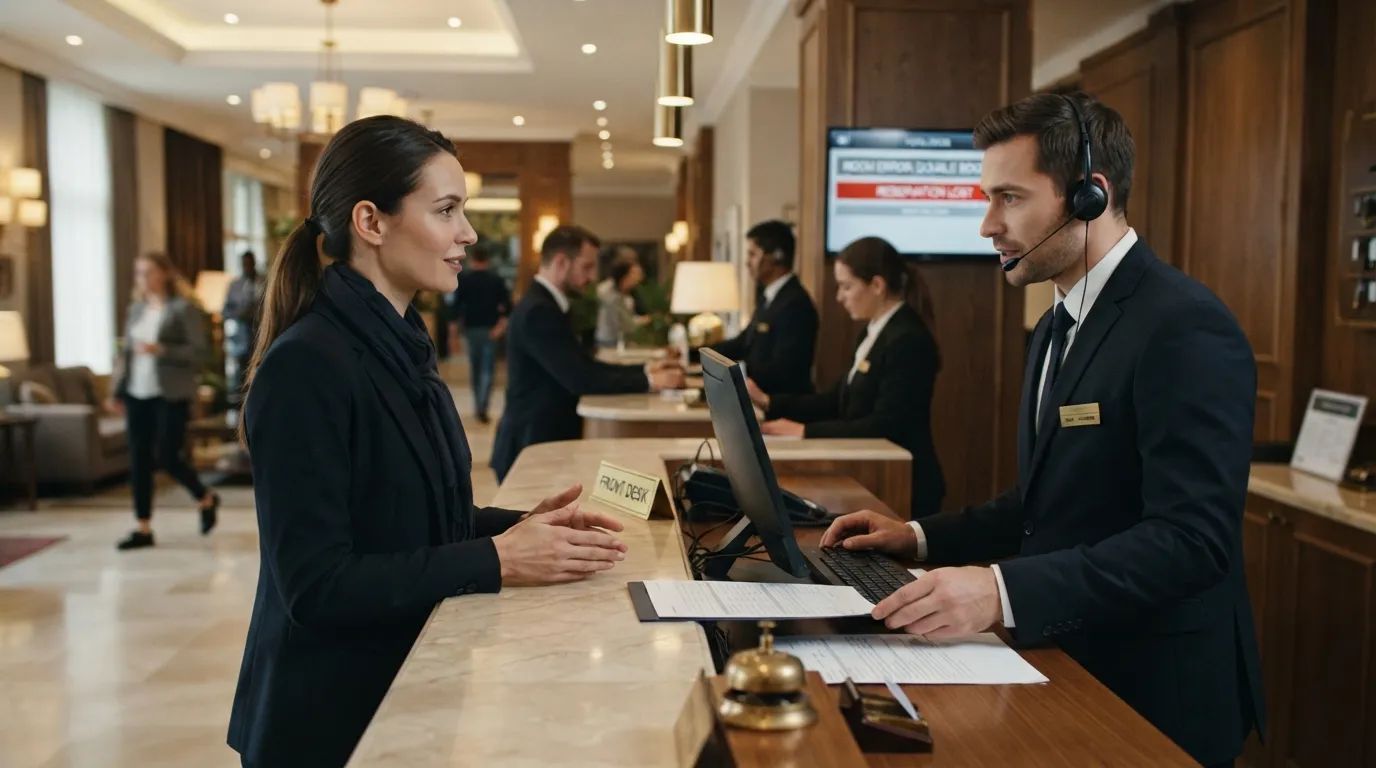
Difficult check-ins often begin with a scavenger hunt through email apps and screenshots. The confirmation is nowhere to be found, and the card is buried at the bottom of a bag. Staff say the delay isn’t the real problem. The mood it sets for the next ten minutes is. Everyone waiting behind that guest feels it too.
At a Glance: The Smooth Check-In Kit
- The name the reservation is under, ready to say out loud
- A photo ID within reach, not at the bottom of a bag
- The payment card you booked or plan to use for incidentals
- The number of nights and the number of people in the room
- Any special request, mentioned up front rather than halfway through
But that’s nothing compared to what staff overhear in the lobby at #14…
#14 – They Keep Phone Calls Off Speaker in the Lobby
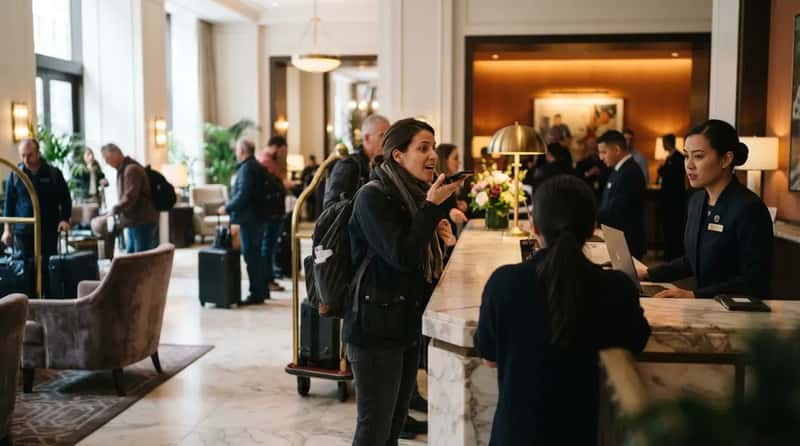
Hotel lobbies are shared rooms, and the front desk hears everything. One agent at a New York boutique hotel told HuffPost that they catch full conversations every day, including breakups, job interviews and family drama. That’s a lot of private business broadcast to total strangers.
Easy guests step outside or put in headphones. Difficult ones take a call on speaker while the agent is trying to check someone else in. The agent’s reaction was blunt: headphones exist.
The next habit shows up inside the room, and housekeeping has strong feelings about it at #13…
#13 – They Don’t Assume Every Policy Bends Because They Paid

“I paid for the room” is the sentence staff dread most. Many guests assume that payment makes every rule negotiable. Some policies really can bend, but many are tied to taxes, insurance, fire codes or the booking platform.
Easy guests ask whether something is possible and accept a polite no. Difficult guests treat the first no as an opening bid. Staff say the policy usually isn’t the agent’s personal decision, yet the agent absorbs the anger anyway.
Housekeeping says the next one makes their day physically harder at #12…
#12 – They Don’t Turn Towels Into Soaking Wet Evidence
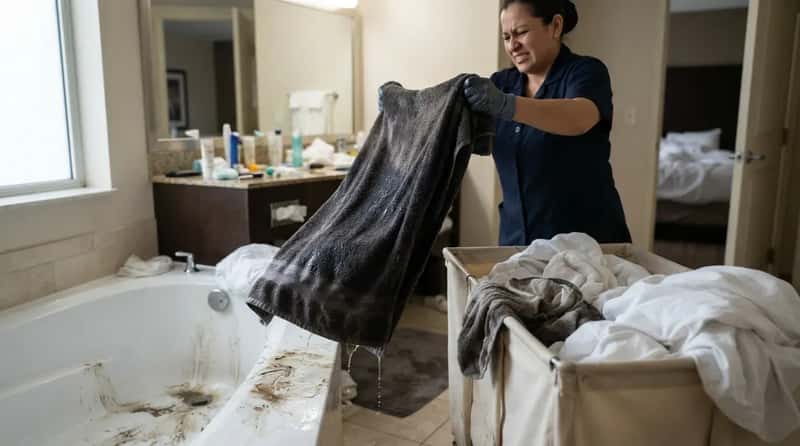
Housekeepers see what guests leave behind. A supervisor at a Nashville business hotel told HuffPost that soaked towels are the bane of her existence. She described them as heavy, dripping and sometimes ruined.
Easy guests hang towels up or drop them in one spot. Difficult guests use them to mop spills, remove makeup or wipe off shoes. One ruined towel seems trivial, but a housekeeper handles dozens of rooms in a shift. Small messes multiply fast across a full floor.
Staff say the first few seconds of a stay can set the tone, and that starts at #11…
#11 – They Say Hello First, and It Changes Everything

Before you say a word, the desk has already noticed you. Your body language, your greeting (or lack of one) and your energy all shape the first impression. That sounds unfair, but it’s how every customer-facing job works.
Easy guests make eye contact, smile and lead with a greeting. Difficult guests walk up already mid-complaint or staring at a phone. The desk may be sizing you up before you’ve said your name. A warm opener buys goodwill that is hard to win back later.
The next habit is one many honest travelers don’t realize they have, at #10…
#10 – They Tell the Truth About Pets, Guests and Extras
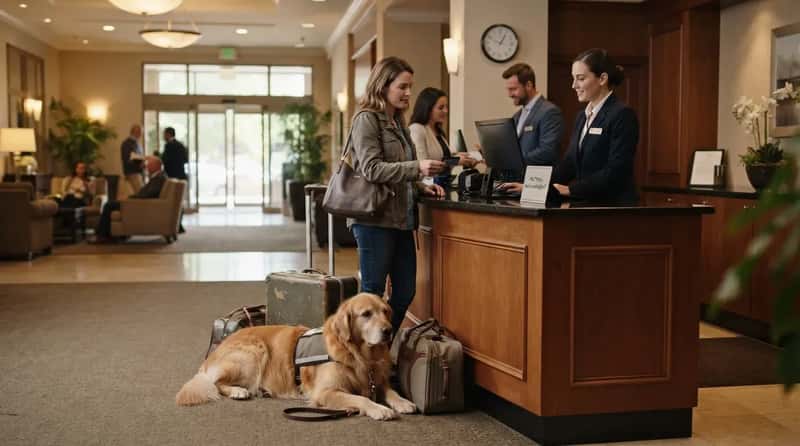
Hotels set rules about occupancy, pets and smoking for a reason. Easy guests declare the extra person or the dog at booking and pay the fee. Difficult guests hope nobody notices, then act shocked when a charge shows up.
Staff are especially frustrated by faked service animal claims. Commenters in HuffPost’s reporting pointed out that the practice makes life harder for guests who rely on trained service animals. Under U.S. law, staff can ask only two questions: whether the dog is required because of a disability, and what task it has been trained to perform. The people who pay the price are the guests with real, legal needs.
But the habit at #9 is the one managers say they wish every guest had…
#9 – They Report a Problem on Night One, Not at Checkout

Few things frustrate a hotel team more than a complaint they could have fixed. A broken air conditioner mentioned at 8 p.m. can often be repaired or swapped for another room. The same issue raised at checkout, with a bad review attached, can only be apologized for.
Easy guests call the desk early and describe the issue calmly. Difficult guests stew in silence and then unload everything at the end. Staff say they would much rather get a call at 9 p.m. than read a surprise complaint two days later.
- Easy: “The TV remote isn’t working. Could someone bring a new one?”
- Difficult: Saying nothing, then listing everything online after checkout.
And then there’s the one move that tells staff exactly what kind of guest they have at #8…
#8 – They Name a Solution, Not Just the Anger
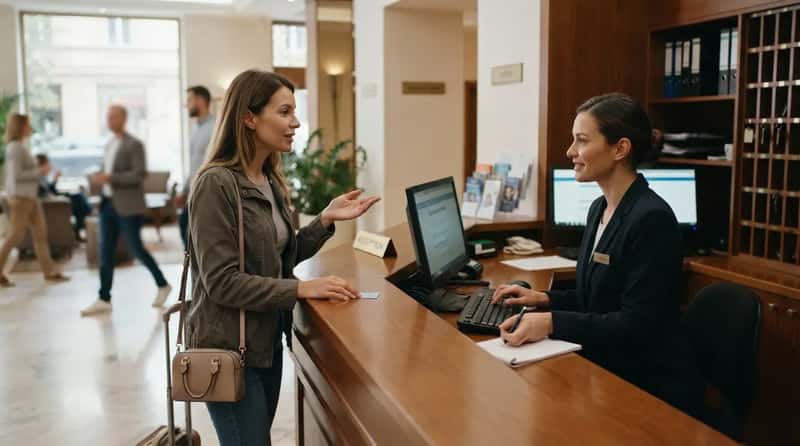
“This is unacceptable” gives the desk nothing to work with. Easy guests explain the problem and say what would help. Hospitality training materials stress offering people a workable alternative or an immediate solution, because it lowers dissatisfaction.
That works in both directions. A guest who says “I need a quiet room away from the elevator” is far easier to help than one who simply fumes. Plenty of staff say a threat to “post a review” is the fastest way to lose their goodwill. Whether that’s fair is up for debate, but it’s a widely shared complaint.
Travel stress makes this next one much harder, and staff know it at #7…
#7 – They Stay Calm When the Room Isn’t Ready

Everyone arrives frazzled. A Colorado hotel marketing director told HuffPost that bad guest behavior has felt more common lately because people show up already tired or irritated. Long flights and delays put everyone on edge.
Easy guests accept that a room may not be ready at noon and ask about a bag drop. Difficult guests turn the wait into a standoff. An older NBC News report quoted a retired hotelier saying that rude, drunk or obnoxious guests may be made to wait longer. Staff today often describe the same dynamic, though they’d rarely say so on the record.
Next up is a habit that even frequent travelers get wrong, at #6…
#6 – They Don’t Treat Early Check-In as a Right
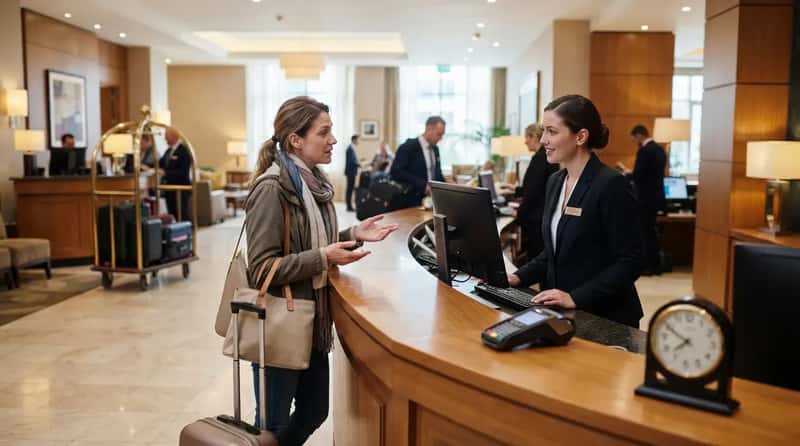
“Check-in is at 3 p.m.” is printed right on the confirmation, yet some guests show up at 9 a.m. and expect a key. Rooms have to be vacated, cleaned and inspected first. The team is already racing the clock.
Easy guests ask whether early check-in is possible and happily drop their bags. Difficult guests argue that they “booked the room for tonight.” Here’s the take many hotel workers share: early check-in is a favor, not a feature. Some travelers disagree, especially after overnight flights, but staff say the polite request wins more often than the demand.
Quick Compare: Same Early Arrival, Two Openers
- Easy: “Is there any chance a room is ready early? If not, could you hold my bags?”
- Difficult: “I paid for tonight, so I should get my room now.”
- The result: One gets a call when a room frees up. The other gets the official check-in time, recited word for word.
The next one is about a sign that is far more powerful than it looks, at #5…
#5 – They Respect the Door Sign and the Housekeeping Cart
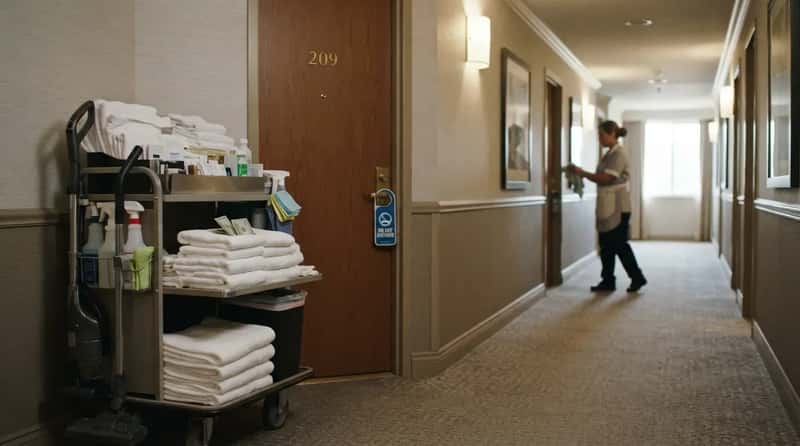
A “Do Not Disturb” sign is a clear message, and housekeepers honor it. Easy guests use it when they want privacy and take it down when they want cleaning. Difficult guests leave it up for days and then complain that the room wasn’t serviced.
Staff also notice who leaves a tidy room and who leaves chaos. Easy guests tend to stack trash in one spot and mention anything unusual. Housekeepers also appreciate a small tip or a short note, which they say gets noticed even when it isn’t expected.
But the next one involves a power most guests never realize the desk has, at #4…
#4 – They Know the Desk Decides Which Room You Get
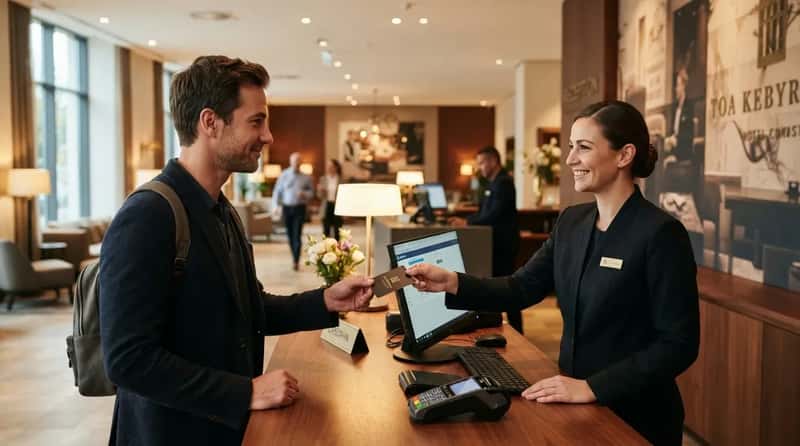
A former hotel manager told NBC News that it can’t be overstated how much power a hotel clerk wields. The reason is simple. Front-desk employees know which rooms are best, which have the great views and which come with extra amenities.
That means the guest who treats the agent like an obstacle may end up next to the ice machine. The guest who’s polite may get a quiet corner room. Upgrades are usually discretionary and depend on availability. Staff say a pleasant attitude is the cheapest loyalty program there is.
Night staff say the next one is a top source of complaints, and it’s at #3…
#3 – They Treat the Hallway Like a Hallway, Not a Party Venue
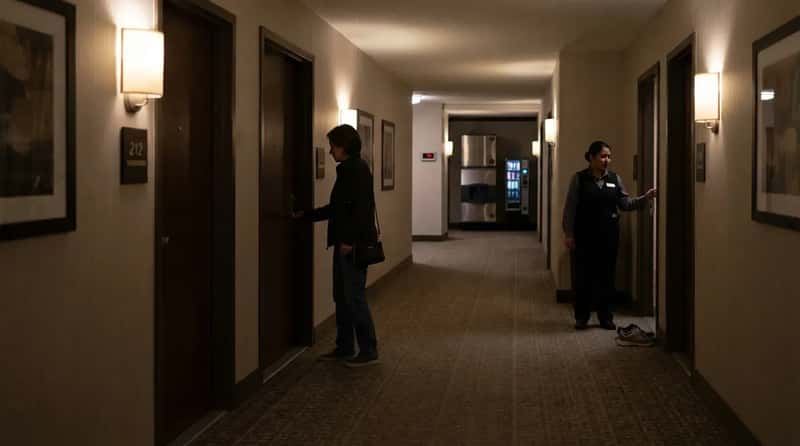
Hotels are full of thin walls and strangers. Easy guests keep late-night noise low, close doors gently and move the party to a bar. Difficult guests discover the ice machine at midnight and assume everyone else is awake too.
Night managers say noise complaints make for some of the most uncomfortable calls. Staff often have to knock on a door and ask guests to quiet down while other guests are on the phone, upset. Easy guests respond politely, and the matter ends there. Difficult guests argue, and it can end with security or even a cancelled stay.
- Easy: lowers the volume after the first warning.
- Difficult: argues that they “paid for the room.”
But the real turning point comes down to how guests see the person behind the counter, at #2…
#2 – They Remember the Person Helping Them Is Under Pressure
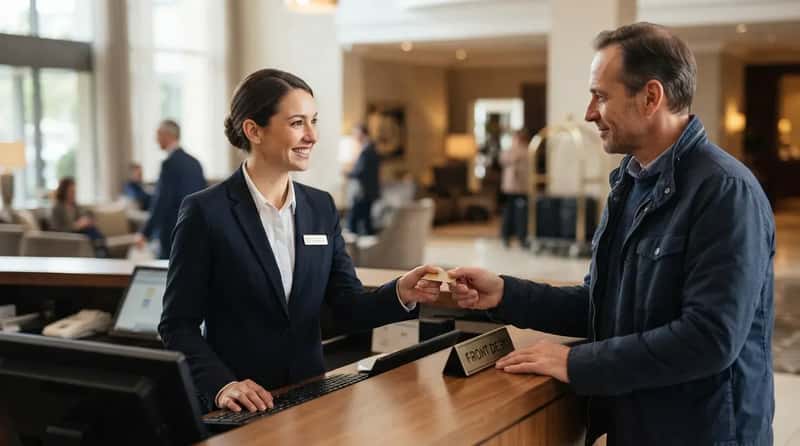
Hotel workers are people under real strain. NBC News pointed out that hotel employees are people, too, and they’re under a lot of pressure. Staffing levels and schedules vary, and the agent you meet may be covering several jobs at once.
Easy guests use the agent’s name and say thank you. Difficult guests snap their fingers or sigh loudly at the line. Most staff say they’ll go the extra mile for a guest who simply acknowledges that they’re human. That might mean a late checkout, a better room or a quick fix.
And the one trait that hotel teams say matters most turns up at #1…
#1 – They Stay Decent When Something Goes Wrong
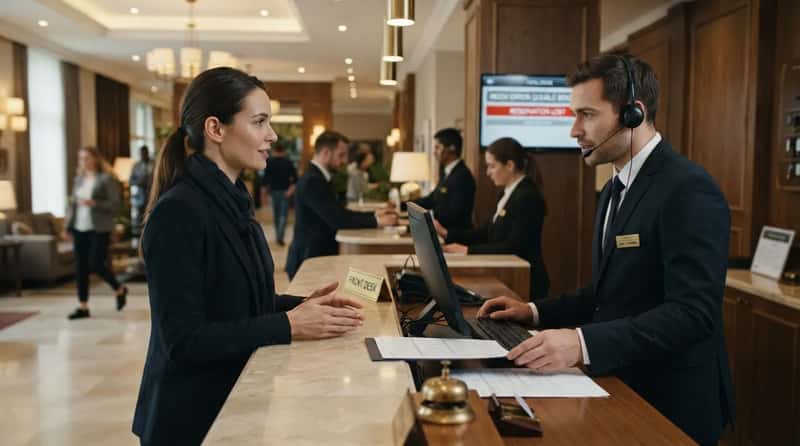
Any guest is easy when everything works. The real test comes with a double-booked room, a broken elevator or a lost reservation. Staff say that’s when they find out who a guest really is.
Hospitality training sources note that how a hotel handles a difficult situation often leaves a stronger impression than a smooth, trouble-free stay. The same is true for guests. The guest who stays courteous during a mess is the one staff talk about for weeks. That guest often gets the best outcome, too, whether it’s a comped breakfast, an upgrade or a manager’s personal attention.
Why It Stands Out
- A steady voice when the news is bad
- A clear ask instead of a vague complaint
- Patience while the fix is in progress
- A sincere thank-you once it’s handled
The gap between easy and difficult guests rarely comes down to a big blowup. It’s built from greetings, patience and noise levels. Staff notice who says hello, who respects the sign and who still treats them well when the room isn’t ready.
The surprising part is how often those habits come back around as better rooms, faster fixes and warmer service. The people behind the desk are keeping score long before anyone raises a voice.