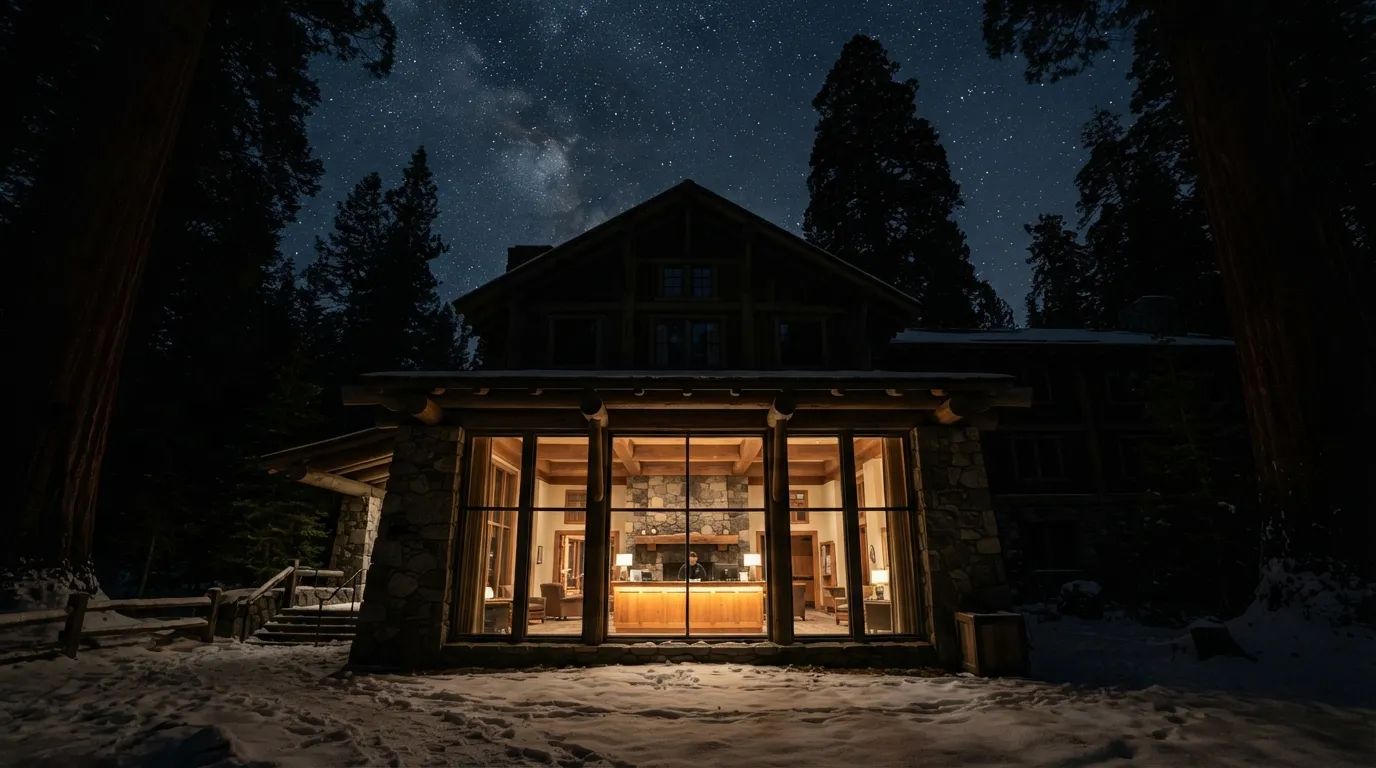
Most guests picture a park lodge at night as a sleepy lobby with a clerk watching the clock. That’s the biggest myth in lodging. The person behind the desk at 2 a.m. may be checking in strangers, closing the books on the day, answering wildlife questions, and acting as the only manager on property.
Meanwhile, everyone upstairs is fast asleep and sees none of it. The job list runs from late-night ledgers to bear warnings to being the one working phone for miles. And one of the chores happens before you ever pour your morning coffee.
#15 – The Late Arrivals Who Roll In After Dark With No Idea Where They Are
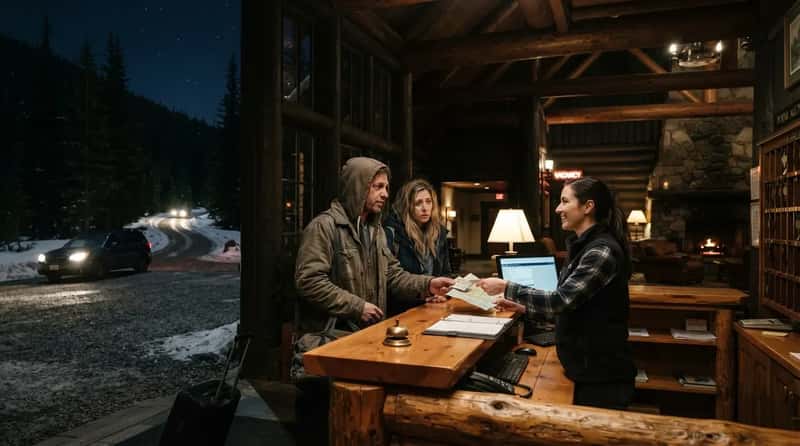
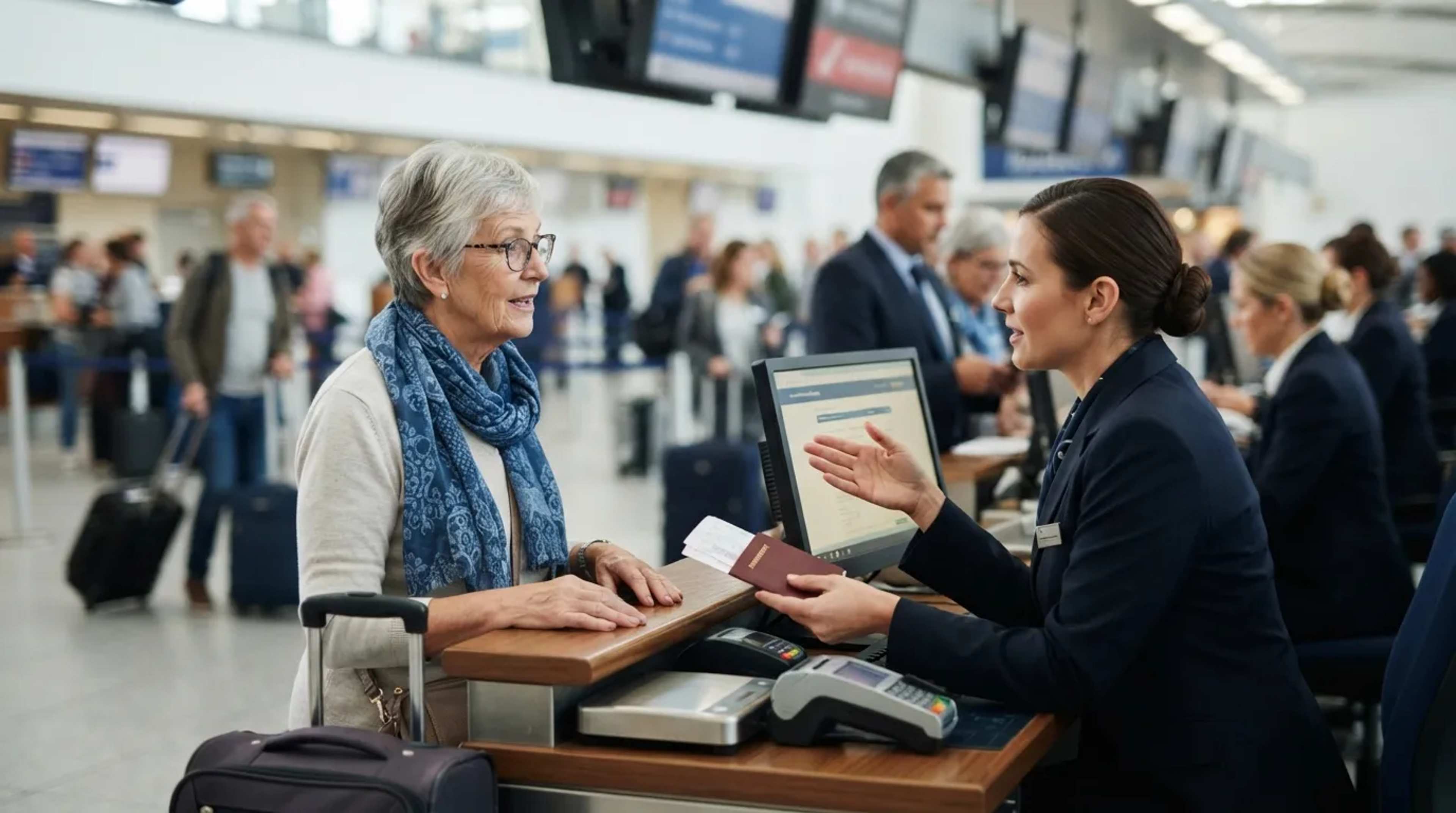
The first face a road-weary traveler sees at midnight belongs to night staff. One Canadian Rockies lodge’s job description says the night auditor may be the first point of contact for guests arriving after 11 PM. Park lodges sit far from highways, so late arrivals often show up tired, hungry, and a little lost after long drives. All they want is a key, a room, and directions to the door.
Night staff are also responsible for handing room keys to guests who return late and for watching the hotel’s entrance. That means the person greeting you at 12:30 a.m. is also guarding the building. The welcome you get after dark is usually delivered by someone covering the whole property. Most guests never realize that, because a lit lobby and a friendly face make it feel like a simple hello.
But the real work starts after the last guest checks in, and #14 happens while everyone sleeps…
#14 – The Nightly Math That Decides Whether Tomorrow Can Even Start
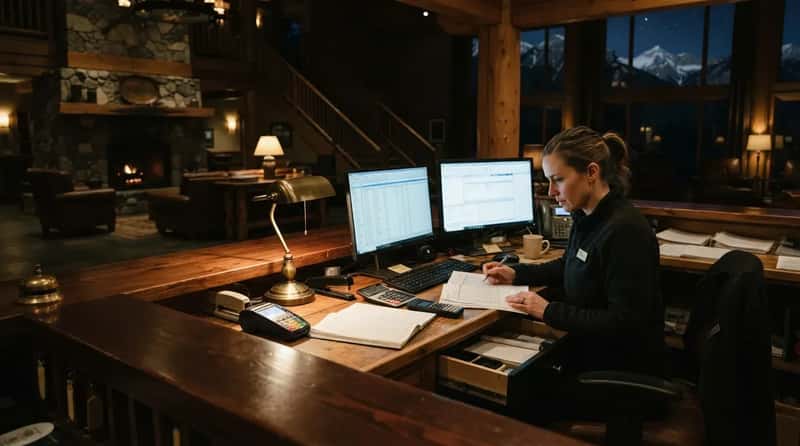
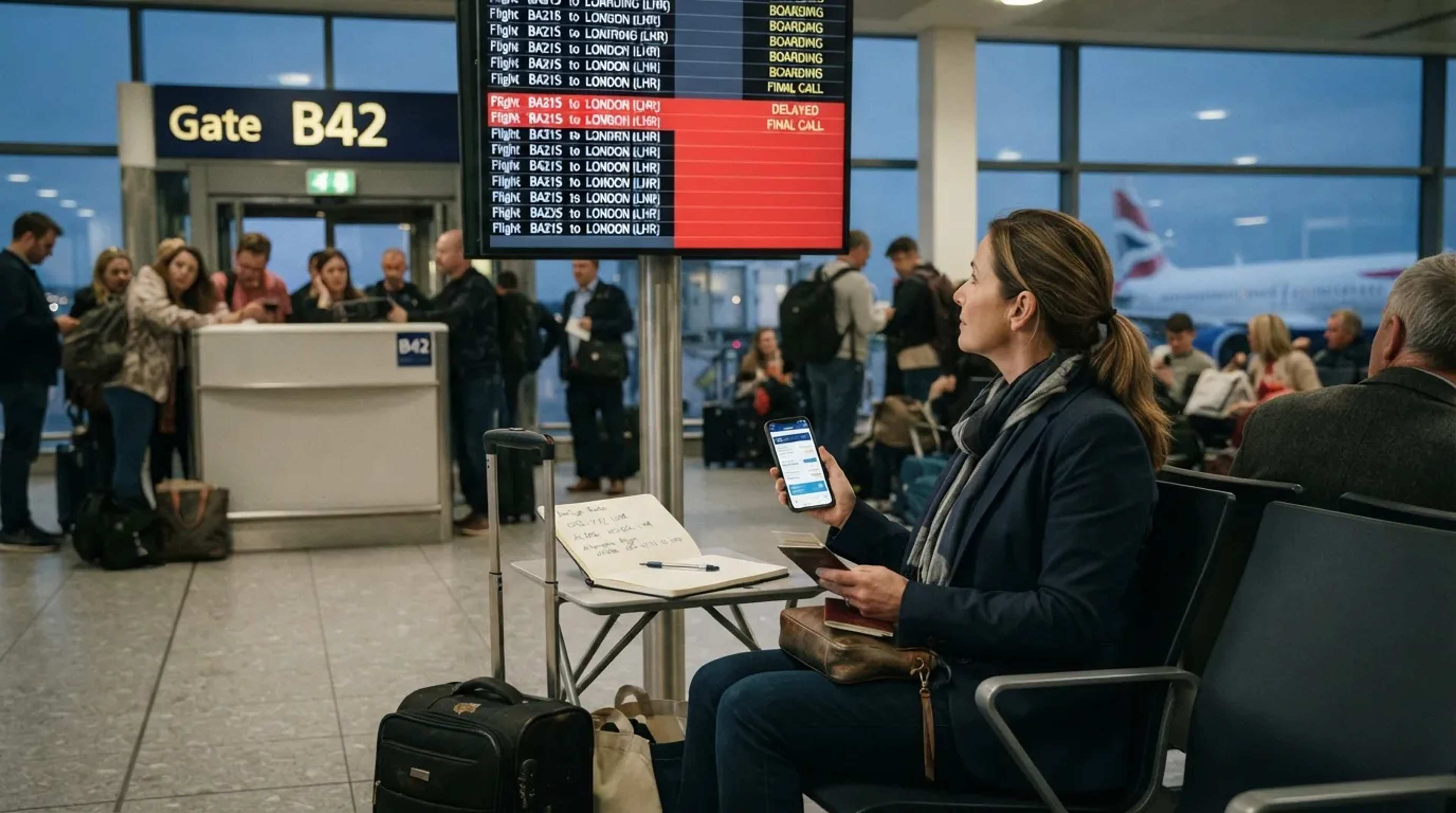
A lodge doesn’t flip to a new day on its own. A standard night audit means reviewing postings, balancing payment records, resolving exceptions, advancing the business date, and preparing reports. Someone has to do all of that while the building is quiet, and it can’t be skipped.
One Canadian Rockies lodge lists the duties plainly. The night auditor balances daily revenue for rooms and food and beverage, then troubleshoots anything that doesn’t balance. If a charge or cash-out doesn’t add up, it becomes the night shift’s puzzle to solve before the day team arrives. Guests see a clean bill at checkout and never think about who made it clean.
Next up is a piece of paperwork most guests have never heard of, and it starts with a booking site…
#13 – The Booking-Site Paperwork Nobody Mentions at Check-In
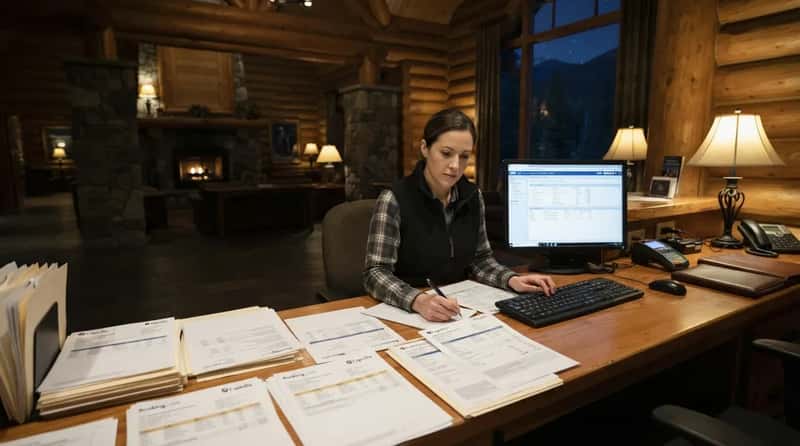
That reservation you made on a travel site creates a trail of billing work. The same Canadian Rockies posting lists processing billing for third-party booking agents, such as Expedia, as a night auditor duty. Guests tap “reserve” and move on with their day. Somebody on the overnight shift keeps those accounts straight.
It gets more detailed. One Estes Park posting says the night auditor verifies the accuracy of allowances, corrections, and miscellaneous vouchers during the shift. Every adjustment posted to your room that day can get a second look from night staff. Most guests assume the desk just clicks buttons.
But the next job on the list has an alarm-clock twist that most travelers never see coming…
#12 – The Wake-Up Call List Running Before Sunrise Plans
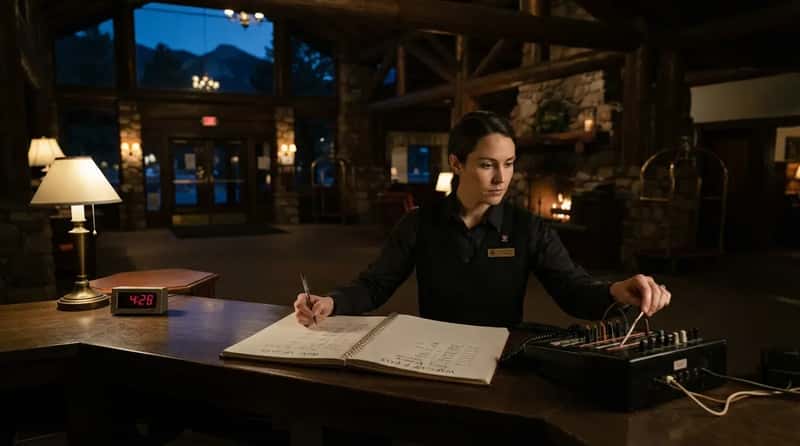
Somebody has to be awake to wake you up. One Estes Park posting includes wake-up call reports among the end-of-shift paperwork. Other job descriptions list scheduling early morning wake-up calls as a standard night auditor task. It’s an old-school service, and it’s still on the checklist.
Park trips tend to start early, so a wake-up call can decide whether a guest catches the sunrise or misses it. A missed wake-up call is one of the few overnight mistakes a guest feels immediately. Nobody applauds when it works. Everybody notices when it doesn’t.
At a Glance
- Wake-up call reports show up in one Estes Park posting’s end-of-shift paperwork.
- Other postings list scheduling early wake-up calls as a regular night task.
- Staff compile the requests and make sure each call goes out on time.
- Early park starts are what make the service matter.
And the complaint that follows guests into the lobby at 1 a.m. might surprise you, because it’s about #11…
#11 – The Wi-Fi Complaints That Land at the Desk at 1 A.M.
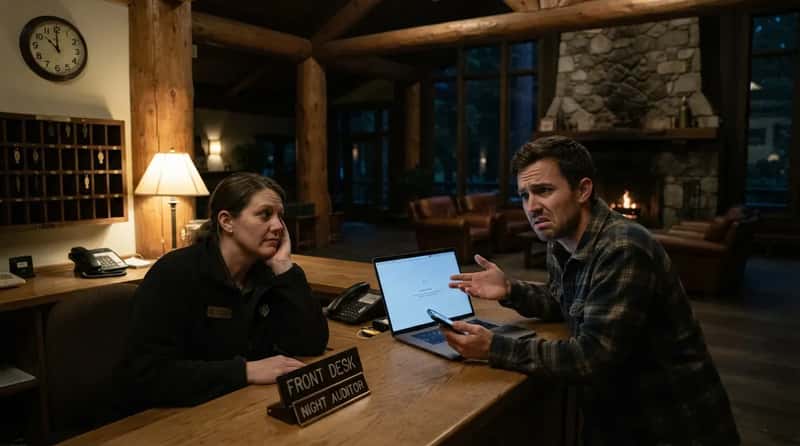
“Why can’t I stream a movie?” is a night-shift classic. At Sequoia’s lodges, the operator describes a slow satellite connection with limited bandwidth, ideal only for email or very light browsing. Wi-Fi is limited to common areas of Wuksachi and John Muir Lodges, so a guest in a cabin or room may have nothing at all.
Yellowstone’s lodge operator says access is restricted to one device per room at a time because of limited bandwidth. At Glacier, very limited wireless internet is available to overnight guests in the front desk and lobby areas. At some park lodges, the best hotspot is the lobby, right where night staff sit. Insomniacs with laptops tend to find them.
But no signal at all creates a much bigger problem, and #10 shows exactly what guests ask for…
#10 – The Phone Call Guests Can’t Make, and Staff Quietly Fix
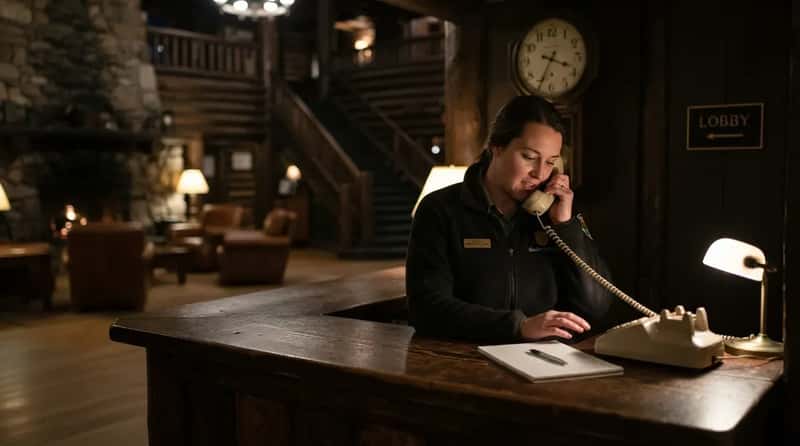
In some parks, the lodge desk is the only dependable phone. Glacier’s lodge operator states that there is no cell phone service at its properties, and public pay phones are available at all lodges and hotels. Guests who can’t text home sometimes turn to the front desk for help. Night staff know that.
One Tripadvisor poster described failing to get a signal in Yellowstone. He said Canyon Lodge staff called his wife from the lobby landline. That’s one traveler’s account, but it shows the pattern. The National Park Service even advises Glacier visitors to warn family that they may be out of touch.
Here’s a smaller chore that guests judge harder than almost anything, and it’s waiting at #9…
#9 – The Lobby Reset That Makes Morning Look Effortless
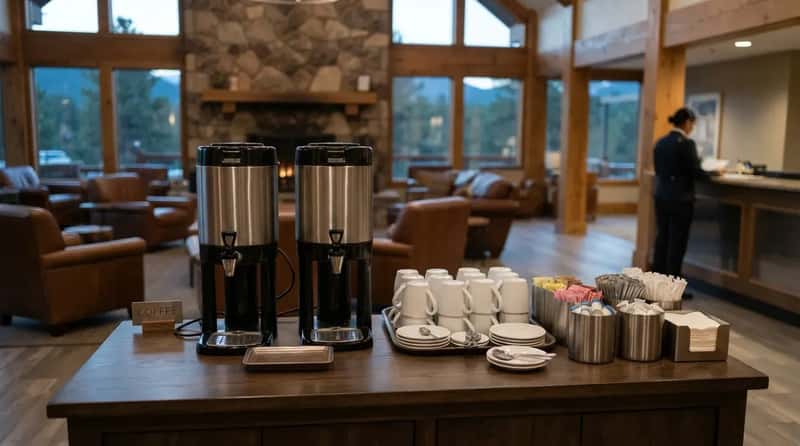
By the time you walk downstairs for coffee, someone has already staged the lobby. One Estes Park night auditor posting lists maintaining the cleanliness and organization of the lobby, coffee stations, and front desk area. That’s on a job description for the overnight shift. It isn’t a favor.
Here’s a take that will start arguments. The lobby coffee station may be the most underrated part of a lodge stay. It’s also the first thing guests blame when it’s empty. At some properties, a full coffee pot at 6 a.m. is a night-shift responsibility. Guests credit the morning crew. The night crew did the setup.
But the lobby is the easy part, and what staff watch overnight is far less cozy at #8…
#8 – The Cameras, the Doors, and the Quiet Walk-Throughs
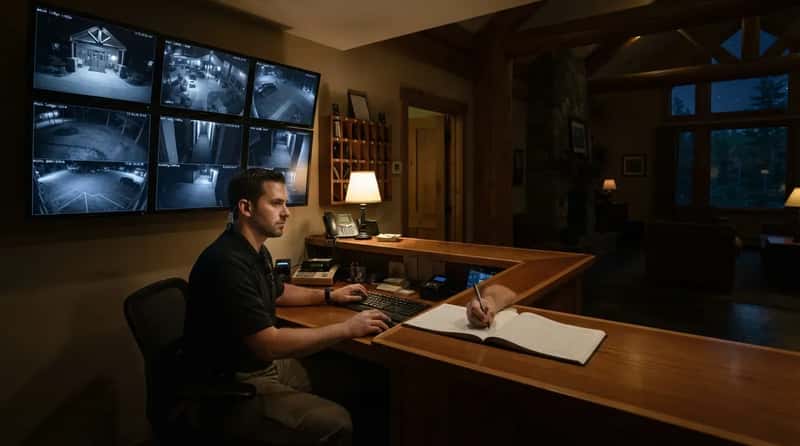
Security is part of the night job at many lodges. Common night auditor duties include monitoring security cameras and responding to security issues. Depending on the property’s size, a night auditor might also focus on security. Guests sleeping soundly rarely think about who is watching the entrance.
Staffing matters here. The job combines guest support, payment handling, and calm decision-making when fewer employees are on duty. At a remote lodge, the person covering the cameras may be the same person covering the desk, the phones, and the cash. That’s a lot of hats for one shift.
Now step outside, because #7 has fur, antlers, and some very real fines…
#7 – The Elk and Bear Questions That Come With Fall
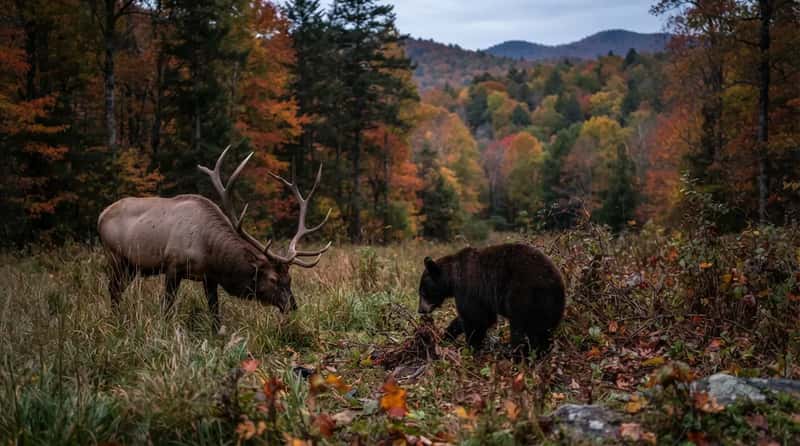
Staff get wildlife questions at all hours. At Great Smoky Mountains, rangers warned that bull elk begin their mating season while black bears enter a period of non-stop feeding ahead of winter. Parks set firm minimum distances for viewing both, and those rules are enforced.
Quick Compare
- Bears and wolves at Yellowstone: stay at least 100 yards away.
- Other animals at Yellowstone: stay at least 25 yards away.
The numbers change from park to park, and Yellowstone’s are among the clearest. Getting too close isn’t just risky. It’s illegal and can bring fines or arrest. It’s easy to see why guests ask the front desk what the rules actually are.
But the biggest wildlife danger might not have claws at all, as #6 reveals…
#6 – The Dark Drive That Staff Quietly Dread
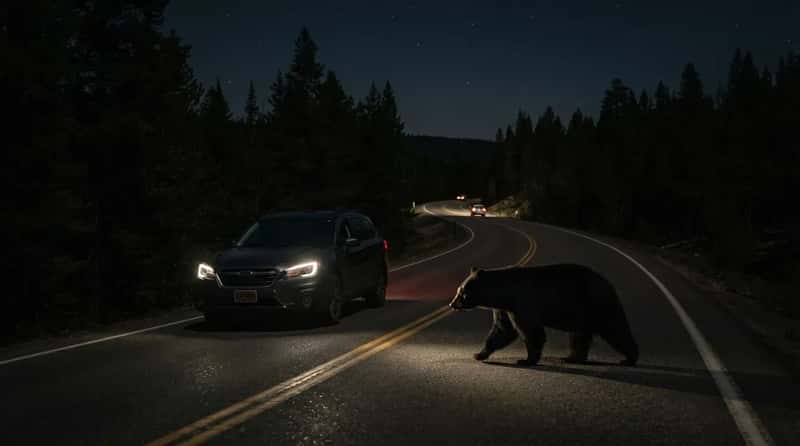
Night staff hear about the drive, and it isn’t pretty. The National Park Service warns that animal fur absorbs light, making animals very difficult to see at night, even with bright headlights. A late arrival who’s rushing to check in is the exact driver that warning is aimed at.
One archived Yellowstone release shows the stakes. Two adult male black bears were struck and killed by vehicles on U.S. Highway 191 on the same evening. The park reminded visitors to travel at 55 mph or less on that road. Two bears died on the same highway in a single evening. Some of those drivers were probably headed for a room key.
And the thing in your back seat could cause the next problem, which is the story behind #5…
#5 – The Cooler in the Back Seat That Bears Find First
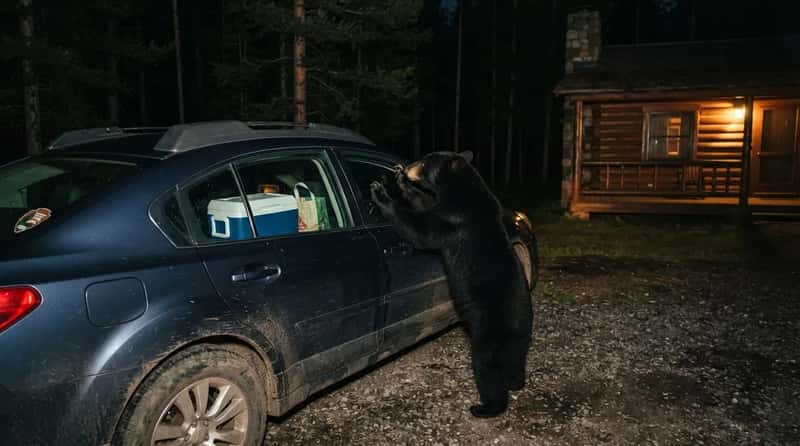
One forgotten snack can change a night. Bears have a keen sense of smell and can be drawn to improperly stored food. Yellowstone requires visitors to use bear-proof containers and store food securely. Guests hauling groceries to a cabin might never think about it.
The rules reach past the food itself. At Great Smoky Mountains, park officials say food scraps and trash belong in bear-proof dumpsters. Feeding wildlife of any kind is strictly prohibited. It’s the kind of reminder a night clerk may give a guest who is walking out with a bag of leftovers.
But what happens when something does go wrong in a place with no signal? #4 answers that…
#4 – The Emergency Call That Has Nowhere Else to Go
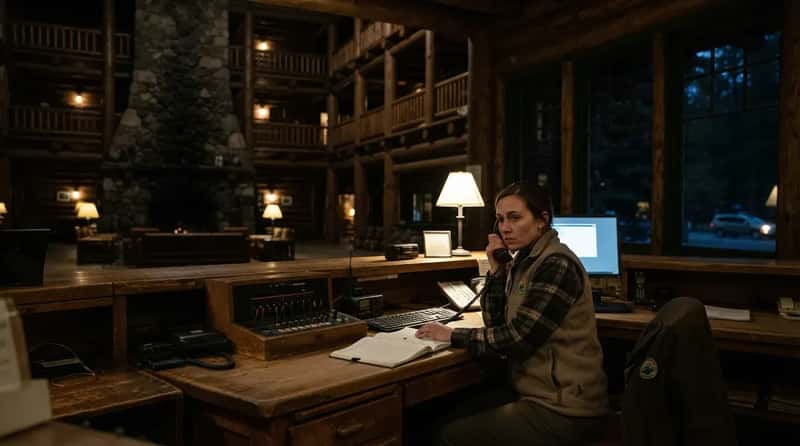
When the signal vanishes, the front desk becomes the emergency line. A night auditor’s duties include dealing with emergency situations. Typical job descriptions also list responding to guest requests, complaints, and emergencies on the night shift.
The park guidance shows why. The phrase “if cell service is available” does a lot of work in remote parks. A lit lobby with a staffer in it may be the closest help.
Worth Knowing
- Yellowstone asks visitors to report any bear conflict to a ranger as soon as possible.
- The advice is to dial 911 if cell service is available.
- Even in Yellowstone, cell service is mostly limited to developed areas like Mammoth Hot Springs, Old Faithful, and Grant Village.
- Everywhere else, the lodge desk may be the quickest way to reach help.
Still, the most surprising fact about night staff is what happens to your complaint, and it’s at #3…
#3 – The 2 A.M. Complaint That Becomes a Written Report
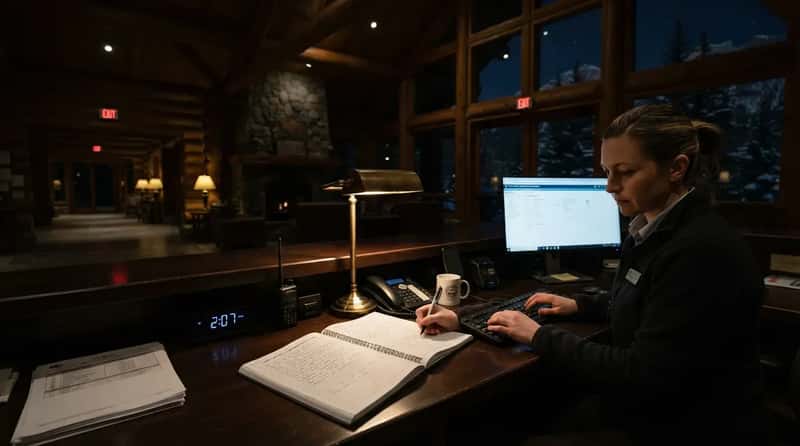
Your late-night complaint doesn’t just disappear. One Estes Park posting says staff document guest requests and issues and work toward timely resolution. A noisy neighbor or a cold room becomes a record, not a shrug.
Most guests assume a 2 a.m. complaint goes nowhere. The job descriptions point the other way. Typical duties include handing unresolved issues to the morning team. One Canadian Rockies lodge also has its night auditor compile data for the lodge manager, owners, and controller. The paper trail is part of the job, which means your problem can reach the people who run the place.
But nothing prepares you for how many jobs one person does at once, and #2 lays it out…
#2 – The One Person Playing Manager, Clerk, and Accountant at Once
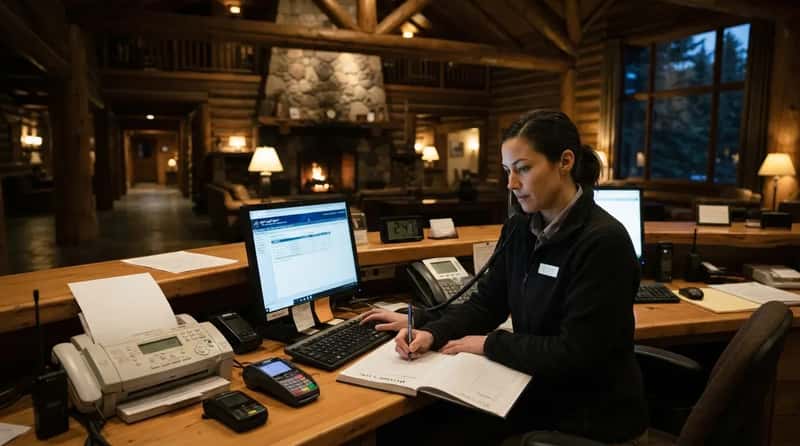
At night, the desk can be the entire chain of command. Indeed’s career guide says a night auditor performs the same duties as a hotel manager, except it’s always a night shift with no staff to supervise. The job comes with the authority and the responsibility.
Why It Stands Out
- One Estes Park listing says the night auditor acts as the night manager on duty.
- That covers guest requests, questions, and issues throughout the hotel.
- Other postings add resolving guest conflicts and disputes.
- There’s usually no one on shift to hand the problem to.
Some postings use blunt language about it. The title says auditor, but the real role is often night manager. Here’s an opinion that will split the comments: the night shift is the closest thing a lodge has to a hidden general manager.
But the single biggest thing night staff handle isn’t on any checklist, and #1 is why…
#1 – Being the Only Lit Window in a Place Without Signal
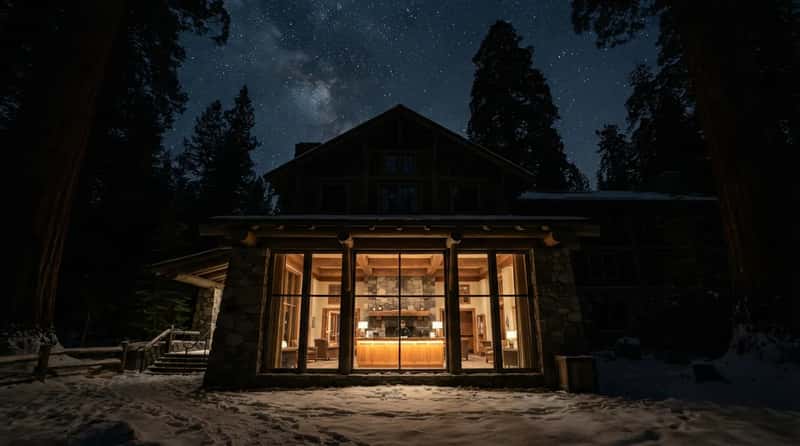
The most surprising thing night staff handle isn’t a task at all. Sequoia’s lodge operator tells guests that they’ll be far away from cell towers and wireless hot spots. Glacier’s lodge operator calls a stay there a technology detox. That’s a selling point by day. At 3 a.m., it can feel very different.
Phones go quiet and the wilderness presses in. Sequoia’s operator states plainly that there is no reception at Wuksachi Lodge. In places like that, the person at the front desk may be the only human voice a guest can reach. A strange noise, a missing key, a confusing charge: the person who answers is the same one who has been quietly running the night.
So the next time you wake up to a full coffee pot, a balanced bill, and a lobby that feels calm, remember that none of it happened by magic. Staff check in late arrivals, balance the books, verify bookings, run wake-up calls, and watch cameras. They answer wildlife questions, warn about dark roads, and act as the emergency line when cell service fails.
Many of them are also the lodge’s only manager until morning. Guests wake up to coffee and a clean bill and never learn who made that happen. Out there, the lights stay on because somebody decided they would.