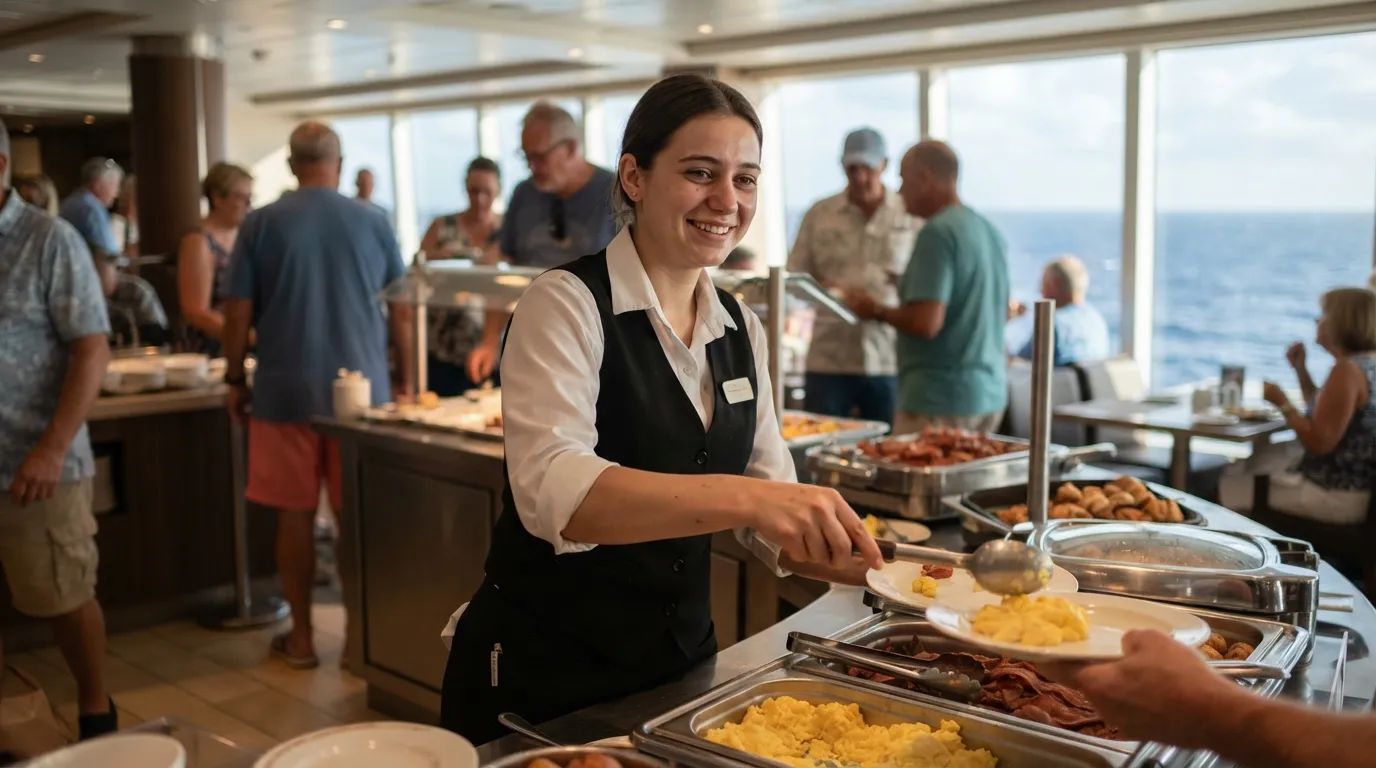
On paper, a sea day is the easiest day of a cruise. No gangway line, no tour bus, no alarm clock, just a lounger and a long lunch. For the people working the ship, it’s the day the whole vessel wakes up at once and every request lands on the same few hundred hands.
That gap is where the real stories live. The towel on the chair, the “quick” question at the buffet and the cheerful 7 a.m. smile all mean something different behind the scenes. Crew accounts, cruise line policies and CDC records point to 15 things worth knowing, and one of them is a hidden highway running somewhere below your feet.
#15 – The “Quiet” Day Is Often the Longest Shift of the Week
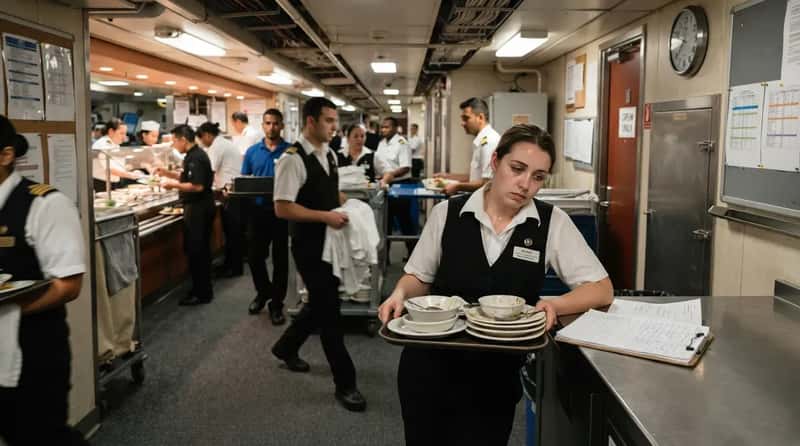
Crew accounts say there are no weekends on board. Crew members work every day of their contract and get time off in hours, not full days. One widely shared crew breakdown puts shifts at 10 to 12 hours, seven days a week. A former crew member says she was contracted for 70 or 77 hours a week with no planned days off.
On a sea day, every guest is on board at once. Every restaurant, bar and pool deck is full, and nobody has wandered off to a beach. The person refilling your coffee may be in the middle of a 12-hour stretch that started long before you rolled out of bed.
#14 – That Towel on the Lounger Is Running Out of Time
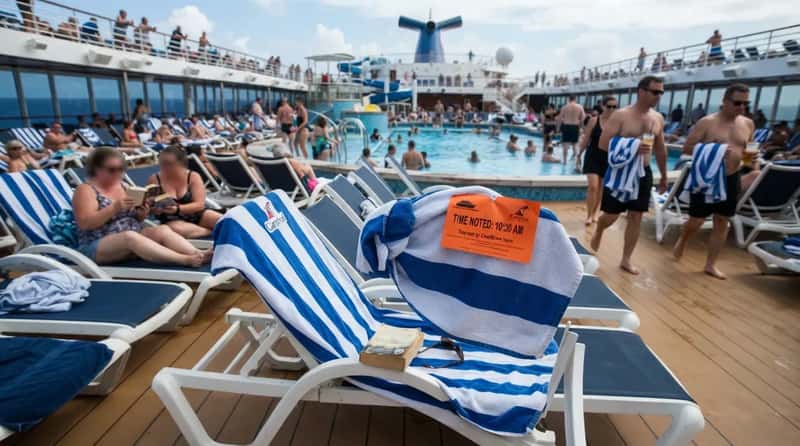
Chair hogging is one of the most common sea-day complaints from crew and passengers alike, and cruise lines now fight back. Carnival’s “ChairShare” team sticks a timestamp on a chair that looks abandoned. After 40 minutes, the belongings are removed. Royal Caribbean’s policy sets the limit at 30 minutes, and Virgin Voyages stores removed items at Sailor Services.
Not everyone thinks stickers are enough. Guests often report that the official policies aren’t enforced, and others say crew shouldn’t have to police grown adults at all. On Norwegian Escape out of Miami, crew started tagging chairs around 10 a.m. And that 10 a.m. rush is no accident, because crew can predict the crowd almost to the hour.
#13 – The Crowd Moves Like a Herd, and Crew Can Set Their Watches by It
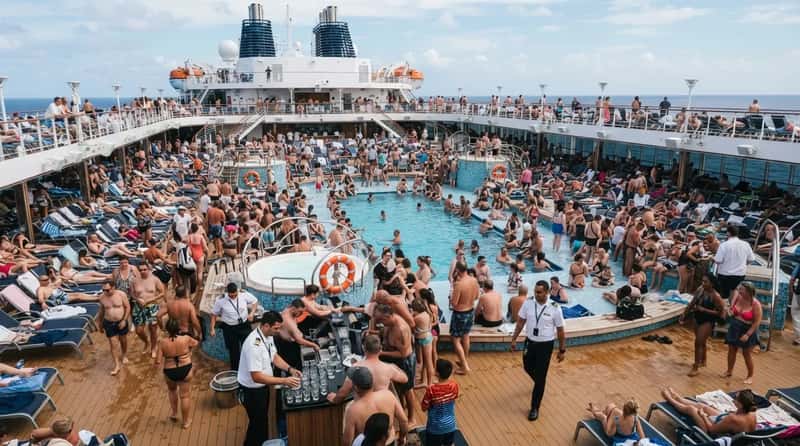
Crew members say sea-day behavior is startlingly predictable. One crew member on a cruise forum put it this way: herd mentality is big on board, driven by the time of day, port versus sea day, and what’s on the schedule. Sleeping in and ordering room service is one classic pattern. By 10 a.m., the main pool deck is a scramble.
The quiet spots exist. Adults-only solariums, forward observation lounges and mid-ship bars often empty out early in the morning and again after dinner, when the crowds head to the main theater. At those hours, the ship feels like a different vessel. That same packed crowd also creates a problem crews take very seriously.
#12 – Hand Sanitizer Won’t Save You From the Ship’s Biggest Sea-Day Bug
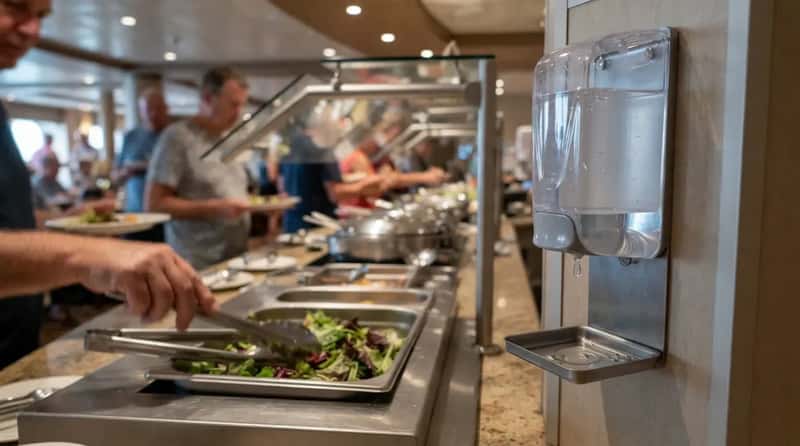
The most common illness on ships is norovirus, and it thrives when thousands of people share a pool deck and a buffet. Since 2019, 81% of the cruise ship stomach-illness outbreaks posted by the CDC’s Vessel Sanitation Program were attributed to norovirus. On a Holland America sailing from late December 2025 to January 2026, the CDC listed 85 passengers and nine crew with symptoms. Crew responded with extra cleaning and disinfection and isolated those who were sick.
Here’s the part that stings: the sanitizer stations at the buffet entrance aren’t a perfect shield. The CDC says hand sanitizer does not work well against norovirus. Its main advice is hot water and soap for at least 20 seconds, especially before eating and after the restroom. Crew would likely tell you to head for the sink. They’d also tell you something about where your tip money actually goes.
#11 – Your Daily Gratuity Isn’t Going to Just One Person
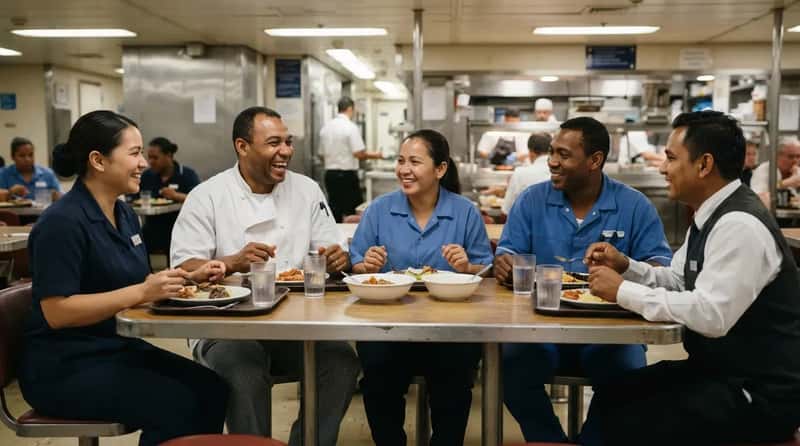
Many guests assume the daily service charge lands in the pocket of their cabin steward. Crew accounts say it’s spread much wider. Automatic gratuities are shared among the cabin steward, dining staff, cooks, laundry workers and common-area housekeeping. The people who never meet you still get a share.
At a Glance
- Cabin stewards are part of the split, but not the only ones.
- Dining staff and cooks share in it too.
- Laundry workers and common-area housekeeping get a cut.
- Many of these crew members never meet the guests who pay it.
That matters on sea days, when more of the ship is in use. The cook, the laundry crew and the person scrubbing the pool deck all work through it. Passengers rarely see them, so they rarely think about them. Someone else on board feels the weight of what guests write, though, and it can follow them for months.
#10 – One Comment Card Can Follow a Crew Member for Months
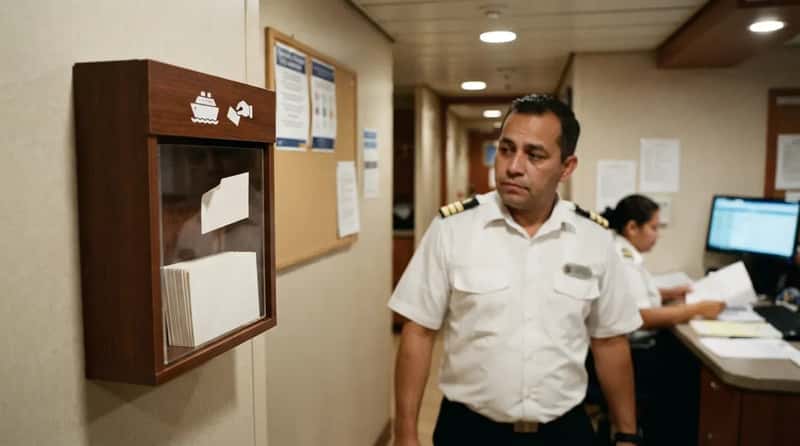
Crew accounts describe a system where feedback matters more than guests realize. One report says reviews move up management chains, and one bad note can follow a worker across departments and future sailings. The same report says complaints can cut earnings, while praising a crew member by name can boost income. Details vary by cruise line, so treat this as a widely reported pattern rather than a universal rule.
Sea days give guests the most time to fill out surveys and the most reasons to feel strongly. A slow bar line on a crowded afternoon may not be the bartender’s fault. Crew wish passengers would aim their frustration at the problem, not the person stuck staffing it. And what that person eats during a 12-hour day is something passengers rarely see.
#9 – The Person Handing You Lobster Might Be Eating Something Very Different
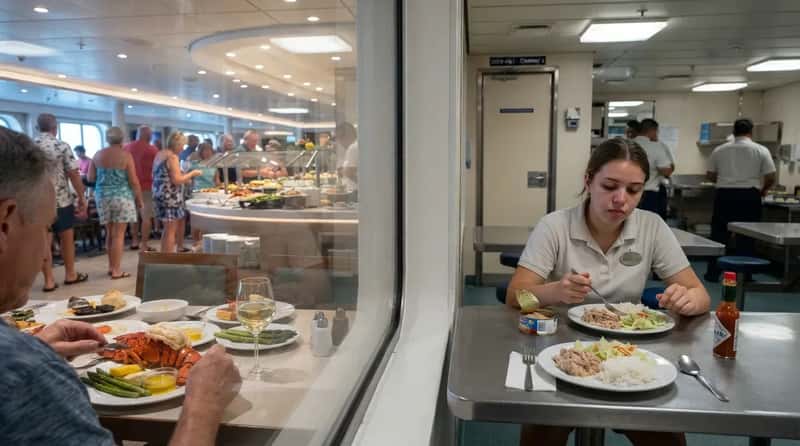
The buffet on a sea day is a spectacle. Crew meals are not. One crew breakdown says a guest might be enjoying lobster one deck above a crew member eating canned fish for dinner. Only senior staff typically get access to passenger dining, and everyone else eats fast, simple meals in a crew mess passengers never see.
Quick Compare
- Guest buffet: lobster, long lunches and a sea-day spread.
- Crew mess: fast, simple meals, with canned fish cited in one breakdown.
- Who gets passenger dining: typically only senior staff.
All that walking and standing adds up. One report says many crew members lose 10 to 12 pounds per contract. That’s one account, so take the number as a rough report rather than a guarantee. Food is only one part of what keeps a crew going, and the next one starts with a seasick passenger who skipped lunch.
#8 – Nurses Can Spot the Seasick Passenger Before They Say a Word
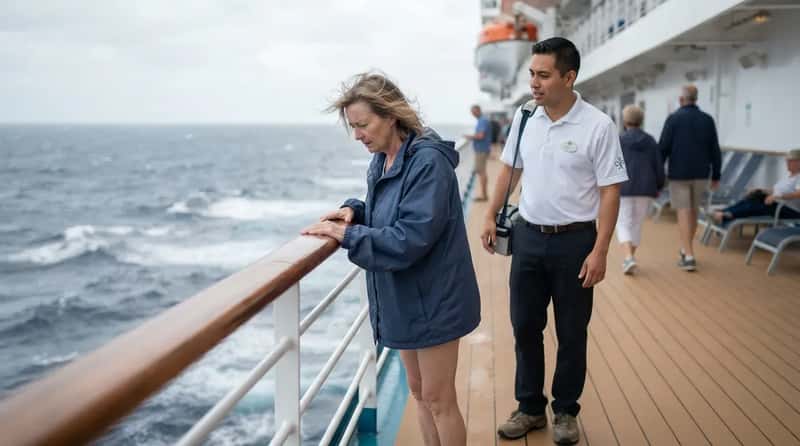
Medical staff say seasickness is easy to recognize. Pale faces, a tight grip on the handrail and a sudden “I’ll skip lunch” tell the story. Part of a nurse’s job is teaching passengers about seasickness prevention, hygiene and first aid. Many passengers try to hide it, which can make a rough morning longer than it has to be.
Crew wish more people would stop toughing it out. Stepping onto an open deck and watching the horizon is a free, simple move. The medical center exists for exactly this. But there’s a more worrying version of the same problem, and it begins on boarding day.
#7 – The Daily Medication Locked in a Suitcase Somewhere Below Deck
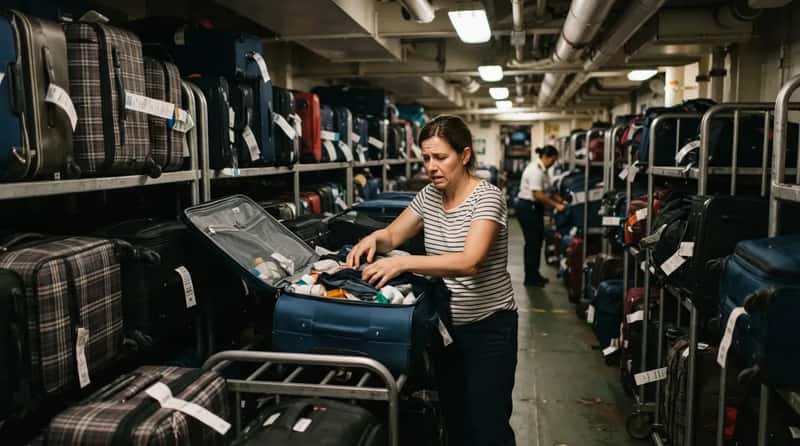
Ship nurses say a surprising number of guests realize on day one that their daily medication is in a bag they can’t reach. Checked luggage often reaches cabins well after boarding. By the first sea day, that small oversight can feel like a big deal.
Worth Knowing
- Onboard medical centers handle refills and prescriptions for ongoing conditions.
- Many run a pharmacy stocked with common medications and antibiotics.
- Checked bags can arrive well after boarding, so the gap often starts on day one.
The medical center can often help. Crew say that beats skipping a dose and hoping for the best. Still, there’s a decision made higher up the chain, and passengers love to criticize it.
#6 – That “Surprise” Sea Day Might Be the Best Decision of the Trip
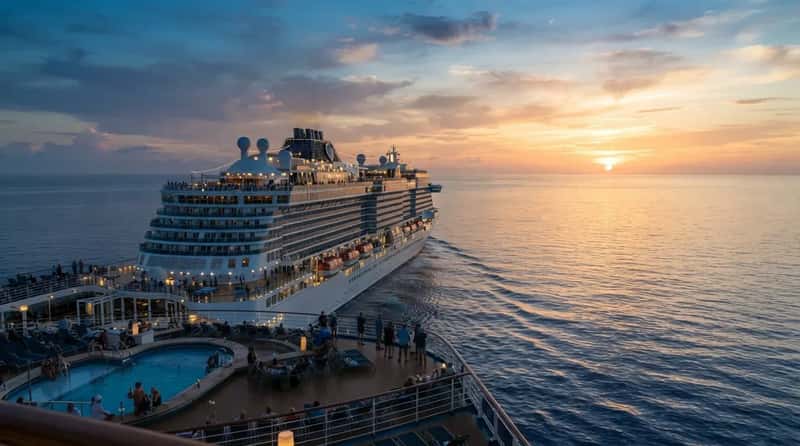
Few things annoy guests like a skipped port. Deck officers say the call is about safety, not convenience. A ship that steers around a storm is doing exactly what it should. The calm sunset, on-time arrival and smooth night’s sleep are what a lot of quiet decisions look like from the outside.
Many cruisers will say they’d have preferred the risk. Officers say that’s the view of someone who has never been responsible for a few thousand people. It’s the part passengers can’t see from the pool deck. And what crews do during the announcements you barely hear is even more surprising.
#5 – The Announcements You Tune Out Are a Code Crew Know by Heart
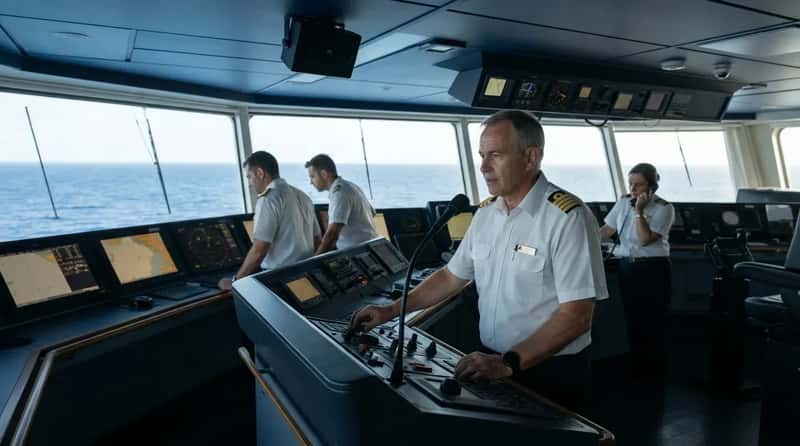
Most guests shrug at an odd announcement and go back to their drinks. Crew know exactly what each code means. The codes vary by cruise line, but they broadly cover medical emergencies, fires, overboard incidents and security situations. A calm voice on the speaker can set a whole group of people in motion.
Fast Facts
- Codes vary by cruise line, but the categories are broadly similar.
- They cover medical, fire, overboard and security situations.
- Crew train constantly and hold backup roles.
- Your waiter may also be on a fire team.
Crew accounts say emergency response isn’t left only to dedicated safety staff. The waiter handling your table may also have a fire-team assignment, and the person refilling your water may be a trained responder. That’s one reason crew never seem rushed, and another reason is something you can’t see at all.
#4 – You’re on Camera More Than You Think, and the Footage Settles Arguments
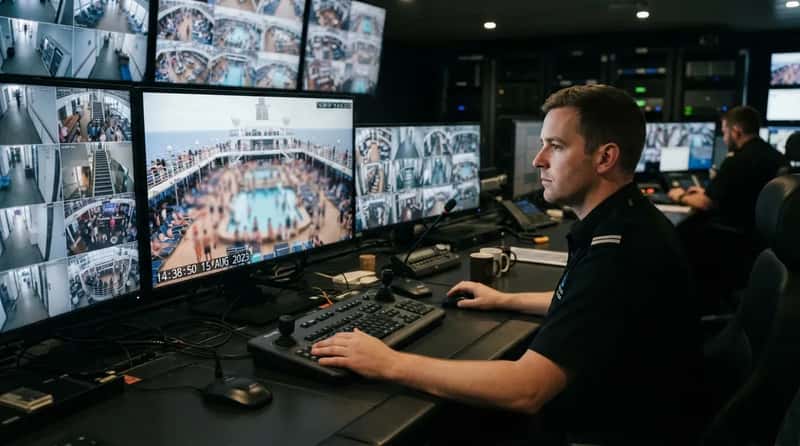
Crew accounts say they assume they’re being recorded whenever they move around the ship. Footage gets reviewed after injuries, disputes or disappearances. The same report adds that there have been instances where footage contradicts passenger stories. Sea days are crowded, so that footage gets used when something goes wrong.
Crew say they’d rather talk to you than review the tape. A quick word with a supervisor on the spot beats a dispute at the end of the trip. Next up is the part of the ship you will never walk through, even if you cruise for a decade.
#3 – A Secret Highway Runs Through the Ship, and You’ll Never See It
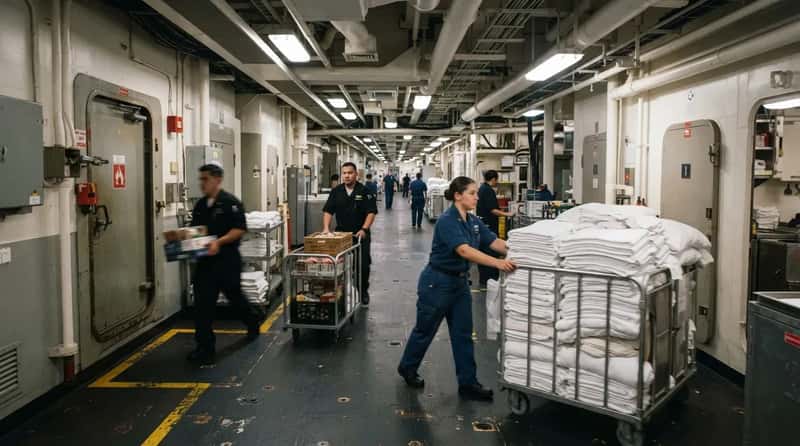
You may wonder how fresh towels and food appear so fast without a cart in sight. One crew list points to an interior corridor nicknamed the “I-95.” It runs the length of the ship, low in the hull, so crew can reach work areas without crossing guest spaces. Names differ by ship, but the idea is common.
That separation is a big part of why a ship feels so polished on a crowded sea day. The work happens, but it’s hidden. The same system also hides how few people are doing it. That ratio explains almost every slow line you’ve ever stood in.
#2 – Thousands of Guests, a Few Hundred Hands, and No One to Cover
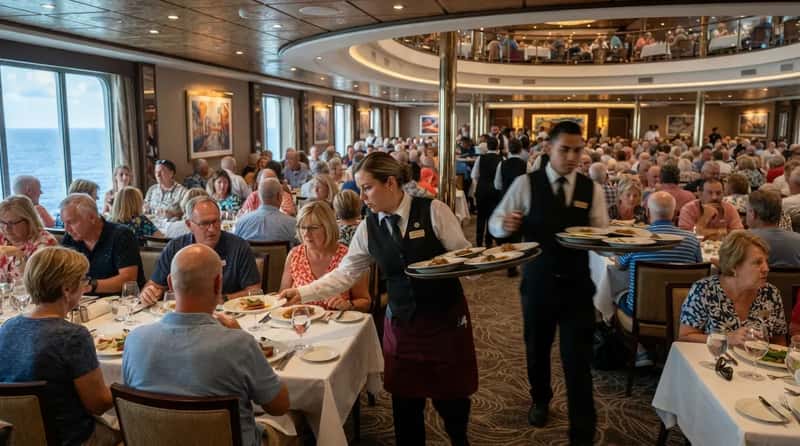
The numbers on a modern ship are striking. The CDC’s report on Royal Caribbean’s Navigator of the Seas in July 2025 lists 3,914 passengers and 1,266 crew. That’s roughly three guests for every crew member, and not everyone in that crew is serving food or drinks.
Former crew say lines hire only the minimum number of crew they need, and if you’re not there to do your job, chances are no one else can do it. A cook can’t do passenger laundry, and a cruise director can’t fix a broken chair. So when a sea-day line crawls, there’s usually nobody free to step in. The last item is the one crews say they wish passengers understood most.
#1 – The Person Smiling at You Is Months Into a Contract With No Days Off
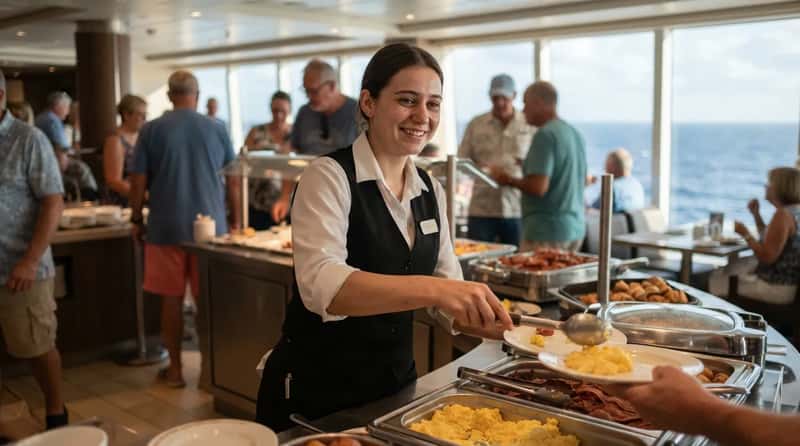
The smile at breakfast sits on top of a long contract. Crew contracts typically run two to nine months, and there are no holiday entitlements. One industry guide puts it bluntly: there are no holidays on board, it’s a seven-day week, and once your contract ends, so does the pay. For entry-level jobs, the break between contracts is around six to eight weeks, often unpaid.
That’s also why crew wish you’d stop asking whether they got to enjoy the port. One crew member explained that most staff work 12-hour split shifts, starting around 7 a.m. and finishing past 10 p.m. A nap often beats a walk through a souvenir shop. It’s not a complaint. It’s just the part of sea days the brochure leaves out.
Crews don’t want pity, and most say they like the work. They just want the people they serve to see them clearly. Next sea day, the towel, the line and the buffet may look a little different, and so might the person smiling behind them.