Most first-time cruisers assume everyone in line gets treated exactly the same at guest services, and that the amenities handed out are identical for every passenger. That’s not even close to true. Behind the atrium desk, there’s a whole quiet layer of request-based perks that seasoned cruisers over 60 have learned to ask for by name, while everyone else just waits in the same slow line and pays full price.
None of this is officially “secret.” It’s just buried in policy pages, staff training manuals, and phone calls most travelers never think to make. Here’s what actually gets set aside once someone knows the right question to ask, and why the guests who ask early end up with a completely different cruise than the ones who don’t.
#15 – The Cabin Location Nobody Volunteers Unless You Ask
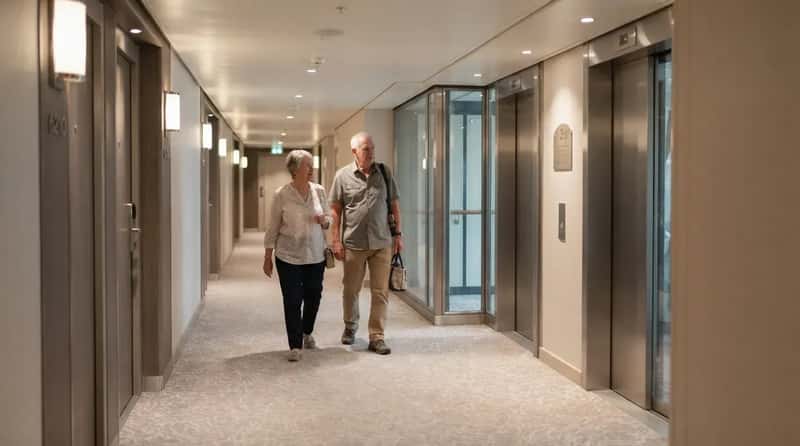
Not all staterooms are created equal, and the best-kept secret isn’t size, it’s proximity. For older travelers, cabins near the elevators get recommended again and again, because the long hallway walk gets old fast, especially after a full day on your feet. Guest services can flag this request at booking, but almost nobody offers it upfront.
It matters most after a shore excursion, when everyone’s quietly pretending their knees are fine. Ask specifically for a cabin close to a bank of elevators, not just “midship,” because midship can still mean a surprisingly long hike. That’s a small fix, but #14 involves equipment you genuinely can’t wing.
#14 – A Wheelchair Held Back Just For You
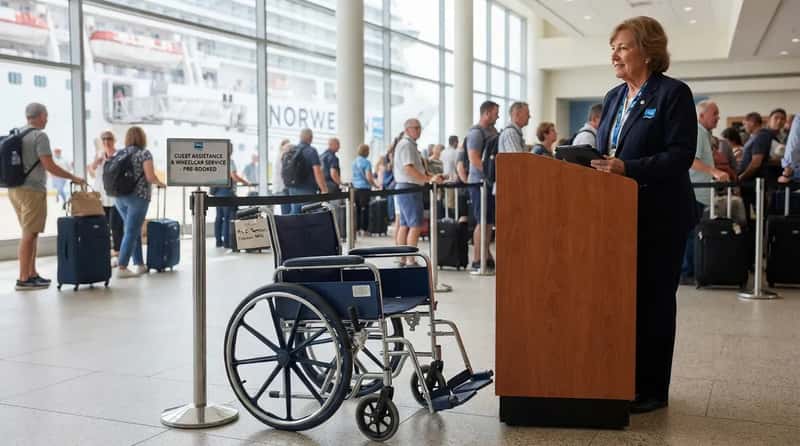
Ships don’t carry unlimited wheelchairs, and most guests never realize how tight that supply actually is. Norwegian Cruise Line reserves its onboard wheelchairs strictly for embarkation and disembarkation, handing them out first-come, first-served. That means calling ahead isn’t a nice-to-have, it’s the only real way to guarantee one exists when you need it.
Most travelers don’t know they can request this in advance, so they just show up and hope. Guests who call weeks early are far more likely to have a chair set aside with their name already attached to it. But #13 involves something even bigger than a chair.
Fast Facts
- Onboard wheelchairs are typically reserved for boarding and departure, not full-ship use
- Allocation is first-come, first-served on most major lines
- Calling a few weeks before departure improves your odds significantly
- Requesting one costs nothing, but supply is genuinely limited
#13 – A Stateroom Rebuilt Around Comfort, Not Just Compliance
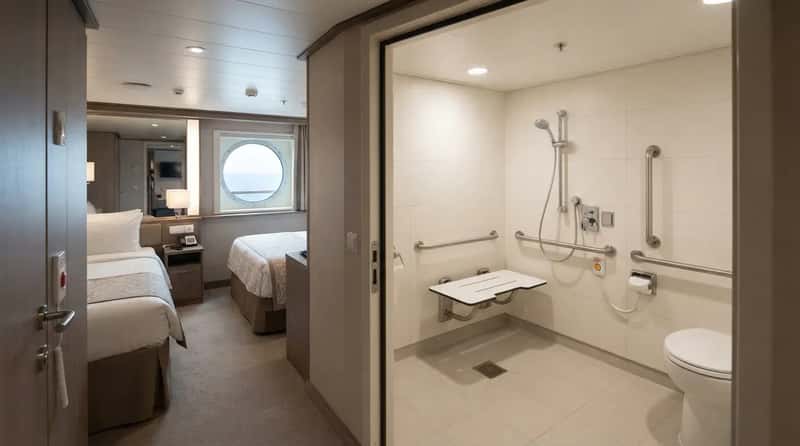
Accessible cabins aren’t just “bigger rooms,” they’re engineered differently, and most guests never ask what’s actually inside one. These staterooms offer wider door frames, roll-in showers, shower benches, high-rise toilets, and handrails around the shower and toilet area. That’s a meaningful upgrade for anyone managing balance issues or fatigue, not just full-time wheelchair users.
These rooms are limited, and lines recommend booking as far ahead as possible. Here’s the frustrating part: plenty of guests over 60 qualify for these comfort features but never request them, because they don’t think of themselves as “disabled.” That hesitation is exactly what costs them the room. But #12 pushes the priority even further.
#12 – Priority Placement At The Very Front Of The Line
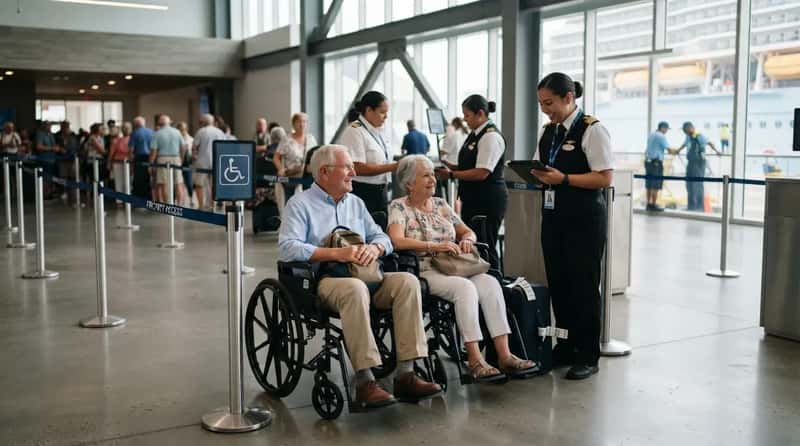
Calling ahead doesn’t just secure equipment, it secures your spot in the queue itself. Cruise lines offer boarding and departure assistance to guests with mobility needs, and contacting the line 30 days out lets them prioritize that help before you’ve even arrived at the pier. That’s a full month’s head start most passengers never bother to use.
Priority disembarkation is standard for guests with mobility needs, and they’re typically called in the first groups, well before the general passenger flow even begins. That’s a genuinely large time savings on a ship carrying thousands of people. But #11 is the one nobody talks about out loud.
#11 – A Discount Buried Behind An Age Checkbox
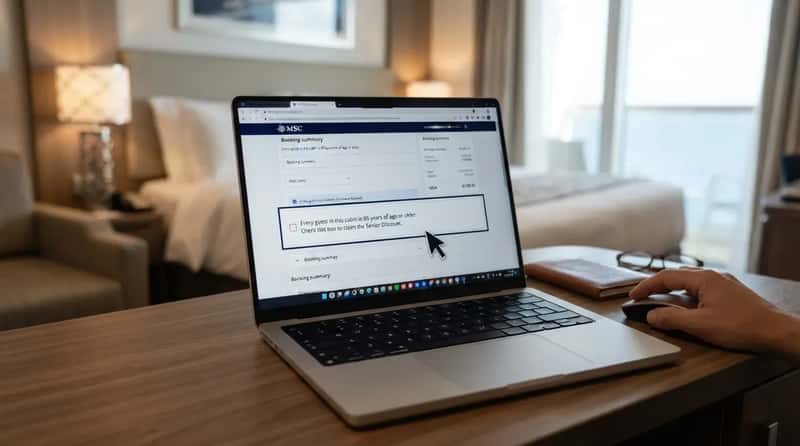
Some of the biggest cruise discounts hide behind a single, easy-to-miss checkbox during booking. MSC Cruises offers passengers 65 and older up to 10% off all cruises through its official website, though the exact discount varies by room type. That’s real money, not a token gesture tacked on for show.
Here’s the catch: unlike lines where only one passenger needs to meet the age requirement, MSC requires every single occupant in the cabin to be over 65 to qualify. Miss that detail, and the discount silently vanishes at checkout. But #10 works almost the opposite way.
#10 – The Silent Flag That Lowers Your Fare Automatically

Booking systems have quiet internal flags that most customers never learn exist. Many of them include a “senior fare” flag that auto-applies once a guest turns 55, but only if the system knows to check for it. If nobody enters your birthdate correctly, that discount simply never fires, and no one tells you it was ever on the table.
A good travel agent is often worth their weight in onboard credit, because agents have access to unpublished deals and know exactly which lines are quietly running senior perks even when nothing’s posted online. Most self-booking passengers never see these offers at all. But #9 rewards a completely different kind of loyalty.
#9 – The Membership Perk Hiding In Plain Sight

You don’t need a cruise line’s loyalty program to unlock savings, a completely unrelated membership can do it instead. AARP members can start claiming cruise discounts as early as age 50 by booking through the AARP Travel Center. That’s a full decade earlier than most “senior” cutoffs even bother to start.
Select trips through major cruise lines can earn AARP members up to $100 in onboard credit. It’s free money attached to a membership most people already carry in their wallet and never think to use here. But #8 has nothing to do with discounts at all.
Quick Compare: Where The Age Cutoffs Actually Sit
- AARP Travel Center bookings: discounts open up at age 50
- Standard cruise line “senior fare” system flag: often auto-applies at 55
- MSC Cruises official discount: requires every guest in the cabin to be 65+
#8 – The Quiet Rooms They Never Put On A Map
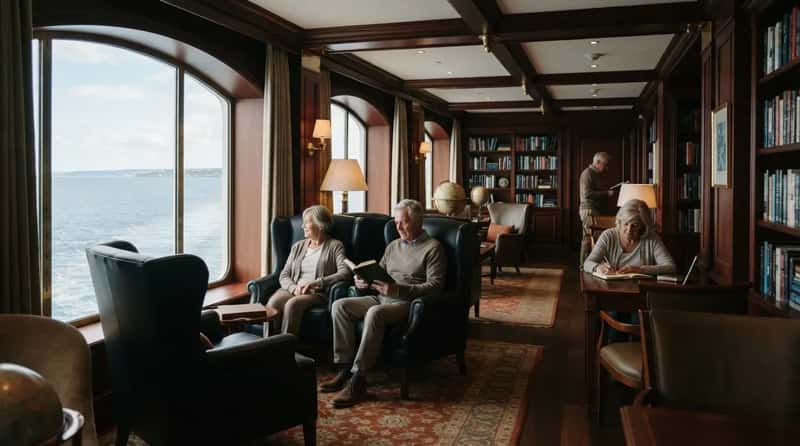
Cruise ships are louder than most people expect, and almost nobody mentions where to escape it. The pool deck is fun until it isn’t, but what many guests don’t realize is that quieter lounges, less crowded decks, and calm indoor corners exist without blaring music or nonstop announcements. Staff know exactly where these spots are; they just don’t broadcast them over the intercom.
Libraries, card rooms, observation lounges, and tucked-away bars stay peaceful most of the day, and they’re perfect for reading, talking, or simply sitting without sensory overload. This might be the most underrated perk on the entire ship, and it costs absolutely nothing. But #7 solves a problem you can’t just walk away from.
#7 – A Listening System Built Into The Room You Never Requested
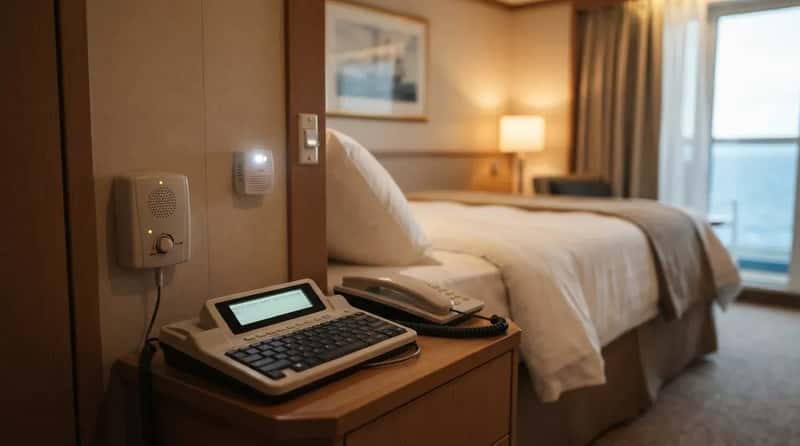
Hearing loss on a ship isn’t just inconvenient, it can mean sleeping straight through an emergency alarm. Assistive listening systems are installed in the main theater on every ship, along with Studio B on select vessels. Few guests ever think to ask whether their own cabin can get similar support.
Cruise lines also offer TTYs that connect directly to the Guest Relations desk, linking a stateroom to the front office in real time. That’s a direct communication line most passengers have no idea is available on request. But #6 goes even further inside the room itself.
#6 – An Alert Kit Nobody Mentions Unless You Ask For It
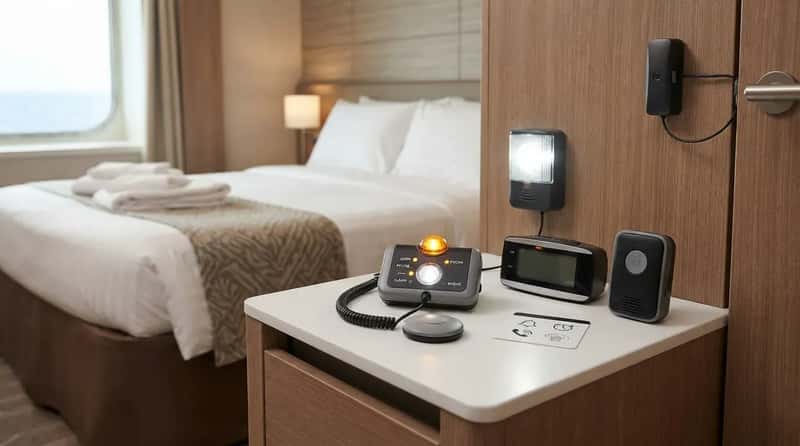
Some of the most useful safety equipment on a ship never leaves the storage closet unless a guest specifically asks for it. Portable room kits, available on request, include a visual-tactile alert system that signals door knocking, a ringing phone, an alarm clock, and a smoke detector. It’s a flashing-light setup built for anyone who can’t rely on sound alone to wake up.
This kit exists on virtually every major ship, yet almost no one requests it at check-in. It takes minutes to arrange and can completely change how safe a cabin feels overnight. But #5 changes how a whole room gets built.
Worth Knowing
- Flashes for a door knock, not just a ringing phone
- Separate visual alert built into the alarm clock function
- Smoke detector signal designed to wake a guest without relying on sound
- Available on request at check-in, no advance paperwork required
#5 – Furniture Quietly Lowered Just For You
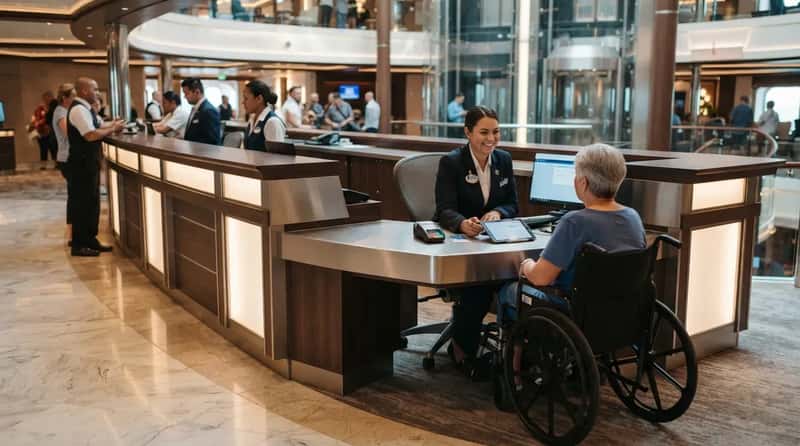
Physical design changes are easy to miss until the moment you actually need them. Royal Caribbean provides accessible staterooms, lowered gaming tables in the casino, and a lowered Guest Relations desk for guests with mobility issues. That’s not a workaround bolted on later, it’s built into the ship’s actual furniture layout.
Most guests never even notice the lowered desk unless someone points it out, since it blends right into the rest of the counter. Here’s a mildly controversial take: cruise lines could market this far more loudly than they do, and simply choose not to. But #4 is the desk where everything else on this list actually gets arranged.
#4 – The Desk Where Every Quiet Favor Actually Gets Arranged
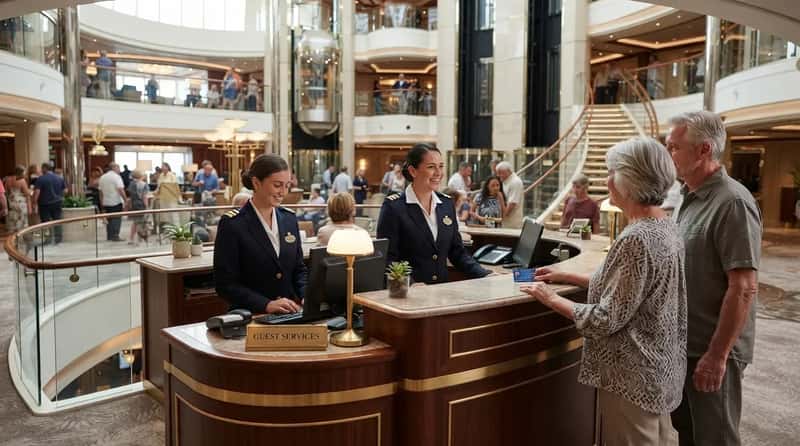
Every request on this list eventually funnels through one specific spot on the ship. Guests find the purser’s desk in the main lobby or atrium of most cruise ships, a central location built for handling any issue that comes up. It’s the unglamorous hub behind nearly every “hidden” perk mentioned so far.
Guests seek out the purser’s desk the same way a hotel guest would use a front desk on land, for anything from questions to complaints to special requests. The trick is asking early, not on the day something actually goes wrong. But #3 is the department most guests hope they never need.
#3 – A Medical Center They Point You Toward First
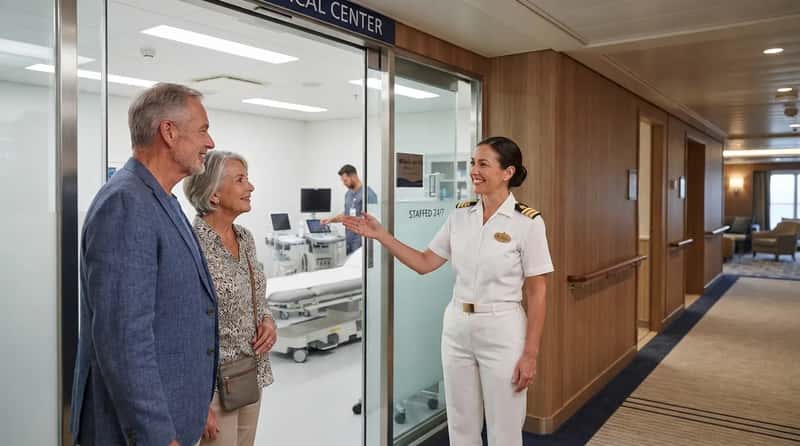
Peace of mind matters more at 60-plus than it does at 30, and cruise lines quietly lean into that reality. Lines emphasize a fully equipped medical center on board for guests’ peace of mind, right alongside accessible staterooms, venues, and excursions. Staff are trained to mention it early to older guests, even when nobody’s asked a single question about it.
It’s a small conversational nudge, but it changes how comfortable someone feels about being far from home for a week. Many guests never realize how staffed and equipped these onboard clinics actually are until the moment they need one. But #2 happens before you even step past the gangway.
#2 – A Porter Who Shows Up Before You Ask
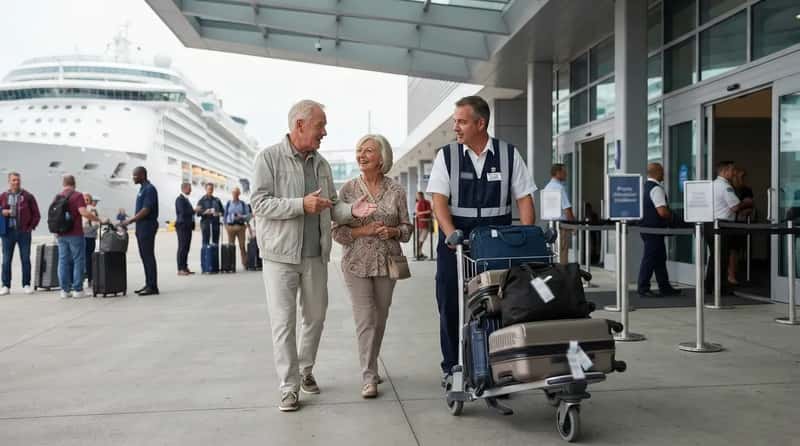
Terminal chaos hits older travelers the hardest, and there’s a quiet fix most people skip entirely. Wheelchair assistance in the terminal, priority embarkation options, and porter help with luggage aren’t always advertised, but they’re available and can vary by port. A single phone call ahead of time is usually all it takes to arrange.
Even guests who don’t use a wheelchair are welcome to request help simply because they tire easily standing in line. That’s one of the least-used perks on this entire list, mostly out of pride rather than actual ineligibility. But #1 might be the most personal reservation of them all.
#1 – A Shore Excursion Rebuilt Around What You Can Actually Do
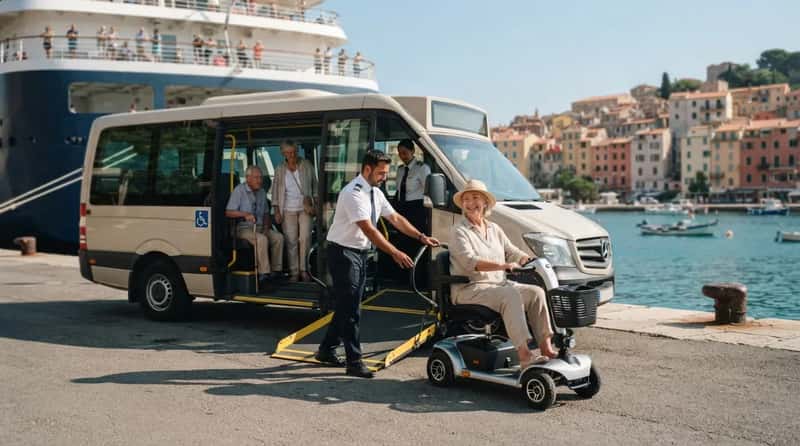
This is the one guests remember longest, because it’s the difference between watching the port from the ship railing and actually stepping onto the dock. Select cruise lines offer accessible shore excursions for guests unable to negotiate motorcoach steps, or for full-time wheelchair and scooter users, using transportation adapted with a ramp or lift. It’s not a downgraded tour, it’s a redesigned one built from the ground up.
These excursions are limited and fill quickly, which is exactly why they’re arranged quietly through guest services instead of posted on the main excursion board. Most passengers never even know the option exists until they specifically ask about it. For a lot of travelers over 60, this single reservation ends up mattering more than every discount on this list combined.
Why It Stands Out
- Vehicles adapted with a ramp or lift, not standard motorcoach steps
- Built for full-time wheelchair and scooter users, not a scaled-back version of the regular tour
- Capacity is limited, so seats disappear faster than the main excursion listings
- Arranged quietly through guest services rather than advertised on the excursion board
None of these 15 perks require a special badge, a loyalty tier, or a lucky upgrade. They require one phone call, one form, or one honest conversation at the guest services desk before departure. The guests who get the best treatment aren’t the ones who tip the most, they’re the ones who simply ask early and ask specifically.
If you’re cruising with a parent, a grandparent, or heading into your own 60s soon, none of this has to stay a secret anymore. Which one of these caught you off guard? Drop it in the comments, because someone planning their next cruise probably needs to see it.