There’s a version of airport security that most travelers over 60 never get to experience – one that’s faster, calmer, and almost completely stress-free. It’s not a VIP lounge or a paid upgrade. It’s just knowledge. TSA supervisors who’ve spent years watching the same avoidable slowdowns, the same unnecessary pat-downs, and the same confused looks at the bin area know exactly what separates the travelers who sail through from the ones who don’t. And most of the time, the difference is a handful of quiet facts that front-line agents simply never mention.
These aren’t tricks or loopholes. They’re real programs, real exemptions, and real procedures that exist specifically to help you – and that most Americans go their entire lives without hearing. A few of them are genuinely surprising. At least one of them has been in place for years and is used by almost nobody who needs it most. Keep reading, because the ones near the top of this list may completely change how you think about flying after 60.
#15 – The “Random” Metal Detector Flag Has Nothing to Do With How You Look
Getting flagged for additional screening when you’ve done everything right is one of the most quietly stressful moments at any airport. And almost every traveler misreads it. Metal detectors randomly select passengers for additional screening through a machine-driven, statistically distributed process – not a judgment call by the agent in front of you. The agent isn’t suspicious of you. They’re executing a protocol they didn’t choose and can’t override.
Experienced travelers who understand this stay calm, cooperate quickly, and are through in under two minutes. Those who don’t know it get flustered, slow everything down, and occasionally turn a 90-second pat-down into a 20-minute ordeal. One thing that isn’t random: your bag. The X-ray flags based purely on what’s inside it – which means while you can’t control whether the machine selects you, you have total control over whether your bag causes a delay.
Fast Facts
- Random selection is machine-driven – agents cannot override it
- A calm, cooperative response gets you through fastest – every time
- Your bag is flagged based on contents only, not on how you look
- A pat-down in a standard lane typically takes under 2 minutes when you cooperate immediately
- You can always request a private screening room if you prefer
#14 – Your Rhinestone Jeans Will Trigger a Pat-Down. Every Single Time.
TSA agents see this play out daily and rarely say anything before the alarm goes off. Sequined tops, blouses with decorative metalwork, and jeans with rhinestones on the back pockets reliably set off the Advanced Imaging Technology scanner – and reliably lead to pat-downs. For travelers over 60 who favor these wardrobe staples, especially on vacation days when you want to look put-together at the airport, this is an almost guaranteed slowdown at the checkpoint.
The fix is simple once you know it: leave the embellished outfits for after you land, or pack them in your carry-on and change at the gate. The same applies to underwire bras, heavy belt buckles, and layered metal jewelry. None of these items are prohibited – they just reliably trigger alarms. A TSA supervisor would tell you straight: wear slip-on shoes, elastic-waist pants, and a plain top on travel day. That one wardrobe swap eliminates the majority of avoidable delays for this age group.
#13 – You Can Freeze Your Water Bottle and Bring It Through Security

Airport water costs a small fortune, and staying hydrated matters enormously for travelers over 60 on long travel days – especially those managing blood pressure medications or prone to dehydration. Most people assume all liquids are banned past the checkpoint. They’re not, and there’s a completely TSA-sanctioned workaround that almost nobody uses. A frozen solid water bottle is classified differently than a liquid and passes through security without issue.
TSA supervisors mention this one almost casually, as though everyone already knows it. They don’t. Pack your water bottle in the freezer the night before your flight, and it’ll still be solid through most morning security lines. By the time you reach your gate, it’ll be thawing into cold drinking water – free, and waiting for you. For a tip that costs nothing and takes 30 seconds of planning, the payoff is surprisingly significant.
#12 – Peanut Butter, Hummus, and Jam Are “Liquids” as Far as TSA Is Concerned

This one trips up experienced travelers constantly, especially those who pack snacks from home to avoid overpriced airport food. The 3-1-1 rule – liquids, gels, and aerosols in containers of 3.4 ounces or less, all fitting into one quart-sized bag – applies to anything that can spread or smear. That means peanut butter, hummus, jelly, soft cheeses, yogurt, salsa, and spreadable cream cheese are all treated as liquids under TSA rules. The moment something can spread, it’s subject to the size limit.
Solid foods are an entirely different story. Nuts, granola bars, hard cheeses, fruit, sandwiches – pack as much as you want, no restrictions. A TSA supervisor’s shorthand: if you could smear it on bread, it goes in the liquids bag or gets left home. Most travelers over 60 who get bags pulled at the checkpoint for food items are genuinely surprised to find out a forgotten jar of almond butter or a tub of Greek yogurt is the culprit. Now you won’t be.
Quick Compare
- Treated as a liquid (3.4 oz limit): peanut butter, hummus, jam, yogurt, soft cheese, salsa, cream cheese, dips
- Travels freely, no limit: nuts, granola bars, hard cheese, whole fruit, sandwiches, crackers, candy
- The test: if you could smear it on bread, it counts as a liquid
#11 – At Airports With New CT Scanners, You May Not Need to Pull Out Your Liquids Bag at All
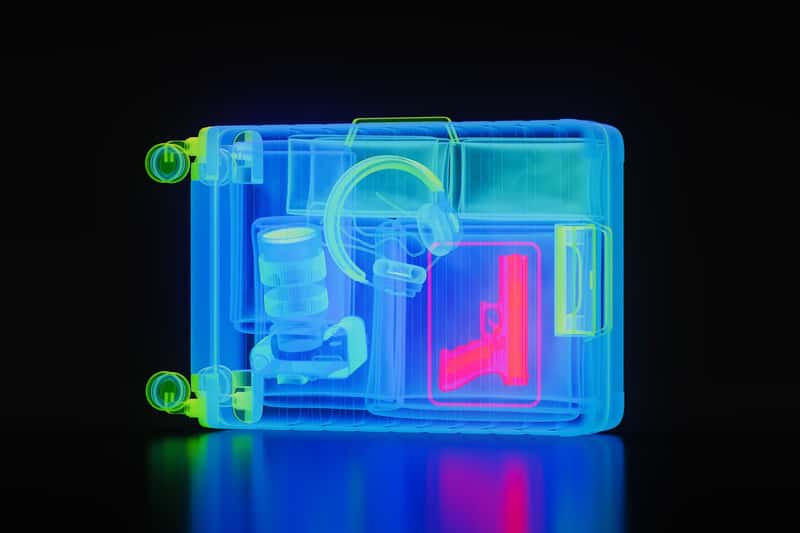
One of the most unevenly communicated upgrades in TSA history is creating real confusion – and real frustration – for travelers who follow the rules precisely and still get waved through differently than the person ahead of them. Many major U.S. airports have deployed CT scanners that produce detailed 3D images of bags, allowing officers to assess threats without requiring passengers to remove their quart-sized liquids bag at all. In those lanes, the old ritual simply doesn’t apply.
TSA officially recommends continuing to use the quart-sized bag to avoid delays, because not all airports have this technology yet and enforcement is genuinely inconsistent. But travelers over 60 who know their home airport has CT-equipped lanes skip the whole routine in those checkpoints. For anyone managing arthritis or limited dexterity – the fine motor task of unzipping, removing small containers, and repacking under pressure – this matters. Best move: watch what the traveler ahead of you does when they reach the bin area. The checkpoint itself will tell you what’s expected.
#10 – Travelers 75 and Older Have Automatic Expedited Screening Rights at Every U.S. Airport
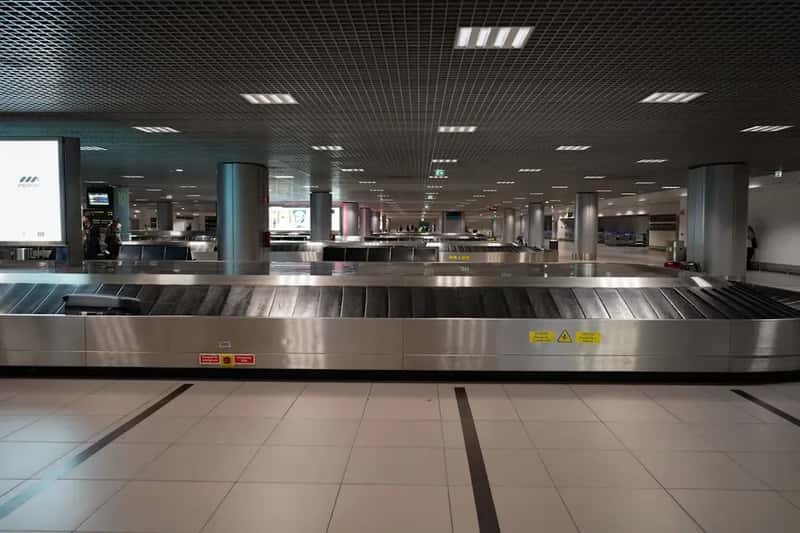
Almost no one over 75 knows this exists, and front-line agents rarely volunteer it. Under TSA’s risk-based screening approach, passengers 75 and older are permitted to keep their shoes on during standard security screening – no PreCheck enrollment required, no special request needed at most checkpoints. This is a formal TSA policy that applies automatically at every U.S. airport. If they pass through without triggering an alarm, their shoes stay on.
One caveat that almost never gets mentioned: the 75-and-older shoe exemption does not extend to light jackets. Removal of light jackets is still required for Advanced Imaging Technology screening in standard lanes, even for passengers over 75. Knowing both sides of that equation – what stays on and what still has to come off – saves time and eliminates the confused back-and-forth at the bin that slows everything down. One sentence to the agent before you reach the scanner handles the whole thing cleanly.
At a Glance: Age 75+ Screening Benefits
- Shoes stay on automatically – no PreCheck required
- Light jackets must still come off in standard AIT lanes
- Mobility device users may remain seated during screening
- Applies at every federalized U.S. commercial airport
- No registration, no card, no advance request needed
#9 – TSA PreCheck Is Still Deeply Worth It
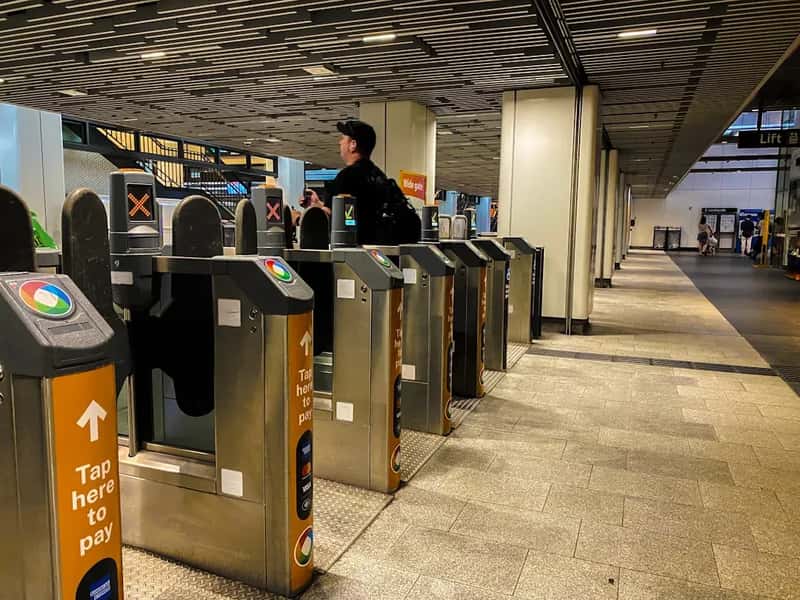
In July 2025, TSA eliminated the shoe-removal requirement for all travelers in standard lanes – and almost immediately, people started asking whether PreCheck was still worth the enrollment fee. It is, and here’s why: the dedicated shorter lane is the real value, and it didn’t change. TSA’s own benchmarks put the PreCheck lane target at under 10 minutes, while the standard lane target is under 30 minutes – and in practice, about 99% of PreCheck passengers wait less than 10 minutes. For seniors managing mobility concerns, the biggest stress point at the airport is often not the screening itself – it’s standing in a slow-moving standard lane for 20 to 40 minutes before you even reach the checkpoint.
PreCheck also still eliminates belt removal, light jacket removal, and the requirement to take your laptop and liquids out of your bag. Each of those is a physical task: bending, unzipping, lifting, then reversing the entire process before you can move. For travelers managing arthritis, limited mobility, or any condition that makes repetitive bending difficult, eliminating those steps isn’t a luxury – it’s a meaningful quality-of-life difference. New enrollment starts at $78 for five years – roughly $15 a year – and many travel credit cards reimburse the fee entirely.
#8 – Global Entry Is the Smarter Buy if You Ever Fly International
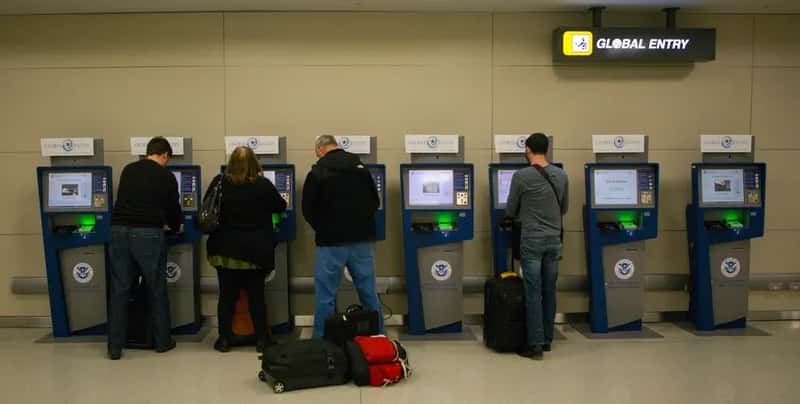
Most travelers over 60 know about TSA PreCheck. Far fewer know that Global Entry is arguably the better value – and that it includes PreCheck automatically. At $120 for a five-year enrollment, that’s roughly $24 a year for a program that covers both your domestic and international travel. Many premium travel credit cards reimburse the full $120 fee, making the real out-of-pocket cost zero. The application requires a background check and an in-person interview, but the interview itself typically takes only 10 to 15 minutes once you’re conditionally approved.
The payoff at international arrivals is significant. Instead of joining the long customs and immigration line after an exhausting overseas flight, Global Entry members use dedicated kiosks – presenting their passport, verifying identity, completing a quick customs declaration, and heading directly to baggage claim. For senior travelers, less time standing after a long flight isn’t a minor convenience. It’s the difference between arriving refreshed and arriving depleted. If you fly internationally even once every few years, this one pays for itself on a single trip.
Worth Knowing: Global Entry vs. TSA PreCheck
- TSA PreCheck only: ~$78 for 5 years, domestic expedited lanes, no interview required
- Global Entry: $120 for 5 years, includes PreCheck automatically, adds expedited customs on international arrivals
- Credit card reimbursement: Dozens of travel cards cover the full $120 fee – check your card’s benefits guide
- Interview: 10-15 minutes at a CBP office; can also be done on arrival from an international trip
- Bottom line: If you fly internationally at all, Global Entry is almost always the smarter buy
#7 – If You Have a Pacemaker or Defibrillator, You Should Never Walk Through a Metal Detector
This one carries real health implications, and it isn’t emphasized nearly enough at the checkpoint. TSA’s official policy is clear: passengers with an internal medical device such as a pacemaker or implanted cardioverter defibrillator should not be screened by a walk-through metal detector. If you have one, you should inform the TSA officer before you reach the machine – not after an alarm sounds. Advanced Imaging Technology is the appropriate alternative, and requesting it is entirely within your rights.
Agents say travelers with implants who say nothing in advance create complicated, time-consuming situations that are entirely avoidable with one sentence spoken proactively: “I have a pacemaker – I need AIT screening.” That’s it. The same applies to implanted spinal stimulators and certain insulin pumps. The TSA Notification Card (more on that next) can also communicate this silently if speaking up in a crowded line feels uncomfortable. The point is: the system accommodates you – but only if you speak up before the moment of screening, not after.
#6 – TSA’s Notification Card Lets You Communicate Medical Needs Without Saying a Word Out Loud

Hundreds of thousands of travelers over 60 manage conditions like ostomies, insulin pumps, spinal stimulators, joint replacements, or anxiety disorders that make explaining themselves to strangers in a crowded checkpoint genuinely difficult. Most of them have never heard of the TSA Notification Card. It’s a free, downloadable card from the TSA website that travelers hand silently to the officer before screening begins – no public announcement, no awkward explanation, no judgment.
The card discreetly communicates any medical conditions, disabilities, medical devices, or medications that might affect the screening process. Before screening begins, a traveler can inform the officer about the location of an ostomy pouch, medical port, or catheter – and can be screened without having to remove or expose that device. No pre-registration required. No advance appointment. Just print it, fill it out, and carry it with you. TSA supervisors are genuinely surprised by how few people who need this card actually use it – and how much stress it eliminates for the ones who do.
#5 – TSA Cares Will Assign You a Personal Escort Through Security if You Call 72 Hours Ahead
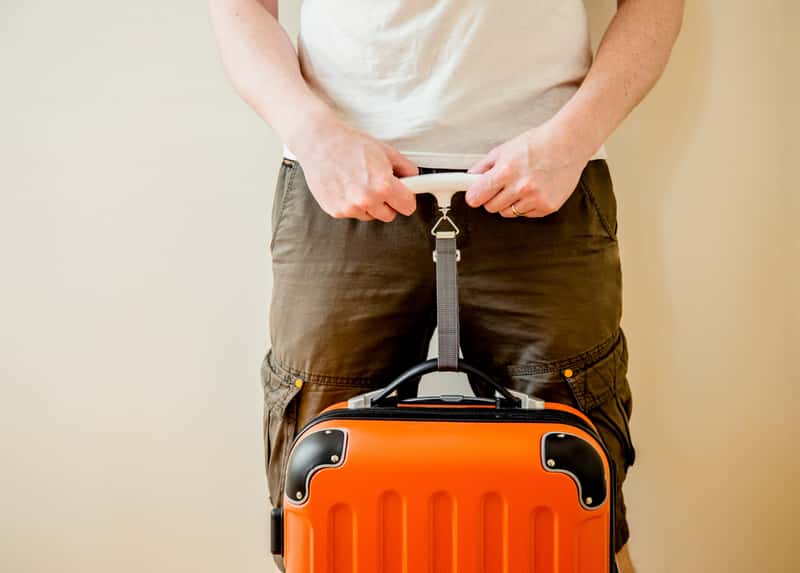
This may be the single most powerful and underused resource available to travelers over 60 – and almost nobody uses it. TSA Cares is a free federal program that provides passengers with disabilities, medical conditions, or complex screening needs a dedicated Passenger Support Specialist: a specially trained TSA officer who meets you at the checkpoint and personally guides you through the entire process. To request one, contact TSA Cares at least 72 hours before your flight at (855) 787-2227 or through the online form on the TSA website.
Support can range from helping someone with a large supply of liquid medication pass through without incident to opening a dedicated lane for someone with more complex screening needs. This isn’t a special favor extended to a few people – it’s a formal program that exists specifically for the traveler who finds security overwhelming, exhausting, or physically difficult. TSA supervisors describe it as dramatically underutilized by the exact demographic it was built to serve. One phone call, made three days before your trip, and your entire security experience changes.
“TSA Cares is a helpline that provides travelers with disabilities, medical conditions and other special circumstances additional assistance during the security screening process.”
Transportation Security Administration (tsa.gov)
#4 – Your Liquid Medications Are Completely Exempt From the 3.4-Ounce Rule

This is one of the most consequential misunderstandings at airport checkpoints today. Travelers over 60 often take multiple liquid medications – eye drops, liquid vitamins, insulin, prescription syrups – and many either pack them in checked bags (a real risk if the bag gets lost) or stress throughout security about violating the 3.4-ounce rule. They don’t have to do either. Medically necessary liquids are explicitly allowed in carry-on bags in excess of 3.4 ounces. You do not need to place them in a zip-top bag. You just need to declare them at the start of the screening process.
The declaration is the key move – before screening begins, not after an alarm. Tell the officer you have medically necessary liquids before your bag goes through the X-ray. Medication is typically screened by X-ray, but if you’d prefer a visual inspection instead, you can request that before the bag enters the tunnel. That request must be made before anything goes on the belt. Most travelers over 60 who learn this say it eliminated years of unnecessary checkpoint anxiety – years of either risking their medication in checked luggage or quietly hoping nobody noticed the full-sized bottle in their bag.
At a Glance: Medication at the Checkpoint
- Liquid medications in any quantity are allowed in carry-on bags
- No zip-top bag required – just declare them separately before screening
- You can request a visual inspection instead of X-ray – but ask before your bag goes on the belt
- Insulin pumps can be screened without disconnection – inform the officer first
- Keep medications in their original labeled containers to avoid questions
#3 – A Cluttered, Layered Bag Is the #1 Reason Travelers Get Pulled for a Secondary Search
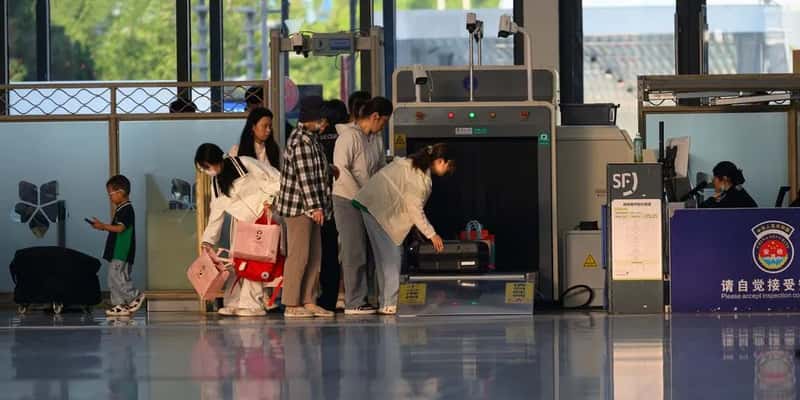
Here’s something TSA supervisors know and almost nobody else does: the single biggest predictor of whether your bag gets flagged isn’t what’s inside it – it’s how organized it is. TSA officers are looking at X-ray images, and a disorganized bag produces a chaotic image that’s hard to read clearly. A cluttered bag doesn’t just slow the process – it flags you for a hand search. The official TSA recommendation is to pack items in organized layers: shoes, then clothes, then electronics, each in its own visual plane.
Supervisors describe it this way: think of the X-ray image as a photograph. A tidy bag produces a clear picture. A stuffed bag looks like chaos, and chaos gets a second look every time. For travelers over 60 who pack heavily or carry a lot of daily-use items in their carry-on, this one insight makes a measurable difference. Spending 10 minutes reorganizing your bag the night before your flight is the single easiest way to eliminate the secondary screening that trips up even the most experienced travelers.
#2 – Asking for a Supervisor at the Checkpoint Is Your Right – and It Actually Works
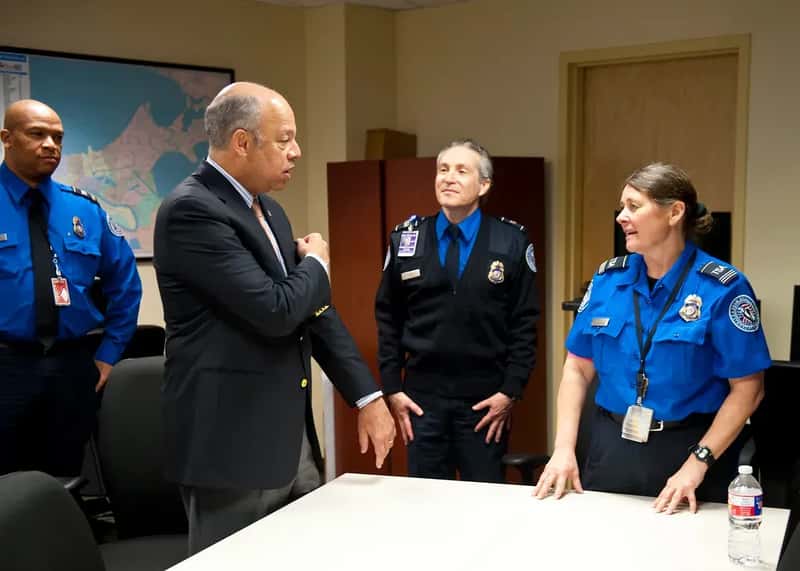
Most travelers treat whatever a front-line TSA agent says as the final word. It isn’t – and supervisors will be the first to tell you so. If you disagree with a ruling about a carry-on item, feel your screening was handled improperly, or need someone with more authority to explain an exemption the agent is unaware of, you can ask to speak to a supervisor. That’s a formal right built into the screening process, and exercising it calmly and specifically is completely appropriate.
Passenger Support Specialists and Supervisory TSA Officers are available at every airport to provide on-the-spot assistance for travelers requiring accommodations or who have concerns about the screening process. The phrasing that matters: “I’d like to speak with a supervisor, please.” Calm, specific, and direct. That phrase triggers a formal escalation pathway – not a confrontation. Travelers who know this never feel trapped by a ruling that doesn’t seem right. The system has a built-in second tier, and using it is exactly what it was designed for.
#1 – REAL ID Is Now Fully Enforced, and an Old License Has No Workaround at the Gate

This is the one thing TSA supervisors most wish every traveler over 60 already knew before showing up at the airport – because the consequences of not knowing are severe and immediate.
TSA PreCheck status does not replace the identification requirement – PreCheck members must also comply. A valid U.S. passport or passport card works as an approved alternative if your state license isn’t compliant. Even with national compliance now reported above 93%, supervisors say a disproportionate share of confusion still comes from travelers over 60 arriving with older, non-compliant licenses. This is the one checkpoint issue that has no workaround once you’re standing at the gate. Check your ID before your next trip – it takes 10 seconds and it’s the only preparation that truly can’t wait.
REAL ID: What You Need to Know Right Now
- How to check: Look for a star in the upper corner of your state license
- No star? Your license no longer works for domestic air travel
- Alternatives accepted: U.S. passport, passport card, Global Entry card, military ID
- PreCheck doesn’t help: All travelers 18+ must show compliant ID, regardless of trusted traveler status
- DMV tip: Many states allow REAL ID upgrades at renewal – call ahead, wait times can be weeks
If any of these caught you off guard – especially the TSA Cares escort program, the liquid medication exemption, or the Notification Card – you’re in very good company. Millions of experienced travelers have been doing things the hard way for years simply because nobody told them these options existed. Share this with anyone over 60 in your life who flies. The gap between a stressful airport and an easy one is usually just a few quiet facts that nobody thought to mention.