Most new RVers think an overnight stop is just “pull in, park, sleep, leave.” Veteran travelers know that mindset is exactly how people end up towed, robbed, or wide awake at 2 a.m. staring at a “No Overnight Parking” sign they swore wasn’t there before.
The gap between a rookie stop and a veteran stop isn’t luck. It’s a handful of small, almost invisible habits that seasoned RVers repeat at every single truck stop, Walmart lot, and rest area they hit. Here’s what experienced road warriors actually do the second the engine shuts off.
#15 – They Do a Slow Drive-By Before They Ever Commit
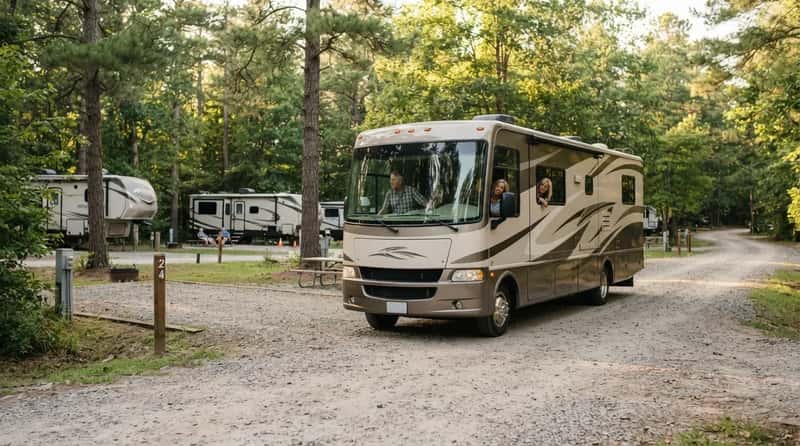
Veteran RVers never park on the first pass. Instead, they treat the first look like a test drive, not a decision. One habit that shows up again and again: a 90-second pause before committing to any spot, stopping short of where they’re actually going to stay for the night.
Before unhitching, dropping the jacks, or doing anything that pins the rig in place, experienced travelers confirm they can still leave, since staying mobile for 90 seconds costs nothing. That tiny pause has saved countless RVers from soft shoulders, blocked exits, and sketchy neighbors. Getting stuck in a spot that turns ugly in a hurry might cost a tow bill, a ruined night, or worse.
#14 – They Rarely Fully Unhitch for a One-Night Stand
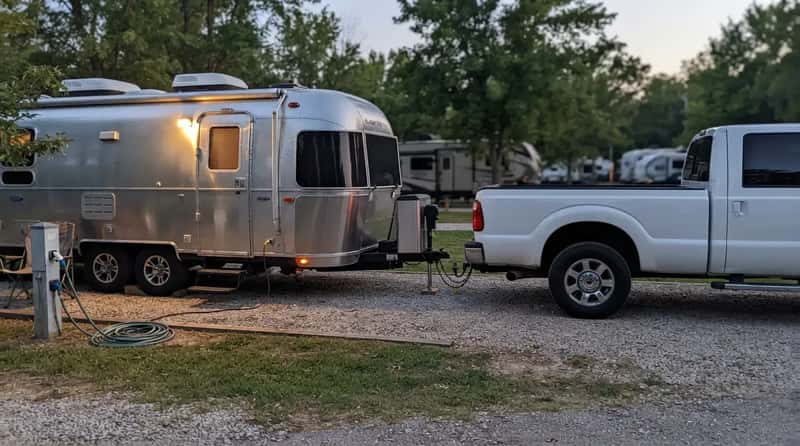
Here’s a habit that surprises rookies: seasoned travelers often leave the tow vehicle attached, even after they’ve parked for the night. For a quick overnight, setup stays minimal – staying hitched if the site is level, plugging in for power if needed, and unpacking only the essentials. It’s not laziness. It’s strategy.
Staying hitched means the rig can move fast if the neighborhood turns loud, the ground turns soft, or plans simply change. Most veterans reserve the full unhitch-and-settle-in routine for stays of two nights or more, not a quick overnight. Unhitching only makes sense when someone actually needs the tow vehicle free for errands or emergencies.
#13 – They Buy Something Before They Leave
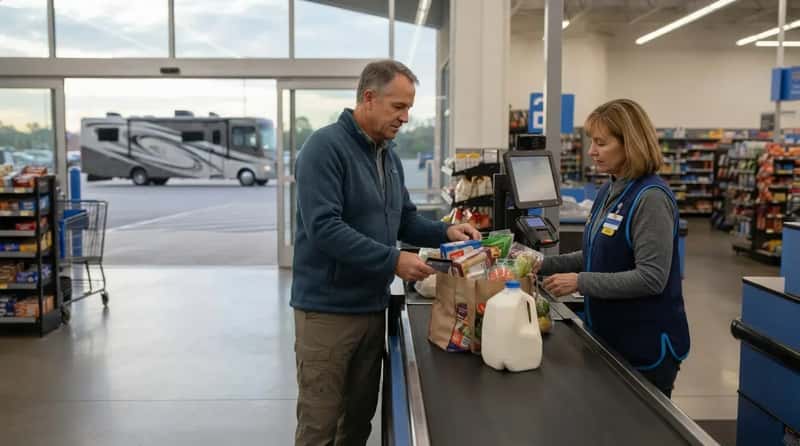
Free overnight parking isn’t actually free, and veteran RVers know it. It runs on an unwritten social contract, and skipping it burns the whole system for everyone else.
When possible, experienced RVers make a purchase at the business where they’re staying and keep their visit to a single night. A $20 grocery run or a tank of diesel is the quiet toll that keeps lots RV-friendly for the next traveler. Many Walmart stores across the U.S. still welcome overnight RV parking precisely because of this quiet, symbiotic trade-off. Skip this step enough times across enough locations, and that “RV-friendly” reputation quietly disappears.
#12 – They Call Ahead, Even When an App Says It’s Fine

Most people trust the little green icon on a parking app. Veterans don’t – and they’re right not to.
Even where local ordinances technically permit overnight RV parking, individual facility managers exercise real discretion based on past complaints and problems, and that discretion never shows up on a map. The app can say “yes” while the actual manager on duty says “absolutely not.” That’s exactly why seasoned travelers pick up the phone before they ever pull in, no matter how confident the app sounds.
#11 – Their Whole Day Runs on the 3:30 Rule
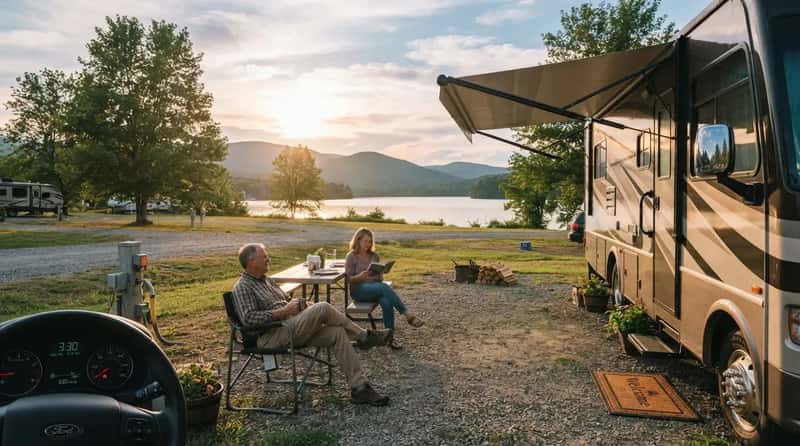
Ask a veteran RVer why they’re already parked while everyone else is still white-knuckling the highway, and they’ll mention a rule most beginners have never heard of.
Many experienced RVers follow what’s called the 3:30 rule: travel 330 miles or stop by 3:30 p.m., whichever comes first, which gets them settled in time for dinner and the sunset. This one habit prevents the single most common overnight disaster: arriving in the dark. RV travel runs at a different pace than car travel, and unexpected delays can easily mean the difference between setting up in daylight and fumbling around with a flashlight.
Fast Facts
- Stop by 3:30 p.m. or after 330 miles – whichever hits first
- Leaves daylight to scout the lot before committing
- Builds in a buffer for traffic, fuel stops, and detours
- Matches a realistic daily pace for a towing rig, not a car
#10 – Their GPS Isn’t the One Everyone Else Is Using
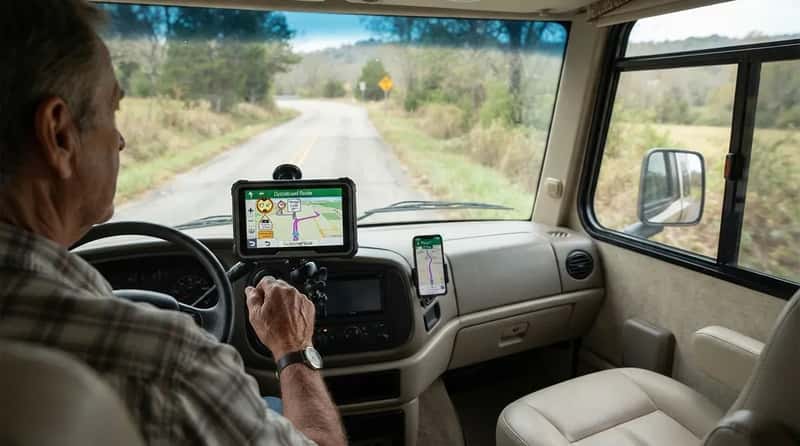
Regular phone maps are, frankly, dangerous for anything over 30 feet long, and veterans learned that the hard way.
Standard GPS apps love to abandon perfectly good interstates and reroute drivers onto roads that were never designed with RVs in mind, sometimes ending on a narrow, unpaved stretch with loose sand and zero turnarounds. RV-specific navigation tools account for height, weight, and length restrictions, along with bridges and tunnels that a car GPS will happily send a 35-foot rig straight into. One wrong turn onto a “shortcut” can mean a scraped roof or a jackknifed trailer on a dead-end road. Seasoned RVers review the route before they ever leave the driveway, using tools built for rigs, not sedans.
#9 – They Level for the Fridge, Not for the Photo
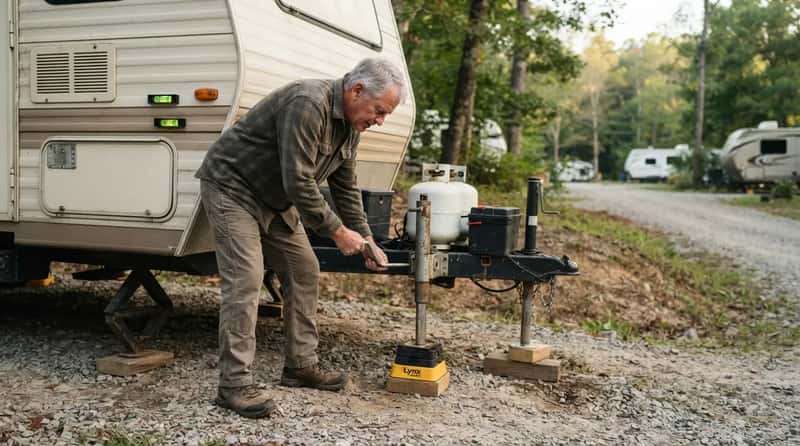
New RVers obsess over a perfectly level Instagram shot. Veterans obsess over something far less glamorous: the refrigerator.
A level rig matters most for keeping the fridge running correctly, and most seasoned travelers use the tongue jack to adjust the moment a site isn’t already flat. An unlevel fridge for even one overnight stop can ruin a full cooler of food by morning, a lesson most veterans only need to learn once. It doesn’t need to be perfect – just level enough that the compressor can actually cycle through the night.
#8 – They Park Facing the Exit, Like They Might Need to Run
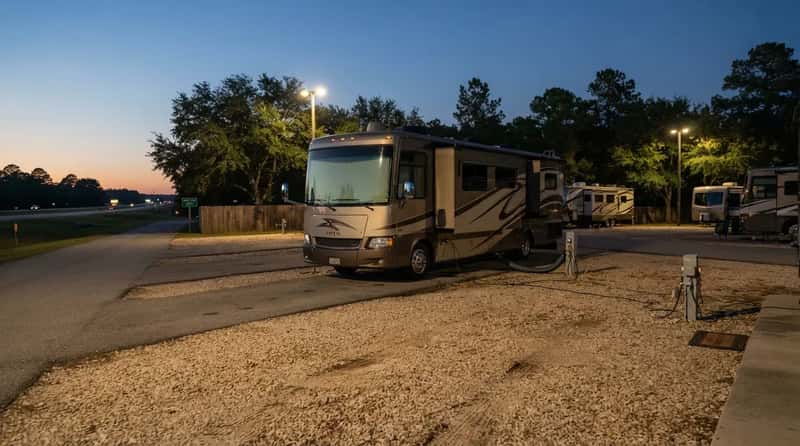
Watch a veteran RVer pull into a lot, and you’ll notice they almost never nose straight into a spot the way a car driver would.
They back in, or angle toward the exit lane, so the rig can pull out without a three-point turn in the dark. This isn’t paranoia; it’s the same logic behind the 90-second pause at #15 – mobility is the whole point of a quick overnight stop. Combined with picking a spot near the edge of the lot instead of boxed in by trucks, it turns a potential 3 a.m. scramble into a 30-second exit.
#7 – They Read Every Posted Sign, Twice
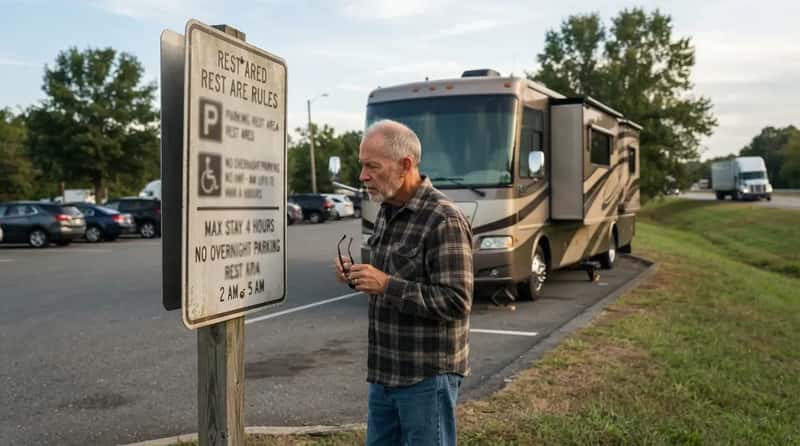
This is the habit that separates a peaceful night from a 2 a.m. knock on the window – and most rookies skip it entirely.
Most rest areas post a time limit on how long an RV can stay, often just two to eight hours, far shorter than a full night’s sleep. Many drivers assume the sign only applies to “the truckers,” not to them. If a sign says “No Overnight Parking,” it’s talking directly to you. Veterans read every posted sign before they even shut off the engine, not after they’ve already popped a slide-out.
Worth Knowing
- Rest area limits typically run two to eight hours, not overnight
- Truck stop policies often favor paying customers over walk-ins
- Store lot rules are set locally, so one Walmart can differ from the next
- Signs can change without notice – a spot that worked last trip may not this time
#6 – They Go Dark Fast – No Awning, No Grill, No Chairs
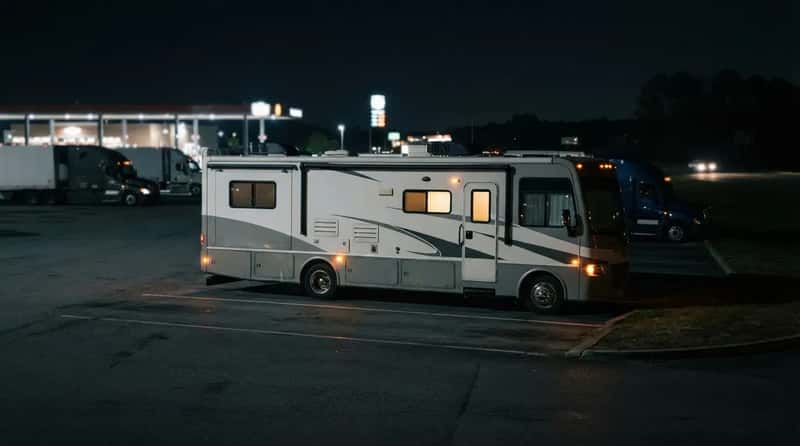
This is one of the more controversial habits, and it genuinely divides the RV community. A quick overnight stop, veterans insist, is not the time to “set up camp.”
Experienced boondockers skip the welcome mat, the canopy, and the grill, choosing to stay inside the rig, cook and eat inside, and generally stay as inconspicuous as possible until they leave. Turning a truck stop into a backyard barbecue is the fastest way to draw complaints – and a knock on the door. Not everyone agrees, and some travelers insist a little fresh air never hurt anyone, but most veterans treat “low profile” as the unofficial rule of any parking-lot overnight.
#5 – Blackout Curtains and White Noise Are Non-Negotiable
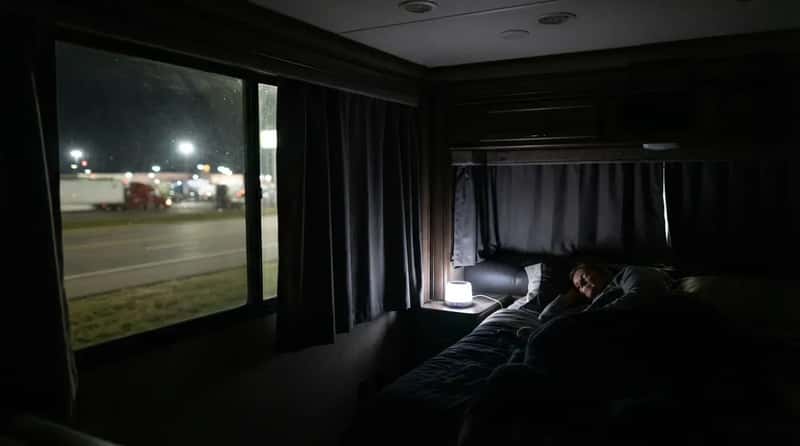
A truck stop at midnight is not a quiet campground, and veterans have long since stopped pretending otherwise.
Anyone parked at a truck stop or Walmart near a busy highway likely won’t get the quietest night, since these lots often keep bright security lights on until sunrise. Rather than fight it, experienced RVers plan around it. Good blackout curtains and a white noise app help most seasoned travelers sleep well despite the noise and glare. It’s a $15 fix for a problem most beginners spend years quietly frustrated by.
At a Glance
- Blackout curtains – block security lot lighting that runs all night
- White noise app or fan – masks idling engines and highway noise
- Foam window covers – extra darkness plus a little insulation
- Earplugs – simple backup for the lightest sleepers
#4 – They Never Dump a Drop Outside a Real Campground
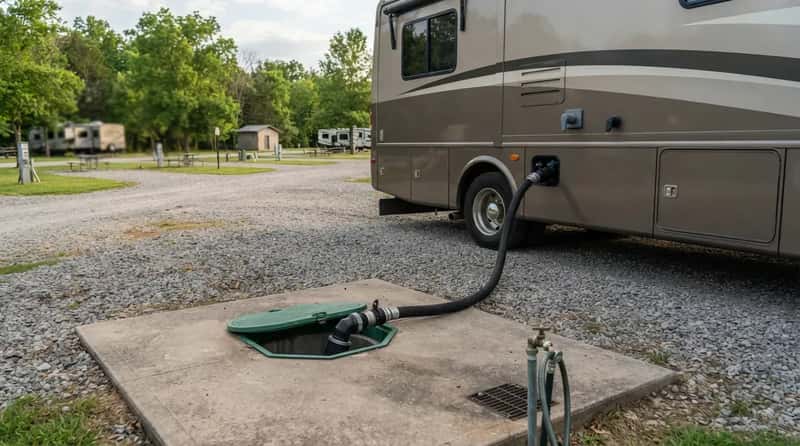
This is the rule that, if broken, quietly closes overnight parking for every RVer who comes after you.
Veteran RVers will not dump black or gray water or leave trash behind at a quick overnight stop – it’s treated as an absolute rule, not a suggestion. The mindset is simple: don’t overstay, don’t dump, don’t roll out the welcome mat. One bad dump in a Walmart lot has gotten entire chains to ban RV parking permanently in certain regions. That’s why veterans hold their tanks an extra day rather than risk it, waiting instead for a proper dump station.
#3 – Their Emergency Kit Lives Within Arm’s Reach
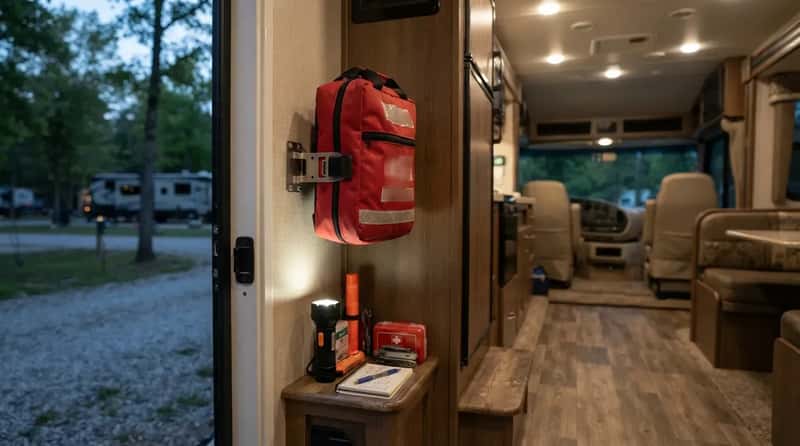
Ask a veteran to grab their flashlight in the dark, and they won’t fumble through three storage bins to find it.
An emergency kit with first aid supplies, basic tools, flashlights, and road safety items like reflectors or flares stays easy to reach and gets checked regularly. Keeping important phone numbers handy – roadside assistance, campground offices, family contacts – adds real peace of mind at an unfamiliar stop. Most emergencies at overnight stops happen in the first ten minutes after arrival, before anything is even fully set up, which is exactly why this kit stays by the door, not buried in a closet.
#2 – They Always Have a Backup Spot Before They Need One
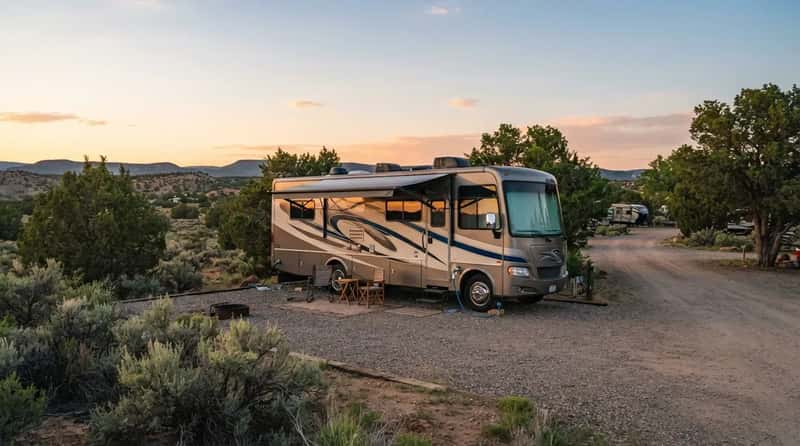
This is the habit that separates a stressful night from a five-minute inconvenience, and it costs nothing but a little planning.
Veteran travelers arrive early, before sunset, to grab a decent spot, ideally at the end of a row, rather than gambling on whatever’s left after dark. But they also keep a second and third option already mapped out. If the first location fails even one gut-check, experienced RVers simply move to the backup instead of forcing it to work. Rookies treat “plan A” like the only plan; veterans treat it like a suggestion.
Worth Knowing
- Arrive before sunset for the best pick of the lot
- Map two or three backup locations along the same route
- End-of-row spots make for the easiest, fastest exit
- A failed gut-check means moving on, not settling in anyway
#1 – They Trust the Gut Feeling Over the Convenience
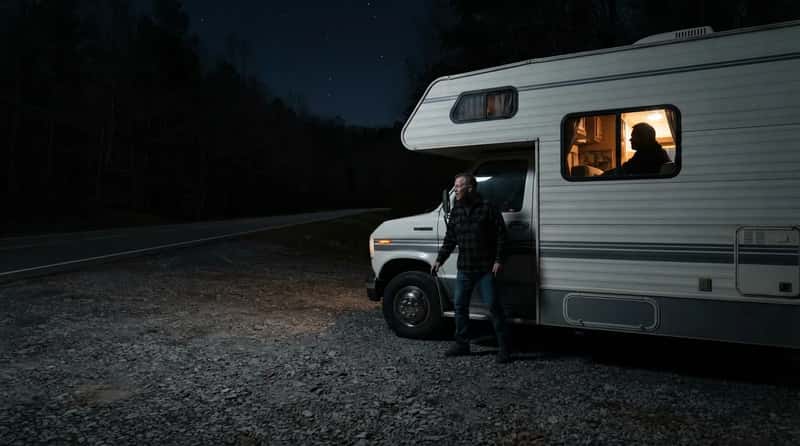
This is the habit every single veteran RVer names first when asked what actually keeps them safe on the road, and it has nothing to do with gear.
If a spot feels wrong – too dark, too quiet, too crowded, too anything – they leave, even if it means driving another hour in the dark. Before unhitching or doing anything that pins the rig in place, they make sure they can still leave, because staying mobile costs nothing. No convenience has ever been worth the risk to a veteran RVer who’s been burned once already. Getting stuck in a spot that turns ugly in a hurry can cost a tow bill, a ruined night, or far worse – and no free parking spot is worth that gamble.
None of these habits are flashy. There’s no gadget to buy, no expensive upgrade, no secret app that fixes everything. It’s ninety seconds of patience, a phone call before committing, a level fridge, and a willingness to leave a “free” spot the second it stops feeling right.
That’s really the whole secret behind veteran RVers who never seem to have a bad overnight story: they treat every single stop, even a boring truck stop at 9 p.m., with the same short checklist. It’s boring. It’s repetitive. And it’s exactly why it works.
Which one of these do you already do without thinking twice – and which one are you adding to your routine tonight? Drop it in the comments.