Most people picture a coach tour as the ultimate low-stress vacation: climb aboard, doze off, let someone else worry about directions. What nobody tells first-timers is that these trips run on a schedule tight enough that a two-minute delay can mean the bus genuinely leaves without you. It happens more than tour companies like to admit, and it’s almost never because someone got lost in a scenic canyon. It’s because they didn’t know the unwritten rules of getting back on board.
The strange part is that the biggest mistakes rarely happen on the road itself. They happen in those rushed ten minutes at a gas station or overlook, when everyone quietly assumes someone else is watching the clock. Here’s what tour directors, drivers, and veteran group travelers actually do differently in that window before the doors close.
1. Snap a Photo of Your Bus and Parking Spot
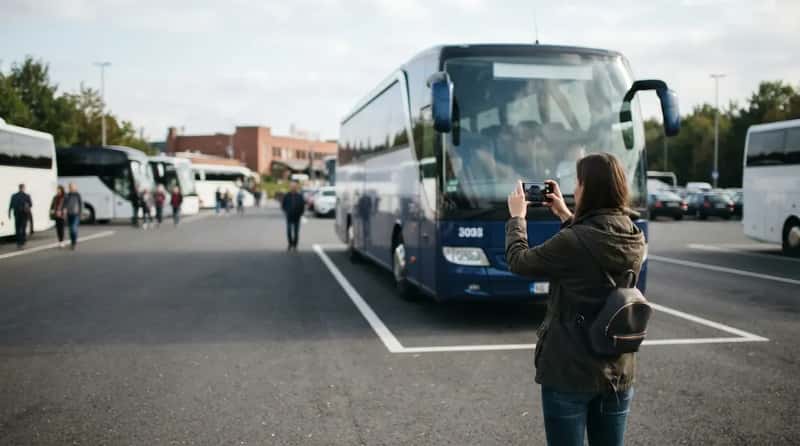
Every coach at a busy rest stop looks nearly identical from fifty feet away, and that’s exactly how people end up standing in front of the wrong vehicle. Veteran group travelers take one photo of the bus number, license plate, or parking row the second they step off, so there’s zero guesswork on the way back.
This habit matters most at highway plazas and national park lots, where a dozen tour operators can be parked within sight of each other. A quick photo also gives you a landmark to search for on your phone if you get turned around inside a crowded terminal or visitor center. It costs three seconds and prevents the single most common reason travelers panic mid-stop.
2. Use the Real Restroom, Even If You Swear You’re Fine
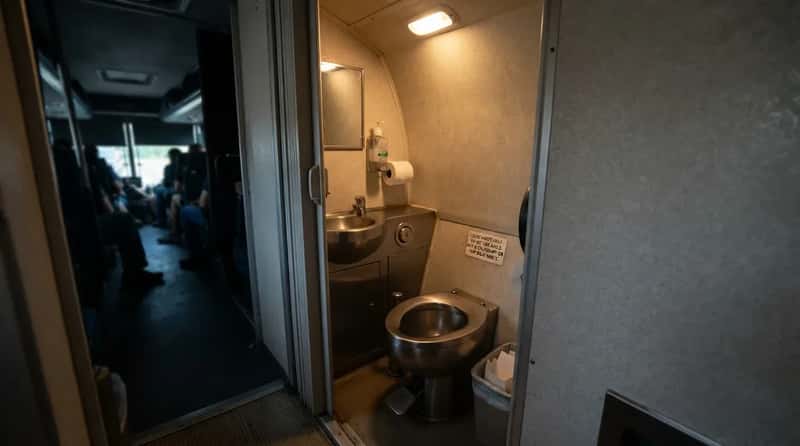
Tour directors say some version of this at nearly every stop: go now, not later, even if you feel fine. Yes, your coach almost certainly has an onboard restroom for emergencies, but that’s a backup plan, not a real bathroom, and everyone on the bus knows it.
Bus restrooms are tiny, usually just a toilet and a hand-washing station, and the tank simply isn’t built for regular use. Most operators treat it as liquid-waste-only, since pumping and servicing a chemical toilet mid-route is expensive and slow. Skipping the real restroom because “I’m fine” is the single most common regret travelers report an hour later, usually somewhere with no exit for miles.
Fast Facts
- Onboard coach restrooms are designed for emergencies, not routine use
- Most tanks are built for liquid waste only, not full bathroom breaks
- Servicing the onboard restroom mid-route slows the whole schedule down
- The real restroom at a rest stop is always the default plan on the itinerary
3. Save the Tour Director’s Number Before You Wander Off

Most passengers never think to grab this number until they actually need it, which is exactly the wrong moment to be scrambling for it. A five-second contact save at the very first stop means you’re never stranded without a way to say, “I’m running two minutes behind.”
Tour directors expect this from experienced travelers and are usually the ones who bring it up first if you don’t. It also solves the awkward problem of not knowing who to flag down in a crowded plaza if you get separated near a food court or gift shop. Nobody wants to be the person asking a stranger’s bus driver for help.
4. Rotate Into a New Seat Like the Regulars Do
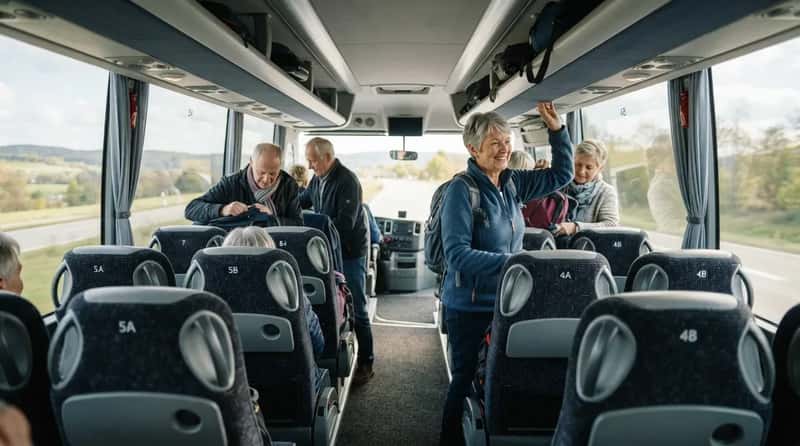
Seat territory on a coach bus turns surprisingly tribal within the first 48 hours of any tour, and guides notice the tension building long before anyone says it out loud. Veteran travelers move to a new seat every single day, without being asked twice.
Many tour companies now build in a rotation system, assigning different seats each morning so nobody is stuck in the back row for two straight weeks. Guides will tell you the complaints they hear most often aren’t about the itinerary, they’re about who got the good seats again. A fresh seat before the bus pulls away isn’t just polite; it’s the quiet difference between a group that bonds and one that splinters into camps by day three.
5. Plug In at Every Outlet You Pass
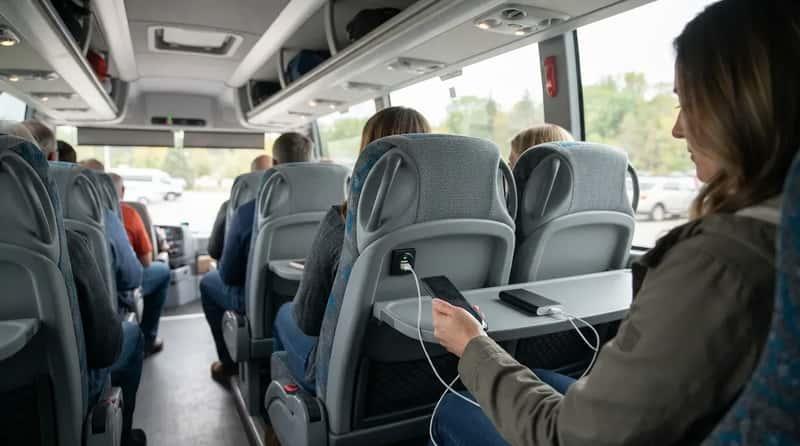
Modern motorcoaches are loaded with amenities older tours never had, and most travelers still don’t take full advantage of them. Charging outlets, WiFi, and reclining seats have become one of the biggest selling points behind the current coach tour boom, but plenty of passengers still treat them as an afterthought.
Outlets are usually limited and shared, so topping off your phone the moment you sit down beats scrambling for a dead battery during the best photo opportunity of the day. Experienced travelers charge at every stop, even a five-minute one, rather than waiting until the battery hits ten percent. It’s a small habit that quietly prevents one of the most common complaints on any modern trip: missing the shot because the phone died.
6. Never Skip Your Turn at the Scheduled Stop
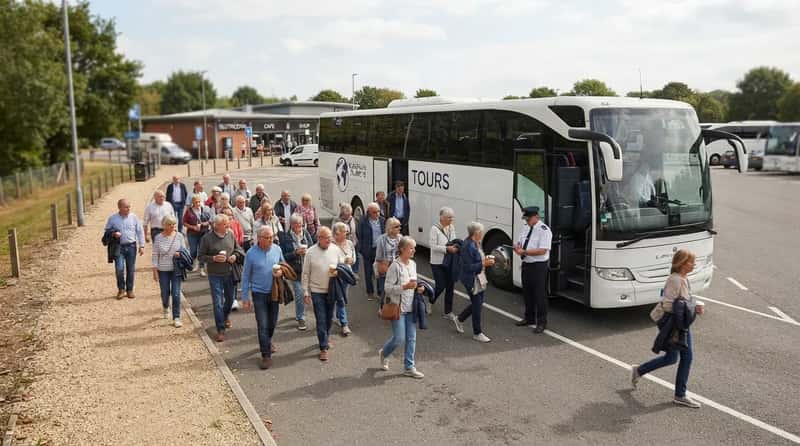
There’s a hidden math problem behind every scheduled break that most passengers never think about. Guides plan bathroom stops with more precision than you’d expect, factoring in group size, road conditions, and how many people will likely need a second stop within twenty minutes.
That means skipping your turn because you’re chatting or browsing a gift shop doesn’t just affect you, it affects everyone. On a full 48-seat coach, one skipped break can quietly turn into a twenty-minute delay for the whole group later on. Veteran travelers treat the scheduled stop as non-negotiable, no matter how tempting the shop window looks.
Worth Knowing
- Standard motorcoaches typically seat somewhere between 48 and 56 passengers
- Scheduled breaks are timed around full-bus math, not individual convenience
- One skipped turn at the restroom can ripple into a delay for everyone
- Tour directors already build stragglers into the schedule, but only to a point
7. Do a 60-Second Seat and Overhead Bin Sweep
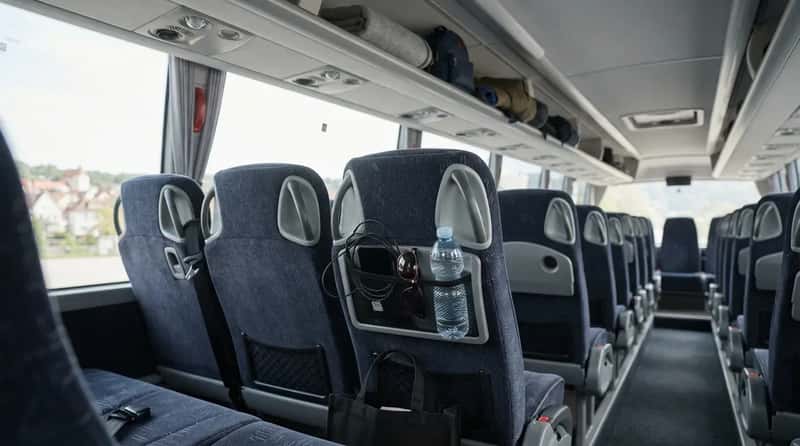
Chargers, sunglasses, and half-finished water bottles are the three most commonly abandoned items on any coach tour, and drivers find them at nearly every stop. A sixty-second sweep of your seat, the seatback pocket, and the floor before stepping off takes almost no time and saves a frantic search later.
This matters even more at the final stop of the day, when bags get shuffled around for hotel drop-off and it’s easy to grab the wrong tote in the rush. Making the sweep a reflex, rather than an afterthought, is one of the clearest habits separating a relaxed traveler from one who spends every rest stop retracing their steps.
8. Set a Countdown Alarm, Not Just a Mental Note

Tour directors announce a departure time at every stop, but relying on memory alone is how people end up jogging across a parking lot in flip-flops. Setting a literal phone alarm for five minutes before wheels-up removes all the guesswork.
This trick matters most at larger attractions, where cell service can be spotty and group announcements get swallowed by crowd noise. A silent countdown means you’re never the person asking a stranger what time it is, and it protects the rest of the group from waiting on someone who lost track of time inside a gift shop.
9. Grab a Snack Before the Vending Machines Disappear
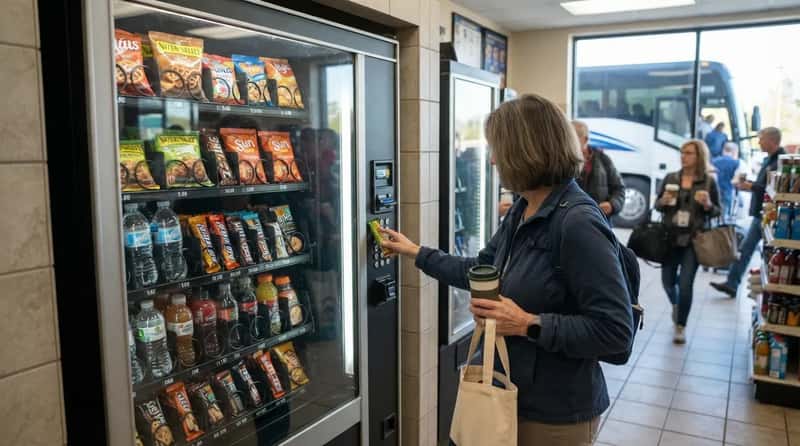
Rest stops with working vending machines and decent coffee aren’t guaranteed at the next stop, especially on rural stretches of highway. Veteran travelers stock up whenever the options look good, rather than assuming the next plaza will offer something similar.
Bringing food onboard does come with one unwritten rule worth knowing, though. A road trip isn’t complete without a good snack stash, but on a shared coach, the smart move is skipping anything loud or strong-smelling for another occasion. A quiet stash beats a bag of chips that makes the whole back row wince for the next hour.
10. Tip the Driver Quietly, Not at the Last Second
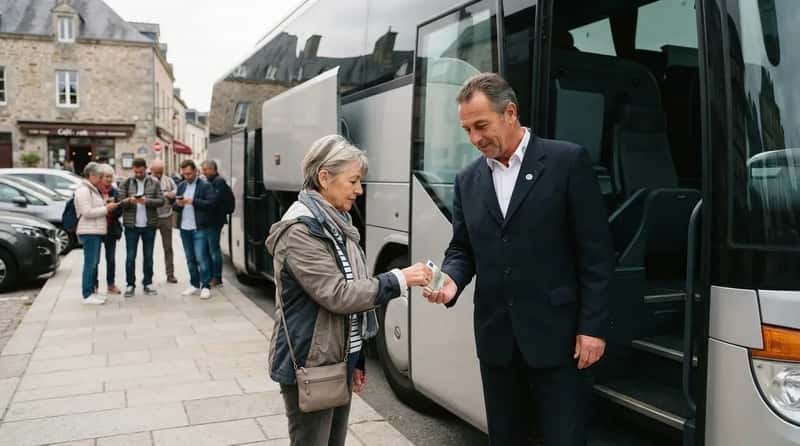
Tipping etiquette trips up more first-timers than almost anything else on this list, mostly because nobody explains it clearly beforehand. It’s never mandatory, but it’s the standard way to show a driver you noticed the work, and it’s rarely folded into the original tour price.
Most seasoned travelers hand over cash quietly during a longer stop, rather than fumbling for bills while the whole group waits to reboard. A common range is ten to twenty percent of the total trip cost when the group is genuinely satisfied. Doing it early, instead of at the very last stop of the tour, avoids the awkward scramble everyone else seems to hit at the exact same moment.
Quick Compare
- Short day trip: a small cash tip per person is typical
- Multi-day tour: ten to twenty percent of the total trip cost is common
- Exceptional service: many travelers round up toward the higher end
- Method: quiet, handed-over cash beats a last-minute scramble every time
11. Take Out Your Trash Before Someone Else Has To
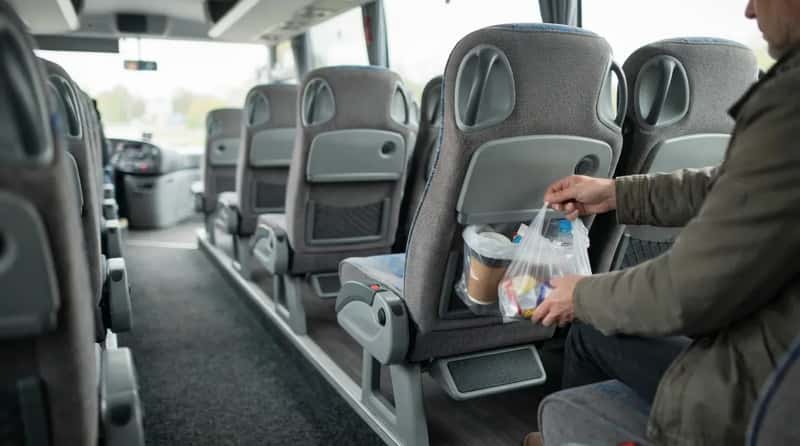
A messy seat area is the fastest way to become the person a driver quietly complains about at the end of a long day. Bringing a small garbage bag to collect wrappers and cups from your row is a tiny act of kindness that drivers genuinely notice and remember.
Before stepping off at any stop, experienced travelers glance at the floor and seatback pocket for anything that shouldn’t be there. It takes barely any time at all, and it’s an easy way to stay on good terms with the one person responsible for getting everyone home safely.
12. Snap the Landmark Sign, Not Just the View

Photos of a canyon, a coastline, or a historic building all start to blur together after a two-week tour, and most travelers regret not labeling any of them. A quick shot of the official sign or plaque before rushing to the scenic view gives every photo an automatic caption later.
This habit costs nothing in the moment but pays off enormously once you’re home trying to remember which overlook was which. It’s a small trick that turns a phone full of nearly identical landscapes into something you can actually organize and share without guessing.
13. Keep Big Bags Out of the Aisle for Good
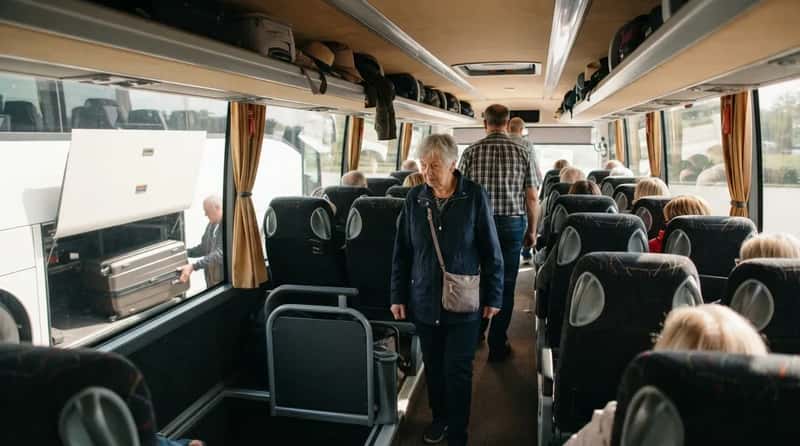
Oversized bags are one of the fastest ways to slow down boarding and frustrate everyone behind you. Storage is often tight on coaches, and bulky luggage rarely fits under the seat in front of you or in the overhead bin, so it either goes below in the undercarriage or it becomes everyone’s problem.
Veteran travelers use the undercarriage storage for anything larger than a light day bag, every single time, rather than trying to wrestle it into the cabin. It sounds minor, but a blocked aisle during a rushed reboarding is one of the most common reasons a coach ends up leaving a few minutes late.
14. Trade Numbers With Your Seatmate While You Still Can

There’s a reason coach tours have a reputation for turning total strangers into genuine travel friends by the end of the trip. Something about shared seat rotations and shared rest stops turns a busload of strangers into something close to a temporary family, and it usually happens faster than anyone expects.
Exchanging contact info early, rather than waiting until the last day, means you actually have someone to coordinate with if you get separated at a stop. It’s also, more often than not, the moment people look back on most fondly once the trip is over and the bus has emptied out for good.
Why It Stands Out
- Shared seat rotations spark conversations that wouldn’t happen otherwise
- Daily rest stops start to feel like informal reunions within days
- Many travelers stay in touch long after the tour officially ends
- Trading contacts early gives you backup help if someone gets separated
15. Do the Headcount Nod With the Guide

The single most reassuring habit on any coach tour is also the simplest: make quick eye contact with the tour director as you board, so they visibly register you’re back. Guides run informal headcounts at nearly every stop, and a small nod or wave removes any doubt about who’s still missing.
This tiny gesture is what actually prevents a bus from leaving anyone behind, more than any sign-in sheet or seat chart ever could. It takes less than two seconds, and it’s the exact habit that separates travelers who never worry about missing the bus from the ones quietly panicking at every single stop.
None of these habits are complicated, and none of them cost more than a few seconds. But together, they’re the quiet difference between a coach tour that runs smoothly for two weeks and one where somebody is sprinting across a parking lot with a half-eaten sandwich. The travelers who never think twice about missing the bus are almost always the ones doing these small things without even realizing it’s become a system.