You’d think the biggest advantage in an airport belongs to whoever flies the most. It doesn’t. It belongs to whoever has been burned enough times to stop making the same mistake twice – and that’s almost always someone who’s been flying for decades, not months.
Watch a traveler over 60 move through a terminal and something feels off in the best way. No frantic phone scrolling, no sprinting past the Cinnabon, no last-second gate panic. They’ve quietly built a set of habits most rookies won’t discover until they’ve already missed a flight – and what’s coming below is exactly what separates the two.
#15 – They Pad Every Layover Far Beyond What the Airline Calls “Enough”

A booking site might say 50 minutes is fine for an international connection, but seasoned flyers don’t buy it. Domestic connections can legally be sold at 30 to 45 minutes, while international connections needing customs and immigration often require 60 to 150 minutes depending on the airport’s layout. That gap between “legal” and “livable” is exactly where most missed connections happen.
Veteran flyers routinely tack on an extra 30 to 60 minutes for peace of mind, even if it means extra time at the gate. They’ve watched a single delayed shuttle or security surge collapse a 50-minute connection more times than they’d like to admit. Rookies book the tightest layover the app allows; the pros build in a cushion they never regret.
Fast Facts
- Domestic connections can be legally sold as tight as 30-45 minutes
- International connections often need 60-150 minutes for customs and immigration
- Seasoned flyers typically add another 30-60 minutes of buffer on top
- Delayed shuttles or security surges are the top culprits behind blown connections
#14 – They Treat “45 Minutes Is Plenty” as a Warning Sign, Not a Promise

Most airline apps insist 45 minutes to an hour is comfortable for a domestic departure. Seasoned travelers have learned the hard way that number is closer to a suggestion than a guarantee. They’ve sat through gate changes, security surges, and shuttle delays that turned a quick trip into a dead sprint through the terminal.
The habit that grows out of this isn’t paranoia – it’s pattern recognition. After enough near-misses, arriving early just becomes automatic, no calculation required. Younger flyers often see this as overly cautious, right up until their own “quick trip” turns into a full sprint through Terminal C.
#13 – They Wear Compression Socks Without Any Embarrassment

Compression socks still carry a stereotype of being something only older travelers wear, and that reputation hasn’t fully faded. But flyers over 60 stopped caring years ago, because they’ve felt the difference on long-haul flights firsthand. Reduced swelling, better circulation, and less stiffness after landing aren’t myths – they’re the reason the habit sticks for decades.
What’s genuinely surprising is how many seasoned flyers rank this above almost every other comfort item they pack. Not the neck pillow, not the noise-canceling headphones – the socks. Younger travelers frequently skip them entirely and only notice the mistake somewhere over Kansas, legs stiff and swollen with hours still left to fly.
#12 – They Self-Identify for Pre-Boarding Without Ever Needing a Doctor’s Note
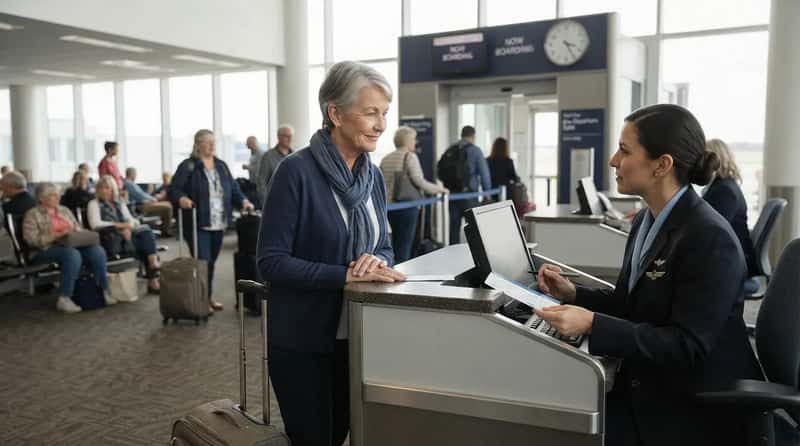
Most rookies think pre-boarding is reserved for wheelchairs or families with strollers. Seasoned flyers know it covers far more than that. Under the Air Carrier Access Act, passengers can self-identify at the gate with no doctor’s note or documentation required, and the accommodation covers mobility issues, joint pain, slow movement, or simply needing extra boarding time.
It’s a quiet conversation with the gate agent before boarding groups are even called, and it takes seconds. Frequent flyers who know this detail board more comfortably, get better overhead bin access, and skip the physical stress of fighting a packed aisle. Most passengers never think to ask – and most agents say yes the moment they do.
#11 – They Pack a 24-Hour Survival Kit in Their Personal Item
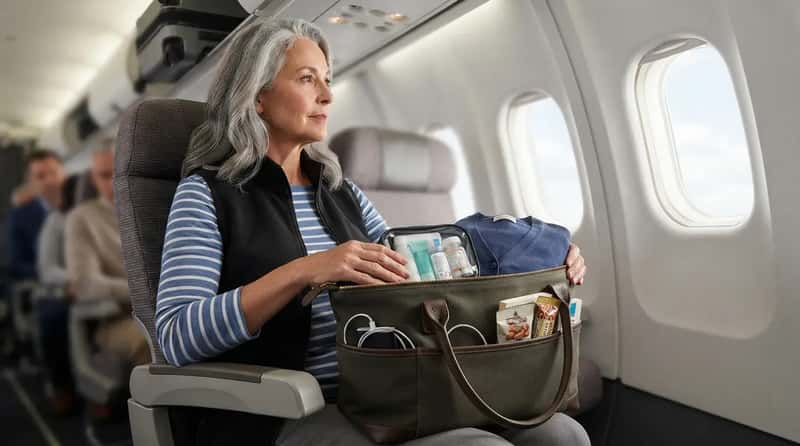
The habit is deceptively simple: a change of clothes, medications, a charger, snacks, and essential toiletries, kept in the small bag that never leaves their side. Seasoned travelers treat that personal item – the one that goes under the seat – as a self-contained survival kit, built for the possibility that the checked bag doesn’t show up.
To someone who’s never had a suitcase go missing, this can look excessive. To the ones who have lived through it, it’s automatic, no second thought required. If the bag disappears in Denver while you’re headed to a wedding in Charlotte, this small pouch is the difference between a minor inconvenience and a full-blown crisis.
#10 – They Consolidate All Their Loyalty Into One Airline, Not Five

Casual travelers often chase whichever fare is cheapest that week, scattering flights across five different airlines and never reaching real status with any of them. Seasoned flyers figured out early that this spreads thin what should be concentrated – and it permanently changes their upgrade odds.
It’s a controversial stance among budget-focused travelers who insist the lowest fare always wins. But over a decade of flying, one airline’s status tier tends to outperform five scattered loyalty accounts that never quite cross the threshold for anything meaningful.
#9 – They Call Directly to Ask About Senior Fares Instead of Trusting the Website

The online price is rarely the whole story, and seasoned flyers know it. American Airlines offers 10 to 15 percent off select fares for travelers 65 and older, United offers senior fares for 65-plus on select routes by phone, and Delta offers limited age-based discounts best accessed by calling directly. None of it shows up automatically at checkout.
Even AARP membership, available starting at age 50, unlocks extra savings on select partner deals. The habit isn’t complicated – it’s a five-minute phone call before booking, comparing the senior fare against whatever the website is currently advertising. Most younger travelers don’t even know that call is worth making, let alone that the sale fare sometimes beats the senior one anyway.
Quick Compare
- American Airlines – 10-15% off select fares, ages 65+
- United – senior fares for 65+, select routes, by phone only
- Delta – limited age-based discounts, best found by calling
- AARP (age 50+) – extra savings on select partner travel deals
#8 – They Carry a Packable Rain Shell Instead of an Umbrella

Ask any flyer who’s been caught in a downpour with no cab in sight, and they’ll tell you an umbrella is the wrong tool for travel. It leaves your clothing wet from the waist down, becomes useless in any wind, and ties up a hand you’ll want free. A packable rain shell keeps you completely dry and leaves both hands open for luggage.
The kind that stuffs into its own pocket weighs only a few ounces and fits in any day bag’s side pocket without anyone noticing it’s there. It’s one of those small items that separates a ruined afternoon from one you barely remember for the weather. Rookies pack for the forecast they hope for; veterans pack for the one that actually shows up.
#7 – They Keep a Master Packing List and Refine It After Every Trip

The best packing, seasoned flyers will tell you, is systematic rather than improvised. A master packing list – genuinely customized to your own travel patterns and updated after every single trip – separates the travelers who always feel prepared from the ones who always forget something critical.
It’s not a static template pulled off a blog somewhere. It’s a living document that gets a new line added every time something gets left behind, or something unnecessary gets hauled around for nothing. After a few dozen trips, that list becomes almost eerily accurate – which is exactly the point.
#6 – They Carry an Empty Water Bottle Through Security Instead of Buying a New One
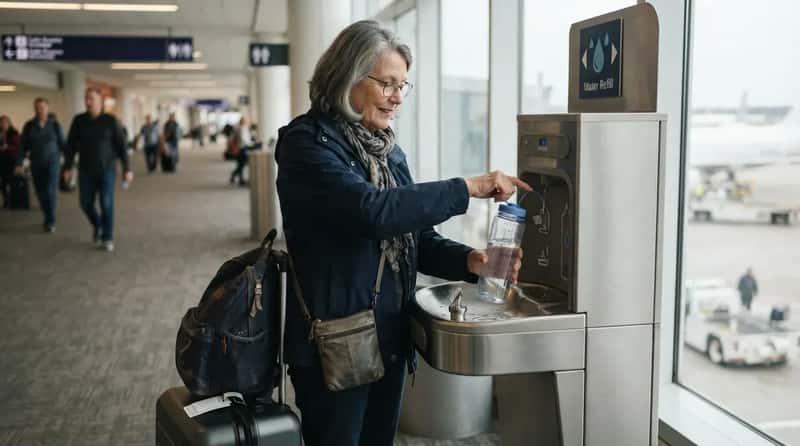
It’s a small habit built from watching too many full bottles get tossed in the checkpoint trash. Seasoned flyers carry theirs empty, fill it at a fountain past security, and skip the overpriced airport bottle entirely. Over dozens of trips a year, that habit alone adds up to real money saved on nothing but water.
On long-haul flights, passengers can lose roughly 8 percent of total body water just from the dry cabin air pulling moisture from skin and the respiratory system. Doctors routinely suggest packing an empty bottle in a carry-on rather than depending on tiny beverage cart cups. Rookies rely on the cart. Veterans refill before boarding and again the moment they land.
#5 – They Pay to Store Luggage During Long Layovers Instead of Dragging It Everywhere

Most rookies assume every bag has to stay glued to them until the final destination. Seasoned flyers know that’s rarely true, and rarely worth the physical toll. Most major international airports offer luggage storage for $5 to $15 for several hours – a fraction of what that freedom is worth in comfort, especially for travelers managing back, shoulder, or hip issues.
It’s an easy habit to dismiss until you’ve actually walked a foreign city for six hours with a rolling suitcase clattering behind you. Storing it and walking free changes the entire layover. Rookies drag everything everywhere simply because it never occurs to them there’s another option.
#4 – They Walk Laps Around the Terminal the Moment They Land

Most rookies land, grab their bag, and collapse into the nearest seat. Seasoned flyers do the opposite on purpose. Deep vein thrombosis is a real risk on long flights where legs barely move for hours at a stretch, and a lap or two around the terminal right after landing is one of the fastest ways to reset circulation.
It sounds almost too simple to matter, which is exactly why so many people skip it. A few minutes of deliberate walking after hours of sitting still isn’t just about comfort – it’s a genuine, low-effort safeguard against a medical risk that gets worse with age and with flight length. The habit costs nothing and takes less time than waiting at baggage claim.
Worth Knowing
- Blood clot risk climbs on flights of four hours or longer
- Hours of stillness slow circulation in the legs and calves
- A short walk right after landing helps reset blood flow quickly
- Risk factors compound with age, making this habit more valuable over time
#3 – They Tip Cash to Gate Agents, Porters, and Drivers, Even When It’s Not Expected
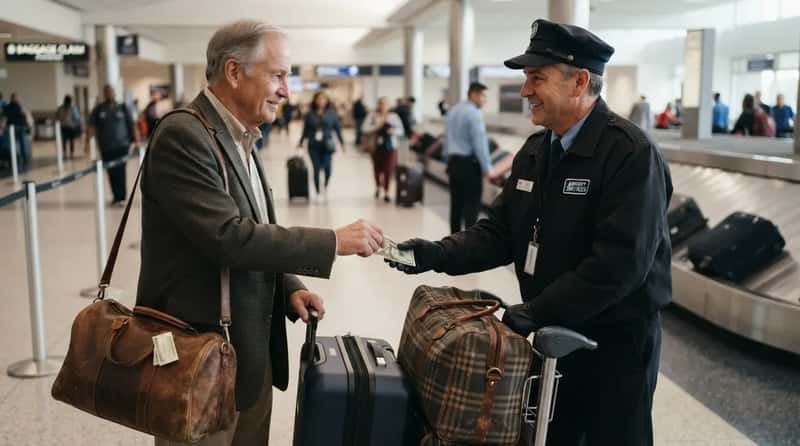
This is one of the more old-fashioned habits on the list, and seasoned flyers do it anyway. Tipping well and consistently means gate agents, drivers, and porters remember them on the return trip – and a cash tip still buys faster service than any app-based rating ever will.
It’s not about flashing money around. It’s a quiet, consistent habit that builds goodwill in places where goodwill quietly matters. A porter who remembers you from the outbound trip moves faster on the return. A driver tipped well the first time shows up early the second. Rookies tip through an app after the fact, if at all, and miss the entire point.
#2 – They Stay Calm With Gate Agents as a Strategy, Not Just Manners
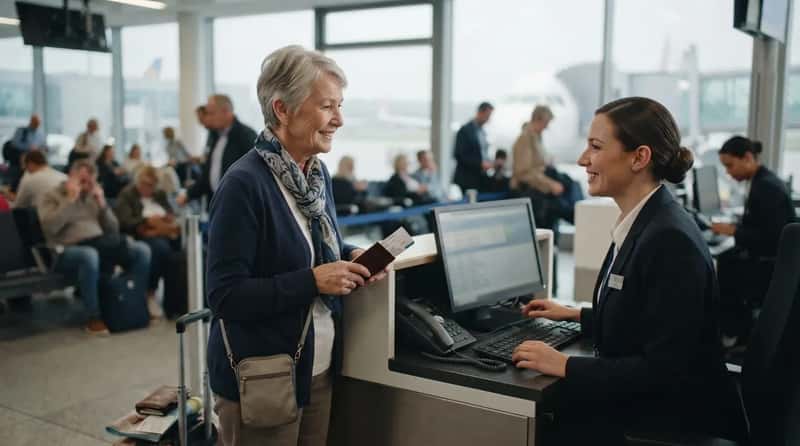
This might be the habit that matters most, and it’s the one younger travelers overlook hardest during a delay. Lifelong travelers stay polite, patient, and genuinely kind to gate agents even when a flight is falling apart – and that kindness is strategic. Gate agents remember the passengers who treated them decently and often quietly offer rebookings, upgrades, or solutions to those people first.
Travel is fatal to prejudice, bigotry, and narrow-mindedness.
Mark Twain
It’s not naive positivity – it’s a calculated read on how systems staffed by tired, overwhelmed humans actually work. If a gate agent watches someone be rude during a delay, that passenger’s odds of getting help have already evaporated, while the calm, easy-to-work-with traveler gets remembered when a seat opens up. Rookies vent. Veterans stay quiet and get quietly rewarded.
#1 – They Ask One Simple Question at Check-In That Can Unlock a Lounge Without Any Status

This is the habit seasoned flyers over 60 almost never explain in detail, mostly because it sounds too easy to be real. Most travelers walk past lounge doors assuming they’re reserved for first-class tickets and corporate road warriors with unlimited budgets. In reality, a credit card, alliance status, or even a single direct question can get almost anyone through that door.
Cards like the Chase Sapphire Reserve, Capital One Venture X, and American Express Platinum all carry lounge access as a standard benefit, with no elite status required and no special application. The final move is simply asking the check-in or lounge desk directly what’s available. Rookies assume the answer is no before they’ve even asked – and that single assumption is the biggest gap between a $17 airport sandwich and a real seat to relax in before the flight.
At a Glance
- Chase Sapphire Reserve – Priority Pass lounge access included
- Capital One Venture X – Capital One Lounge access included
- American Express Platinum – Centurion Lounge access included
- No elite status needed – just ask the check-in or lounge desk directly
None of these fifteen habits are flashy, and none of them came from a viral post or a slick travel-hacking app. They were earned the slow way – through missed connections, swollen ankles, lost luggage, and a few too many rude moments at a gate that didn’t pay off. What ties them together is patience: a willingness to build in buffer, ask the quiet question, and treat airport staff like people instead of obstacles. Rookies chase speed. Seasoned flyers chase certainty, and after enough trips, certainty wins every time.
Which of these habits do you already swear by – and which one are you stealing for your next trip? Drop it in the comments.